
I once counted thirty-one named flowers on a single Japanese seasonal calendar, spread across all twelve months. That is not a poetic round number. It is what serious gardeners and parks departments actually publish, the moment you start treating “flower” as everything from the first plum bud in late January to the last maple leaf in early December. If you arrive in Japan in any given week of any given month, something is in bloom, and somewhere there is a park or shrine or hillside that has been timed to that bloom for a hundred years.
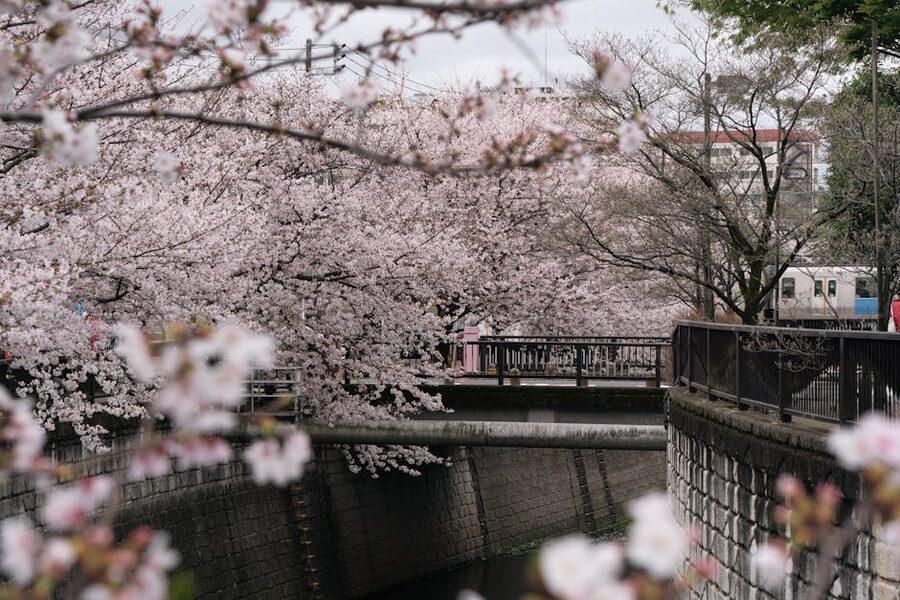
This is a working calendar, not a poetry one. For each month I have picked the bloom that defines it, the named place I would actually take a friend to see it, and the verified opening hours and admission as of 2026. Where the timing depends on weather (it always does, slightly), I say so. Where a flower is famous and overrated, I say that too.
If you are still building the trip itself, the structure of when to visit is in my guide to the best time to visit Japan. If you are planning the autumn opposite of this article, see the autumn leaves guide. If your trip plan also includes a soak, my onsen guide is the companion piece. And the country’s ten regional hubs are linked individually below at the section where each region’s flower lives.
In This Article
- The short version: what is blooming, by month
- Reading the bloom forecast (the one rule that saves trips)
- January: camellias and narcissus, when nothing else is supposed to bloom
- February: plum blossoms, the unofficial start of spring
- March: cherry blossom, the wave that crosses the country
- The single best March add-on if you have an extra day
- April: the busiest flower month, and the one with the most options
- Nemophila at Hitachi Seaside Park
- Tulips at Tonami
- Wisteria at Ashikaga and Kameido Tenjin
- May: moss phlox, the spring closer
- The other May blooms worth a stop
- June: hydrangea, in the rain, on purpose
- The other June flower: Japanese iris
- July: lavender in the north, lotus in the south
- Lotus, mostly in Tokyo
- August: sunflowers, with the heat dome
- Morning glory, briefly
- September: the red spider lily, in formation
- The cosmos overlap
- October: cosmos, kochia, and the second nemophila
- Cosmos, the cherry blossom of autumn
- November: chrysanthemum, the imperial flower
- Late roses
- Late-season tea flowers
- December: back to camellia and the winter pinks
- If you want a one-week flower trip, this is the plan
- What to budget, briefly
- Combining flowers with the rest of your itinerary
- Useful sources for live bloom timing
The short version: what is blooming, by month
If you have one minute, this is the table I check before booking dates. Peak weeks shift a few days each year, but the order does not change.
| Month | Headline bloom | The place I would go first |
|---|---|---|
| January | Camellia, narcissus | Izu Oshima Camellia Festival, Tokyo’s offshore island |
| February | Plum (ume), Kawazu-zakura early cherry | Kairakuen, Mito, for plum; Kawazu, Izu, for early cherry |
| March | Cherry blossom, peach | Tokyo, Kyoto, anywhere on the main wave |
| April | Tulips, wisteria, baby-blue-eyes (nemophila) | Hitachi Seaside Park, Ibaraki |
| May | Moss phlox (shibazakura), wisteria, azalea | Fuji Shibazakura Festival, Yamanashi; Ashikaga Flower Park, Tochigi |
| June | Hydrangea (ajisai), Japanese iris (hanashobu) | Meigetsu-in, Kamakura |
| July | Lavender, lotus, sunflower | Farm Tomita, Nakafurano, Hokkaido |
| August | Sunflower (himawari), morning glory | Hokuryu Sunflower Village, Hokkaido |
| September | Red spider lily (higanbana), cosmos starts | Kinchakuda, Saitama |
| October | Cosmos, kochia, late roses | Hitachi Seaside Park (yes, again) |
| November | Chrysanthemum, ginkgo, late-season roses | Hibiya Park, Tokyo, for the chrysanthemum show |
| December | Camellia, sasanqua, winter peony, daffodil | Izu Oshima again; Hotel Chinzanso, Tokyo, for camellia variety |
That is the headline. The detail, with named gardens and the practical bits, follows below.
Reading the bloom forecast (the one rule that saves trips)
The single best skill on a Japan flower trip is checking the live bloom forecast before you book the train. The Japan Meteorological Corporation, the Weather Map company, and Weathernews all publish bloom forecasts updated weekly through the season. They are in Japanese, but the maps are colour-coded and the dates are obvious.
For sakura, the forecast updates from January onwards and tightens through February. For nemophila, kochia, lavender, and shibazakura the parks themselves publish a public bloom status page. Hitachi Seaside Park, for example, posts a “now blooming” status and an updated peak window every few days through the nemophila and kochia seasons. I have changed flights twice based on it. As of 2026, the park extended its nemophila peak window when the bloom held longer than expected, with full bloom posted through 26 April and the second-half peak running to 1 May.
The same is true for the shrines that have a single signature bloom, the famous example being Ashikaga Flower Park’s Great Wisteria. The park’s public “current flower status” page is updated almost daily during the season. Bookmark it, do not assume calendars from previous years are still right.
January: camellias and narcissus, when nothing else is supposed to bloom
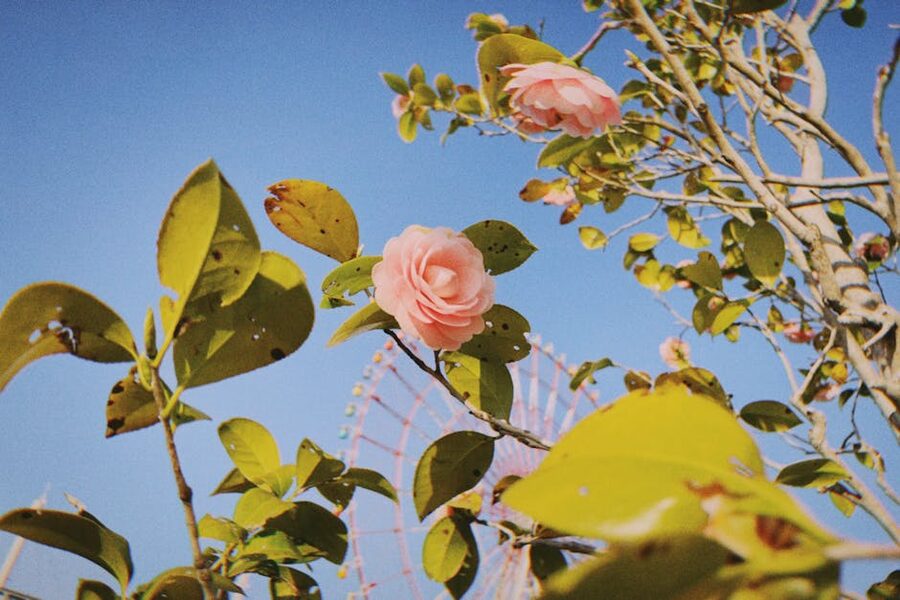
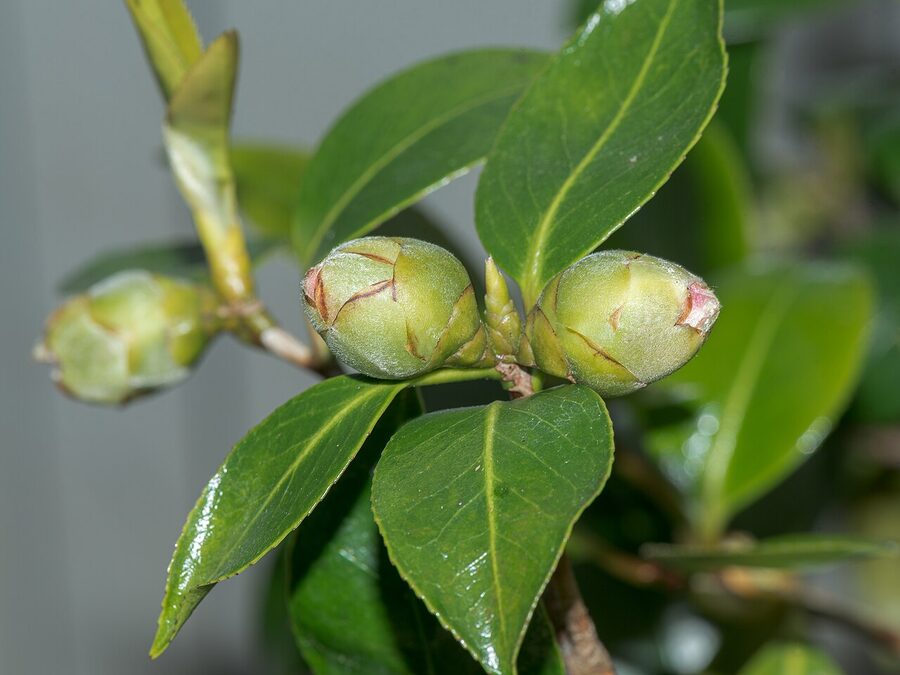
People who say “winter is dead in Japan” are looking in the wrong place. Camellia (tsubaki) is the flower that does not care. It comes in two main forms: the autumn-to-winter Sasanqua camellia, and the late-winter-to-spring Japonica camellia. Together they cover most of the year, peaking in shoulders nobody else fills.
The camellia capital of Greater Tokyo is Izu Oshima, the volcanic island ninety minutes by jetfoil from Takeshiba Pier. The annual Camellia Festival runs roughly from late January through to late March, with around three hundred thousand camellia trees scattered around the island. The flagship is at Tsubaki Park (Tsubaki Hana Garden) on the north of the island. Closer to central Tokyo, the gardens of Hotel Chinzanso, in Mejiro, hold a notable collection of named camellia cultivars from around the country.
The other January flower worth a detour is the Japanese narcissus (suisen), which carpets headlands on the warmer Pacific coast in mid winter. Jogashima Island, off Miura Peninsula in Kanagawa, has fields of narcissus right above the cliff line and is a clean half-day from Yokohama. Echizen, on the Sea of Japan side, has a much larger narcissus run on the rocky cape, in bloom from late December through mid-February.
February: plum blossoms, the unofficial start of spring
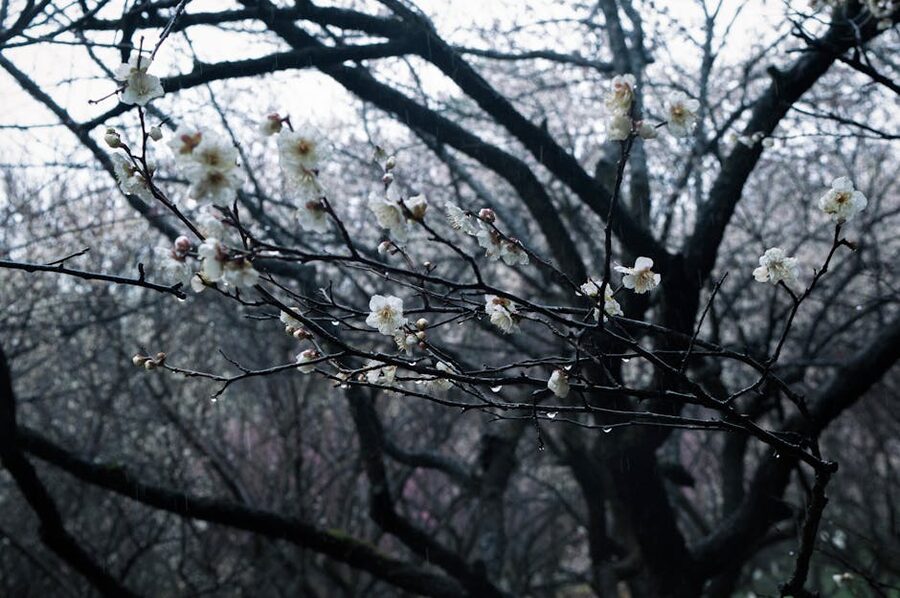
Plum (ume) is the flower the Japanese poetic tradition treats as the real opening of the year, before the louder cherry blossom takes over. It blooms from late January in Kyushu and warm Pacific coasts and runs through to mid March further north. The trees flower on bare branches, before the leaves come, which is why the look is so distinctively spare.
The three classical “great plum gardens of Japan” are Kairakuen in Mito, Ibaraki, where about three thousand plum trees in around a hundred varieties carpet the slope of the old Tokugawa daimyo’s retreat; Kitano Tenmangu in Kyoto, where the trees frame the shrine to Sugawara no Michizane and where the Baikasai plum-blossom tea ceremony takes place on 25 February each year; and Dazaifu Tenmangu in Fukuoka, dedicated to the same scholar-poet, with around six thousand plum trees on the shrine grounds.
If you are based in Tokyo, the classical city-centre option is Koishikawa Korakuen, where the plum grove is right next to the Edo-era pond garden. Smaller and quieter is Yushima Tenjin in Bunkyo, north Tokyo, traditionally the city’s shrine for students sitting university entrance exams. The plum-viewing festival there runs through most of February.
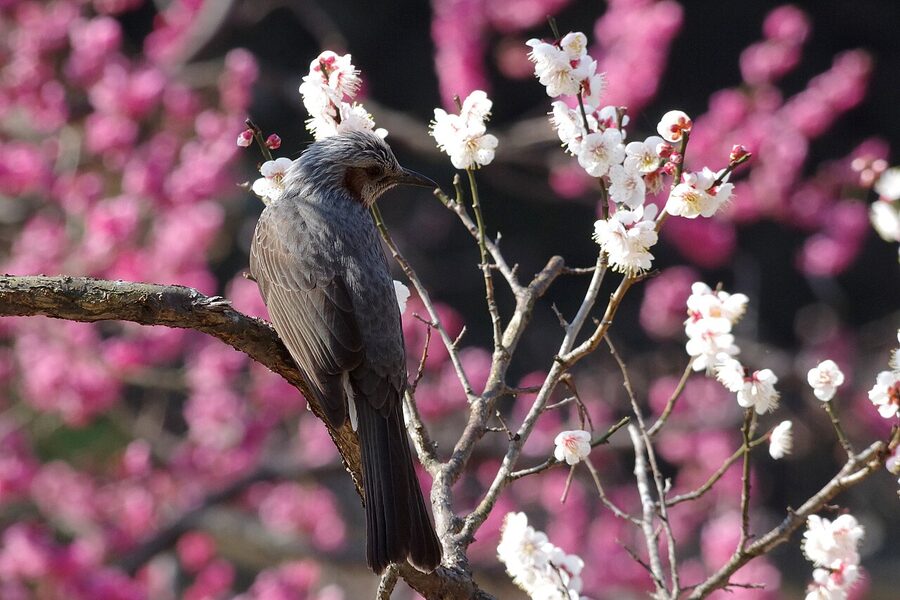
February is also when the early cherries open. Kawazu-zakura, a deep-pink cherry variety, blooms from early February to early March in Kawazu, on the Izu Peninsula. The 36th Kawazu Sakura Festival runs 7 February to 8 March 2026, lining about three kilometres of riverside with several thousand trees. Verified on the official festival site as of 2026. If you are flying into Tokyo in February and want sakura without travelling north into colder weather, this is the trip.
March: cherry blossom, the wave that crosses the country
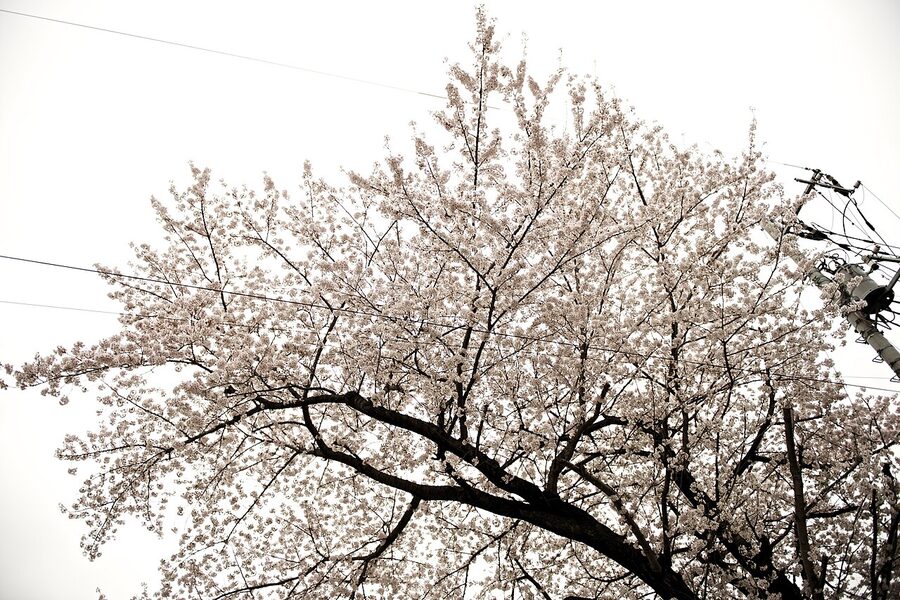
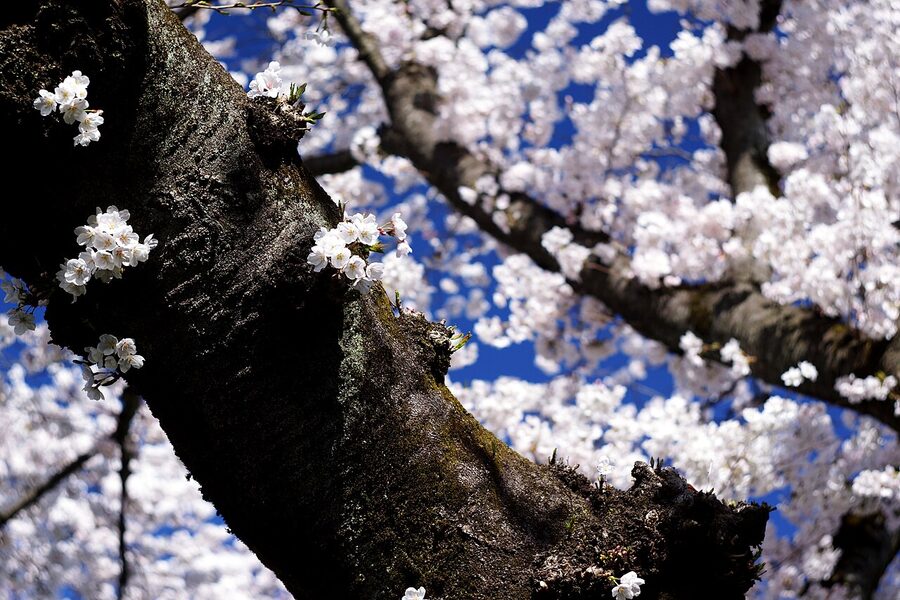
The cherry blossom (sakura) wave starts in Kyushu and Shikoku in mid-to-late March, sweeps through Kansai and Tokyo around the last week of March, and reaches Tohoku in mid-April and Hokkaido in late April or early May. Average dates shift a couple of days each year and have crept gradually earlier over the past decade.
The variety doing most of the work is Somei Yoshino, a hybrid that flowers a touch before the leaves come and produces the iconic pale-pink cloud effect. Earlier and later varieties extend the season at both ends: Kawazu-zakura in February, Yamazakura overlapping the main wave, and the late double-flowering Yaezakura that blooms a week or two after Somei Yoshino fades.
Where I would go depends on what kind of trip you are after, classical garden context or scale. For garden context, Kyoto’s sakura spots are the obvious answer, especially Maruyama Park, the Philosopher’s Path, and the night-lit weeping cherry at Daigo-ji. For scale, Tokyo’s viewing spots are the usual answer, particularly Shinjuku Gyoen and Chidorigafuchi’s moat. For a contrarian late-season choice that lets you skip the worst crowds, Hokkaido’s cherry blossom in late April and early May, especially Goryokaku in Hakodate, gives you the sakura wave without the central Honshu crush.
If you want the full strategic picture (which forecast service to trust, how to time flights, how to handle Golden Week overlap), see the complete cherry blossom guide.
The single best March add-on if you have an extra day
Tulips. Almost nobody arrives in Japan in March planning to see tulips. The Sakura Tulip Festival at Sakura Furusato Square, in Sakura City, Chiba, has around half a million tulips with a working windmill and overlaps the Tokyo cherry blossom by ten days, so you can do both on the same trip with the same JR pass. Free entry. Confirmed for spring 2026 on the festival’s public schedule.
April: the busiest flower month, and the one with the most options
April is the month when sakura ends and four other major blooms come up underneath it. The sequencing is brutal if you are trying to see all of them on one trip. The pragmatic plan is to pick two or three.
Nemophila at Hitachi Seaside Park
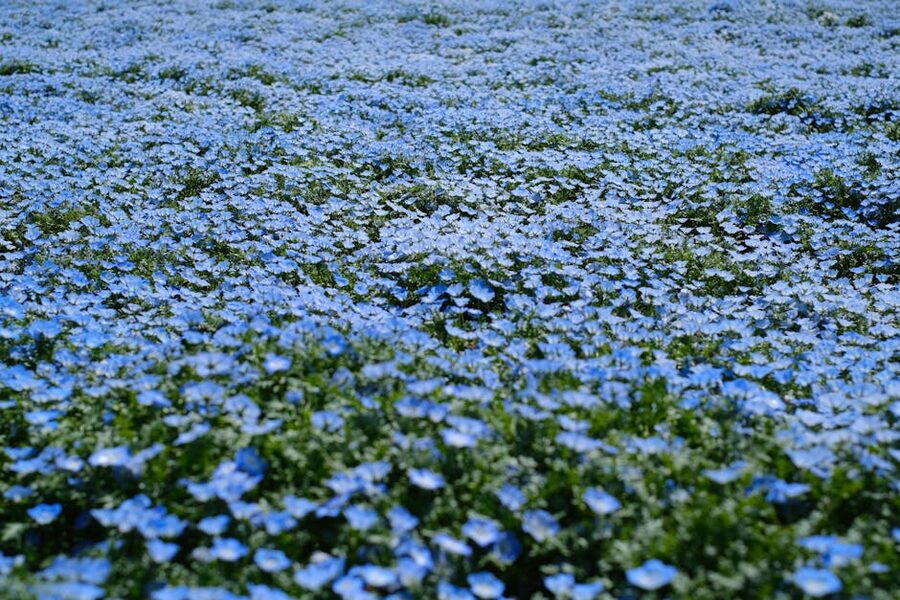
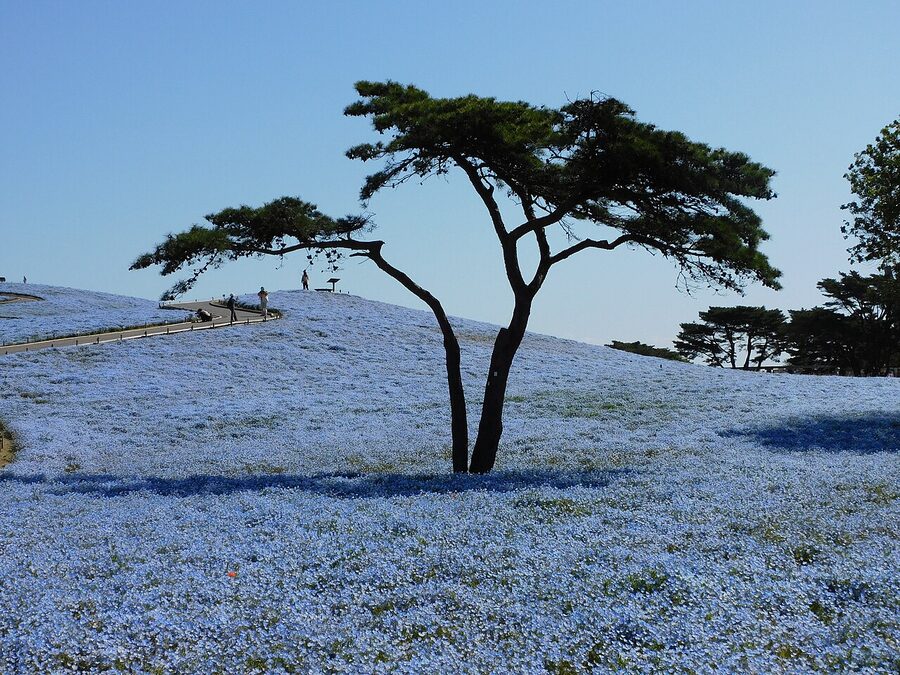
The headliner. Hitachi Seaside Park in Hitachinaka, Ibaraki, holds about 4.5 million nemophila plants on Miharashi Hill, peaking from mid-April to early May. The colour, “baby blue eyes” pale-blue cup against the green hill, is the Instagram image. As of 2026, the park kept its peak full bloom posted through 26 April with the second-half peak posted through 1 May (verified on the park’s public bloom status page).
Adult admission is ¥450, junior school and below free, seniors over sixty-five ¥210. Park hours run 09:30–17:00 in spring (these tighten in winter). Tuesday is the standard closing day, except in peak nemophila weeks when the park opens daily. Access by JR Joban Line to Katsuta, then about fifteen minutes by Ibaraki Kotsu bus.
Tulips at Tonami
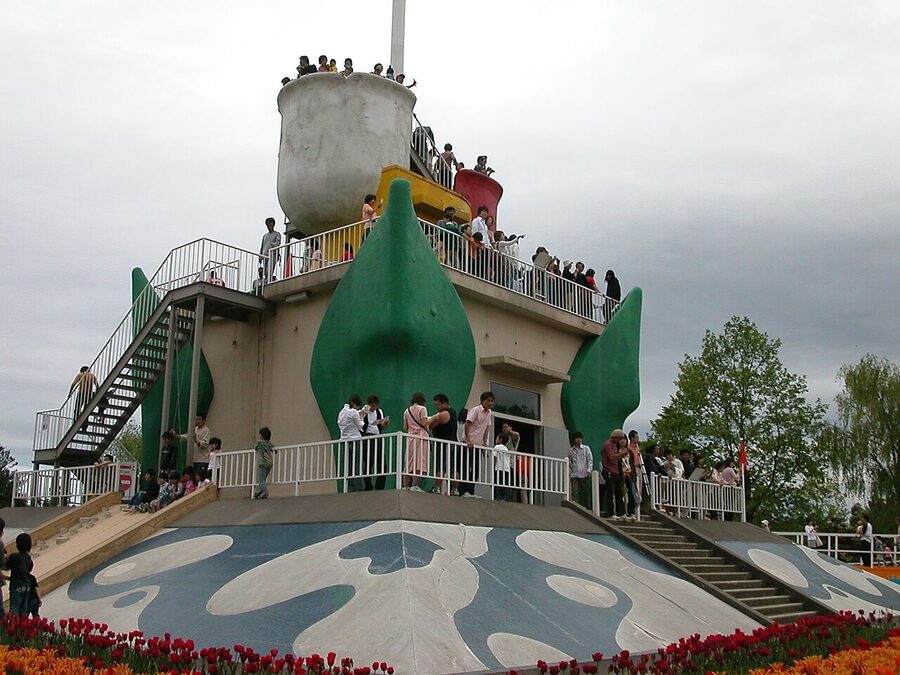
The other April field flower with national reputation is the tulip at Tonami Tulip Park, on the Hokuriku coast. Tonami plants around 700 named varieties, peaking in the last ten days of April through Golden Week. The park also runs the Tonami Tulip Fair through that window. Combine it with Kanazawa, ninety minutes away by Hokuriku Shinkansen, and you have a clean two-night Hokuriku trip with cherry blossom in Kenrokuen and tulips in Tonami back to back.
Wisteria at Ashikaga and Kameido Tenjin
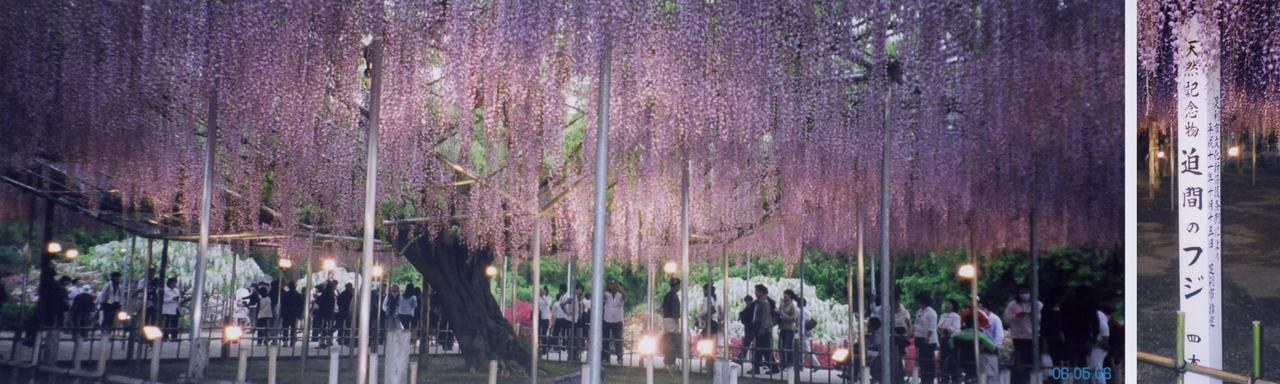
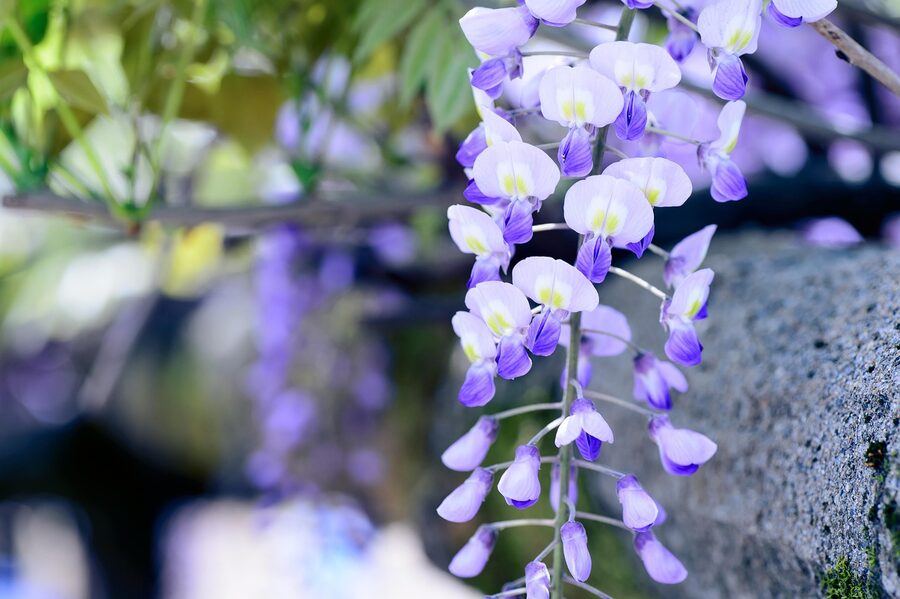
Wisteria (fuji) opens in the last week of April and runs into mid May. Ashikaga Flower Park in Tochigi has the most photographed wisteria in Japan, including a Great Wisteria tree more than 160 years old whose canopy covers a full trellis. Admission varies with bloom intensity (¥400 to ¥2,300 for adults, ¥200 to ¥1,200 for children, depending on the day’s flower status), which is unusual but pragmatic. Hours 10:00–17:00 in standard season, extended to 21:00 during peak bloom for night illumination. Verified on the park’s official site as of 2026.
If you are based in Tokyo and want a wisteria stop without the day trip, Kameido Tenjin in Koto City has about fifty wisteria trellises framing the shrine’s pond and arched bridges. The festival runs roughly mid-April to early May. No admission fee, open 06:00 to 17:00. Quieter on weekday mornings.
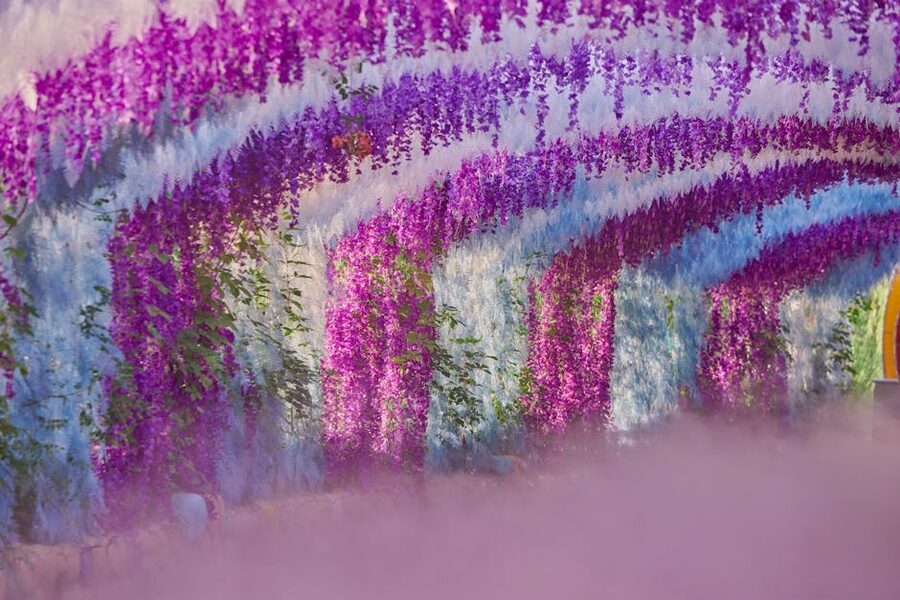
May: moss phlox, the spring closer
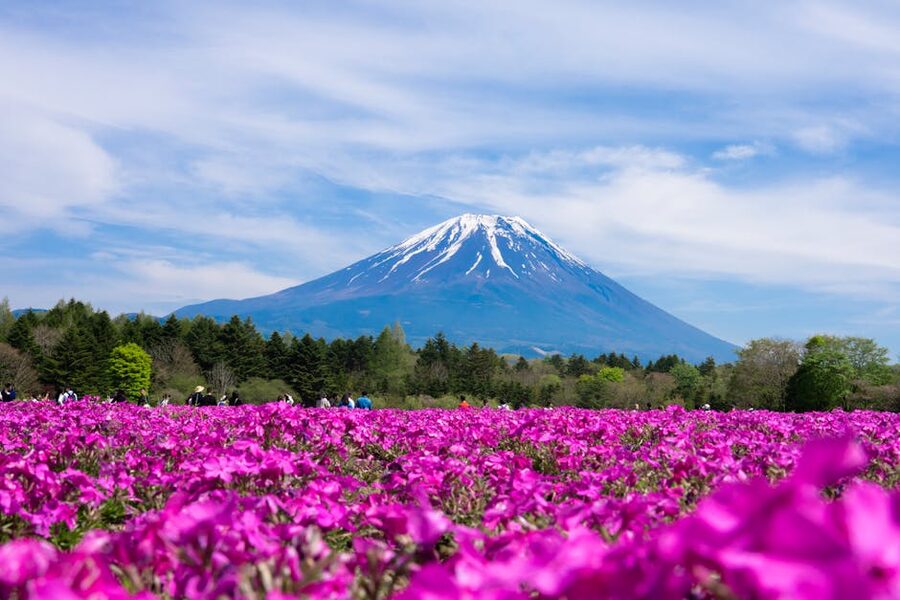
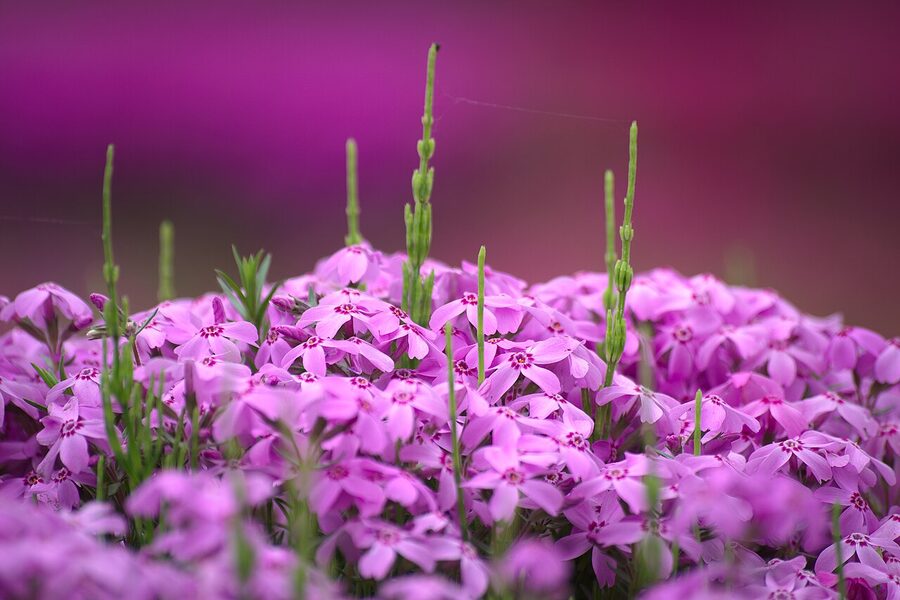
If you are in Japan in early May, the bloom that defines the month is shibazakura, which translates to “lawn cherry blossom” but is actually moss phlox. The plant carpets the ground, looks like spilled pink paint when seen from above, and is what the photogenic May field shots are.
The most-famous shibazakura site is the Fuji Shibazakura Festival at Fuji Motosuko Resort, in the foothills of Mt. Fuji in Yamanashi. About 800,000 plants in shades from pale pink through magenta to white, with Mt. Fuji as the backdrop on a clear morning. The 2026 festival opens on 11 April and runs to late May; admission ¥1,000 to ¥1,300 adult depending on date, ¥500 to ¥700 for children three and over. Parking ¥500 to ¥1,000 (rising to ¥1,000 from late April through Golden Week). Verified on the official Fuji Motosuko Resort site as of 2026.
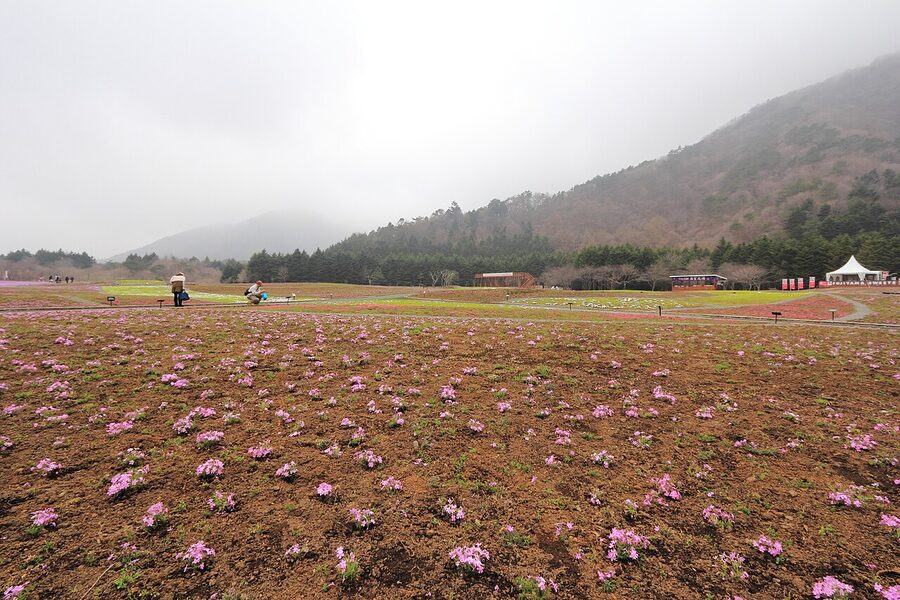
The under-rated alternative is Hitsujiyama Park in Chichibu, Saitama, an easy day trip from central Tokyo by Seibu Chichibu Line (around eighty minutes from Ikebukuro). Roughly 400,000 plants over four hectares of slope. The Chichibu Shibazakura Festival typically runs mid-April to early May. Less famous, far less crowded, and you can combine it with a soak at Chichibu Onsen on the way back.
The other May blooms worth a stop
Roses peak from mid May to early June: Jindai Botanical Gardens in Chofu, west Tokyo, and Keisei Rose Garden in Yachiyo, Chiba, are the two largest collections within easy day-trip distance. Iris (shobu) opens at the end of the month, the warm-up to its proper peak in June. Kakitsubata iris come a touch later, classically at Meiji Jingu’s Inner Garden in Shibuya and at Mishima Taisha’s pond garden in Shizuoka.
If you are travelling out into the countryside in late May, look for fields of nemophila’s late successor, the lupine, especially in Hokkaido around Furano and Saitama around Musashi-Kyuryo Park.
June: hydrangea, in the rain, on purpose
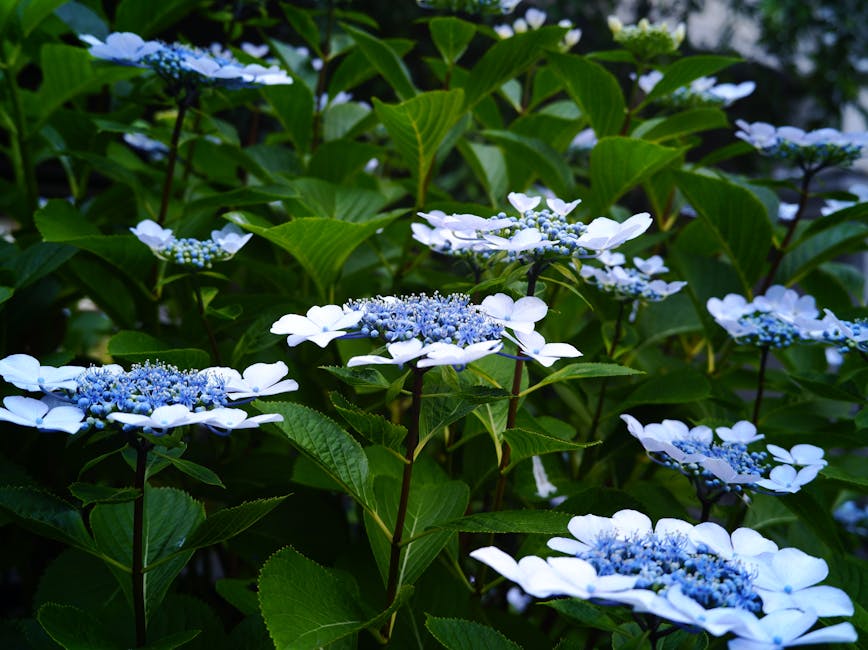
The rainy season starts in June across most of Honshu (a touch later in Tohoku and Hokkaido). It is also when hydrangea (ajisai) peaks. The flower handles wet weather better than almost any other named bloom, which is why ajisai photography in light rain, on a wet temple stone path, is its own genre.
The classic destination is Meigetsu-in in Kamakura, where about two thousand five hundred hydrangea bushes line the temple paths. The “Meigetsu-in blue” cultivar is what gives the temple its nickname, “Ajisai-dera”. Admission is around ¥500. Crowds are heavy through June; arriving at opening (typically 09:00) is the only realistic strategy. Verify the current admission and any timed-entry rules on the temple’s public site before going.
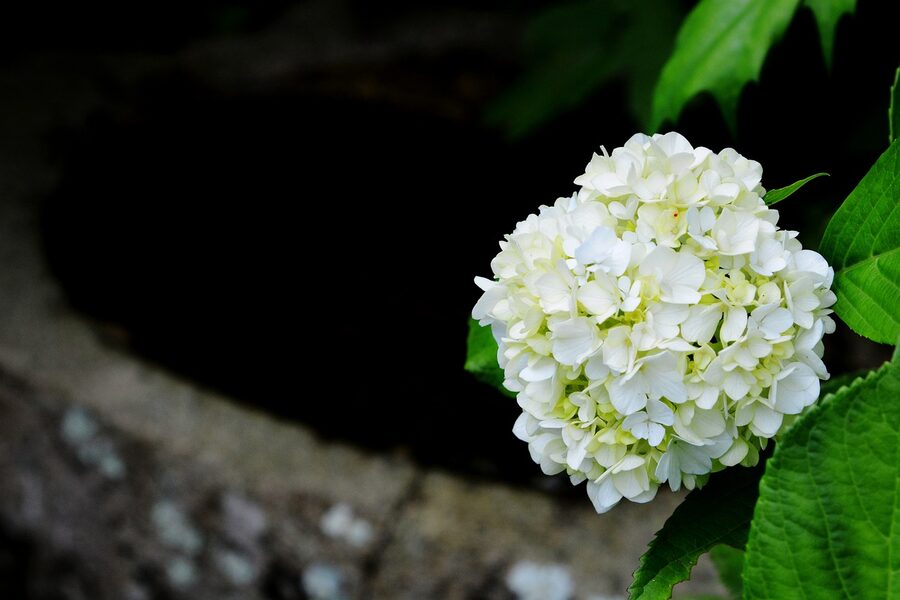
The less-crowded alternatives in Greater Tokyo are Hakusan Shrine in Bunkyo (more compact, free, and right by Hakusan station on the Mita Line) and the Hakone Tozan Railway, where the train climbs through hydrangea-lined embankments and runs evening “Hydrangea Trains” through the season. If Hakone is on your itinerary anyway, the train through hydrangea is essentially the better hot-spring approach in June.
Outside Kanto, the largest hydrangea gardens are Mimurotoji in Uji, Kyoto (around ten thousand plants on temple slopes) and Honnenji’s sister hydrangea gardens around Kobe.
The other June flower: Japanese iris
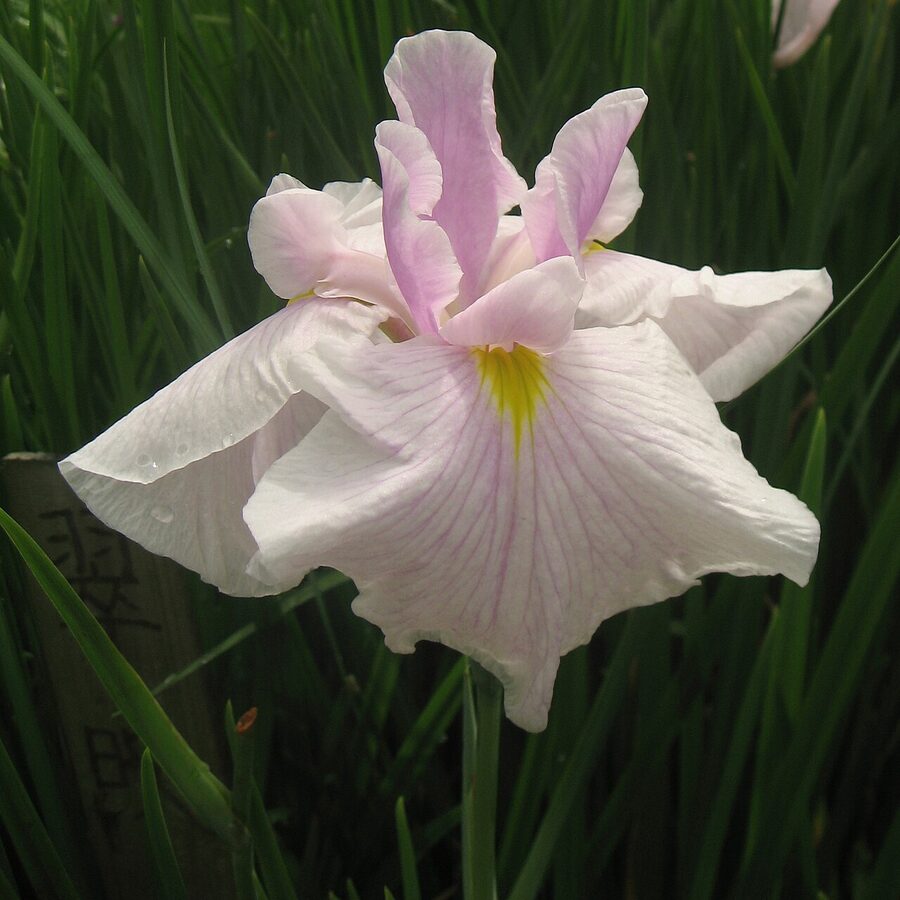
Japanese iris (hanashobu) peaks the first half of June. The classical viewing spots in Tokyo are Meiji Jingu’s Inner Garden and Horikiri Iris Garden in Katsushika. Out in the country, the Suigo Itako Iris Festival in Ibaraki and Kashima Shrine’s pond complex are bigger but trickier to combine with city sightseeing. Admission to Meiji Jingu’s Inner Garden is about ¥500 in iris season; the rest of the shrine is free.
July: lavender in the north, lotus in the south
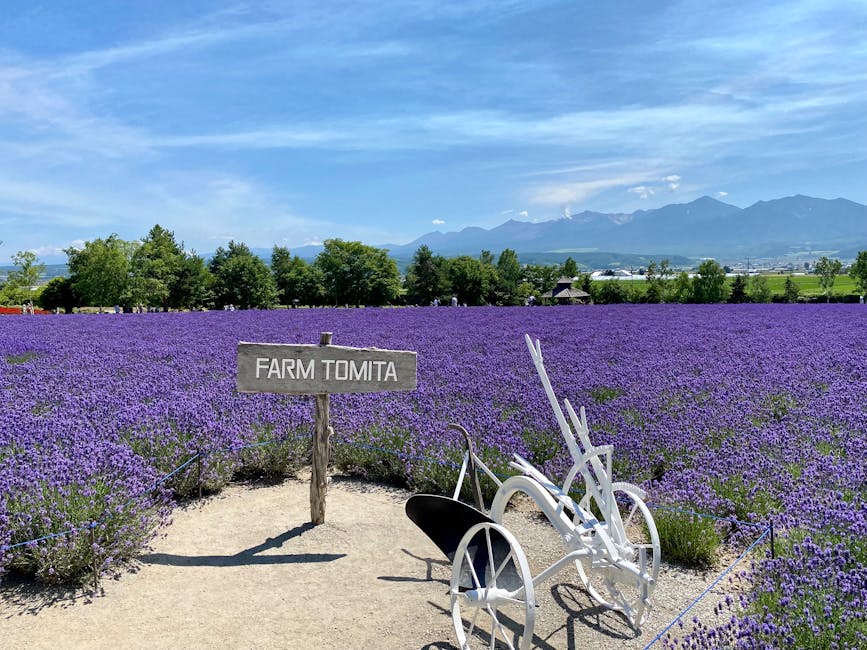
If you arrive in Japan in July and pick one regional flower trip, make it Hokkaido lavender. Furano and Biei, on the central Hokkaido plateau, hold the country’s biggest lavender plantations. The flagship is Farm Tomita in Nakafurano, open 09:00–17:00 (verified on the official site as of 2026), free entry, with daily webcams of the flower fields and a separate Lavender East site that opens only when the second farm’s rows are at peak (mid July through early August in a typical year).
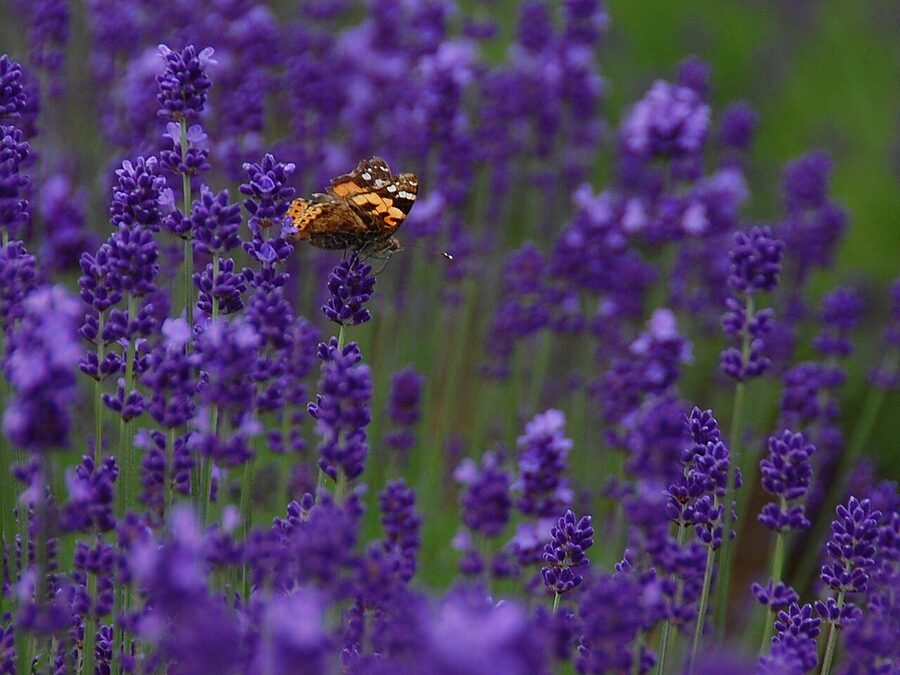
Access from Sapporo: JR Limited Express to Asahikawa or Takikawa, then JR Furano Line. In peak season the seasonal Furano-Biei Norokko slow tourist train runs and stops at Lavender Farm Station, walking distance from Tomita. If you have one day to spend in Furano, the loop is Asahikawa → Biei (Patchwork Road) → Farm Tomita → back, by rental car or by the Twinkle Bus seasonal service.
For a second tier of lavender close to Tokyo, Tambara Lavender Park in Numata, Gunma, has about fifty thousand lavender plants on a ski-resort slope (the same hill is a winter ski run). Smaller than Furano, but the timing is identical, and from Tokyo you can do it as an overnight using the Joetsu Shinkansen.
Lotus, mostly in Tokyo
Lotus (hasu) blooms from late July to late August, mainly on the surface of temple ponds. Shinobazu Pond at Ueno Park, Tokyo, is the city’s biggest, and the early-morning lotus viewing in late July is the time to go (the flowers open at sunrise and close by mid morning). At Mimurotoji in Uji, where the hydrangea finished in June, the lotus pots take over for July-August. Both are free.
August: sunflowers, with the heat dome
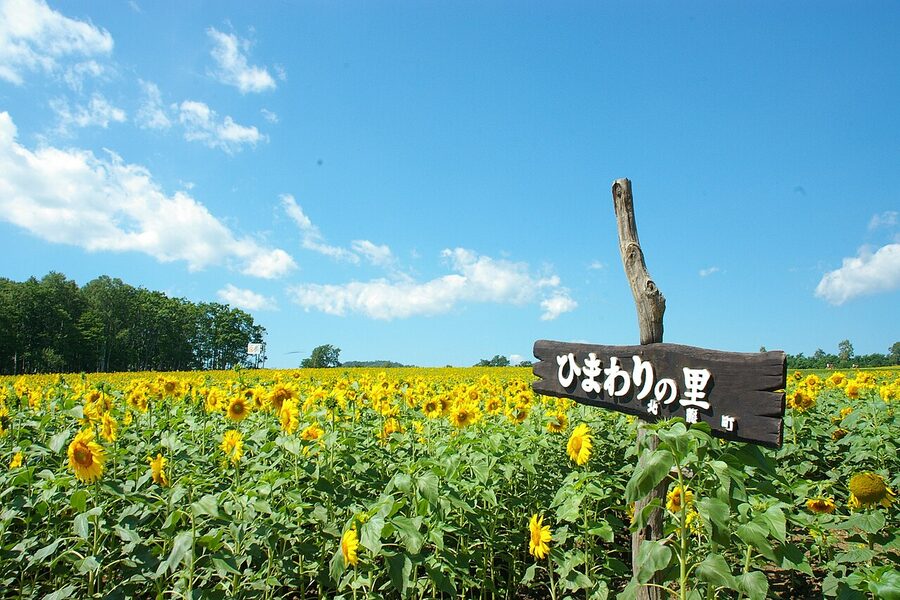
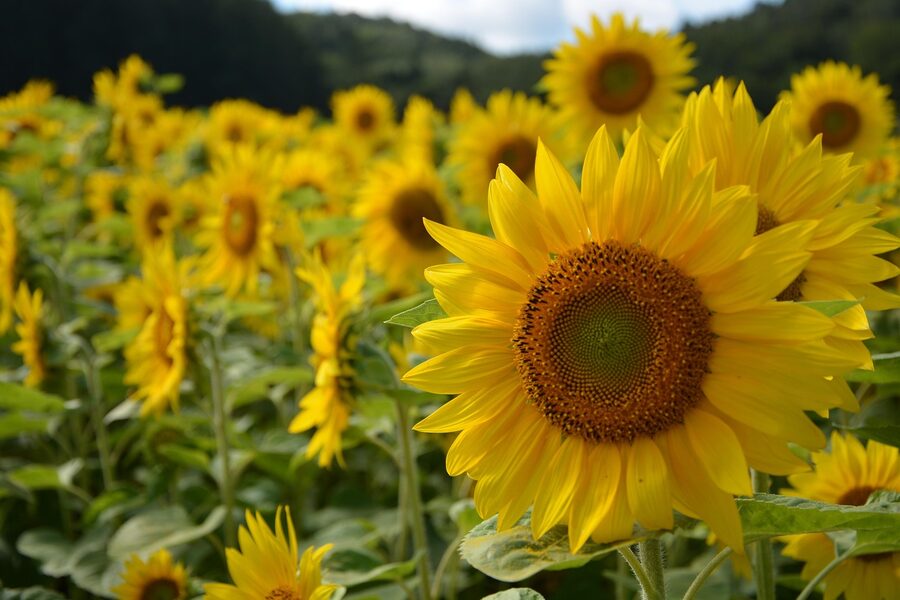
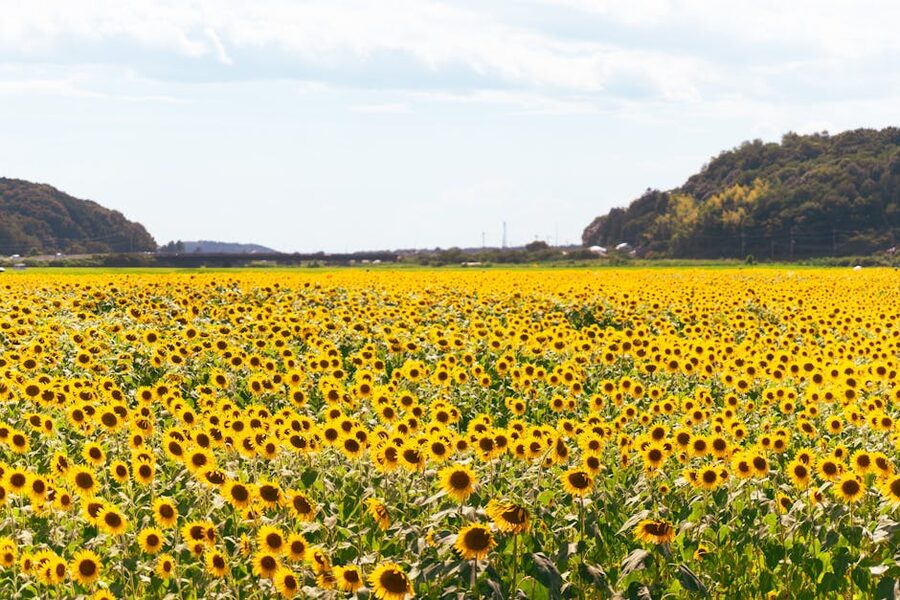
August is hot, often unbearably so, in central Honshu. The flower trip that escapes this is Hokkaido sunflowers. Hokuryu Sunflower Village in Hokuryu, Uryu District, Hokkaido, plants around a million sunflowers across about twenty-three hectares each summer. Peak bloom is roughly the first half of August. There is a sunflower maze, a sunflower tower viewing platform, and (importantly in late summer) a temperature about ten degrees lower than Tokyo.
If you are stuck in Honshu, Yamanakako Hanano Miyako Park, on the north shore of Lake Yamanaka with Mt. Fuji on the horizon, plants about three-hundred-thousand sunflowers along with cosmos, salvia, and zinnia in mid-to-late August. The mountain backdrop is the reason to go. Sakura Furusato Square in Chiba (which I mentioned earlier with tulips in spring) replants its fields with sunflowers from late July through August.
Morning glory, briefly
Asagao (morning glory) opens at dawn and closes by late morning. The flower is small but the cultivar variety is huge: a single Iriya Asagao Festival in Tokyo’s Taito ward, held annually around 6–8 July, sells more than a hundred named morning-glory cultivars over three days. If you happen to be in Tokyo that week, it is the most low-key authentic flower festival in the city. Free, opens at sunrise.
September: the red spider lily, in formation
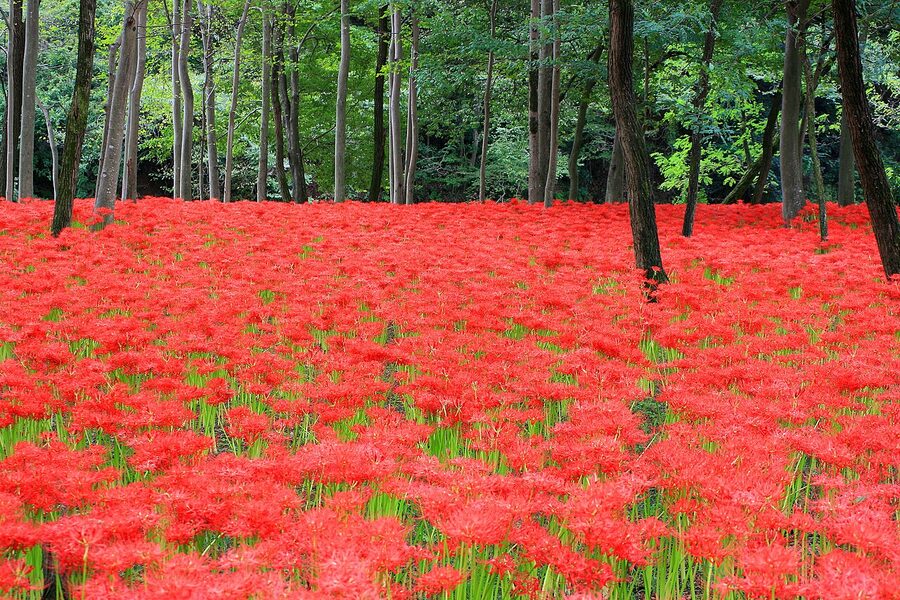
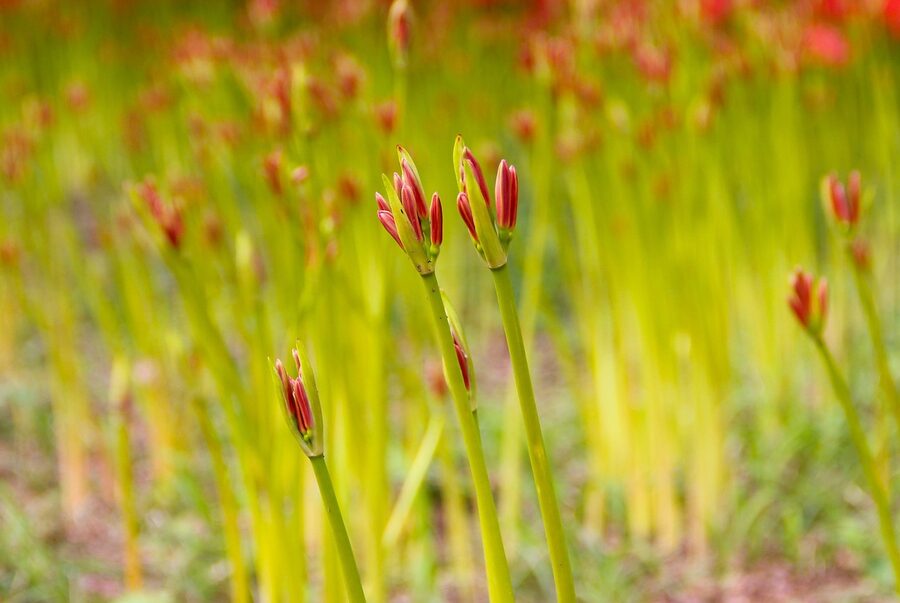
The September flower with no equivalent in Western seasonal calendars is the red spider lily (higanbana), also known as manjushage. It blooms in the few days bracketing the autumnal equinox (around 22–23 September), in a sheet of red, with no leaves and tall straight stalks. The cultural associations are funereal: spider lilies are traditionally planted on rice-field bunds and around graves, where the bulbs deter rodents. The sight of a sheet of them in late September feels both lush and a little eerie, which is the point.
The single biggest concentration is Kinchakuda Manjushage Park in Hidaka, Saitama, on a U-shape bend of the Koma River. Around five million spider lilies cover the riverside woodland for roughly two weeks in late September. Admission is ¥500 during the festival window. Access from Tokyo: Seibu Ikebukuro Line direct to Koma Station, then a fifteen-minute walk. Verify dates and admission on the Hidaka City tourism site each year, as they shift slightly with the bloom.
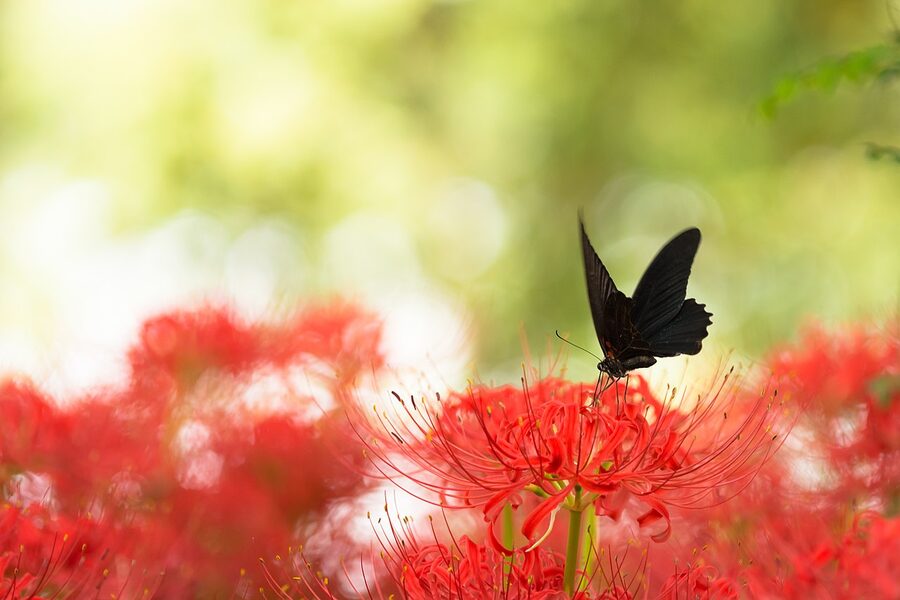
If you cannot get to Kinchakuda, the second answer is the riverside paths along the Yakachi River near Handa City, Aichi, where the red spider lily ribbon stretches for around twenty kilometres along rural rice paddies. This is the version of the bloom that Japanese landscape photographers travel for. Access is best with a rental car from Nagoya.
The cosmos overlap
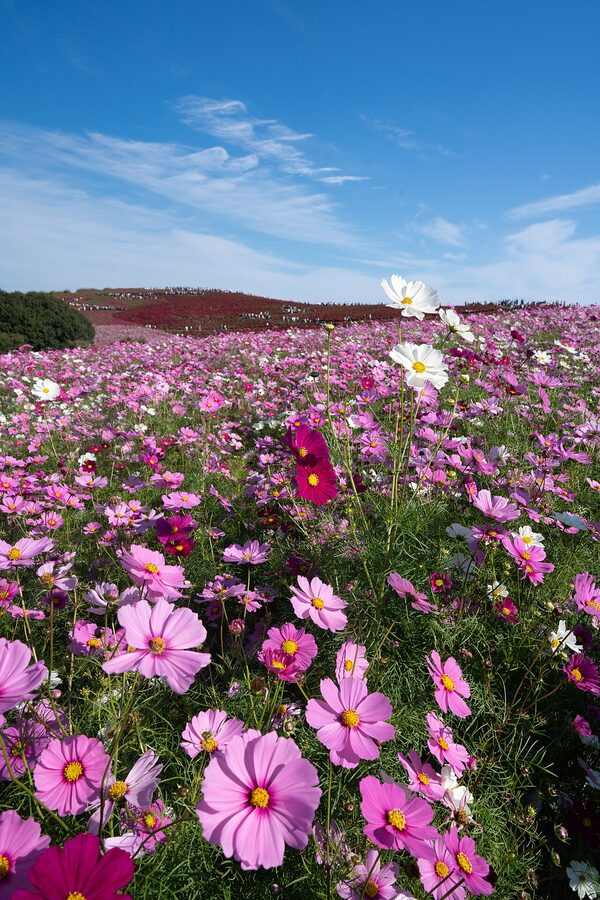
Cosmos starts in mid September and runs into November. Treat September as the warm-up; the proper cosmos peak is October.
October: cosmos, kochia, and the second nemophila
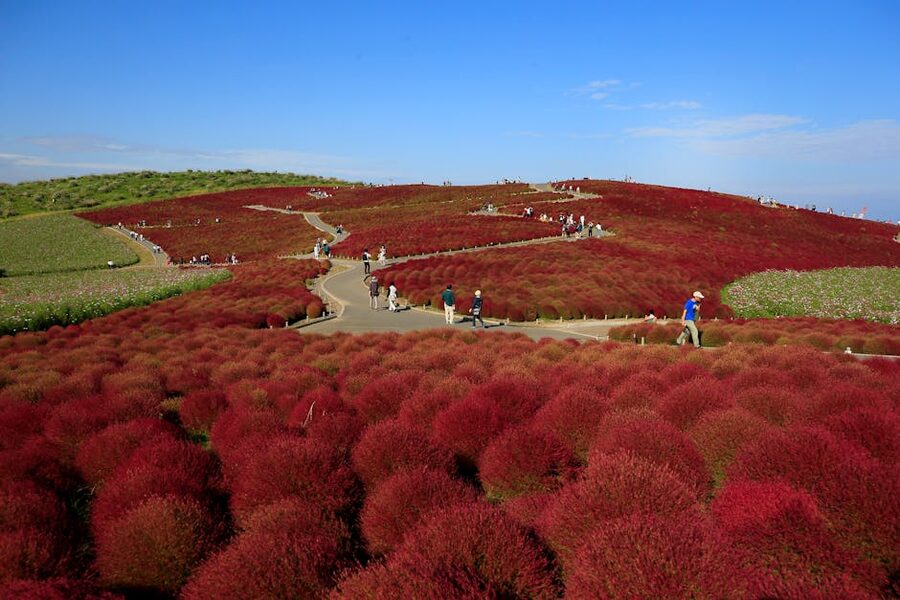
If you are visiting in October, Hitachi Seaside Park is the best-value flower stop in Japan, full stop. The same hill that held nemophila in April fills in October with about thirty-two thousand kochia (summer cypress) plants that turn from green in summer to scarlet red from mid October. Add the cosmos in the adjacent fields and you have two distinct flowers on one hill on the same ticket.
The kochia peak is roughly 10–25 October in a typical year. The park’s public bloom status updates the kochia stage almost daily through October. Admission, hours, and access are the same as in nemophila season. Tuesdays close in autumn except during peak weeks.
Cosmos, the cherry blossom of autumn
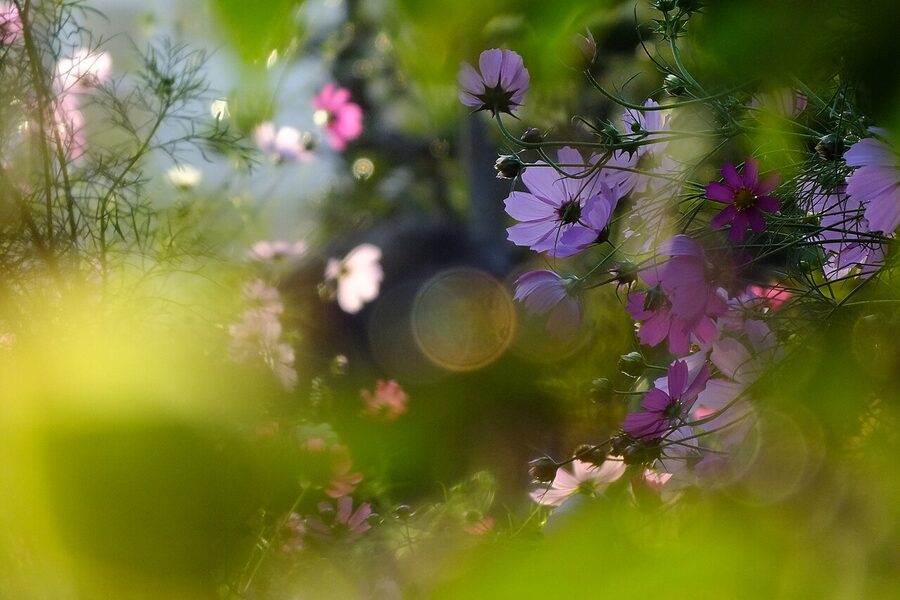
Cosmos (kosumosu) is sometimes called “akizakura”, autumn’s cherry, because the soft pink fields read like an October echo of April. The big sites are Hannyaji Temple in Nara, where about a hundred and fifty thousand cosmos cover the temple grounds in October, Akebonoyama Agricultural Park in Kashiwa, Chiba, with around eight hundred thousand cosmos by autumn, and Showa Kinen Park in Tachikawa, west Tokyo, with extensive cosmos beds at the same time the autumn ginkgo is starting.
The Kyoto-Kameoka Yume Cosmos Garden, in Kyoto’s western Tamba region, is the rural option: about eight hundred thousand cosmos against terraced foothills, easier to combine with the Sagano Scenic Railway than with central Kyoto.
November: chrysanthemum, the imperial flower
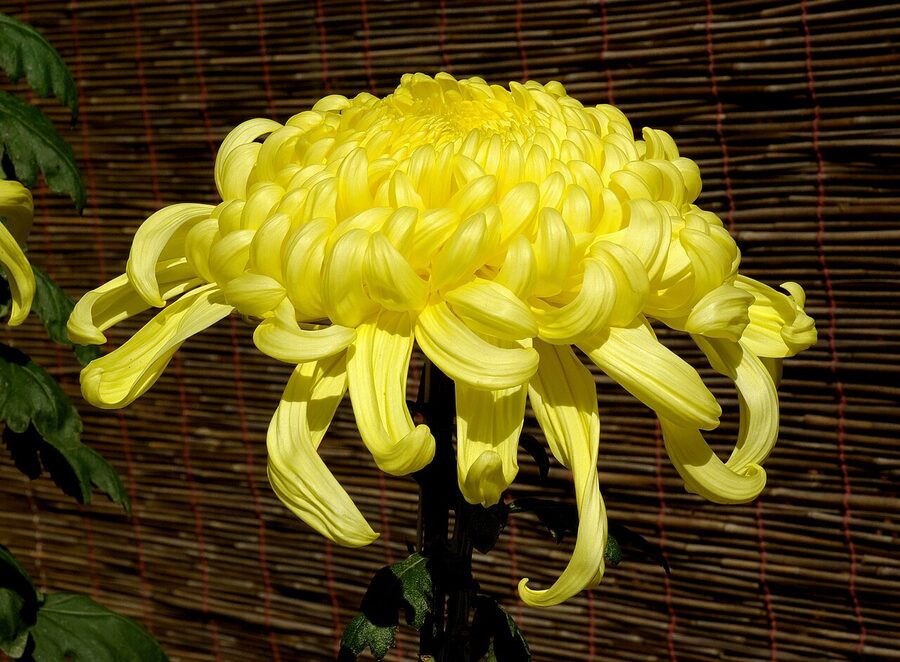
Chrysanthemum (kiku) is Japan’s national flower. The chrysanthemum throne is the formal name of the imperial seat. Chrysanthemum exhibitions in late October and November are the most curatorial of the year’s flower events: thousand-flower bonsai, single-stem prize specimens, and reconstructed waterfalls of cascading cultivars.
The big public chrysanthemum shows are at Hibiya Park in central Tokyo (free), Yushima Tenjin (the same shrine as for plum in February), Nihonbashi’s Mitsukoshi store, and the chrysanthemum exhibitions held inside several castle keeps including Hiroshima Castle and Nagoya Castle. The Sera Kogen Highland Garden in Hiroshima Prefecture combines a dahlia festival with a million-stem chrysanthemum display in October to early November. Verify the year’s exact dates against the official venue listings.
Late roses
The second annual rose bloom (after the May peak) opens in October and runs through mid November. Yokohama English Garden, Old Furukawa Garden in Kita, Tokyo, and Keisei Rose Garden in Yachiyo all field full collections through November.
Late-season tea flowers
Sasanqua camellia (sazanka), the autumn cousin of the spring japonica camellia, opens from late October. Hibiya Park, Shinjuku Gyoen, and the Showa Memorial Park in Tachikawa all have substantial sasanqua plantings.
December: back to camellia and the winter pinks
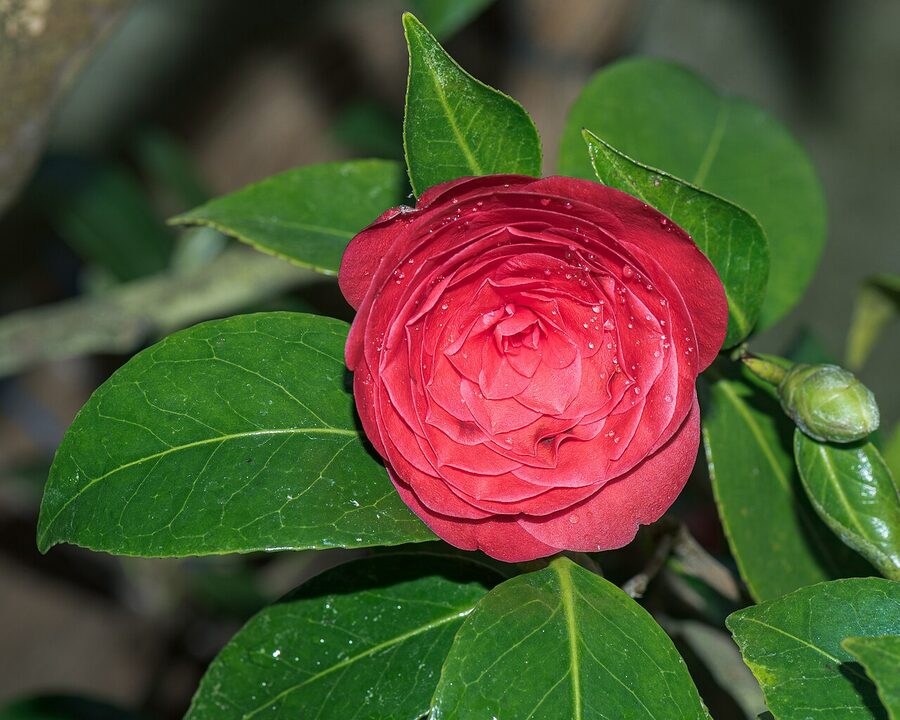
December reads as a dead month for flowers in most international travel writing. It is not. Sasanqua camellia is at peak through the month at Hibiya Park, Shinjuku Gyoen, and around most temple grounds in central Tokyo. The Izu Oshima Camellia Festival overlaps the start of January but the warm-up festival of the camellia industry on the island runs through December. Narcissus opens on Jogashima and Echizen.
The two December flowers most international travellers miss are wintersweet (robai) and winter peony (fuyu-botan). Wintersweet has buttery-yellow translucent petals that look almost waxed and a strong sweet-and-spicy scent on cold mornings. Matsuda Yadoriki Robai Park in Kanagawa is the largest planting near Tokyo. Winter peonies, traditionally protected under straw cones (wara-bocchi), are displayed at the Tsurugaoka Hachimangu Botan Garden in Kamakura and at the Ueno Toshogu Peony Garden in Tokyo from January through mid-February. Admission to each is around ¥700 to ¥1,200; verify on each garden’s site before going.
If you want a one-week flower trip, this is the plan
The single best week of the year for a Japan flower trip is the third or fourth week of April. The reason is overlap: peak nemophila at Hitachi Seaside Park, peak Somei Yoshino in Tohoku and Hokkaido, peak shibazakura at Hitsujiyama, opening shibazakura at Fuji Motosuko, peak tulips at Tonami, and the start of wisteria at Ashikaga and Kameido Tenjin.
A working seven-day plan I have used:
- Day 1: Tokyo arrival, Showa Kinen Park or Shinjuku Gyoen for late sakura.
- Day 2: Day trip to Hitachi Seaside Park for nemophila, return to Tokyo.
- Day 3: Day trip to Ashikaga Flower Park for early wisteria, return to Tokyo.
- Day 4: Hokuriku Shinkansen to Toyama, transfer to Tonami for tulips, overnight in Kanazawa.
- Day 5: Kanazawa: Kenrokuen for late blossom and gardens.
- Day 6: Train to Yamanashi, base at Kawaguchiko, evening at the Fuji Shibazakura Festival.
- Day 7: Day trip from Tokyo to Hitsujiyama Park in Chichibu for shibazakura, evening flight out.
That hits five of the seven biggest April blooms in seven days, with one rest day. If you want to add the wisteria specifically at Kameido Tenjin, swap out one of the Tokyo day trips. If you want a different starting season, my best time to visit Japan guide compares the four seasons by what you would actually do on the trip.
What to budget, briefly
Most public flower parks charge between free and ¥500 admission. The exceptions:
- Ashikaga Flower Park, ¥400 to ¥2,300 adult, depending on bloom intensity. Highest in peak Great Wisteria week.
- Fuji Shibazakura Festival, ¥1,000 to ¥1,300 adult, ¥500 to ¥700 child, depending on date.
- Hitachi Seaside Park, ¥450 adult, ¥210 senior, junior school and below free.
- Meigetsu-in, around ¥500.
- Most temple flower viewings, ¥200 to ¥500.
Add ¥1,000 to ¥3,000 for return train fares to outer-Tokyo destinations like Hitachi or Ashikaga from central Tokyo. The Hokuriku Shinkansen to Tonami runs around ¥13,000 each way. Furano in Hokkaido is the only flower trip that needs more than a one-day budget allocation; allow two nights and a rental car or seasonal tourist train for the loop.
Combining flowers with the rest of your itinerary
Flowers don’t need to be the headline reason for a trip. They do tend to upgrade an existing itinerary by one full bracket, the way good autumn leaves do. If you are already planning the cluster, here is what flower-hunting plugs neatly into:
- If cherry blossom is the main reason, add nemophila or wisteria to the trip’s second week.
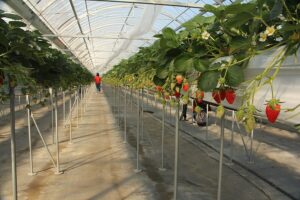
- If strawberry picking in winter is on the plan, add Kawazu-zakura early cherry in February to the same itinerary.
- If Tokyo is the base, you can do five of the year’s biggest blooms (plum, sakura, nemophila, wisteria, kochia) without a single overnight stay outside the metropolitan area.
- If Kyoto is the base, add the late-summer cosmos at Kyoto-Kameoka Yume Cosmos Garden.
- If Hokkaido is the trip, time it for the second half of July for both lavender and the start of sunflowers.
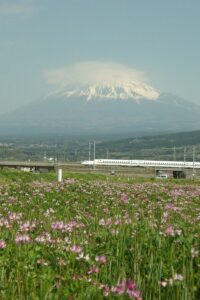
- If Mt. Fuji is the goal, the May shibazakura at Fuji Motosuko gives you the best-possible foreground for a Fuji shot.
- If Tohoku is the trip, the late-April Hirosaki Castle cherry blossoms are the country’s late-wave headliner.
- If Hiroshima is on the plan, time it for the November chrysanthemum exhibition at Hiroshima Castle.
- If Kyushu is the focus, the February plum at Dazaifu Tenmangu is the country’s biggest plum-blossom shrine event.
- If Okinawa is the destination, the deep-pink Kanhizakura cherry that opens on the main island in late January is the only Japanese sakura that opens before the equinox.
- If Shirakawa-go is on the route, the spring rapeseed (nanohana) fills the village’s rice paddies in early May, before the rice planting goes in.
If your trip will involve hot springs, the onsen guide covers the etiquette and the named regional springs that pair best with the season you have picked. The autumn equivalent of this article, the leaves guide, picks up where November chrysanthemum leaves off.
Useful sources for live bloom timing
Three official sources I bookmark before any flower trip:
- Japan National Tourism Organization (JNTO) seasonal flowers, the multi-language official overview, useful for general month-by-month structure.
- Hitachi Seaside Park, live bloom status updated almost daily through nemophila and kochia seasons.
- Fuji Shibazakura Festival official site, opening and closing dates, prices, and access for the May shibazakura field at the foot of Mt. Fuji.
For Kawazu, check the official Kawazu Sakura Festival site, which runs the live bloom feed and the parking and shuttle information through February. For lavender, the daily field webcam at Farm Tomita’s English site is what I use to time the Hokkaido leg.
Whatever month you arrive, something is in flower somewhere on these islands. Pick the one bloom that matters most, build the rest of the itinerary around it, and let the second and third blooms be bonuses. That is the way Japanese gardeners have planned their own years for centuries, and it is still the right way to plan a trip.

.jpeg)
.jpg)


.png)

.jpg)


.jpg)
.jpg)

