
06:30 in Peace Memorial Park, the day after I had decided to give Hiroshima a proper visit instead of the day-trip lap most itineraries reduce it to. The river was still gunmetal grey. A heron stood in the shallows of the Motoyasu, indifferent to the few joggers passing along the embankment. The Genbaku Dome, the building most people know as the Atomic Bomb Dome, was a black silhouette against the river mist. I had it almost to myself for nearly an hour. By 09:00 the school groups arrive, and after that the park photographs differently. Before that, you can hear the river.
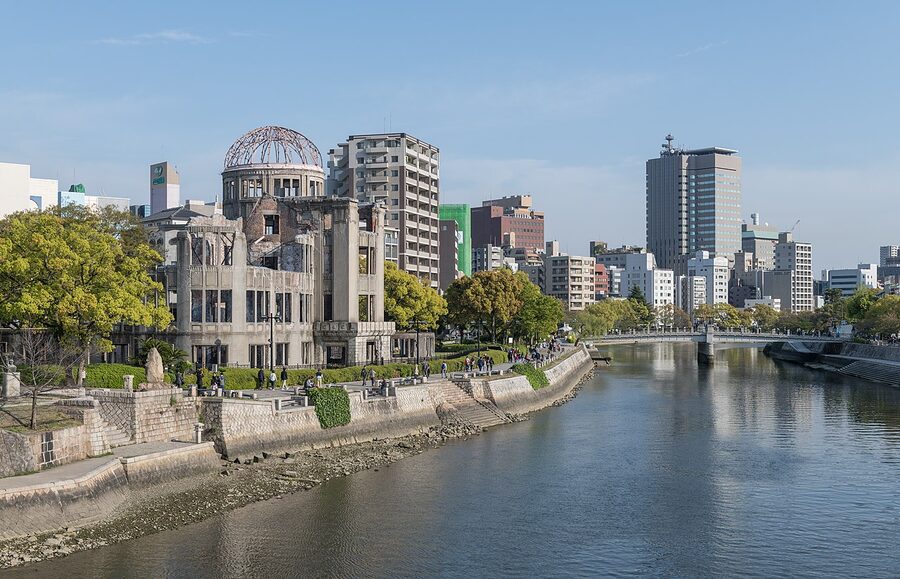
That morning is the case for staying two nights, which is the editorial spine of this guide. Most Japan trips do Hiroshima as a same-day Shinkansen stop on the way west to Kyushu, six hours of luggage drag, museum, train, and you have done the city. You haven’t. You have ticked the box. Hiroshima rewards the slower visit because the Peace Memorial Museum is a 90-minute read minimum, ideally two hours, and Miyajima at low tide is a different place from Miyajima at high tide. Two nights gives you the early-hour park, the museum without rush, both tides of the floating torii, a proper okonomiyaki dinner cooked in front of you on the iron, and a morning to wander Hondori before the next train.
In This Article
- Why two nights, and what one night misses
- How to plan the two days
- Peace Memorial Park, the right way
- The Genbaku Dome (Atomic Bomb Dome)
- The Peace Memorial Museum
- The Children’s Peace Monument and the cranes
- The cenotaph and the Flame of Peace
- Miyajima, and why both tides matter
- High tide vs low tide, decided
- Itsukushima Shrine itself
- Beyond the shrine: pagoda, deer, Mount Misen
- The 100-yen visitor tax, and how to pay it
- Stay overnight on the island, if you can
- The other reasons to stay: castle, garden, arcade
- Shukkeien Garden
- Hiroshima Castle: a moving target in 2026
- Hondori arcade and the downtown
- Hiroshima okonomiyaki, the right way
- Where to eat it
- One more thing the city does well: oysters
- How to get there, and how to get around
- Sanyo Shinkansen, the spine
- The Hiroden tram
- Ferry to Miyajima
- From the airport
- Where to stay in Hiroshima
- Hiroshima Station-side
- Downtown
- Miyajima
- When to come
- What to combine Hiroshima with
- The case for the second night, one more time
Why two nights, and what one night misses
If you arrive on the Shinkansen mid-afternoon, drop bags, do the park and the dome, and try to fit in the museum, you will be in the museum at the worst possible time, which is 15:00 to 17:00. The galleries are crowded, the school groups are at peak density, and you will read the early panels carefully and skim the rest because closing time is approaching. The museum closes at 19:00 in the high season, but the last entry is 18:30 and the final hour rushes you out.
One night gets you a hurried museum visit and a Miyajima day-trip at whatever tide happens to coincide with your ferry. Two nights gets you the museum on a fresh morning, an unhurried walking circuit of the park monuments, a Miyajima afternoon-and-evening at the tide of your choice, and an unhurried okonomiyaki dinner cooked in front of you on a teppan iron. Those are different trips.
One more thing the Shinkansen lap misses: the city’s actual character. Hiroshima is not, despite the way it gets framed, a memorial city. It’s a working regional capital of just over a million people, with a tram network older than most railways, a working castle moat, a small but real downtown art scene around Hondori, and bars that open late and close late. The first pass through Peace Park is the headline. The second day is the reason the city is still here.
How to plan the two days
A two-night Hiroshima itinerary that uses the time properly looks roughly like this. It assumes Shinkansen arrival in the afternoon, two full days, and a morning departure on day three.
| When | What | Why this slot |
|---|---|---|
| Day 1, 16:00–19:00 | Settle in, walk the park perimeter at golden hour, dinner okonomiyaki at Nagataya or Okonomi-mura | Walk loosens travel legs. Park at golden hour, no museum. Save the museum for fresh eyes. |
| Day 2, 06:30–08:30 | Park at dawn, Genbaku Dome from the river, cenotaph, Children’s Peace Monument | The only time the park feels meditative rather than touristic. |
| Day 2, 09:00–11:30 | Peace Memorial Museum, slow read | Doors open 08:30, but most coaches arrive 09:30. The first hour is the quietest. |
| Day 2, 13:00–19:00 | Tram + ferry to Miyajima, time it for the day’s tide | Half a day on the island lets you see both the shrine and Mount Misen. Stay until sunset for the lit torii. |
| Day 3, 09:00–11:30 | Shukkeien Garden, Hiroshima Castle Ninomaru, Hondori arcade | Closer to Hiroshima Station, easy luggage transfer to the Shinkansen. |
The tide is the variable that changes everything for Miyajima. Check the Japan Meteorological Agency tide table for Hiroshima Bay before booking your day-two ferry. Low tide and you can walk to the foot of the floating torii on damp sand, a scene most photographs do not show. High tide and the torii actually floats, which is the postcard version. Both are worth seeing. Two nights lets you do this; one doesn’t.
Peace Memorial Park, the right way
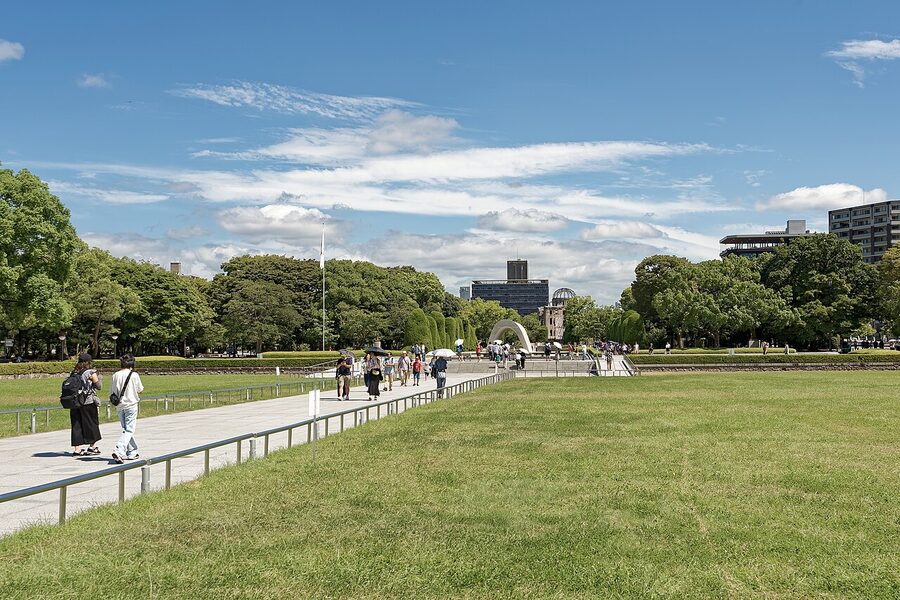
The park covers about 122,000 square metres of what used to be Hiroshima’s commercial heart, the Nakajima district, before 06:15 on 6 August 1945. Walking the park clockwise from the south entrance, the order goes Peace Memorial Museum, the cenotaph (officially the Memorial Cenotaph for the A-bomb Victims), the Flame of Peace and Pond of Peace, the Children’s Peace Monument with its glass cases of folded paper cranes, and the Genbaku Dome across the Motoyasu River.
The Genbaku Dome (Atomic Bomb Dome)
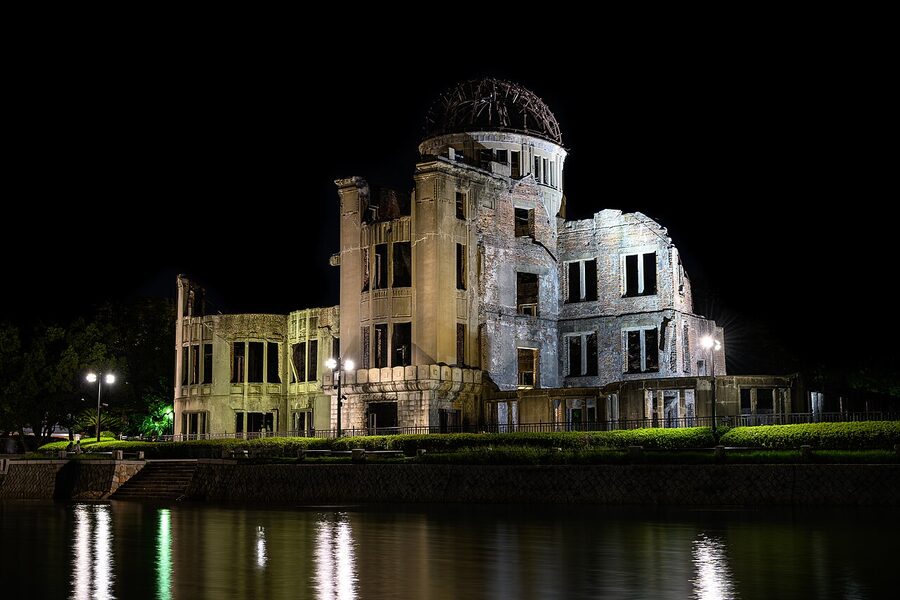
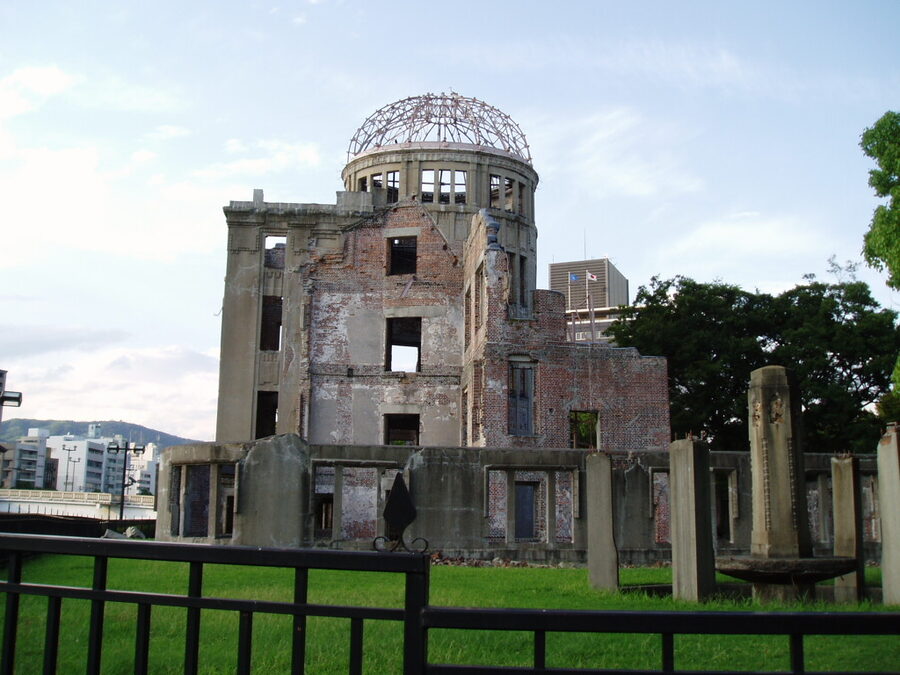
The skeletal frame on the east bank of the river is the Hiroshima Prefectural Industrial Promotion Hall, designed by the Czech architect Jan Letzel and completed in 1915. The bomb detonated almost directly above it, about 600 metres up. Everyone inside was killed. The walls and dome held. UNESCO listed it as a World Heritage Site in 1996. The structure has been stabilised but not restored, and the city has committed to keeping it as it stands in 1945, which is why the rebar still pokes through the masonry exactly the way it did.
You cannot enter. You’re not meant to. Walk it from the river side at 07:00 and from the park-square side after dusk for the best two viewpoints. The night view, with the dome lit from inside the park railing, is unexpectedly beautiful and most visitors miss it because they have already left for dinner.
The Peace Memorial Museum
The museum is in two buildings, a Main Building (rebuilt and reopened in 2019) and an East Building. You enter the East Building first, walk through the historical context galleries, then cross into the Main Building where the personal-effects exhibits are. This is where most visitors slow down and stop talking. Personal possessions of victims, school uniforms with the names of children written by their mothers in case the bodies could be identified, eye-witness drawings of the morning. The museum does not editorialise. It shows.
Plan for two hours minimum. Ninety minutes is the absolute floor and you will skim the East Building. Three hours is reasonable if you read everything. The museum offers a free audio guide and you should take it.
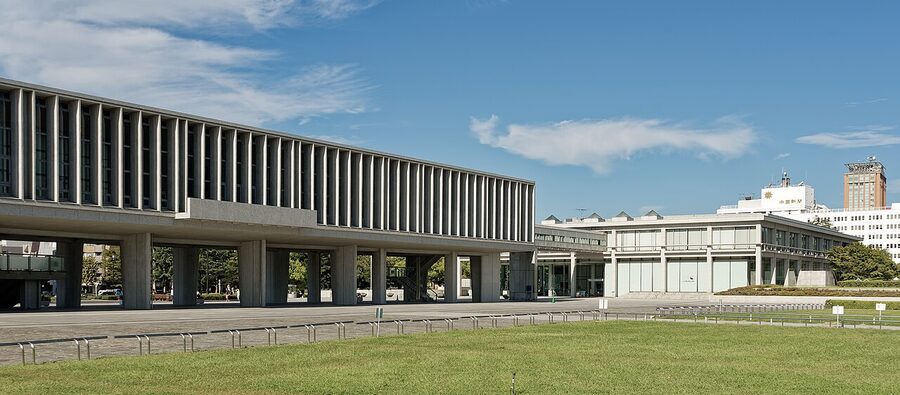
Practical specifics, verified on the Hiroshima Peace Memorial Museum official site as of 2026:
- Admission: ¥200 adults, ¥100 high school, free for junior high and younger
- Hours: March–July 08:30–18:00 (last entry 17:30); August 08:30–19:00 (last entry 18:30, with 20:00 closing on 5 and 6 August); September–November 08:30–18:00; December–February 08:30–17:00 (last entry 16:30)
- Closed: 30 and 31 December, plus a short period in mid-February for exhibition turnaround
- Web ticket reservations are available for early-morning and after-hours slots and recommended in summer when daytime queues stretch outside the building
If you only have one slot, take 09:00 to 11:30 on a weekday morning. The school groups generally arrive after 09:30 but cluster in the middle galleries; arriving at the door for opening lets you walk the East Building ahead of them. Don’t visit the museum the same afternoon you arrive in the city. Tired travellers do not give the museum what it deserves.
The Children’s Peace Monument and the cranes
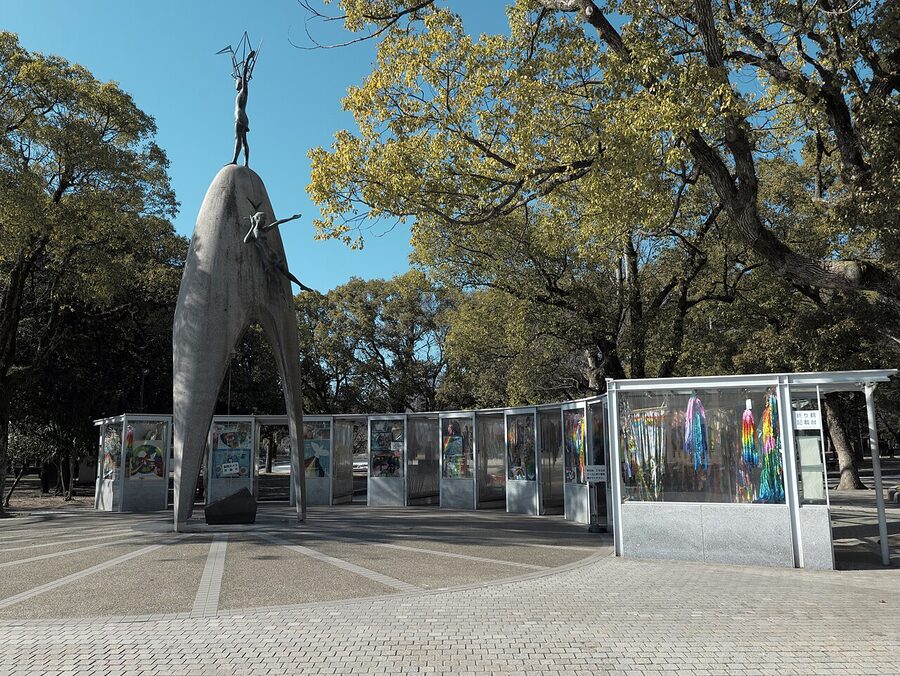
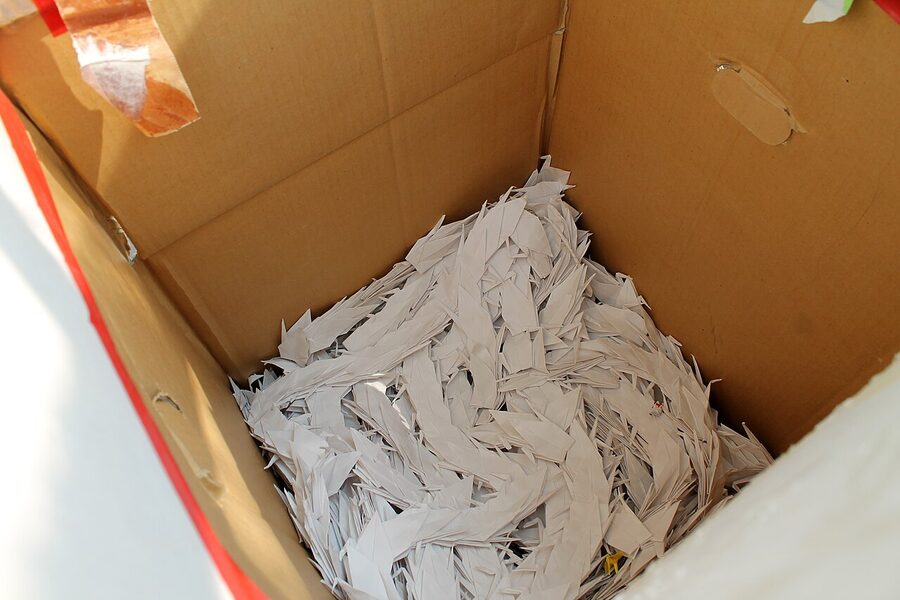
The bronze figure with the folded crane held overhead is the Children’s Peace Monument, dedicated to Sadako Sasaki, who was two when the bomb fell, developed leukaemia at twelve, and folded paper cranes during her hospital stay. She died at thirteen. Schools across Japan and beyond send strings of folded cranes here, and the glass cases around the monument are repacked weekly.
The cenotaph and the Flame of Peace
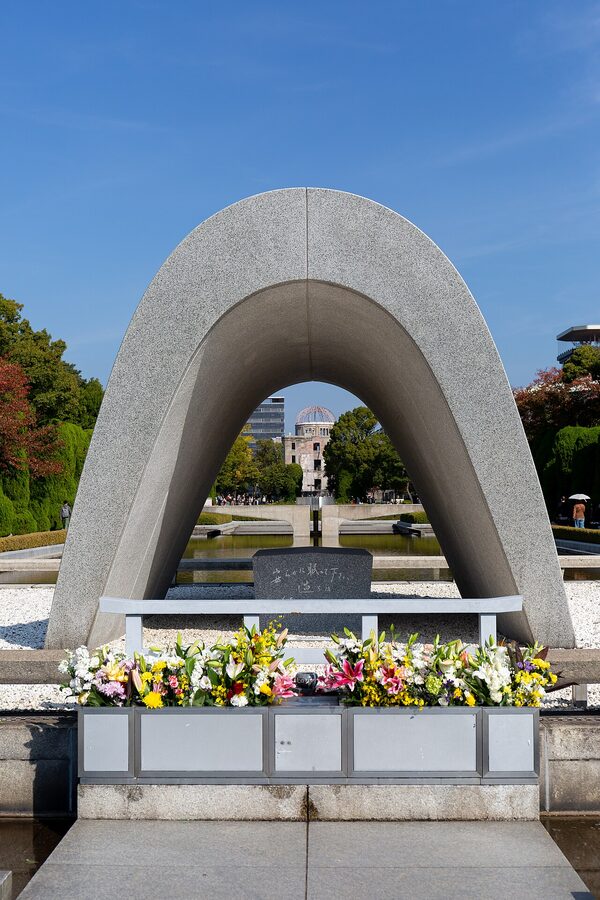
The arched cenotaph holds the registry of all known victims, currently more than 340,000 names, updated each August on the anniversary. The arch is positioned so that, looking through it, you see the Pond of Peace, the Flame of Peace, and the Genbaku Dome in a single line. The Flame of Peace has been burning since 1964 and will, the inscription reads, continue burning until the world’s last nuclear weapon is destroyed.
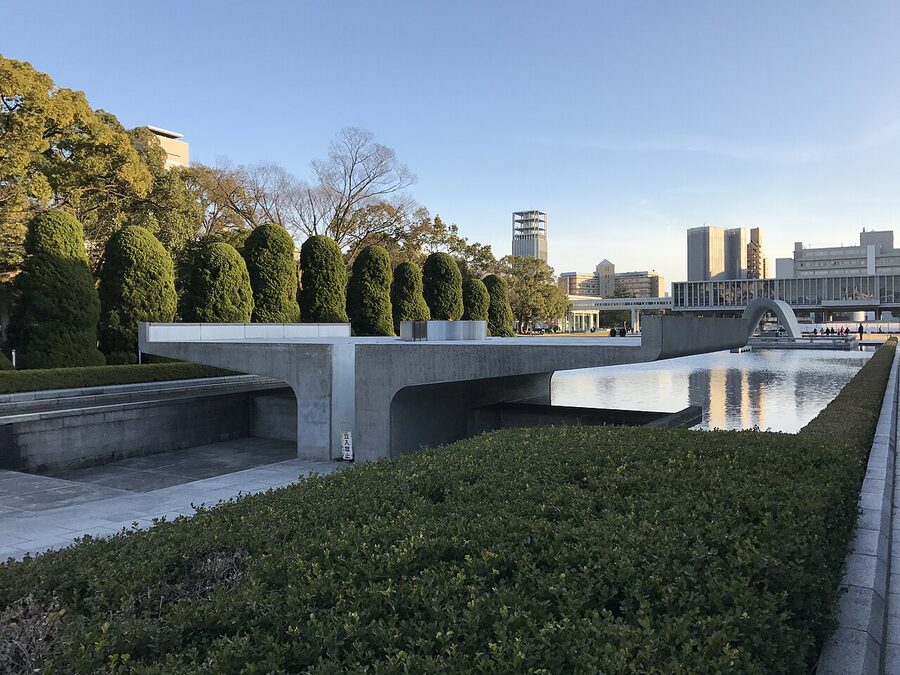
The full park circuit, slowly, takes about ninety minutes. Add the museum and you have a four-hour morning. Don’t try to do it in less.
Miyajima, and why both tides matter
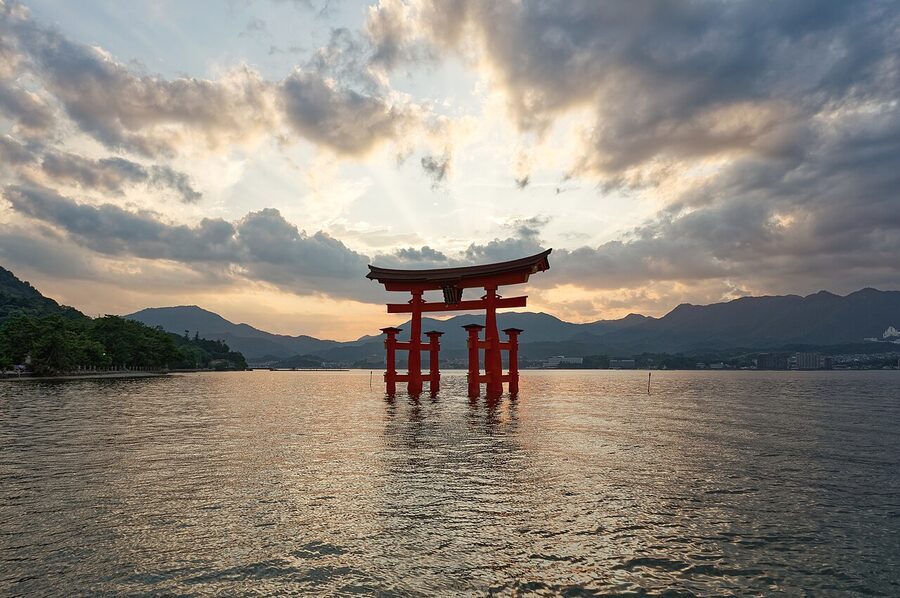
Miyajima is the popular name for Itsukushima, the small island in Hiroshima Bay that holds the floating torii of Itsukushima Shrine. The shrine itself dates to 593 in its earliest form. The pile-supported main hall over the tideflat was built by Taira no Kiyomori in 1168. The current vermillion torii is the eighth, raised in 1875, and was wrapped in scaffolding from June 2019 to December 2022 for a major refurbishment, the first in seventy years. The scaffolding came down in late 2022 and the torii is now fully visible again, paint refreshed and timber cleats replaced.
High tide vs low tide, decided
The torii is on a tidal flat. Twice a day the bay rises until the gate appears to float, then drops until you can walk to the base on damp sand. Both views are worth photographing. They are also genuinely different experiences.
High tide is the postcard version. The vermillion torii sits in the bay, the shrine corridors creak above the water, and the small wooden boats moored at the shrine bob on a flooded tideflat. The sunset version of this, when the lanterns inside the shrine are lit, is the single image most people associate with Itsukushima. Aim for the high tide closest to dusk if you have a choice.
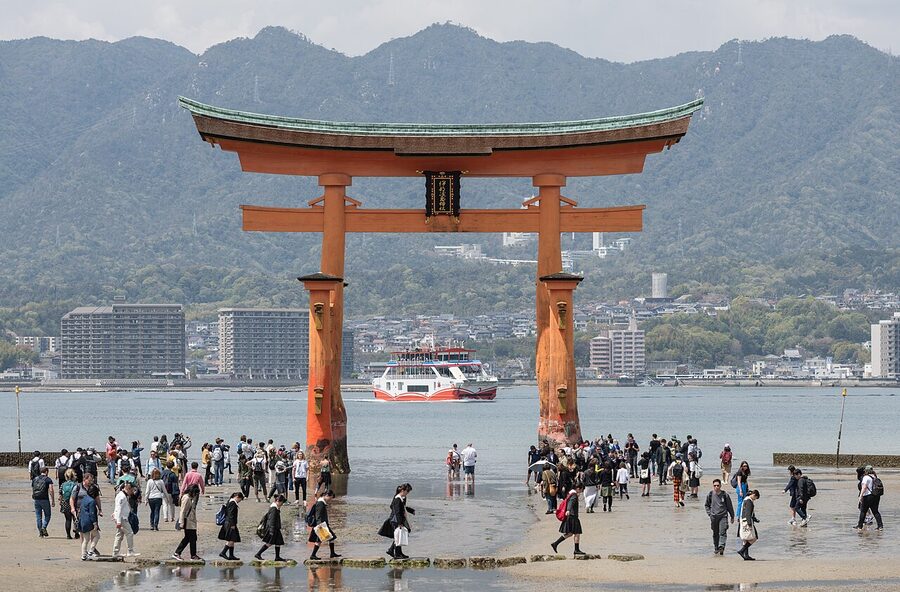
Low tide is the version most photographs do not show. You can walk out across damp sand to the base of the torii, look up the 16-metre cypress posts, see the seaweed and barnacle crust on the timber feet, drop a coin into the cracks at the base for luck (locals do this and the torii’s underside is decorated with embedded coins). It is also the time when you can see the tidal flat creatures in the puddles around the shrine pillars.
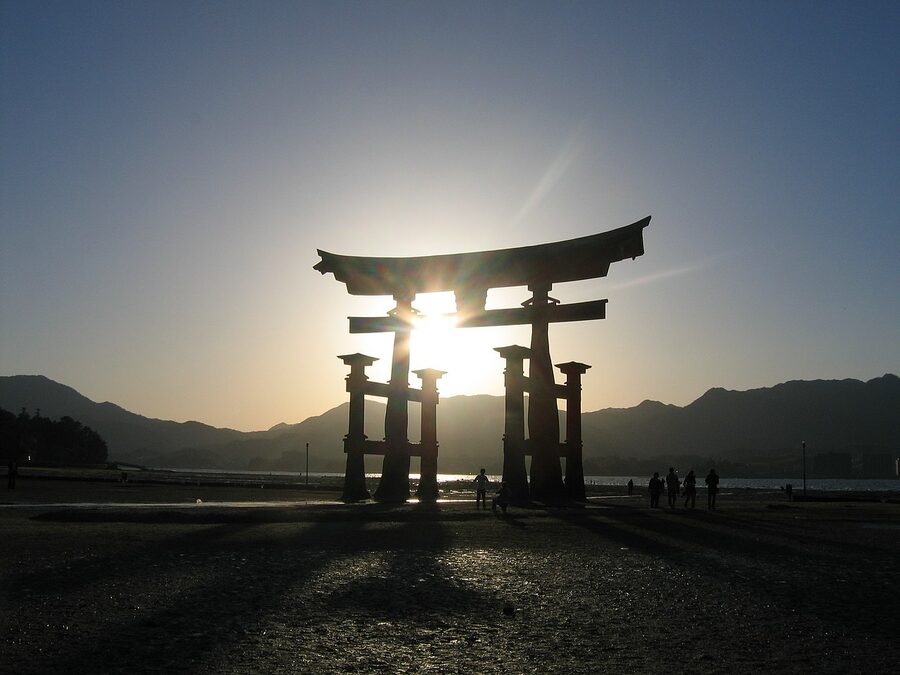
Check the JR Miyajima Ferry website or the Japan Meteorological Agency’s tide table for the exact times on your day. A useful rule of thumb: a tide of 250 cm or above for high water gives you the floating effect, and 100 cm or below at low water lets you walk to the base. Tides shift forward by about fifty minutes per day, so you cannot generalise from one day to the next.
Itsukushima Shrine itself
You enter the shrine on a wooden boardwalk, walk the open corridors that hover over the tideflat, and exit at the back of the bay. The corridor is the building. The Honden, the central hall, is closed to visitors but visible across the open courtyard, where a Noh stage projects out into the water and the orange paint catches the light differently at every step.
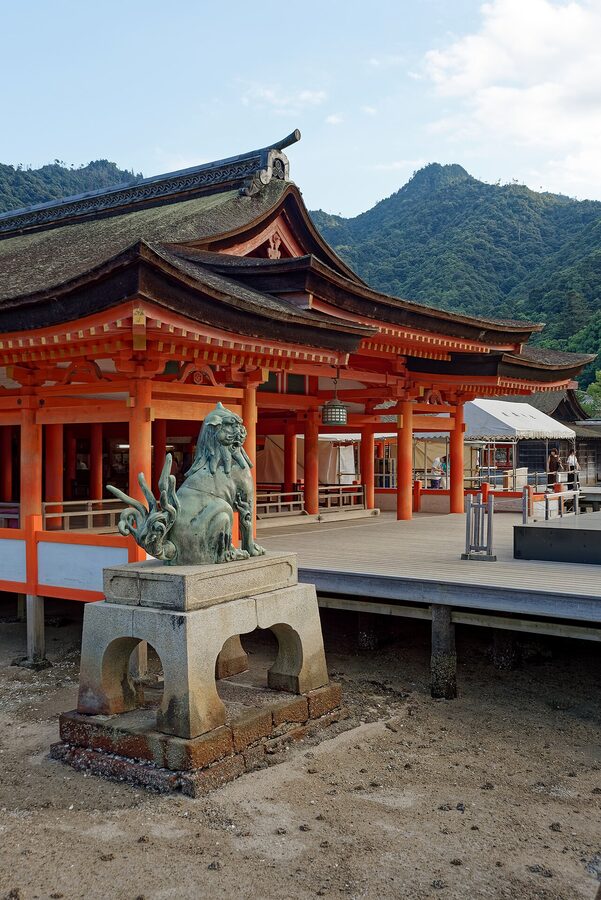
Verified entry information from the Itsukushima Shrine official site as of 2026:
- Admission: ¥300 adults, ¥200 high school, ¥100 elementary and junior high
- Hours: 06:30–18:00 in standard months, with seasonal closing of 17:00 in mid-winter
- Combined ticket with the Treasure Hall: ¥500
- Open daily, no closing day
The 06:30 opening is decisive. Arrive on the first ferry of the morning if you stay overnight on the island, or use the dawn opening to beat the day-trippers from Hiroshima. The shrine is essentially yours from 06:30 to about 09:00 and again from 16:30 to closing.
Beyond the shrine: pagoda, deer, Mount Misen
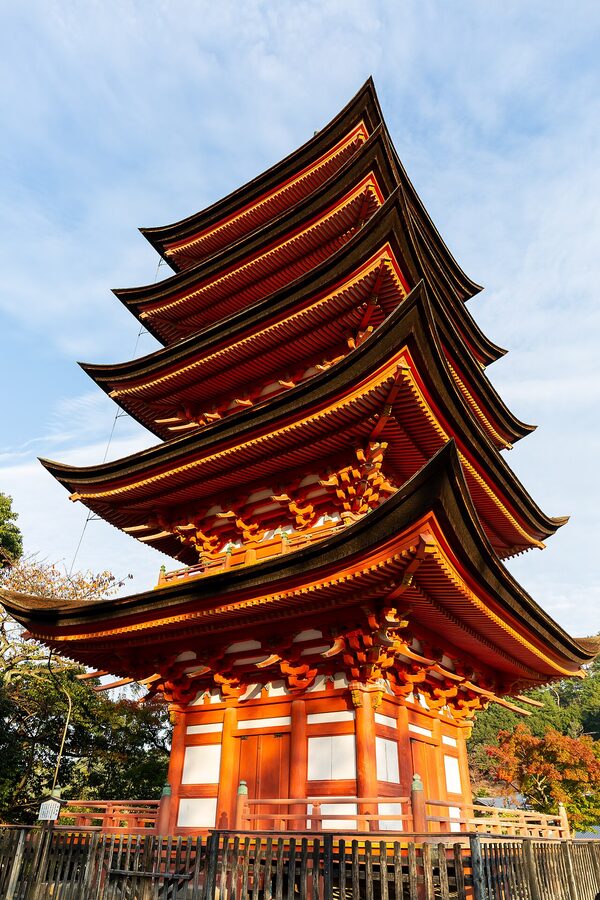
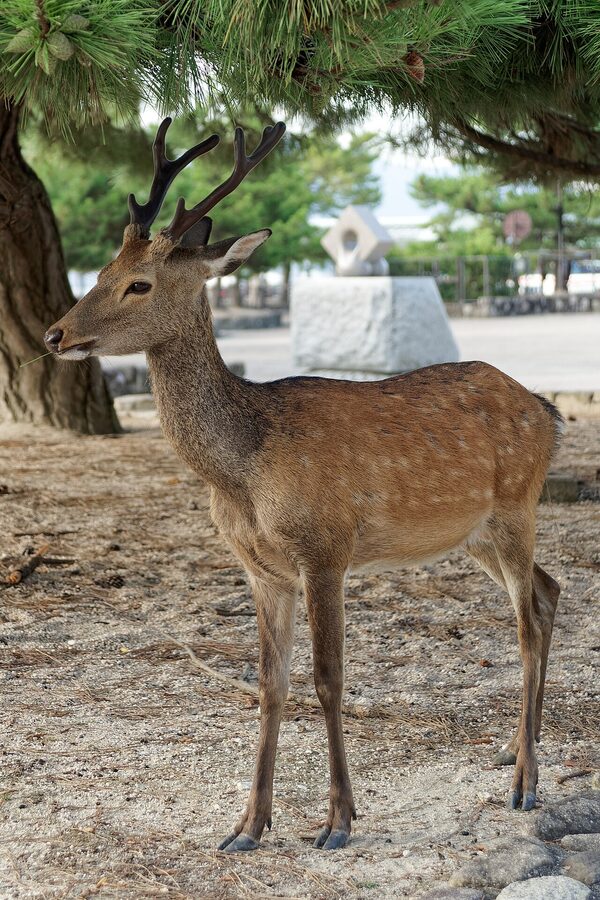
Miyajima rewards a half-day at minimum and a full day if you want to climb. From the shrine exit, the five-storey pagoda and Senjokaku Hall sit on the hill above; the climb takes ten minutes and the pagoda from below is one of the most photographed views on the island. From the ferry terminal, the deer are everywhere, used to people, occasionally cheeky about a dropped okonomiyaki bun. Resist the urge to feed them. Signs are posted in three languages because too many of them have stomachs full of paper bags.
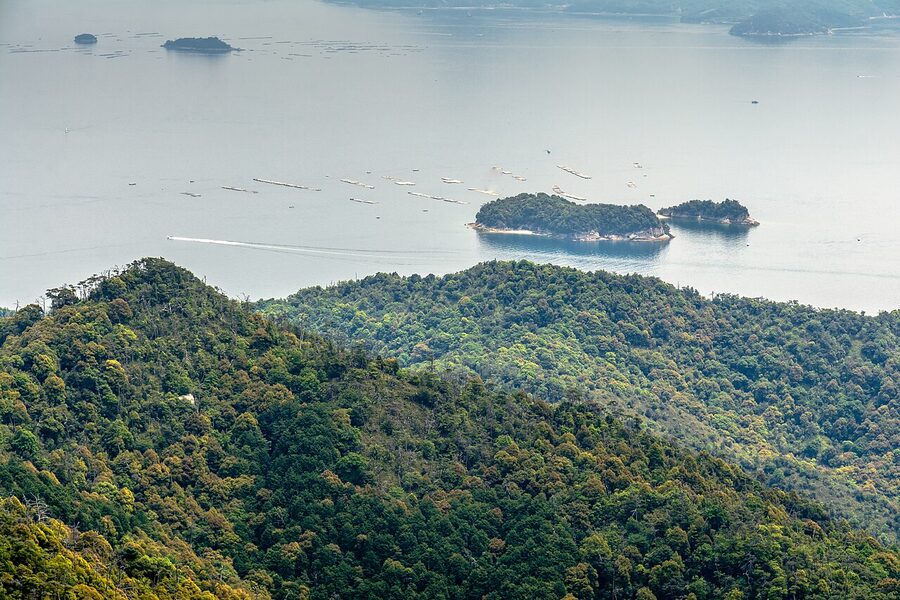
Mount Misen is the island’s high ground, 535 metres above the shrine. Three trails climb from the shrine area to the summit, ranging from forty-five minutes (Daishoin route) to ninety (Momijidani). A Mount Misen ropeway runs from Momijidani Park to a station fifteen minutes’ walk from the summit and saves the climb if you want the view without the legs. Top-of-Misen views run the length of Hiroshima Bay, with the city skyline pale to the north-east and the islands of the Seto Inland Sea breaking the water to the south.
The 100-yen visitor tax, and how to pay it
From 1 October 2023, Hatsukaichi City levies a Miyajima visitor tax of ¥100 per person per visit. The tax is added automatically to your ferry ticket, so a one-way Miyajimaguchi-to-Miyajima fare on the JR Miyajima Ferry now costs ¥200 base fare plus ¥100 visitor tax, total ¥300. There is also an annual pass at ¥500 for visitors who come more than four times a year. As verified on the Hatsukaichi City and JR Miyajima Ferry sites in 2026, the tax remains in place and continues to fund island infrastructure and conservation.
You don’t fill in any forms. Tap your IC card or buy a ticket and the tax is included. Local residents and a small list of exemptions (school excursions, day workers commuting to the island) are exempt at the gate, but for short-stay visitors the ¥100 is just baked into the fare.
Stay overnight on the island, if you can
The single biggest upgrade to the Miyajima experience is staying overnight on the island. The day-trippers leave on the 17:30 ferry, the lanterns inside Itsukushima Shrine come on around dusk, the deer come down from the hills, and the village empties. The shrine is open until 18:00 in summer and the torii is lit until 23:00.
The classic stay is Iwaso Ryokan, a 170-year-old riverside inn at the foot of the Mount Misen trail, with hot-spring baths fed by Miyajima’s own spring (Official site | Booking.com | Agoda). Higher-end ryokan rate, kaiseki dinner included; book three months out for high season. The mid-tier alternative is Kurayado Iroha, a smaller, more contemporary ryokan five minutes from the shrine (Official site | Booking.com | Agoda).
The other reasons to stay: castle, garden, arcade
Day three on a two-night itinerary is the day to walk the slower side of central Hiroshima. The morning circuit goes Shukkeien, Hiroshima Castle Ninomaru, and Hondori arcade, all within a fifteen-minute tram ride of Hiroshima Station, so you can roll luggage through to the Shinkansen for an early-afternoon departure.
Shukkeien Garden
Shukkeien is the city’s pocket-sized circuit garden, built in 1620 by the daimyo Asano Nagaakira just outside what was then the castle moat. The name translates as “shrunken-scenery garden”, and the layout is a deliberate miniaturisation of mountain, valley, and shoreline scenery into an eleven-acre walking circuit around a central pond. There’s a stone arched bridge in the middle (the Kanran-Bashi, “rainbow bridge”) that is the most photographed feature.
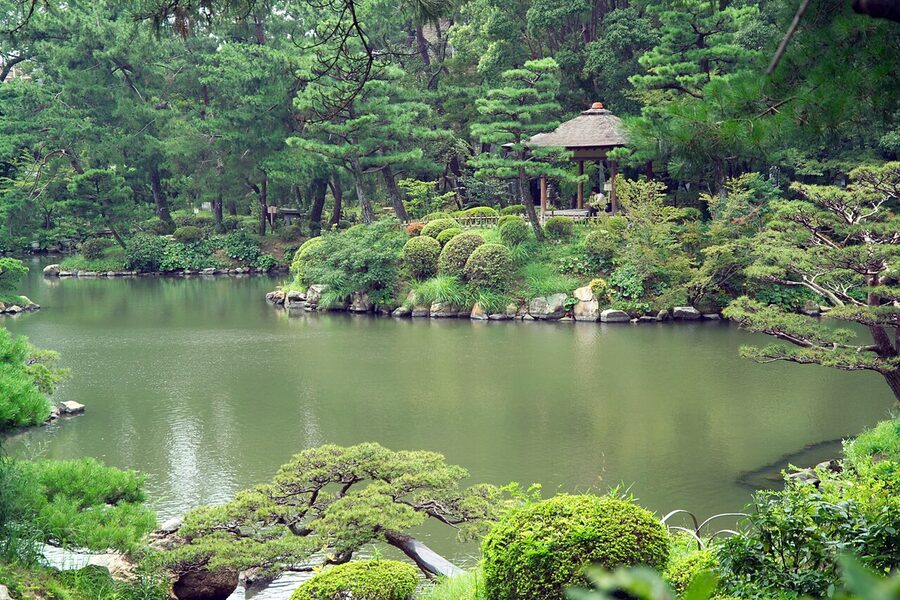
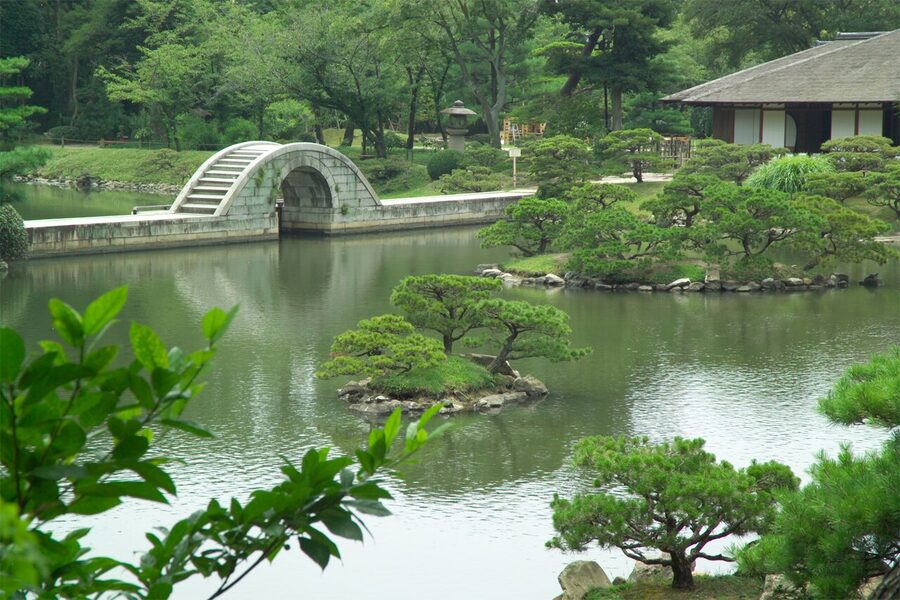
Current 2026 admission, verified on the garden’s official site, is ¥350 for adults, ¥150 for university students, and free for high-school and younger as well as 65 and over. Hours are 09:00–18:00 from April to September, 09:00–17:00 October to March. The garden is open every day. The combined ticket with the Hiroshima Prefectural Museum of Art (next door) costs ¥660 and is a saver if you intend to visit both. Note that the prices were revised on 14 April 2025; if you see ¥260 quoted online, that’s the older rate.
Hiroshima Castle: a moving target in 2026
Hiroshima Castle was built in 1589 by Mōri Terumoto, expanded under the Asano family, and survived as one of Japan’s three great Edo-period castles until 06:15 on 6 August 1945. The bomb destroyed it. The 1958 reconstruction is a five-storey ferro-concrete keep, copy of the original silhouette, that operated as a museum of Hiroshima’s pre-war history.
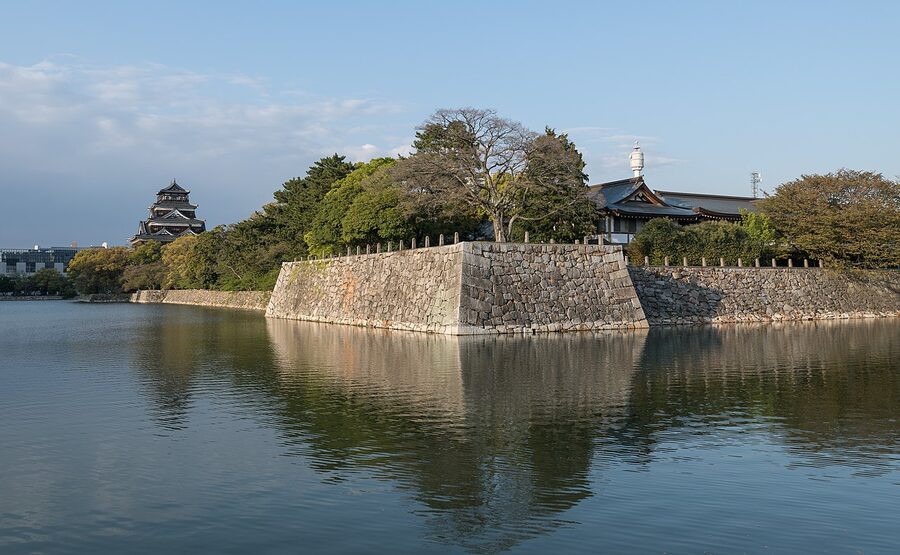
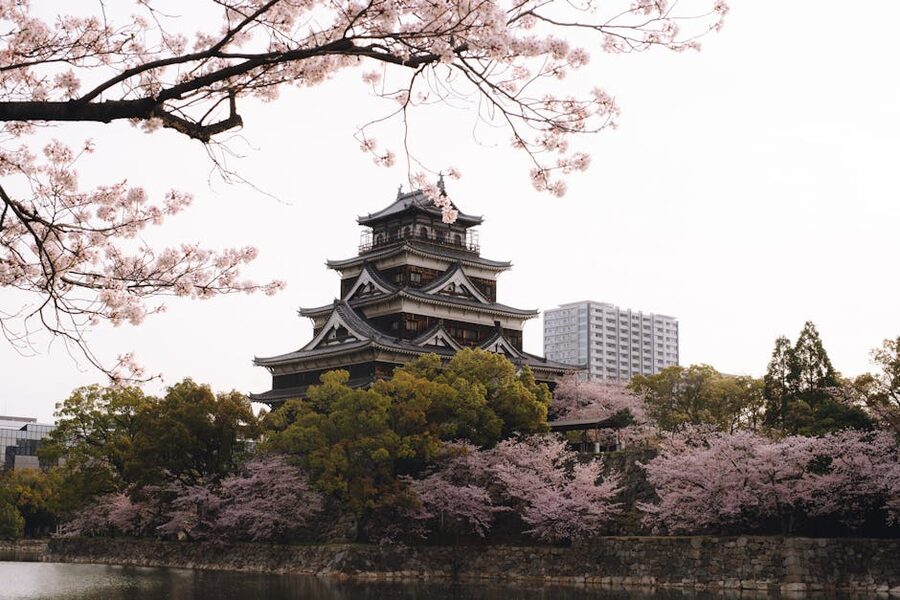
Important update for 2026: the castle keep closed to the public on 22 March 2026 over seismic-safety concerns about the 68-year-old concrete shell. The city is considering rebuilding the keep in wood at scale, a process likely to take a decade or more, so for the foreseeable future you cannot enter the keep. The Ninomaru area, including the reconstructed Otemon main gate, the turrets, and the moat walk, remains free and open to the public year-round.
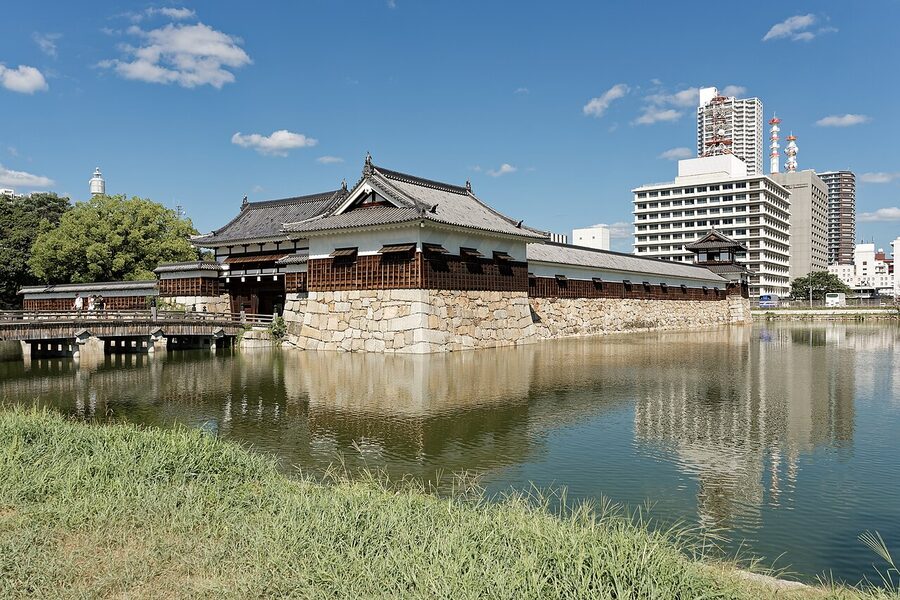
Even with the keep closed, the moat walk is a pleasant thirty minutes. The cherry blossoms in early April line the moat and the wall is the best vantage point for them. The Ninomaru’s hours, currently April–September 09:00–17:30, October–March 09:00–16:30, are unaffected.
Hondori arcade and the downtown
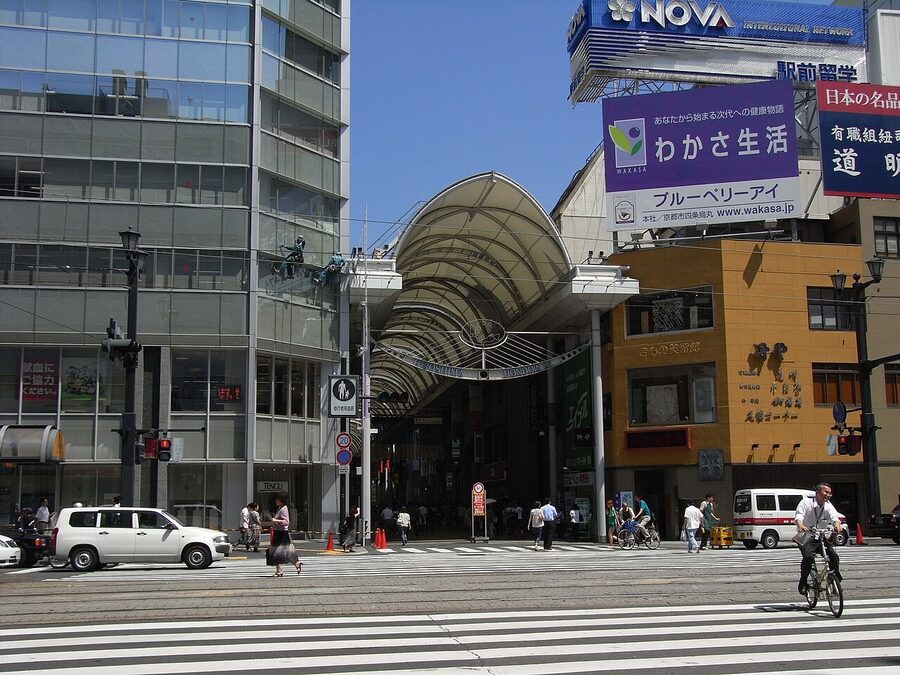
Hondori is Hiroshima’s covered shopping arcade, a 600-metre roofed pedestrian street that runs east from Peace Memorial Park to the Parco department store. The roof and the cobbled paving are covered for almost the entire length, which is decisive in Hiroshima’s wet summers. About 200 shops along the arcade and the side streets that branch off cover most of what you need: clothing, regional sweets (try momiji-manju, the maple-leaf-shaped red-bean cake unique to Miyajima), a Tokyu Hands branch, and most of the city’s best okonomiyaki houses.
Hiroshima okonomiyaki, the right way
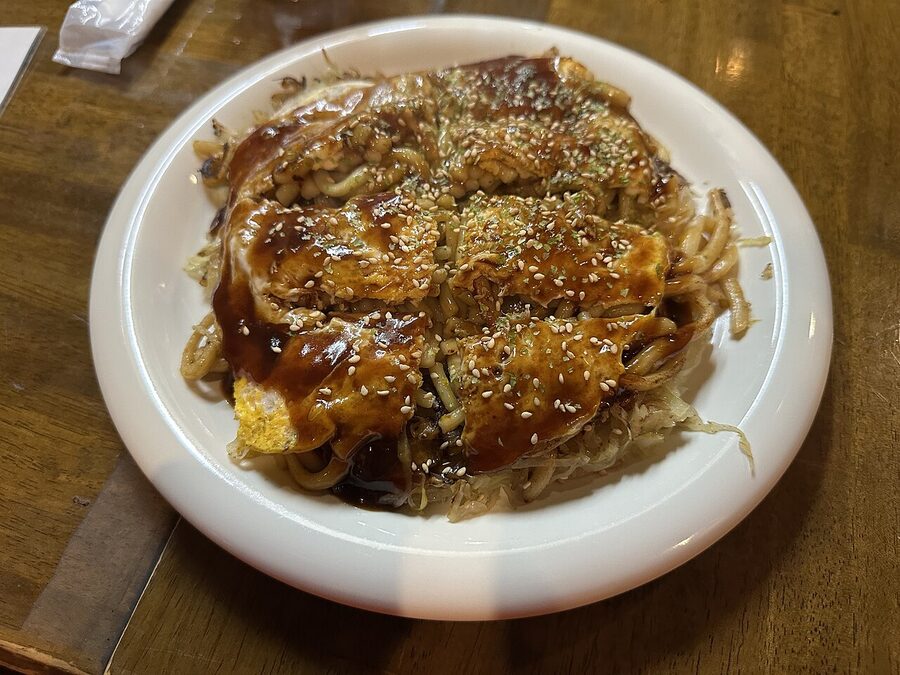
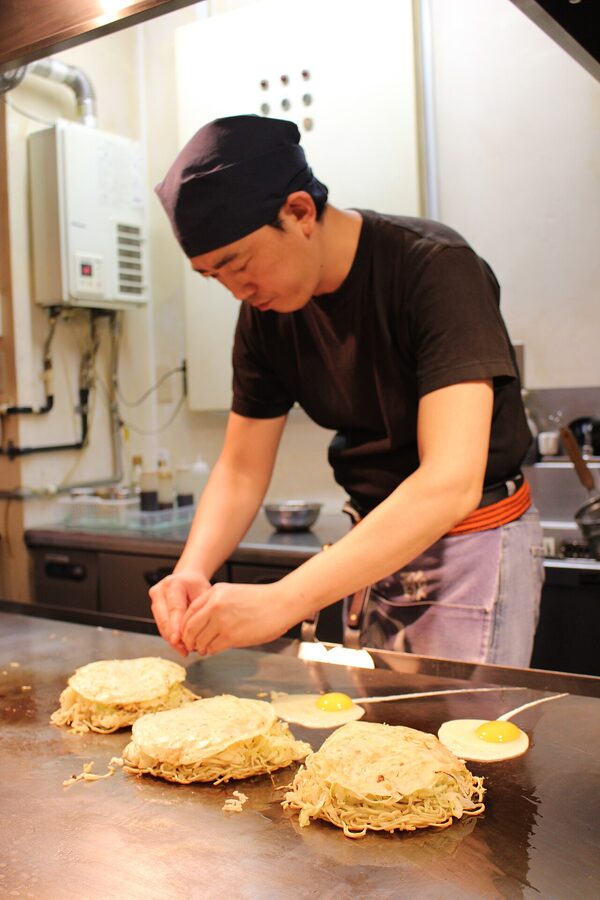
Hiroshima-style okonomiyaki is layered, not mixed. A thin crepe goes on the iron, then a small mountain of cabbage, beansprouts, pork belly, and tempura crumbs is built on top. While the cabbage steams down, a portion of yakisoba noodles cooks alongside. A fried egg goes on the noodles. Then the whole stack is flipped together, sauced with the dark sweet-savoury Otafuku sauce that’s specific to the region, and served either on the iron or on a plate. You eat it with a small metal spatula called a hera, working pieces off the side.
This is not Osaka-style okonomiyaki, where the ingredients are mixed into the batter before cooking. Hiroshima people are touchy about the difference. Don’t compliment it as Osaka-style if you want to come back.
Where to eat it
Three approaches, all valid:
Okonomi-mura (お好み村). The “okonomiyaki village”, a four-storey building on Shintenchi just south of Hondori, holds about 24 tiny okonomiyaki stalls (the number rotates as shops open and close). Each stall has its own counter facing a single big iron, you sit, you order, the chef cooks it in front of you. It is touristic in a good way. Prices around ¥900–¥1,400 per okonomiyaki depending on toppings. Official site. No reservations, queue moves fast, open daily 11:00 until late.
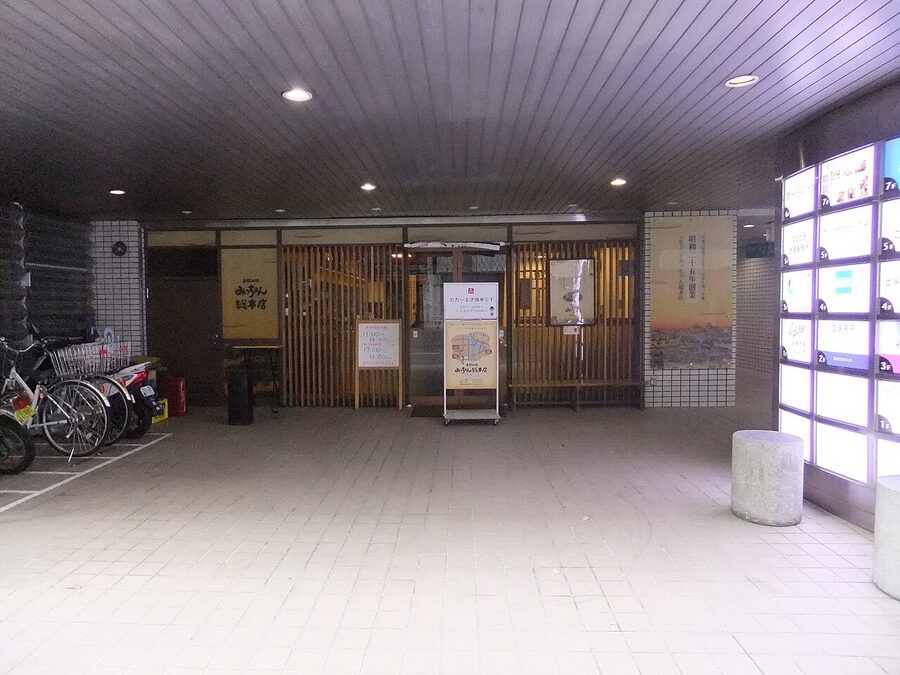
Nagataya (長田屋). The closest of the named houses to Peace Memorial Park, fifty metres from the south-east corner of the park. Specialises in the standard Hiroshima okonomiyaki done well, with a longer queue than most because Lonely Planet adopted them. Plan to wait twenty to forty minutes at peak meal times. Official site, English menu, opens 11:00.
Hassei (八誠). A smaller, harder-to-find counter in the Yagenbori area, about five minutes’ walk from Hondori. Older crowd, longer-running locals’ favourite, smaller queue, slightly higher prices. The smashed-egg variant (fried egg cooked broken on top of the noodles, not whole) is a Hassei-style trademark.
If you only do one okonomiyaki meal, do it at Okonomi-mura for the spectacle of the four-storey building of identical irons cooking in unison. If you do two, your second is a Nagataya or Hassei sit-down.
One more thing the city does well: oysters
Hiroshima Bay grows about 60% of Japan’s oysters. November to March is high season; the local way to eat them is grilled in the half-shell over charcoal, then sauced with ponzu or a touch of lemon. Kakihama in the basement of the BIG FRONT building near Hiroshima Station is the standard recommendation, but the oyster bars along the river south of Hondori are also good. Aim for around ¥2,000 to ¥3,000 for a generous platter.
How to get there, and how to get around
Sanyo Shinkansen, the spine
The Sanyo Shinkansen runs from Shin-Osaka through Okayama, Fukuyama, and Hiroshima down to Hakata in Fukuoka, on through to Kagoshima-Chuo via the Kyushu Shinkansen. Fastest Tokyo-to-Hiroshima time is about 3 hours 50 minutes on a Nozomi (about ¥19,440 reserved). Shin-Osaka to Hiroshima is 1 hour 22 minutes on a Nozomi, ¥10,440. Hiroshima to Hakata is 1 hour 5 minutes on a Nozomi, ¥9,090.
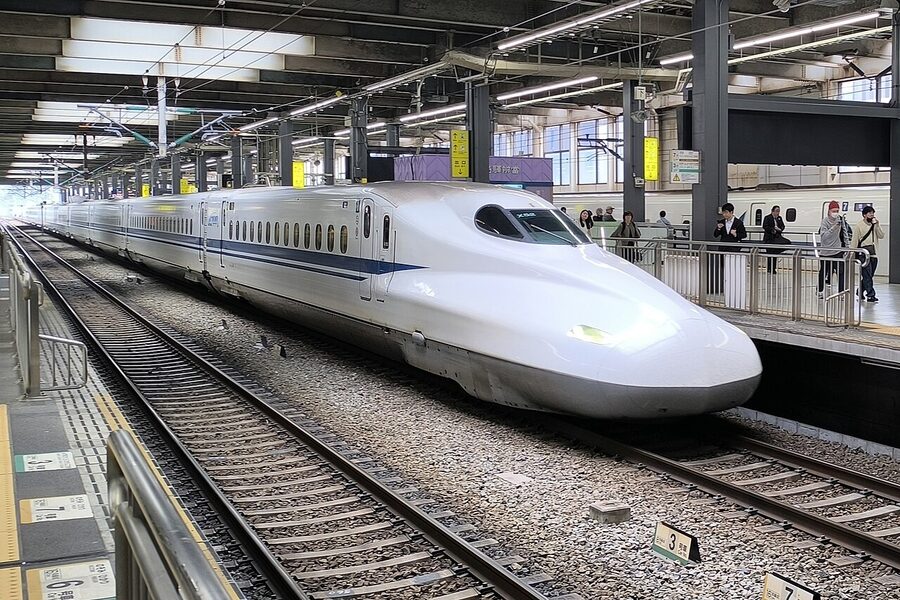
If you have a national Japan Rail Pass, the Hikari, Sakura, and Kodama services are covered but the fastest Nozomi/Mizuho services are not. A Nozomi-eligible upgrade is now available with the Pass for an additional fee. If you’re focused on western Japan, the JR West Sanyo-San’in Area Pass covers Hiroshima with unlimited Sanyo Shinkansen rides as far as Hakata, plus the JR Miyajima Ferry, for a flat 7-day price.
Hiroshima Station has been rebuilt twice in the last fifteen years; the current South Gate concourse is connected directly to the Hotel Granvia, and the tram terminal sits across the south plaza. The Shinkansen platforms are upstairs and signed clearly in English.
The Hiroden tram
Hiroshima Electric Railway (Hiroden) runs eight tram lines that cover the city centre and reach as far as Miyajimaguchi, the ferry terminal for Miyajima. Inside the city, all rides are a flat ¥240 per adult. To Miyajimaguchi the fare is ¥320. You pay when you exit, dropping coins into the box next to the driver or tapping a Suica/ICOCA/PASMO/SUGOCA IC card.
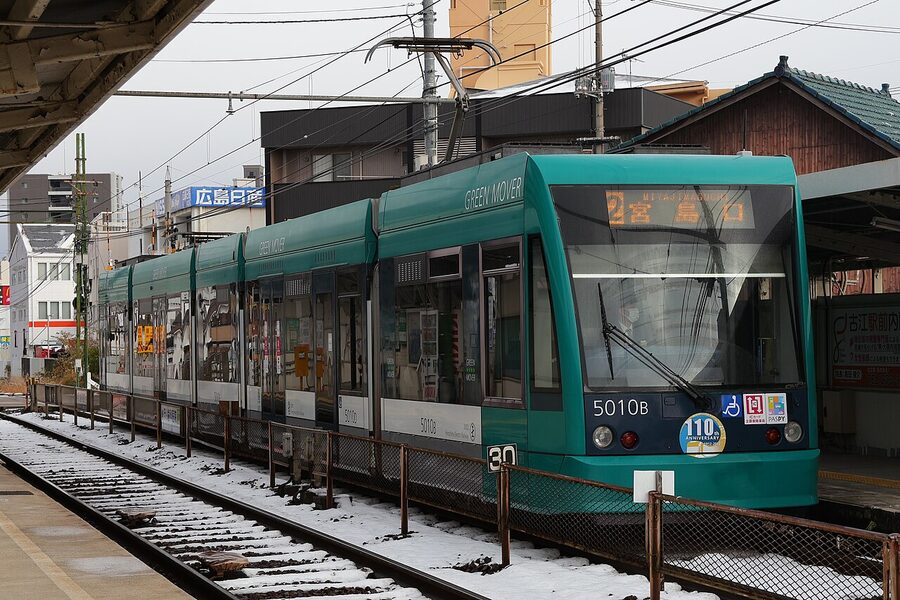
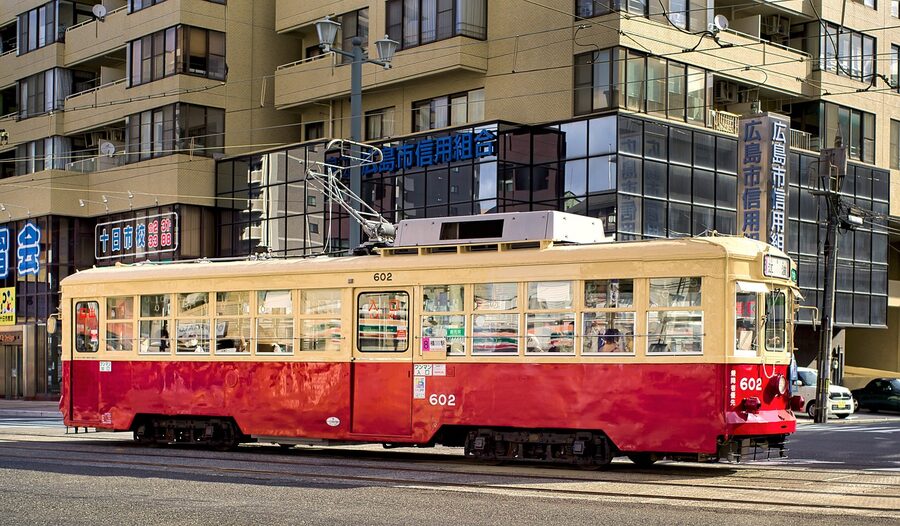
If you plan to use the tram for the full day plus a return Miyajimaguchi run, the Hiroden 1-day pass is ¥700 for adults. Buy it from the conductor on board or at the Hiroshima Station tram counter. Verified on the Hiroden official site as of 2026.
Ferry to Miyajima
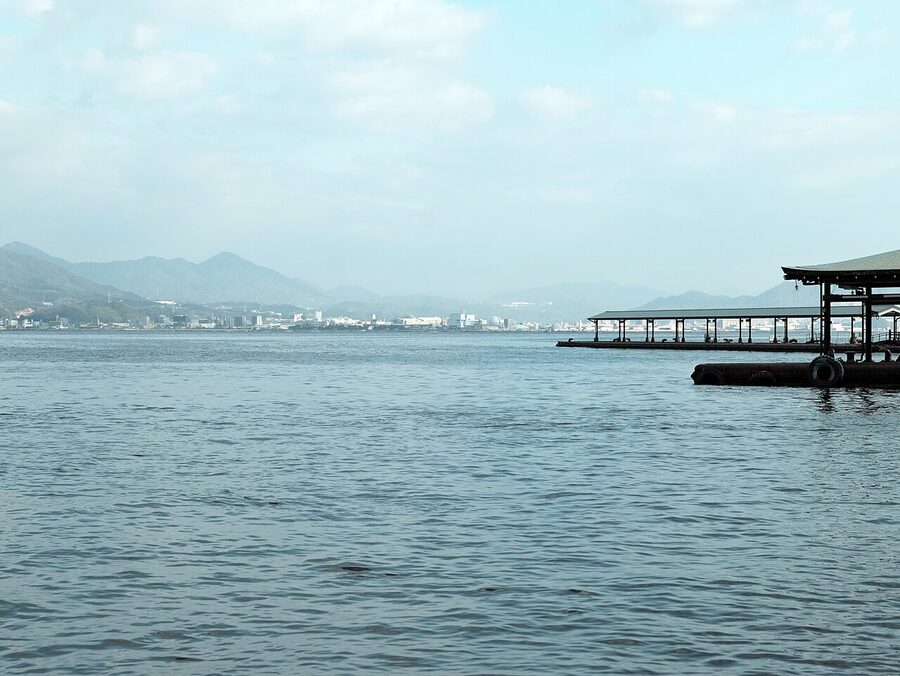
From Miyajimaguchi (terminus of the Hiroden no. 2 line, also a JR Sanyo Line stop one stop from Iwakuni) the JR Miyajima Ferry crosses to Miyajima in 10 minutes. Sailings every 15 minutes through most of the day, every 10 minutes at peak. The base fare is ¥200 one-way for adults, ¥100 children, plus the ¥100 visitor tax: total ¥300 each way. There is also the Matsudai Kisen ferry running the same route at the same fare.
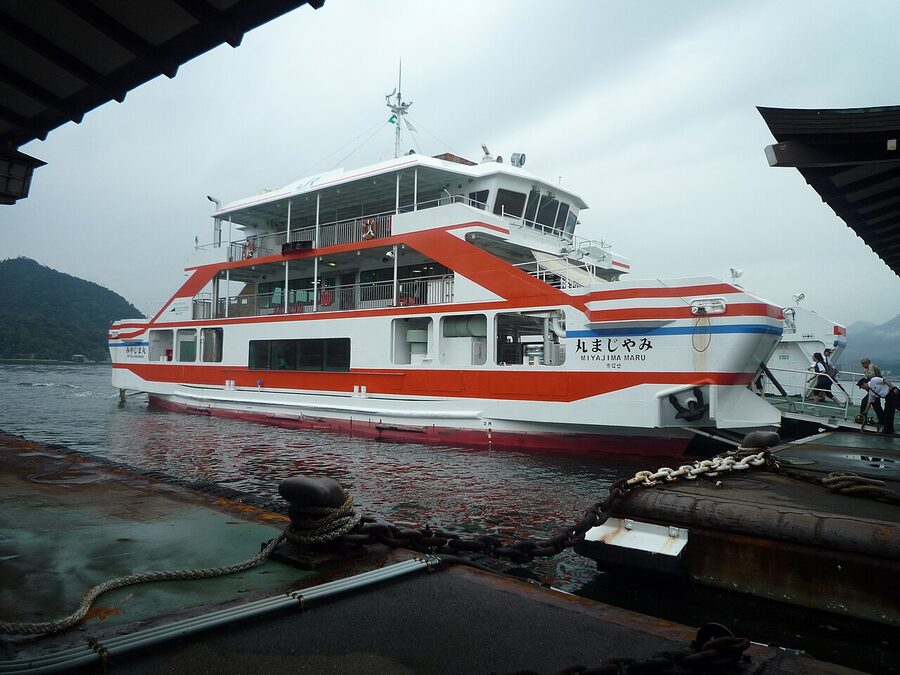
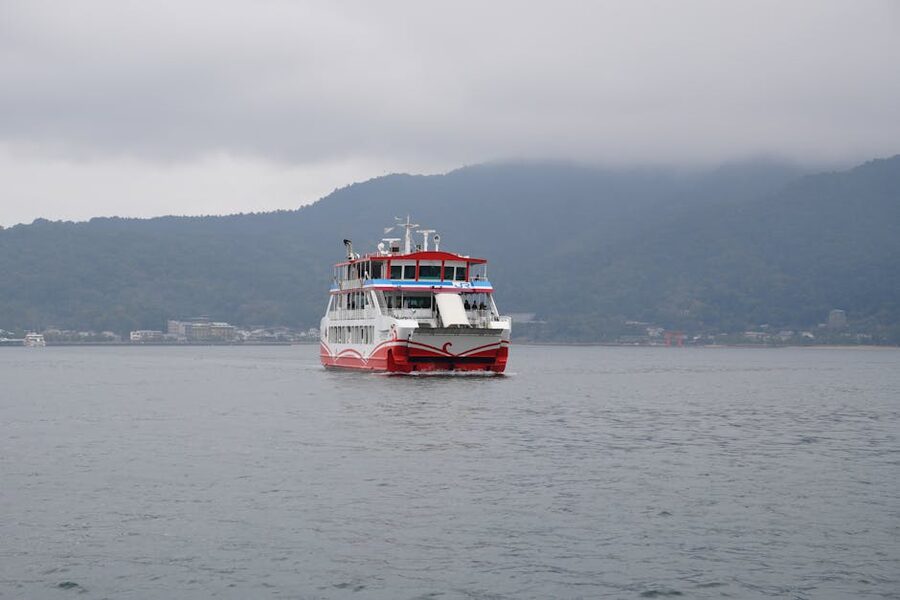
Daytime sailings (roughly 09:10 to 16:10) on the JR ferry detour close to the floating torii on the way over, getting you within thirty metres of the gate. Worth picking one of these for your outbound crossing if your tide timing allows. Verified at the JR Miyajima Ferry official site as of 2026.
From the airport
Hiroshima Airport sits 50 km east of the city. The Limousine Bus to Hiroshima Station takes 45 minutes and costs ¥1,450. Most international visitors arrive by Shinkansen from Tokyo or Osaka instead and skip the airport entirely; that’s the right call unless you’ve found a specific cheap fare into Hiroshima from Tokyo Haneda.
Where to stay in Hiroshima
Three useful zones: the area immediately south of Hiroshima Station (best for one-night stays and luggage convenience), the Kamiyacho/Hatchobori downtown (best for evenings out and walking-distance to Peace Park), and Miyajima itself (best for the Itsukushima morning).
Hiroshima Station-side
Hotel Granvia Hiroshima. Connected directly to the South Gate of Hiroshima Station; the lobby is on the same level as the JR concourse, and the Shinkansen gates are a 90-second walk. Clean, well-run, mid-range business hotel with a JR-Hotel-Group polish. The best of the Station-side options if you want zero luggage drag (Official site | Booking.com | Agoda).
Downtown
Sheraton Grand Hiroshima Hotel. Above the North Gate of Hiroshima Station, but functionally a downtown hotel because of the through-station access and the airport bus stand directly below. International chain standards, large rooms by Japanese terms, an indoor pool. The most reliable option for travellers who want a known brand (Official site | Booking.com | Agoda).
Rihga Royal Hotel Hiroshima. The tallest hotel in central Hiroshima at 33 floors, perched above Hiroshima Castle. Rooms on the upper floors look directly into the castle moat or south to Peace Park; ask at booking. Older property than the Sheraton, slightly faded in spots, but the views are unreplicable from anywhere else in the city (Official site | Booking.com | Expedia).
Miyajima
Iwaso. The classic Miyajima ryokan, riverside in Momijidani Park, walking distance to the Mount Misen ropeway base. Hot-spring baths, kaiseki dinner included. Higher-end pricing, around ¥35,000 per person per night with two meals at peak season; book three months out (Official site | Booking.com | Agoda).
Kurayado Iroha. Smaller, more contemporary ryokan, five minutes from the shrine, top-floor rooftop bath that looks out over the bay. Half the price of Iwaso, half the formality, sometimes slightly better atmospherics if you don’t need the historic pedigree (Official site | Booking.com | Agoda).
When to come
Hiroshima’s climate is mild Pacific maritime, warmer than Tokyo, drier than Kyushu. The city has four genuine seasons. Each has its case.
Late March to mid-April is cherry blossom season around the castle moat and along the rivers. The blooms generally peak around 28 March to 6 April, slightly earlier than Tokyo or Kyoto. Hiroshima is one of the most rewarding sakura cities in Japan precisely because the moat-walk and the riverside in the centre are continuous bloom corridors. The full national picture is in the cherry blossom guide.
Early August is hot, humid, and the Peace Memorial Ceremony on 6 August packs the city with international press, school groups, and survivors and survivor families. If you have any flexibility on dates, do not visit Hiroshima in the first week of August unless you specifically want to be present for the ceremony. Hotel prices double, and the city operates on a different rhythm. The 6 August evening lantern-floating on the Motoyasu River, by contrast, is one of the most moving small ceremonies in Japan and worth being present for if you choose to.
Late October to late November is autumn and Miyajima’s Momijidani Park (literally “Maple Valley”) is one of the country’s classic koyo viewing spots. The maples turn first to gold and then to deep crimson; the path from the Mount Misen ropeway up through the valley is solid red by mid-November. Daytimes are dry, evenings are cool but not cold, and crowds are real but not Kyoto-grade.
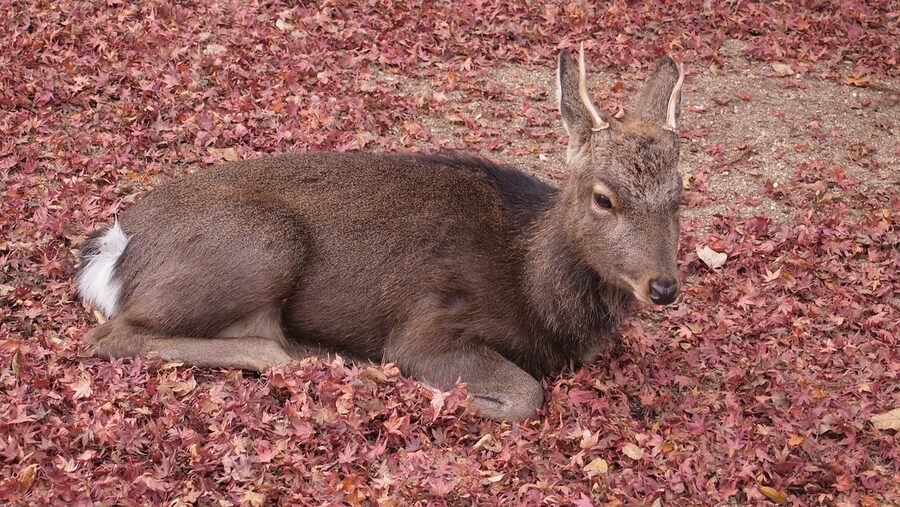
Late December to February is cold by Japanese standards, around 4–9°C in the daytime, but it almost never snows. The advantage of winter is that Miyajima empties out, oyster season is in full swing, and the museum and shrine are uncrowded. The disadvantage is that the daylight is short and the riverside walk in Peace Park is blustery. If you don’t mind layers, winter is the underrated season.
June is tsuyu (the rainy season). Avoid if possible. Heavy rain three or four days in five, the Genbaku Dome looks correct in the wet but the museum lines push outdoors and the Miyajima ferry is bumpy. The Hondori arcade is a saviour during tsuyu because the entire 600 metres are covered.
What to combine Hiroshima with
Hiroshima sits geographically in Chugoku (southern Honshu) but logistically connects most naturally to the Sanyo Shinkansen corridor west to Kyushu. The clean two-week itinerary that includes Hiroshima looks like Tokyo, Kyoto, Hiroshima (two nights), Fukuoka (two nights), Nagasaki (two nights). For the wider Kyushu loop, the Kyushu hub covers seven prefectures, including the Aso volcano, Beppu and Yufuin onsen, and Sakurajima.
If you’ve come from Honshu and have an extra day, Iwakuni (one stop west on the Sanyo) is an under-rated half-day side-trip; the Kintai-kyo five-arched bridge and the small mountain castle above it make a good morning. Onomichi (one hour east on the JR Sanyo Line) is the start of the Shimanami Kaido cycle route to Imabari on Shikoku, the country’s best long-distance cycle path.
The case for the second night, one more time
I started this article with the Genbaku Dome at 06:30 because that morning is the case for staying. The Shinkansen-stop Hiroshima you get on a single afternoon is a compressed, rushed, polite visit to a memorial. The two-night Hiroshima is a working regional city that happens to hold one of the most important sites in modern history, plus a thousand-year-old shrine on a tidal island, plus a regional cuisine you cannot get anywhere else, plus a tram network that’s a pleasure to ride. The compressed version pays its respects. The fuller version actually meets the city.
If your itinerary has any flexibility, give Hiroshima the second night. By the morning you leave, you’ll know which iron at Okonomi-mura you want to come back to.


_2.jpg)