
Skip April. If you’ve already booked your Japan trip for late March or the first week of April and you’re chasing cherry blossom, fine, you’ll get them in Tokyo or Kyoto. But if you’re still picking dates, or you’ve done the Tokyo–Kyoto axis once already and want a second look, the smarter window is the last week of April through the middle of May, and the smarter prefecture is Hokkaido.
The reason is simple, and it’s a thing the cherry-blossom forecasters print every year but most travel writers ignore. Japan’s bloom front moves north. Kyushu and Tokyo open in late March. Tohoku follows two to three weeks behind. Hokkaido brings up the rear, with Hakodate and Matsumae opening around 22–25 April most years, Sapporo around 28 April to 1 May, and the eastern and northern reaches of the island going through to mid-late May. So the season people associate with “Japan in spring” runs not for two weeks but for nearly two months, if you’re willing to follow it.
What you give up by going north and late: the postcard image of Mt. Fuji with cherry blossom in the foreground. What you get back: an island where the trees aren’t shedding petals into selfie sticks five layers deep, where a cherry blossom festival can run for a month because the varieties stagger their bloom, and where on a clear day you can pair sakura with a star fort, a samurai castle, the Tsugaru Strait, the Sea of Okhotsk, or 30,000 trees lining a single straight road. Honshu does not offer that compound interest.
In This Article
- Why Hokkaido sakura is its own thing
- The May timeline, week by week
- Getting to Hokkaido in time
- Where to base yourself
- Sapporo: where to actually go
- Hokkaido Shrine
- Other parks that lift Sapporo above one viewing spot
- What’s also on while the cherry blossom’s out
- Hakodate: the Goryokaku star
- Inside the moat
- After dark
- Hakodate Park itself
- Matsumae: the 250-variety castle
- The journey, in plain numbers
- Beyond the cherry trees
- Beyond the southern triangle
- Nijukken Road, Shizunai
- Asahiyama Park, Asahikawa
- Tentozan, Abashiri
- Kushiro, Obihiro, Nayoro
- What’s blooming alongside the cherries
- Variety primer (for the sakura-curious)
- Hanami practicalities, in case you’ve never done one
- Crowds, money, and what’s worth what
- Common questions, brief answers
- Where this fits in the wider picture
Why Hokkaido sakura is its own thing
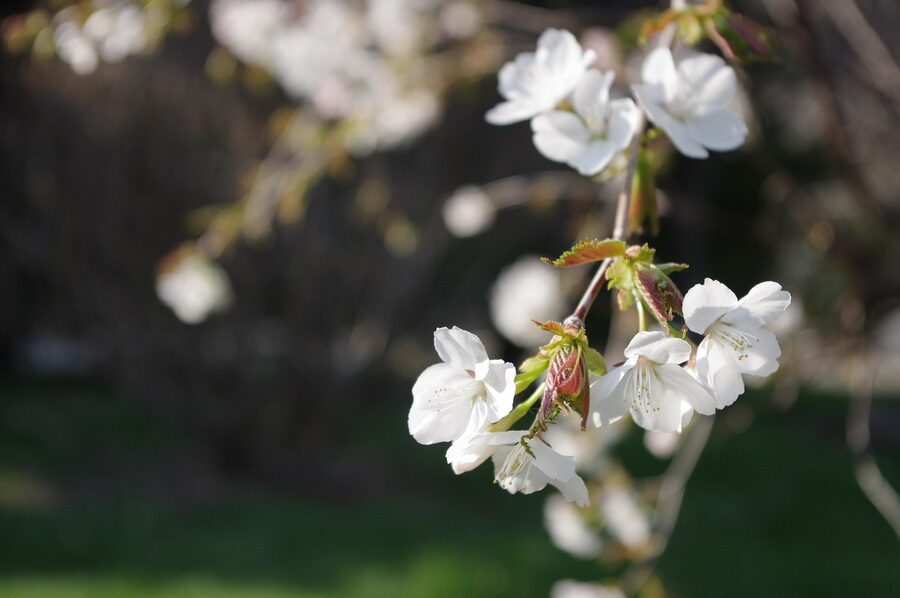
The first thing to know is that Hokkaido’s cherry trees are not all somei yoshino. Honshu’s bloom is dominated by that one cultivar, which is genetically uniform across the country and bursts open in a synchronised wave when the temperature crosses a particular threshold. Hokkaido has plenty of somei yoshino too, but the dominant native species in the south of the island is ezoyamazakura, the Sargent’s cherry, which has a deeper pink flower and tends to bloom alongside its emerging leaves rather than ahead of them. The result is a pinker, leafier, less ethereal-looking blossom: it’s still beautiful, but it’s a different beautiful.
Then there’s the timing. Because cherry varieties have different bloom cues, a park that mixes ezoyamazakura, somei yoshino, shidarezakura (weeping), and the late-blooming yaezakura double-flowered cultivars can keep something pink for four to five weeks straight. Matsumae, the southernmost spot in Hokkaido, takes this idea to its extreme: 250 documented varieties, and a festival that runs from 18 April to 10 May because the early-blooming and late-blooming varieties never overlap.
The May timeline, week by week
Pencil this in roughly. The Japan Meteorological Agency’s long-run averages put Hakodate’s first-bloom date around 27 April and full bloom around 1 May. Sapporo opens about three days later, hits full bloom around 4–5 May. Asahikawa and the central inland cities run another week behind. Kushiro and the eastern coast can be looking at mid-May to late May, particularly in cooler springs.
What that means in practice for a trip:
- 22–28 April: Matsumae opens its early varieties. Hakodate’s Goryokaku may have first-bloom but isn’t full yet. Sapporo is still showing buds. This is the window if you want to hit the southern stretch on the way back from Honshu before the rest of Hokkaido catches up.
- 29 April–5 May (Golden Week): The peak overlap window. Sapporo’s Maruyama Park hits full bloom, Goryokaku is at its best, Matsumae is mid-festival with the late varieties pushing through. The downside: domestic tourism is at its loudest. Book accommodation early.
- 6–12 May: Sapporo and Hakodate are shedding petals. Matsumae’s late varieties are the headline act. Asahikawa and Nayoro are at peak. Eastern Hokkaido is opening.
- 13–20 May: Eastern and northern Hokkaido (Abashiri, Kushiro, Wakkanai) hold the last of the season. By the calendar, Honshu has been over for three weeks.
I’d treat this as a base map and add maybe a week of slack. Cherry blossom timing wanders by five to seven days in either direction depending on the spring’s warmth, and the forecasts published by Weathernews and the JMA in early April are a more useful guide for the actual year you’re travelling. If you’re locked into a Golden Week trip and the forecast moves earlier than usual, swap your itinerary so that the late-blooming Matsumae varieties become your last stop.
Getting to Hokkaido in time
The four useful arrival points: New Chitose Airport (CTS) for Sapporo, Hakodate Airport (HKD) for the south, Asahikawa Airport (AKJ) for the centre, and Shin-Hakodate-Hokuto Station for shinkansen arrivals from Tokyo. Most international visitors fly into CTS via Tokyo or Seoul. Domestic flights from Haneda or Narita run roughly hourly during sakura season; budget on a 90-minute flight plus the JR Hokkaido Rapid Airport train (around 40 minutes, ¥1,150) into Sapporo Station.
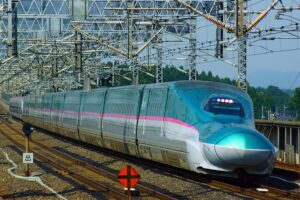
For Hakodate from Tokyo by rail: Tokyo to Shin-Hakodate-Hokuto on the Hayabusa shinkansen runs a little over four hours. From Shin-Hakodate-Hokuto, the Hakodate Liner local takes 15–20 minutes into Hakodate Station. Most visitors expecting to do Tohoku and Hokkaido in one trip will use the JR East-South Hokkaido Pass or a regional combination; the standard JR Pass also covers the route.
Matsumae is the awkward one. There is no train. From Hakodate Station, take the Hakodate Bus 800-series direct service (about 2.5 hours, ¥2,000 one way, two to three departures a day) or shinkansen to Kikonai then transfer to the Matsumae bus from the Misogi roadside station outside Kikonai (about 90 minutes from Kikonai, runs roughly hourly). I’d budget the full day either way, and stay overnight in Hakodate before or after rather than trying to bounce between Hakodate, Matsumae and Sapporo on consecutive evenings.
Where to base yourself
Three sensible bases for the southern run: Sapporo for the Sapporo-area parks and access onward to Otaru and the central inland; Hakodate for the Goryokaku, Hakodate Park and Matsumae triangle; and one of the smaller towns (Niseko, Noboribetsu, Lake Toya) if you want the onsen plus blossom combination. For first-time sakura visitors I’d skip the small-town option and pick Sapporo or Hakodate, depending on which side of the island you’ve come into. The blossom alone justifies two nights in Hakodate. The sakura plus the night view alone justifies three.
Sapporo: where to actually go
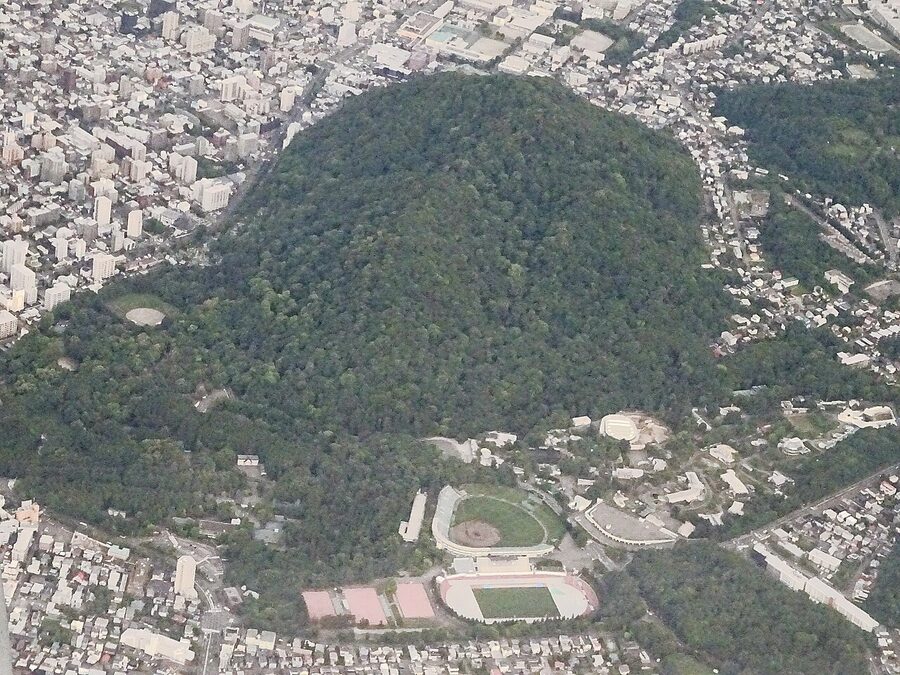
Sapporo’s classic cherry blossom spot is Maruyama Park, with Hokkaido Shrine sitting on the eastern slope inside the park’s boundary. It’s a five-minute walk from Maruyama Koen subway station on the Tozai line, and the park is open all year with no admission fee. Around 1,400 trees, mainly somei yoshino and ezoyamazakura, fill the lawn area between the subway exit and the shrine approach. On a Golden Week weekend the whole open lawn is covered in picnic tarps; you’ll smell jingisukan (Hokkaido’s lamb barbecue) in clouds, because Sapporo people grill their hanami here in a way that the parks in Tokyo and Kyoto won’t let you do.
Hokkaido Shrine
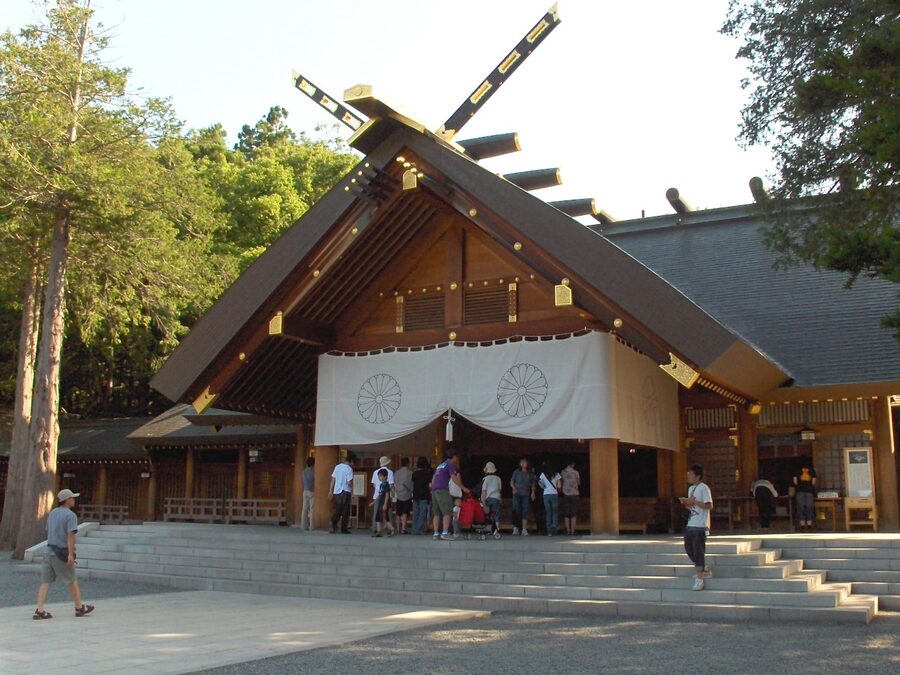
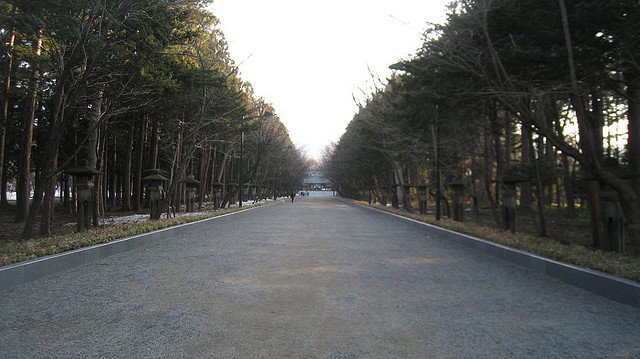
Hokkaido Shrine is the prefecture’s principal Shinto shrine, founded in 1869 to consecrate Hokkaido’s settlement era. During cherry blossom week the long approach (sando) lined with sakura is genuinely one of the most pleasant ten-minute walks in any Japanese city. Combine the shrine and the park into one morning. There’s a small festival market near the western shrine entrance with food stalls during peak bloom.
Other parks that lift Sapporo above one viewing spot
Three more spots if you’ve got two days in Sapporo:
Nakajima Park. Five minutes south of the city centre by Nakajima Koen subway. Somei yoshino, ezoyamazakura, weeping varieties around the iris pond. Quieter than Maruyama because it doesn’t have the shrine, which means you can actually find a bench at lunchtime.
Moerenuma Park. Out in the east of Sapporo near Moerenuma Koen-Higashiguchi bus stop, this is the Isamu Noguchi-designed sculpture park. It’s not the densest cherry blossom site in the city, but the contrast of pink trees against the geometric white pyramids and Mt. Moere’s cone makes it a photographer’s pick. Allow half a day to do it properly. Fountain operates six times daily.
Makomanai Park. South Sapporo, accessed from Makomanai subway. Somei yoshino and ezoyamazakura bloom two to three weeks apart, so the sakura window here is one of the longest in the city. Recommended for families and dog walkers; the river path under the trees is one of the underrated walks in Sapporo.
What’s also on while the cherry blossom’s out
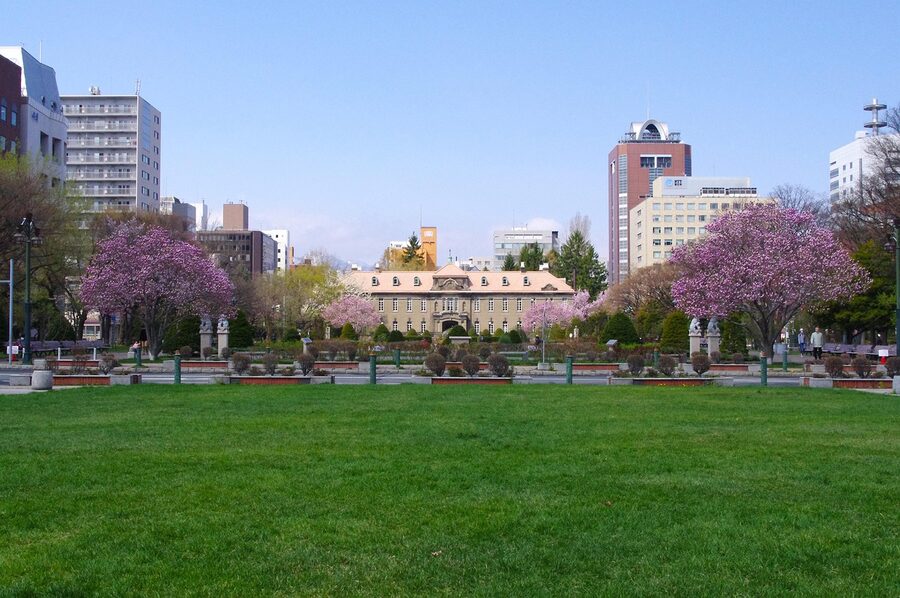
Late April and May in Sapporo is also when the lilac comes out (the city’s Lilac Festival runs in late May at Odori Park) and the tulip beds peak in central Odori. The Hokkaido Jingu Shrine festival itself runs in mid-June, slightly past sakura, but if you’re in the city the second week of May, the Asahikawa and Furano flower season is starting, which is one reason this whole window beats the late-March Tokyo equivalent if you care about flowers in general rather than sakura specifically. For city-context viewing tips that work the same way down south, the Tokyo cherry blossom guide covers Meguro, Chidorigafuchi, and the Shinjuku Gyoen approach in the same kind of detail.
Hakodate: the Goryokaku star
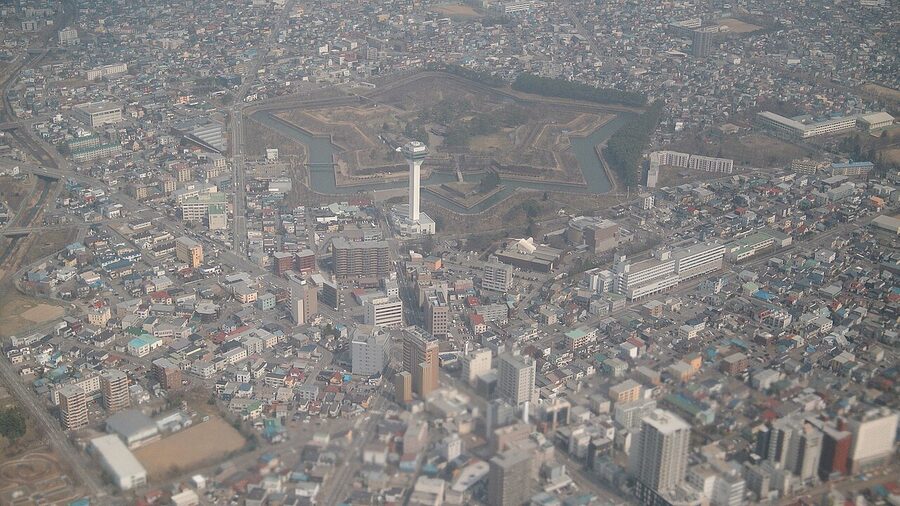
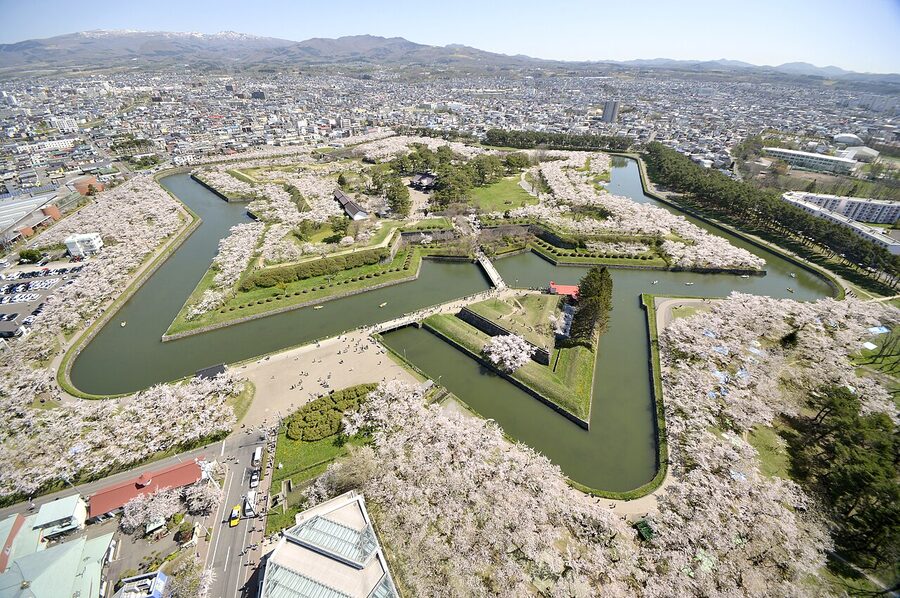
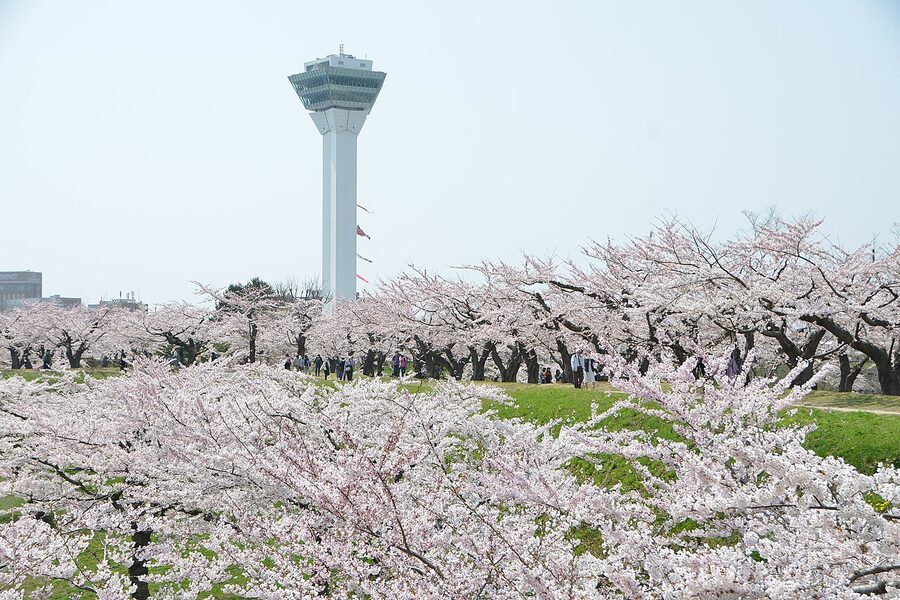
Goryokaku is the only star-shaped fortress in Japan. The geometry is European, designed in the closing years of the Edo period as a defensive citadel against the Western powers turning up at Hakodate’s port. By the time it was fought over (in the Boshin War of 1868–69), the technology was already obsolete; today the moat-and-rampart shell is a public park, around 1,500 cherry trees thick, with the moats bracketing the avenues so the petals fall onto water in long pink ribbons.
The tower next to the fort, the Goryokaku Tower, is 107 metres tall and the only place from which the shape is properly legible. During cherry blossom week it opens an hour earlier than usual (08:00–19:00 instead of the standard hours) and the deck queue moves quickly enough that I’d just pay the fee. Adult tickets ¥1,000.
Inside the moat
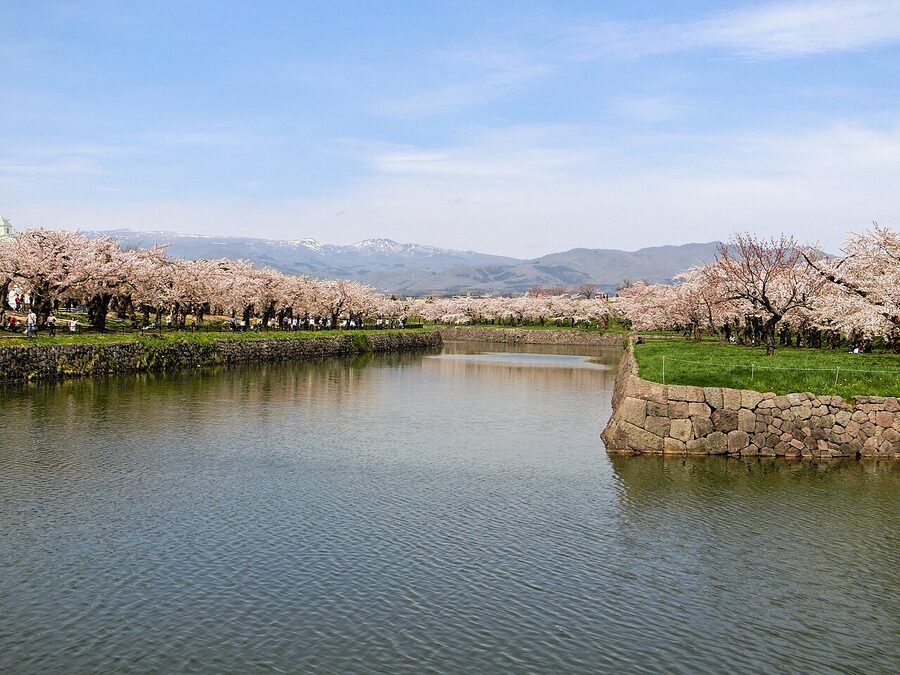
Cross the Nino bridge into the central enclosure and you’re walking on what was once the floor of the magistrate’s compound. The reconstruction of the Hakodate Bugyosho (the magistrate’s office) sits in the middle and is open to visitors; tickets are inexpensive but the building works better as a backdrop for cherry-blossom photos than as a museum. The avenue of trees inside the eastern wall is the section to walk; the central area is the picnic flat, and Hakodate locals lay out tarps here every weekend of the bloom.
A practical note that surprised me on my first visit: the park permits gas barbecue on a designated stretch immediately west of the magistrate’s office, 10:00–18:00 during the festival period. So if you’ve heard “you can’t barbecue at hanami spots in Japan”, Goryokaku is the exception. Bring a portable burner from a Don Quixote in Hakodate, the petals will land in your lunch, and you’ll have done a hanami the way most foreign guides describe but very few actually let you do.
After dark
The cherry trees inside the moat get illuminated each evening of the festival, 19:00–21:00, until 6 May most years. The lighting is gentler than the floodlit illuminations you see at Tokyo’s Meguro River, more like backlit-paper than full stage lighting. Walk the inside circuit of the moat starting from the Ichi-no bridge and you’ll get the lit blossom reflected on the water for the entire perimeter, which takes about 25 minutes at a relaxed pace. There’s a small food stall area near the southern entrance during the festival; the squid-ink fried potato (an Hakodate-only thing) is worth the queue.
Hakodate Park itself
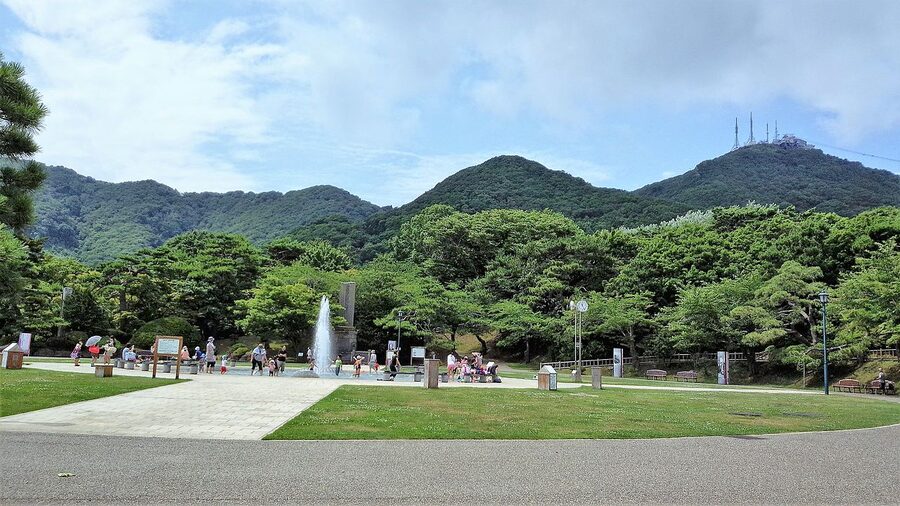
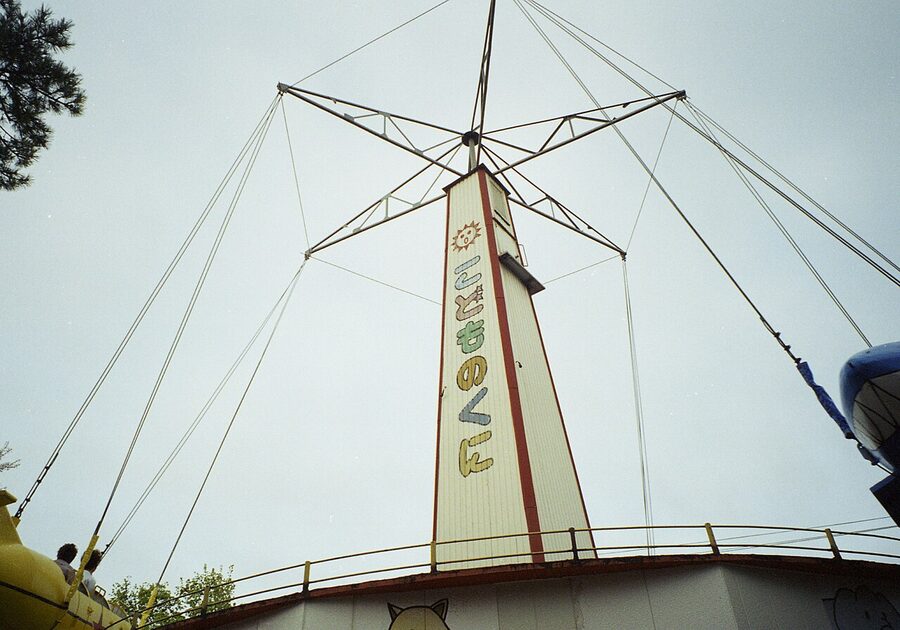
Goryokaku gets all the press, but Hakodate Park, sitting at the foot of Mt. Hakodate near the Motomachi historic district, is the older and quieter option. About 400 cherry trees, free admission, and the small Kodomo no Kuni amusement area inside the park has Japan’s oldest still-operating ferris wheel (worth a ride for novelty). The park is a 25-minute tram ride from Hakodate Station on the city tram (Hakodate Shiden), getting off at Aoyagicho and walking five minutes uphill. Pair it with a Mt. Hakodate ropeway sunset (peak time is the 30 minutes after dusk) for the cleanest one-day Hakodate plan.
Matsumae: the 250-variety castle
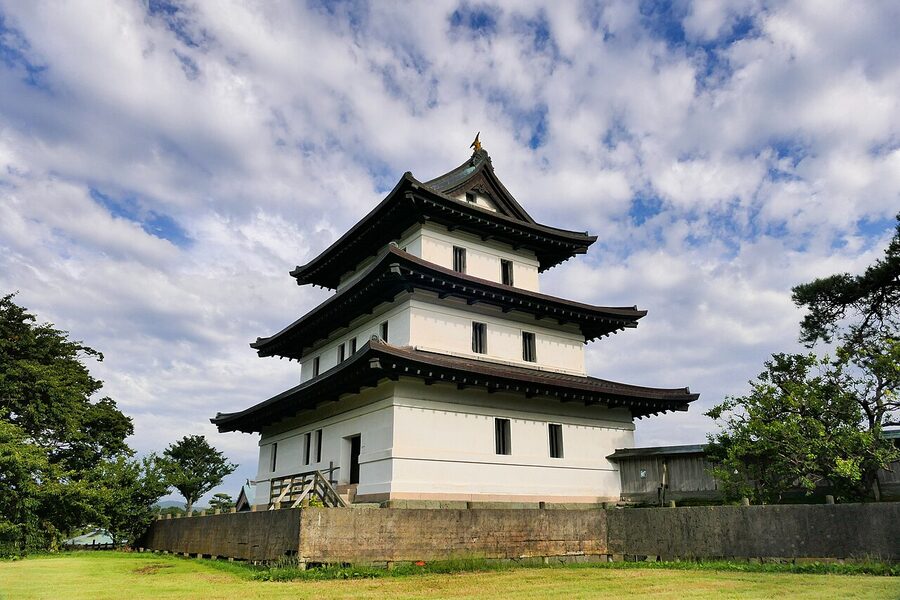
Matsumae is a small town on the southwestern tip of Hokkaido and one of the most unfairly under-visited cherry-blossom sites in Japan. The pitch: 10,000 cherry trees of around 250 documented varieties, ranged across the castle precinct and the surrounding Matsumae Park. The varieties are why you make the trip. Because the early somei yoshino, the mid-season naden, and the late fugenzo, kanzan, shogetsu and ukon bloom in succession, the festival runs for a continuous 23 days (18 April to 10 May for 2026). At any point in that window, several thousand trees are at peak, even if a different few thousand are budding or shedding.
The named trees here are oddly specific and worth knowing about before you arrive. The Kechimyaku-zakura at Kozenji temple is reportedly the parent tree of the naden variety, around 300 years old. The Meoto-zakura (husband-and-wife tree) at the southeastern castle gate is a somei yoshino and a naden grown into one trunk, blooming together in late April. The Ezo-kasumi-zakura at Ryuunin temple is a single old specimen the Matsumae locals point to as the symbol of the precinct’s longevity. Each tree is signed (in Japanese; bring a translation app), and walking around reading them is a peculiar form of botanical sightseeing you won’t get anywhere else in the country.
The journey, in plain numbers
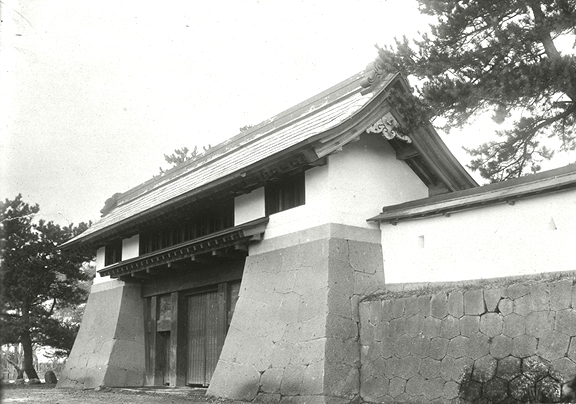
Matsumae’s biggest downside is that there is no train. From Hakodate, the cleanest route is the Hakodate Bus 800-series direct service from outside Hakodate Station: about 2.5 hours, ¥2,000 each way, two to three departures a day. The alternative is shinkansen to Kikonai (15 minutes from Shin-Hakodate-Hokuto), then Hakodate Bus from Kikonai (the route 521/522/523 to Matsujo, about 90 minutes). The bus stop at Kikonai is right outside the Misogi roadside station; there’s a heated waiting room with a power outlet, which I have used to charge my phone twice now while waiting for connections. Matsujo is the closest stop to the castle; alight there, and the castle gate is a 10-minute walk along the coast road.
The practical recommendation: do this as a day trip from Hakodate, leaving Hakodate around 07:30 and back by 18:30, with the castle and park getting most of the day. If you can stretch to an overnight in Matsumae itself, the festival illuminations (sunset to 21:00, on the dual-trunk tree and the southern garden plaza) are the best part of being here, and the morning queue at the castle keep before the buses arrive at 11:00 is the quiet half of the visit. Lodging in Matsumae is mostly minshuku and a couple of small ryokan; book direct, the OTAs barely cover them.
Beyond the cherry trees
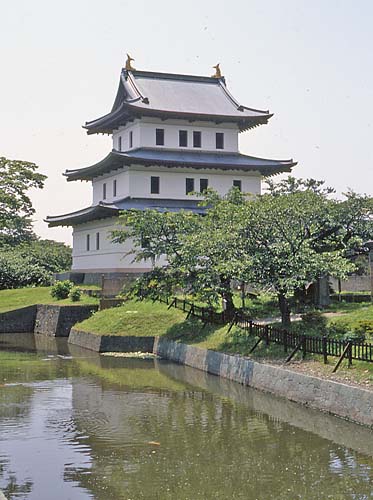
Worth doing alongside the cherry blossom: the Matsumae Hanyashiki replica townscape inside the western park, which recreates the Edo-period merchant district with 14 reconstructed buildings and rentable samurai costumes for those who want them; the old temple precinct directly south of the castle, which predates the castle itself and contains the Matsumae clan’s family graveyard; and the small Matsumae Sakura Museum near the park entrance, free admission, a useful 30-minute primer on the named varieties if you want to catch up on what you’re seeing. If you’re carrying a JR rail pass, neither the bus to Matsumae nor the local exhibits are covered, so budget around ¥5,000 in cash for the day above transport.
Beyond the southern triangle
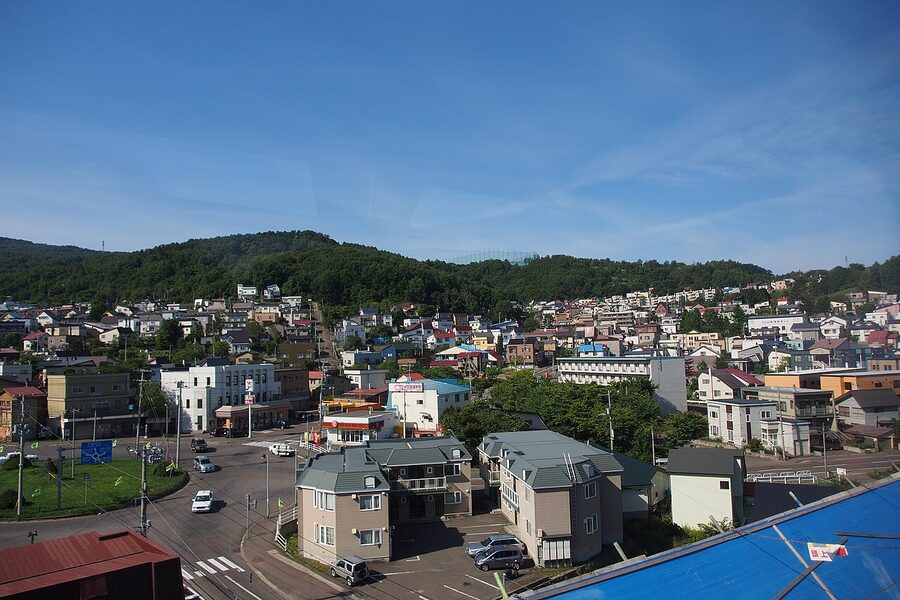
If you’ve got more than four days in Hokkaido and the bloom front has moved past Sapporo, push north or east. The pay-off is having sakura entirely to yourself.
Nijukken Road, Shizunai
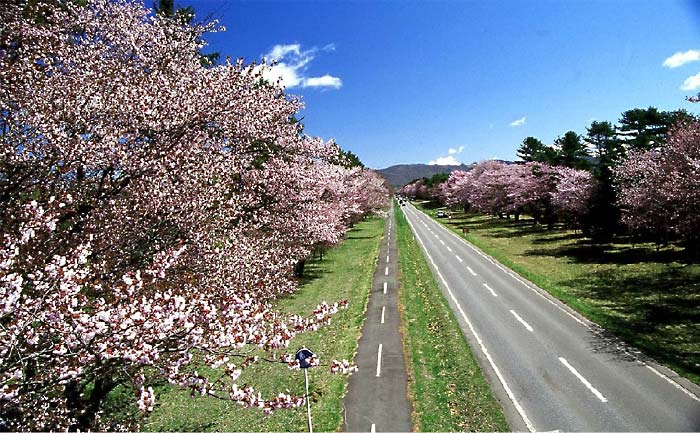
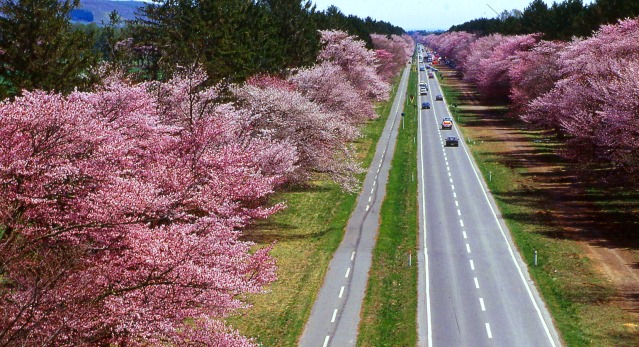
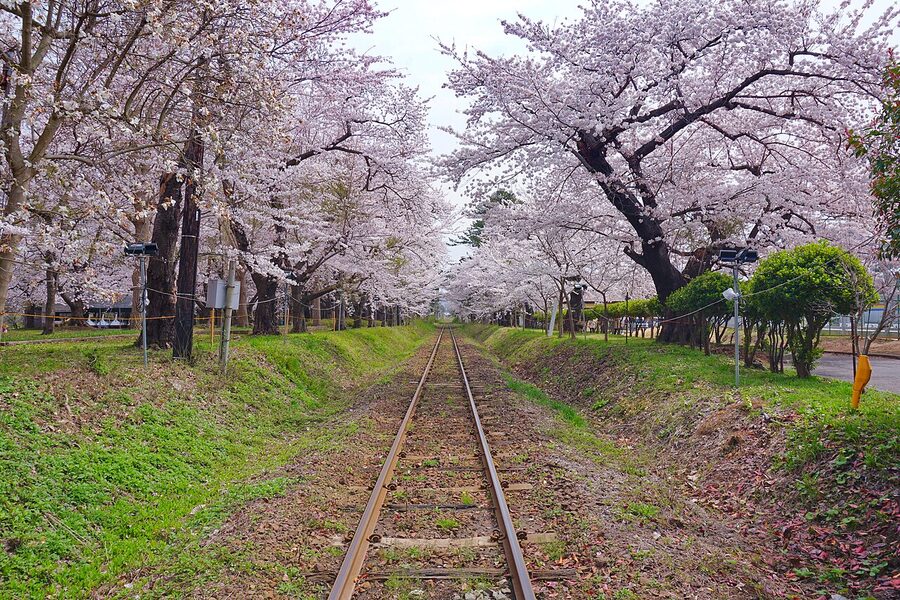
The Nijukken-doro Cherry Blossom Avenue is a 7-kilometre straight road in Shinhidaka Town on the Hidaka coast, lined with around 3,000 ezoyamazakura on both sides. It blooms early-to-mid May, peaks Golden Week most years. Driving is the only sensible way to do it; the closest station is Shizunai (Hidaka Line), 90 minutes by JR rapid from Sapporo, and you’ll need to add a taxi or rental car for the road itself. The Shinhidaka Sakura Festival happens here every year, with food stalls at the entrance and the road closed to through-traffic on weekends. This is the spot that finally explains why some Hokkaido domestic tour groups bypass Goryokaku: a 7-kilometre tunnel of pink, no people, no buildings, just trees and sky. If you’re chasing photographs without crowds, this is the prefecture’s clearest answer.
Asahiyama Park, Asahikawa
Asahikawa is the inland city in central Hokkaido (don’t confuse the park with the more-famous Asahiyama Zoo, which is a separate destination). The park sits on a hill overlooking Asahikawa and has around 600 trees, dominated by ezoyamazakura. Bloom typically arrives 5–10 May, two weeks behind Sapporo. Night illuminations during peak. Practical access is by JR Limited Express Lilac from Sapporo (1h 25m, ¥4,810), then a 15-minute bus to Asahiyama-Park-iriguchi.
Tentozan, Abashiri
Tentozan Sakura Park sits 207m above the Sea of Okhotsk on the eastern coast, around 1,200 trees ranged across the slope. Peak is mid-May. The view combination, sakura plus the sea ice that has just receded that month, is the highest-latitude version of the cherry blossom you can do in Japan. Access is awkward (bus from Abashiri Station, then a 15-minute walk uphill), so this is for the second or third Hokkaido trip rather than the first.
Kushiro, Obihiro, Nayoro
The genuinely late-front spots. Kushiro’s Double-Cherry Avenue blooms mid-to-late May with yaezakura only, the latest sakura in the country. Obihiro’s Midorigaoka Park is the eastern-Hokkaido picnic spot; Nayoro Park is the northern-front equivalent and runs to mid-May. None of these makes sense as a sakura-specific trip; they’re useful add-ons if you’re already touring eastern Hokkaido for the wildlife or the open spaces.
What’s blooming alongside the cherries
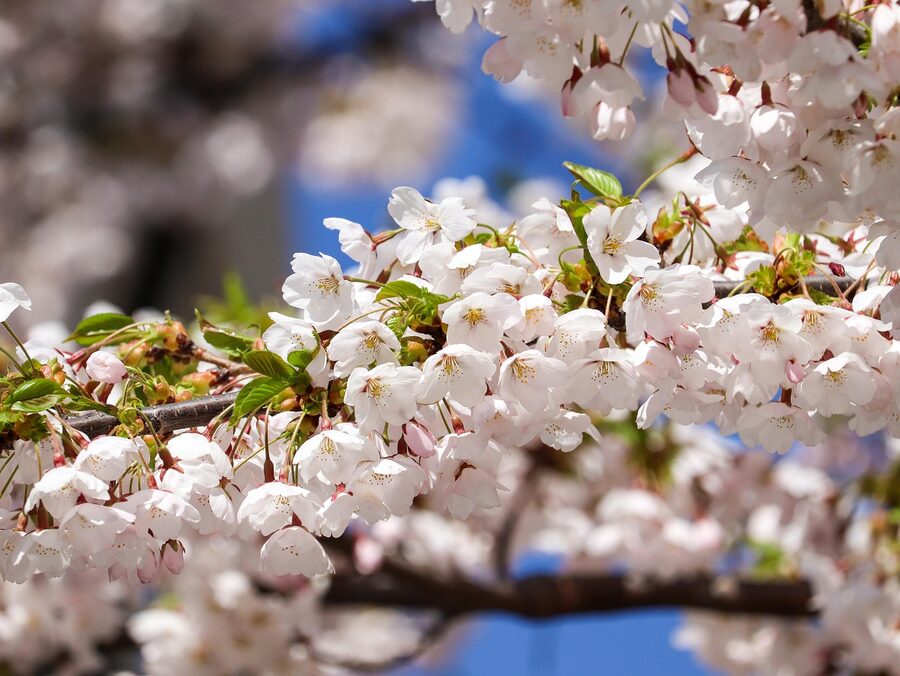
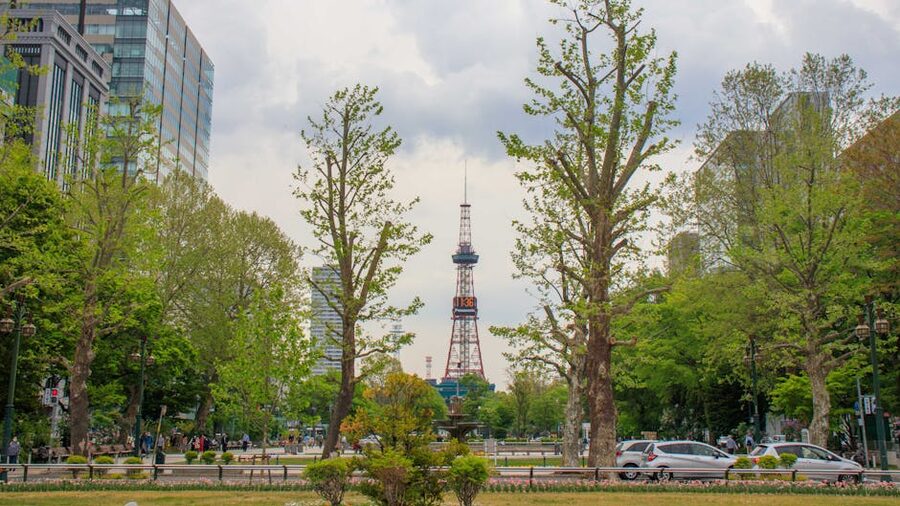
One of the rewards of going late and going north is that the timing puts you alongside flowers that don’t pair with cherry blossom in Honshu. In Sapporo, the tulip beds at Odori Park reach peak in early May and the pansies are at their best concurrent with the sakura. By mid-May, the lilac is starting (the city’s Lilac Festival opens the third week of May). In central Hokkaido, the katakuri (dogtooth violet) carpet at the foothills around Sapporo and Asahikawa is at peak bloom in early May; the local guidebooks publish maps for the better katakuri viewpoints. Further south on Honshu, the late-blooming wisteria and tsutsuji azaleas overlap with Hokkaido’s sakura window, so a long traveller’s view is that “Japan’s spring” runs continuously from mid-March to early June, and the Hokkaido sakura is the back end of that arc rather than the dying breath of one wave.
Variety primer (for the sakura-curious)
The varieties you’ll actually encounter and that the parks sign:
- Somei yoshino: the Tokyo / Kyoto archetype. Pale pink, single row of five petals, tree blooms before its leaves. Hokkaido has plenty but not as much as Honshu.
- Ezoyamazakura: Hokkaido’s native dominant variety. Deep pink, single petals, blooms with the leaves. The “different beautiful” of the introduction.
- Naden-zakura: a many-petalled (5–15) pink cultivar particularly common at Matsumae, blooms a few days after somei yoshino.
- Shidare-zakura: weeping cherry. Different shape, same general timing as somei yoshino.
- Yaezakura: the umbrella term for late-blooming double-flowered varieties. Includes kanzan (the deep-pink standard), fugenzo, shogetsu, ukon (greenish-yellow). Bloom 7–14 days after somei yoshino.
You don’t need to memorise this. But knowing that yaezakura bloom a week or so later than somei yoshino is the single most useful fact for trip planning, because it means a “you missed peak bloom” trip in Hokkaido often catches the second wave at full strength.
Hanami practicalities, in case you’ve never done one
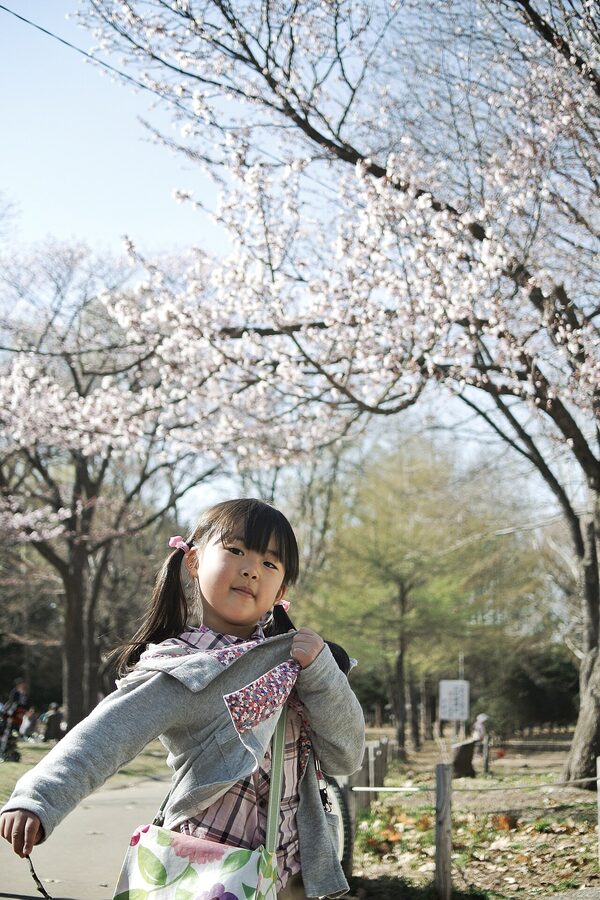
Hanami in Hokkaido is more relaxed than Tokyo. Maruyama Park, Goryokaku and the Matsumae Park grounds all permit gas barbecue, which is unusual in Japan generally; it’s part of the Hokkaido picnic culture and a good reason to take advantage. A workable kit, all of which can be bought at any Don Quixote in Sapporo or Hakodate:
- Plastic tarp (around ¥500 for 1.8m square)
- Portable Iwatani gas burner (¥3,500–4,500 if you buy new; rentable from some hotels)
- Pre-cut jingisukan lamb tray from a Hokkaido supermarket (¥800–1,200)
- Cabbage, onion, garlic-butter potato (¥500 total)
- A six-pack of Sapporo Classic and a litre of strong-brew tea (¥1,500)
The whole picnic comes in well under ¥6,000 for two and feels like the version of cherry blossom you saw described and never quite found in Tokyo. The waste rule is universal: take your bags out, even if there are bins, even if they’re not full. Hokkaido residents are particular about this and so should you be.
For comparison with the Honshu pattern (where barbecue is generally banned and the etiquette tighter), the Kyoto cherry blossom guide describes the temple-precinct version of hanami, which works very differently: you walk, you look, you sit briefly on a bench. Kyoto sakura is a viewing experience; Hokkaido sakura is a participation experience. Knowing which kind you want shapes which prefecture you book.
Crowds, money, and what’s worth what
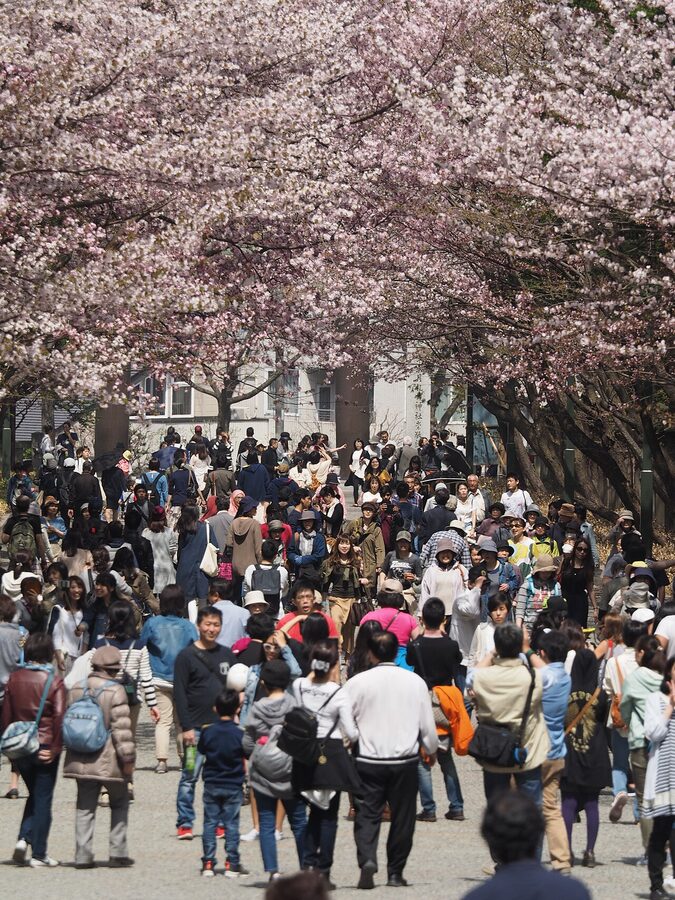
The crowd ranking. Goryokaku in Golden Week is the closest Hokkaido has to the kind of cherry-blossom tourism crush you get on the Meguro River in late March, and it’s still notably less crowded than the Tokyo equivalent because Hakodate is a smaller city. Sapporo’s Maruyama Park during Golden Week is busy on the picnic lawn but the shrine approach is fine. Matsumae is sleepy on weekdays and busy only on the festival’s opening and closing weekends.
Money: factor ¥15,000–25,000 per night for a Sapporo or Hakodate hotel during Golden Week (peak), ¥9,000–14,000 outside the holiday week, ¥6,000–9,000 for a Hakodate business hotel mid-May. Cherry-blossom season is one of the more expensive times to be in either city; the difference between booking three months out and booking three weeks out can be 40 percent. Direct flights from Tokyo to Sapporo run around ¥14,000–28,000 each way during peak, less in the shoulder weeks of mid-May.
What’s actually worth what. Goryokaku Tower deck (¥1,000) earns its fee, because the geometry only reads from the air. Matsumae Castle keep (¥360) is fine but skippable if you’re tight on time; the castle grounds are the point, not the museum inside. Hakodate Park is free and one of the best 90 minutes you can spend in the city. The Lilac Festival is free, runs late May, and pairs naturally with a late-window sakura trip if your dates overlap.
Common questions, brief answers
Is one week enough? Yes, for a Sapporo / Hakodate / Matsumae loop. Three nights Sapporo, two nights Hakodate, day-trip to Matsumae from Hakodate. Add a fourth night in Hakodate if you want the festival illumination at Goryokaku.
Do I need a JR Hokkaido pass? Probably not, unless you’re crossing the prefecture (Sapporo to Asahikawa or further east). For the southern triangle, individual tickets work out cheaper.
Should I do Tohoku and Hokkaido in one trip? Only if you have ten days. The Aomori then Hakodate handover (Hirosaki Castle Park’s late-April illumination, then bullet-train into Hokkaido) is one of the best week-long sakura trips in Japan, but it doesn’t fit cleanly into seven days.
Will the bloom be early or late this year? Check the JMA’s first-bloom forecast (issued from late March, updated weekly) and Weathernews’ independent forecast. Most travel guides quote averages; the actual year you’re travelling can be five days off in either direction.
What if I miss it? Run east. The bloom front in Hokkaido moves south-to-north and west-to-east at roughly the same speed Honshu’s does, so missing Hakodate by three days means you’ll catch Sapporo perfectly. If you’ve missed Sapporo too, the eastern parks at Tentozan and Asahiyama are still ahead. There’s almost always somewhere in Hokkaido at full bloom in May, which is exactly the safety the Honshu sakura window doesn’t offer.
Where this fits in the wider picture
If you’re trying to choose between Hokkaido in May and the standard Tokyo / Kyoto window in late March, the simplest question to ask yourself is: do you want the postcard, or do you want the experience? The postcard is Honshu, in late March, with the trees synchronised across the country and the famous backdrops (Mt. Fuji, Kiyomizu-dera, the Imperial Palace moat) all on at the same time. The experience is Hokkaido, in May, with cooler weather, jingisukan barbecue under the trees, a star fort full of pink, a 7-kilometre cherry road in Shizunai, and a 250-variety castle precinct in Matsumae that nobody from your home country will have heard of. For the full national-scale view of how the bloom front works and where it lands when, the Japan-wide cherry blossom guide walks through the timing in detail. For the city-specific alternatives this article argues you might consider skipping or saving for another trip, the Tokyo and Kyoto guides above set out their own cases.
One last bit of practical advice. The first time I came to Hokkaido for sakura, I made the mistake of trying to do the whole prefecture in five days. I drove from Sapporo to Asahikawa to Abashiri to Hakodate, and arrived at Goryokaku on a perfect afternoon, exhausted, with one hour of light left. Don’t do that. Pick the southern triangle, give it real time, and use the days you would have spent in transit to walk the same park twice in the same week, once at peak and once a day later when the wind has done its work. Hokkaido’s cherry blossom rewards the second visit to the same place more than it rewards the first visit to a long list.
If you go: 06:30 at Goryokaku’s inner moat, 17:00 at the Matsumae castle gate as the western light drops on the keep, and 21:00 at the Maruyama Park lawn after the picnic crowd has thinned, listening to the trees move. Bring a thermos. The wind off the Sea of Japan is colder in May than the temperature suggests.


.jpg)


.jpg)
.jpg)


.jpg)
.jpeg)