
Yamagata is the Tohoku prefecture you should base in, not pass through. Most guides treat it as a side trip, an optional add-on after Sendai or before Aomori, and that's wrong. The Yamagata Shinkansen runs straight off the main spine at Fukushima and dead-ends in Yamagata City and Shinjo, which means almost nobody is on it for transit, only travellers who chose this prefecture on purpose. Choose it on purpose.
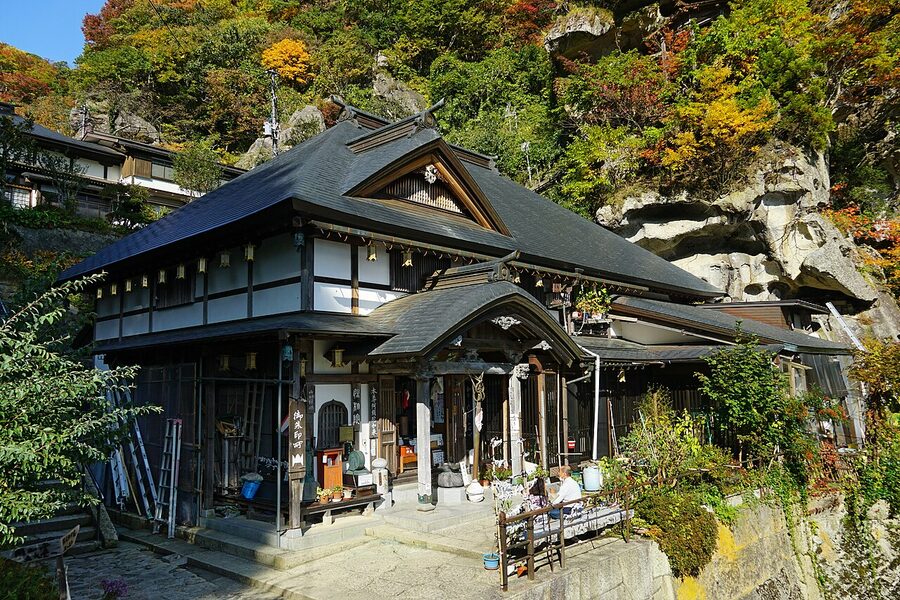
What you actually get for picking Yamagata over its neighbours: a mountain temple where Basho wrote the cicada haiku that every Japanese schoolchild knows, an alpine village where the fir trees turn into rime-ice sculptures every winter, a hot-spring street that looks like the set of Spirited Away (you've seen photos of it whether you know it or not), a 12-kilometre boat ride down a gorge with a boatman who sings as he poles, and the Three Mountains of Dewa, which the Shugendo monks treat as a literal walk through past, present and future. None of that is on the Tohoku Shinkansen spine. None of it is in Sendai or Aomori. You come here for it specifically.
I'm going to spend most of this guide on the four anchors: Yamadera, Zao, Ginzan, and Dewa Sanzan. Then a shorter run through the Mogami River boat, the Sato-Nishiki cherry orchards, the Sakata coast, and where to actually stay so the prefecture works as a base. If you only have two days, do Yamadera and Zao and call it. If you have four, do all four anchors. Five plus, you can add the coast. Tohoku rewards patience and Yamagata rewards it more than most.
In This Article
- What you're choosing between
- Getting to Yamagata, and why it matters
- Yamadera: the temple Basho climbed
- The climb itself
- Eating around Yamadera
- Zao Onsen and the snow monsters
- The Zao Ropeway
- What to do at the village level
- Ginzan Onsen, and why the day trip beats the overnight
- The day-trip case
- The 2025 rule everyone needs to know
- If you do stay overnight
- Dewa Sanzan: the Three Mountains
- Mt Haguro: the five-storied pagoda
- Mt Gassan: summer-only
- The Mogami River boat
- Sato-Nishiki cherries: three weeks of the year
- The Sakata and Tsuruoka coast
- Yamagata City and where to base yourself
- Where to stay, by base
- What to eat
- When to come
- How Yamagata fits a wider Tohoku trip
- One last thing
What you're choosing between
Quick read for the reader who skims, then I'll unpack each one. Prices verified on the operators' own sites in May 2026.
| Place | Best season | Time needed | Cost | One-line verdict |
|---|---|---|---|---|
| Yamadera (Risshakuji) | Late October to early November (autumn colours), or any clear day | Half day from Yamagata City | ¥500 entry | The 1,015 stone steps are the point. Don't skip the climb. |
| Zao Onsen, snow monsters | Late January to early March | Full day from Yamagata City, better as overnight | Ropeway round trip ¥4,200 in winter | Worth the cold queue. Nothing else in Tohoku looks like this. |
| Ginzan Onsen | Winter for the snow-and-gas-lamp look, summer for fewer crowds | Day trip beats overnight unless you're booking far ahead | Free to walk around. Onsen day passes ¥500–1,000. | Day trip with the dusk-lamp window. Read the 2025 access rules first. |
| Dewa Sanzan (Three Mountains of Dewa) | Mt Haguro year-round; Gassan and Yudono summer only | Half day for Haguro, full day if you climb Gassan | Haguro free; Yudono Hongu shrine fee ¥500 | The five-storied pagoda is one of Tohoku's great photographs. Climb the 2,446 steps if your knees allow. |
| Mogami River boat | Mid-September to early November (autumn) or January to early March (heated boat) | Half day with the boat plus return transit | ¥3,000 adult one-way fare | The boatman's song is real and the gorge earns its reputation. |
| Cherry picking, Sato-Nishiki | Mid to late June only | Couple of hours at an orchard | ¥2,500 all-you-can-eat | Three weeks of the year. Plan the whole trip around it if you're in Japan in June. |
Getting to Yamagata, and why it matters
The Yamagata Shinkansen Tsubasa runs from Tokyo Station to Yamagata in 2 hours 45 minutes, and continues on to Shinjo. It's the only shinkansen on the line because the line itself is a hybrid. South of Fukushima, it shares track with the Tohoku Shinkansen heading to Sendai and Aomori. North of Fukushima, it splits off and runs on regular-gauge track at lower speed, which is why the Tsubasa cars are narrower than a full shinkansen, and why the journey from Tokyo costs around ¥11,250 for a reserved ordinary seat (verify before booking; JR East has been raising fares from March 2026 for the first time since the company was founded).
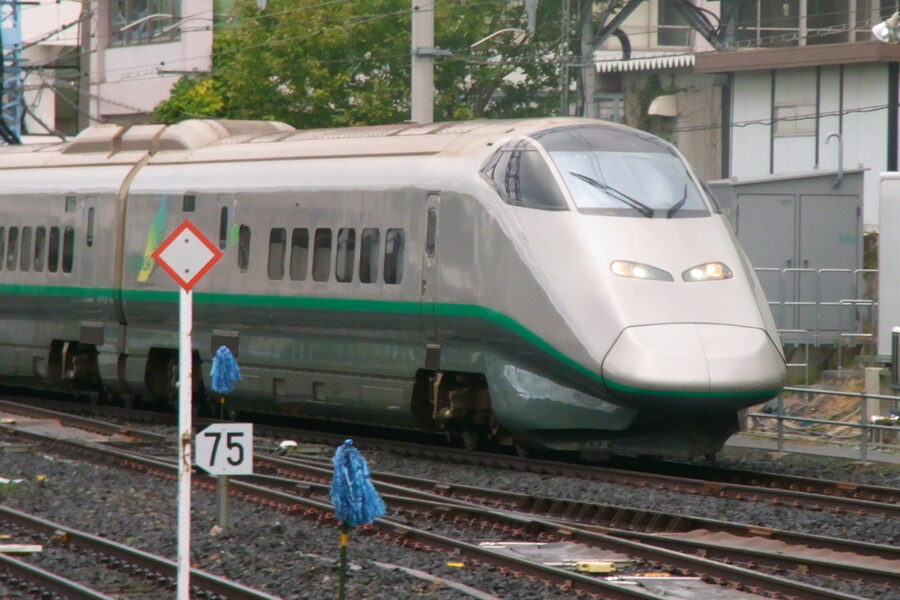
Coming in via Sendai works too if you're combining with the rest of Tohoku. The JR Senzan Line runs from Sendai to Yamagata in about 1 hour 20 minutes, around ¥1,170, and Yamadera sits roughly halfway along that line, which makes it a clean Sendai day trip if you're short on time. Most of my own first visits were exactly that pattern: Sendai breakfast, Yamadera by mid-morning, back to Sendai for gyutan dinner. It works. But if you only ever do that, you've missed the prefecture.
If you're using the JR East Pass or the national Japan Rail Pass, the Yamagata Shinkansen is fully covered. The flexibility of the JR East Pass for five days within fourteen is what makes the whole northern-Honshu plan workable on a single ticket, and Yamagata sits inside its zone.
Yamadera: the temple Basho climbed
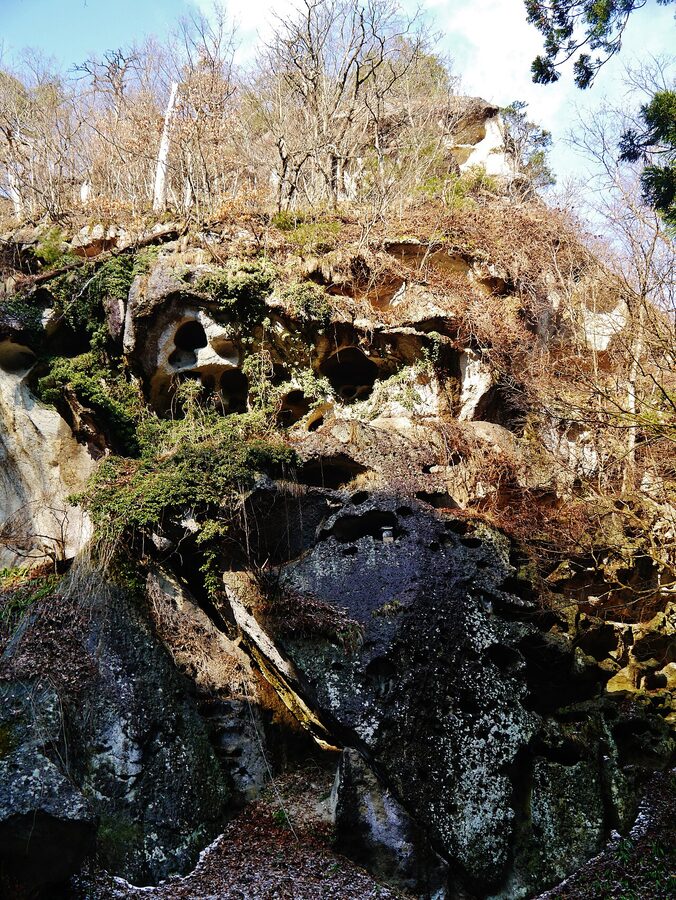
Risshakuji Temple, called Yamadera (literally “mountain temple”) by everyone except its own monks, was founded in 860 by the Tendai priest Ennin. The temple sprawls across a forested cliff face above the Tachiya River valley, a hundred-or-so buildings linked by a single staircase that rises 1,015 stone steps from the valley floor to the Okunoin hall at the top. The most famous visitor was Matsuo Basho, who walked through in 1689 and wrote one of the best-known haiku in Japanese: “Stillness, the cicada-cry seeps into the rocks.” You'll find Basho's statue at the base, with a stone inscription of the original verse beside it.
The entry fee was raised to ¥500 for adults on 1 April 2025 (it was ¥300 before; the temple confirmed the change on its official site, rissyakuji.jp). Children pay ¥200. The mountain gate opens at 08:00 from April to November and closes at 16:00 (last entry); from December to March it opens at 08:30 and closes at 15:00, with weather closing it earlier in heavy snow. Cash only.
The climb itself
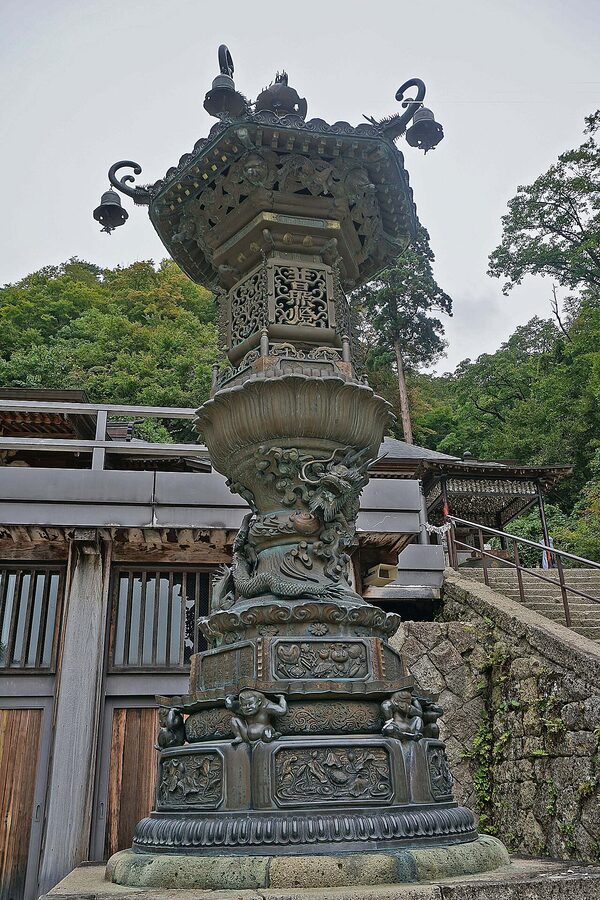
The 1,015 steps sound worse than they are. Pace yourself, take a breath at every level shrine, and budget around 45 minutes up if you're reasonably fit. The first sixty steps are the steepest. After Semizuka (the “cicada mound,” a small monument where some accounts say Basho's slip of paper with the haiku is buried) the path eases into a cedar tunnel that winds back and forth. The trick is that the famous photograph of the cliff buildings is taken from a viewing platform halfway through the climb, not the top. So if you're running short of time or your knees are complaining, you can stop at Niomon gate, take the photo, and turn back. You'll have done about 700 of the 1,015 steps.
Don't do that. Go to the top.
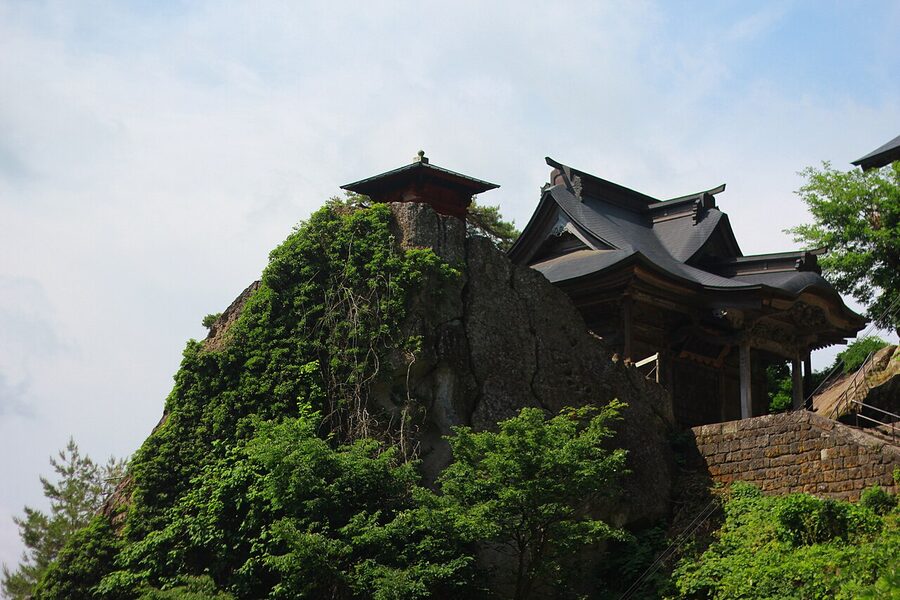
The reason: the actual buildings everyone photographs (Kaisando hall, the small red Nokyodo sutra hall) are at the upper level, and they're open to walk around when you reach them. From the platform of Godaido, the cliff-edge wooden Noh stage built in 1714, you look out across the whole Yamadera valley. On a clear day you can see Yamagata City's plain in the distance and the line of the Ou mountains beyond it. Cicadas in summer, scarlet maples in late October. If you only have one day in Yamagata, this is what you came for.
Eating around Yamadera
The base of the climb has half a dozen small shops selling tama-konnyaku, the round konnyaku skewers boiled in soy broth that have become Yamadera's signature snack. They're ¥100 a stick, served scalding. There's also a row of cafes if you want something more substantial before or after the climb, but eating heavy before 1,015 steps is a mistake. Save the soba for after. The walk from JR Yamadera Station to the climb entrance takes five minutes; trains run from Yamagata roughly twice an hour on the JR Senzan Line, around ¥240, twenty minutes.
Zao Onsen and the snow monsters
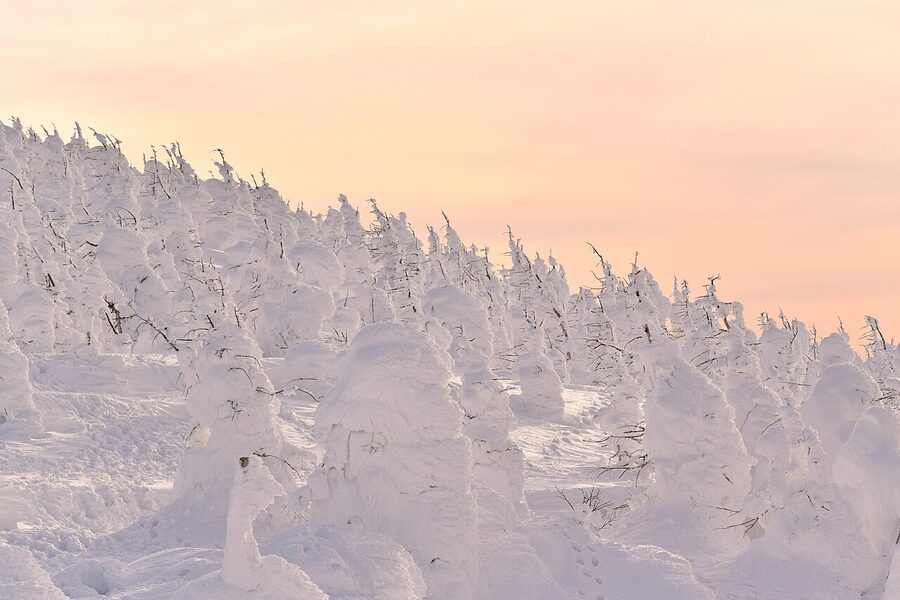
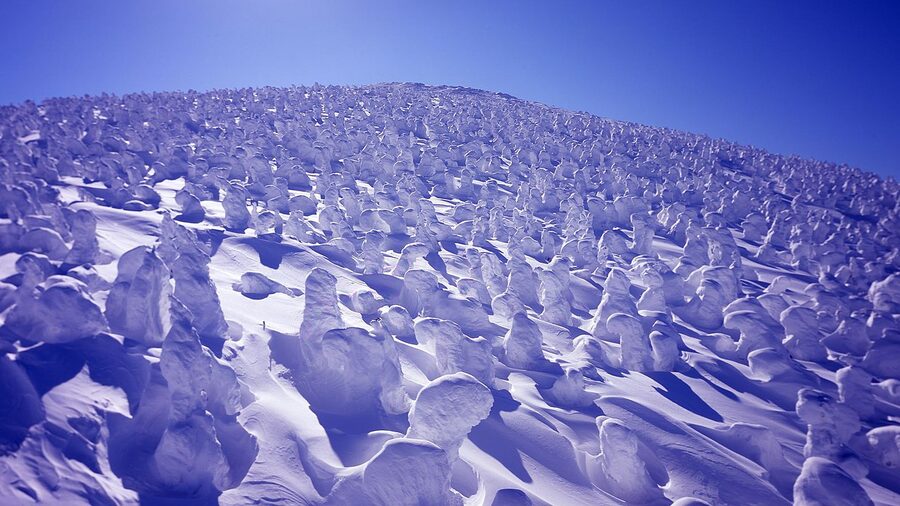
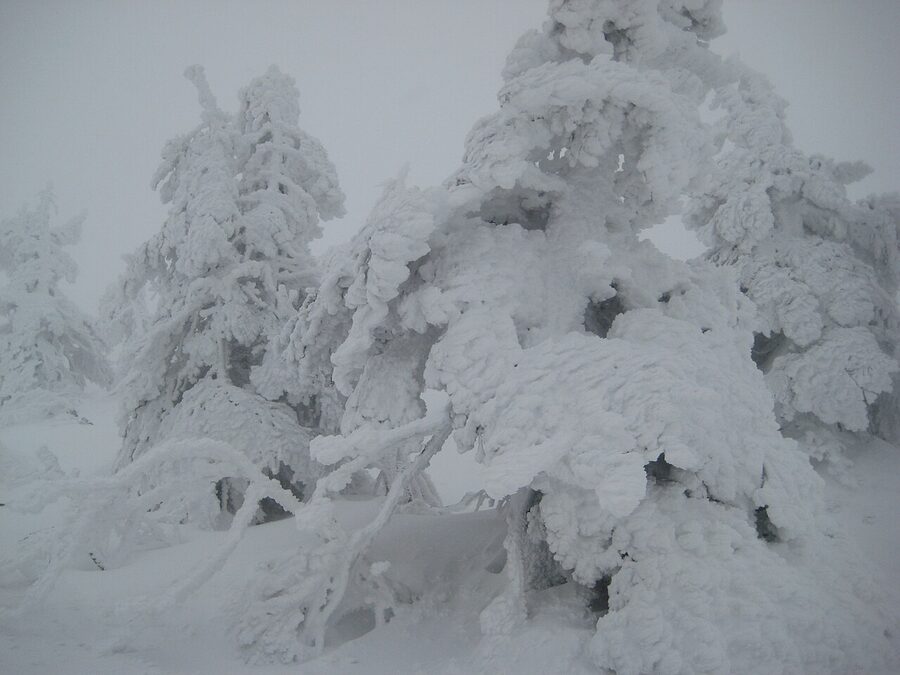
The snow monsters of Mt Zao, called juhyo in Japanese (literally “tree-ice”), are the strangest landscape feature in Tohoku and the single best reason to come to Yamagata in winter. They form when supercooled fog blowing off the Sea of Japan freezes onto the windward side of Aomori firs near the summit of Zao, building up over weeks until each tree becomes a hooded white sculpture sometimes three metres taller than the trunk underneath. The conditions only occur on a handful of mountains in Japan: the most photographed concentration is here at Zao, and a smaller stand sits on Mt Hakkoda up in Aomori.
The viewing season is roughly late December to early March. The peak is the first three weeks of February, when the trees are at their tallest and densest. By mid-March the structures start to slough off in chunks and by month-end they're mostly gone. February also gives you the Juhyo Light-up, an evening illumination that runs from late December to early March on selected dates, when the upper-mountain trees are floodlit and you can ride the ropeway up after dark.
The Zao Ropeway
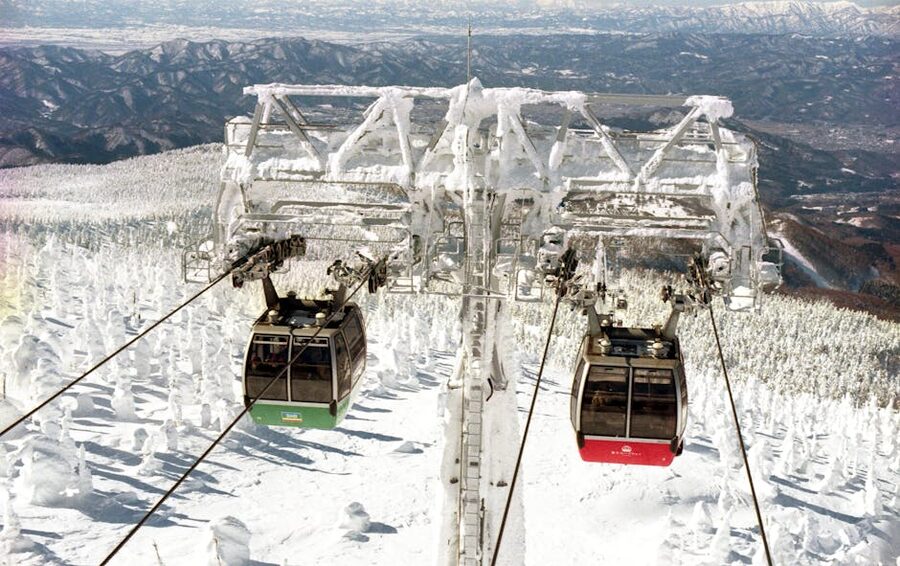
The ropeway is run in two stages. The first stage from Sanroku Station rises to Juhyo Kogen, where you're already in some smaller juhyo. The second stage from Juhyo Kogen to Jizo Sancho takes you to the summit, 1,661 metres, and into the proper army of monsters. Round-trip both stages costs ¥4,200 for adults in winter, ¥2,800 in non-winter (children half price). Confirm pricing on zaoropeway.co.jp before you go because it changes seasonally.
Realistic warning: if it's a clear weekend in February, the queue at Sanroku for the morning ride can run an hour or longer, in temperatures that hit minus ten on a calm day. Buy your ticket online if you can, dress for outside, and get there at opening (around 08:30 in season). The ride itself is about fifteen minutes total. The monsters look better in low afternoon light if you can manage the timing, but you also risk the upper ropeway closing for wind in the afternoon, so I'd still go in the morning if you're only there one day.
What to do at the village level
Zao Onsen village sits at 880 metres, well below the juhyo zone, and is one of the oldest hot-spring villages in Tohoku. The water is highly acidic sulphur, with a pH around 1.3. It feels strong on the skin, smells like an old kettle, and is locally claimed to be good for circulation; you'll see locals at the public baths every morning regardless of season.
The famous open-air bath, Zao Onsen Dai-Rotenburo, is closed in winter. This catches a lot of visitors out: it operates roughly mid-April to mid-November only, ¥800 adult, and the milky-blue stream you bathe in is the same sulphur water as the inside ryokan baths but in a forest setting. If you're here for snow monsters, you don't get the rotenburo. Stay overnight at a ryokan with its own outdoor bath instead. Takamiya Ryokan Komachi and Zao Hotel Lucent both have kashikiri (private-bookable) outdoor baths and sit a short walk from the ropeway base.
Hotel listings: Takamiya Bettei Kogetsu / Miyamaso (Booking.com | Official site) for the proper acidic-spring experience; Zao Astraea Hotel (Booking.com) if you want ski-in convenience right at the slopes. Verify availability and current rates on the platforms.
Ginzan Onsen, and why the day trip beats the overnight
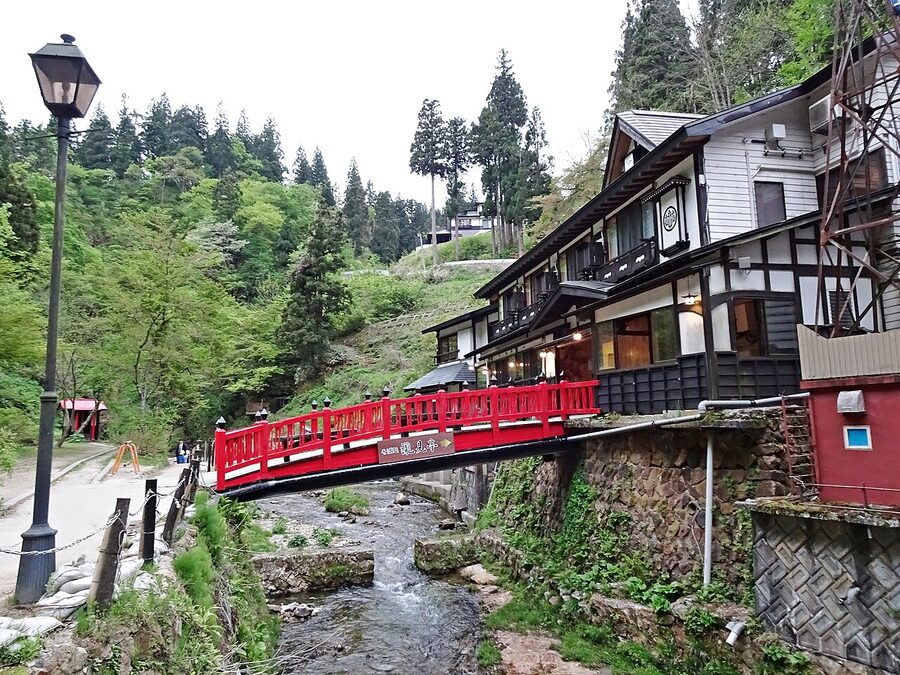
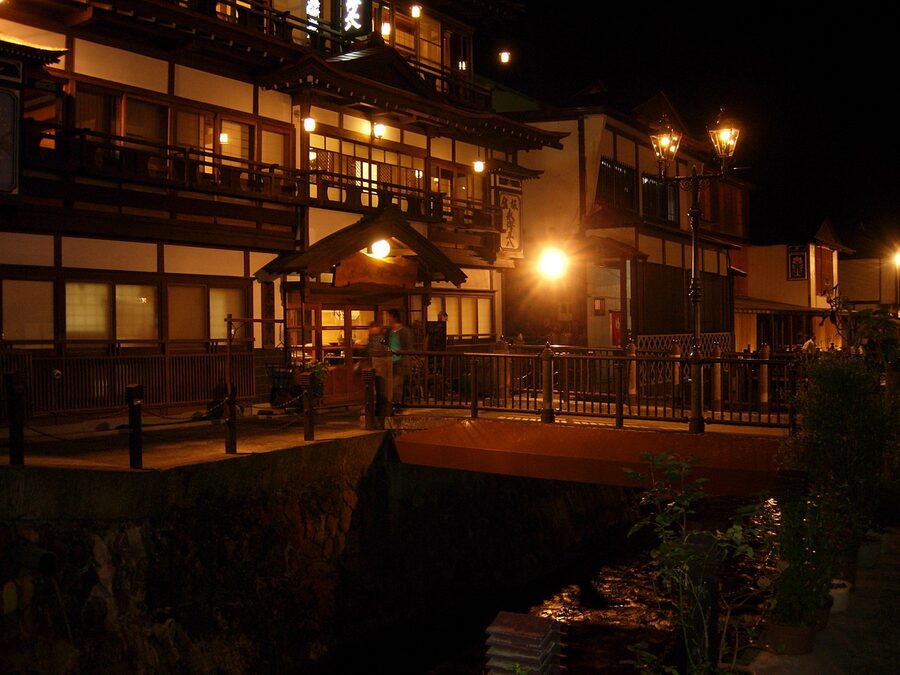
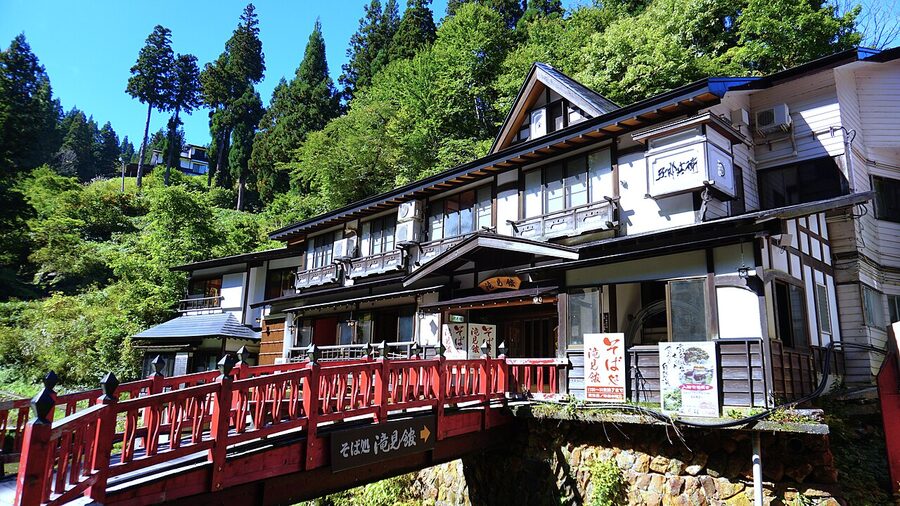
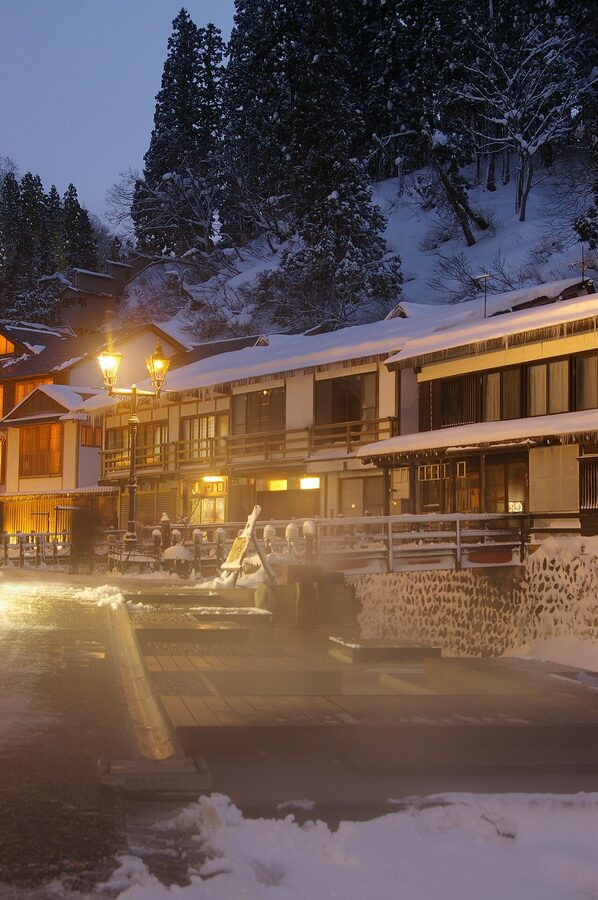
Ginzan Onsen is the famously photogenic hot-spring street where wooden three- and four-storey ryokan line both sides of the Ginzan River, gas-style street lamps glow at dusk, and the whole tableau in winter snow looks like the bathhouse from Spirited Away (which it inspired, although the film's art director has been clear that the actual inspiration was a composite). It's also the place where the gap between Instagram and the on-the-ground experience is widest in Tohoku.
The contrarian take: a day trip works better than an overnight stay for most travellers, and the official rules now make this even more true.
The day-trip case
Three reasons. First, the inns are tiny family-run places, often six to fifteen rooms each, and they book out a year in advance for winter weekends. To stay overnight in the period when Ginzan looks best, you usually need to plan further ahead than the rest of your trip allows. Second, the rooms cost from around ¥30,000–60,000 per person per night with two meals, and the meals are kaiseki set courses you'll have eaten elsewhere. Third, and most important, the famous gas-lamp glow only happens for about an hour and a half: the lamps come on around dusk and the street is at its peak from 17:00–18:30. You can experience that on a day trip if you arrange your transport right. You just have to leave before the buses stop.
Day-trip access from Yamagata: take the Yamagata Shinkansen up to Oishida Station (about 35 minutes), then the Hanagasa-go bus to Ginzan Onsen (about 35 minutes, ¥1,000 one way). Buses run roughly every 90 minutes to two hours; check the schedule the night before. Last bus from Ginzan back to Oishida is around 17:30, which means if you want the lamp-lit street, you stay until just before that and ride back. From Oishida, the Tsubasa back to Tokyo runs reasonably late.
The 2025 rule everyone needs to know
From winter 2025 onwards, Ginzan Onsen has imposed strict day-tripper limits because the place was being overwhelmed. The rules apply roughly 20 December to 1 March each year. Daytime (09:00–16:00) is unrestricted. From 17:00–20:00, only 100 day visitors per hour are allowed, and the only access is via a paid shuttle bus from the Taisho Romankan visitor centre in Obanazawa, ¥1,150 each way per person; you cannot drive in. From 20:00 onwards, the village is closed to non-staying guests entirely, and from 08:00–09:00 the same restriction applies. Confirm the year's exact rules on ginzanonsen.jp before you commit.
That sounds like a hassle, and it is, but the practical effect is that the street is dramatically less crowded in the lamp-lit window than it was two years ago. The cap forces a calmer experience. Plan to arrive at Ginzan around 15:30, walk the street in daylight, soak in the public bath, then watch the lamps come on. Take the shuttle out at 19:00 or 19:30. Catch the last bus from Oishida back to Yamagata.
If you do stay overnight
It's worth doing once if you can secure a room. Notoya Ryokan has the best old-Taisho atmosphere; Fujiya Ryokan was rebuilt by Kengo Kuma in 2006 and is the architect's most quietly admired Tohoku project (it's currently closed for refurbishment as of early 2026, so check status). Booking links: Notoya Ryokan (Agoda | Official site); Ginzanso (Agoda | Official site) is on the hill above the village, slightly more reservable, with a bus shuttle. Plan a year out for winter dates.
Dewa Sanzan: the Three Mountains
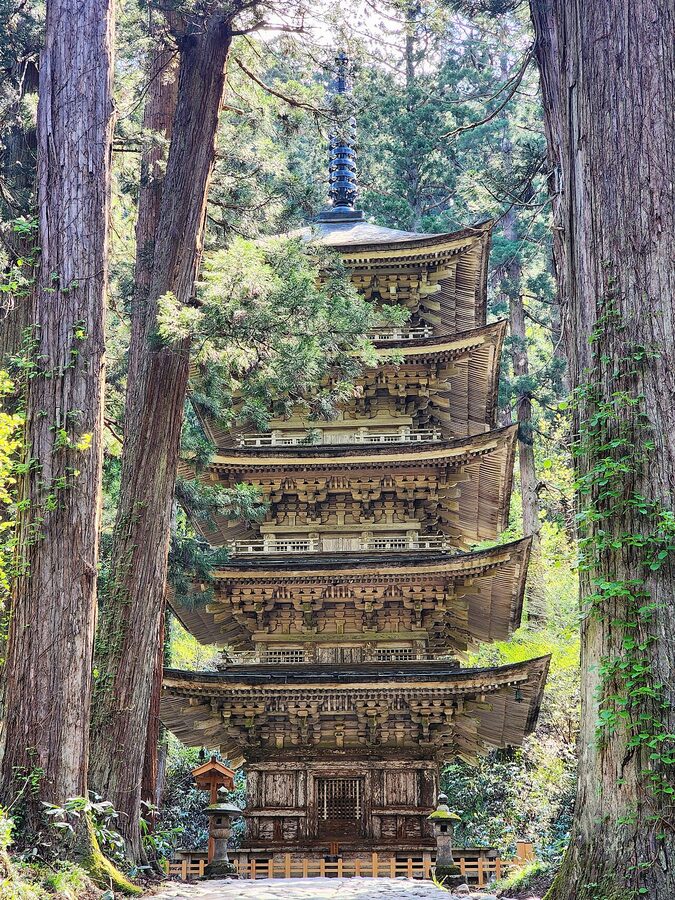
The Three Mountains of Dewa, Dewa Sanzan, are Mt Haguro, Mt Gassan, and Mt Yudono, and together they form one of Japan's oldest pilgrimage circuits. The Shugendo monks (mountain ascetic Buddhists) treat the climb as a literal walk through past, present and future: Haguro represents the present, Gassan the past, Yudono the rebirth into future. Pilgrims who walk all three in white robes are called yamabushi; you'll see a few during summer.
For travellers, Haguro is the year-round one and the priority. Gassan and Yudono only open in summer (roughly July through September) because the upper trails are buried in snow the rest of the year. Haguro is reachable from Tsuruoka on the Sea-of-Japan side; you can do it as a day trip from Tsuruoka or as part of a longer Sakata-Tsuruoka loop.
Mt Haguro: the five-storied pagoda
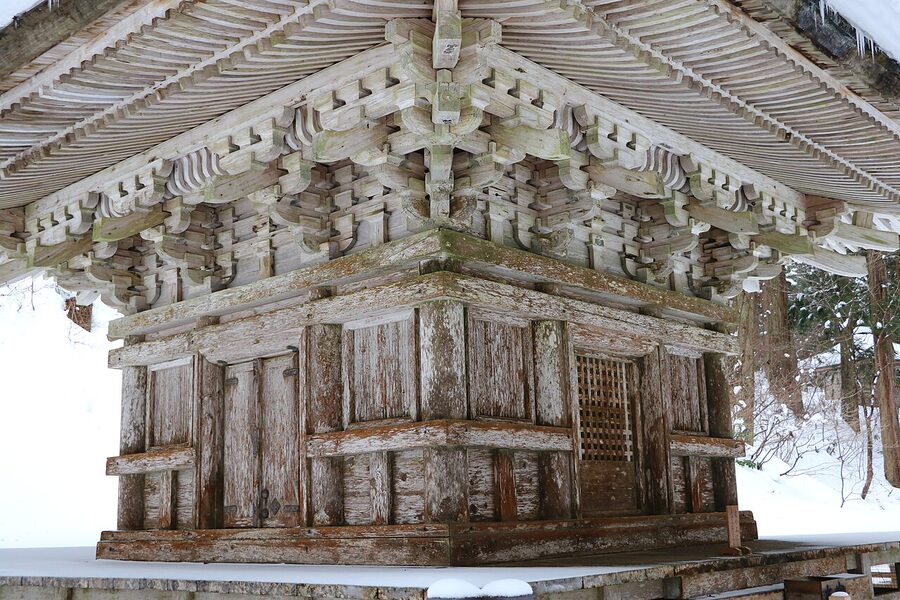
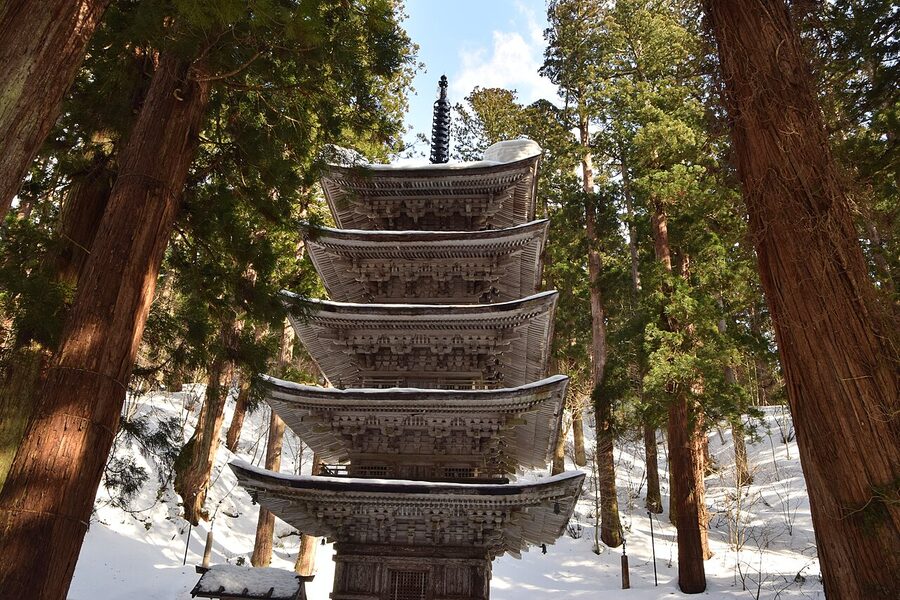
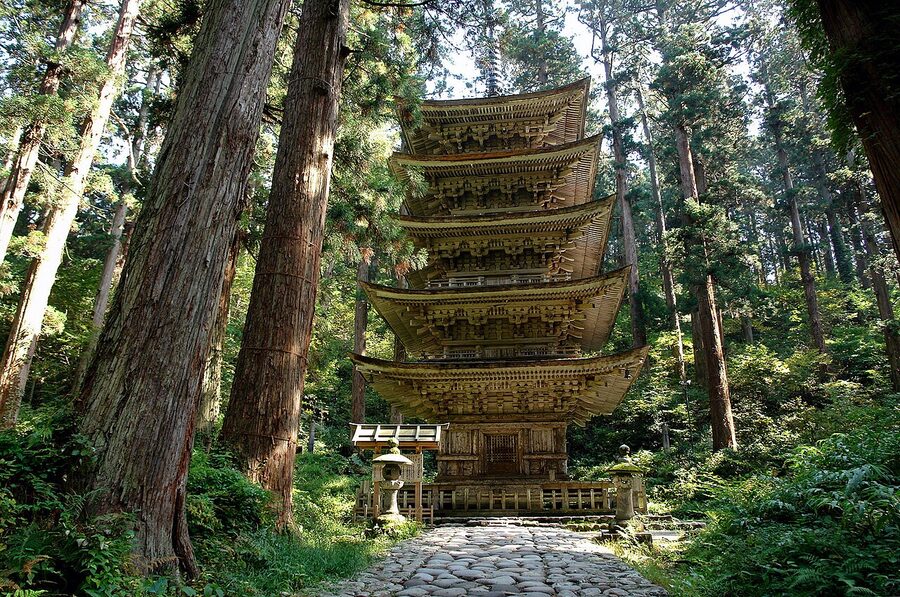
The five-storied pagoda at Mt Haguro is, in my opinion, the single best Tohoku photograph you can take. It stands deep in a cedar forest about ten minutes' walk up the pilgrim stairs from the Zuishinmon gate at the base. The pagoda is unpainted cypress, 29 metres, with a wood roof in kokerabuki shingle (overlapping cypress slats), and it's been a National Treasure since 1966. The current structure is around 600 years old; a pagoda has stood on the site since the 10th century.
The full pilgrim climb to the summit shrine is 2,446 stone steps and takes about an hour and a half going up, around 50 minutes coming down. About a third of the way up there's a teahouse called Ninosaka Chaya which has been serving travellers chikara mochi (energy mochi) for centuries. Pause there. The shrine at the top, Sanjin Gosaiden, houses the deities of all three mountains in one building, which is why pilgrims short on time treat Haguro as a stand-in for the full circuit. There's also a road if you can't do the steps; the bus from Tsuruoka Station goes all the way to the top in summer (around 50 minutes, ¥1,200, seasonal). Verify schedules on dewasanzan.com.
Mt Gassan: summer-only
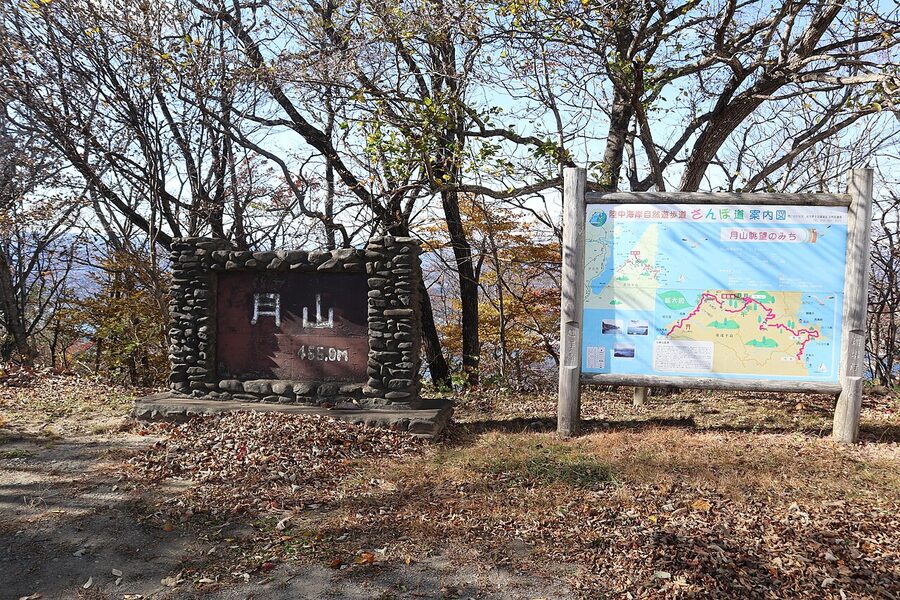
Mt Gassan, 1,984 metres, is the middle and tallest of the three. The summer climbing season runs roughly from July to mid-September; outside that the upper trail is impassable. The most popular access is from Hagurosan: take the seasonal bus to Gassan Hachigome (the eighth station, around 1,400 metres), then climb three to four hours to the summit shrine. The flowers in late July and August are why you go: the alpine meadows here are some of the densest in Honshu.
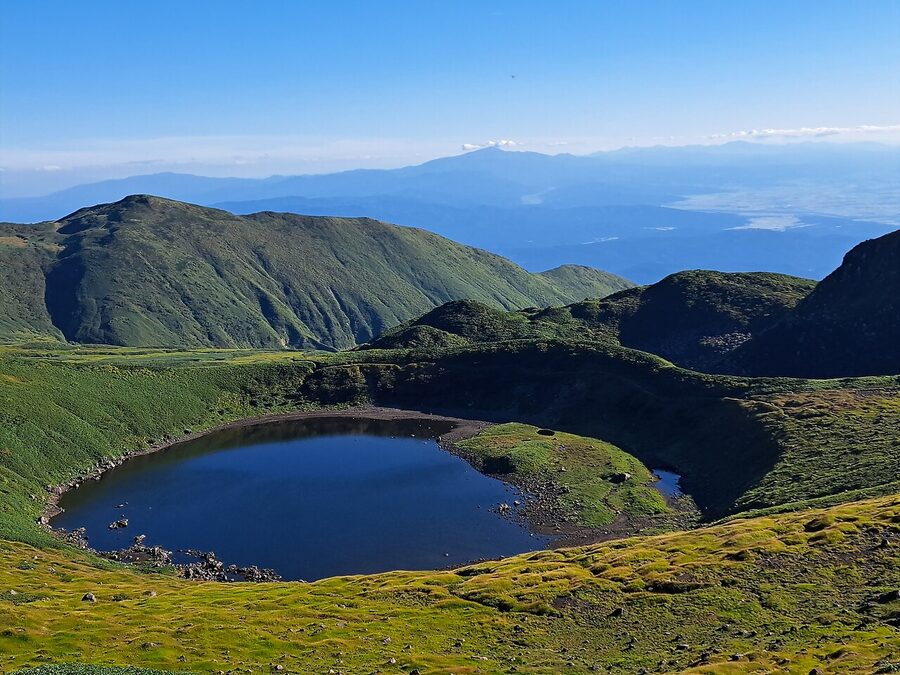
Mt Yudono is the third, accessible by a road tunnel from the Asahi side; the “shrine” itself is a sacred rock you can't describe in writing or photograph (the rule has been honoured since the 8th century, so I won't test it). Visitors remove their shoes, are blessed, and walk barefoot to it. It's a thirty-minute experience and one of the most genuinely strange in Honshu. The Hongu shrine fee is ¥500; the shrine is open from May to early November, weather permitting. If you're building a Dewa Sanzan day, doing all three in one go is possible only by car or by booking a Shugendo-led tour from dewasanzan.com directly.
The Mogami River boat
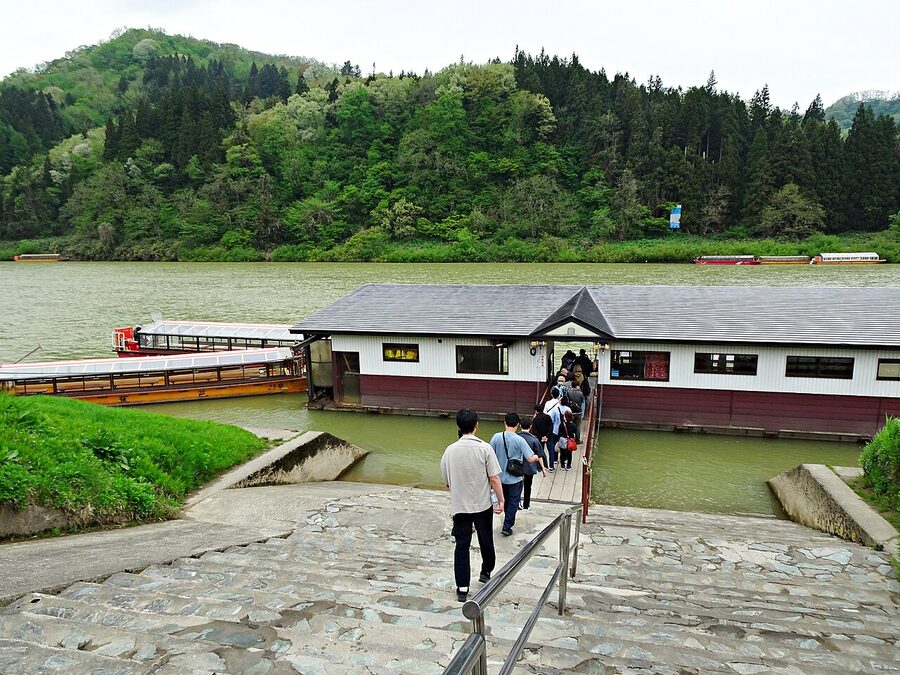
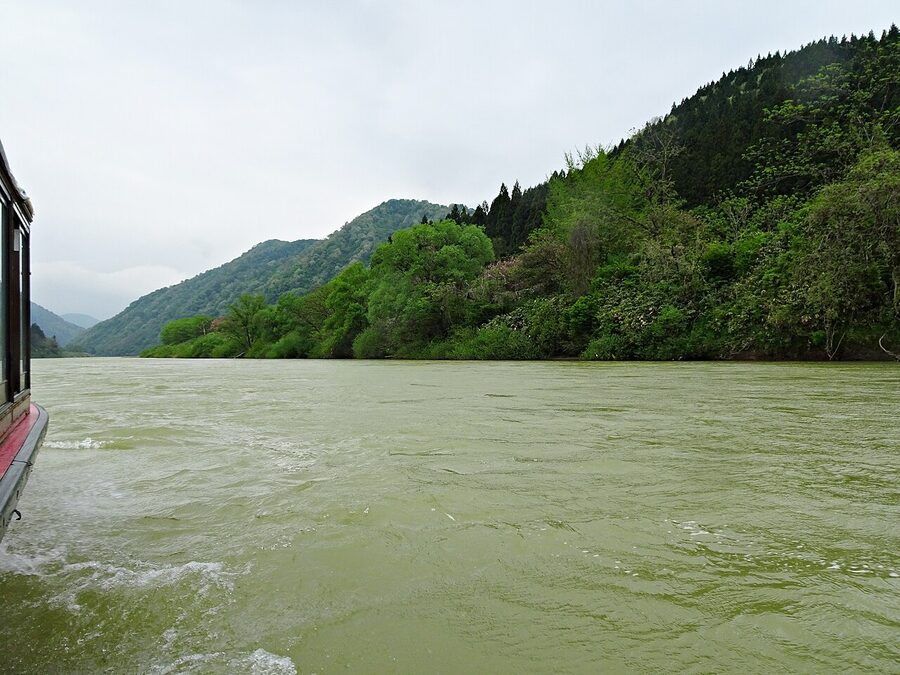
The Mogami River boat is a 12-kilometre downstream ride through one of Japan's three classic river gorges, between Furukuchi (near JR Furukuchi Station) and the Kusanagi landing point. The boatmen sing the Mogami-gawa Funa-uta, the boat song, as they pole; this is one of those tourist things that is also genuinely good, because the song is older than the tourist trade and the men singing it have done the route every working day of their adult lives.
Adult one-way fare is ¥3,000, child ¥1,500, operated by Mogamikyo Basho Line (blf.co.jp). The trip takes about an hour. April to November the boats are open-side; December to March the winter version has a heated cabin with a sunken kotatsu, which is its own experience. Autumn (mid-October to mid-November) is the popular peak; winter has snow on the gorge walls and almost no other tourists. I'd pick winter for atmosphere and autumn for the photographs.
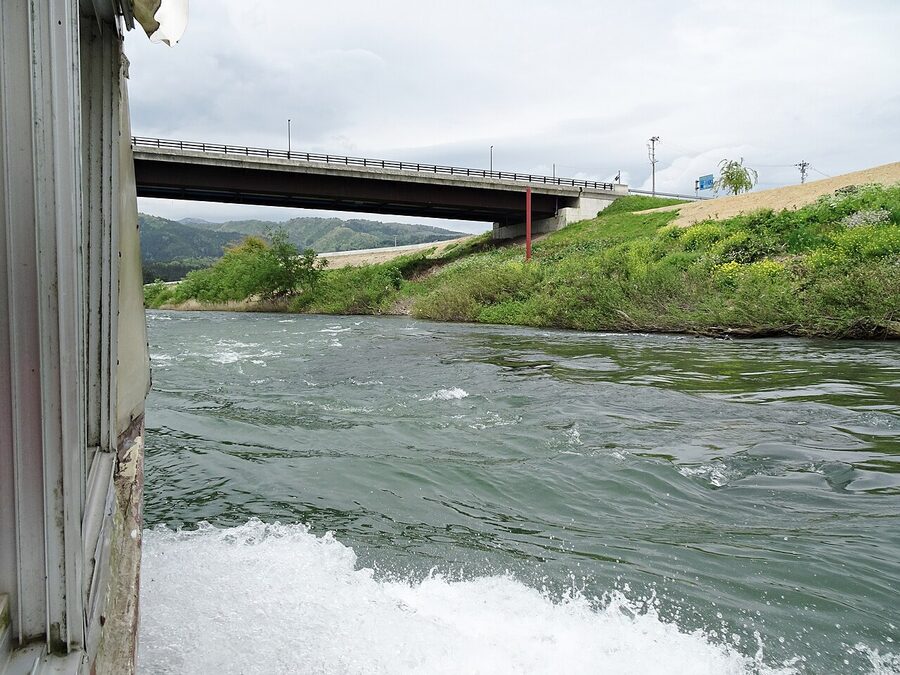
Practical warning: there are three landing points and most travel agency descriptions get the geometry wrong. The standard tourist trip is Furukuchi to Kusanagi (1 hour, downstream). After Kusanagi you're a 25-minute taxi from JR Sakata Station, or a return bus to Furukuchi if the schedule aligns. If you're doing the boat as a day trip from Yamagata City, plan it as: morning Tsubasa to Shinjo, transfer to the Rikuu West Line to Furukuchi, board the boat, end at Kusanagi, taxi to Sakata, evening Inaho limited express back to Yamagata or onwards to Niigata. It works but it eats the day.
Sato-Nishiki cherries: three weeks of the year
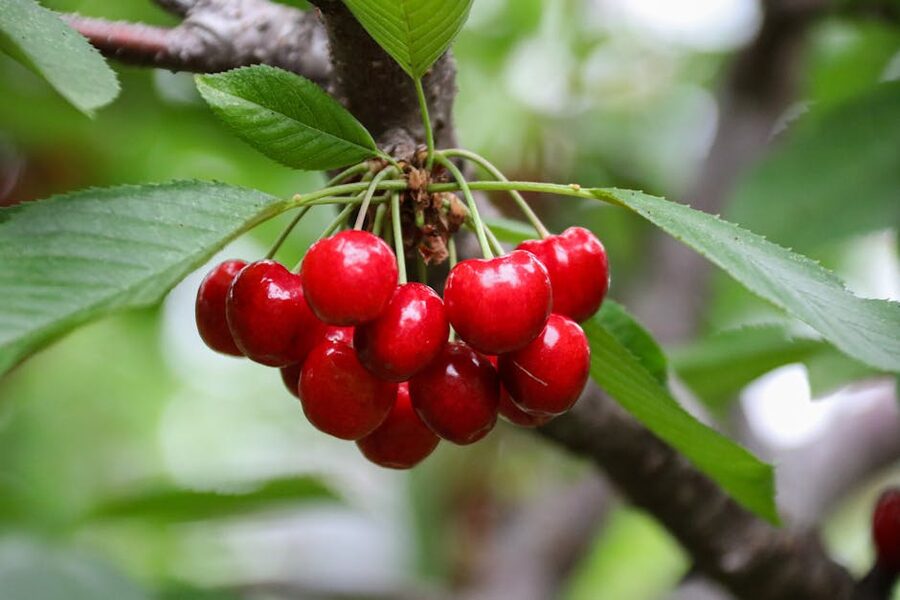
Yamagata is Japan's “fruit kingdom,” and the Sato-Nishiki cherry is its most famous export. The cultivar was developed by a farmer named Ei Sato in the village of Higashine in 1928 and is a cross between Napoleon and Governor Wood; the bright red fruit, sweet-tart balance, and short pickable window made it the standard Japanese eating cherry within a generation. The first auction of the season every June regularly produces price records (a single 500-gram tray went for ¥800,000 a few years ago).
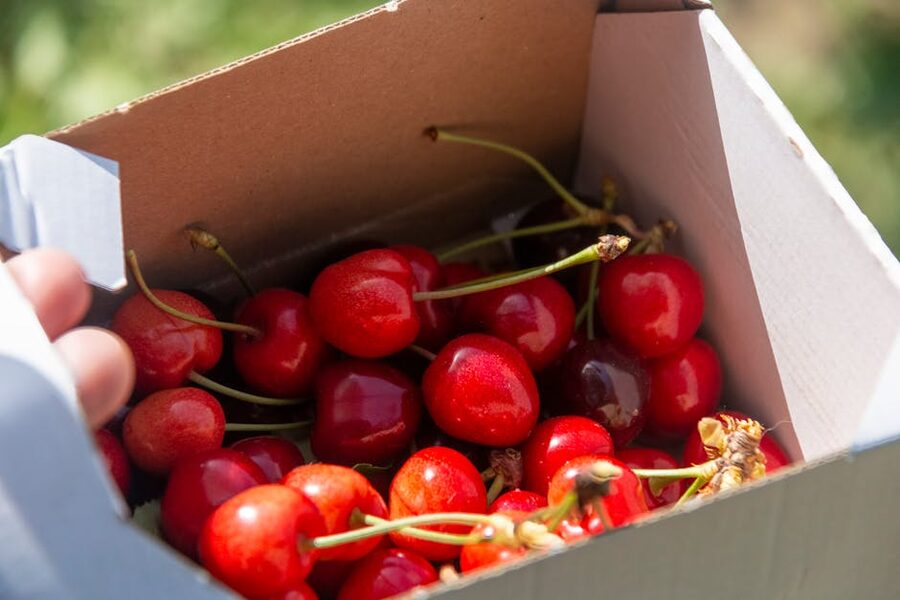
The actual season is short: roughly mid to late June, three weeks total. Pick-your-own orchards in Sagae, Higashine, and Tendo open during that window for an all-you-can-eat fee. The standard rate is ¥2,500 for adults, ¥1,300 for elementary children, no time limit, all the cherries you can eat in 30 to 60 minutes which is less than you think. Sansen Tourist Cherry Association in Sagae has run since 1968 and books out for weekends; weekdays are usually walk-in. Higashine offers a ¥500 discount if you scan a QR code on entry, which is the kind of small-town promotional flourish I'd miss writing about anywhere else.
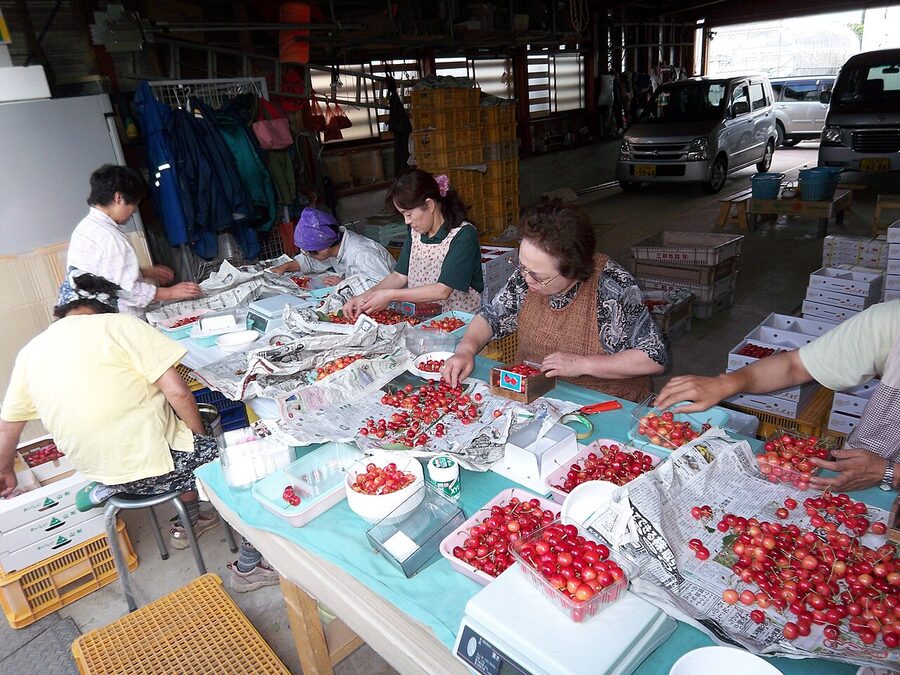
If you're in Japan in mid-June, plan around this. Train to Tendo or Sagae from Yamagata City (about 15 minutes Tendo, 30 minutes Sagae on the JR Aterazawa Line or Yamagata Shinkansen for Tendo), grab the orchard from the tourist information booth at the station, eat too many. Plan to feel slightly ill for an hour afterwards. It's worth it.
The Sakata and Tsuruoka coast
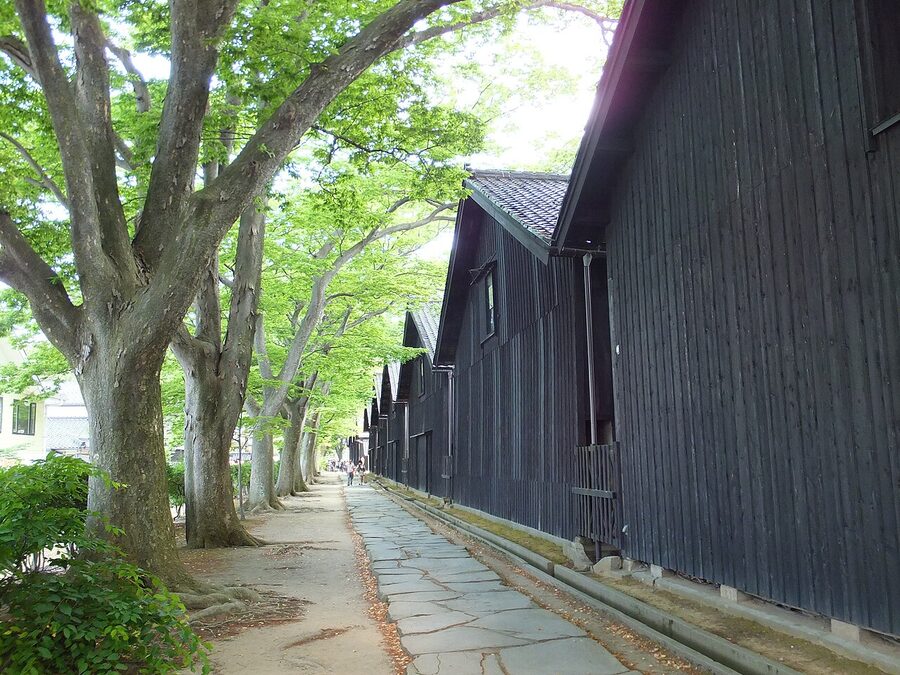
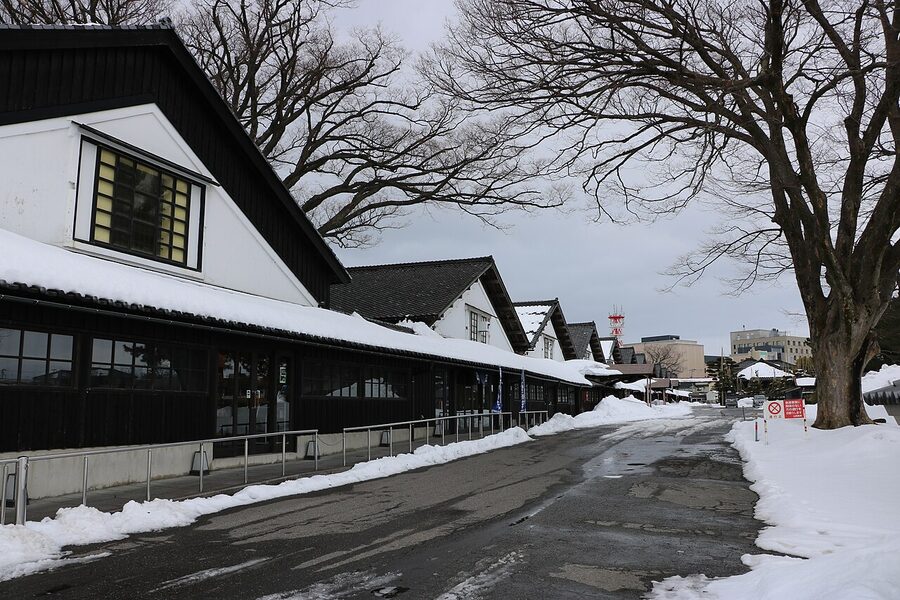
The west side of Yamagata, on the Sea of Japan, is sleepier than the east and most foreign visitors don't reach it. They should. Sakata, on the coast, is the old port that supplied Edo with rice during the Edo period and still has the storehouses that did the work: the Sankyo Warehouses (Sankyo-Soko), twelve interconnected white-walled rice stores built in 1893, with the famous row of keyaki (zelkova) trees behind them shading the buildings from the western sun. They're still in working use, with the Shonai Rice Historical Museum attached. Free to walk around the trees; the museum is ¥320.
Sakata also has the geisha hall Somaro, where you can watch a short performance over lunch (one of only a handful of traditional geisha houses still operating in Tohoku), and the Kaikoku-ji Sokushinbutsu temple in nearby Ohira, where one of Japan's mummified-monk Buddhas is on display. (Sokushinbutsu, monks who self-mummified through ascetic practice during life, is a regional Yamagata tradition; there are five preserved sokushinbutsu in the prefecture.)
Tsuruoka, 30 minutes south of Sakata on the Inaho limited express, is the gateway for Mt Haguro, but it's also the start of the Shonai coast and home to the Kamo Aquarium, the world's largest jellyfish aquarium with over 80 species on display (¥1,000 adult). Tsuruoka also has the Chido Museum, an open-air collection of relocated regional buildings on the grounds of an old Sakai-clan retainer's house.
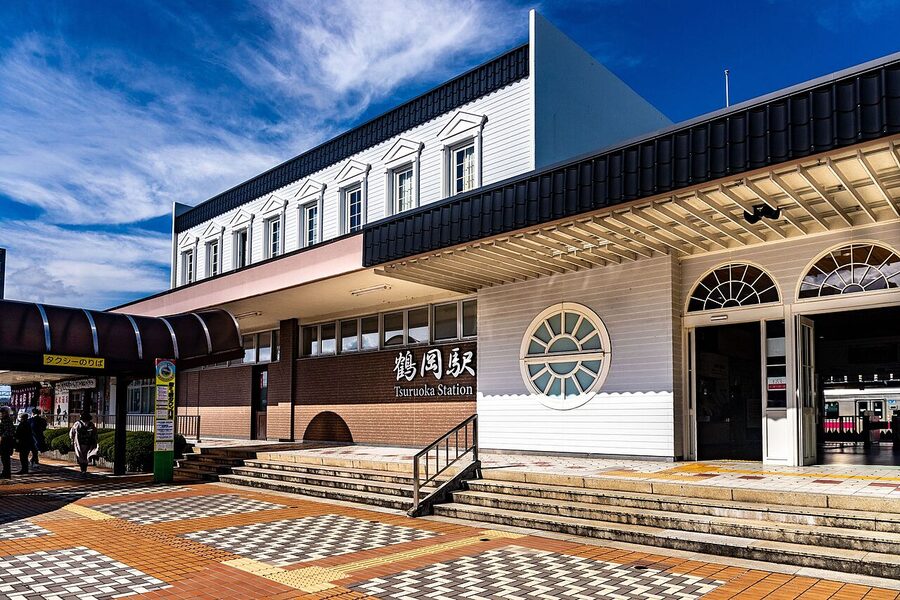
Practical: Sakata and Tsuruoka are both on the JR Uetsu Main Line and the Inaho limited express runs the route hourly between Niigata and Akita with stops at both. From Yamagata City, go via Shinjo on the Rikuu West Line; from Tokyo, you can also come via Niigata on the Joetsu Shinkansen plus Inaho, which takes about four hours and uses different track than the Yamagata Shinkansen. If you're looking at a multi-region trip, the Niigata route makes more sense than backtracking.
Yamagata City and where to base yourself
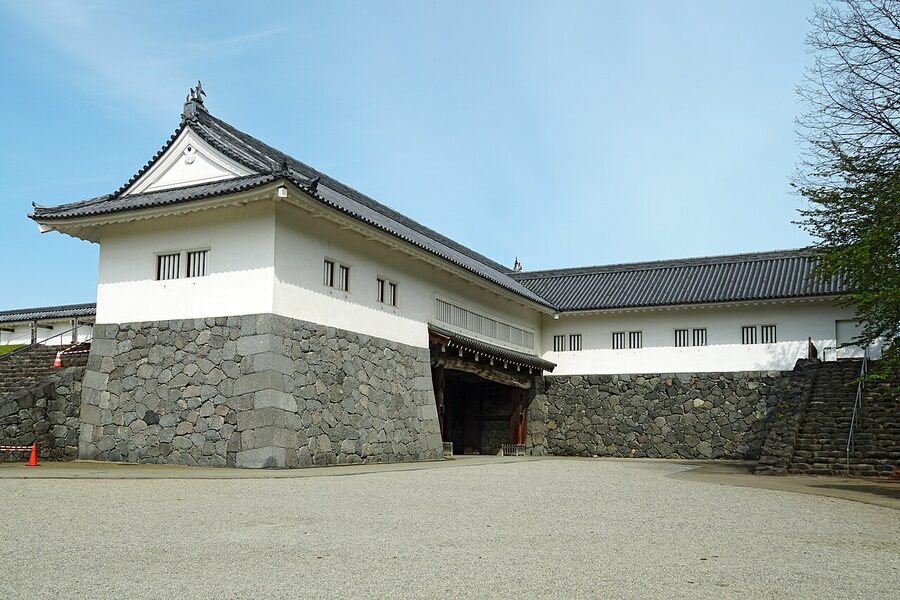
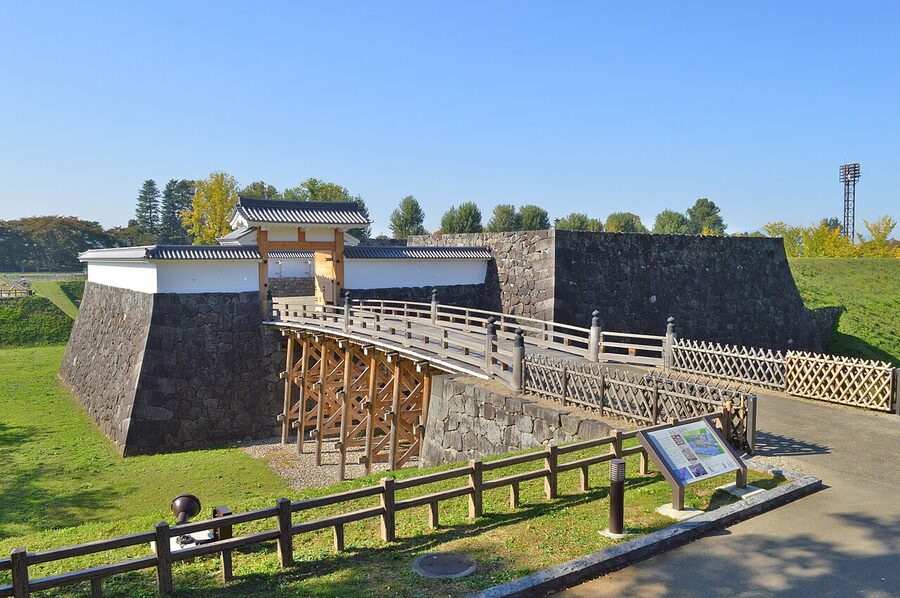
Yamagata City is small and not pretty in the way Sendai is pretty, but it's the practical base for everything in the eastern half of the prefecture. The city was the seat of the Mogami clan during the Edo period, and the remains of Yamagata Castle (now Kajo Park) are a fifteen-minute walk west from Yamagata Station. The reconstructed Higashi Otemon gate and the moats are pleasant in spring when the 1,500 cherry trees come out, and the park is free.
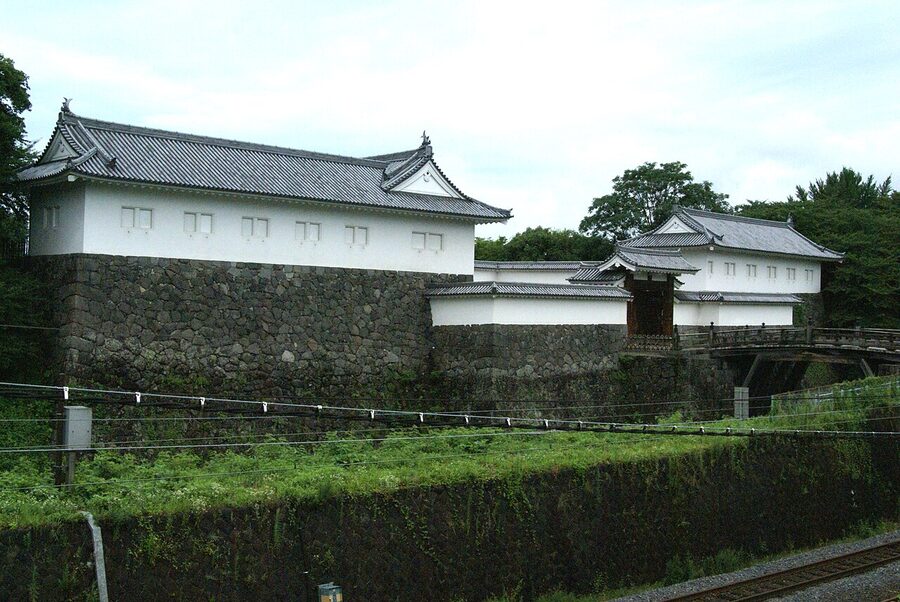
The other things to see in the city itself: the Yamagata Bunshokan, a Western-style 1916 prefectural building in red brick with a clock tower, free to enter; the Mogami Yoshiaki Historical Museum (covering the Edo-period clan history); and the underrated Tendo, 20 minutes north, which produces 95 percent of Japan's shogi (Japanese chess) pieces, has shogi-piece motifs on its manhole covers, and hosts the Ningen Shogi festival in late April when costumed performers act as life-sized chess pieces during the cherry-blossom peak. Tendo also has good ryokan and is a viable base alternative to Yamagata City.
Where to stay, by base
Yamagata City (most flexible base): business hotels around the station are the rational choice for two- or three-night stays. Hotel Metropolitan Yamagata (Booking.com | Agoda) is built into Yamagata Station itself and the simplest. Hotel Route Inn Yamagata Ekimae (Booking.com) and Comfort Hotel Yamagata (Booking.com) are the cheaper options.
Zao Onsen (worth one night for snow monsters): stay slope-side rather than commute. Takamiya Ryokan Komachi (Booking links above) for the historic version; Lodge Chitoseya if you ski.
Tendo (cherry-blossom or shogi-themed alt to Yamagata City): Takinoyu Hotel (Booking.com) has shogi-piece-shaped private onsen tubs, which I admit charmed me. For the upscale option, look at Tendo Onsen ryokan listings on the platforms; Tendo Royal Hotel and Hoshino Resorts Yamagata are recurrent picks.
Tsuruoka or Sakata (if you're doing the coast): stay one or two nights to give Dewa Sanzan its own day. Hotel Route Inn Sakata (Booking.com) for budget; Yutagawa Onsen ryokan in the hills above Tsuruoka if you want the inn experience without the overnight Ginzan price tag.
What to eat
Yamagata food is loud, regional and cheap, and most of the famous dishes are eaten standing or sitting on a stool. Imoni is the giveaway: a taro-and-meat stew in dashi and soy that locals defend with religious fervour (Yamagata-style is beef in soy; Miyagi-style is pork in miso, and the regional argument is part of the meal). The festival version is cooked in a six-metre cauldron in early September on the Mamigasaki riverbank; thirty thousand bowls go out in a single day.
Hiyashi Ramen is the local summer specialty: cold ramen with ice cubes in the broth, a Yamagata invention from the 1950s. Sakaeya Honten in central Yamagata City is the original. Yonezawa beef, from the southern half of the prefecture, is one of Japan's three top wagyu (along with Matsusaka and Kobe); a Yonezawa beef set lunch in a department-store restaurant runs ¥3,500–5,000, in a kappo dinner house double that. Tama-konnyaku, the tea-coloured konnyaku skewers at every Yamadera teahouse, are the snack version of the same regional sensibility: cheap, salty, surprisingly satisfying.
When to come
Three usable answers depending on what you came for.
Mid-February is the peak for snow monsters at Zao and a calmer winter at Ginzan now that the day-tripper rules are in force. Cold, clear, the most photographically rewarding option. Pack layers for minus-ten on the upper ropeway. Mt Haguro's pagoda in snow is the bonus.
Mid to late June is the only window for Sato-Nishiki cherry picking, and June is also the best month for the Mogami River boat in green-leaf weather, the climb up Mt Haguro before high summer, and the start of the Gassan summit climbing season. Hot in the afternoon but not the August-style sticky heat.
Late October to early November is autumn at Yamadera (peak around 28 October to 5 November) and the Mogami gorge in autumn colour. Less of the year-round prefecture but the most postcard-friendly fortnight. The downside: the rotenburo at Zao is still open but cooling fast, and the snow-monster window hasn't started yet.
Avoid August if you can: the festivals are mostly in Aomori and Akita rather than Yamagata, and the heat in the Yamagata basin (the prefecture sets Japanese summer-temperature records most years; 40.8°C in 1933 stood as the national record for 74 years) makes the Yamadera climb genuinely uncomfortable. April's cherry blossoms are nice but cherry blossoms are nicer south of Tohoku; if you're here for blossoms specifically, the cherry blossom timing guide covers the better options.
How Yamagata fits a wider Tohoku trip
If Yamagata is one of three or four prefectures you're visiting in Tohoku, the route I'd run looks like: Tokyo to Sendai on the Tohoku Shinkansen Hayabusa, two nights in Sendai (Matsushima Bay day, gyutan dinners), then the Senzan Line over to Yamagata for three nights based in Yamagata City. Day trip Yamadera and Tendo from there, day trip Zao for snow monsters or Mogami River for green season, day trip Ginzan with the dusk return. Then north to Shinjo and onwards to Aomori on the Ou Main Line plus a transfer, or back to Tokyo on the Tsubasa.
If you're building a wider Tohoku loop including Niigata, drop the return to Tokyo and exit via the Inaho limited express from Tsuruoka or Sakata to Niigata, then the Joetsu Shinkansen back. That picks up the Sea-of-Japan coast (Sankyo warehouses, Dewa Sanzan, Kamo Aquarium) and avoids the same Yamagata Shinkansen track twice. It's also a slightly cheaper exit if you've been using a JR pass that covers both East and the Niigata exit.
One last thing
The reason I keep coming back to Yamagata is the late afternoon light. The Yamagata basin is east-west long with mountains rising on three sides, and the sun slides down behind the Asahi range from about three in the afternoon. The cedar forest at Yamadera goes amber from inside, the cliff temples up top catch the last direct light, and you climb back down with the valley already in shadow. The same light does Mt Haguro's pagoda about 90 minutes earlier. The juhyo at Zao under that light, in February, with the upper-ropeway shadow line cutting across the mountain, is the strangest landscape I've walked through in Japan.
You won't see any of this from the Tohoku Shinkansen window. The Shinkansen runs forty kilometres east of all of it. Get off at Fukushima, change to the Tsubasa, and come over.

.jpg)

_,_%E5%B1%B1%E5%AF%BA_%E5%AE%9D%E7%8F%A0%E5%B1%B1%E7%AB%8B%E7%9F%B3%E5%AF%BA_-_panoramio_(6).jpg)

.jpg)


_-_panoramio.jpg)


.jpg)


.jpg)


