
The Sapporo Snow Festival pulled in roughly 2 million visitors across its eight-day February run in 2026, making it the single biggest tourism event Hokkaido stages all year. That works out to one festival visitor for every guest staying overnight in Sapporo across the whole of high winter, packed into one stretch of Odori Park that takes most people forty-five minutes to walk end to end. It tells you something useful about Sapporo: this is a city that doesn’t fill up gradually, it fills up in spikes, and the rest of the year it’s calm enough to feel underrated.
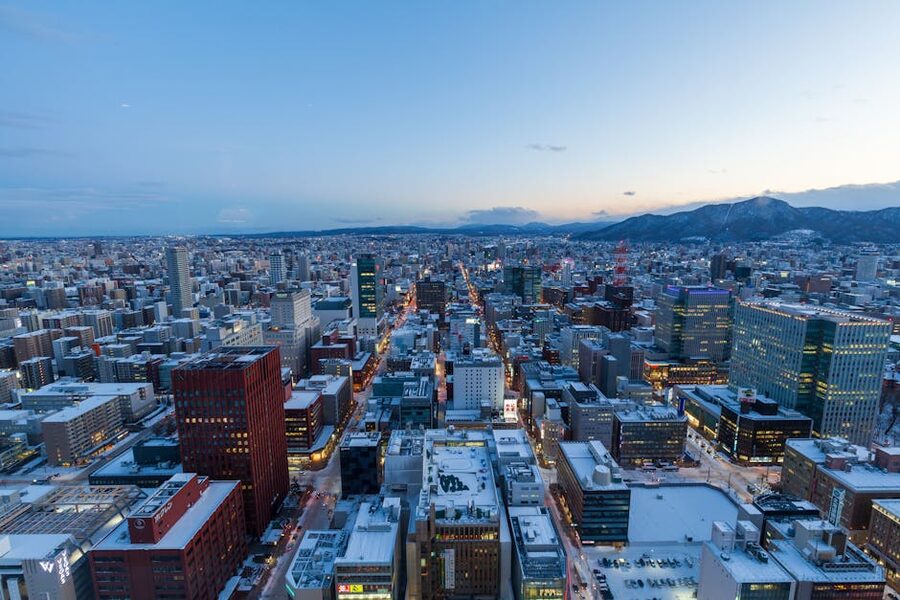
I’d argue Sapporo is best treated as a base, not a destination on its own. You stay here, eat well, sleep in a heated room, and use the cheap subway and the JR line out to Otaru as your daily commute to wherever the snow or the food is that day. Two days in the city itself is usually enough. Add a third for Otaru. Add a fourth in winter for the Snow Festival. Beyond that you’re either skiing in Niseko or chasing the rest of Hokkaido, and you should be.
In This Article
- The grid: why Sapporo is easy to navigate
- Getting in and getting around
- Odori Park and the TV Tower
- The Clock Tower: yes, it’s small. Go anyway.
- Hokkaido University: walk it for free
- Susukino at night
- Ramen Yokocho
- Jingisukan
- Soup curry
- Mt Moiwa: the view that’s actually worth paying for
- Sapporo Beer Museum: the only free brick-Meiji-Hokkaido museum
- The Snow Festival
- Where to eat, beyond the icons
- Otaru as a half-day trip
- When to come
- Where to stay, briefly
- What to pair Sapporo with
The grid: why Sapporo is easy to navigate
Sapporo was laid out in 1869 by an American engineer hired during the Meiji-era opening of Hokkaido, and the result still feels nothing like older Japan. Streets run on a strict numbered grid, twelve blocks east-west by eighteen north-south in the central core, with Odori Park forming the spine that splits the city into north and south addresses. Tell a taxi “North 4 West 3” and you’ll get there. There’s no Kyoto-style maze of unmarked alleys here, no Tokyo’s gentle absurdism of district-then-neighbourhood-then-block. Sapporo is one of the few Japanese cities where you can navigate by address number alone.
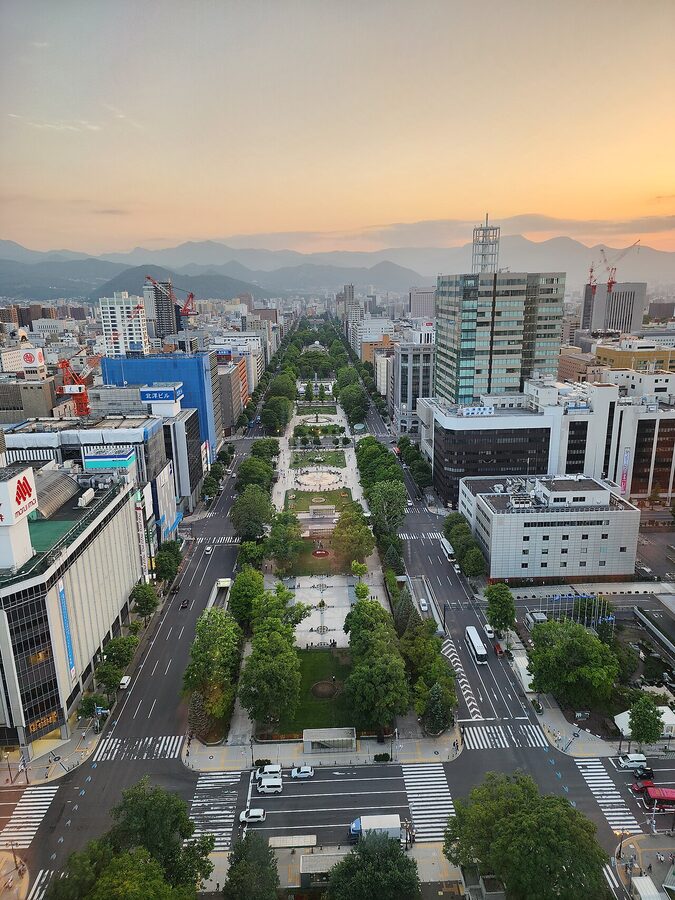
That grid changes how you plan a day. The subway, three lines crossing at Odori and Sapporo stations, runs on the same logic. Almost every place in this article is within ten minutes of an Odori Station exit. The half of Sapporo most travellers see fits inside a 1.5km square.
Getting in and getting around
From Tokyo, the choice is plane or shinkansen. The plane wins on time and cost: ANA and JAL fly Haneda to New Chitose in 1h 35m, prices ¥10,000–30,000 depending on how late you book. The Hokkaido Shinkansen reaches as far as Shin-Hakodate-Hokuto in 4h, then you change to a Hokkaido Limited Express for another 3h 30m to Sapporo, total over 7h. Even with the Japan Rail Pass it’s a long sit. If you’ve already got a pass and the time, the train is fine and you’ll see all of Honshu blur past. If you don’t, fly. The Japan Rail Pass covers the trip if you do choose rail.
From New Chitose Airport, the Rapid Airport JR train runs every 15 minutes to Sapporo Station in 36 minutes for ¥1,150. The bus is slower and the same money. Take the train.
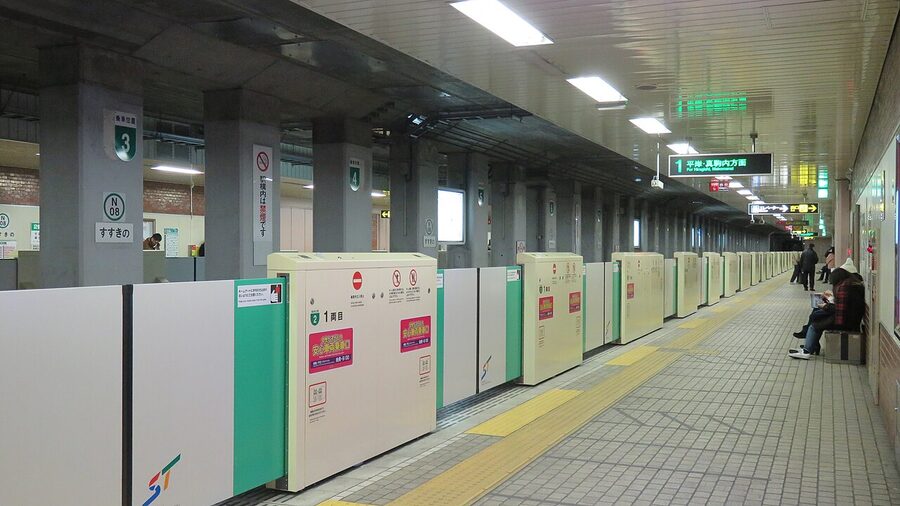
Inside the city the subway is small but efficient: three lines (Namboku, Tozai, Toho) and a tram that loops the southwestern edge. A standard ride is ¥210–380 depending on distance. The Subway One-Day Pass costs ¥830 from any station ticket machine and pays for itself if you make three rides in a day, which you usually will. On Saturdays, Sundays and public holidays the Donichika Kippu does the same job for ¥520, a flat 37% discount that’s worth structuring a weekend around. Both are cash-only at the machine, just so you know. Confirmed against the city’s transport bureau site, accurate as of 2026.
The JR line is what gets you to Otaru and to New Chitose Airport. The subway doesn’t reach either.
Odori Park and the TV Tower
Odori is the central spine, thirteen blocks of green rectangle running east to west between North 1 and South 1 streets. In summer it’s beer gardens and rose beds and office workers eating bento on benches. In autumn it’s gingko leaves. In December it’s the German Christmas market with mulled wine and bratwurst stalls (the Sapporo White Illumination overlaps with this from late November to early March). In February it’s the heart of the Snow Festival.
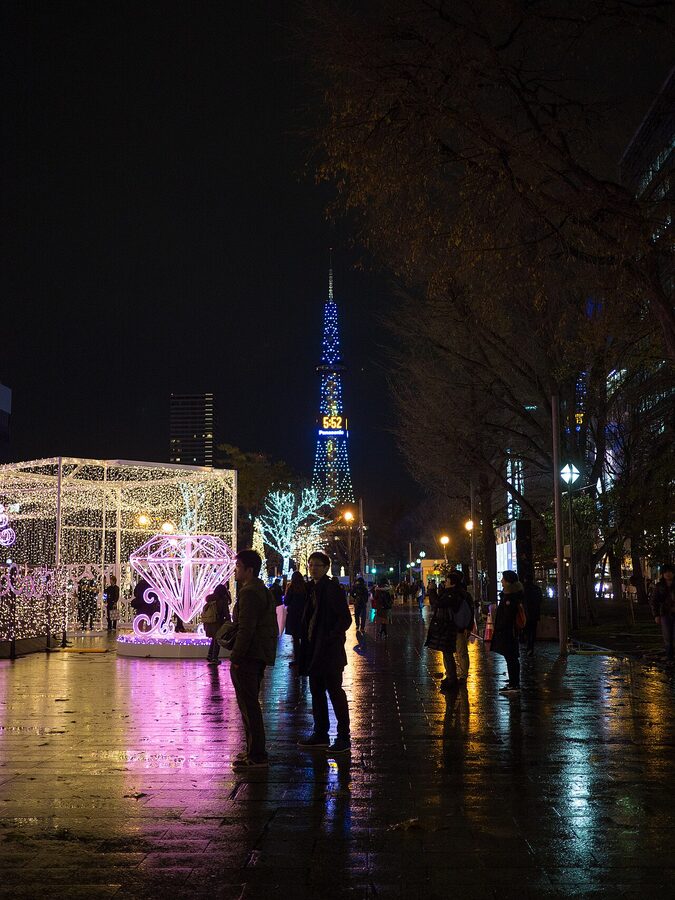
The Sapporo TV Tower stands at the eastern end, 147m, painted that orange-red colour the Japanese reserve for transmission masts. The observation deck is at 90m, ¥1,000 to climb, open 09:00–22:00. The view is fine but not exceptional, and it costs more than the better view I’ll come to in a minute. If you only have one money-spent-on-views budget in Sapporo, save it.
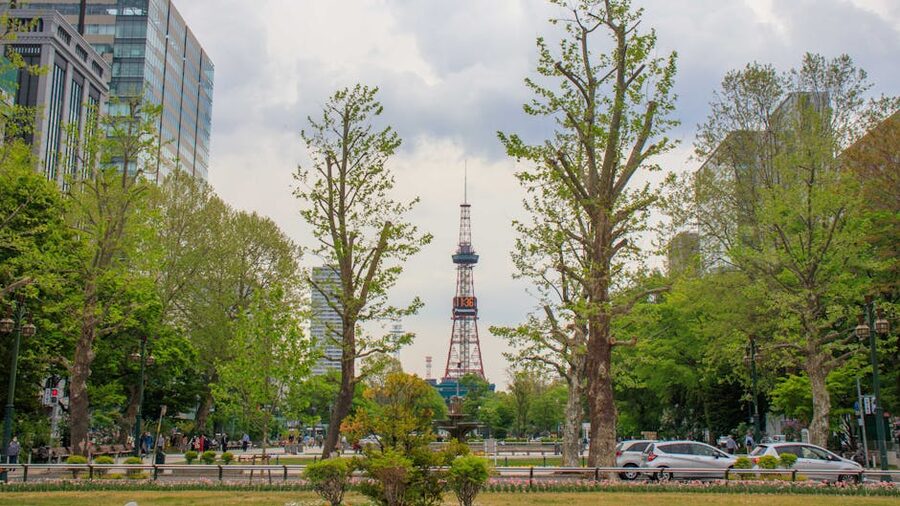
What I’d actually do at Odori Park: walk it once end to end (twenty minutes), and pick the season-specific thing. June for the lilac festival, July–August for the beer gardens with Sapporo, Asahi, Kirin and Suntory all setting up rival beer pavilions in adjacent blocks (the Sapporo block is the busiest, the Asahi block has the best food). October for the autumn colour. December–March for the lights. February for the Snow Festival.
The Clock Tower: yes, it’s small. Go anyway.
The Sapporo Clock Tower (Tokeidai) has a permanent reputation as Japan’s most disappointing tourist attraction. You read this everywhere. The thing is, the reputation is mostly about expectations: people see “iconic Sapporo Clock Tower” in a guidebook and picture something the size of Big Ben. What’s actually there is a small two-storey wooden building with a clock turret, marooned at the foot of mid-rise office blocks that crowd it on three sides.
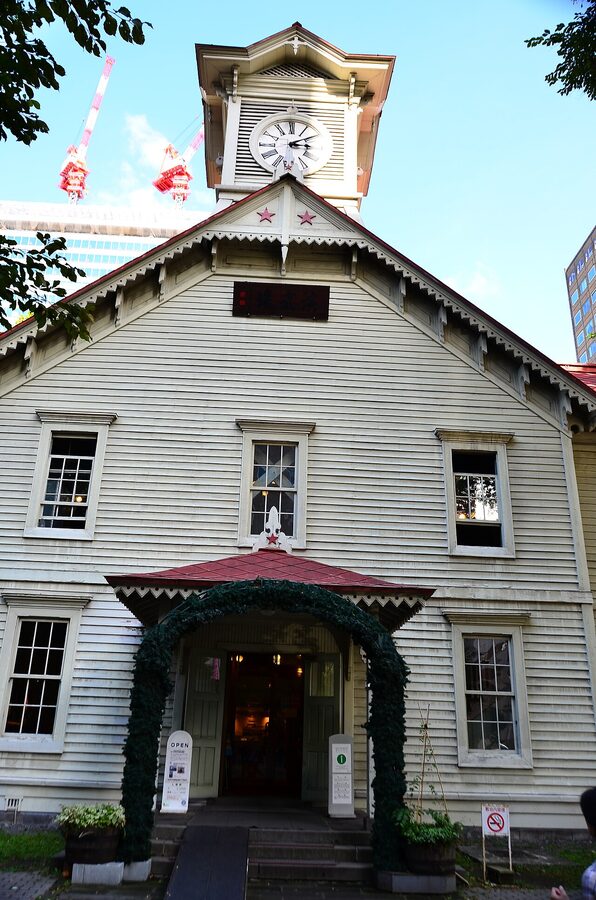
Adjust expectations and the visit is fine. The building is the 1878 drill hall of the original Sapporo Agricultural College, the predecessor of Hokkaido University’s engineering faculty. It’s a National Important Cultural Property. Inside, the small museum tells the story of the American advisors who shaped Hokkaido’s modernisation, and you can see the original Howard pendulum mechanism from Boston, still ticking. Admission is ¥350 (university students ¥150, school-age children free), open 08:45–17:10, closed 1–3 January only. Confirmed on the operator’s site, accurate as of 2026.
It takes thirty minutes. Go in winter when the surrounding pavements are knee-deep in snow and the modern buildings recede a little, and the Clock Tower looks much more like the watercolour image people had in mind.
Hokkaido University: walk it for free
Hokkaido University, four blocks north of Sapporo Station, has the most relaxed flagship-university campus I’ve walked in Japan. The grounds are open to the public, free, every day. Two specific things make it worth a half-hour detour from the station.
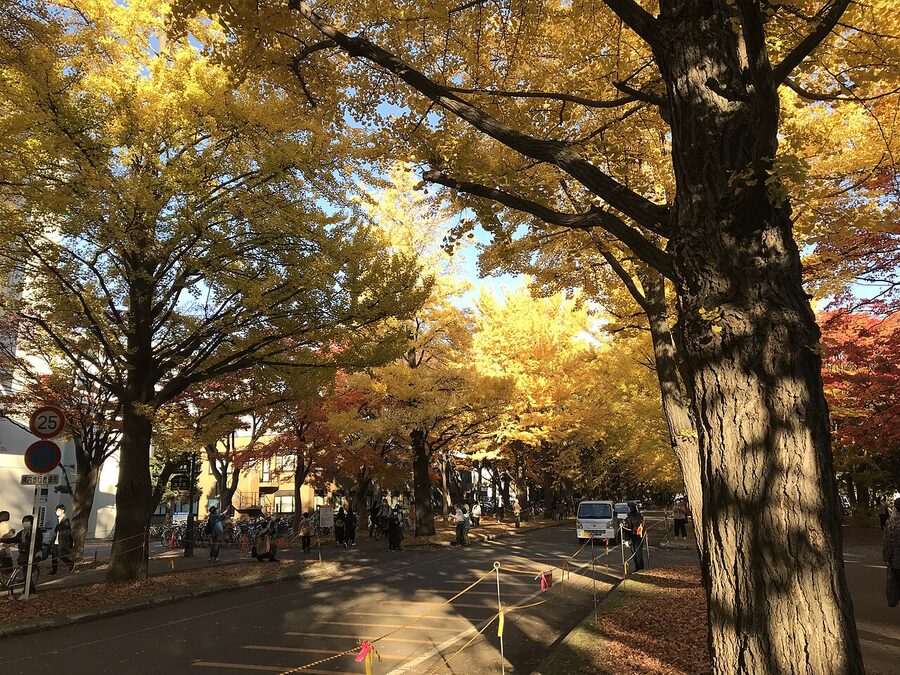
The first is the gingko avenue. North 13 Avenue, 380 metres long, lined on both sides with old gingko trees that turn an absurd, fluorescent yellow in the last week of October and the first week of November. There’s a “Golden Avenue Festival” weekend that gets crowded; the rest of the season you can have it close to yourself if you arrive at 08:00. The second is the campus model-farm pond, an old experimental rice paddy beyond the engineering quad, lined with poplars planted in the 1920s. Walk the pond loop and you’ll have done about 1.5km, and you’ll have seen the last hour of an English-speaking visit to Sapporo most lists never mention.
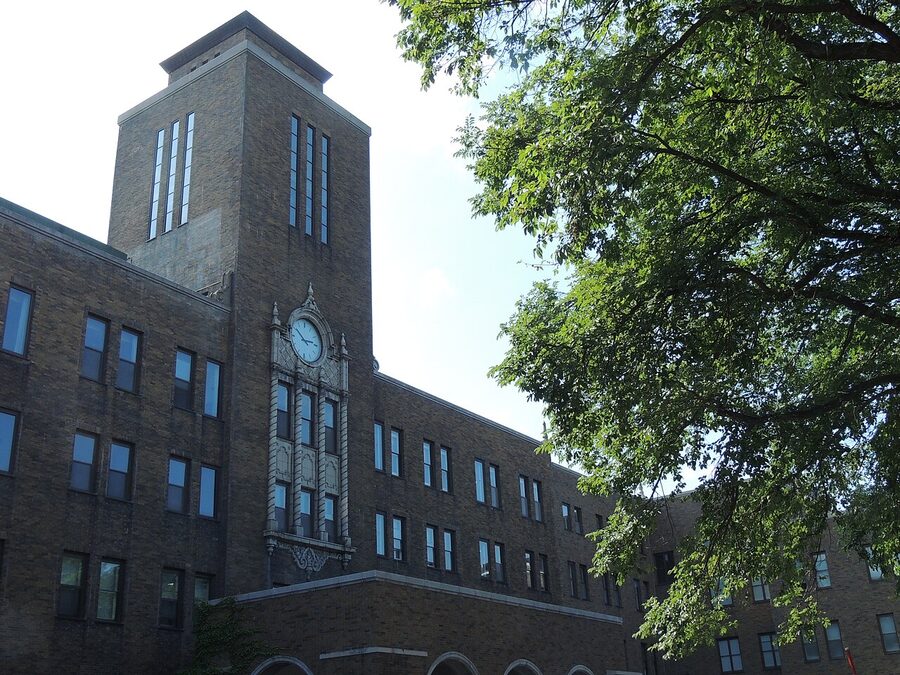
The campus also has a small Hokkaido University Museum (free, closed Mondays) which is worth fifteen minutes if it’s raining. Don’t make it a destination. Use the campus as a long, leafy walk between Sapporo Station and the Sapporo Beer Museum on a clear day.
Susukino at night
Susukino is the entertainment district. It starts about three blocks south of Odori Park and runs for six more before it stops. You’ll know you’re in it when you reach the giant Nikka Whisky neon, a 1969 sign showing King of Blenders W.P. Lowrie holding a glass of Black Nikka. The crossing under the sign is the Susukino Koten, the city’s most-photographed intersection. People line up at the McDonald’s corner taking selfies. It’s not Shibuya scramble levels of busy, but at peak (Friday night, 21:30) it’s plenty.
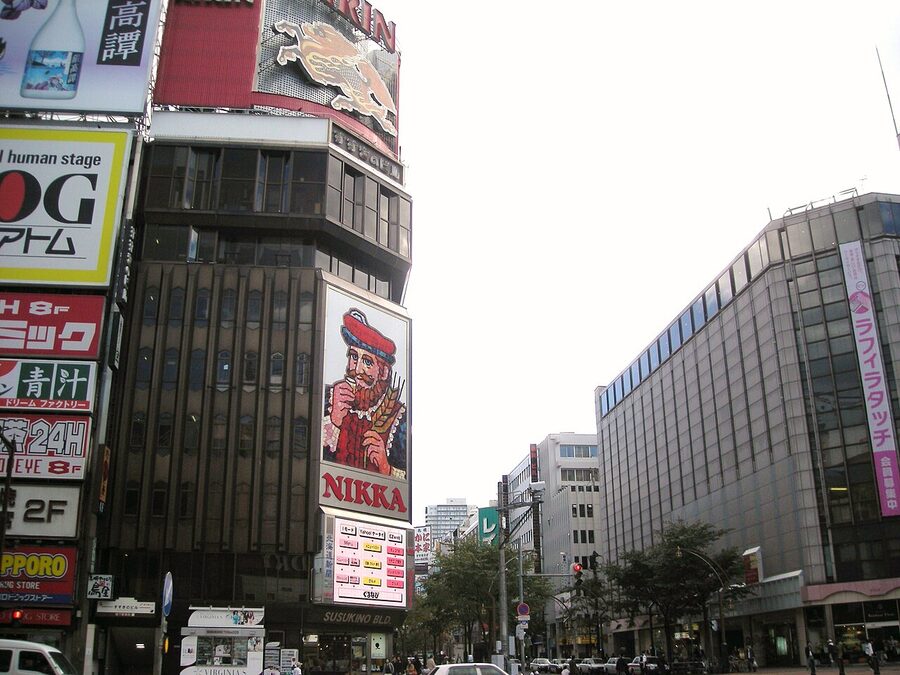
What Susukino actually is, after the photo: a dense grid of izakaya, ramen shops, jingisukan halls, hostess bars, sushi counters and karaoke buildings stacked four to twelve floors high. Restaurants you want occupy floors two, three and four (the ground-floor places nearest Susukino Station are usually tourist-priced; the regular-priced ones hide one storey up).
The red-light cluster is one block east, marked clearly enough that you’ll know if you’ve wandered in. The rest of Susukino is fine to walk at any hour. I’ve never felt unsafe here at 02:00, and I have a low tolerance for that kind of thing.
Ramen Yokocho
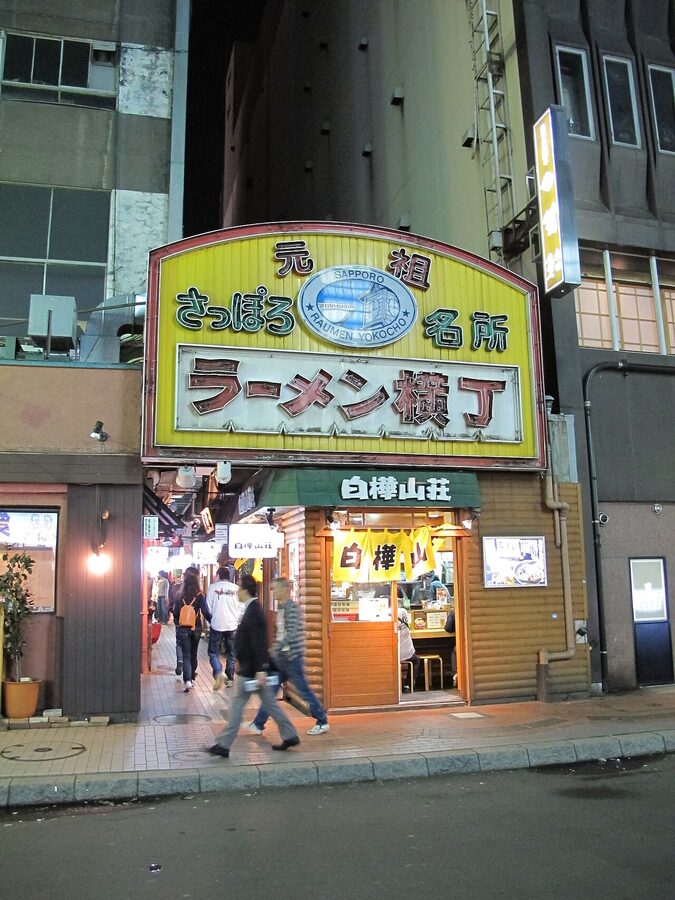
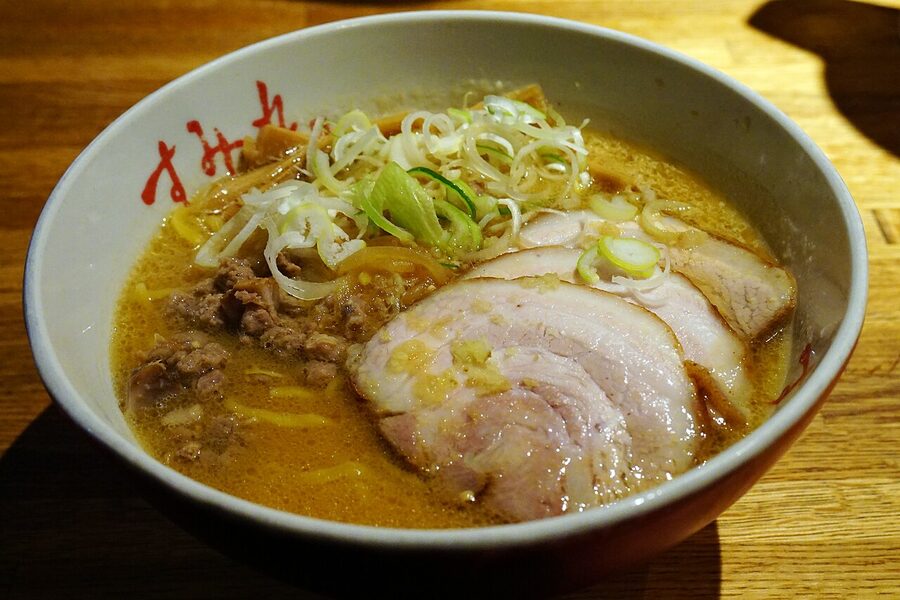
Ramen Yokocho (“Ramen Alley”) is the small covered alley off Susukino’s western edge, seventeen ramen shops in a row, each barely bigger than a galley kitchen with a counter. It’s been here since 1951. Most do the Sapporo style: thick miso broth, wavy yellow noodles, bean sprouts, sweetcorn, butter, ground pork. Aji-no-Sanpei, on the second floor of Daiichi Building four blocks north of the alley, is usually credited with inventing the miso-ramen formula in 1955. The alley’s Ramen Shingen is the most consistently recommended of the bunch by my Hokkaido-resident friends. ¥1,000–1,400 a bowl, cash mostly, no reservations.
Jingisukan
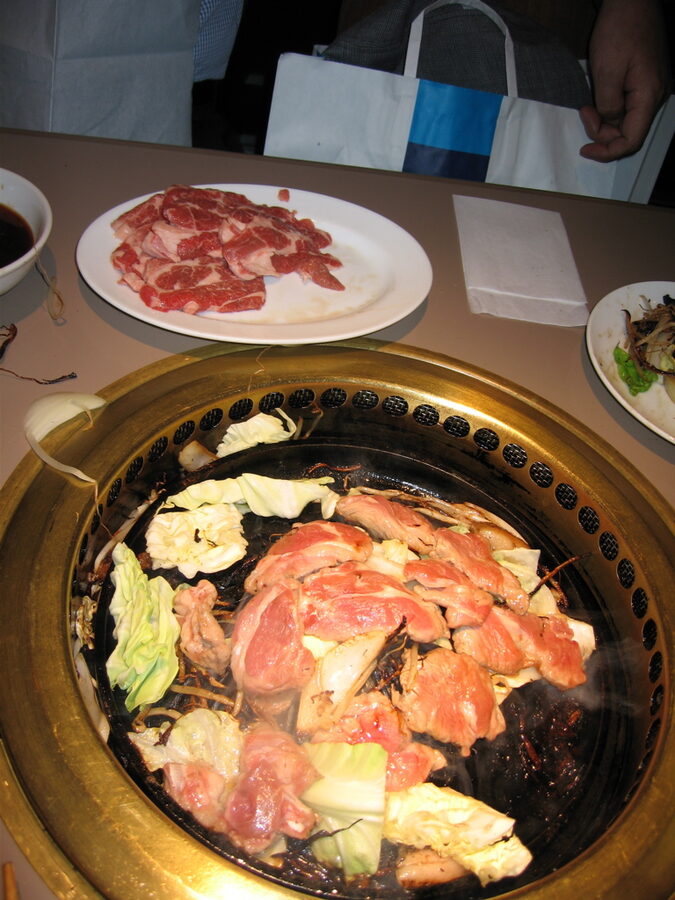
Jingisukan (“Genghis Khan”) is grilled lamb on a domed cast-iron pan, the centrepiece of Hokkaido’s beer-garden food. The classic places are Daruma Honten at South 5 West 4 (the original 1954 branch, six counter seats, queue out the door from 17:30 most nights, pay cash, ¥800 a plate of ribeye with a separate plate of vegetables) and Sapporo Beer Garden’s Genghis Khan Hall at the Beer Museum complex, which is the all-you-can-eat version with a strict 100-minute time limit, around ¥4,000 a head. Daruma is for the food. The Beer Garden is for the experience and the beer.
Soup curry
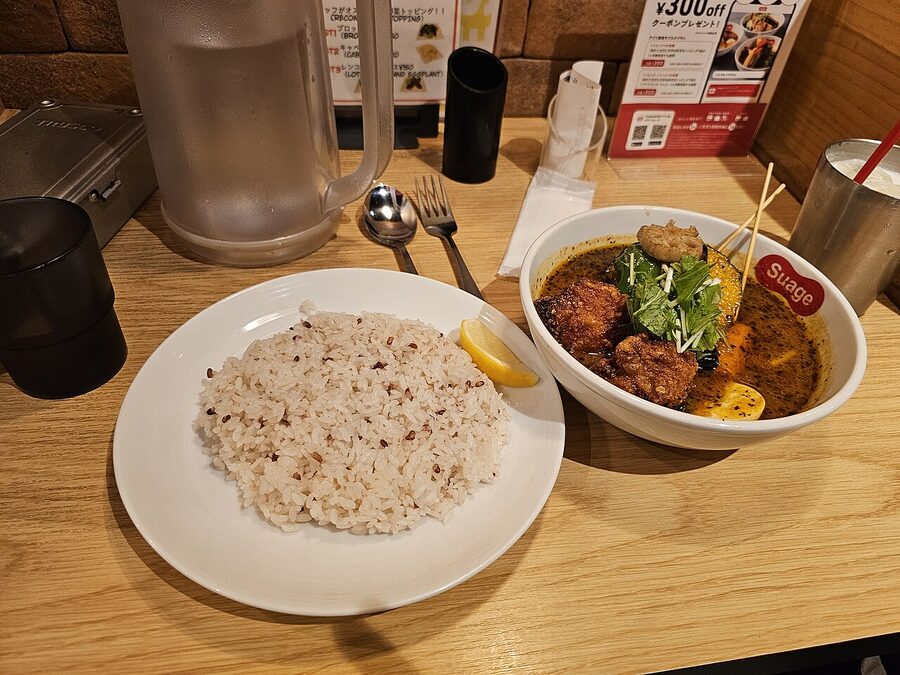
Soup curry is Sapporo’s other invention, a thinner, spicier curry served with a pile of separately-cooked vegetables and a piece of chicken or pork. The origin claim usually goes to Ajanta, founded 1971, still running on the Maruyama side near the zoo. In Susukino try SHO-RIN (open from lunch, lamb the speciality, ¥1,400–1,800), or Picante (chickpea-base broth, mild house heat to a level-10 chilli option that genuinely hurts).
Mt Moiwa: the view that’s actually worth paying for
Mt Moiwa is the wooded hill on Sapporo’s southern edge, 531m, with a ropeway and mini cable-car that take you to a summit observation deck at 525m. The view from the top is the view you should buy: the entire grid of Sapporo opens out below you in one piece, the gingko-lined boulevards visible as straight stripes, the sea and Ishikari Bay glinting beyond, and on a clear winter night the city is a dense field of yellow-orange lights with the dark patches of Hokkaido University and Maruyama Park inked into it.
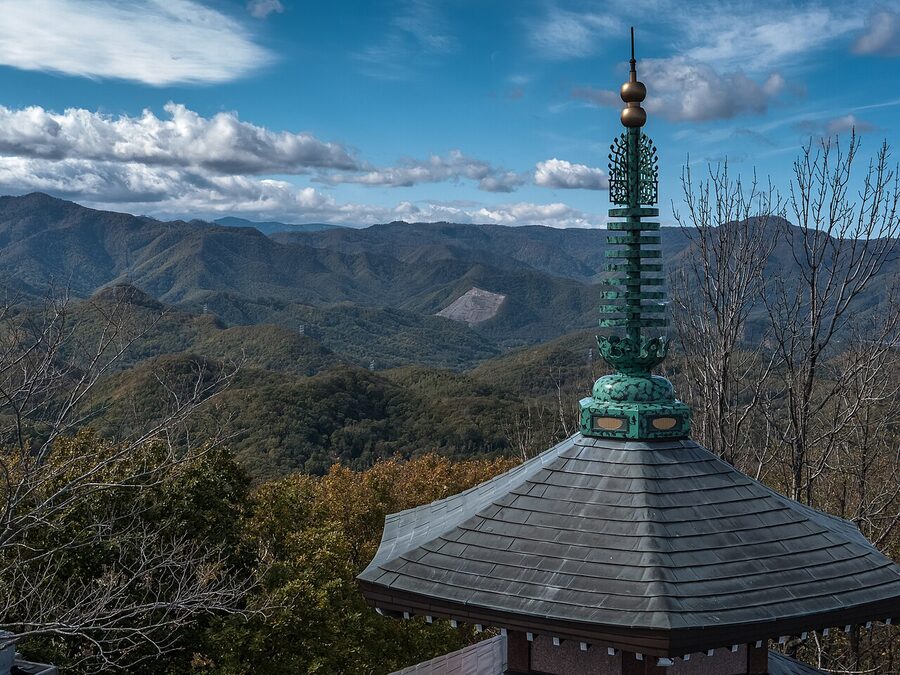
Round-trip ticket (ropeway + mini cable car combined) is ¥2,100 for adults, ¥1,050 for primary-school-aged children. The ropeway runs roughly 10:30 to 22:00 in summer, 11:00 to 22:00 in winter, with the last upbound car about 21:30 (verified on the operator’s official site, accurate as of 2026). Closed for annual maintenance in mid-November to mid-December most years, so check before going.
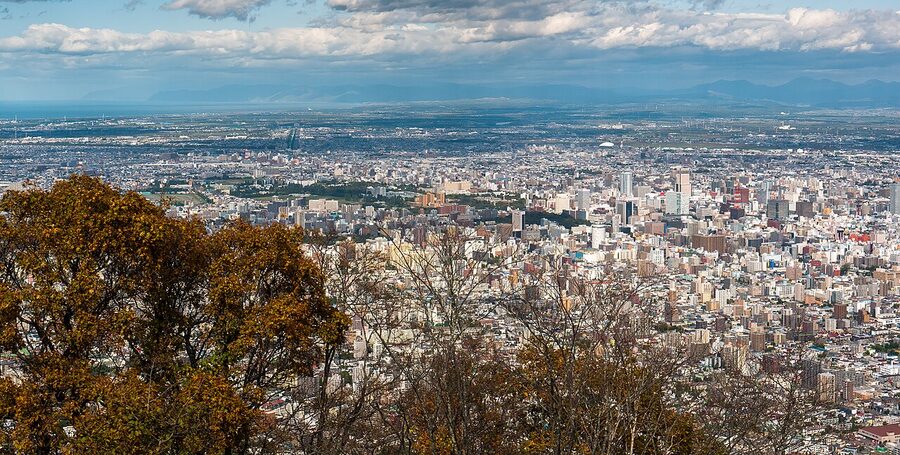
To reach the foot, take the Sapporo Streetcar (the loop tram) from Susukino to Ropeway-Iriguchi stop, ¥230 flat fare, then either walk eight minutes uphill or wait for the free shuttle bus that connects the tram stop to the ropeway base station every fifteen minutes. Aim to arrive thirty minutes before sunset. You ride up in daylight, watch the lights come on from the deck, and ride down in full night. There’s a bell at the summit you ring for luck in love. People do.
Sapporo Beer Museum: the only free brick-Meiji-Hokkaido museum
The Sapporo Beer Museum sits in a 1890 red-brick former malting house, ten minutes’ walk east from Sapporo Station or five from Higashi-Kuyakushomae subway. Self-guided admission is free; you can wander the second and third floors at your own pace, looking at vintage labels, the painted-tin advertising posters from the 1920s, the original copper kettles. It’s open 11:00–18:00 (last entry 17:30), closed only on 31 December. Verified on the brewery’s own site, accurate as of 2026.
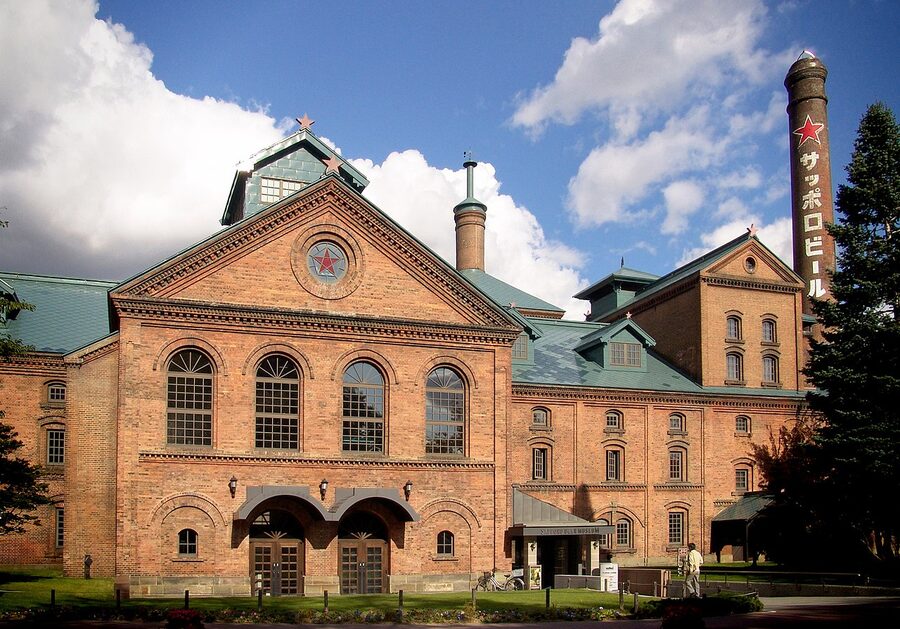
Three things I’d actually do. First, take the Premium Tour: ¥1,000 (¥500 for 12–19, free under 12), 50 minutes, in Japanese only but a thorough run-through of the company’s Meiji-era origins, ending with two free draughts in the Star Hall tasting room. Bookable in advance on the brewery’s website. Second, even if you skip the tour, pay ¥450 for a glass of Black Label or ¥450 for the Hokkaido-only Sapporo Classic at the Star Hall counter, both pulled from kegs straight off the line. The Classic is the version of Sapporo you can’t buy outside Hokkaido. Third, walk over to the adjacent Sapporo Beer Garden building for the all-you-can-eat-and-drink jingisukan if you didn’t get to Daruma in Susukino.
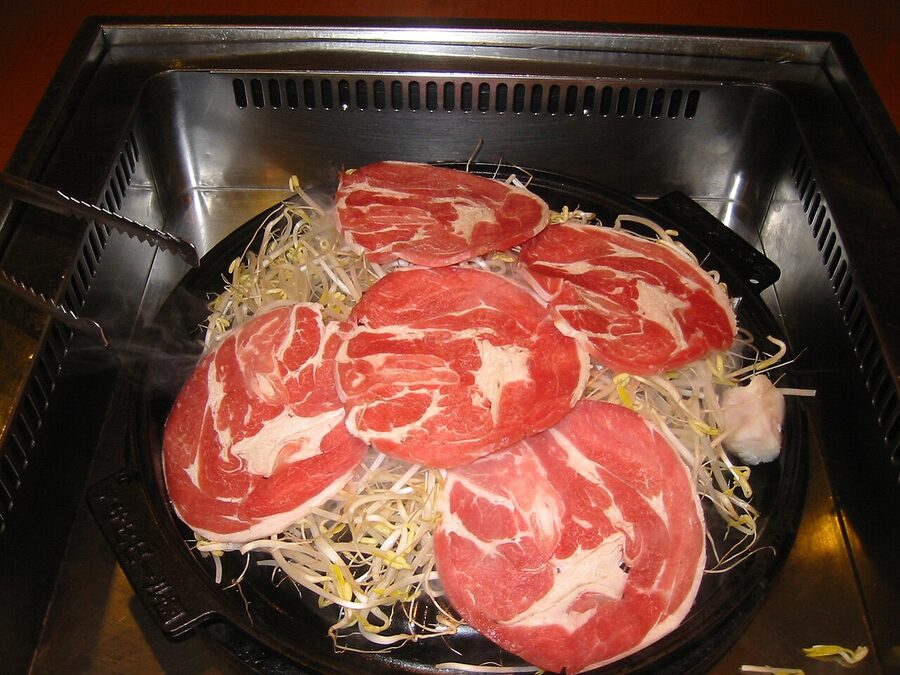
The whole complex is a National Heritage of Hokkaido site. The brick exterior alone is worth the walk over from Sapporo Station, and you can do it via the campus of Hokkaido University’s eastern edge in about thirty leisurely minutes.
The Snow Festival
The Sapporo Snow Festival (Yuki Matsuri) is the city’s biggest event, held annually for one week in early February. The 2026 edition (the 76th) ran 4–11 February across three venues. The 2027 dates haven’t been published yet on the official site at time of writing, they usually go up around the previous October. Aim for the first or second week of February if you’re booking ahead.
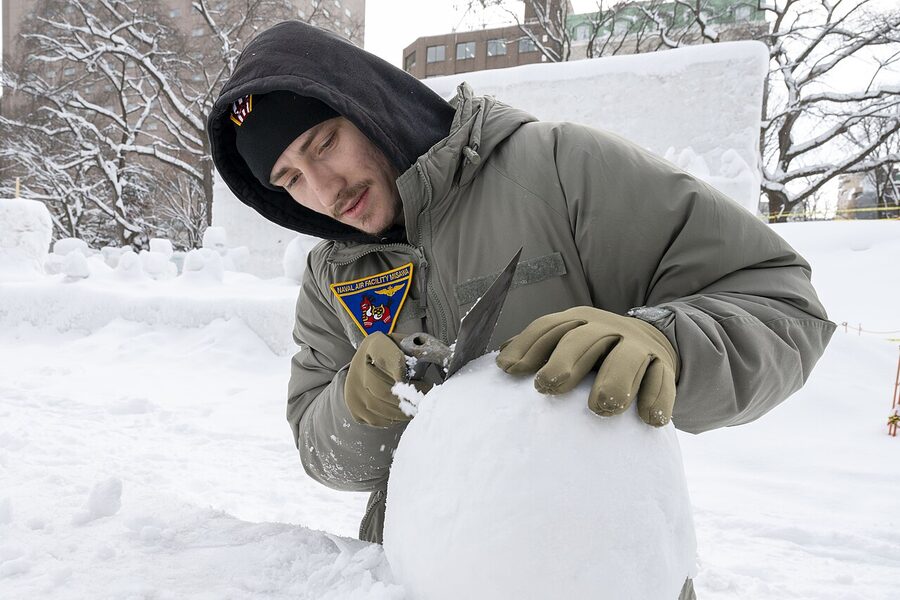
Three venues. Odori Park is the headline site: five enormous snow sculptures the size of two-storey buildings, scattered across thirteen city blocks, alongside ice-sculpture-courts and food stalls. This is the venue you photograph. Susukino hosts the ice-sculpture site three blocks south of Odori, with seventy-plus carved blocks lit up at night. Tsudome, in the city’s eastern outskirts, is the family venue: tube sliding, snow rafting, an indoor playground for kids, served by a free shuttle from Sakaemachi subway. Odori and Susukino are free to enter. Tsudome is also free to enter, though some attractions inside are paid.
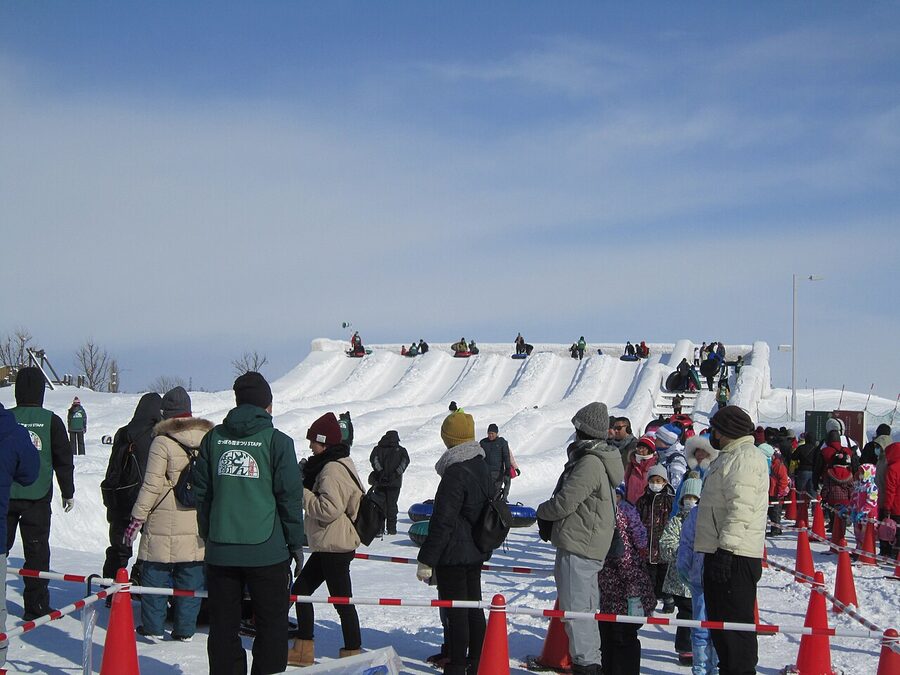
What it’s actually like during the festival. The crowds near the big sculptures are dense from 18:00 to 21:00 every night, especially on the middle weekend. The light-up runs to 22:00. By 22:30 the same sculptures are easy to walk around with no queue. The temperature is regularly minus 6 to minus 12 Celsius and the wind cuts through anything that isn’t down-filled. Hand warmers (¥100 from any convenience store) are not optional, they’re the price of staying out for the lights. Hotels for that week book out by November the previous year and triple their rates. Plan early or skip the week and come a fortnight later.
The festival is bookable via Klook for guided tours and shuttle packages, see Klook’s Sapporo activities if you want a tour rather than a self-guided night out. The festival itself is free to attend.
Where to eat, beyond the icons
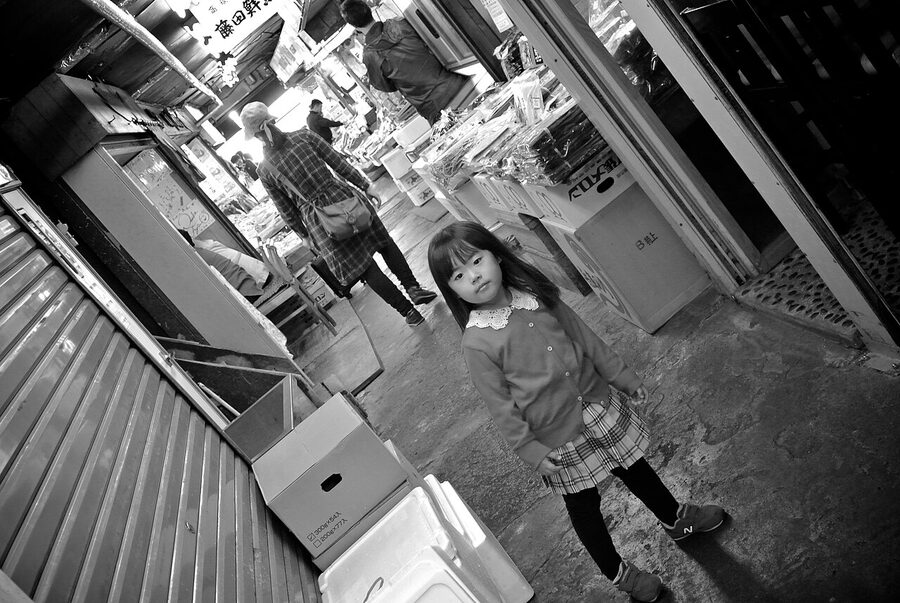
I’ve named the standard ramen and jingisukan choices already. A few more meals worth knowing about:
- Nijo Market for breakfast: a one-block fish market two blocks east of Odori, opens 06:00. Get a kaisendon (rice bowl topped with sea urchin, salmon roe, scallop, tuna and crab) at Donburi Chaya on the south side of the market, ¥3,500–5,000 depending on what’s stacked on top. The market also sells whole snow crab boiled and split open at the counter, overpriced for daily eating but a once-in-a-trip thing.
- Sapporo Central Wholesale Market (Jogai Ichiba) is the bigger, cheaper, less-touristy alternative four kilometres west, but you have to take the JR train two stops to Soen, so it’s only worth it if you’re already heading that way.
- Convenience stores are excellent in Sapporo. Specifically, the Hokkaido-only Lawson and Seicomart chains carry local dairy: Yotsuba milk, Sapporo Cream Puffs, the Hokkaido cheese twin-pack onigiri at Seicomart that I will recommend to anyone who’ll listen. Seicomart is the Hokkaido cult convenience-store you don’t get on Honshu.
- Royce Chocolate shops on the underground concourses of Sapporo Station: the regional fresh chocolate (nama choco) bars are the best souvenir, ¥780 a box, must be kept cold so buy on the day you’re flying.
Otaru as a half-day trip
Otaru is the canal-side former merchant port forty minutes west of Sapporo by JR. The trains run every fifteen minutes from Sapporo Station, ¥750 each way, no reservation required. It is the standard half-day from Sapporo and one of the most rewarding ones in Hokkaido.
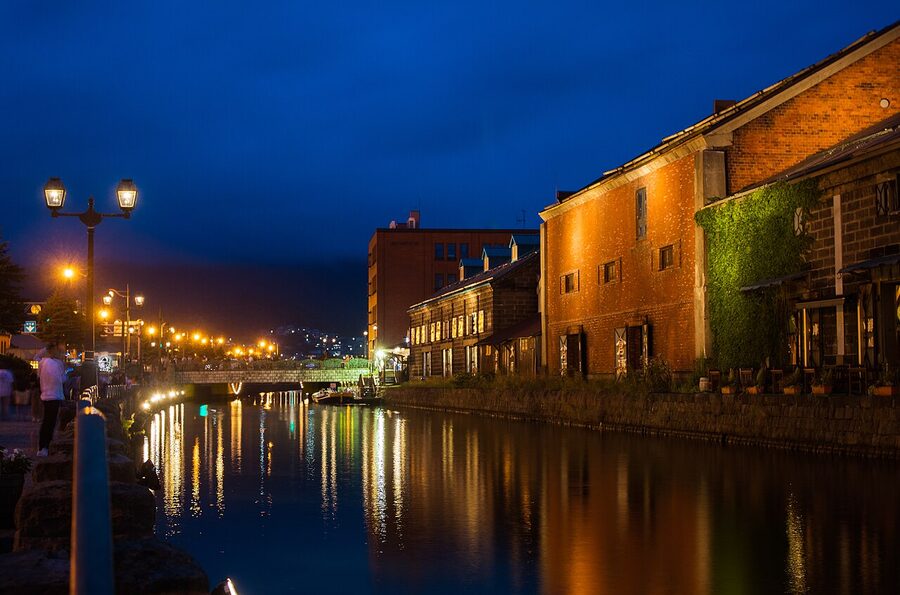
What’s in Otaru. The canal itself is the postcard, lined with stone warehouses from the 1880s, all converted now to glass studios, restaurants, museums, beer halls. The light-up runs every winter evening from 17:00 to 21:00 with two hundred candle lanterns floating on the canal water. The Sankaku Ichiba (Triangle Market) right next to the JR station is a 1.5-block fish-market alley full of seafood-bowl shops where you can sit at the counter and watch your kaisendon assembled in front of you, ¥2,500–4,000. The Kitaichi Glass Three Hall is the most famous of the glass-craft studios; in summer the petroleum-lamp display alone is worth twenty minutes.
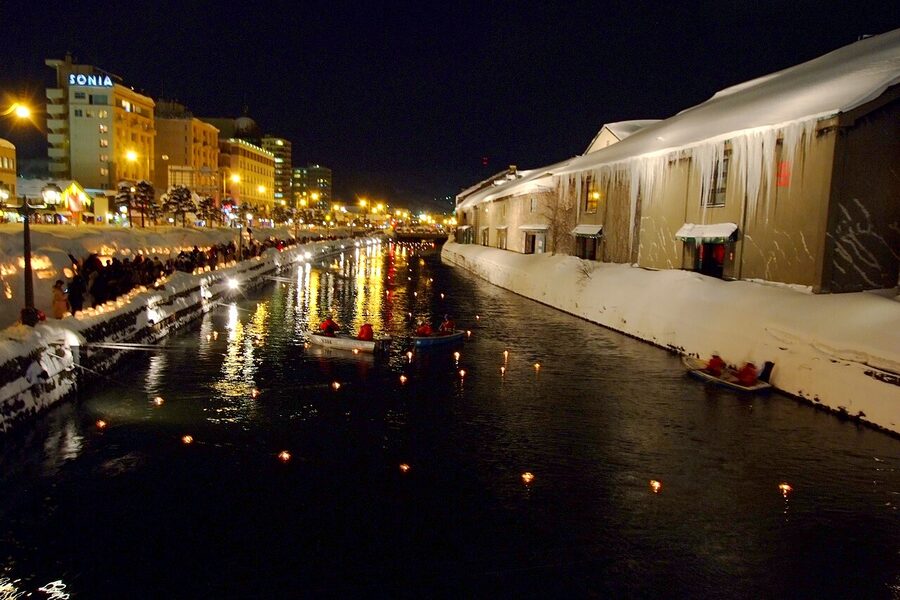
What I’d actually do in Otaru: arrive on the 09:30 train, walk the canal slowly (it’s only about 1.2km along), have early lunch at the Triangle Market, browse one glass studio, take the 14:30 train back. You’re back in Sapporo in time for an evening at Susukino. If you do this in winter wear proper boots; the cobblestones along the canal are lethal when the snow turns to ice.
For a guided alternative with transport included, both Klook and GetYourGuide list small-group day tours from Sapporo that pair Otaru with the Sapporo Beer Museum or with Yoichi (the Nikka whisky distillery a further 25 minutes west).
When to come
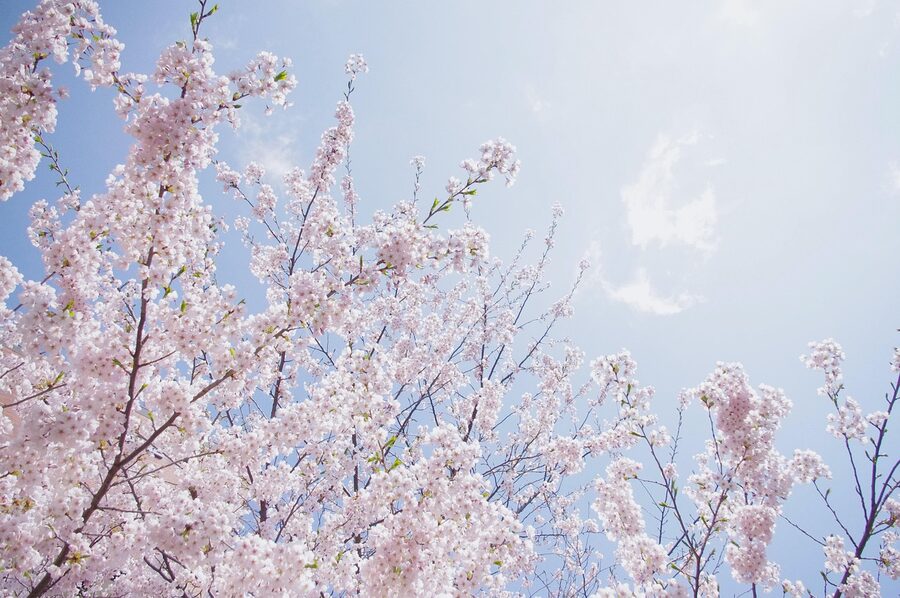
Sapporo has the most extreme four-season swing of any major Japanese city. The winter is properly Russian: average daytime highs in January are minus 1 to minus 4, lows minus 8 to minus 12, with cumulative snowfall over the season around five metres. The summer is European: daytime highs 24–28, evenings 17–19, very low humidity, almost no rainy season (Hokkaido officially has none). Spring is short and cherry-blossom-late: peak bloom at Maruyama Park usually 3–10 May, a full month after Tokyo. Autumn at Hokkaido University and Nakajima Park runs late October to early November.
If I had to pick: late January through mid-February for the Snow Festival and the cold-weather food culture, late April through May for cherry blossoms without the Honshu crowds, late September through mid-October for autumn colour and the cleanest skies of the year. Summer (July–August) is mild and pleasant but you’ll meet other domestic tourists who have come specifically to escape the Honshu humidity, and the city is slightly busier than people expect.
The one season I’d avoid is March. The snow has started melting into ice slush, the Snow Festival is over, the cherry blossoms haven’t started, and the city looks tired.
Where to stay, briefly
I won’t go deep on hotels here, but in shorthand: the hotel zone you want is along the south side of Sapporo Station or either side of Odori. JR Tower Hotel Nikko Sapporo is the literal-on-the-station option (rooms above the JR concourse, view of the city from the 30th floor up), see Booking.com. Mitsui Garden Hotel Sapporo is the reliable mid-range a block west of the station, see Booking.com. Cross Hotel Sapporo sits on the corner of North 2 West 2, three minutes from Odori, with a top-floor onsen with a city view, see Booking.com. All three are within ten minutes’ walk of two of the three subway lines, which is what you actually want to optimise for.
For Snow Festival week, book by mid-October the year before. For cherry blossom week (early May), book by late February. For everything else, two weeks ahead is fine.
What to pair Sapporo with
Sapporo on its own is two days, three with Otaru. The natural extensions are obvious: a third or fourth night skiing in Niseko (two hours by bus or train), or the Hokkaido Shinkansen down to Hakodate (3h 30m) to get the whole western-southern arc of the island. If you’re coming from Honshu by rail rather than flying, the JR East Pass doesn’t quite cover the Sapporo run, you want either the Japan Rail Pass or the JR Hokkaido-only pass. Either way the regional Hokkaido guide goes deeper on what to combine where.
One thing not to do: don’t try to fit Sapporo into a 36-hour Tokyo-and-back flying visit. You’ll see the inside of New Chitose and a hotel room, and miss the actual texture of the place. Either spend the time, or save it for when you’ve got it.
My favourite hour in Sapporo is the one you don’t plan. About 22:30 on a winter weeknight, after the Snow Festival crowds have thinned, walking back from Susukino along South 2 with a bag of Royce chocolate and a Sapporo Classic in a coat pocket. Snow on the boulevards. Most of the cars gone. Steam coming up out of the manhole covers. That’s the version of the city worth coming for.


.jpeg)


