
It is 06:04 in late May, and a man at the Donburi Yokocho stall is filling a bowl with three colours of roe while I wait. Sea-urchin orange, salmon-roe vermilion, ikura-and-kani gold. He uses a spoon for the uni and his fingers for the crab. The miso soup arrives at the same time as the rice; the bowl, when he hands it over, is heavier than I expect. Outside, the sun has been up for an hour. The squid tank in the next aisle is already churning. A child is being shown how to flick the line and lift, and the squid she lands flips twice on the metal table before the chef takes it from her, slices into ika-somen in 90 seconds, and slides it back to her family with soy sauce and ginger. The whole thing, from her line going in to the dish coming out, takes less time than it took me to walk from the station.
Hakodate is, by my count, the most underrated city in Japan. It sits at the southern tip of Hokkaido, an hour and a half by Hokkaido Shinkansen south of the island’s centre, four hours by bullet train from Tokyo. Most foreign itineraries skip it. Most Japanese ones don’t. There is a reason: the city does specific things almost no other place in Japan does, and it does them at the kind of granular detail that rewards two unhurried days more than ten in a guidebook trail.
What follows is the version of Hakodate I’d give a friend who has done Tokyo and Kyoto and is now ready for the country I find more interesting. Where to be at 06:00. Where to be at 19:00. The fort that looks like nothing on the ground and like a star from a tower. The five-block stretch of Motomachi where a Catholic church and a Russian Orthodox cathedral were rebuilt within fifteen years of each other after the same 1907 fire. The bowl of shio ramen the locals reach for that bears no resemblance to the one Sapporo is famous for. And the ferry to Aomori, ninety minutes across the strait, that costs less than a Tokyo taxi ride and gets handed off in this article only because it deserves its own.
In This Article
- Why Hakodate is the city the guidebooks underplay
- 06:00 at the morning market
- What to skip at the market
- The fort that looks like a star from above
- Goryokaku Tower: pay the ¥1,200 to see the star
- Motomachi: a Catholic church and a Russian cathedral, five blocks apart
- Old Public Hall and the British consulate
- 17:30 to 19:30 on the mountain
- Ropeway, bus, walk, drive: pick one
- Timing the night view
- The view-without-the-queue alternative: Hachimanzaka
- Motomachi by daylight: walking the slope
- The Trappistine Convent and a cape on the south coast
- Hakodate ramen: the lighter shio bowl
- Getting to Hakodate, getting around Hakodate
- From Tokyo: Hokkaido Shinkansen
- From Sapporo: Limited Express Hokuto, for now
- From Aomori: the ferry
- The tram, the airport, and walking
- Where to stay
- When to go
- If you have a third day: Onuma Park
- What surprises first-time visitors
- One last thing
Why Hakodate is the city the guidebooks underplay
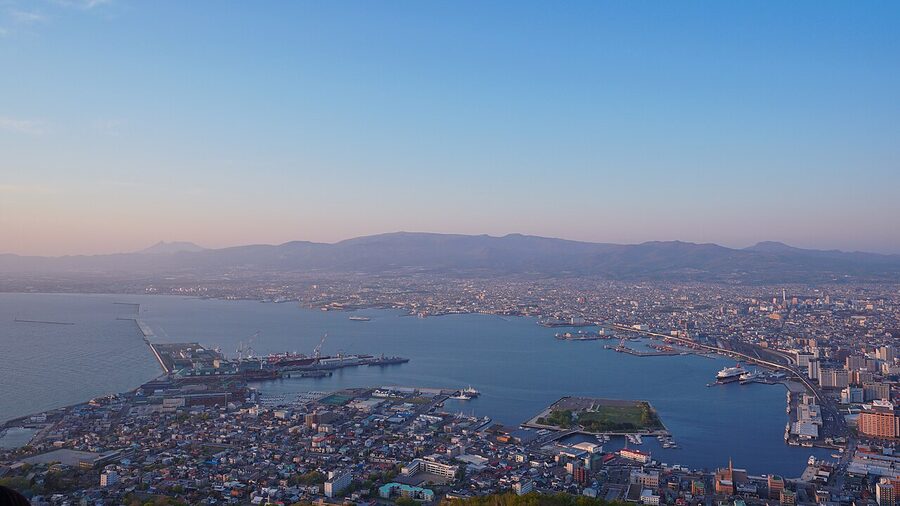
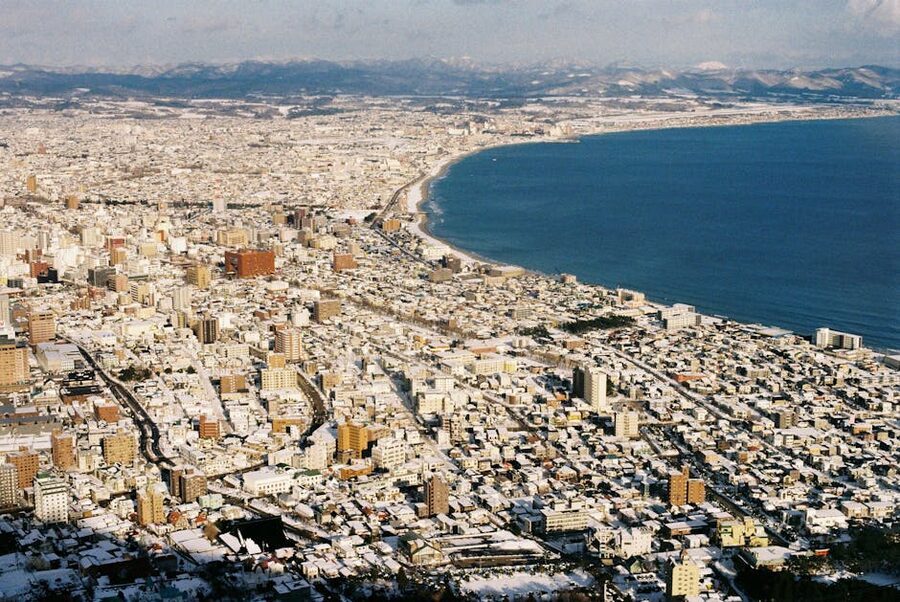
Three things explain Hakodate. First, geography. The city sits on a tombolo, a narrow neck of sand that connects the mainland of Hokkaido to what was once the offshore island of Mt Hakodate. The neck is a kilometre wide at its thinnest. Bays sit on either side. From the 334-metre summit you look down on a glittering hourglass, which is the photograph everyone has seen and nobody has fully understood. The hourglass is not a metaphor. It is a road map.
Second, history. Hakodate was one of the first three Japanese ports the Tokugawa shogunate opened to foreign trade in 1854 under the Convention of Kanagawa. Russian, British, American, and French consulates went up. So did churches, schools, foreign cemeteries, and trading houses. When the bakufu fell in 1868, the rebel admiral Enomoto Takeaki sailed his fleet north, occupied the unfinished Goryokaku fort, and proclaimed the short-lived Republic of Ezo. The Boshin War’s last battle ended here in May 1869. None of this is buried trivia. The buildings are still standing. The fort is still in the shape it was.
Third, food. Hakodate sits on the Tsugaru Strait, where cold Oyashio current meets warmer Tsushima water, and the result is one of the densest fishing grounds in northern Japan. Squid, kelp, salmon roe, sea urchin, hairy crab, snow crab, scallops, herring. The morning market opens before sunrise because the boats come in before sunrise. The shio ramen tastes the way it does because Hakodate kombu is the variety almost every dashi-maker in the country quietly considers the best.
Two unhurried days is the right length. Three if you want to add Onuma Park or a ferry day to Oma. Add a fourth if Goryokaku is in cherry blossom and you can’t bring yourself to leave. Skip the half-day, half-night version that some itineraries suggest. You’ll feel the city as a checklist, not a place.
06:00 at the morning market
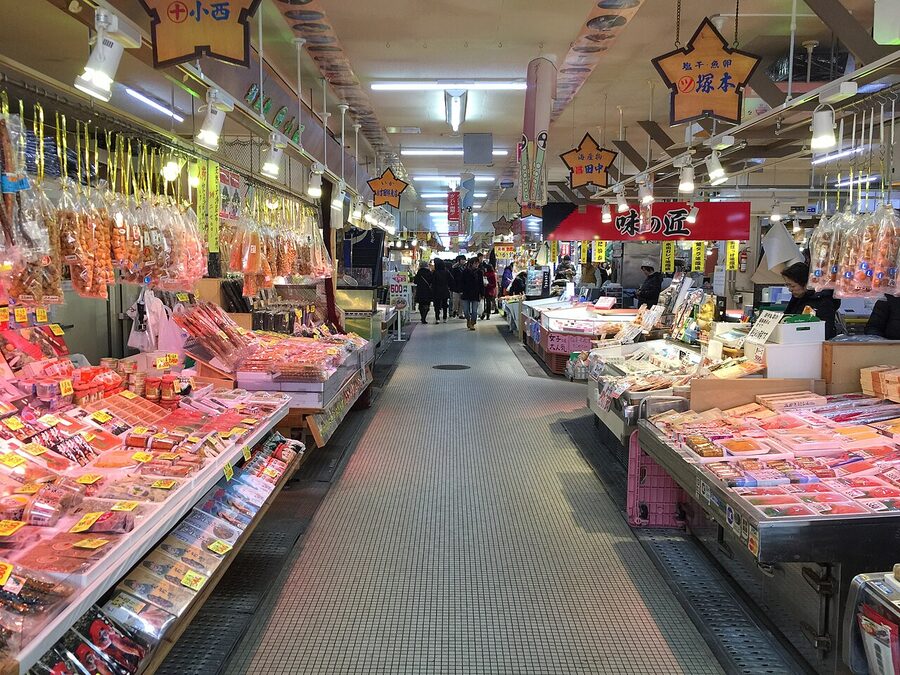
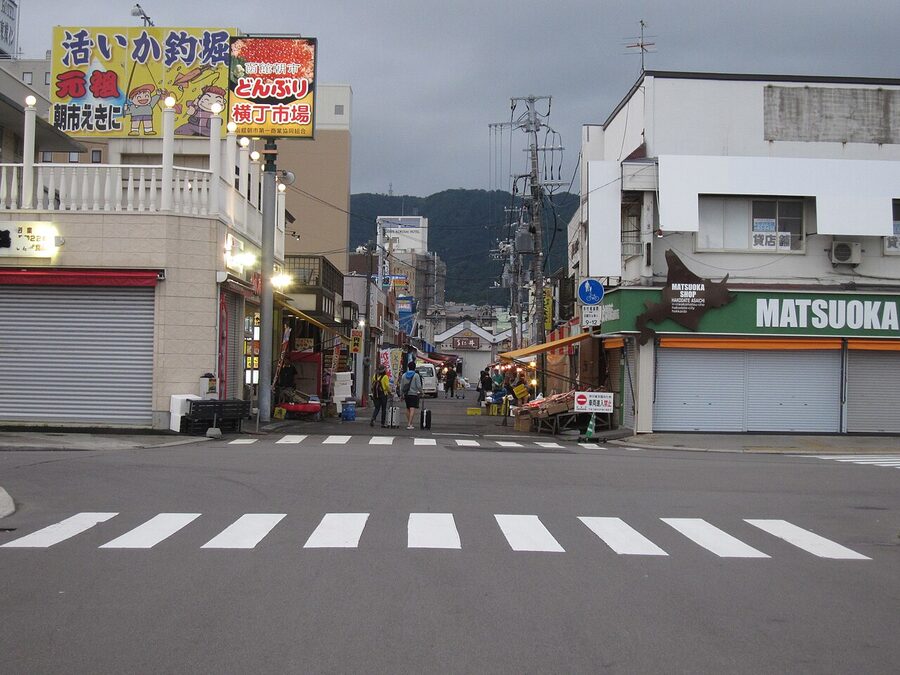
The Hakodate Morning Market, or Asaichi, sits a two-minute walk from the station’s south exit. It opens at 05:00 from May to December and 06:00 from January through April; both windows close around 14:00, and individual stalls finish earlier. There are around 250 stalls spread across four indoor and outdoor blocks, the most useful of which is Donburi Yokocho, a short row of about twenty rice-bowl restaurants where you sit at a counter, point at a photograph, and pay between ¥1,500 and ¥3,500 for a bowl of seafood that was alive last night.
What to order, in three lines. The three-coloured don of uni, ikura, and crab is the photogenic option. The kani-meshi (rice topped with shredded crab) is the cheaper one and just as good. The ikura-don, plain salmon roe glistening over rice, is the one I think you should try if you only get one bowl. The roe at this market is graded sharply: red is younger and softer, orange is bigger and slightly firmer. Both are excellent. Neither is better.
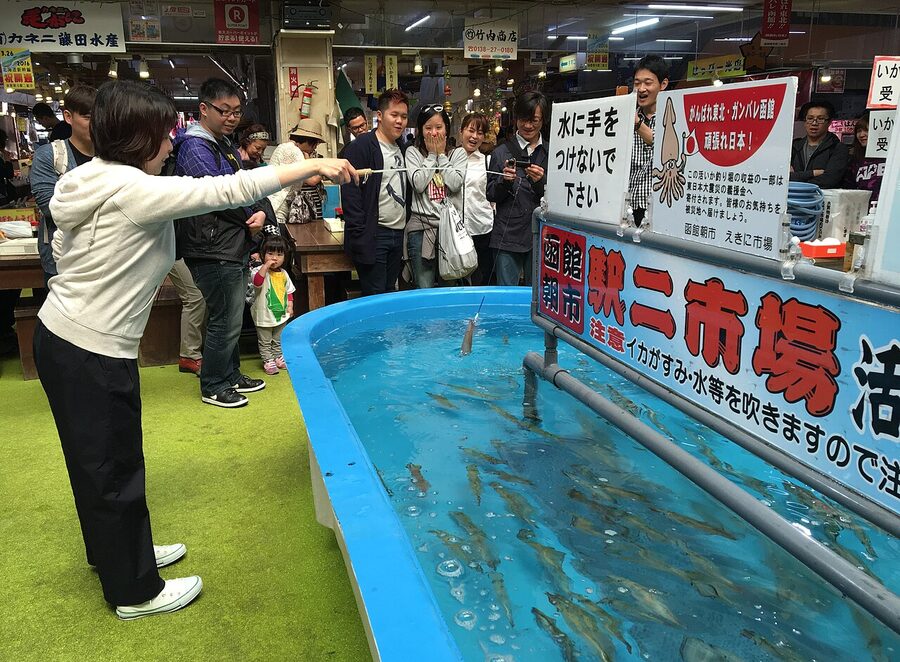
The other thing the market is famous for is the live-squid catch-and-eat at the small tank in the central hall. You pay around ¥1,500, the chef hands you a fishing line with a small lure, and you fish. When you hook one, the chef cleans and slices it for you in roughly 90 seconds. The squid is then served as ika-somen, which is squid sliced into noodle-thin ribbons with grated ginger, soy sauce, and a quail egg yolk. Fresh enough that the body still moves on the plate as it reacts to soy. Tourists film it. Locals don’t. I don’t think you should skip the market because of the squid; I think you should skip the squid if it bothers you, and order the ikura-don, and stop. The market is not the dancing-squid theatre. The market is the bowl.
What to skip at the market
The melon stalls. Hokkaido melon is genuinely good but you’ll pay tourist prices here, and it’s significantly cheaper at any supermarket two blocks inland. The tourist-grade dried squid souvenirs. The free-tasting stalls that pour you a small cup of something and then expect you to buy a 1.5kg gift box. Walk past, smile, decline. They are not aggressive about it.
The fort that looks like a star from above
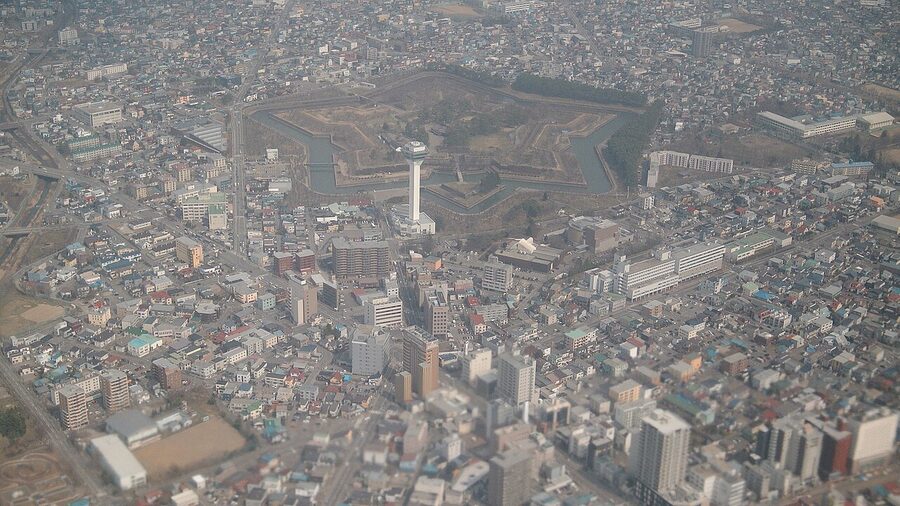
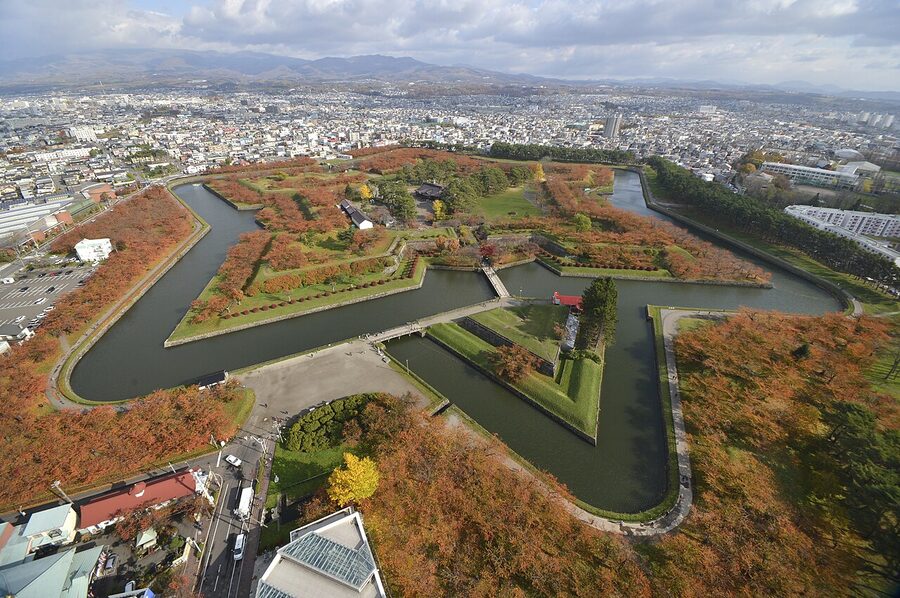
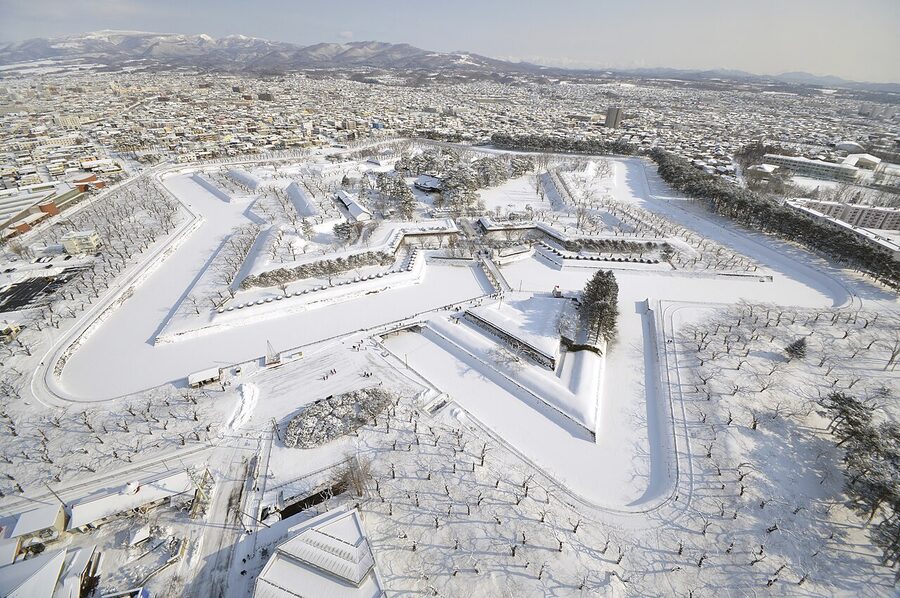
Goryokaku is a star-shaped fortress built between 1864 and 1866 to a French military design. The Tokugawa government commissioned it as a defence against the foreign powers it had just opened the port to. It is the only star fort of its kind in Japan. The shogunate fell before the cannons it was designed for could be installed, and in 1868 it became the capital of the breakaway Republic of Ezo when Enomoto Takeaki occupied it with his eight-ship fleet. The Imperial forces took it back in May 1869 after a four-month siege, ending the Boshin War. Hijikata Toshizo, the Shinsengumi’s vice-commander, died in the assault. There is a bronze statue of him in the park.
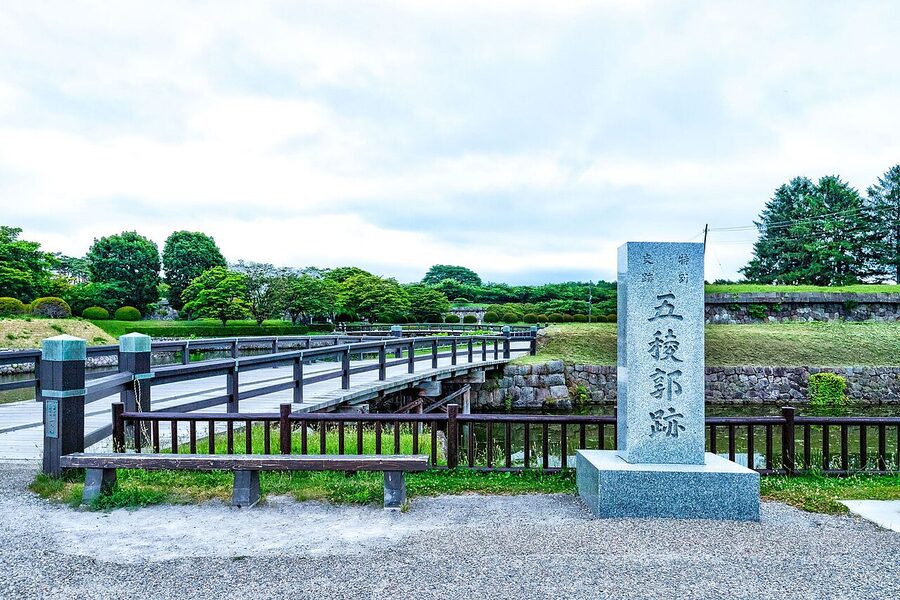
The fort sits about three kilometres east of Hakodate Station, an easy 18-minute ride on Tram Lines 2 or 5 (¥250 single fare, or ¥800 with the one-day tram pass). Get off at Goryokaku-koen-mae and walk five minutes north. The park itself, which fills the inside of the star, is free and open at all hours. The reconstructed magistrate’s office (Hakodate Bugyosho) inside is ¥500 to enter and worth the time if you want to read the timeline of the 1868 occupation.
Goryokaku Tower: pay the ¥1,200 to see the star
Right outside the moat is the 107-metre Goryokaku Tower, opened in 2006 and almost the only reason to climb it. The current pricing as of 2026 is ¥1,200 for adults, ¥900 for high school students, and ¥600 for primary school children. The tower opens 09:00–18:00 (last admission 17:50). The observation deck is at 86 metres on the lower level and 90 metres on the upper, with windows on all sides and a glass-floor see-through panel facing straight down at the moat. From here, and only from here, the star shape becomes obvious. From the ground the star is just a series of grass embankments. The tower fee is the price of admission to the geometry.
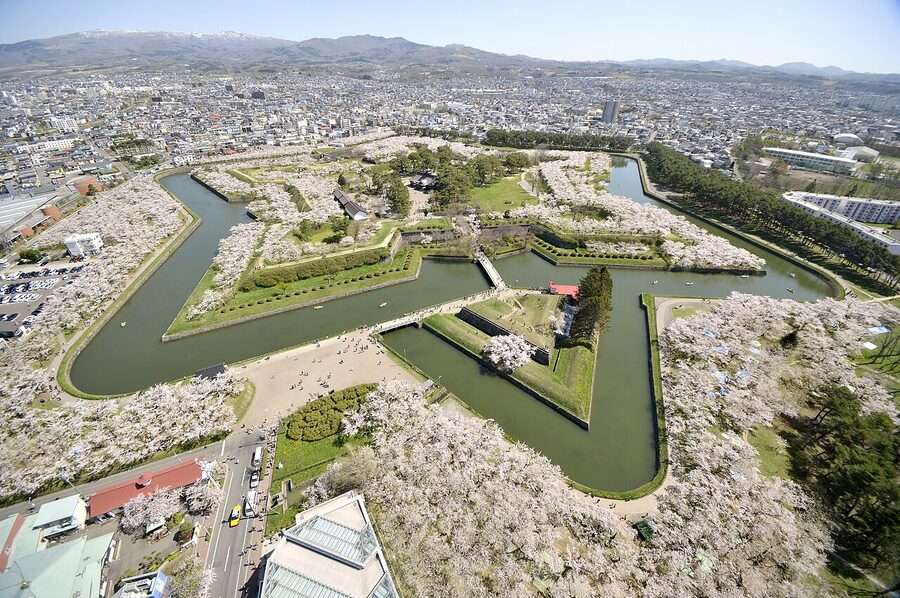
The cherry blossom window is short, usually 25 April to 5 May depending on the year, but it is one of the best sakura sites in Japan and undeniably the best in Hokkaido. About 1,600 trees ring the moat and fill the interior. From the tower deck during peak bloom the star turns into a five-pointed pink-and-white object that does not look like anything else in the country. Get there at opening if you want a window seat in the cafe on the way down.
Motomachi: a Catholic church and a Russian cathedral, five blocks apart
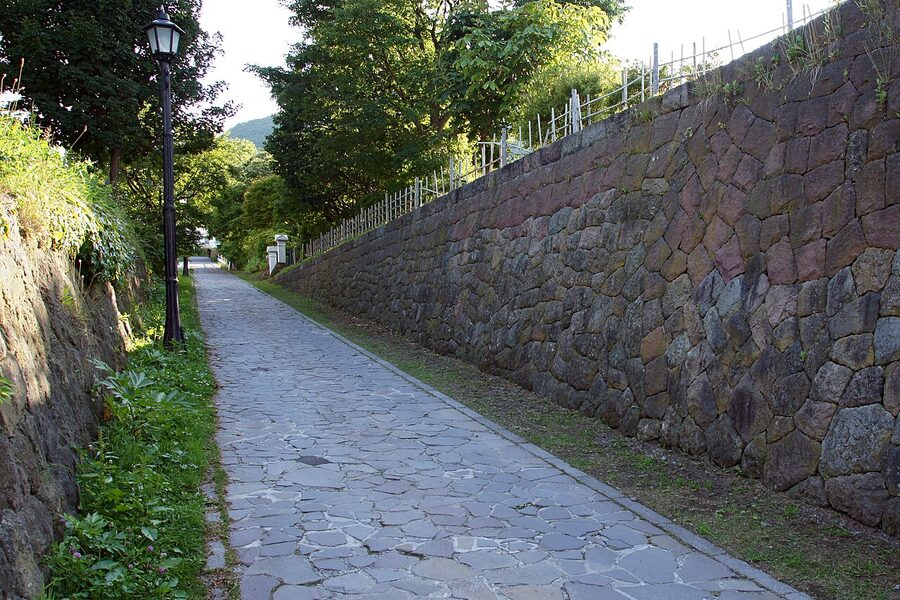
Motomachi is the slope at the foot of Mt Hakodate, the old foreign-quarter district where the consulates and missions clustered after the port opened in 1854. The cobbled streets run straight up the hill on a strict grid; the foreign cemetery sits at the western edge near Funamizaka; the major churches and consulates spread along the upper terrace. The whole stretch is about five blocks square, walkable in a slow afternoon, and one of the only places in Japan where a Catholic church, an Orthodox cathedral, and an Anglican church are visible from a single intersection.
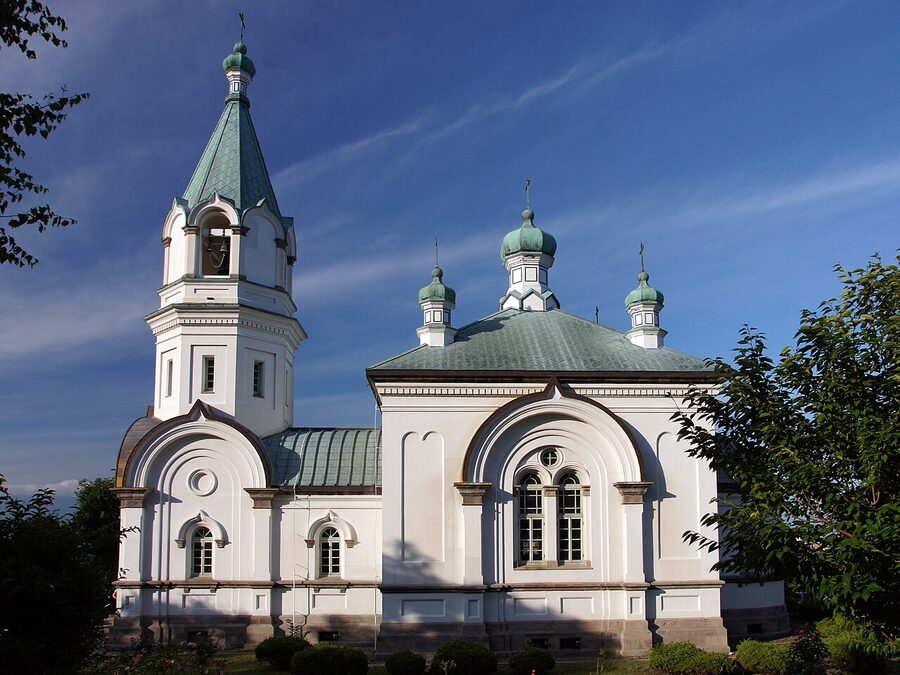
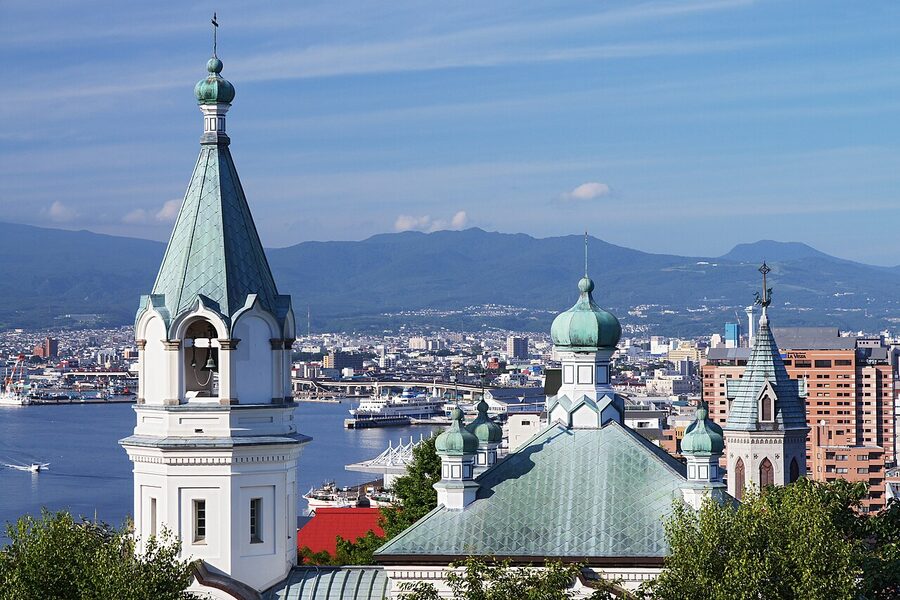
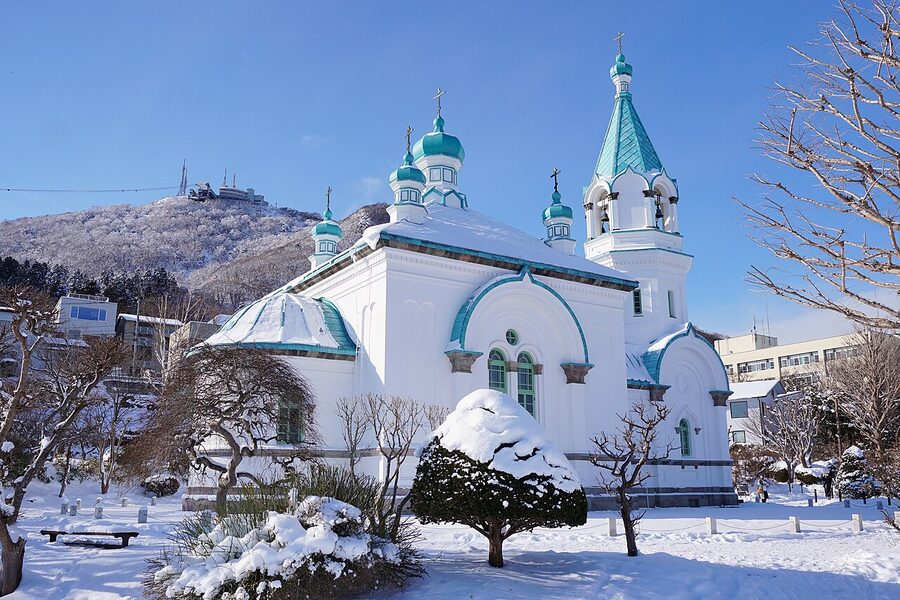
The church I’d reach for first is the Hakodate Holy Resurrection Cathedral, more commonly called the Hakodate Orthodox Church. It was first built in 1859 by the Russian consulate, burned down in the city-wide 1907 fire, and rebuilt in stone-clad concrete in 1916 in the byzantine cross-and-onion-dome style you’ll recognise instantly. The bell, recast and rehung after the fire, rings every Sunday at 11:00 and on church feast days. If you can plan dusk in Motomachi for a Saturday in summer, you’ll catch the bell at 17:00 evening service across the empty district. The interior is small, mostly icons against blue walls, lit by candles. ¥200 entry.
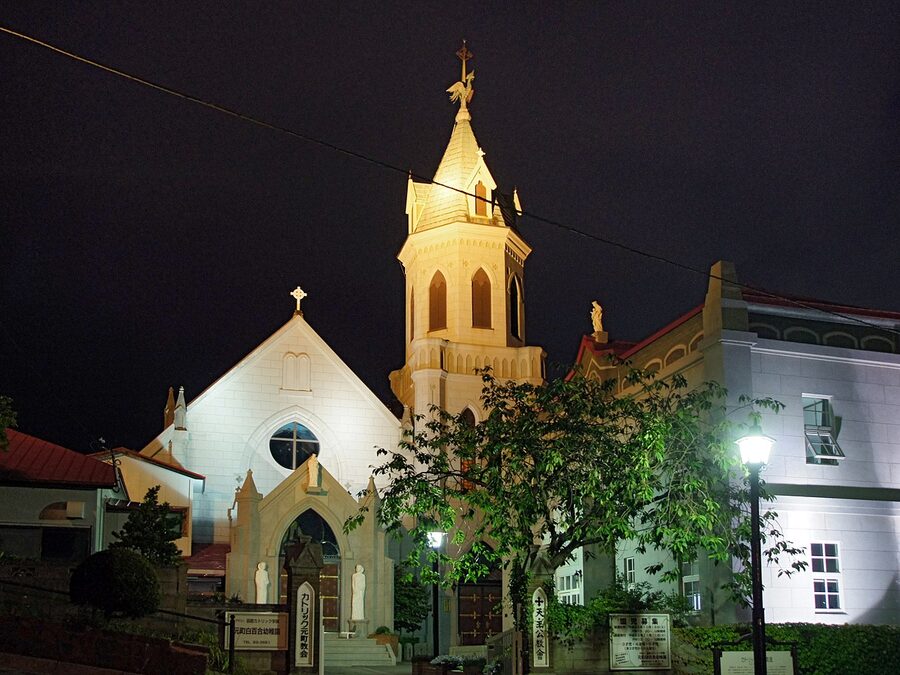
Three minutes’ walk south, the Motomachi Catholic Church is the second of the trio. It was founded in 1859, again rebuilt after 1907, and again rebuilt after a 1921 fire. The current building dates from 1924 and has a small square brick tower whose top sits about level with the Orthodox onion dome from the right angle. Inside, the altarpiece is a Vatican-gifted reredos that arrived in 1923, one of only two in Japan, the other being in Nagasaki. Free entry, open 10:00–16:00 except Sundays.
The third in the cluster is the Episcopal St John’s, the Anglican church, dating from 1979 in its current form. The roof is shaped as a cross when seen from above, which most visitors miss because they are walking past it on Daisanzaka. Worth the walk only if you have time and the order matters to you.
Old Public Hall and the British consulate
Two more buildings to see and ten that are fine to walk past. The Old Public Hall of Hakodate Ward (Kyu-Hakodate-ku Kokaido), built in 1910, is the building you’ve seen on every Hakodate brochure since: a yellow-and-blue wooden two-storey neo-Renaissance hall sitting at the top of Motomachi Park looking down at the harbour. ¥300, open 09:00–19:00 in summer, 09:00–17:00 in winter. The Old British Consulate, three blocks east, is a small museum (¥300) with a passable English tea room attached. Skip the rest of the consulate buildings unless you are in a museum mood.
17:30 to 19:30 on the mountain
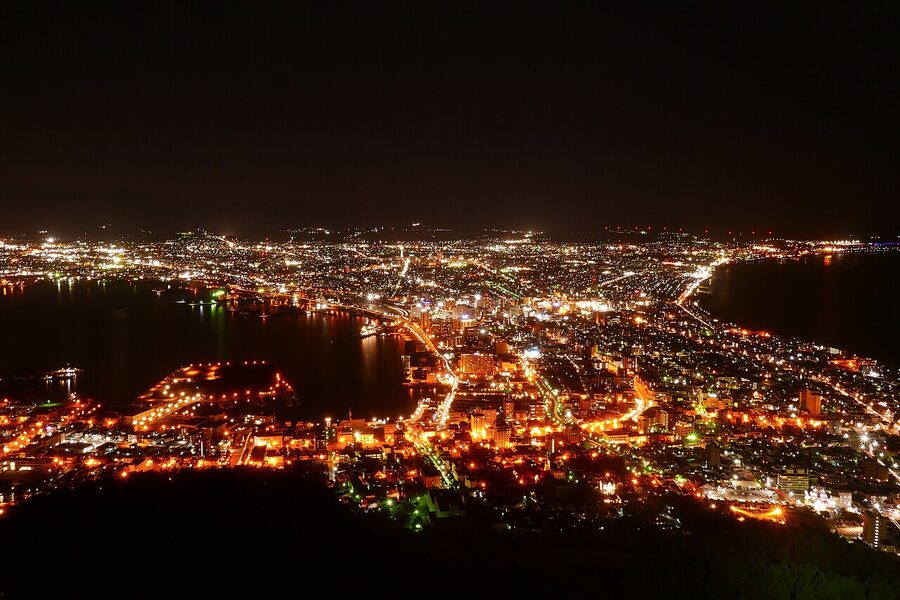
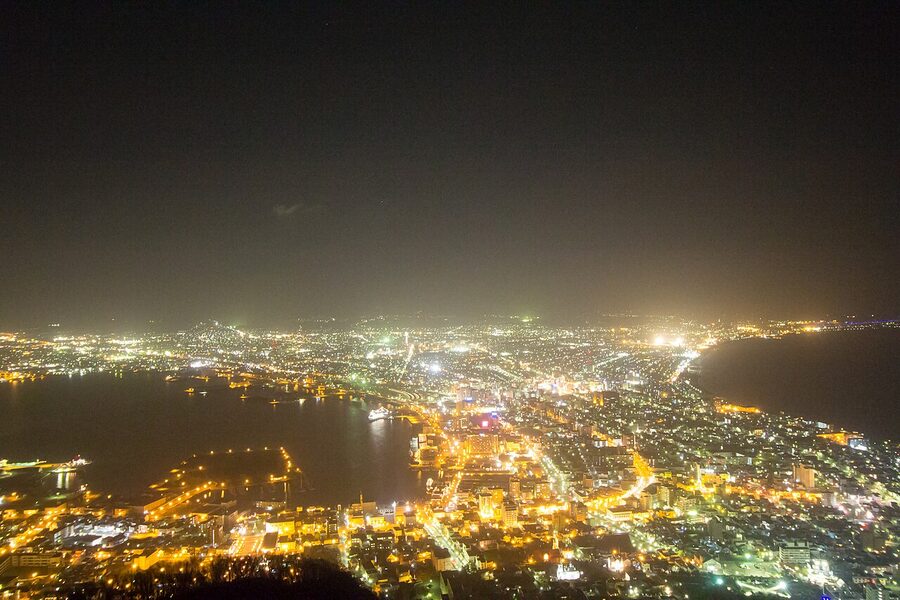
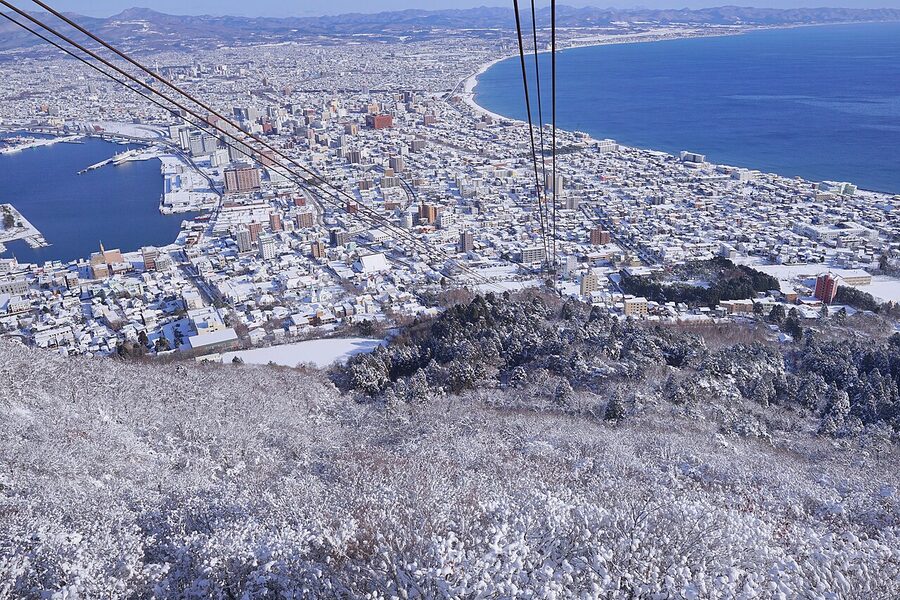
Mt Hakodate is the headland at the southwest tip of the peninsula, 334 metres high. From the summit you look back along the tombolo at the city, which runs out into the strait in a perfect hourglass with bays on both sides. The viewing platform at the top is one of three night views Japan officially calls its best, the other two being Mt Inasa in Nagasaki and Mt Rokko above Kobe. Of the three I think Hakodate is the strongest because the geometry of the city below is so much cleaner.
Ropeway, bus, walk, drive: pick one
The Mt Hakodate Ropeway is the standard way up. It runs from the lower station at 19-7 Motomachi (a 10-minute walk uphill from Jujigai tram stop) to the summit in three minutes. The pricing as of 2026 is ¥1,800 round trip, ¥1,200 one-way for adults, and ¥900 round trip, ¥600 one-way for children, with the cars running every five to ten minutes. Operating hours change seasonally: from 20 April to 30 September the last car up is 21:30 and the last car down 22:00; from 1 October to 19 April the last up is 20:30 and last down 21:00. Tickets are pay-on-the-day at the lower station; advance e-tickets save the queue at peak summer.
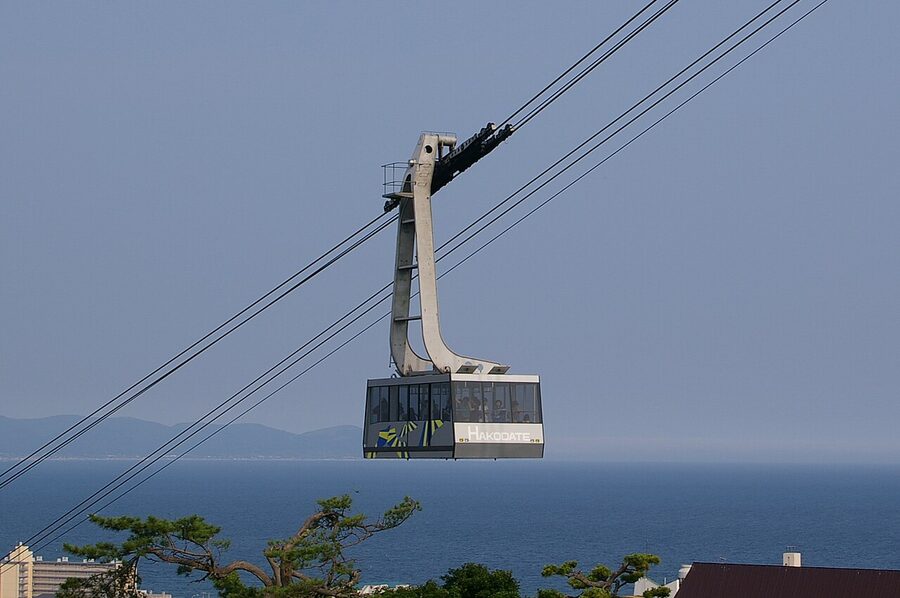
The summit bus (route 30, the Mt Hakodate Tozan Bus) is the alternative. It runs from late April through early November only and goes from Hakodate Station bus terminal stop 4 directly to the summit, 30 minutes for ¥500 one-way. Slower than the ropeway but cheaper and you skip the queue. From early November through mid-April the summit road closes to private vehicles entirely (so you can’t drive up either), and the ropeway is the only public option.
The third option is to walk. There is a hiking trail from the back of the ropeway base station to the summit, 1.4 km of switchbacks rising 280 metres, about 50 minutes up at a steady pace. I have done it twice and would do it again only in spring or autumn, too hot in summer, snow-shut from December through April. Free.
Timing the night view
Aim for 30 minutes after sunset. In Hakodate that’s roughly 19:30 in midsummer (when the sun sets around 19:00) and roughly 17:00 in mid-December (when it sets around 16:00). The 30-minute window is the blue hour, when the sky still has colour and the city lights are at full intensity but not yet washed out by deeper blackness. After 21:00 in summer or 19:00 in winter the sky is fully dark and the photograph reads more flatly. Get up there 45 minutes before sunset and walk the upper terrace for the daylight panorama first; the queue for the photograph spot at sunset minus 10 forms fast.
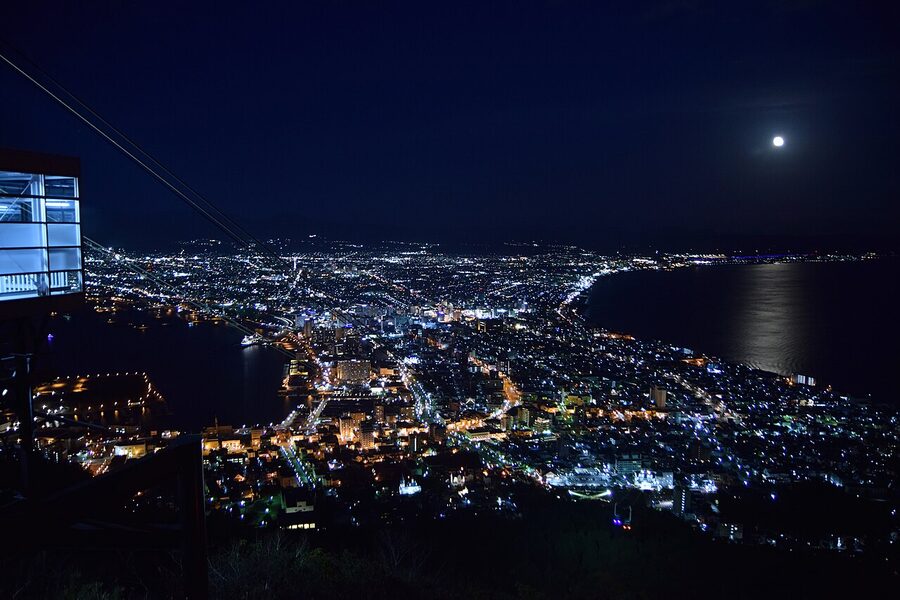
The honest warning: the queue. On clear evenings in July, August, October weekends, and over the New Year window, the line for the prime upper-terrace photo spot can run 30 to 60 minutes. The summit terrace itself is generous and you can simply stand 10 metres back and have a perfectly good view; the queue is for one specific viewing balcony at the front. I never queue for it. The shot from the side platform is as good and the cafe terrace inside is empty.
The view-without-the-queue alternative: Hachimanzaka
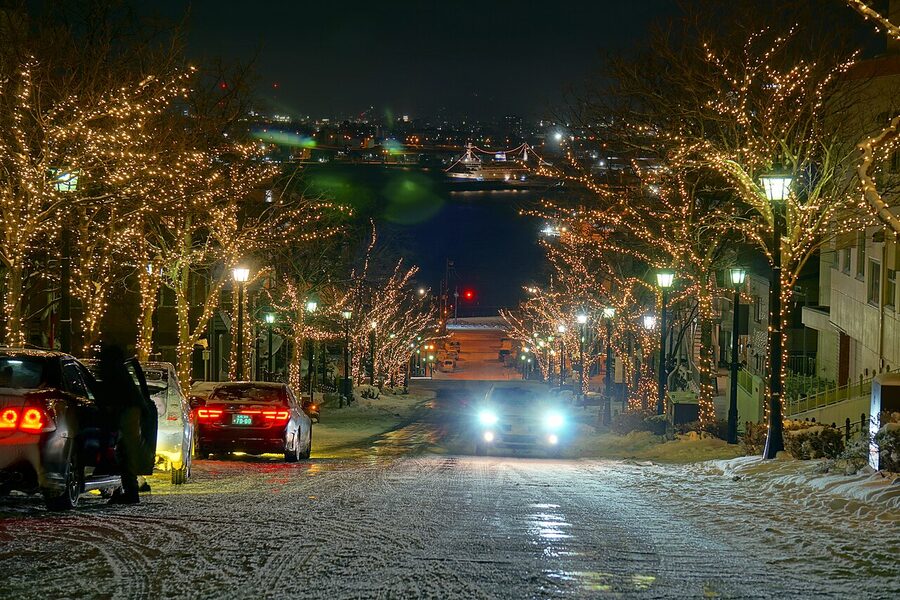
If the ropeway queue is two hours, or the weather has gone in, walk five minutes up Motomachi from the bay to Hachimanzaka. It is the cobbled slope that runs straight from the harbour to the foot of the mountain; the line of street lamps that frames it with the boats and the Kanemori warehouses below is the second-best night photograph in Hakodate and free. I’d argue it is the more interesting composition. The mountain view is the famous shot. Hachimanzaka is the photograph the locals take.
Motomachi by daylight: walking the slope
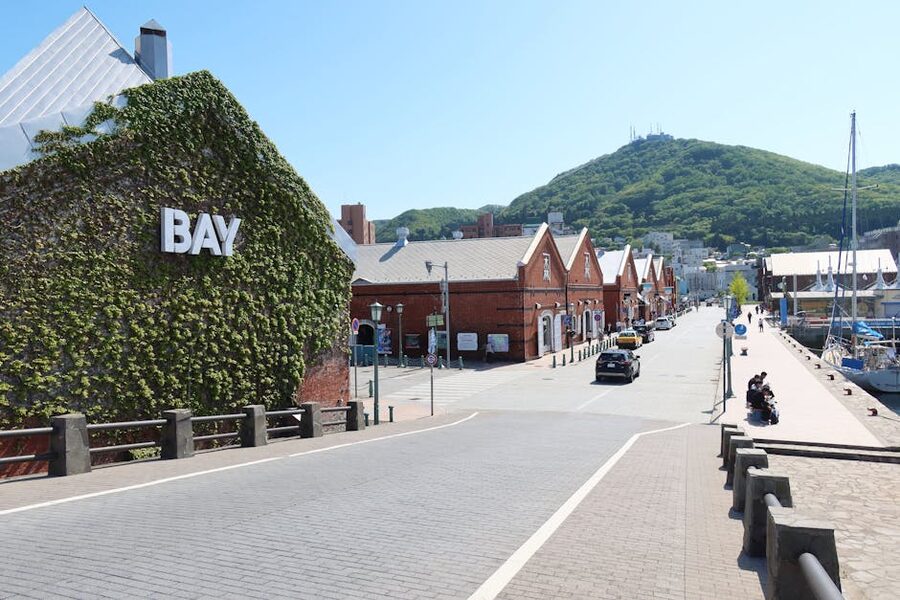
Walk Motomachi top-down, not bottom-up. Take the tram to Jujigai, walk up Hachimanzaka or the parallel Daisanzaka, hit the churches near the top, and let gravity carry you back along the cobbled slopes to the bay. Doing it the other way means you arrive at the churches sweating. There are eight named slopes climbing from the harbour up the lower face of Mt Hakodate; the ones worth walking up at least once are Hachimanzaka, Daisanzaka, Chachanobori, and Motoizaka. Each one frames a slightly different vertical slice of the bay.
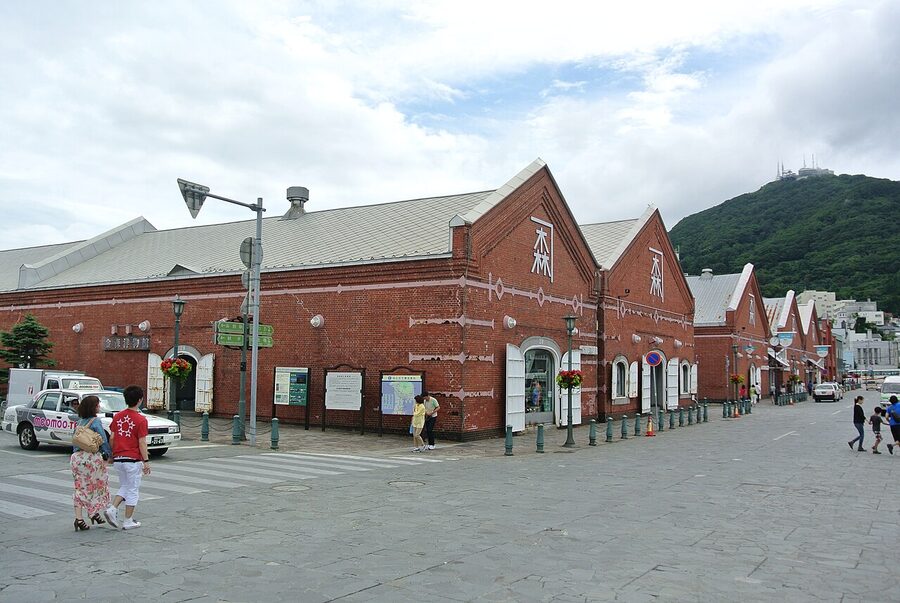
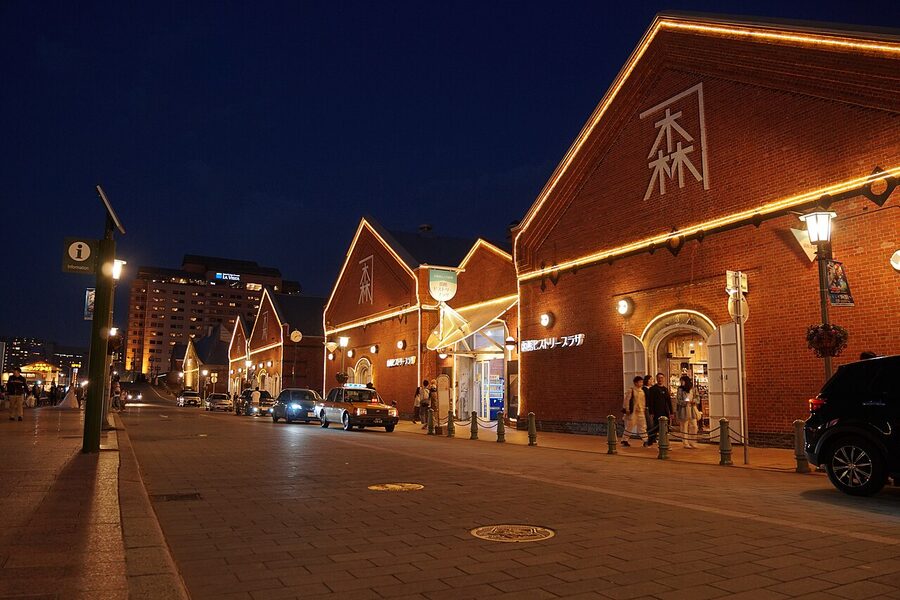
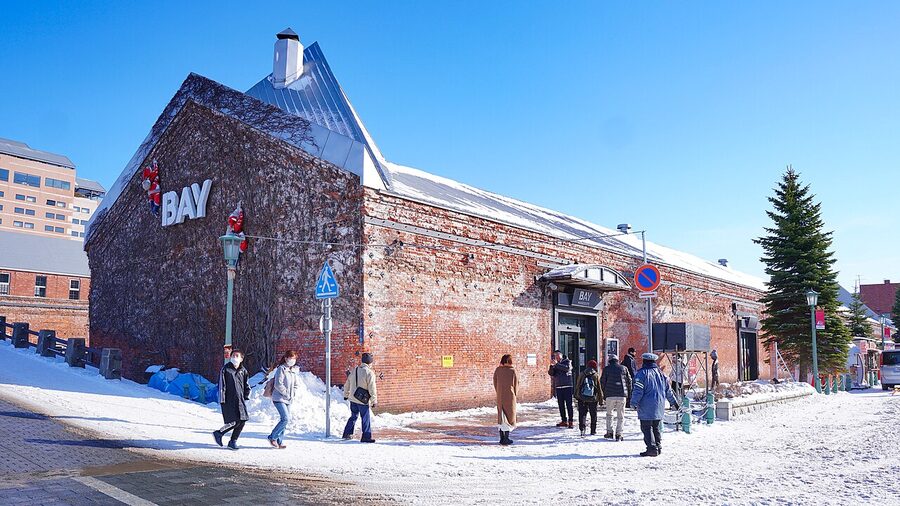
Kanemori is the row of brick warehouses at the bottom of the slope, on the harbour. The buildings date from 1869 onwards and were originally trading-house storage. They were converted into a shopping arcade in 1988, and the interior reads as exactly that: a mall in old brick. Don’t go in for the shopping. Go in for the soft-serve, walk through, and come out the other side. The exterior at blue hour and the wooden walkway over the inlet between the warehouses is what the photograph is for.
The Trappistine Convent and a cape on the south coast
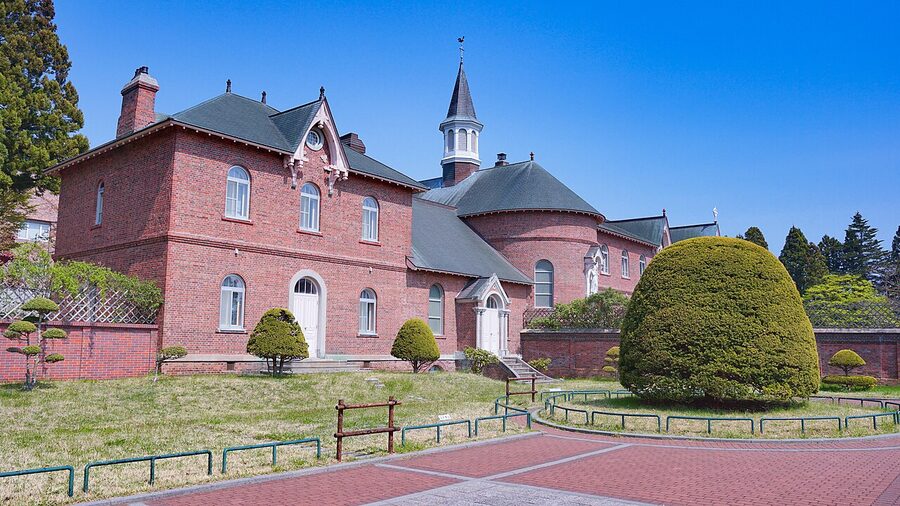
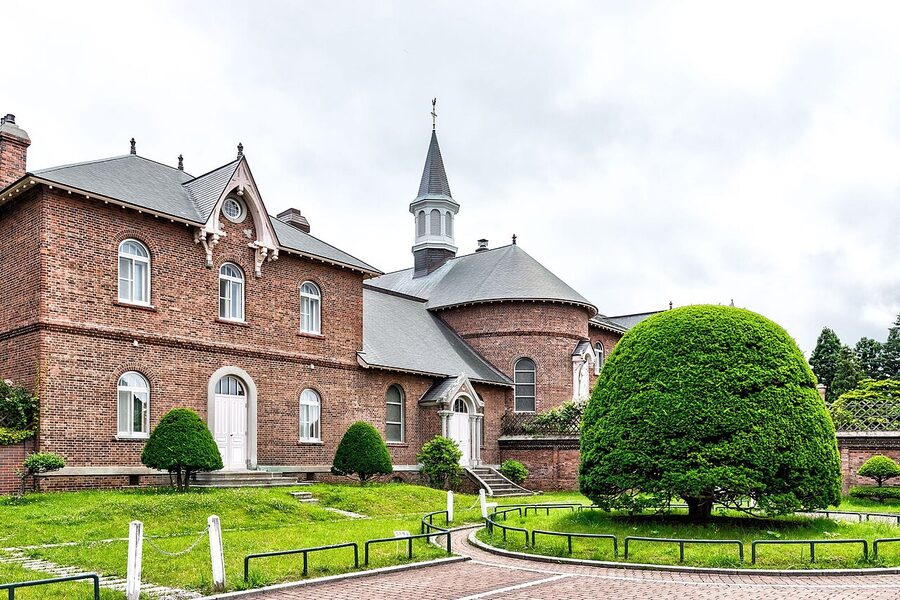
Two add-ons that don’t fit the Motomachi-Goryokaku-Mountain triangle. First, the Trappistine Convent (Tenshien Trappist Monastery), a working Cistercian convent founded in 1898 by eight French nuns, the first in the East. The cloister is strictly closed to outsiders. The visitor area at the gate is open 08:30–17:00 (closed 16:30 in winter) and includes a small chapel, an exhibition room with the convent’s history, and a shop selling the convent’s signature madeleines and butter cookies. ¥0 to enter the gardens, donations welcome at the chapel. The convent sits at 346 Kamiyunokawacho, 9 km east of the station, easiest reached by the airport-bound bus from Hakodate Station bus terminal stop 14 (about 30 minutes, ¥330) or by taxi.
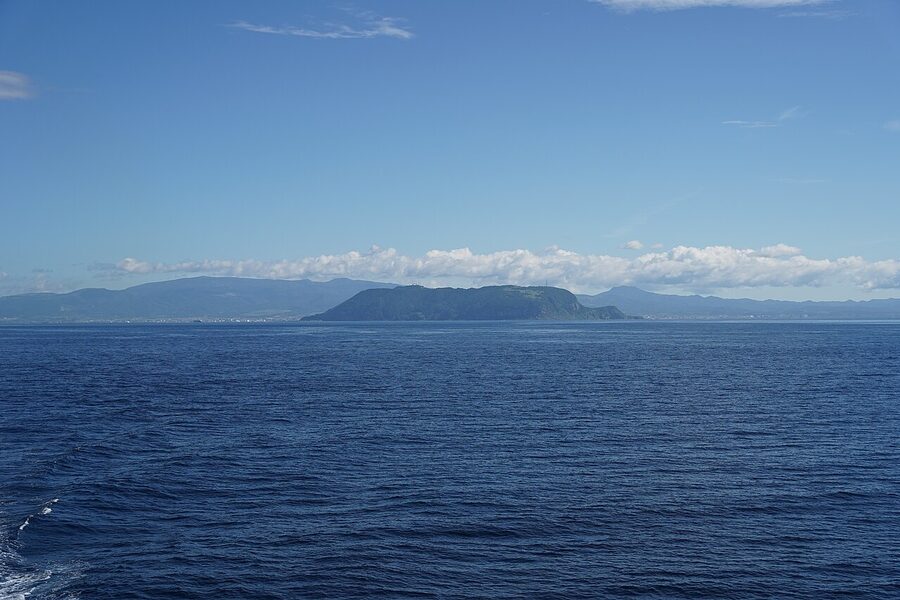
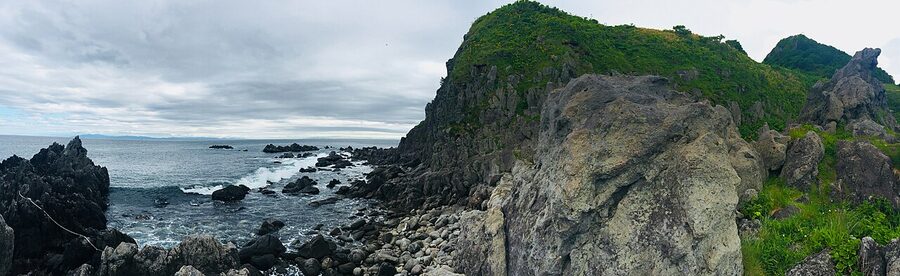
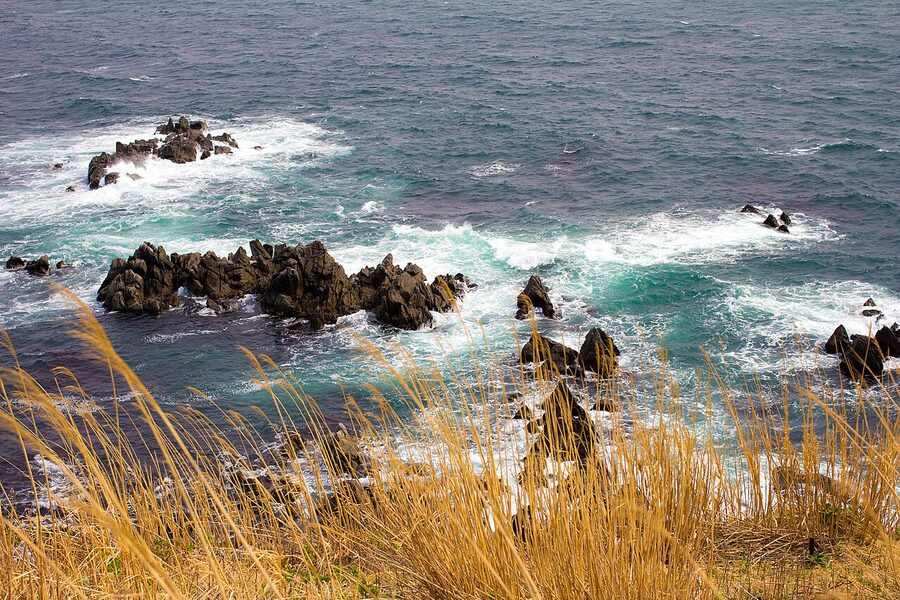
Second, Cape Tachimachi (Tachimachi-misaki), the rocky promontory at the south end of the peninsula, behind Mt Hakodate. It is a 12-minute walk from the Yachigashira tram terminus, the southern endpoint of Tram Line 5. The cape ends in cliffs over the Tsugaru Strait, with the Aomori coast visible 20 km across the water on clear days. There is a small lookout, a memorial to Ichiyo Higuchi (the writer on the ¥5,000 banknote), and almost nobody. Free.
Hakodate ramen: the lighter shio bowl
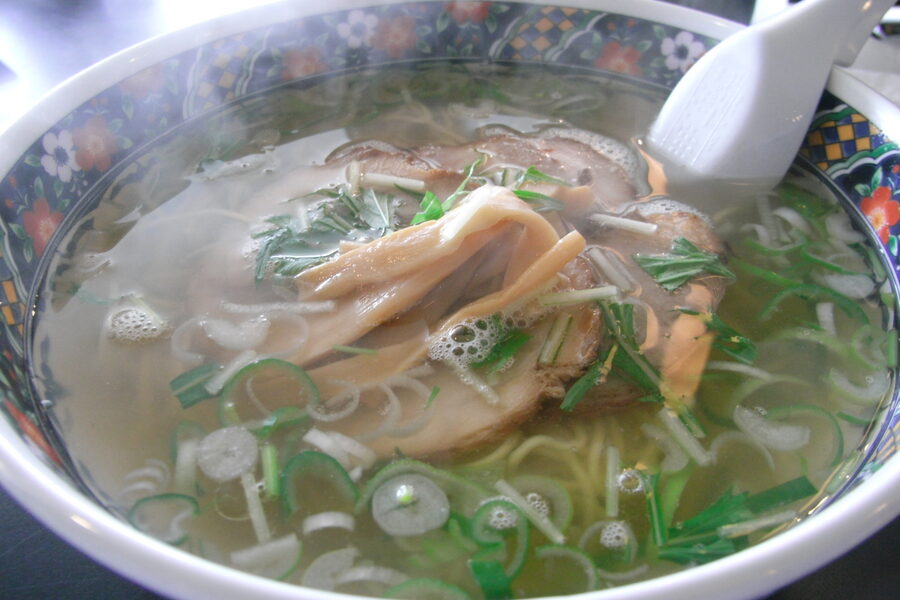
Hokkaido is famous for ramen, but the famous Hokkaido bowl is Sapporo’s miso. Hakodate’s bowl is shio, salt, and it is almost the opposite: clear amber broth instead of cloudy brown, no fat film on the surface, light on the tongue, salty rather than savoury. The base is a long-cooked pork bone and chicken stock seasoned with sea salt and Hakodate kombu, no miso, no soy. The noodles are usually a straight medium-thin cut rather than Sapporo’s curly yellow ones. It is the bowl I would have if I’d had a heavy night in Susukino the week before, which is to say it is the bowl Sapporo doesn’t make.
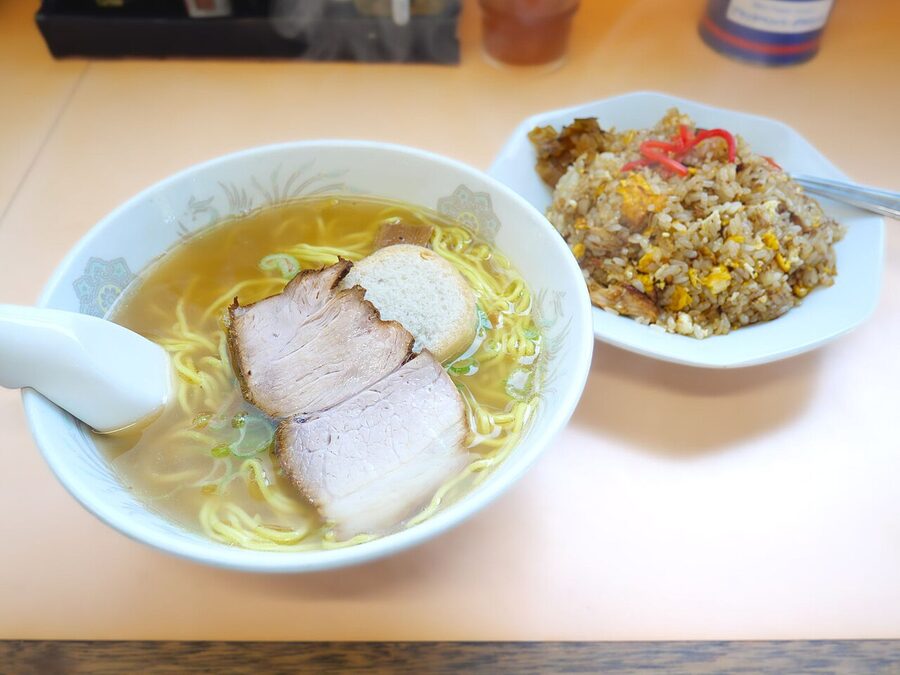
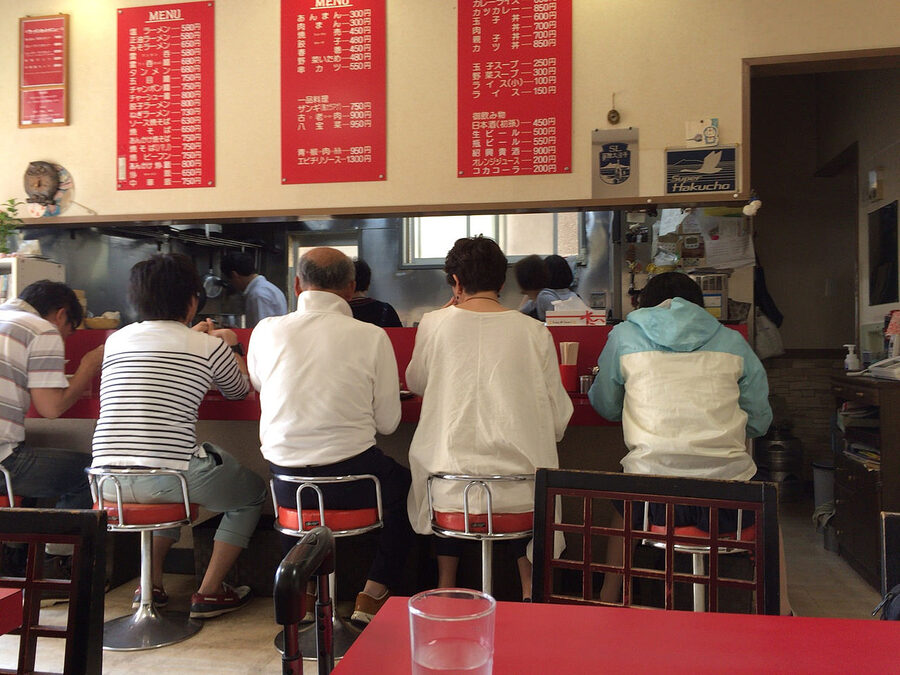
Three places I’d send you. Ajisai Honten in Goryokaku-cho is the canonical version, the bowl that goes on the postcards, ¥900–1,200, queue 11:30 to 13:30, often a 20-minute wait. Hakodate-men Bekkan Hijikataya in the Bay Area, named for Hijikata Toshizo, leans towards the older shio recipe with more kelp, less salt. Seiryuken in Asahi-cho is the local-grandfather version, dingier kitchen, slightly thicker noodle, around ¥800. None of the three serves miso ramen at all. If you want it, you are in the wrong city.
The other Hakodate-only food I’d add: shio-brined uni in summer (June through August), the pretty good Hokkaido beef burger from local chain Lucky Pierrot (the Chinese-chicken burger is the order, ¥380), and the Trappistine madeleine, which is denser and butterier than the French version because the convent uses Hokkaido butter at twice the standard ratio. The squid sashimi at the morning market overlaps with these and you don’t need to do all four.
Getting to Hakodate, getting around Hakodate
From Tokyo: Hokkaido Shinkansen
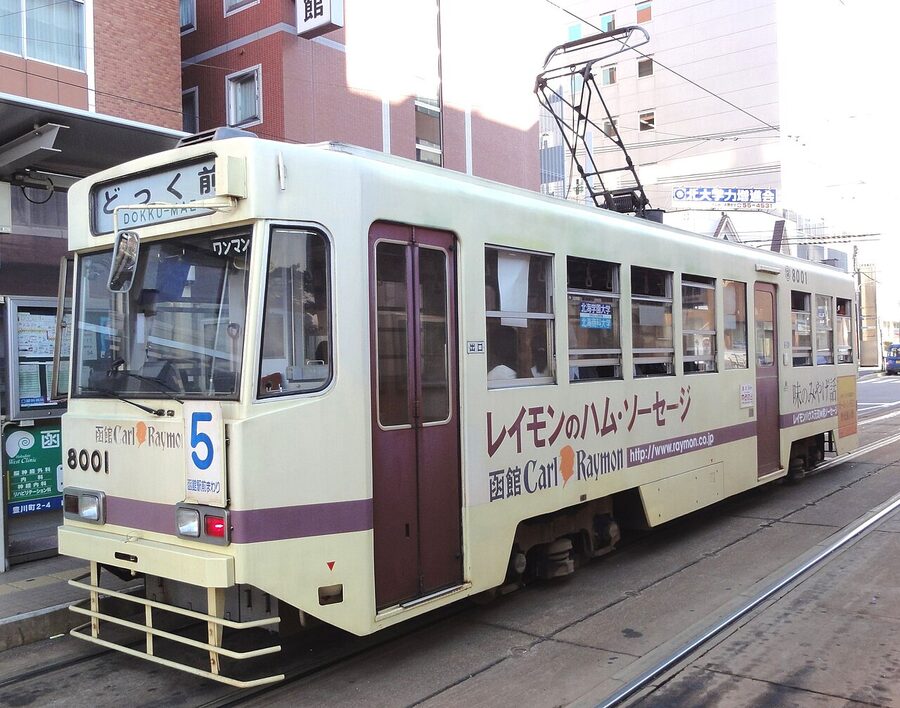
The fastest route from Tokyo is the Hokkaido Shinkansen on the JR Hayabusa service. It runs from Tokyo Station to Shin-Hakodate-Hokuto in 4 hours 2 minutes at full speed, with a one-way reserved fare of around ¥23,430 in 2026. Trains leave roughly every 60 to 90 minutes through the day. From Shin-Hakodate-Hokuto Station the Hakodate Liner shuttle covers the last 18 km to Hakodate Station in about 20 minutes (¥440 unreserved). Total Tokyo-to-Hakodate door time, allowing for the transfer, is about 4 hours 30 minutes, which is the same as flying when you account for airport transit at both ends.
The shinkansen is fully covered by the Japan Rail Pass (national, 7/14/21 days) and by the JR East Pass (Tohoku-South Hokkaido) consolidated pass that covers Tokyo north to Hakodate. Both make the journey effectively free if you’re already on the pass. The dedicated single-direction shinkansen ticket is the cheapest cash option if you’re not.
From Sapporo: Limited Express Hokuto, for now
From Sapporo, the JR Hokkaido Limited Express Hokuto runs to Hakodate in roughly 3 hours 30 minutes, ¥9,440 reserved. Twelve services a day. The Hokkaido Shinkansen extension to Sapporo is under construction and currently scheduled for 2030; until it opens, the limited express is the fast option. By car the journey is around 4 hours 30 minutes via the Doo Expressway.
From Aomori: the ferry
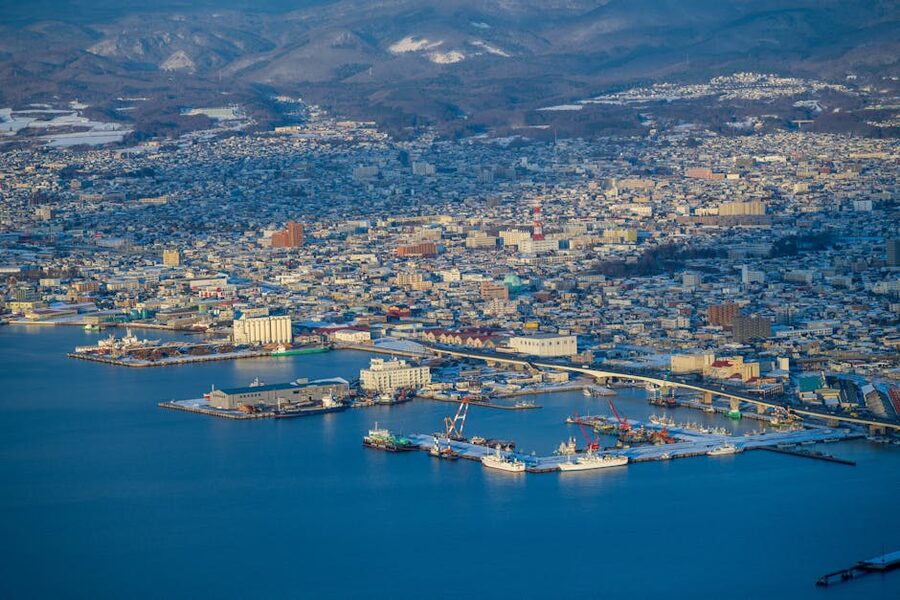
The Tsugaru Kaikyo Ferry runs the Aomori-Hakodate crossing 6 times a day, 3 hours 40 minutes one-way, with second-class fares around ¥2,860 in 2026. There is also a shorter Hakodate-Oma route to the northern tip of Honshu’s Shimokita peninsula, 90 minutes, twice a day, around ¥2,440. If you want a slow, beautiful, historically-charged way to enter Hokkaido and you are coming from Tohoku, the ferry is the choice and it costs less than the shinkansen by far.
The tram, the airport, and walking
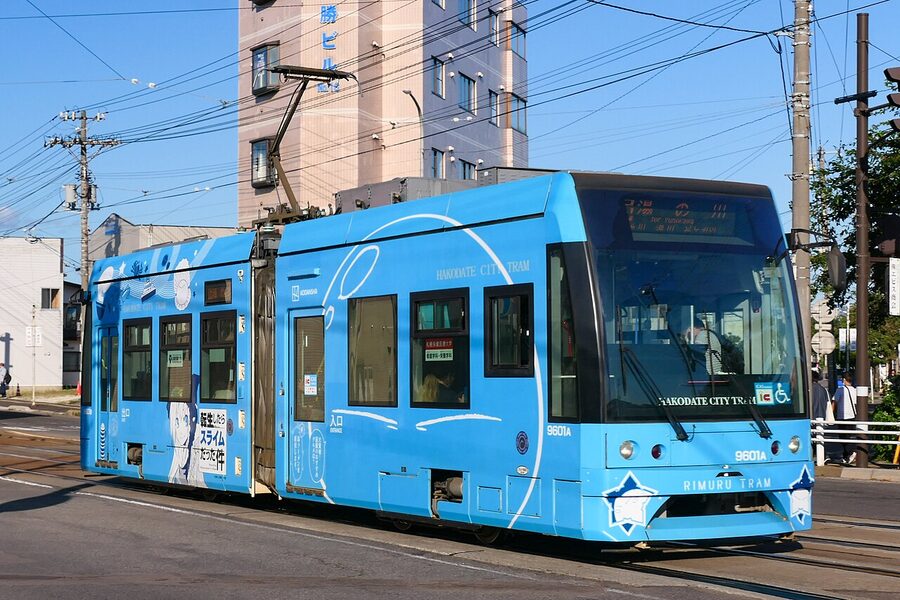
Hakodate has two tram lines, both running through the centre of the peninsula on a single trunk that branches near the station. Line 2 ends at Yunokawa, the eastern hot-spring suburb. Line 5 ends at Yachigashira (for Cape Tachimachi). They are slow, frequent, and link almost every place in this article: Goryokaku-koen-mae for the fort, Suehirocho or Jujigai for Motomachi and the warehouses, Hakodate Ekimae for the morning market and station, Yunokawa for the hot springs and the airport bus connection.
Single fare is ¥250 flat. The one-day tram pass at ¥800 (adults, ¥400 child) pays for itself on the third ride and is sold at the station tourist information centre, on board, and at most hotel front desks. There is also a tram-and-bus combination one-day pass at ¥1,600 if you plan to ride the airport bus and the tram on the same day.
Hakodate Airport (HKD) sits 8 km east of the station, 20 minutes by airport limousine bus (¥500) or 15 minutes by taxi (around ¥3,500). There are direct flights from Tokyo Haneda (about 80 minutes), Osaka Itami, Nagoya Chubu, and Fukuoka.
Walking is what most of this city is for. From the station to Motomachi and the bay is 25 minutes flat. The morning market, the warehouses, the slopes, and the lower ropeway station are all on foot from the station within an hour. Only Goryokaku, the airport, the convent, and Yunokawa Onsen really require a tram or bus.
Where to stay
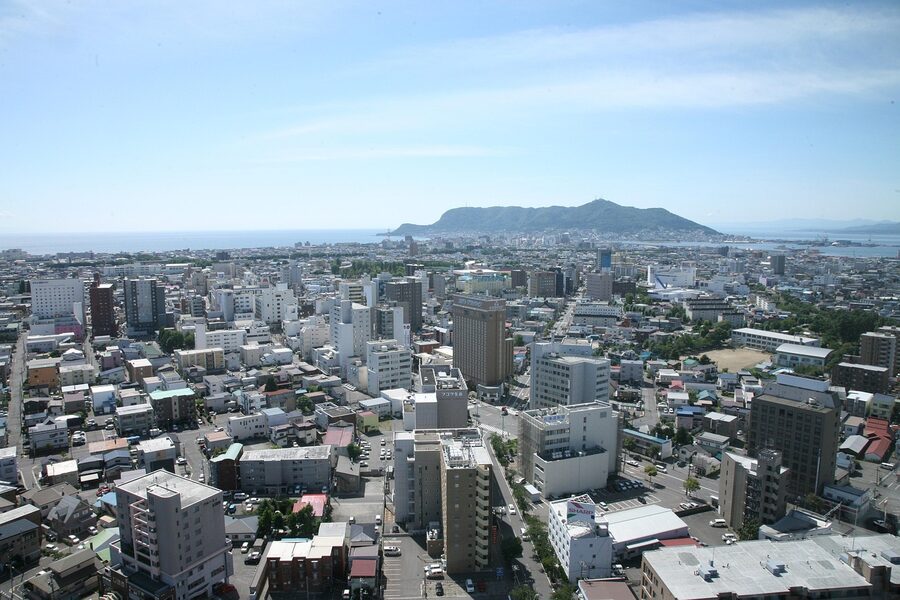
Three places to base yourself, depending on what you’re optimising for.
Near the station and morning market. The fastest sleep-to-ikura-don option. Tokyu Stay Hakodate Asaichi sits literally inside the morning market complex, a one-minute walk to Donburi Yokocho. Hotel and Spa Century Marina Hakodate is a step up, harbour-side, with a top-floor onsen overlooking the bay. Hotel Mystays Hakodate Goryokaku is the budget end of the station cluster, around ¥7,000 to ¥10,000 a night for a double room.
In the Bay Area / Motomachi. Older buildings, more atmosphere, slightly slower walk to anything outside the slope district. La Vista Hakodate Bay sits next to Kanemori Red Brick Warehouse and has a top-floor onsen with the harbour view. HakoBA Hakodate by The Share Hotels is a converted heritage building two minutes from Suehirocho tram stop with a hostel-and-hotel-together format.
Yunokawa Onsen. The hot-spring suburb, 12 minutes from the station by tram, near the airport. Trade off in walkability to the centre, gain a real onsen ryokan stay. Wakamatsu Hot Spring Resort is the upscale ryokan choice (full kaiseki dinner, open-air baths, ocean view, ¥30,000 to ¥55,000 per person per night including dinner and breakfast). Yunokawa Prince Hotel Nagisatei is the best mid-tier ryokan in the area, with in-room private open-air baths from around ¥25,000.
When to go
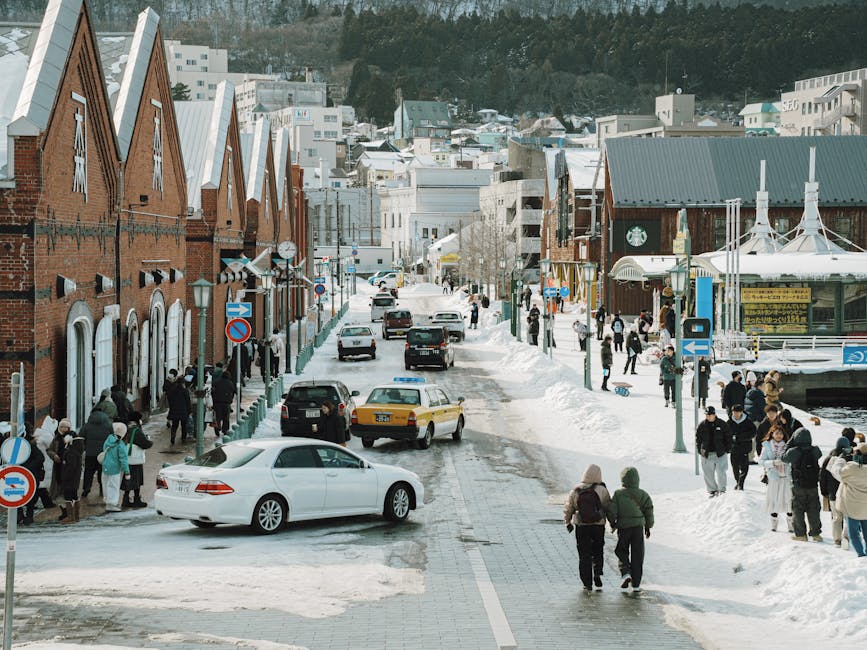
Hakodate has the most distinct four seasons of any major Hokkaido city, and each one offers a meaningfully different version of the place.
Late April to early May is the cherry blossom window at Goryokaku, late by Japan’s standards, early-summer light, mid-teens daytime temperatures. The most beautiful version of the city. Book hotels three to four months ahead.
June through August is the summer high season. Comfortable mid-twenties, light fog from the strait some mornings, the morning market at full intensity, the night view at its longest blue hour. Ferry connections to Aomori run twice as often as the rest of the year. Hakodate Port Festival in August.
October to early November is my favourite. Maples turn red around Goryokaku and Onuma Park, daytime temperatures drop into the low teens, and the queues thin out. Pack a light coat. The snow has not yet started.
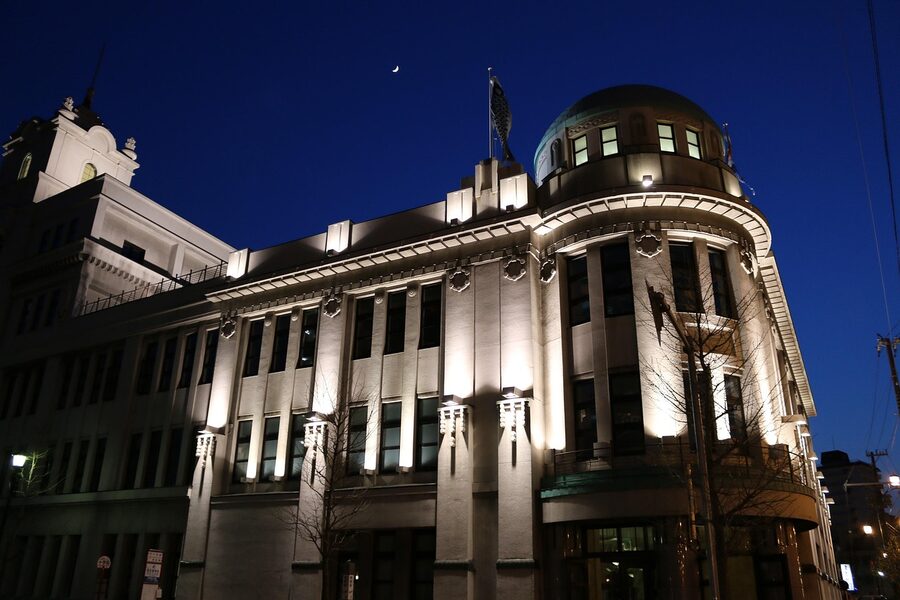
December to February is hard but rewarding. Daytime highs of 0 to 4°C, regular snow, the slopes of Motomachi turn into single-track ice paths. The night view is dazzling because the dry air sharpens the lights. Goryokaku is illuminated 17:00–20:00 from mid-December to late February. The Hakodate Christmas Fantasy lights up the bay from late November to 25 December. Bring proper winter boots, not city shoes.
March is the only month I’d skip. Brown slush from the melt, before the cherry trees, after the illumination season. Everything else is a good time.
If you have a third day: Onuma Park
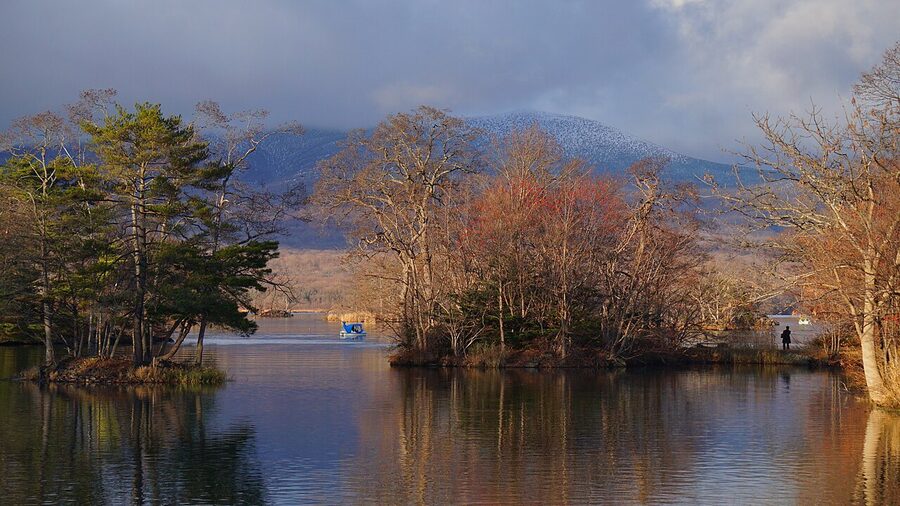
Onuma Quasi-National Park, 28 km north of Hakodate, is the closest big-nature day trip. The park is built around three glacial lakes (Onuma, Konuma, Junsainuma) at the foot of the 1,131-metre Mt Komagatake stratovolcano. The lakes are dotted with 126 small forested islands connected by walking bridges, the main loop of which is 50 minutes flat.
From Hakodate Station: take the JR Hakodate Line limited express (Hokuto, Super Hokuto, or Hokuto Star) to Onuma-koen Station, 25 minutes, ¥1,840 reserved. Local trains take 50 minutes for ¥750 unreserved. Onuma-koen Station is a 5-minute walk from the visitor centre and the start of the islands loop.
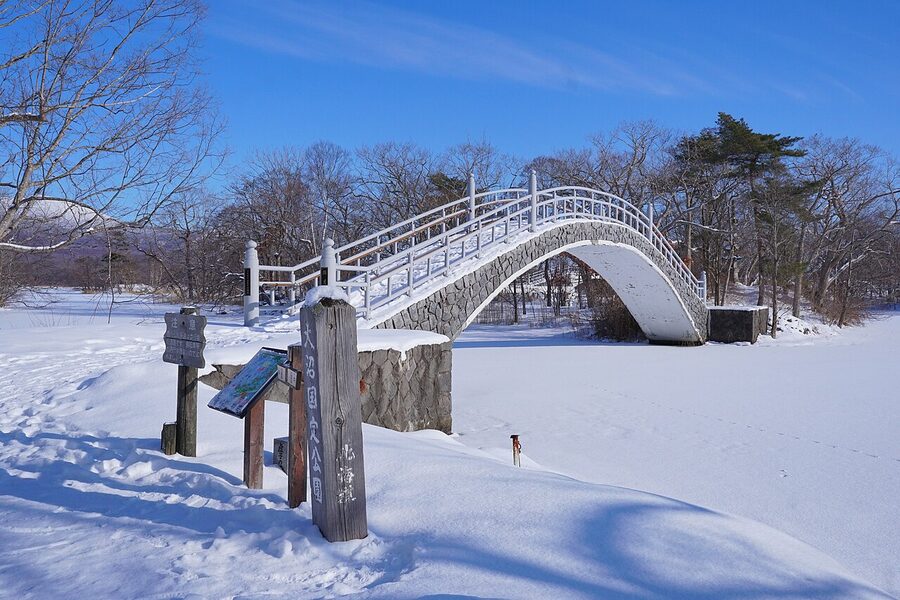
Best windows: late October maples, July greenery, January frozen-over with snowshoe rentals at the visitor centre (¥800 per day). The cycling loop around the larger Onuma lake is 14 km, rentable bikes ¥1,000 for three hours, three to four hours at a sightseeing pace.
What surprises first-time visitors
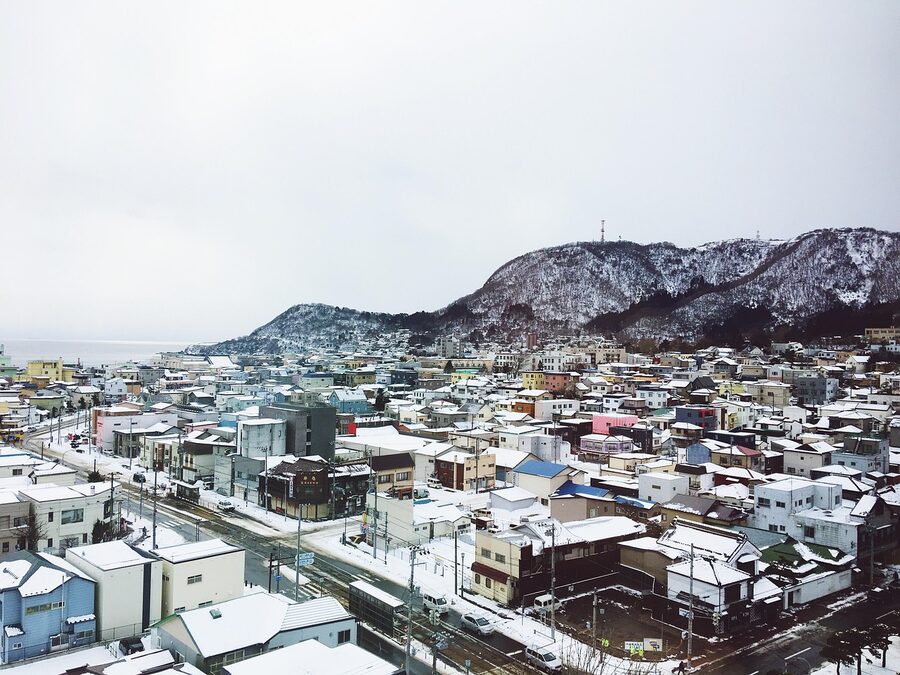
A few things worth knowing before you arrive.
The morning market really is in the morning. By 11:30 most of the rice-bowl stalls have sold out of the day’s good roe and the line moves to the second-tier roe. By 13:30 the photogenic stalls are closed. The market is genuinely a 06:00 to 11:00 destination, not a casual lunch one.
The slopes are steep and they ice. From late November through March the cobbled slopes of Motomachi turn from charming into actually dangerous in city shoes. Wear treaded boots. Take handrails seriously. The slope between the Orthodox Church and Hachimanzaka has caught me out twice.
The Mt Hakodate ropeway closes for two weeks in October or November every year for legal inspection (in 2026 the closure runs 20 October to 8 November). If you have your heart set on the photograph, check the dates before booking. The summit road is also closed to private cars from early November through April; the bus stops, the ropeway is the only way up, and the queue can run 90 minutes on a Saturday in February.
Hakodate is sleepier than Sapporo. There is no Susukino-equivalent night district. Most restaurants outside the bay area close their kitchens by 21:00 and their doors by 22:00. If you want a midnight bowl of ramen, you’ll find one or two near the station, but you can’t expect the choice you’d have in a bigger city.
The southern Hokkaido weather is its own thing. Hakodate sits much further south than the rest of the island, near the same latitude as northern Aomori, and you’ll get warmer summers, milder winters, and more rainfall than Sapporo or Niseko. The fog rolls in off the strait in early summer and can stay for half a day. If you arrive on a day with the fog the night view is closed; treat it as a flexible plan rather than a fixed one.
One last thing
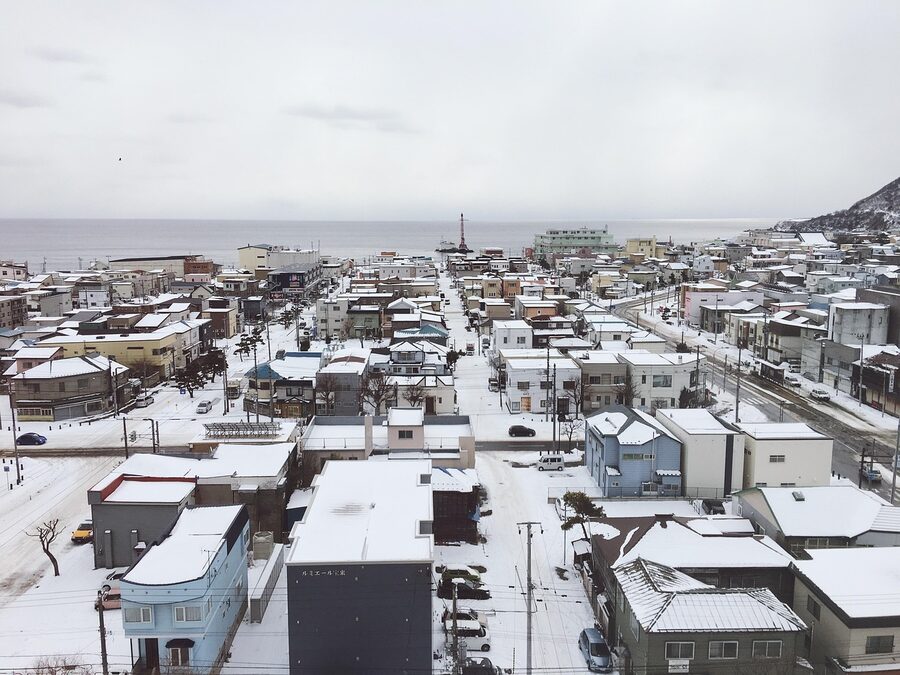
Most of the standard Hokkaido itineraries treat Hakodate as a day trip from Sapporo or a one-night stop on the way to Sapporo from Tokyo. I think this is the wrong way to plan it, and you can tell I think this is the wrong way to plan it. Two unhurried days here pay back the time more than two hurried days in either of the other two big Hokkaido cities, because the things Hakodate does, the morning market at sunrise, the star fort and its tower, the five-block Motomachi religious cluster, the night view, the lighter shio bowl, the ferry across to Honshu, only happen in this place. You can do Sapporo‘s big set pieces in any large Japanese city. You can do Niseko at any major ski destination on earth. Hakodate is the irreplaceable one.
Get the 06:00 ikura-don. Then the tower. Then the slope down through Motomachi to the bay. Then the ropeway at sunset. Then the shio bowl. That’s the city. Two days.


.jpg)


.jpeg)

.jpg)


.jpeg)


.jpg)


