
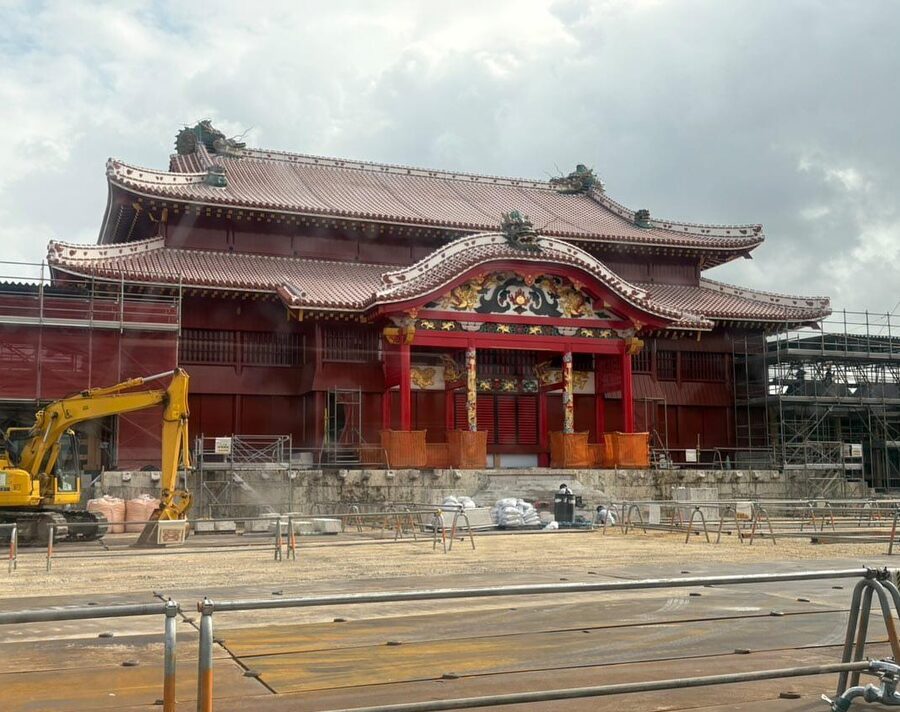
Shuri Castle’s Seiden, the main hall of the Ryukyu kings for nearly 450 years, burned to the ground at 02:41 on the morning of 31 October 2019. Six and a half years on, the rebuilt cypress hall is scheduled to open its doors again in autumn 2026, and the work is happening in front of you. The ongoing reconstruction is wrapped in a glass-walled Kibadan shed that lets you watch carpenters fit dovetail joints, stencil cinnabar lacquer, and shape the giant ridge dragons by hand. That alone is worth half a day. Most travel guides hand Naha three or four hours: a snap of Okinawa‘s capital before the ferry to the Kerama Islands. The city earns more.
I’ve spent more time in Naha than the city’s reputation suggests it deserves, and I’d argue most travel guides are wrong about it. The 1.6 km strip of Kokusai-dori is loud and partly tacky, yes. But step one block off the main street into the covered Heiwa-dori arcade and you’re in a market the size of a small village, with butcher counters, herb stalls, and second-floor restaurants where the shopkeeper from downstairs walks your purchase up to the kitchen. Twenty minutes by Yui Rail and you’re at Tamaudun, the 1501 royal mausoleum where 17 of the Ryukyu kingdom’s last 19 kings still lie. Half an hour by bus from there to Shikinaen, the 1799 royal stroll garden no one ever puts on the highlights list. None of this is hard. None of it is far. The city just rewards the traveller who slows down.
In This Article
- Quick orientation
- Shuri Castle: the reconstruction is the point
- What you actually see in 2026
- How to get to Shuri
- Kokusai-dori and the arcades behind it
- The covered arcades
- Makishi Public Market: where the city actually shops
- The market trick worth knowing
- What to order on the second floor
- Tsuboya pottery district
- What yachimun actually is
- What to buy and what to skip
- Tamaudun: the Ryukyu kings’ tombs
- What you actually see
- Shikinaen: the royal stroll garden
- Why the garden matters
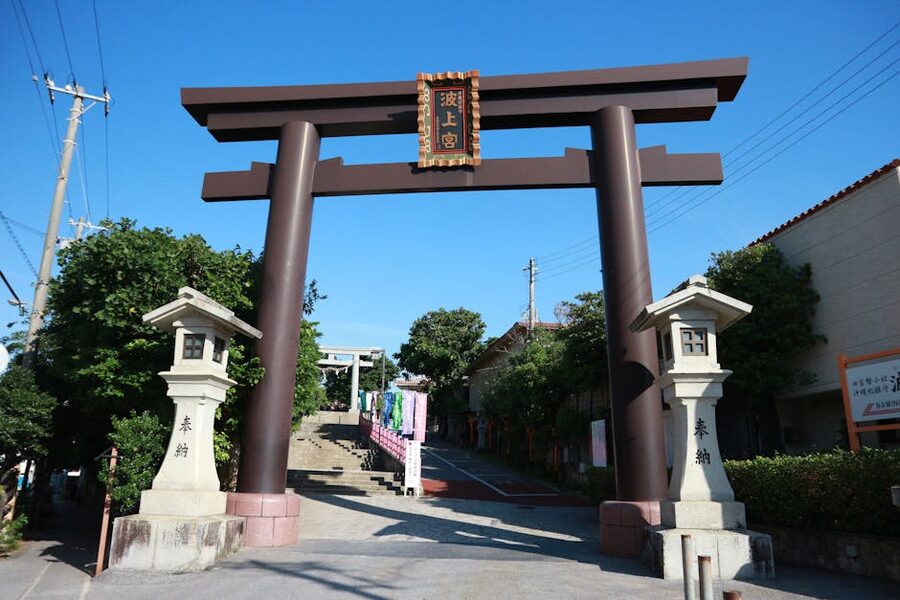
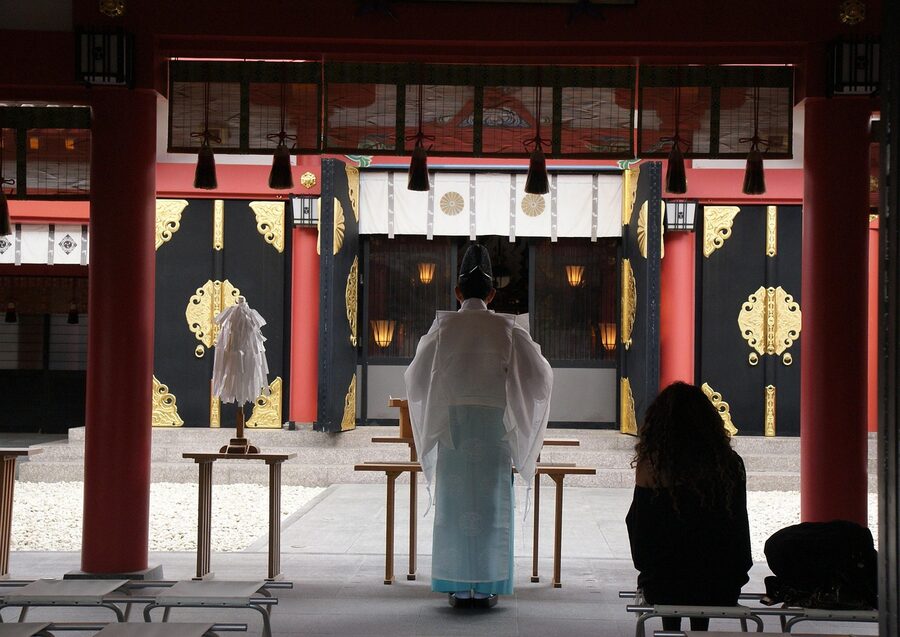
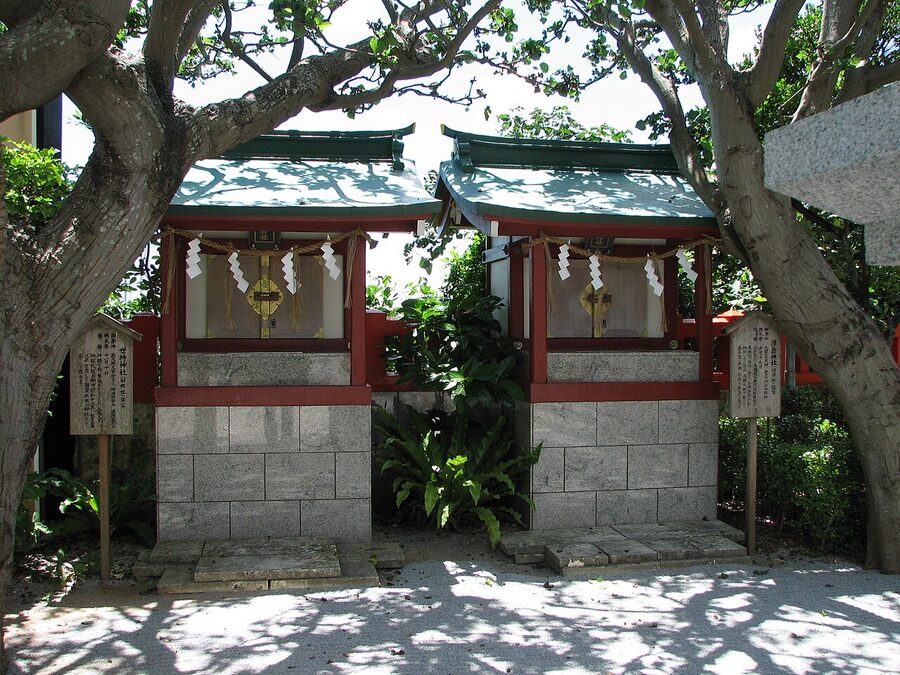
- Naminoue Beach and Naminoue Shrine
- The shrine
- The Yui Rail monorail
- Worth knowing about Yui Rail
- Naha Port and the ferries to the islands
- Booking the Kerama ferries
- Food beyond Makishi
- Where to stay in Naha
- Central Kokusai-dori
- Omoromachi (the new town, 10 minutes by Yui Rail)
- Tomari (10 minutes’ walk to Kokusai-dori, 5 minutes to the ferry pier)
- When to come to Naha
- December to February
- March and April
- May to mid-June
- July to early September
- October to November
- What to combine Naha with
- Practical bits
Quick orientation
Naha is a city of about 318,000 people on the southwest coast of Okinawa Main Island, and it does most of the heavy lifting for the entire prefecture: the airport, the port, the only public rail line in any of the 47 inhabited Okinawa islands, and the prefectural government all sit within a five-kilometre radius. The streets are busier and grubbier than you’d expect from a tropical capital. The architecture is a study in 1950s American occupation concrete and 1980s rebuild concrete, with World War II as the obvious break: 90% of pre-war Naha was destroyed in the Battle of Okinawa between April and June 1945. What you see today was almost entirely rebuilt from scratch.
That history matters because it shapes how the city reads. Tokyo and Kyoto wear their continuity on the surface; Naha wears the rebuild. The Ryukyu Kingdom that ran the islands from 1429 to 1879 spoke its own language, ran its own court, paid tribute to both China and Japan, and had a court orchestra that played gagaku alongside instruments from southern China. The kingdom was annexed by Meiji Japan in 1879. Sixty-six years later, the Battle of Okinawa flattened the capital. The reconstruction project is, in a quiet sense, still ongoing.
Shuri Castle: the reconstruction is the point
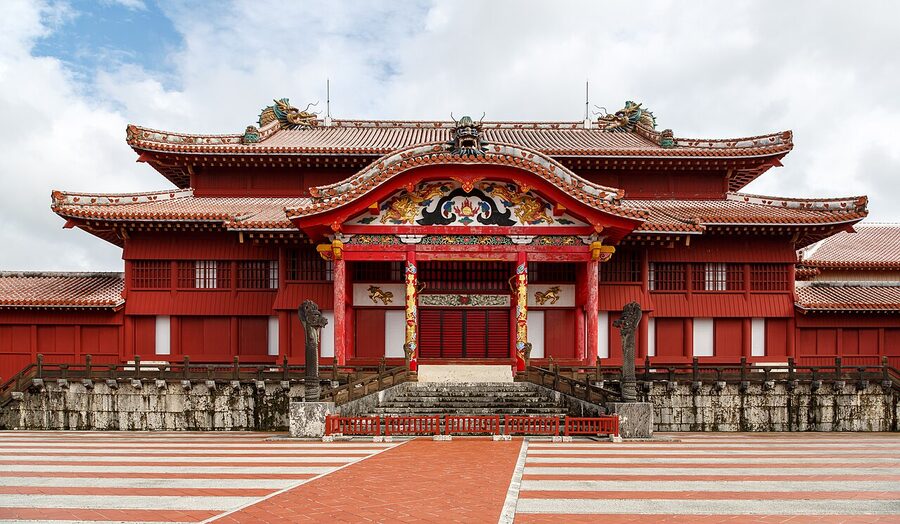
Shuri Castle (Shurijo) sat as the political heart of the Ryukyu Kingdom from 1429 to 1879. The hilltop site has been rebuilt four times before the most recent fire: in 1453, 1660, 1709, and 1945, after the Battle of Okinawa reduced the keep to its foundation. The 1958 to 1992 reconstruction restored the central citadel walls and the main hall. UNESCO inscribed the gusuku site as a World Heritage Site in December 2000.
And then on 31 October 2019, the rebuild burned. An electrical fault in the floor of the Seiden ignited around 02:30, and by sunrise four buildings, including the main hall, the north hall, the south hall, and a reception hall, were gone. None of the wooden structures were the original; they were all 1990s rebuilds. The central tragedy is that they were rebuilt to the original 14th-to-18th-century specifications, with red lacquer and gold leaf, by a team of master craftsmen many of whom had aged out of the trade by 2019. So this round of rebuilding is also a training exercise. Crews are reusing material protocols, finishes, and even tooling techniques that very nearly disappeared.
What you actually see in 2026
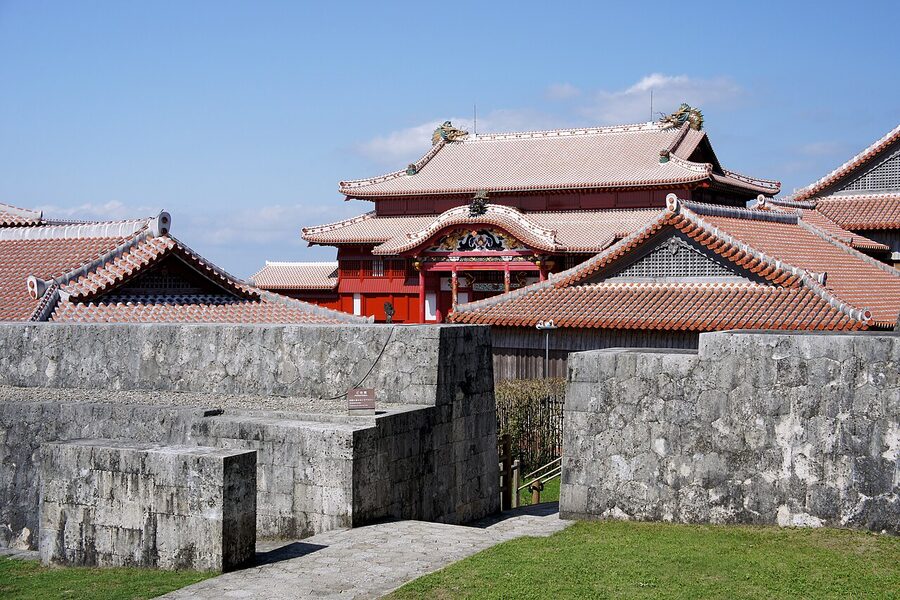
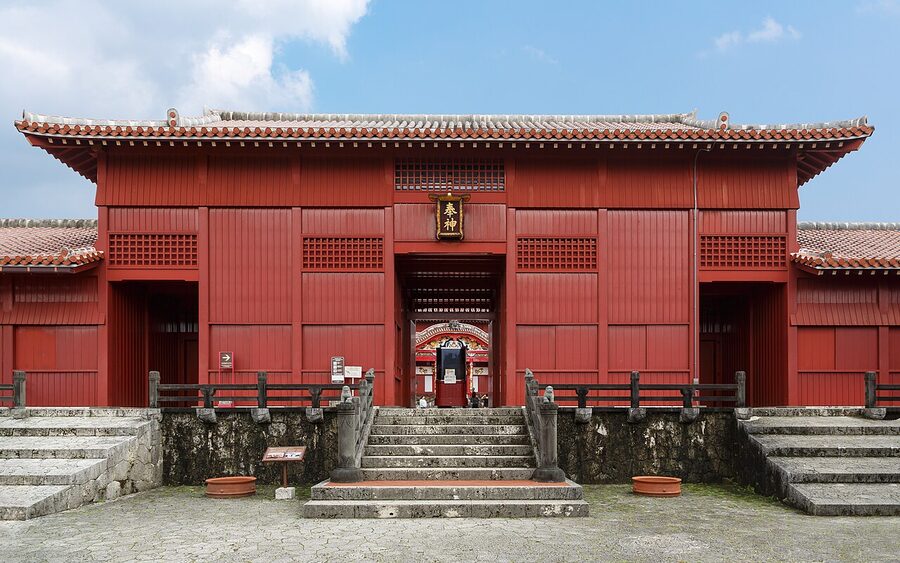
Visitors enter through the Shureimon, the iconic ornamental gate that appears on the ¥2,000 banknote. Up the slope is the Kankaimon, then the Zuisenmon and Roukokumon. The main castle walls survived the 2019 fire intact and are unchanged. What’s new is the temporary glass-walled viewing shed over the rebuild site, called the Kibadan, and a series of interpretive panels following the carpenters through the joinery, the lacquer, the tile firing, and the dragon ridge sculptures. There’s a daily public-tour element where supervisors walk visitors past key worksites in turn. Staff carry English-language leaflets and there’s an audio guide for ¥500.
Plan two hours minimum, three if you intend to read the panels. As of 2026, admission to the paid area runs at a reduced rate of about ¥400 for adults during the reconstruction phase, with the standard admission expected to return when the Seiden reopens in autumn. The official park site at oki-park.jp/shurijo updates the schedule and any closure dates. Hours run roughly 08:00–19:30 in the warmer months and close earlier in winter; check before you go because the schedule shifts with the construction phase.
How to get to Shuri
From central Naha, take Yui Rail to Shuri Station (about 25 minutes from Kencho-mae or Asahibashi, ¥340) and walk 15 minutes uphill, or take the bus from Kencho-mae or Kokusai-dori for about ¥240. The walk from the station is the route most people take and it’s not particularly steep, but in summer humidity it’s still a sweat. There’s a small bus from the station that loops to the castle entrance for ¥180 if you’d rather skip the climb.
Kokusai-dori and the arcades behind it
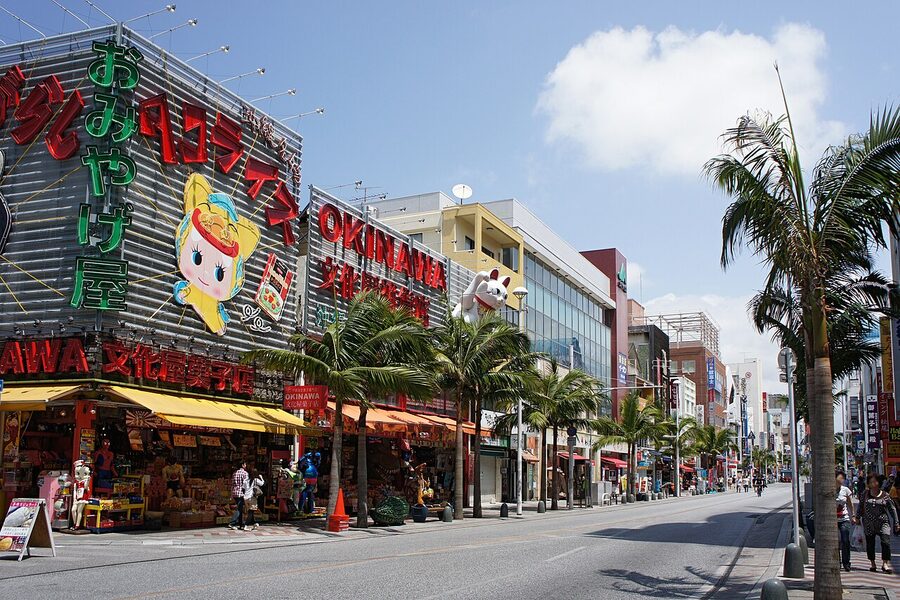
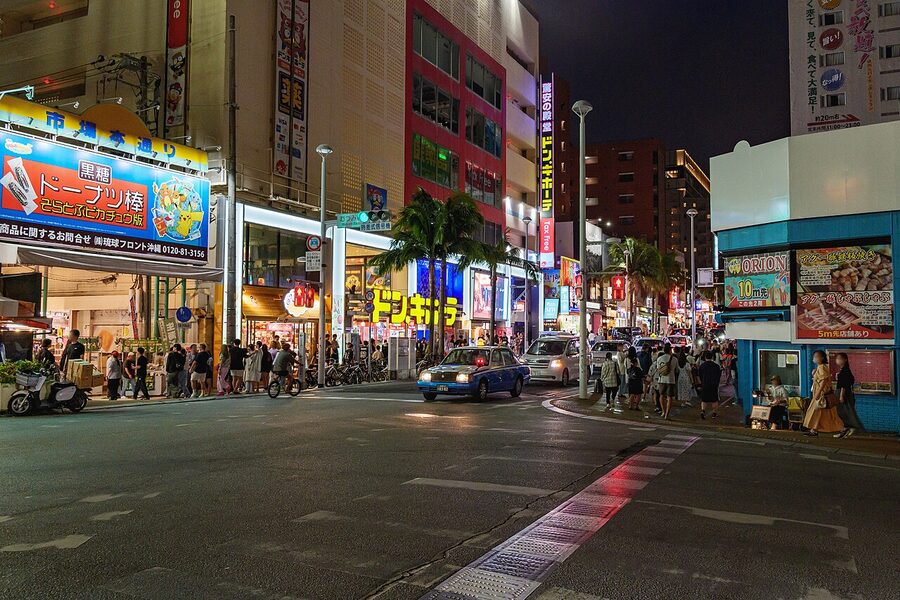
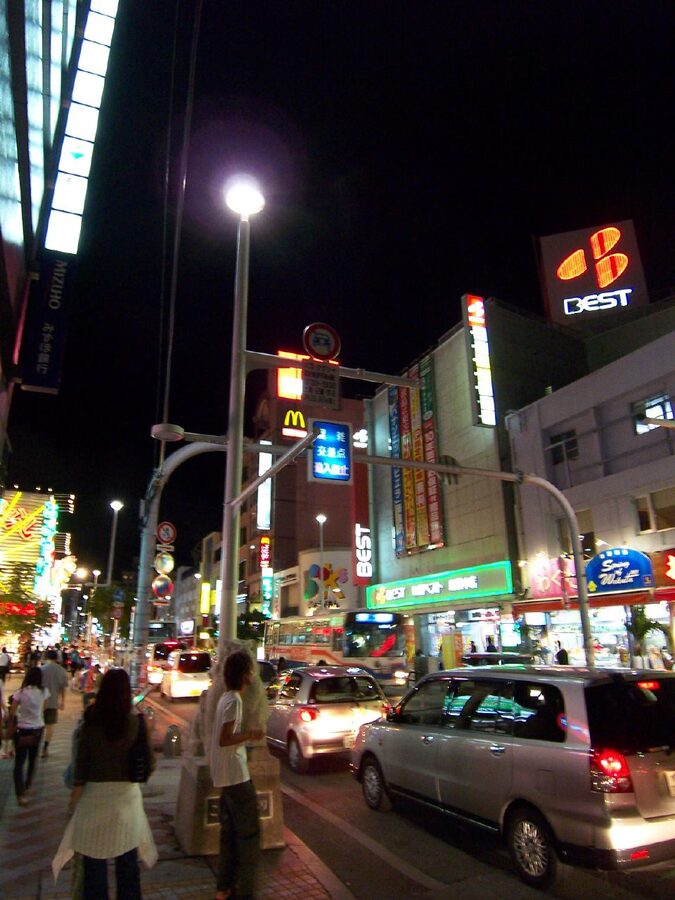
Kokusai-dori, the “International Street”, runs 1.6 km between Asahibashi and Asato in the city centre. The full strip takes about 30 minutes at a walking pace, longer if you stop. The street looks the way most travel writers describe it: souvenir shops selling Okinawa T-shirts and shisa lion figurines, Blue Seal ice cream parlours every block, a giant Don Quijote discount store, salt-cookie vendors, and at least three Okinawan-themed izakaya per kilometre. If that’s all you do here, the dismissive write-ups are right. There’s a much better Naha one block south.
The covered arcades
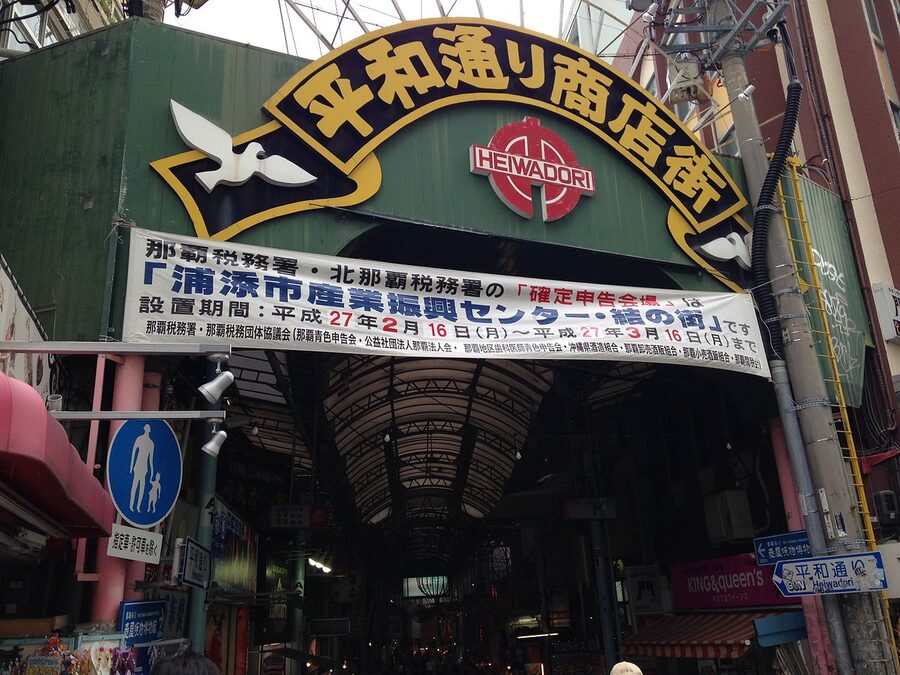
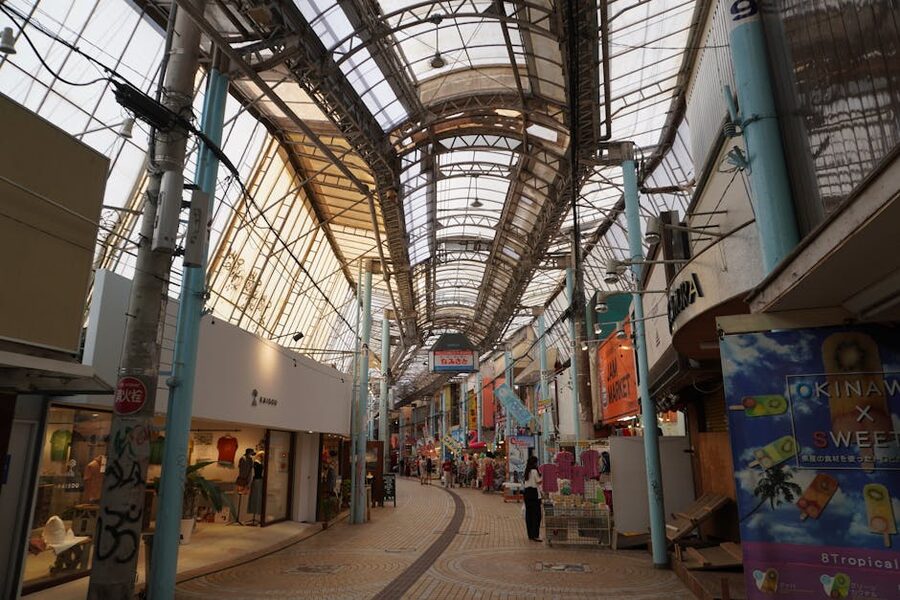
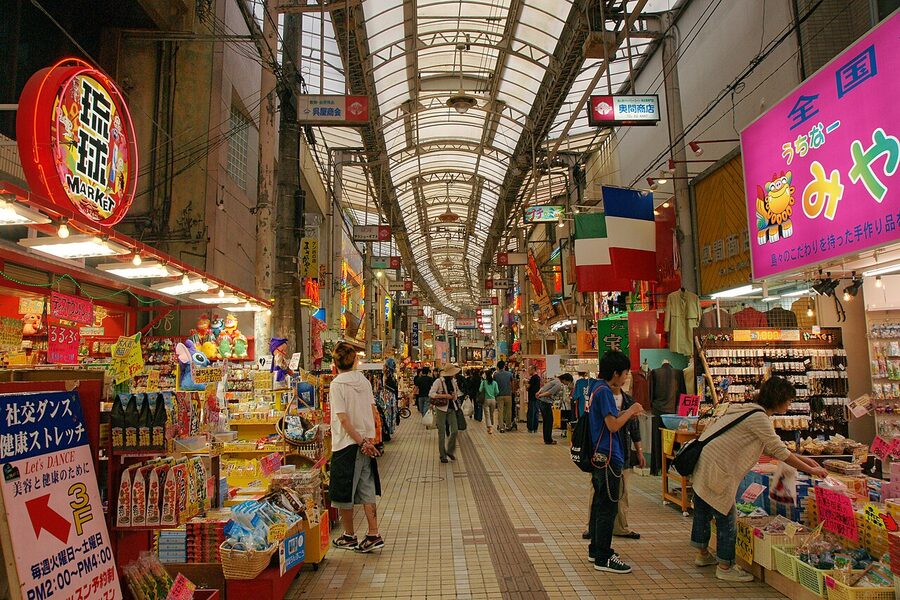
Step off Kokusai-dori at the midpoint and you’re into a network of three covered shopping streets that run perpendicular for about 600 metres each: Heiwa-dori (the Peace Avenue arcade) is the longest, then Mutsumi-bashi-dori, then Ichiba-hondori. These are 1950s and 1960s arcades built on the site of the post-war black market. Most of the shops still have a sliding-glass-front, family-run feel: dried-bonito vendors, Okinawan medicine pharmacies (the kind that sell habu-snake liquor in giant glass jars with the snake coiled inside), a bookshop with two seats, hat shops with three customers in 30 years.
Makishi Public Market: where the city actually shops
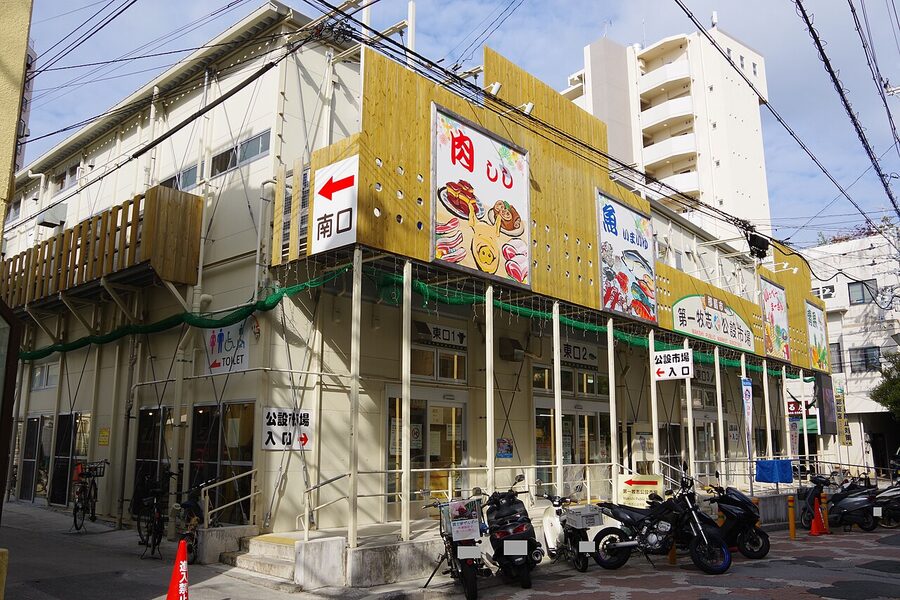
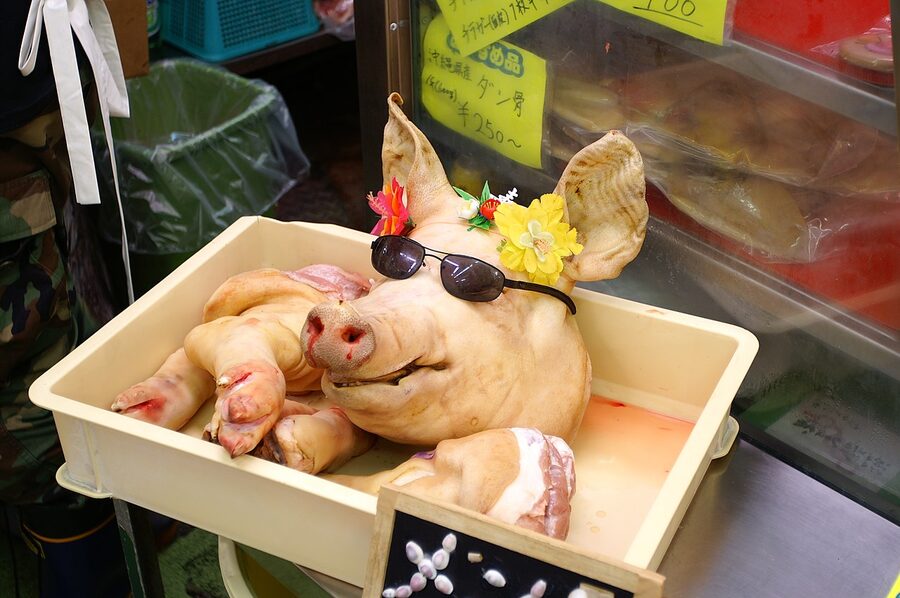
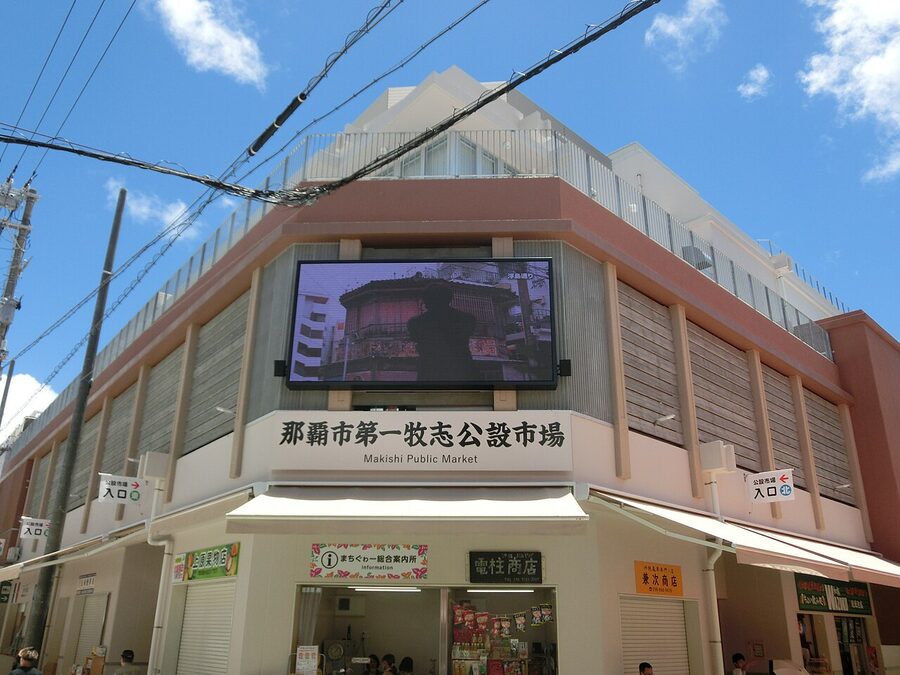
The Daiichi Makishi Kosetsu Ichiba (First Makishi Public Market) is a three-storey market hall halfway down the arcade complex, and the most useful single stop in the city. The current building reopened in March 2023 after a roughly three-year rebuild on the original site; the temporary stalls during construction operated from a building two blocks over. The new hall keeps the original layout: ground floor for produce, fish, butchered pork, and dry goods; second floor for restaurants; third floor for events and a small museum.
The market trick worth knowing
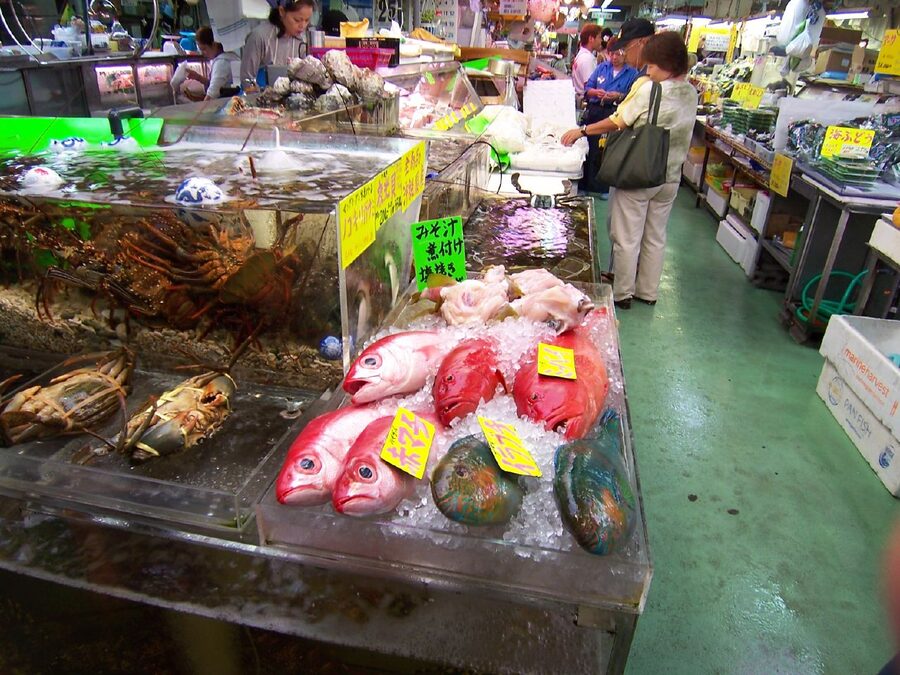
This is the part most travel articles miss: you can buy raw fish, shellfish, octopus, or pork from any of the ground-floor counters and have it cooked for you upstairs. The cooking fee is around ¥500 to ¥700 per dish, plus the cost of the seafood at counter price. The vendor wraps your purchase, gives you a slip, and you walk it up to the second-floor restaurant of your choice. They sashimi, grill, fry, or steam to order. A whole irabuchaa (parrotfish) will run about ¥2,500 to ¥3,500 by weight; have it sashimied flat and the kitchen makes the head and bones into a clear soup that comes free with the order. This is the Naha lunch experience. Allow 90 minutes minimum.
What to order on the second floor
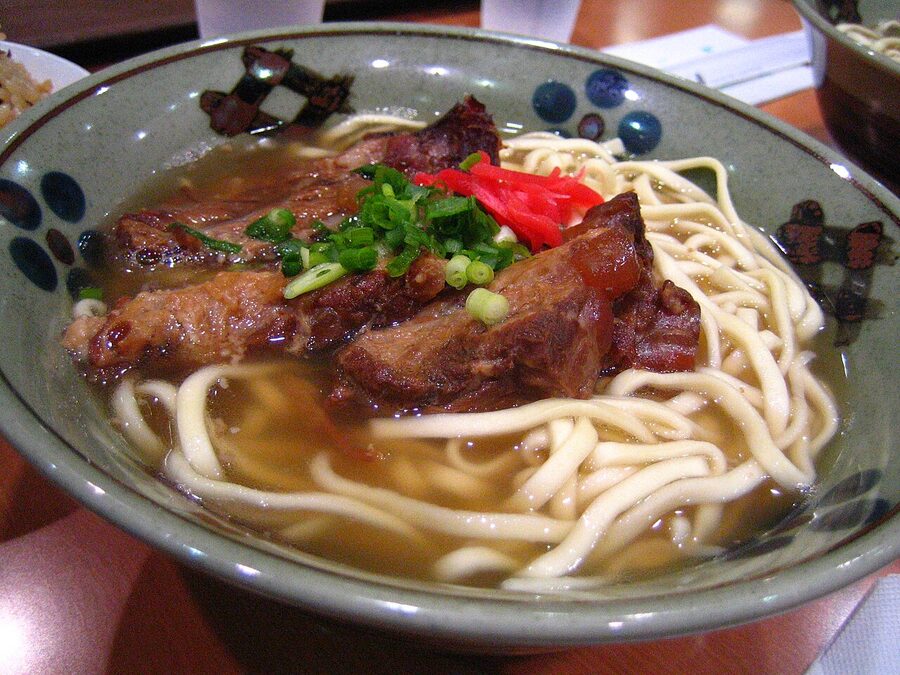
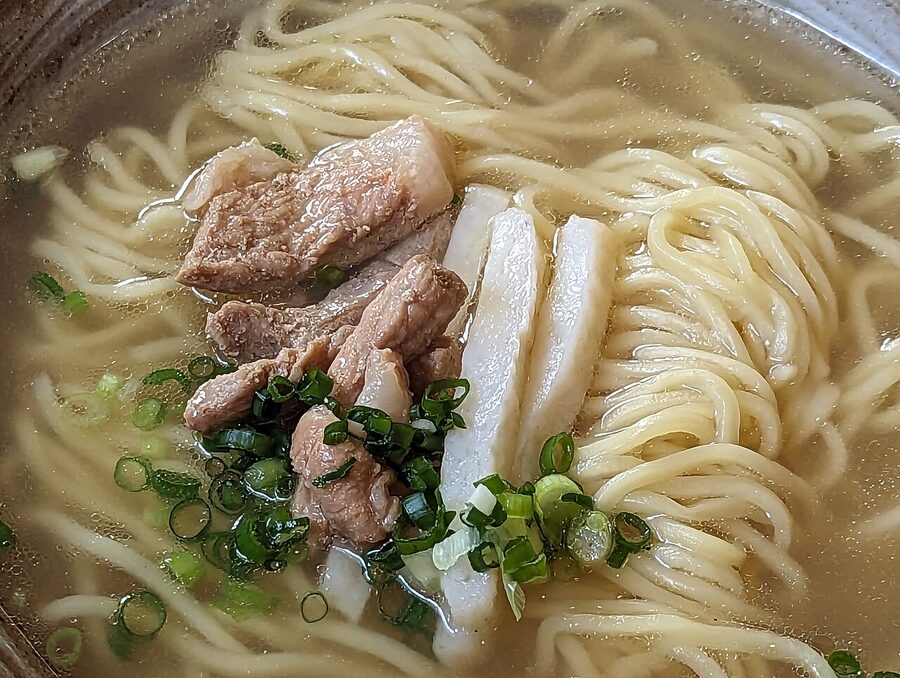
Five things worth knowing about: goya champuru (bitter melon stir-fry with tofu and pork, the most famous Okinawa home dish), rafute (slow-braised pork belly cubes in soy and brown sugar, sticky and dark and properly served as one of three dishes on a tray with rice and miso soup), umibudo (sea grapes, the cluster seaweed that pops like caviar between your teeth, eaten with vinegar and soy), jimami dofu (peanut tofu, denser than soy tofu, served chilled with sweet soy syrup as a starter or dessert), and Okinawa soba in any of its forms. Most of the upstairs restaurants will offer the cook-your-own-fish service for a service fee.
Tsuboya pottery district
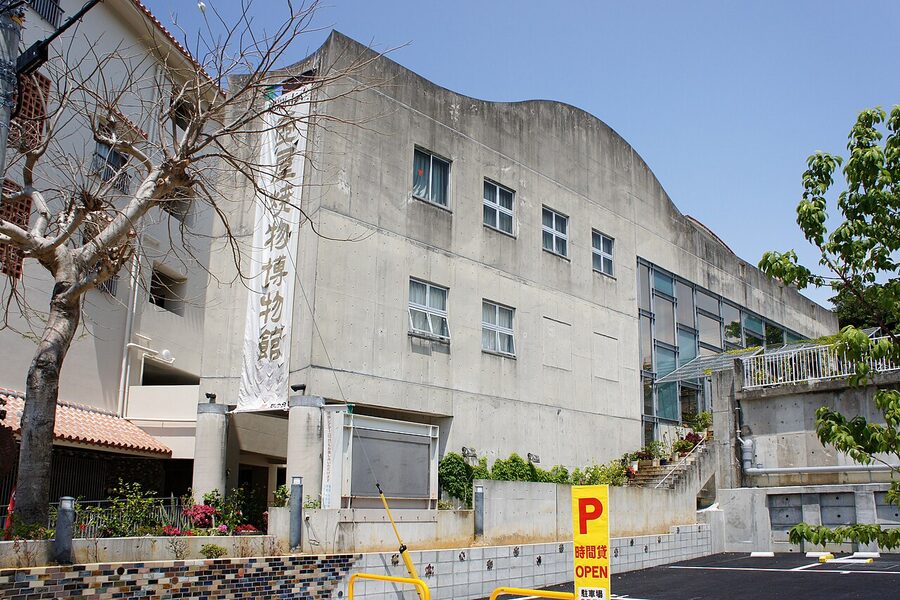
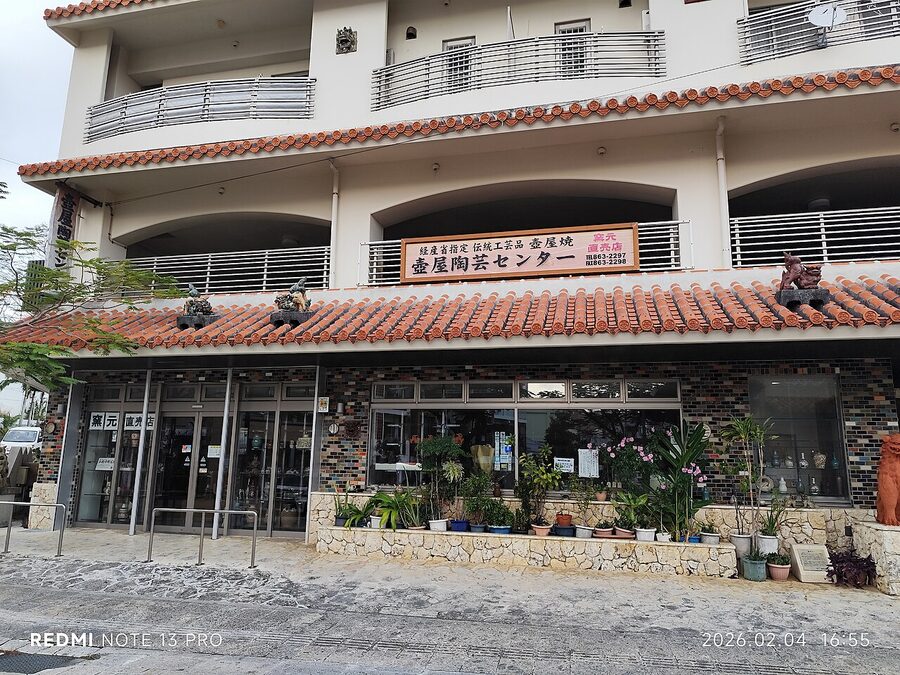
Ten minutes’ walk from Makishi, the Tsuboya district is where the city’s yachimun (pottery) trade has been concentrated since 1682, when the Ryukyu government consolidated three earlier kiln sites into one. The main street, Tsuboya Yachimun-dori, is a stone-paved 400-metre lane lined with about 25 active workshops and shops, two old kilns visible from the road (one a NaCl-glaze nobori-gama climbing kiln, the other an agari-gama single-chamber kiln), and the small Tsuboya Pottery Museum which is the place to start.
What yachimun actually is
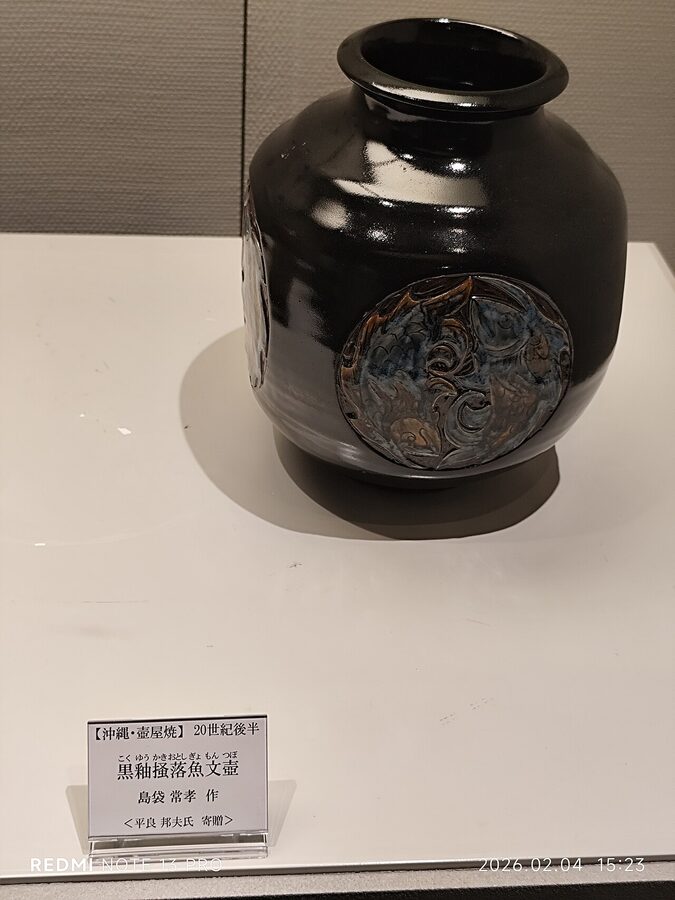
Two main families. Joyachi is glazed pottery, often with the distinctive cobalt fish or octopus motifs in white-blue palette, and the deep brown sugar-and-bamboo ash glaze that’s the most recognisable Okinawan look. Arayachi is unglazed terracotta, used for water jugs and the awamori-storage jars that you’ll see lined up in any bar. The clay comes from local hillsides on the main island. The single most-photographed piece is the shisa, the lion-dog roof guardian that comes in a male-female pair (open-mouth keeps the good in, closed-mouth keeps the bad out, or possibly the other way around depending on which potter you ask).
What to buy and what to skip
Buy a small piece. A single yunomi (tea cup) at ¥1,500 to ¥3,000 is the souvenir worth bringing home; a full place setting is bulky and not worth the airline excess-baggage. The Yachimun-dori lane has price ranges from approachable to specialist-collector. Skip the airport gift-shop yachimun (mass-produced, usually not from Tsuboya, often not from Okinawa at all). The kilns post-war are mostly relocated to Yomitan in central Okinawa for environmental reasons, but the Tsuboya district remains the design and retail centre.
Tamaudun: the Ryukyu kings’ tombs
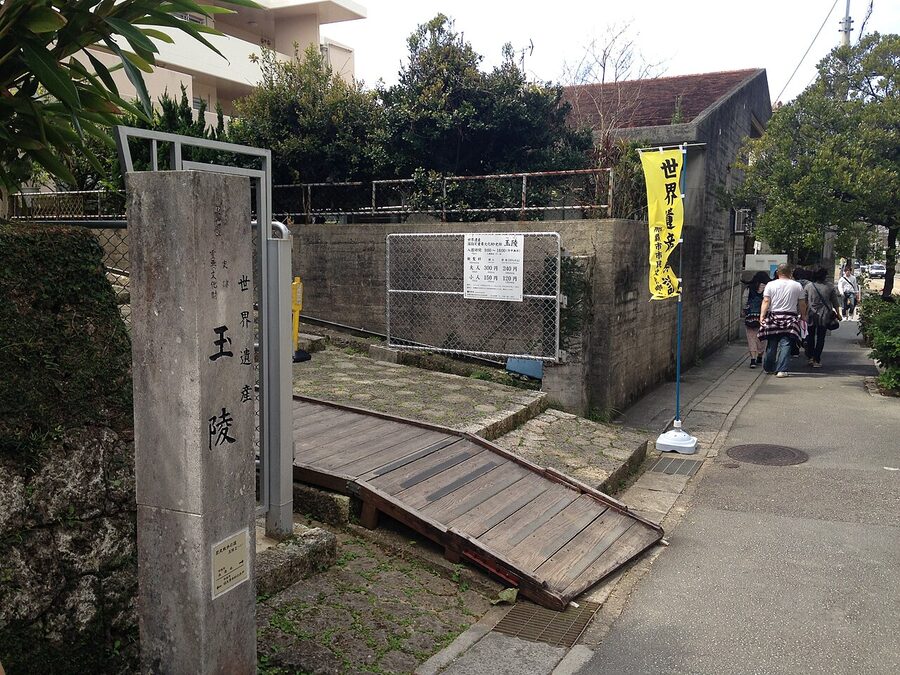
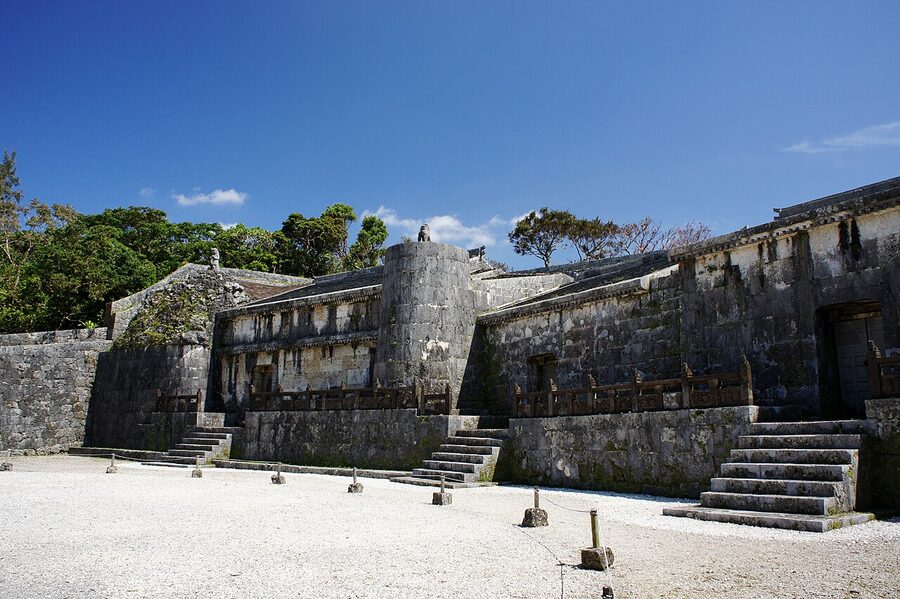
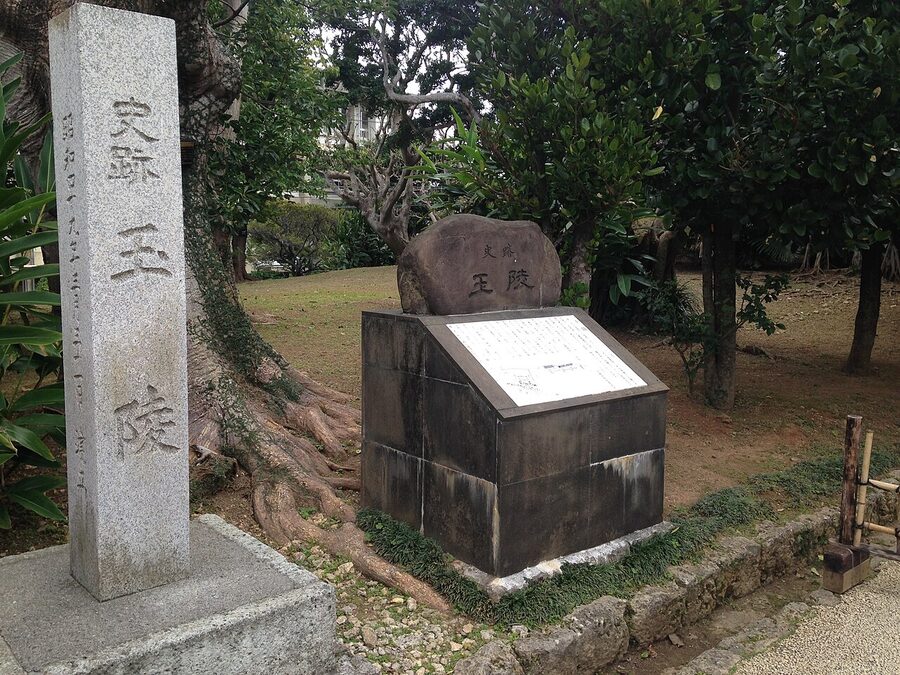
A short walk from the Shuri Castle main entrance, Tamaudun is the royal mausoleum of the Second Sho Dynasty, built in 1501 by King Sho Shin to house the remains of his father, Sho En. UNESCO inscribed it as part of the Gusuku Sites group in December 2000, and Japan’s Agency for Cultural Affairs upgraded it to National Treasure status in 2018. Of the 19 kings who ruled the dynasty between 1469 and 1879, 17 are buried here, alongside the queens and the royal children.
What you actually see
Three stone-walled chambers across the rear of a coral-paved courtyard, north-facing, backed by a natural cliff that does some of the visual work. The eastern chamber holds the kings and queens; the western chamber holds the princes and other royals. The central chamber was used for senkotsu, the Ryukyuan funeral practice in which the body was kept for several years to allow the flesh to decompose, after which the bones were washed and transferred to urns in the appropriate side chamber. The site is laid out in a way that’s more austere than mainland Japanese mausoleums and more architectural than royal tombs in southern China. UNESCO calls the synthesis “uniquely Ryukyuan”.
Plan 30 to 45 minutes. The on-site museum (Hoenkan) has the original 17th- and 18th-century funerary urns and a ten-minute video that’s worth sitting through. There’s no English audio guide, but the panels are bilingual.
Shikinaen: the royal stroll garden
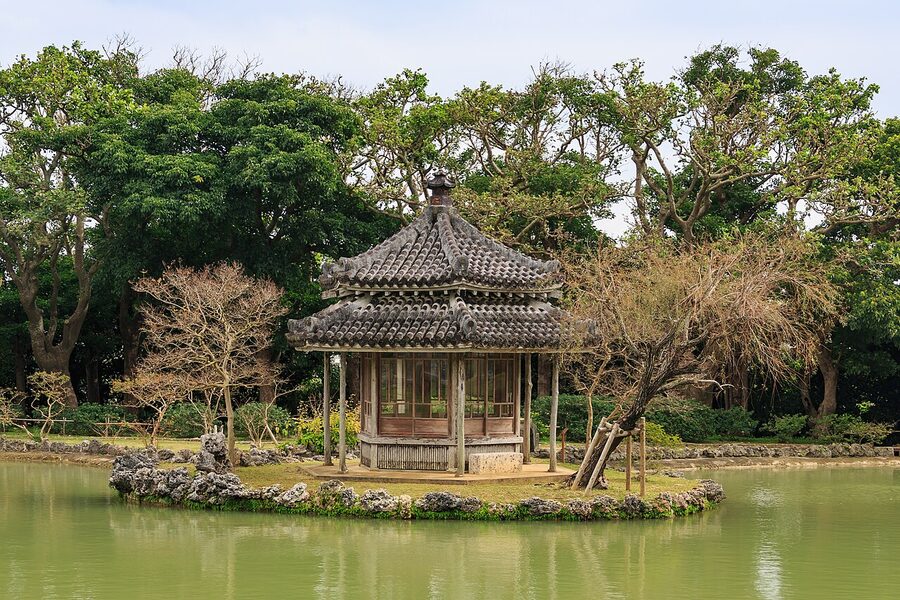
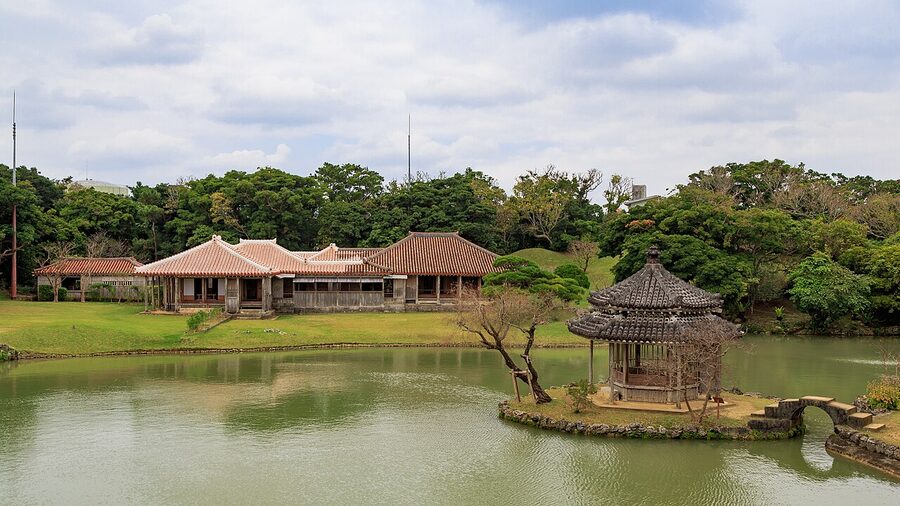
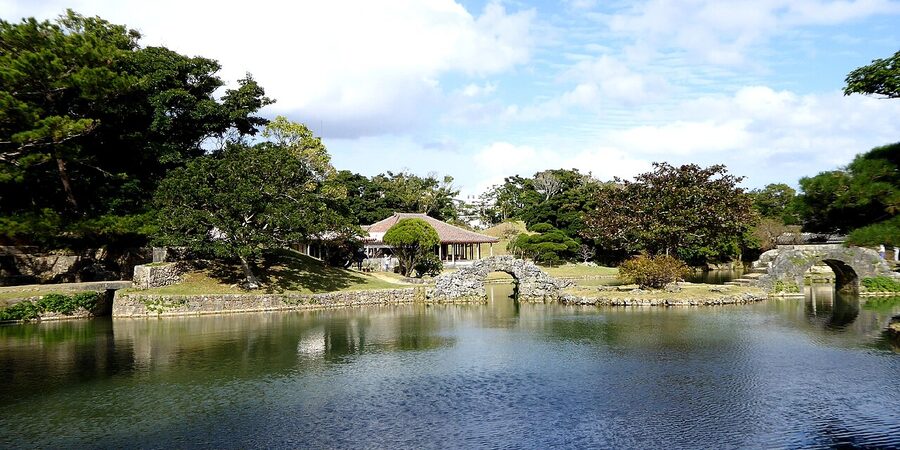
Three kilometres south of Shuri, on a small hill overlooking the city, Shikinaen is the second residence of the Ryukyu royal family, built in 1799. UNESCO listed it under the same Gusuku Sites group as Shuri Castle and Tamaudun, designating the gardens a Special Place of Scenic Beauty in 2000. The site covers 4.2 hectares and includes a Japanese-style stroll garden with two small islands, a Chinese-style hexagonal pavilion (the Rokkakudo), and the Udun, the wooden statehouse with a red-tiled roof.
Why the garden matters
Shikinaen was used as a state-reception garden where the king received envoys from the Qing court. The Chinese envoys would arrive after a sea voyage of two to three weeks, and the royal household would walk them through the garden as a way of demonstrating Ryukyuan cultural sophistication: a Japanese-style pond, a Chinese-style pavilion, the seasonal plantings of plum, wisteria, and bellflower in the Chinese poetic tradition. It’s the most legible architectural statement of how the kingdom positioned itself between China and Japan, and the only time you’ll get to see it in original form. Shuri Castle is a 1990s rebuild; Shikinaen is mostly original 18th-century stonework, with the wooden statehouse rebuilt after Battle of Okinawa damage but on the same footings.
Admission runs about ¥400 for adults, ¥200 for students. Hours run 09:00–18:00 April to September, and 09:00–17:30 October to March. Closed Wednesdays. From Shuri or central Naha, take Bus 5 from Kokusai-dori or Kencho-mae to Shikinaen-mae stop (about ¥260, 20 minutes). Allow 90 minutes once on site, more if you bring a book.
Naminoue Beach and Naminoue Shrine
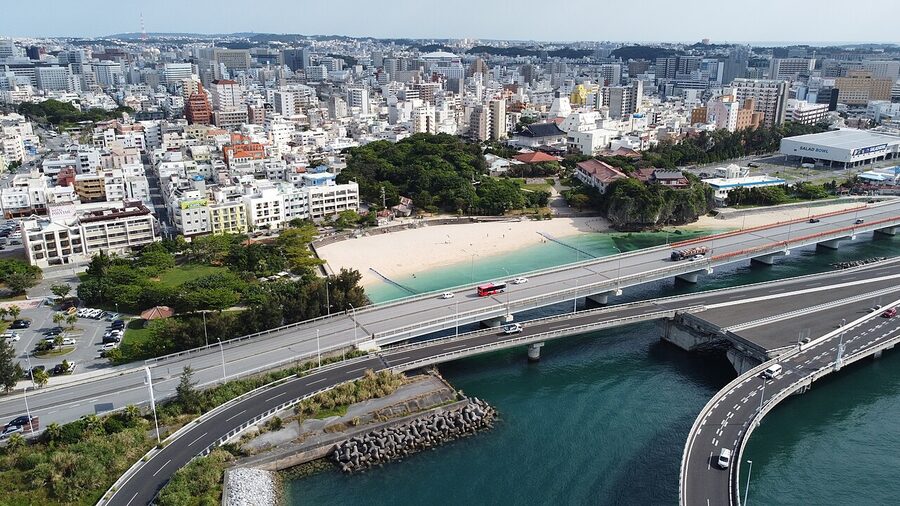
The only beach in Naha proper is a 200-metre crescent of imported white sand, set against a low cliff at the edge of the urban grid. The only Shinto shrine on a cliff in Naha sits directly above it. Together, Naminoue Beach and Naminoue Shrine (Naminoue-gu) form one of the most photographed spots in the city, partly because they’re walking distance from Kokusai-dori, partly because the contrast is so deliberate: city, then bluff, then sea, then the elevated highway viaduct that frames the beach from the south.
The shrine
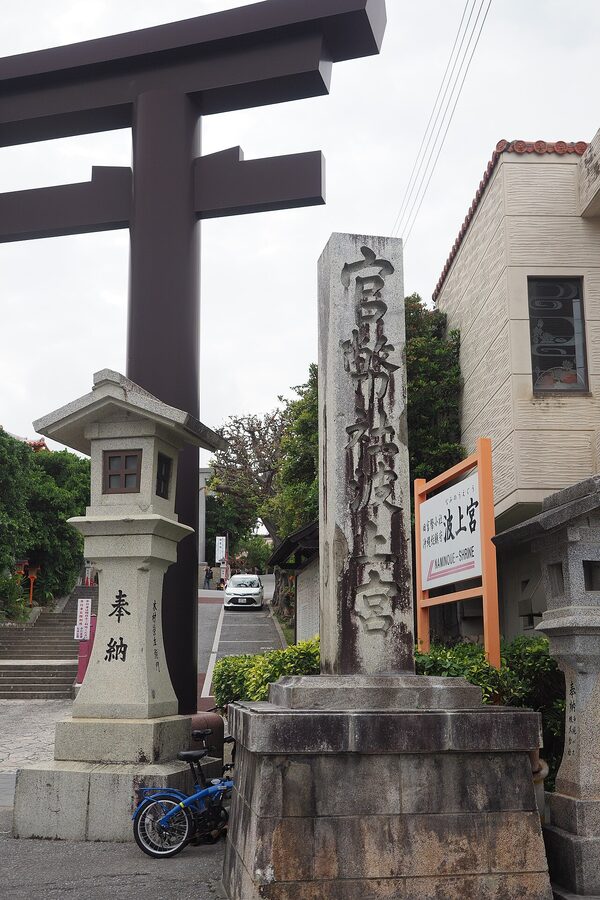
Naminoue-gu is the ichinomiya of Okinawa Prefecture, the highest-ranked Shinto shrine in the islands, and the only Naha shrine that pre-dates the 1879 annexation in any form. The cliff was a sacred site in the indigenous Ryukyuan religion long before Shinto arrived, dedicated to the sea-spirit pantheon of nirai kanai. The current shrine buildings are a post-war rebuild after wartime destruction, but the cliff and the location are 600+ years continuous. Reception hours run 09:00–16:45; goshuin stamp seekers should aim for the morning.
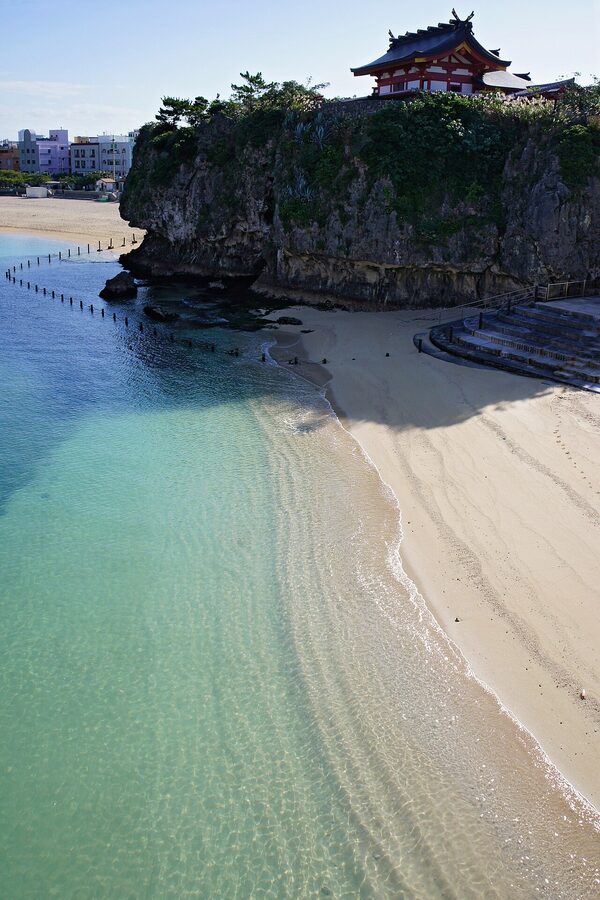
Don’t expect a serious beach day. The water is fine for a 30-minute swim, the sand is clean enough for a sit, and the cliff path is genuinely scenic. But the beach is small, urban, and overlooked by a four-lane viaduct. For real beach days you want the main island’s west coast (Manza Cape, Cape Maeda) or the Kerama ferry, both covered in the Okinawa beaches guide.
The Yui Rail monorail
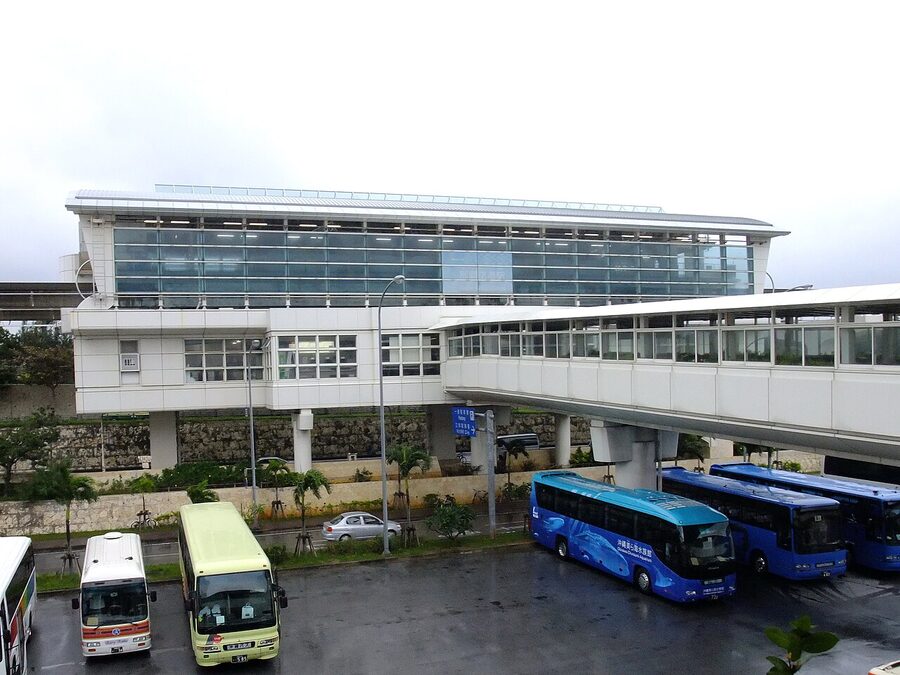
The Okinawa Urban Monorail, branded Yui Rail, opened on 10 August 2003 and is the only public rail system in any of the 47 inhabited Okinawa islands. The Japan Rail Pass does not cover it. The line runs 17 km on an elevated guideway from Naha Airport to Tedako-Uranishi in the next-door city of Urasoe, with 19 stations spaced an average 0.93 km apart. End-to-end takes 37 minutes and costs ¥390. Trains run every 4 to 15 minutes from 06:00 to 23:30.
Worth knowing about Yui Rail
The line is the only useful public-transit answer for the central Naha tourist circuit. From any point on Kokusai-dori (Asahibashi or Kencho-mae stations) you can ride to Shuri Station for the castle, Makishi for the market, Asato for the Tsuboya pottery district. A 24-hour pass at ¥800 pays for itself with three rides. The 48-hour pass is ¥1,400. Buy at any station ticket machine; English language toggle on the screen. Akamine Station and Naha Airport Station are the southernmost and westernmost rail stations in Japan, respectively, and the line is fully barrier-free with all stations accessible.
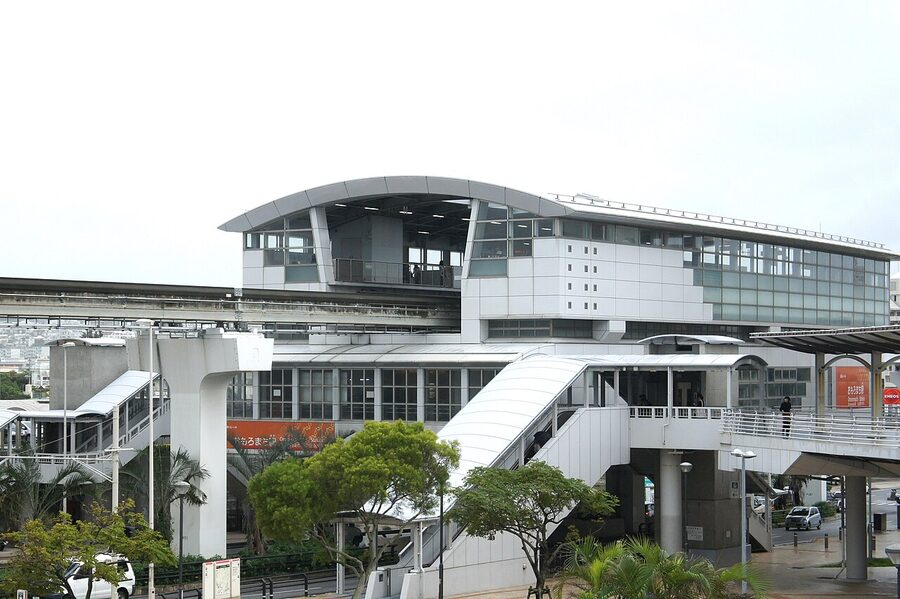
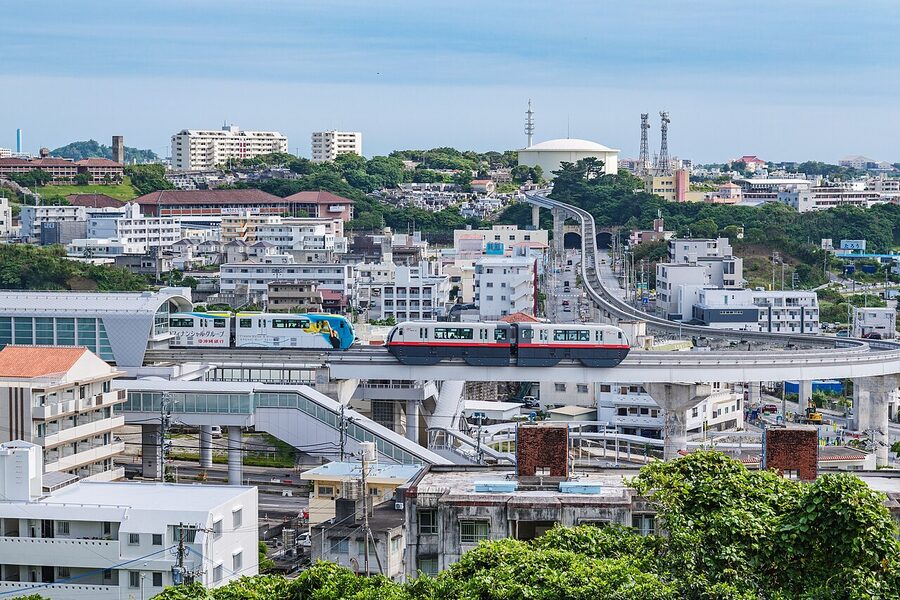
The monorail accepts paper tickets, the local OKICA card, and since March 2020 the ten major Japanese IC cards (Suica, ICOCA, Pasmo, Sugoca, Toica, Hayakaken, Manaca, Nimoca, Kitaca, Pitapa). If you’ve been on a Welcome Suica from a previous mainland Japan stop, it works here too. The connection from a JR mainland trip is one of the few times a generic IC card is genuinely useful in Okinawa, because almost no other Okinawan transit accepts mainland IC cards. The bus system uses OKICA only.
Worth stating outright because so many travellers assume it: the Japan Rail Pass doesn’t get you anything in Okinawa. There is no JR rail in the prefecture. The Yui Rail is privately operated and stands alone.
Naha Port and the ferries to the islands
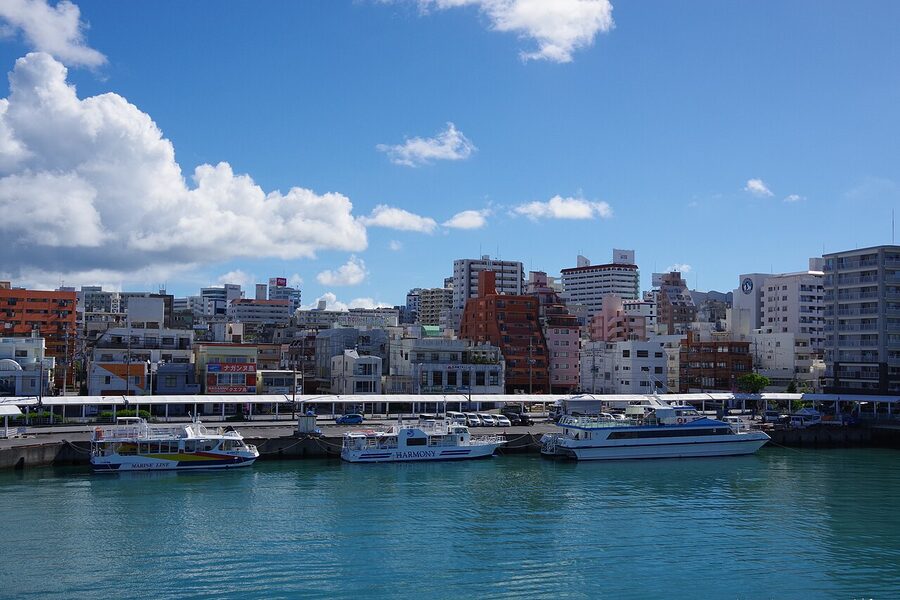
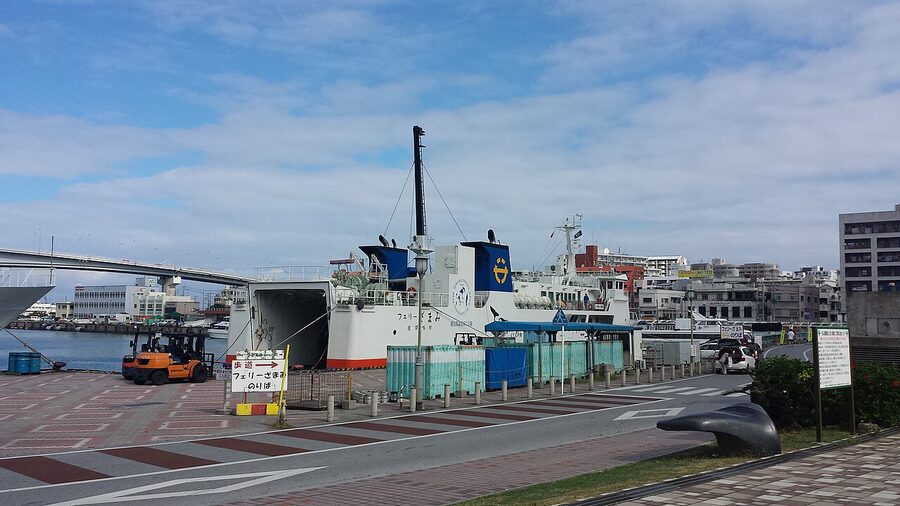
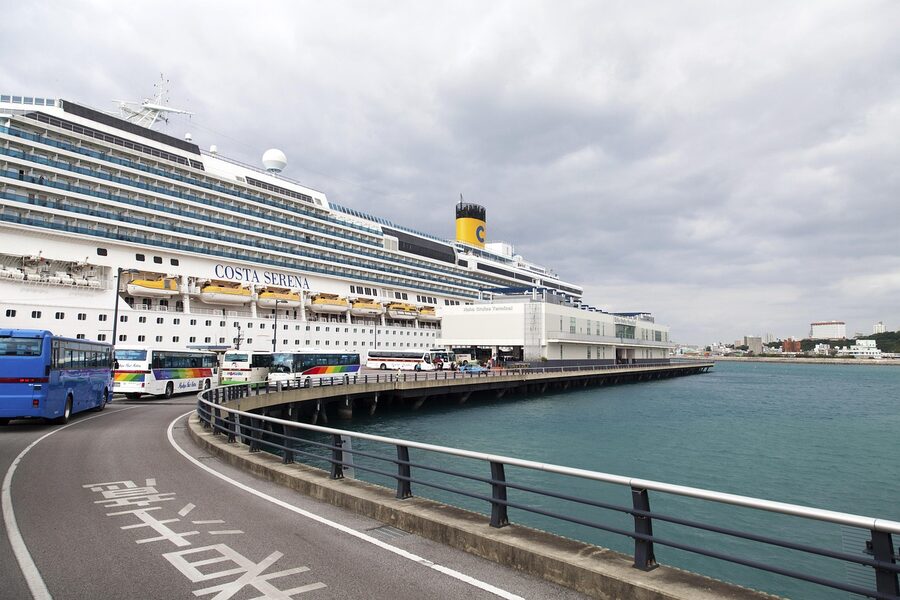
Two ports matter in Naha. Tomari Port, just north of Kokusai-dori, is where the inter-island ferries to the Kerama Islands (Zamami, Tokashiki, Aka) and the Iheya/Izena/Aguni small-island ferries depart. Naha Port (Naha Shin-ko, the main port) handles cruise ships, the larger Tokyo-bound passenger ferries, and the Kume-jima ferries. For practical traveller purposes, Tomari is the one to know.
Booking the Kerama ferries
Reservations are recommended in summer (June to early September) and during Golden Week, when the Marine Liner can sell out a day ahead. Online booking via the operator’s site (kerama-marine.com) opens roughly two months ahead. Walk-up tickets at the terminal are usually fine outside peak: arrive 30 minutes before departure. The Marine Liner is the high-speed catamaran (Tomari to Zamami in 50 minutes, about ¥3,140 one-way as of 2026); the car ferry is slower but cheaper and lets you bring a bicycle. Crossings are weather-dependent: the May to October typhoon-and-monsoon season can shut down the high-speed boat for days. For details on the islands themselves, see the Okinawa beaches guide.
Food beyond Makishi
Three patterns worth knowing. Sakaba (taverns) cluster on the back streets behind Kokusai-dori, especially around Yachimun-dori and the southern end of Heiwa-dori. These are small, six-to-twelve-seat counter places, beer-and-awamori-led, with menus that lean on rafute, mimiga, jimami dofu, and umibudo. A meal runs ¥2,500 to ¥4,000 per person. Reservations not usually needed; turnover is fast.
Shokudo (cafeteria-style restaurants) are the budget answer. Look for places with plastic-food-model windows and a counter-and-tables setup. Okinawa soba runs ¥700 to ¥1,000; a teishoku (set lunch) of fish or chanpuru runs ¥800 to ¥1,200. The branch of Yamabare Soba in central Naha is one of the better consistent ones, but any market shokudo on the Makishi second floor will do you the same job.
The Tsuboya pottery district has a few coffee shops worth knowing for an afternoon break: small, single-room, with the host roasting beans on a tabletop machine in the corner. None are advertised hard. Walk Tsuboya-dori looking for the kanji on a small wooden sign and pick whichever one catches the light.
Where to stay in Naha
The city has three useful zones to base yourself in.
Central Kokusai-dori
Walking access to the arcades, the markets, and the nightlife. The Hotel Collective near Makishi Station is the modern five-star option (about ¥28,000 a night for a standard double, with a pool and on-site dining). The Royal Park Hotel Iconic Naha and the Southwest Grand Hotel sit in the same general area and the same general price band, both 4-star with pools. Mid-range options like Hotel Gracery Naha and Daiwa Roynet sit at ¥15,000 to ¥20,000 for a double, business-hotel standard with breakfast included.
Omoromachi (the new town, 10 minutes by Yui Rail)
Quieter, more business-traveller-leaning, with the Okinawa Prefectural Museum next door. Hotels here run cheaper for the same standard. JR Kyushu Hotel Blossom Naha sits at Omoromachi Station with double rooms in the ¥13,000 to ¥18,000 range. Daiwa Roynet Naha-Omoromachi Premier is a step up at around ¥18,000 to ¥22,000 with a top-floor breakfast room overlooking the city.
Tomari (10 minutes’ walk to Kokusai-dori, 5 minutes to the ferry pier)
The right base if you’re using Naha as a launch pad to the Kerama Islands. Hotels around Tomari include a string of mid-range business hotels and a couple of hostels; nothing flashy. The advantage is that you can walk a wheelie bag to the 09:00 ferry without needing a taxi. The Yukureba Maejima Hotel in this area runs around ¥14,000 to ¥18,000 for a double, well-located.
Booking direct via the property’s own site usually matches Booking and Agoda within a few percent and sometimes throws in breakfast. Strip aggregator URLs of tracking parameters before sharing them; a clean canonical link reads better.
When to come to Naha
The seasonal logic is different from mainland Japan and worth understanding before you book.
December to February
Cool by Okinawan standards (16 to 22°C), the air is dry, and Okinawan cherry blossoms (Taiwan-zakura, the deeper-pink early-flowering variety) bloom from mid-January through early February. Naminoue Beach is closed for swimming. Hotel rates are low. This is the best non-summer window if you don’t need to swim. Worth pairing with the cherry blossom guide‘s notes on Okinawa: the islands flower three months before mainland Tokyo and Kyoto.
March and April
Weather warms (20 to 25°C), Naminoue’s swim season opens (mid-April), and Golden Week (late April to early May) is the busiest domestic-travel window of the year. Book hotels two months ahead for Golden Week.
May to mid-June
The Okinawan rainy season is roughly 5 May to 23 June, lighter and warmer than the mainland tsuyu. Brief afternoon downpours, then sunshine. Hotels are cheaper. The Nanminmatsuri festival at Naminoue runs 15 to 17 May and is the cultural highlight of the year.
July to early September
Hot (28 to 32°C), humid, peak swim and snorkel season, and typhoon season. Two to four typhoons typically pass close enough each summer to disrupt ferries and flights for one to three days at a time. Book travel insurance and don’t plan a one-day window for the Kerama crossing. The Naha Tug of War (Naha Otsunahiki) on the second weekend of October is technically late-summer for booking purposes; reserve hotels in September if you want to be in town for it.
October to November
The best months. Heat eases, water is still warm enough for snorkelling, typhoons mostly past. The Shurijo Castle Festival runs over the late-October to early-November window in normal years; check the official park schedule because the timing shifts with the reconstruction.
What to combine Naha with
Naha is the entry point. Most visitors fly in here and use the city as a base to do one of three things: the main island’s west coast for beaches and the Churaumi Aquarium, the Kerama Islands by ferry, or the Yaeyama Islands by onward flight. The Okinawa hub covers how the regions connect. The beaches guide covers the main-island and Kerama options in detail. The Yaeyama guide covers the Ishigaki / Iriomote / Taketomi onward-flight route.
If you’ve come from the mainland with a Japan Rail Pass: the pass takes you as far as the Tokyo Haneda or Osaka Itami flight, but Okinawa is not in the JR system. The Yui Rail and the bus network are local-only. Plan the Okinawa leg as its own thing, with its own daily transit budget.
Three days is the right Naha allocation if you want to do it justice without rushing: one for Shuri / Tamaudun / Shikinaen, one for the markets / Tsuboya / Kokusai-dori arcades, one as a beach-and-ferry day or a Cape Maeda snorkel run. Two days will work if you skip Shikinaen. One day works if you skip everything except Shuri and Kokusai-dori, and that’s the day-trip version most cruise itineraries default to. It’s the version this guide pushes back on.
Practical bits
ATMs: 7-Eleven and Lawson convenience stores have international-card ATMs that work for foreign cards. The post-office ATM (Yucho) is also reliable. Most local bank ATMs do not take foreign cards.
Connectivity: free public Wi-Fi is patchy. Pocket Wi-Fi rentals at the airport run about ¥500 to ¥800 per day. Most hotels include Wi-Fi.
Payment: cash is still king at smaller market stalls, soba shops, and pottery workshops. Larger restaurants and hotels take credit cards. IC cards work on Yui Rail and at convenience stores, but not on city buses (those are OKICA-only).
Language: tourist-area English signage is decent; off Kokusai-dori it drops off fast. The Naha Tourist Information Center on Kokusai-dori (next to Tenbusu Hall, mid-strip) has English-speaking staff and free maps.
Walk back along Kokusai-dori at sunset. The west-end view, looking towards the harbour, is the way to leave Naha.


.jpg)

.jpg)

.jpg)
.jpg)


