
Fukuoka has roughly 100 yatai food stalls licensed to operate at night, the highest concentration of any Japanese city, and they sit a five-minute subway ride from the country’s most efficiently placed major airport. That combination, an international hub airport with the runway 3 km from the central station and a 6 pm flick of canvas curtains across the river, is the city’s argument for itself. You can land at 16:30, drop your bag at a Hakata hotel by 17:15, and be slurping tonkotsu ramen at a riverside stall with steam in your face by 18:00. Most travellers don’t. They route Tokyo to Kyoto and call Japan done.
That’s the mistake this guide is built around. Fukuoka rewards the slow approach, not the speedy stopover. Two nights minimum if you want to do Hakata old town and the night yatai. Three if you also want a Dazaifu morning or an Itoshima beach afternoon. Four if you want to add a Yanagawa boat day and not feel rushed.
In This Article
- The day-trip shortlist, at a glance
- Getting in: Fukuoka Airport is in the city
- Subway, JR, Nishitetsu: how the rails fit together
- The Hakata-Tenjin Loop Bus
- Hakata old town: the temples Hakata wears lightly
- Kushida Shrine
- Tochoji and Shofukuji
- Sumiyoshi Shrine and Hakata Machiya Folk Museum
- Yatai: the night the city changes shape
- Yatai practicalities
- Tenjin: where Fukuoka does its everyday shopping
- Tenjin Underground
- Canal City Hakata
- Ohori Park and Fukuoka Castle: where the city goes to breathe
- Fukuoka Castle ruins
- Dazaifu Tenmangu: the half-day worth taking
- Plum blossom and the Tobiume tree
- Komyozenji moss garden
- Itoshima: the coast Fukuoka thinks of as its weekend
- Sakurai-Futamigaura: the Couple Stones
- Beaches and pottery
- Yanagawa: the boatman’s town
- What to eat: Hakata is a food town first
- Hakata-style tonkotsu ramen
- Mentaiko and motsunabe
- Where to eat the rest of the time
- When to come
- February: plum blossom at Dazaifu
- Late March to early April: cherry blossom
- Mid-July: Hakata Gion Yamakasa
- October to November: cool and clear
- Where to stay
- Practical: passes, money, the small things
- Transport passes
- Money and IC card
- Connectivity
- One small thing about manners
- What to combine Fukuoka with
The day-trip shortlist, at a glance
If your time is short and you only want one or two of the side trips, the table below is the answer. The rest of this guide unpacks each in detail.
| Day-trip | Travel time from Hakata | Cost (round trip) | Best for |
|---|---|---|---|
| Dazaifu Tenmangu | 30–45 min by Nishitetsu train | around ¥800 | Half-day. The shrine of learning, plum blossom in February, the Komyozenji moss garden. |
| Itoshima coast | 40 min by JR + bus, longer by bike | around ¥1,200 by transit; rental car if you want to chain stops | Half-day or full. Beaches, the Couple Stones at Sakurai-Futamigaura, pottery and seaside cafes. |
| Yanagawa | 50 min by Nishitetsu Tenjin Omuta Line | around ¥1,800 plus the boat fee | Full day. The 70-minute river-boat ride and grilled eel for lunch. |
| Nanzoin reclining Buddha | 30 min by JR Sasaguri Line | around ¥760 | Half-day. Japan’s largest bronze reclining Buddha, in a quiet temple complex. |
Getting in: Fukuoka Airport is in the city
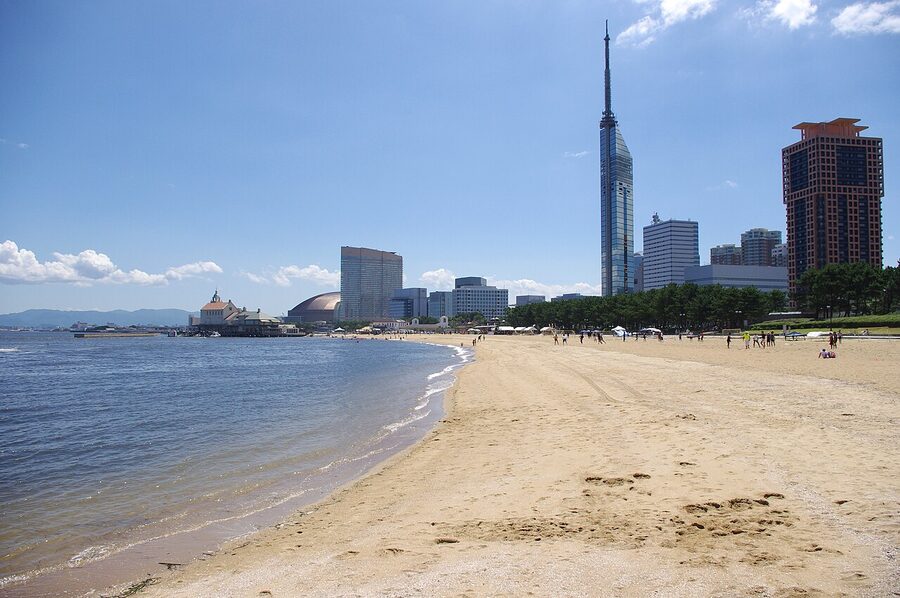
Fukuoka Airport sits in the actual city, not strapped to the edge of it. The domestic terminal is one stop on the Subway Kuko Line from Hakata Station. The ride is 5 minutes and costs ¥260. Tenjin, the other downtown anchor, is 11 minutes from the airport on the same line. There’s no other major Japanese airport with this geography. Haneda needs the monorail. Kansai needs the Haruka or the bus.
The international terminal is on the far side of the runway. A free shuttle bus connects it to the domestic terminal in about 10 minutes. From there you take the same subway. Combined airport-to-Hakata door-to-door, allow 25 to 35 minutes from the international arrivals hall.
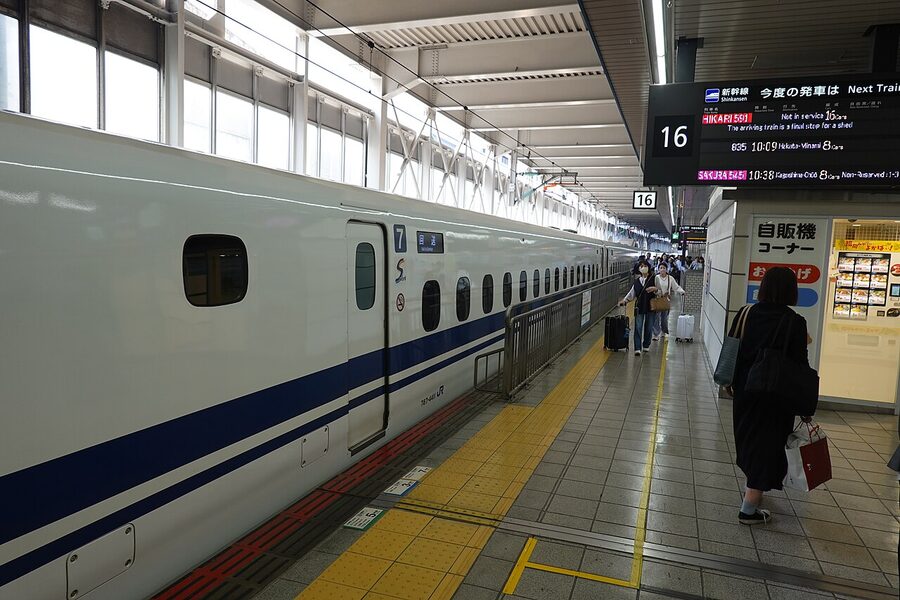
If you’re arriving by Shinkansen, Hakata Station is the western terminus of the Sanyo Shinkansen, which through-runs from Tokyo, Osaka and Hiroshima. From Tokyo it’s around 5 hours by Nozomi (the JR Pass doesn’t cover Nozomi, but Hikari Sakura works to Shin-Osaka with a transfer). For most international visitors flying in directly to Fukuoka beats riding the train all the way down. Use the Shinkansen if you’re already mid-trip in Honshu and want to read about it in the Japan Rail Pass guide or the JR West regional pass guide, which covers Sanyo Shinkansen access west of Osaka.
Subway, JR, Nishitetsu: how the rails fit together
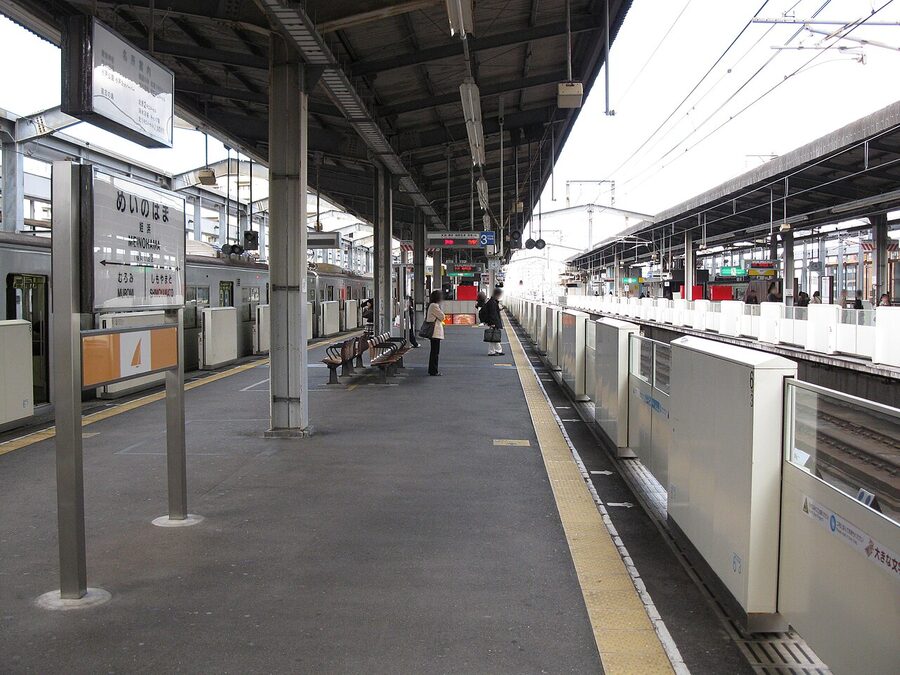
Three rail networks share the city, and they don’t all use the same station names for the same place.
- Fukuoka City Subway runs three lines. The Kuko Line is the airport-Hakata-Tenjin spine. The Hakozaki Line runs north-east from Nakasu-Kawabata. The Nanakuma Line runs south through Tenjin-Minami. A 1-day pass is ¥640 (adult) and pays for itself if you make four hops. Buy it at any station.
- JR Kyushu runs into Hakata from outside the city. Use it for Dazaifu approach via Futsukaichi, for the Sasaguri Line to Nanzoin, and for any onward Shinkansen.
- Nishitetsu is the private operator. Their Tenjin Omuta Line runs from Nishitetsu-Fukuoka (Tenjin) station to Yanagawa and Omuta. Note the name: Nishitetsu-Fukuoka, not Hakata. They are a 5-minute subway ride apart.
The Hakata-Tenjin Loop Bus
If your hotel sits between the two centres, the ¥100 city centre loop bus (Nishitetsu’s Hakata-Tenjin route, shown as the ¥100 zone bus) is genuinely cheaper than the subway for one-stop hops. The catch is the route runs the same direction in a loop, so if you misjudge the geography you can ride 25 minutes for what should be a 4-minute trip. The subway is faster and harder to mess up. Use the loop bus for short Hakata-Hakata or Tenjin-Tenjin shuffles, not for crossing the river.
Hakata old town: the temples Hakata wears lightly
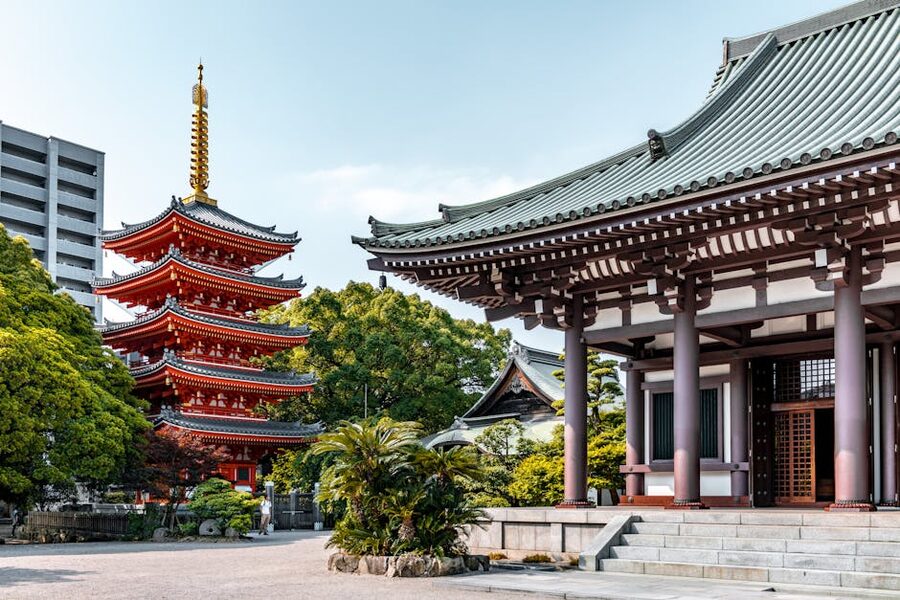
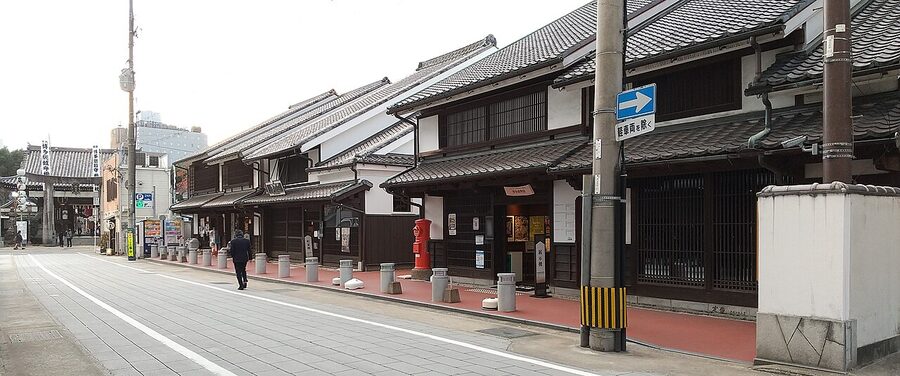
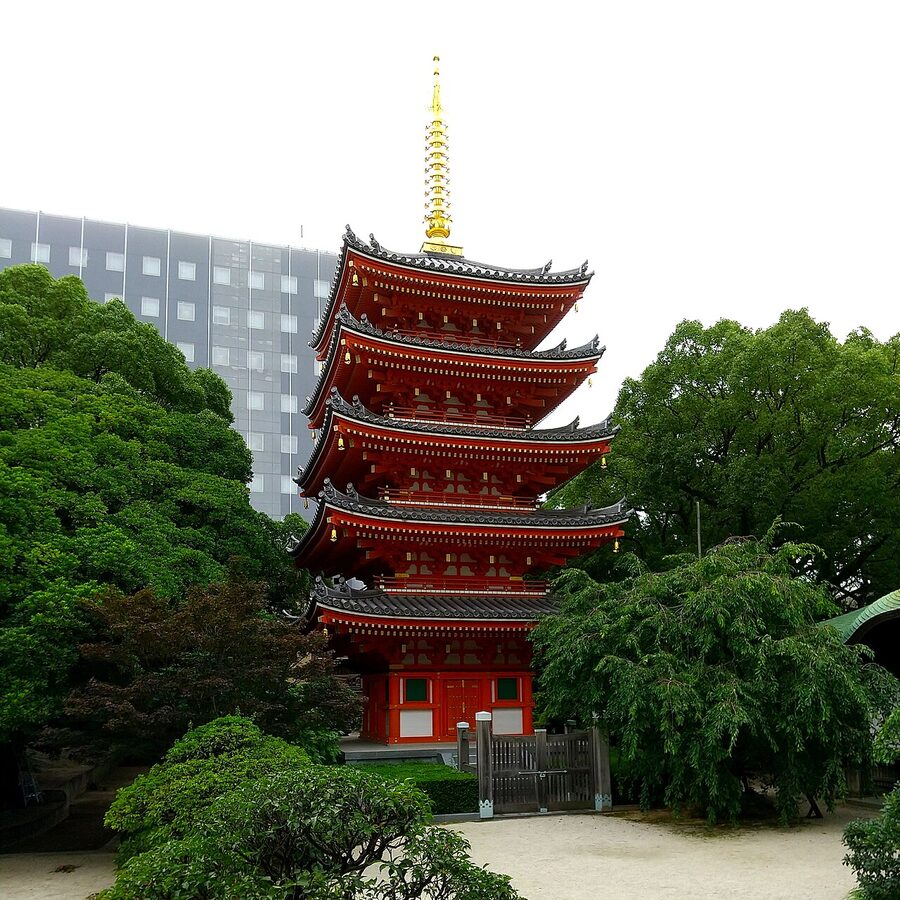
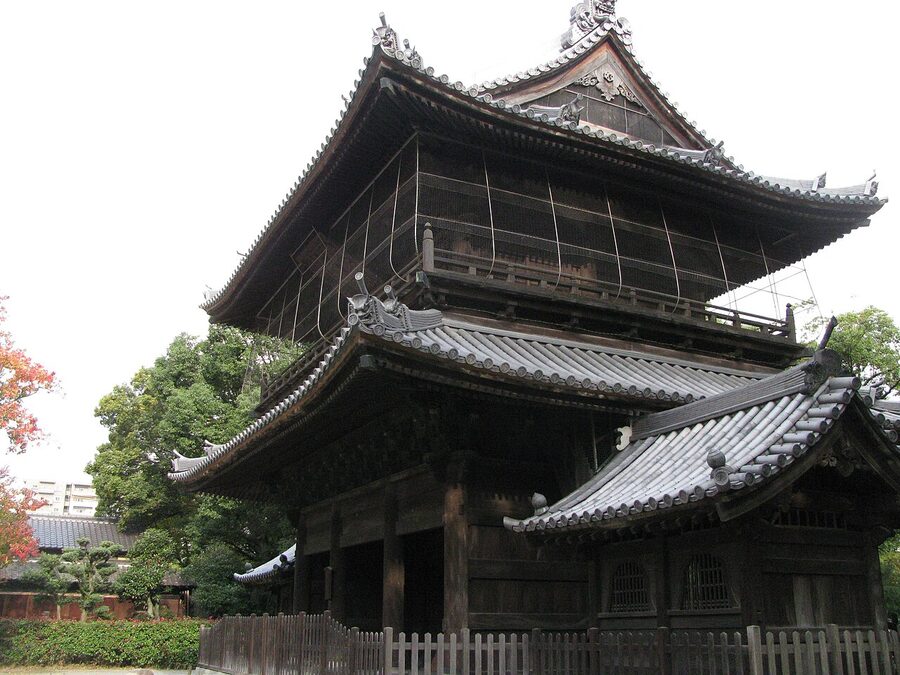
Hakata’s temple cluster is one of those Japanese things that doesn’t look like much from the outside. No marketing, no English-only audio guides, no queue. You walk past the Tochoji Temple gate twice before you realise the five-storey vermillion pagoda inside is one of the tallest wooden structures in Kyushu. That’s the texture of this district. Quiet, unhurried, and dense with places that have been there for 700-plus years.
The whole walking circuit, from Hakata Station’s Hakata exit (north side) through Kushida, Tochoji, Shofukuji, and back via Sumiyoshi, takes about three hours at a normal pace. None of it costs more than a couple of hundred yen, most of it is free, and the walking distances are all under 20 minutes between stops.
Kushida Shrine
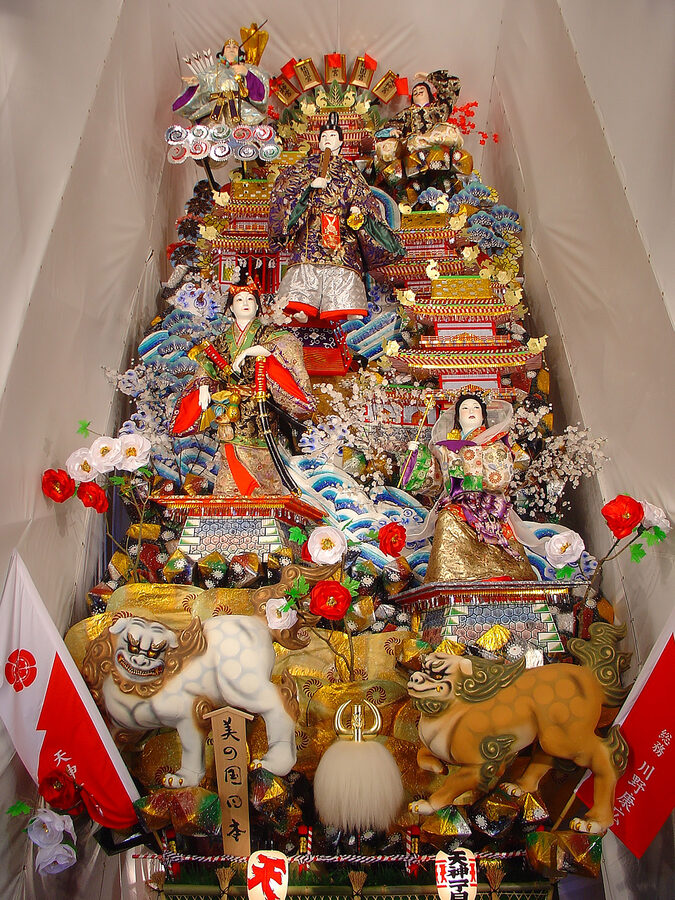
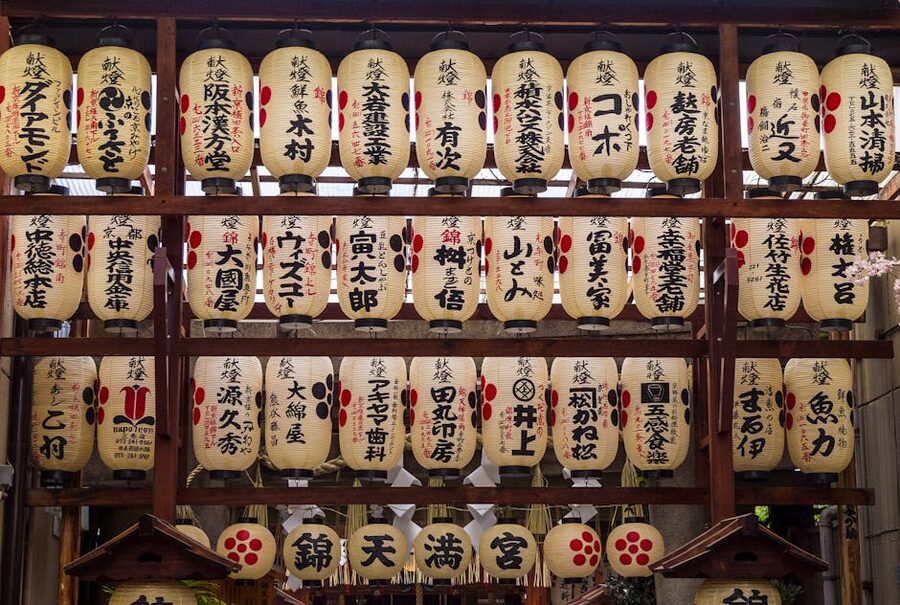
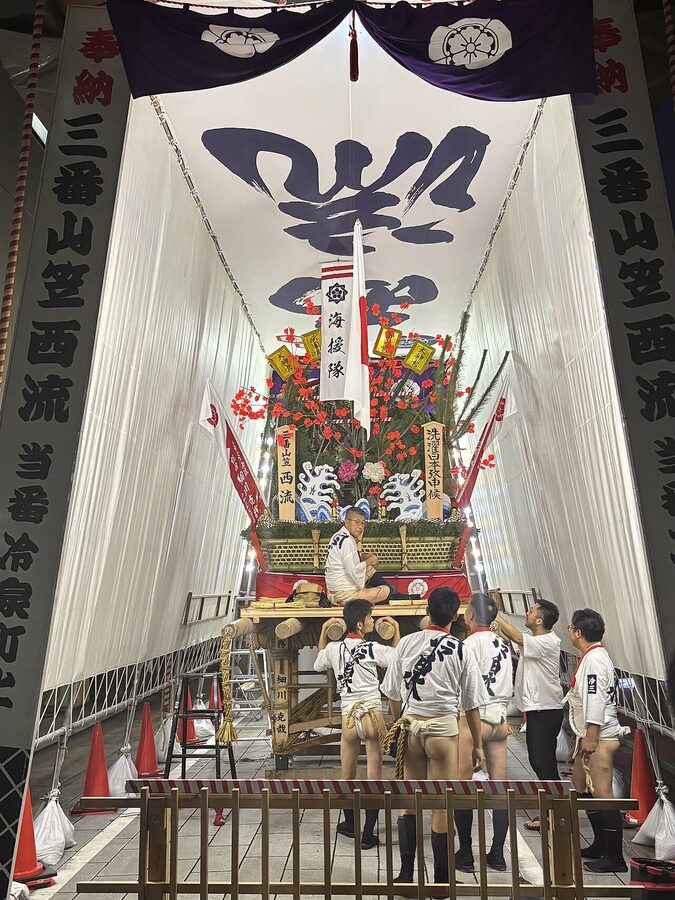
Kushida is the spiritual home of the Hakata Gion Yamakasa festival, the float race that turns the streets of Hakata into a chaos of running men in loincloths every July. You can see one of the kazariyama, the highly decorated tall floats that aren’t raced (the racing ones are different and shorter), parked permanently on the shrine grounds. Free to visit. Open from before sunrise to after sunset. The shrine itself is small but old. If you’re here in late October, walk through to find the seasonal eve of New Year decorations being prepared.
Tochoji and Shofukuji
Tochoji is famous in Japan for its Fukuoka Daibutsu, a wooden seated Buddha 10.8 metres tall, carved over four years in the 1980s. The temple itself dates to 806. The five-storey pagoda outside is younger, completed in 2011, but it’s been built using traditional joinery and looks 400 years old already. Free to enter the precincts; a token fee for the Daibutsu hall.
Shofukuji is older still, founded in 1195, and is officially Japan’s first Zen temple. The grounds are usually empty. The main hall isn’t always open to visitors but the precinct is, and the back of the complex has a small bamboo grove that doesn’t make any tourist lists.
Sumiyoshi Shrine and Hakata Machiya Folk Museum
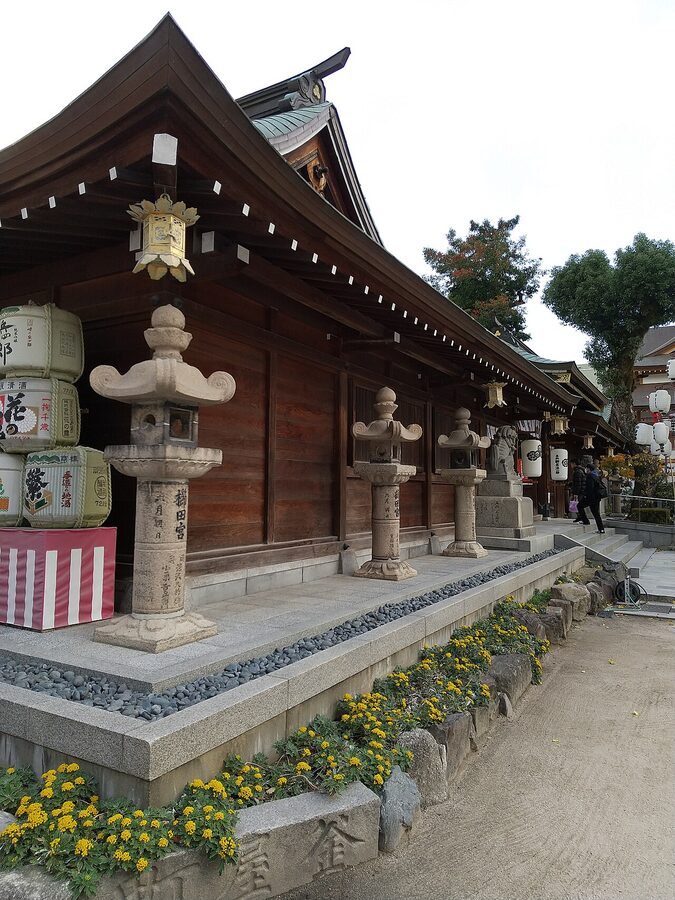
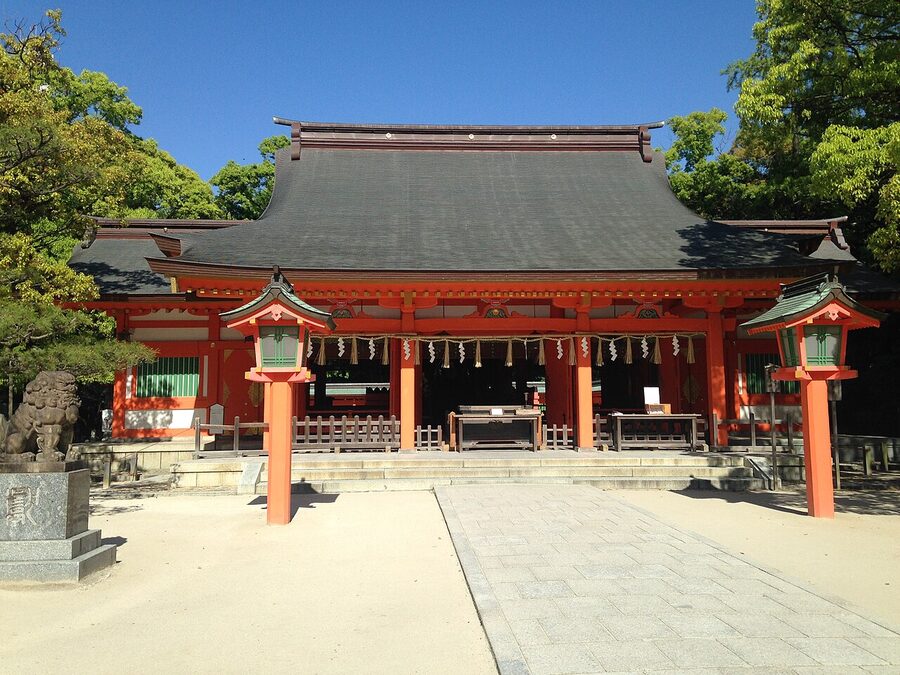
Sumiyoshi Jinja sits south-west of Hakata Station and is one of three Sumiyoshi shrines that claim to be the oldest of the line (the others are in Osaka and Shimonoseki). Free. Wide grounds with a 1,000-year-old camphor tree.
The Hakata Machiya Folk Museum is the worthwhile interpretation centre for the area. Three preserved Meiji-era wooden townhouses with reconstructed Hakata weaving looms, traditional Hakata doll workshops, and a clear timeline of how the merchant city worked. Admission ¥200. Open 10:00–18:00, closed late December and on the fourth Monday of every month. If you go to one museum in the city, this is it.
Yatai: the night the city changes shape
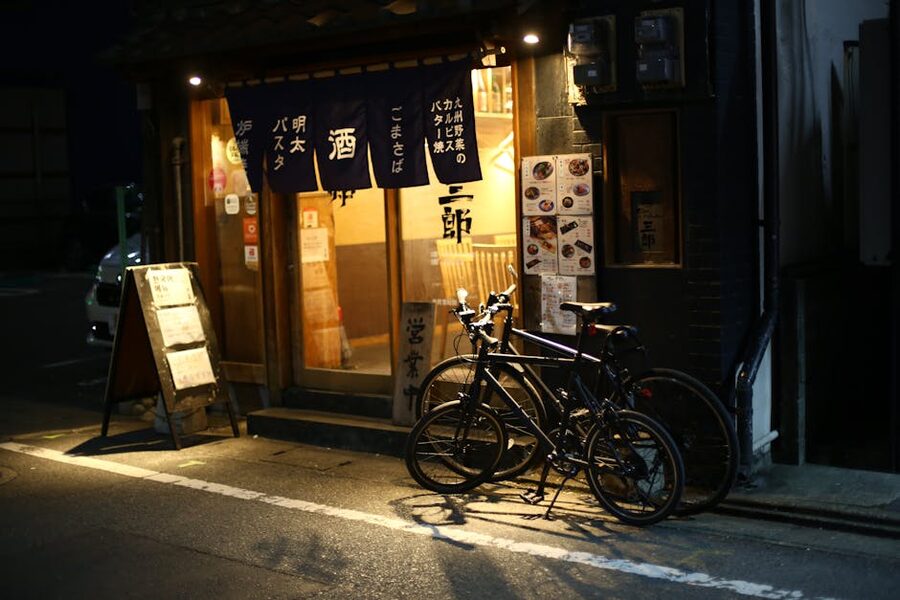
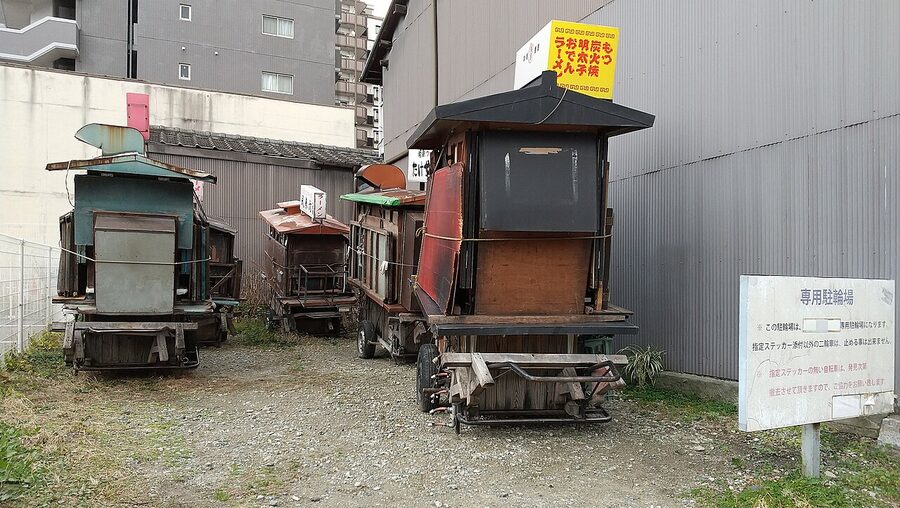
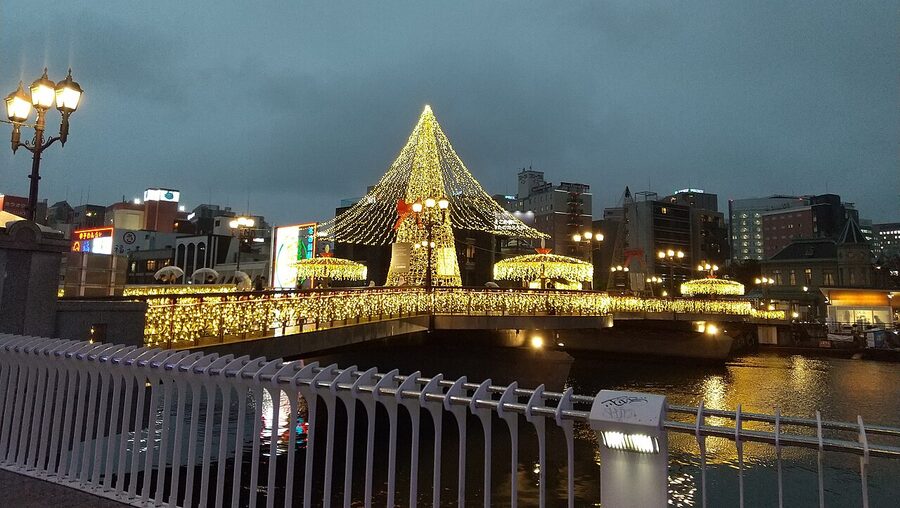
Yatai are wheeled wooden food stalls with red canvas curtains and 8 to 10 stools. They wheel out at dusk, stay open until 02:00, and pack away before sunrise. There’s no fixed location pattern: a stall licensed to operate on, say, the south side of Naka River near Canal City may not be in the exact same metre of pavement on consecutive nights. They aren’t restaurants. They’re closer to a moveable bar that happens to also feed you.
The city’s official tourism office puts the count at over 100 currently licensed yatai. The number rose and fell across the 2010s as Fukuoka tightened the permit system, then loosened it again with a public-call program from 2017 onward to bring in new operators. As of 2026 the city has been running a managed permit rotation; expect the exact stall lineup along the river to keep shifting year to year.
Three concentrations matter:
- Nakasu, along the south bank of the Naka River: the most visited cluster, the most photogenic. Around 20 stalls on a busy night.
- Tenjin, mostly along Nishi-dori and around Tenjin Bus Centre: more locals, fewer cameras.
- Nagahama, near the wholesale fish market in Chuo Ward: smaller, older, the original Hakata ramen yatai cluster.
Yatai practicalities
You sit where there’s space, you order in Japanese (or pointing), you pay cash. Average bill: ¥1,500 to ¥2,500 per person for a bowl plus a beer plus a side. Specials vary stall to stall. Some are ramen-focused. Some do oden, the slow-simmered winter stew. Some do tempura. A few are dedicated to mentaiko (cured cod roe) sides and yakitori. The bar entry rule of polite turnover applies: if there’s a queue, finish, pay, leave.
Practical reality: at a yatai you’re sharing a few square metres of stool with whoever else is hungry that night. The owner’s space behind the counter is the kitchen and they don’t have a dishwasher. They will not appreciate cigarettes (most stalls now non-smoking by city ordinance), large cameras pointed at the prep area, or groups larger than four. None of this is unfriendly; it’s just the geometry of the format.
Don’t bring children to the late-evening Nakasu yatai. The atmosphere is bar-adjacent. The 6 pm to 8 pm window is fine for a teenager interested in the food. After 21:00 it’s adults.
Tenjin: where Fukuoka does its everyday shopping
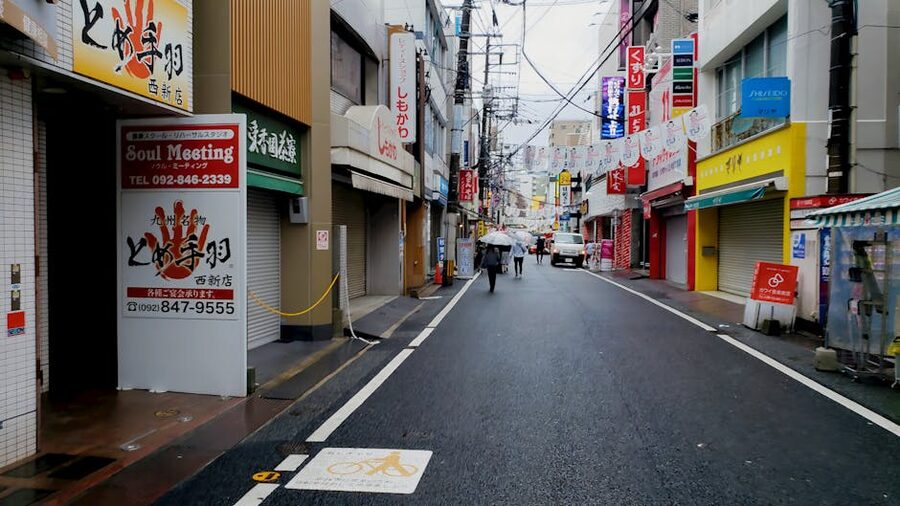
Tenjin is the commercial centre. Department stores stacked on top of each other, the Daimaru, the Iwataya, the Mitsukoshi, all within a few blocks. The locals do their everyday shopping here, not in Hakata. The streets are wider, the buildings are newer, and the foot traffic is a different demographic: young, dressed-up, on weeknight dates. If Hakata is the temple-and-station district, Tenjin is the wallet-and-wardrobe district.
Tenjin Underground
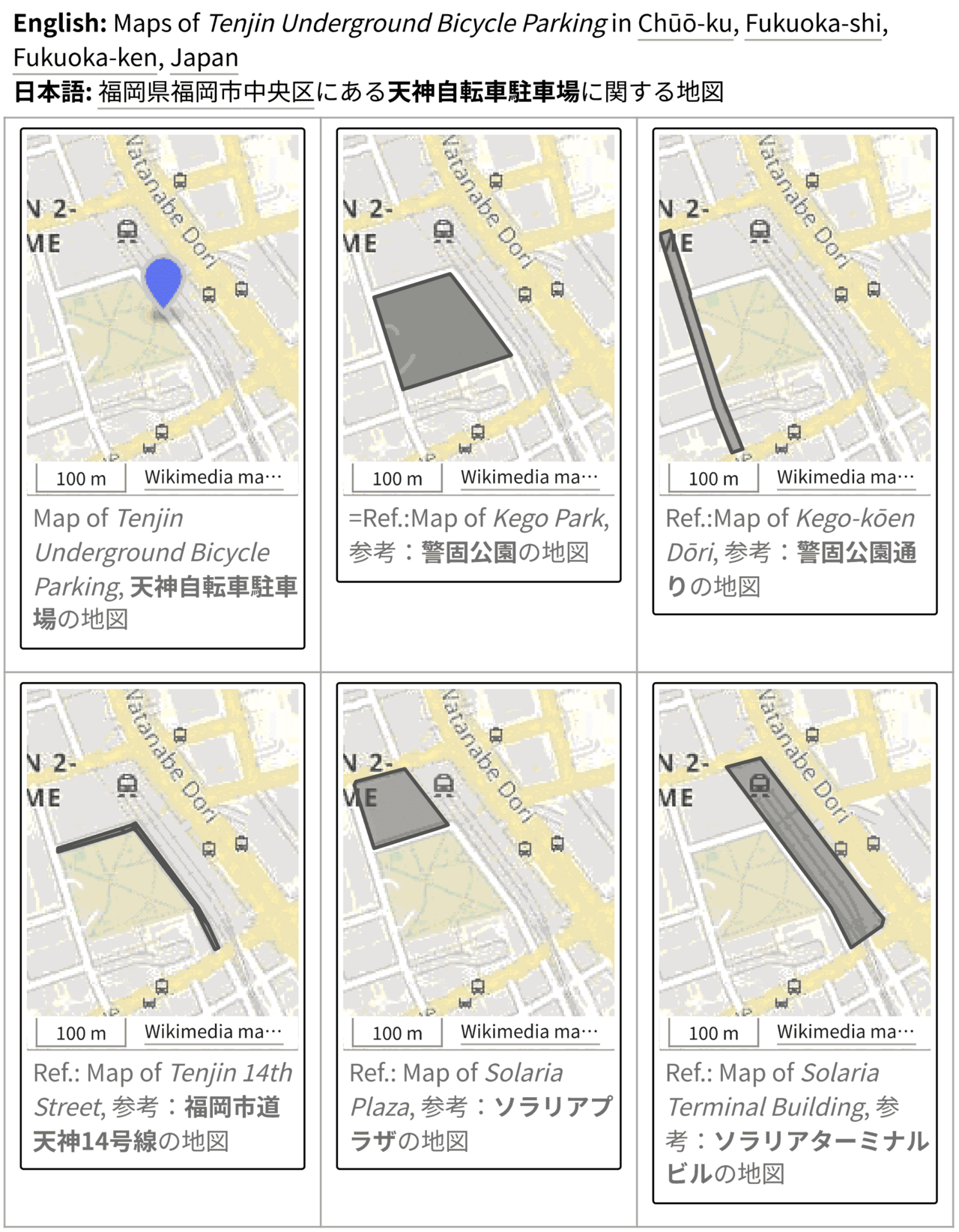
Beneath the streets sits the Tenjin Chikagai underground mall, a 590-metre long stretch of arched brick passageways styled after 19th-century Europe. It runs north-south from Tenjin Station to Tenjin-Minami Station and is genuinely one of the more architecturally interesting underground spaces in any Japanese city. Around 150 shops and food spots. It’s also a refuge in summer (Fukuoka’s August heat is humid and serious) and in heavy rain.
Useful detail: the underground links across to Iwataya, Mitsukoshi, Solaria Plaza and a couple of department stores. You can travel from end to end of the shopping district in air conditioning if you’re caught in weather.
Canal City Hakata
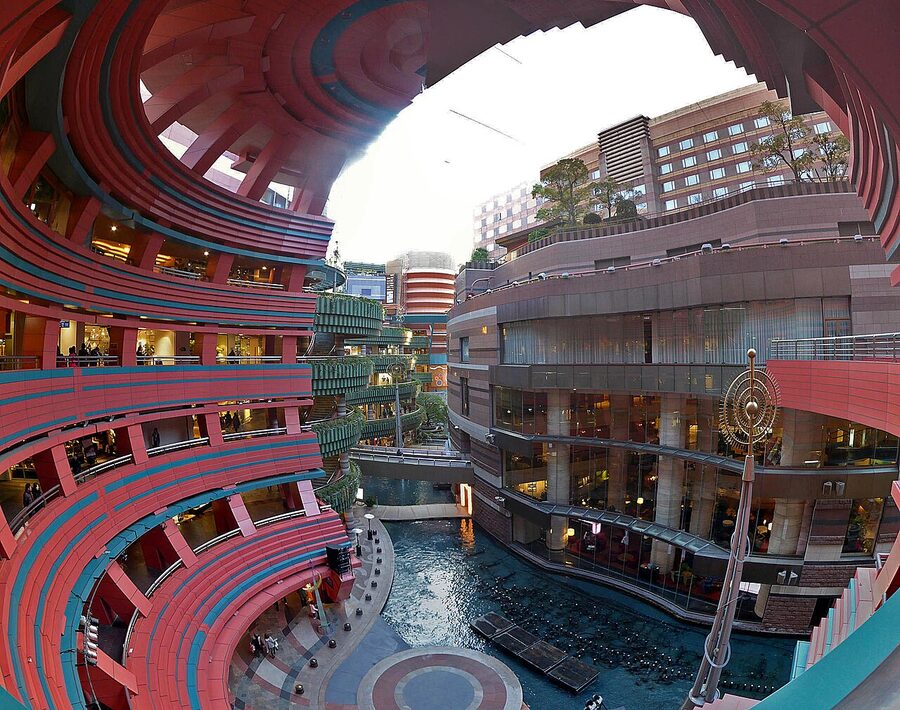
Canal City is a 1996 Jon Jerde-designed shopping and entertainment complex on the Hakata side of the river. There’s a literal canal running through the middle. Fountains every half hour. A Ramen Stadium on the fifth floor where eight regional ramen styles are represented (decent, not better than a real Hakata yatai, but useful if you want to compare). Around 250 shops. Free entry. Open 10:00–21:00 most shops, until 23:00 for restaurants.
Honest take: Canal City is dated. It looks like the late 1990s, because that’s when it was built. If you’ve seen a major Japanese shopping mall before, this one won’t reset your expectations. But it’s a 12-minute walk from Hakata Station and a free thing to walk through, so if you have an hour to kill before dinner, it’s there.
Ohori Park and Fukuoka Castle: where the city goes to breathe
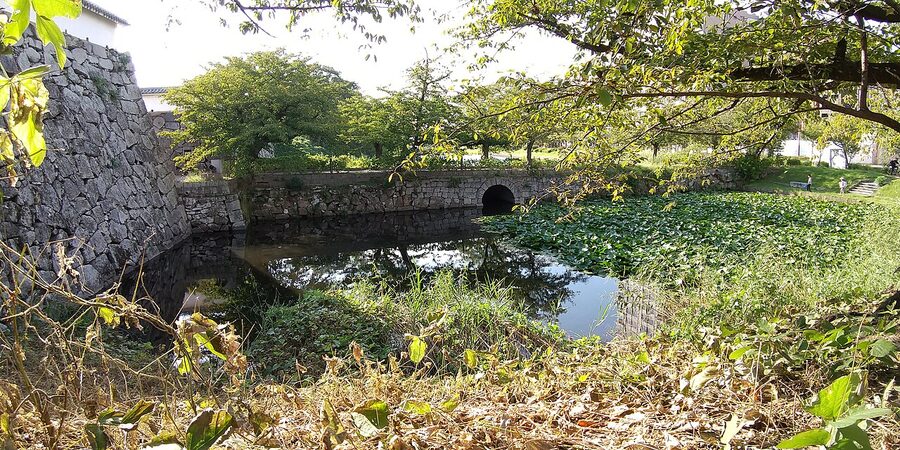
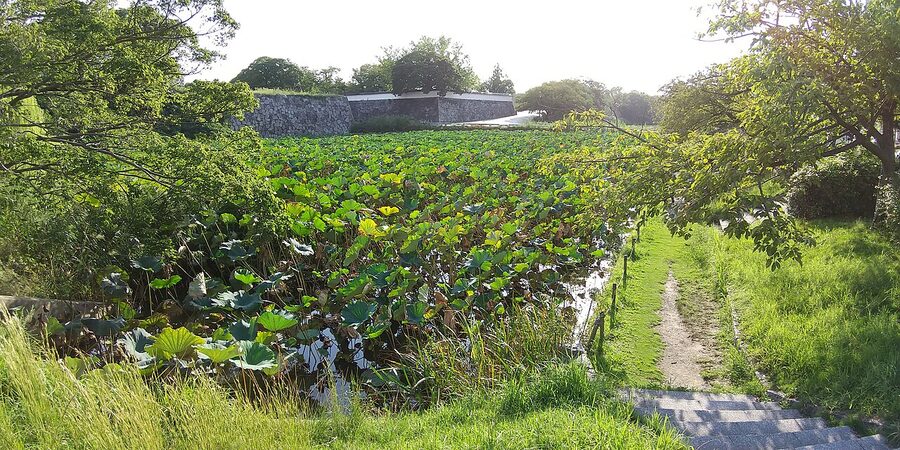
Ohori Park is built on the moat of the old Fukuoka Castle. The castle itself is a ruin (stone walls, gates, a few foundations, no keep), torn down in 1872. The moat became the park, the keep became the foundation, and the result is a landscaped 41-hectare green space with a 2 km perimeter walking loop around a central pond. Free, open 24/7.
Locals come here for early morning runs and late afternoon walks. The pond has three small islands connected by stone bridges, and you can rent a swan-shaped paddle boat for ¥1,100 per 30 minutes if you have a sense of humour about it. There’s a Japanese garden on the east side (additional ¥250 admission, open 09:00–17:00, closed Mondays) that most park-walkers skip and shouldn’t, particularly in November when the maples turn.
Fukuoka Castle ruins
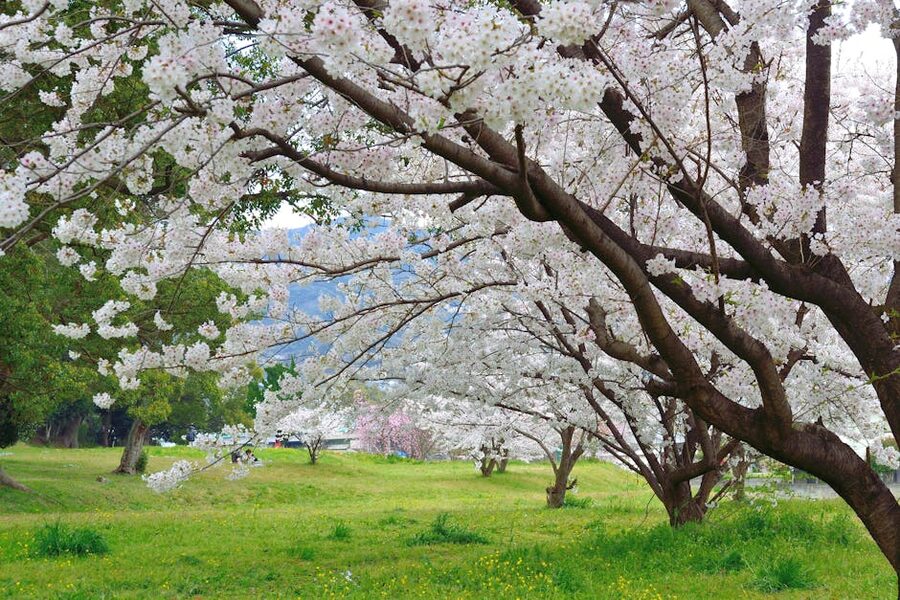
The castle ruins are immediately south-east of Ohori, accessed via Maizuru Park (the same complex). What’s left: the Tamon-yagura turret (rebuilt), several gate foundations, the main bailey stone walls, and a viewpoint at the top where the keep once stood. Free to walk through. The cherry blossom in late March and early April covers the ruins in pink and turns this into one of Kyushu’s better hanami spots, picnic-mat dense by mid-day, almost empty at sunrise. Plan for sunrise if you can. If cherry blossoms are why you’re here, the cherry blossom Japan guide covers the full Kyushu timing.
Opposite Ohori Park, the Fukuoka Art Museum holds a strong collection of Asian ceramics and 20th-century Japanese painters. ¥200 for the permanent collection, more for special exhibitions. Open 09:30–17:30, closed Mondays. Most travellers skip it. If you have a rainy afternoon, it’s worth two hours.
Dazaifu Tenmangu: the half-day worth taking
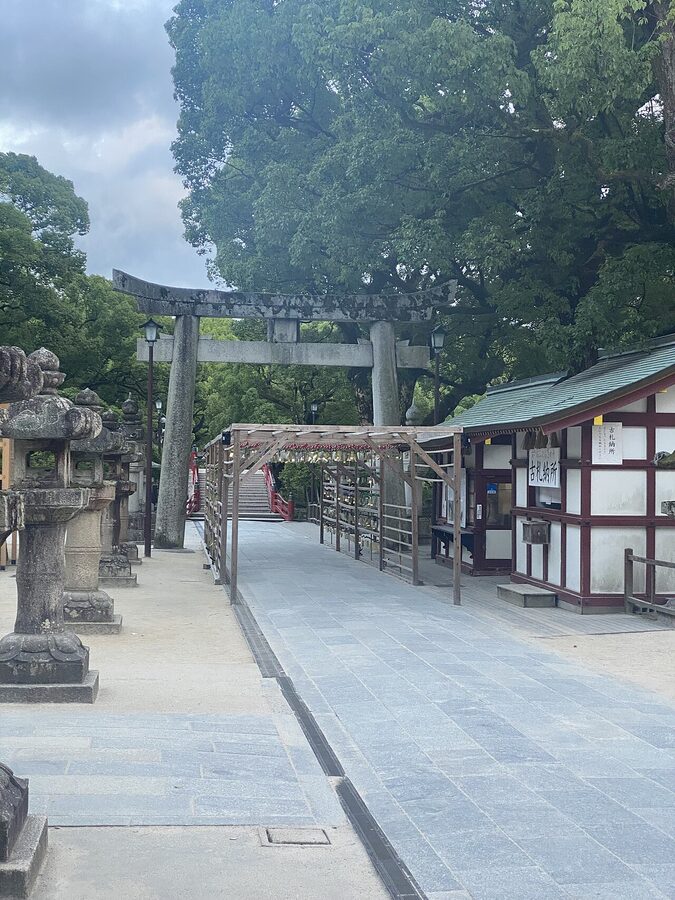
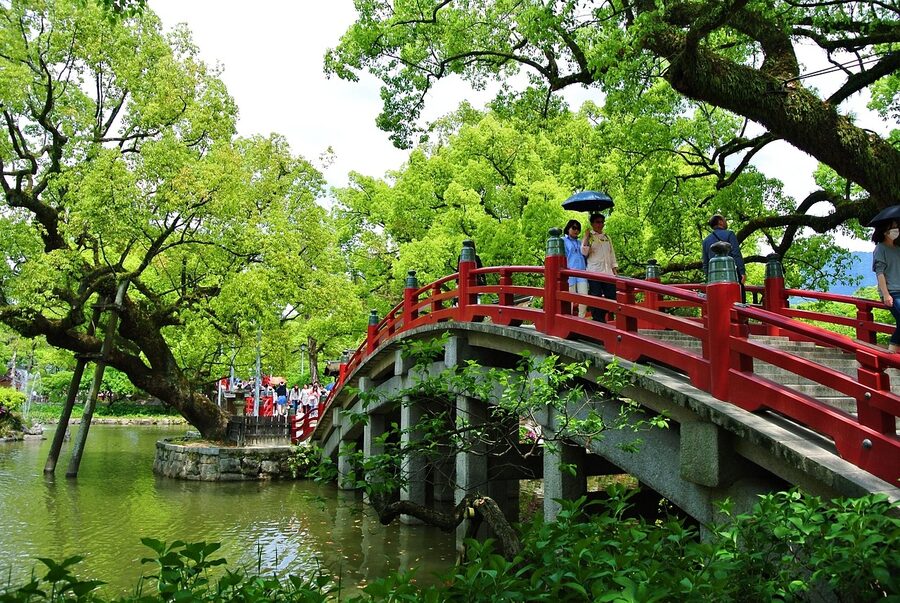
Dazaifu Tenmangu is the head shrine of 12,000 Tenjin shrines across Japan. Tenjin here isn’t the shopping district; it’s Sugawara Michizane, the 9th-century scholar-poet who was exiled here from Kyoto, died in 903, and was deified after his death as the Shinto god of learning, literature and art. Students across Japan come to write their wishes for exam success on wooden ema plaques and leave them by the thousands.
The shrine is 30 to 45 minutes from Hakata depending on route. The simplest is the Nishitetsu Tenjin-Omuta Line from Nishitetsu-Fukuoka (Tenjin) to Nishitetsu-Futsukaichi, then transfer to the short Dazaifu spur. About ¥420 each way. There’s also a direct Tabito limited express on certain days that runs straight through without the transfer, ¥700 each way, take it if you can time it.
The honden (main hall) is currently undergoing major restoration work that began in 2023 and is scheduled to continue for several years. During the restoration, Dazaifu Tenmangu opened a striking temporary hall (kari-honden) designed by architect Sou Fujimoto with a meadow of native plants and grasses growing on its roof. It’s worth seeing in its own right; verify the current state on the dazaifutenmangu.or.jp official site before you go (verified 2026-05-07).
Plum blossom and the Tobiume tree
The shrine grounds hold around 6,000 plum trees of 200 varieties. They flower from late January through early March, peaking around mid-February in most years. The most famous is the Tobiume, the Flying Plum, which legend says flew here from Michizane’s garden in Kyoto to be near him. It’s on the right of the main hall as you approach. February is when this place is at its best.
Komyozenji moss garden
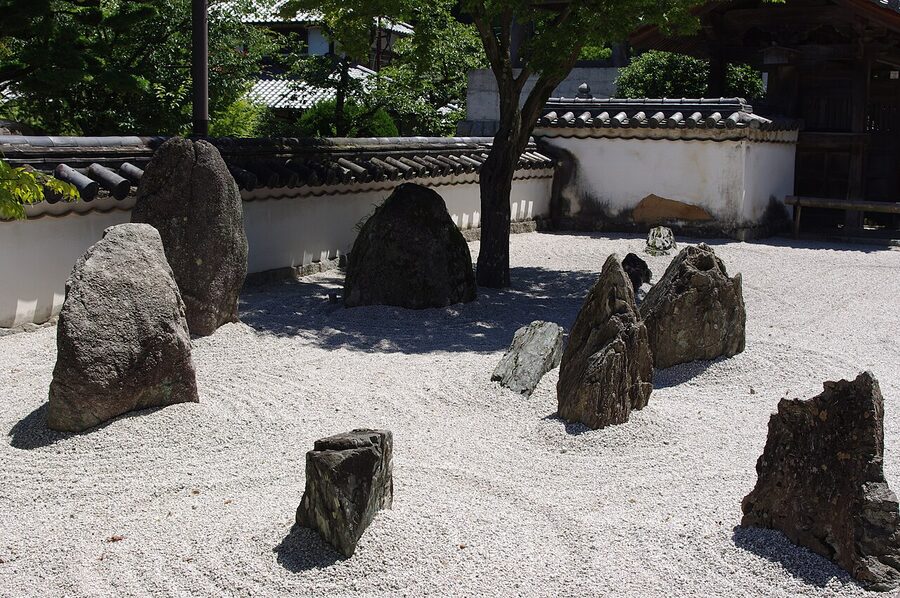
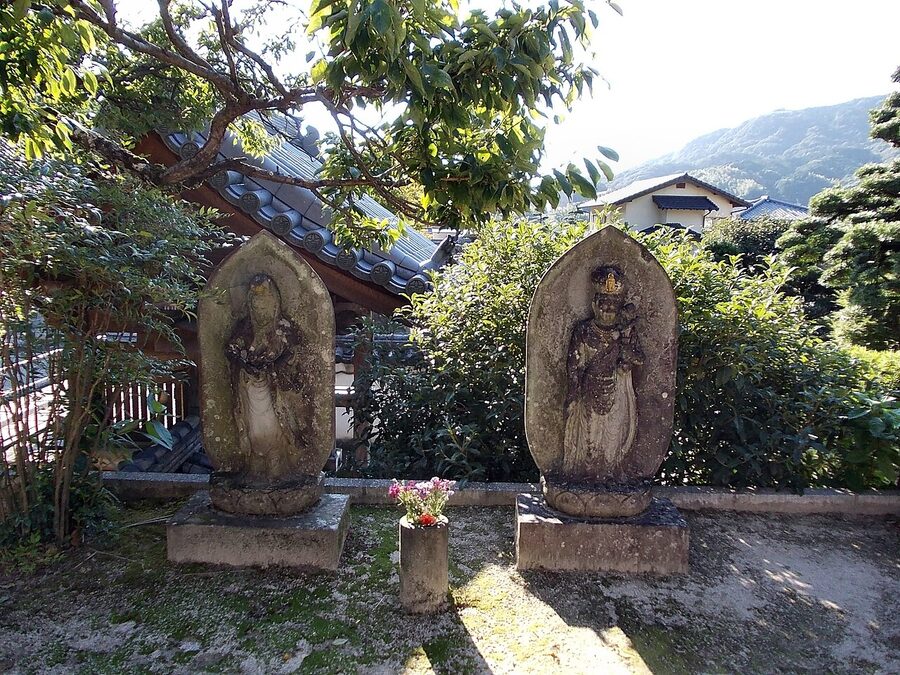
A two-minute walk from Dazaifu Tenmangu’s main approach is Komyozenji, a Zen temple with two of the best-known small dry-landscape gardens in Kyushu. The front courtyard is the Buddha’s Light garden of stones; the back is a viewing deck overlooking a moss-and-maple garden that turns deep red in November. Admission ¥500. Closed sometimes for ceremonies; check at the gate.
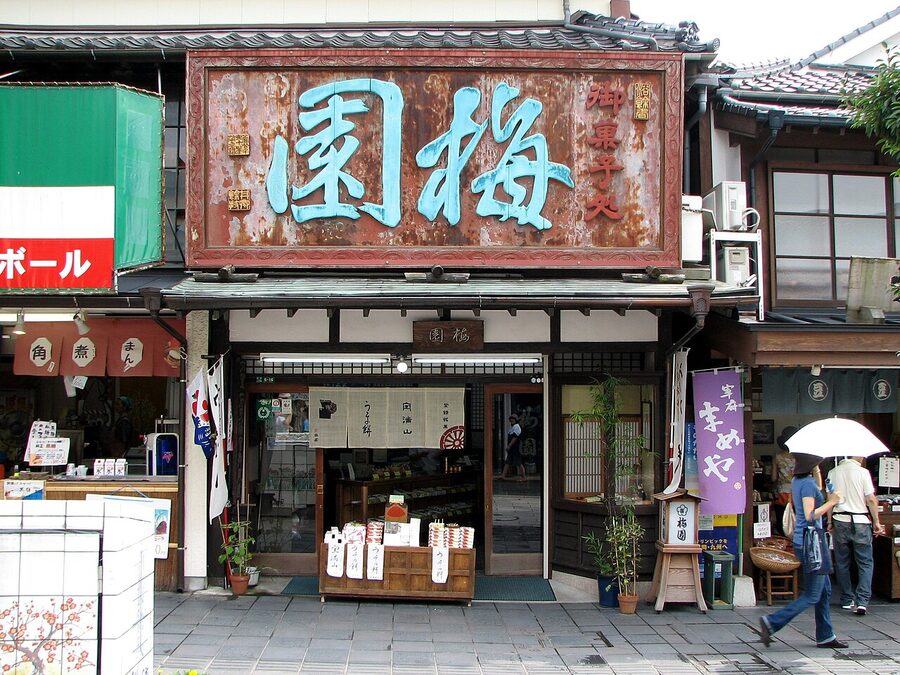
Most Dazaifu day-trippers stop at Tenmangu, eat an umegae mochi (the local plum-stamped grilled rice cake, sold for ¥130 each at half-a-dozen shops on the approach), and head back. They miss Komyozenji. If you have an extra hour, walk it.

Itoshima: the coast Fukuoka thinks of as its weekend
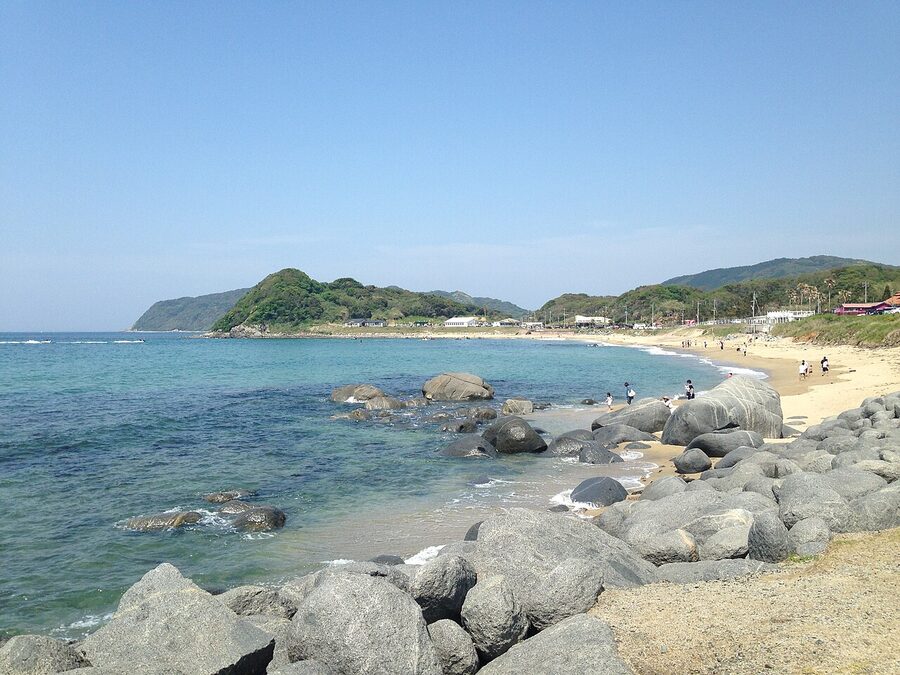
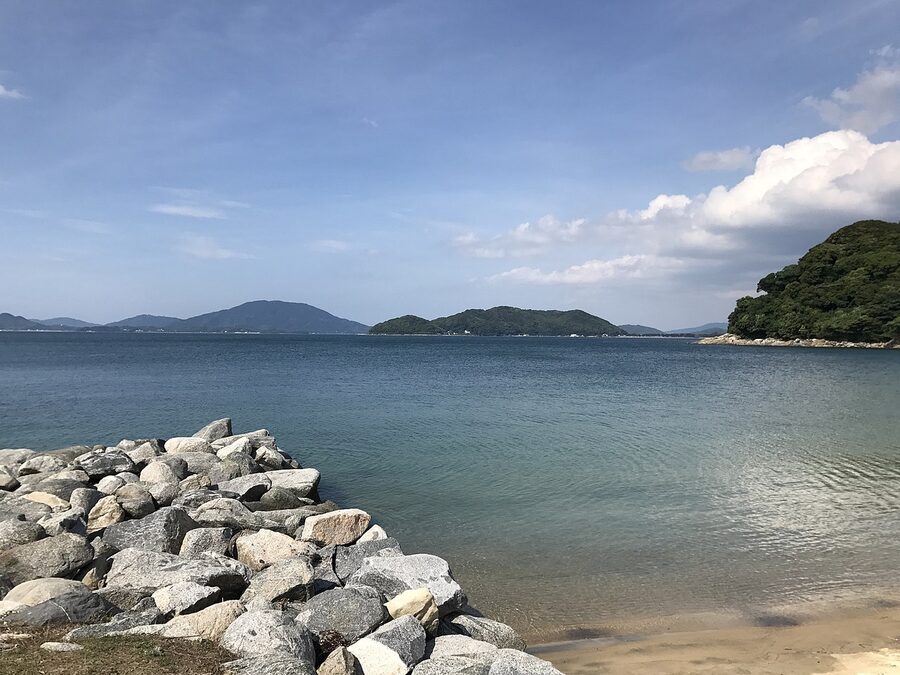
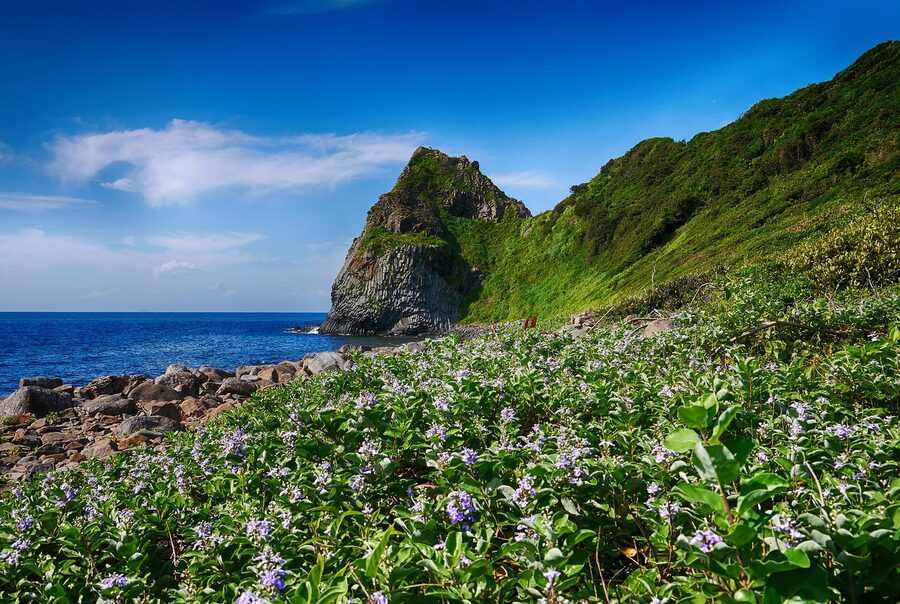
Itoshima is the peninsula west of the city. Forty minutes from Hakata Station on the JR Chikuhi Line (which through-runs from the Subway Kuko Line, so you don’t have to change trains, you just stay on past the airport). The east coast of Itoshima is the part most travellers see: surf beaches, seaside cafes, and the Sakurai Futamigaura Couple Stones.
Sakurai-Futamigaura: the Couple Stones
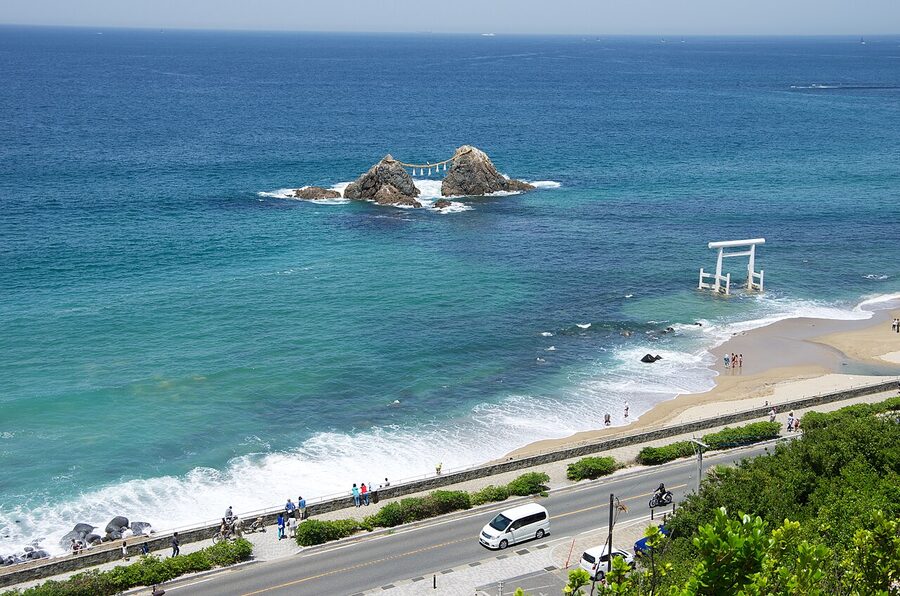
Two rocks rise out of the sea at Futamigaura beach, joined by a thick shimenawa rope, with a white wooden torii gate sitting on the sand. At low tide you can walk close to the gate. At high tide the rocks become an island. At sunset on a clear day in summer the sun lines up and drops directly between the two rocks. The rope is rebuilt every May at the local festival; the torii is white-painted, much-photographed, and still feels less crowded than its more famous cousins (Miyajima, Hashikui-iwa).
Getting there from Hakata is awkward by transit alone. The standard route is JR Chikuhi Line to Chikuzen-Maebaru (about 35 minutes, ¥620), then a Showa Bus or taxi for the last 30 minutes to the beach. A taxi from Maebaru is around ¥3,500 each way. If you’re planning a full day, rent a car at Hakata for around ¥6,000–8,000 a day; that’s the only way to chain Sakurai with the pottery villages and the Keya beaches.
Beaches and pottery
Itoshima’s east coast has a strip of cafes set up around 2015 that’s now reached saturation: every second Western-style beach cafe with reclaimed wood, blue glass and a sea-view deck is here. Best of them include Sumiyaki Kafe Beach Café Sunset, the Palm Beach near Futamigaura, and the small pottery-village restaurants near Shiraito Falls.
The Itoshima pottery scene is older and worth more attention than the cafe scene. Several potters work in small studios in the central peninsula, particularly around Kafuri and Imafuku. Some open their kilns to visitors on weekends; check Itoshima City’s official tourism site before you drive out. Pieces in the ¥3,000 to ¥15,000 range, hand-thrown, with the clay coloured by local sand.
Yanagawa: the boatman’s town
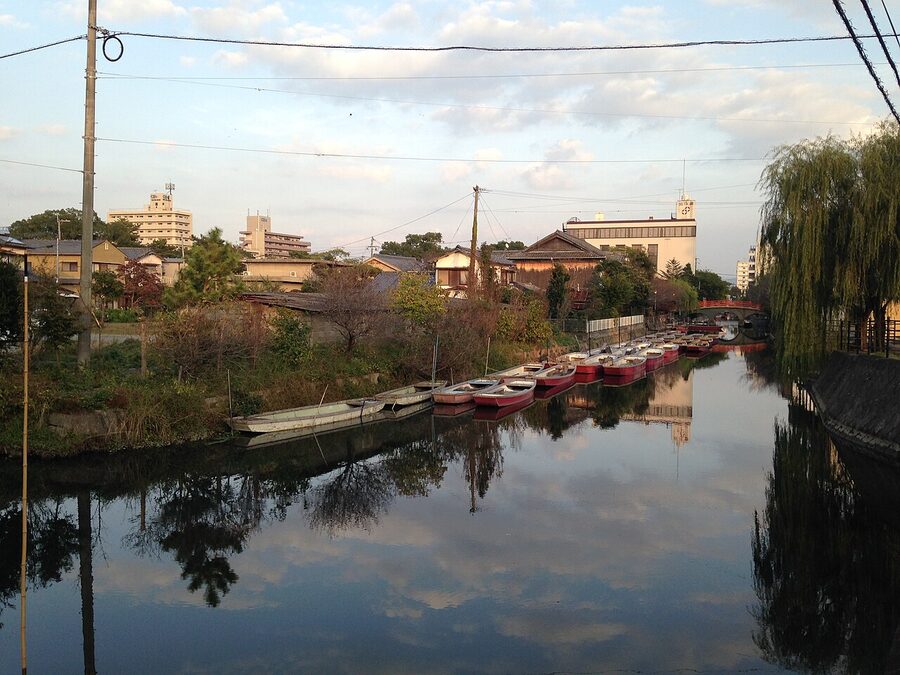
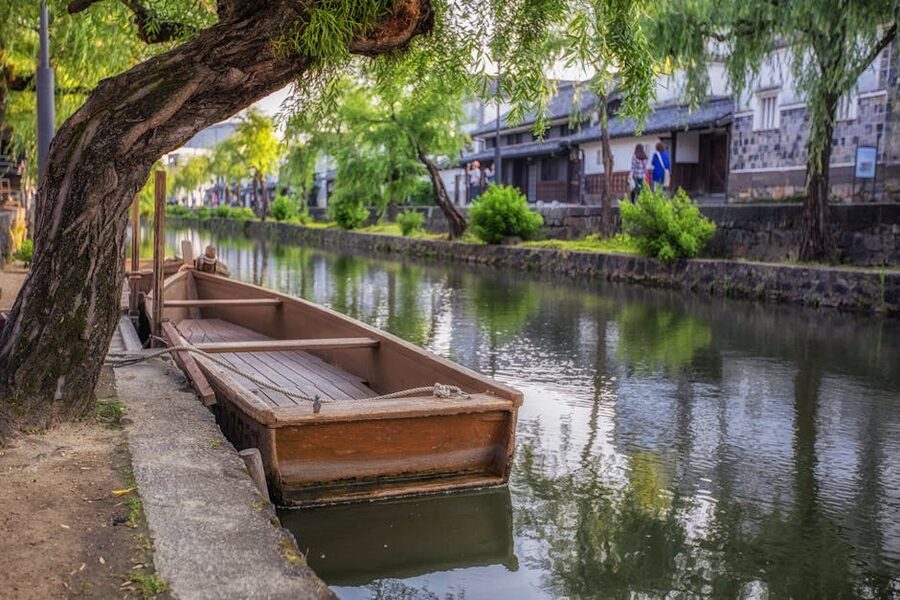
Yanagawa is a moated castle town an hour south of Tenjin on the Nishitetsu Tenjin-Omuta Line. It’s known for one thing: the Yanagawa river-boat ride, called sandanbashi after the three-stage water lock (or sometimes just kawakudari, “going down the river”). A boatman steers a flat-bottomed punt with a single bamboo pole through the moats and canals of the old town for around 70 minutes.
The boats run year-round but are most pleasant in autumn and spring. In winter they fit a kotatsu heater under a canopy in the boat. Adult fare runs around ¥1,800 to ¥2,000 depending on the operator and time of year. There are five companies (Yanagawa Kanko Kaihatsu, Otomeryu, Hakua, etc.); you don’t need to choose carefully, they’re roughly equivalent. Verify current fares on yanagawa-net.com or kawakudari.com before you go (verified 2026-05-07).
The standard route ends at Ohana, the former lord’s residence-and-garden, where most boats time the arrival to coincide with lunch. The local lunch dish to eat after the boat is unagi seiro mushi, eel steamed over rice in a wooden box, layered with sweet sauce. Some say it’s the best eel in Japan. It’s certainly among the most distinctive. ¥3,000 to ¥4,500 a serving at the established eel houses (Wakamatsuya, Ganso Honke Motoyoshiya).
Reality check: the boat ride is the appeal. There isn’t much else in Yanagawa town once you’re done with that and lunch. Plan it as a half-day add-on, not a full day in itself.
What to eat: Hakata is a food town first
The food culture is the strongest reason to spend more than one night here. Three things to plan around.
Hakata-style tonkotsu ramen
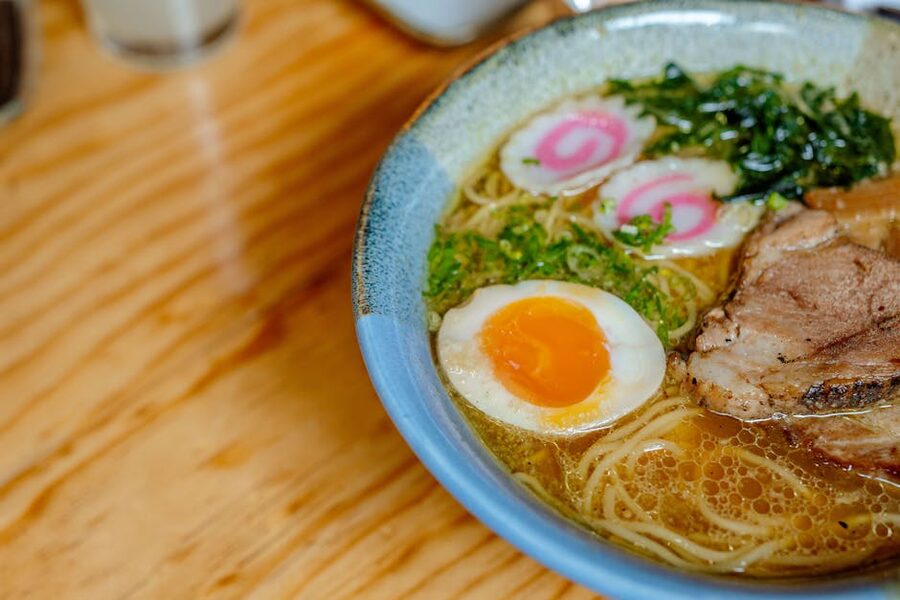
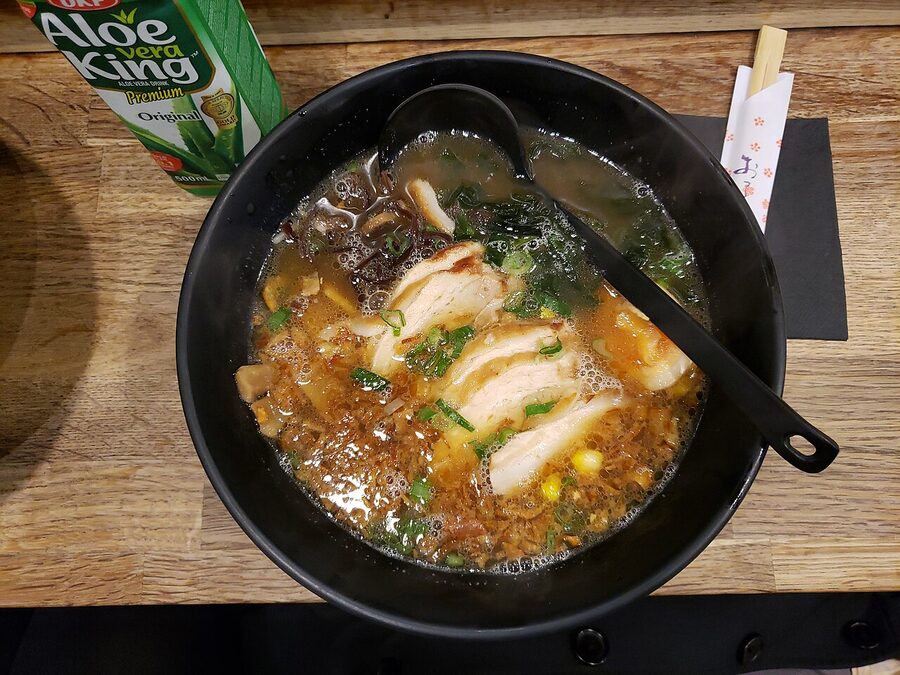
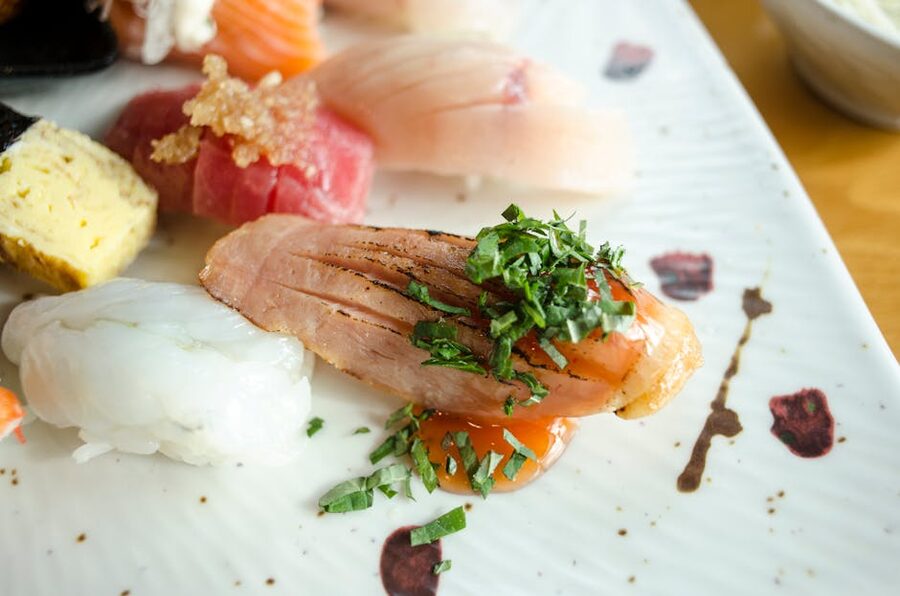
Hakata invented tonkotsu, the milky pork-bone broth ramen that has since spread across Japan and the world. The local style: thin, straight noodles cooked harder than most other ramen styles (you can specify hardness from yawa to bari-kata), tonkotsu broth, scattered green onion, char siu pork, sometimes a wood-ear mushroom slice. Bowls run ¥600 to ¥1,200. The noodles cook in 30 seconds and the bowl typically reaches you within 90 seconds of ordering.
The famous chain is Ichiran (started in Fukuoka, now everywhere), and the original branch is in Nakasu near the river. It’s fine. The single-shop counters most locals love include Shin-Shin (Tenjin), Hakata Issou (Hakata Station), and the original yatai-style Nagahama Ramen Numero Uno (Nagahama). Late-night yatai ramen at ¥1,000 a bowl, eaten standing or on a stool with the noodles slightly less precise than at a fixed shop, is the most distinctly Fukuoka version of all this.
Mentaiko and motsunabe
Mentaiko is spicy cured cod roe, brought to Fukuoka from the Korean peninsula in the 1940s and now Hakata’s most exported souvenir. Plain on rice for breakfast at the hotel. Cooked into pasta. Eaten as a side at any yatai. Buy a couple of vacuum-sealed tubes at the airport on the way out (the standard Fukuya brand is the safe choice; ¥1,500 to ¥3,000 a tube depending on grade). Pretty much every Japanese ekiben (train bento) in Fukuoka also has a mentaiko version.
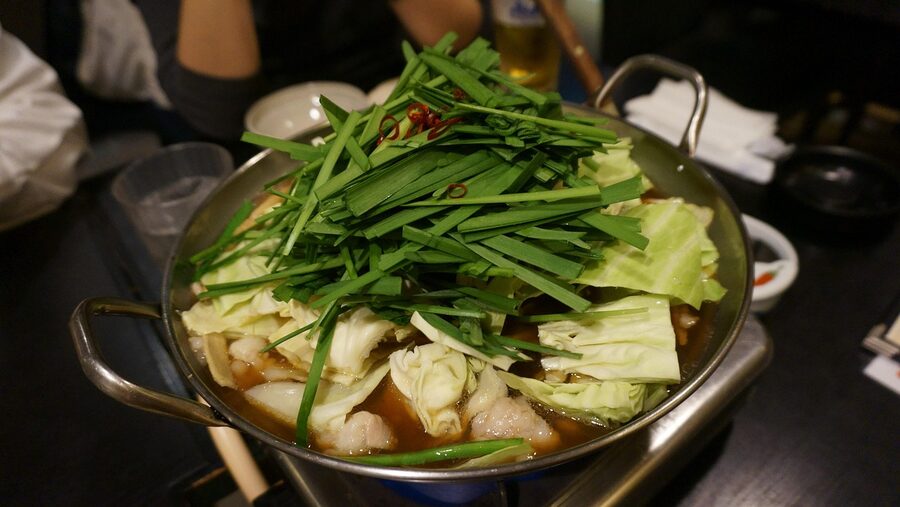
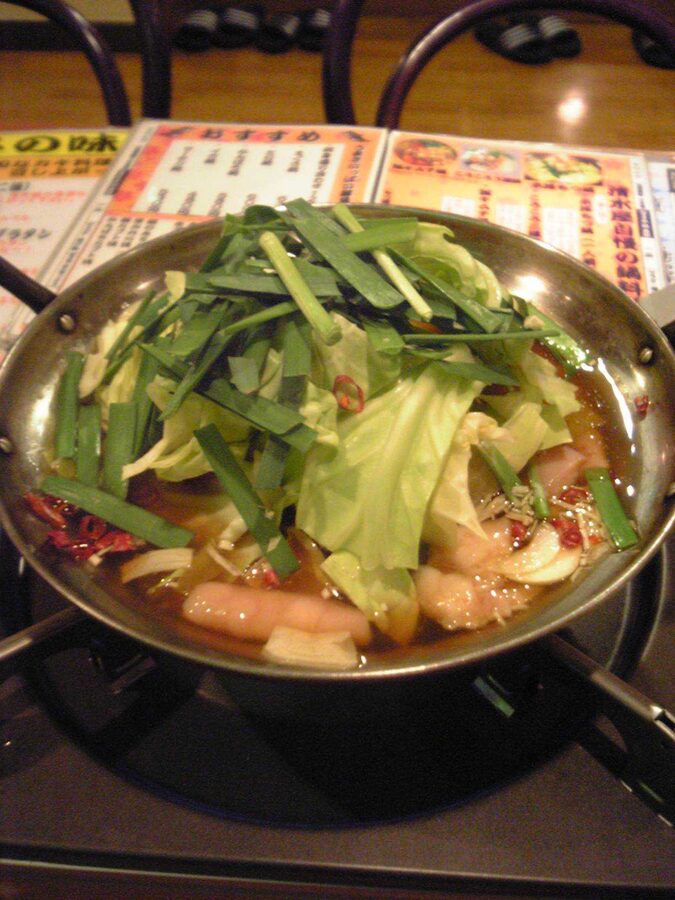
Motsunabe is the Hakata winter hot-pot: beef offal (intestine), garlic, chili and chives in a soy or miso broth, served bubbling at the table with thick udon noodles dropped in towards the end. ¥2,000 to ¥3,500 a portion at a chain like Yamaya or Rakutenchi. Not for everyone, even by Japanese standards, but if you eat offal it’s the dish of the city. Go in winter.
Where to eat the rest of the time
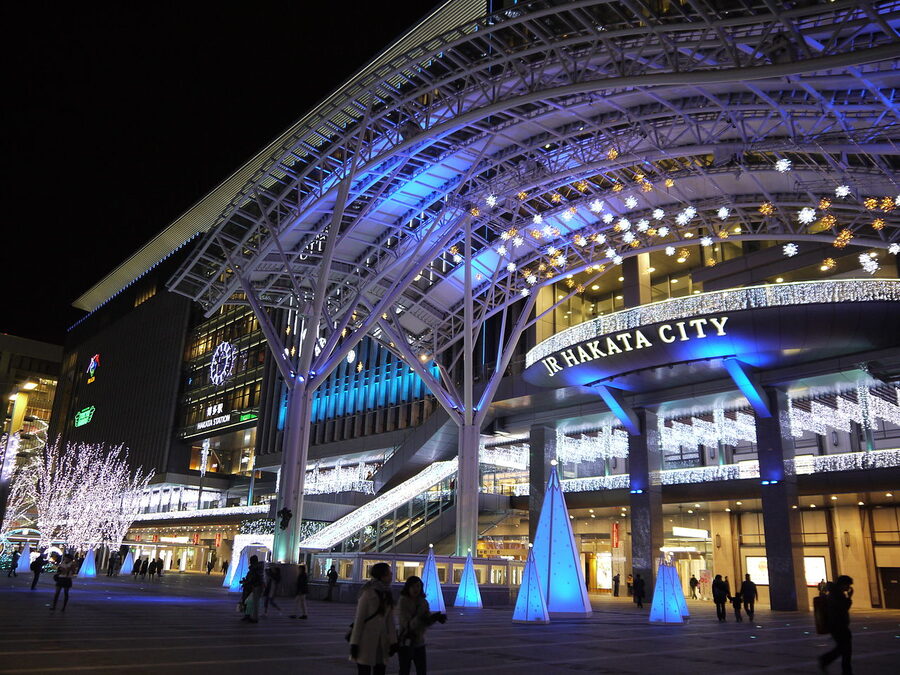
Naka-gawa-bata Shotengai (the arcade running west from Kushida Shrine to Hakata Riverain) has 100 small shops including some good cheap-eats. Hakata Station’s basement has Mr Maxx, JR Hakata City’s roof Tsubame Garden, and the underground gourmet floor with several tonkotsu-ramen specialists; for a one-stop dinner if you have a Shinkansen train to catch, Hakata City basement is the answer.
When to come
Fukuoka has a sub-tropical climate by Japanese standards, milder winters than Tokyo, hotter and more humid summers. Four windows are particularly good.
February: plum blossom at Dazaifu
Late January through mid-February the plums at Dazaifu Tenmangu come in. Fewer crowds than the cherry blossom that follows. Cold mornings, sunny days. Pack a sweater.
Late March to early April: cherry blossom
Hanami in Fukuoka peaks around 25 March to 5 April most years, a week ahead of Tokyo. Maizuru Park (Fukuoka Castle ruins) is the headline spot, dense with picnic groups all weekend. Ohori Park is the runner-up, with the trees ringing the pond. The riverside walks at Naka-gawa light up at night.
Mid-July: Hakata Gion Yamakasa
The festival climaxes on 15 July with the oiyamakasa, a sunrise race of one-tonne wooden floats run by teams of barefoot men through the streets of Hakata. It starts at 04:59 sharp at Kushida Shrine and the crowds line up from 03:00. If you can be in the city for one festival, make it this one. The week leading up to the 15th is when the kazariyama floats come out, walking-tour-able all week.
October to November: cool and clear
The shoulder season, with low humidity and high blue skies. The maples at Komyozenji turn red in mid-November. The Itoshima coast is at its best with no jellyfish in the water but air still warm enough to wade. Hotel rates are at their lowest outside peak summer holiday week. If I had to pick one month for a first-time Fukuoka trip with no festival agenda, it would be early November.
Avoid late August to mid-September unless you’re committed: high humidity, regular typhoons hitting Kyushu first before they hit anywhere else. The summer school holidays also push hotel rates up.
Where to stay
One rule: stay close to Hakata Station or Tenjin. Anywhere else and you’ll waste 10 minutes each direction every time you go out. The two areas are five minutes apart on the subway, but the choice between them shapes the rest of the stay.
Hakata side if you want easy Shinkansen access, more business-traveller hotel inventory at lower prices, and Hakata old town within walking distance.
Tenjin side if you want livelier dinner and shopping out the front door, slightly fewer hotels but more boutique inventory.
A small selection of named properties most reviews keep returning to:
- The Ritz-Carlton Fukuoka (Tenjin) (Booking.com | Agoda | Official site): the city’s marquee five-star, opened 2023, 500 metres from Tenjin Station. Tenjin Big Bang redevelopment district. Around ¥90,000 a night.
- With The Style Fukuoka (Hakata) (Booking.com | Agoda): a 16-room boutique with a courtyard and rooftop pool, walking distance to Hakata Station. Around ¥55,000 a night.
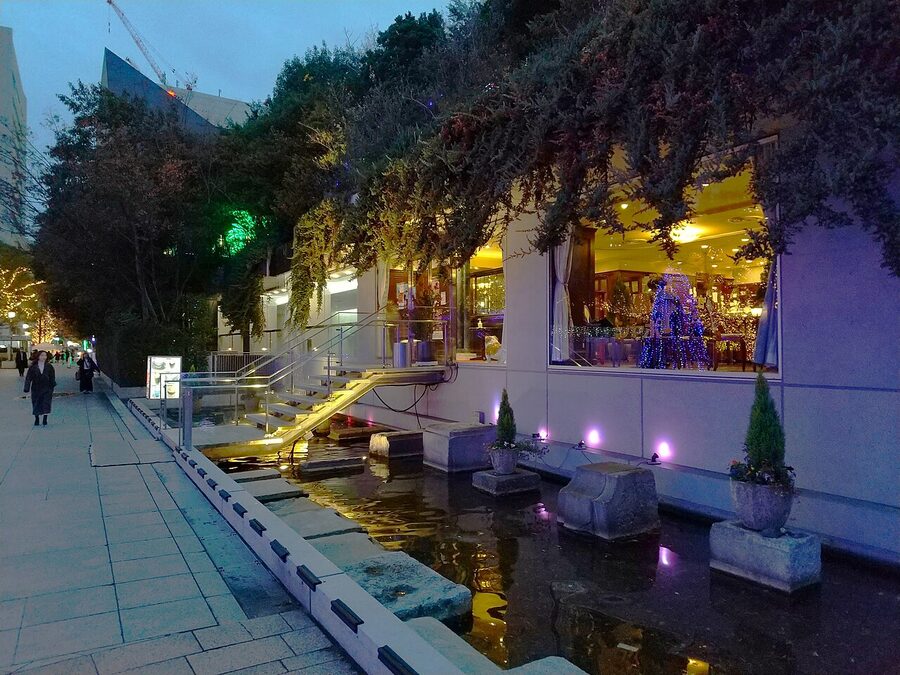
- Hotel Il Palazzo (Nakasu) (Booking.com | Agoda): the Aldo Rossi 1989 design, on the Nakasu river, walking distance to Tenjin and to the yatai. Around ¥30,000 a night.
- Miyako Hotel Hakata (Hakata Station) (Booking.com | Agoda): 150 metres from JR Hakata Station. The Shinkansen-traveller’s pick. Around ¥25,000 a night.
- The Blossom Hakata Premier (Hakata) (Booking.com | Agoda): 10-minute walk from Hakata Station, big bath, in-house laundry on each floor. Around ¥22,000 a night.
- Hotel WBF Grande Hakata (Hakata Station): mid-range business hotel chain with onsen on the top floor. Around ¥14,000 a night. Booking widely available.
For backpacker / hostel inventory, WeBase Hakata (capsule and dorm) and Khaosan Fukuoka (private rooms from ¥5,000) cover the ¥3,000 to ¥6,000 range cleanly.
Practical: passes, money, the small things
Transport passes
The Fukuoka Tourist City Pass (¥1,800 adult / ¥900 child for the city version, ¥2,800 / ¥1,400 for the version that adds Dazaifu) covers all city subway lines, Nishitetsu buses inside the city, JR trains inside the city, and (in the wider version) the Nishitetsu line to Dazaifu. If you’re doing Dazaifu, Tenjin and a yatai dinner across one day, the wider version pays for itself in two hops.
The Subway 1-day Pass (¥640 adult) is the cheaper option if you’re only riding the subway and not the Nishitetsu lines.
If you’re combining Fukuoka with onward Kyushu travel, the JR Kyushu Rail Pass (3-day ¥20,000, 5-day ¥25,000, 7-day ¥30,000 as of 2026, verify on the JR Kyushu site before you buy) is the better instrument. Buy it abroad before arrival for the discount.
Money and IC card
Fukuoka takes IC cards on every subway and bus. Suica from Tokyo works fine here; so do Pasmo, Icoca, Sugoca (the local card). All are interchangeable. Carry a few thousand yen in cash for yatai dinners, small temple fees, and the older neighbourhood shops.
Connectivity
The major Japan eSIMs work the moment you land at Fukuoka Airport. Free Wi-Fi runs in the subway, the airport, JR Hakata City and most cafes. None of it is fast enough for a Zoom call; a local pocket wifi or eSIM is.
One small thing about manners
Hakata locals are friendlier and chattier than the Tokyo or Kyoto stereotype. The yatai cook may strike up a conversation; the bus driver may say good morning. Reciprocate with a basic konnichiwa, an arigatou-gozaimasu, and you’ll have a warmer trip than anywhere else in Japan.
What to combine Fukuoka with
Fukuoka is the natural Kyushu entry point, so the obvious onward moves are south and east into Kyushu itself. The Kyushu regional guide covers the whole island including the Aso volcano and Beppu hot springs side. To the east, the Sanyo Shinkansen takes you to Hiroshima in 1 hour 5 minutes for around ¥9,500 (covered by the JR West pass), and from there onward to Osaka and Kyoto. To the west, the new Nishi-Kyushu Shinkansen runs to Nagasaki via Takeo-Onsen, opening in September 2022. Many travellers do Fukuoka two nights, Nagasaki two nights, then Kumamoto, Aso or Beppu.
If you only want to be in one city, Fukuoka rewards two nights more than most people expect. Three nights if Dazaifu and Itoshima both interest you. A morning at Sumiyoshi Shrine in light rain, with the smell of camphor in the air and a queue forming at the udon shop opposite the gate, is the city at its quiet best.


.jpg)


.jpg)

.jpg)


.jpg)


