
Shibuya Scramble is the least interesting reason to come to Shibuya. There. Said it.
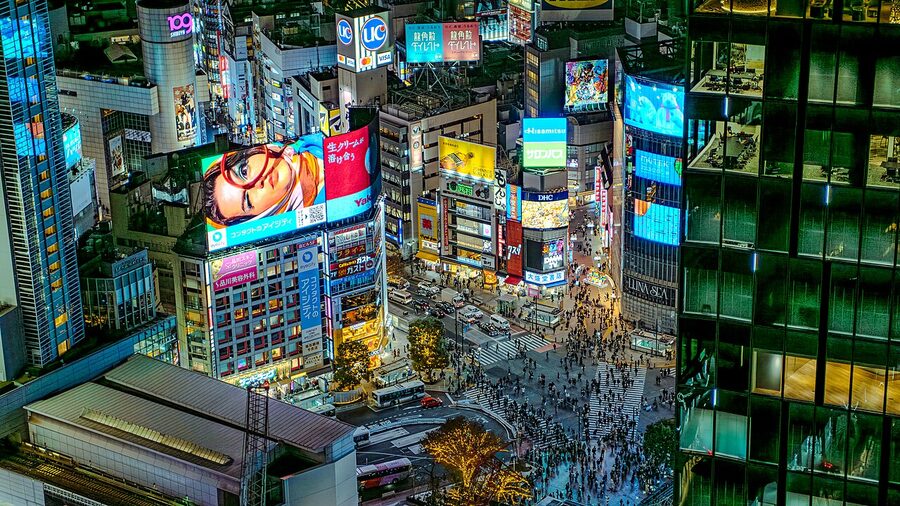
Walk twenty steps off Hachiko Square and the entire reason to be in this neighbourhood opens up: a 230-metre observation deck that looks down on Mt. Fuji at sunset, a free rooftop terrace in Omotesando that nobody queues for, a forest of 100,000 trees one stop from the station, and an alley of 1.5-metre-wide bars where the salaryman exodus stops at the door. The Crossing is a five-minute photo. Everything else is the trip.
I’ve been coming to Shibuya for the better part of a decade, mostly because friends keep making me stand in the middle of the intersection “just to feel it.” What I’ve actually grown to love is what sits in the orbit around it: the absurdly confusing station that finally makes sense once you know which exit to leave from, the 1923 dog story that’s told wrong on every guidebook, the side of Shibuya hidden behind the JR tracks where a Norwegian coffee shop and a ten-table chocolate maker quietly outclass anything you’ll find in the towers. This article walks you through all of it.
In This Article
- Why I keep saying skip the Scramble
- Surviving Shibuya Station: a quick map of the chaos
- The Hachiko story, told properly
- Shibuya Sky, and how it stacks up against Tokyo Tower and Skytree
- Yoyogi Park: the actual reason to be on this side of Tokyo
- Meiji Shrine, while you’re here
- Center Gai and the food spine of Shibuya
- Nonbei Yokocho: the alley most lists miss
- Okushibu: the side that nobody is selling you
- The towers: Scramble Square, Stream, Hikarie, Mark City, Sakura Stage
- Miyashita Park, the rooftop nobody warns you about
- Tokyu Plaza Omotesando’s “Omohara” rooftop terrace
- The Harajuku connection, one stop north
- Where to stay (and where I’d actually book)
- Tickets and tours that actually add something
- When to come
- What to combine it with
- One last thing
Why I keep saying skip the Scramble
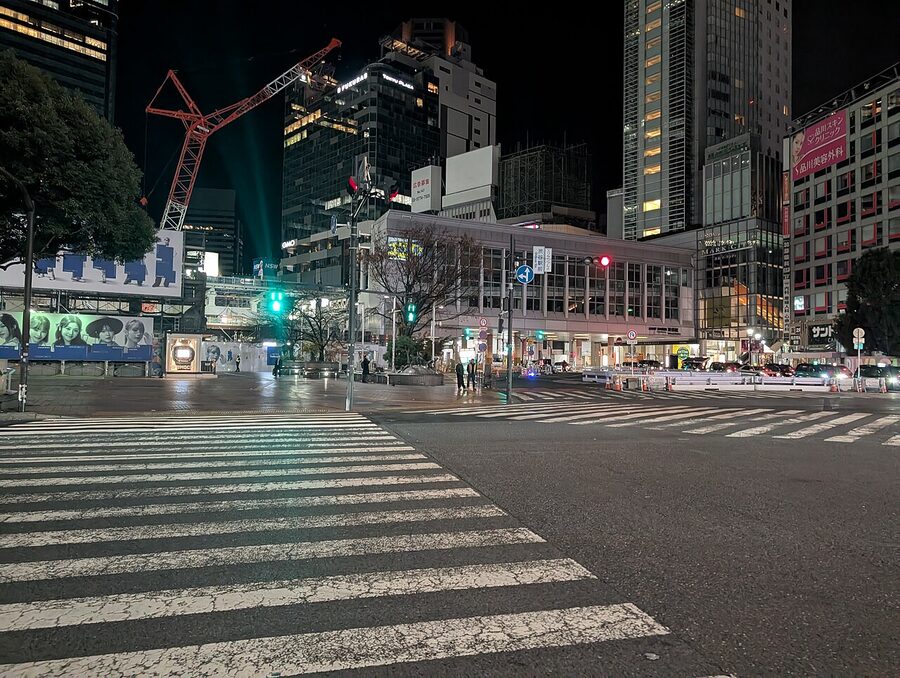
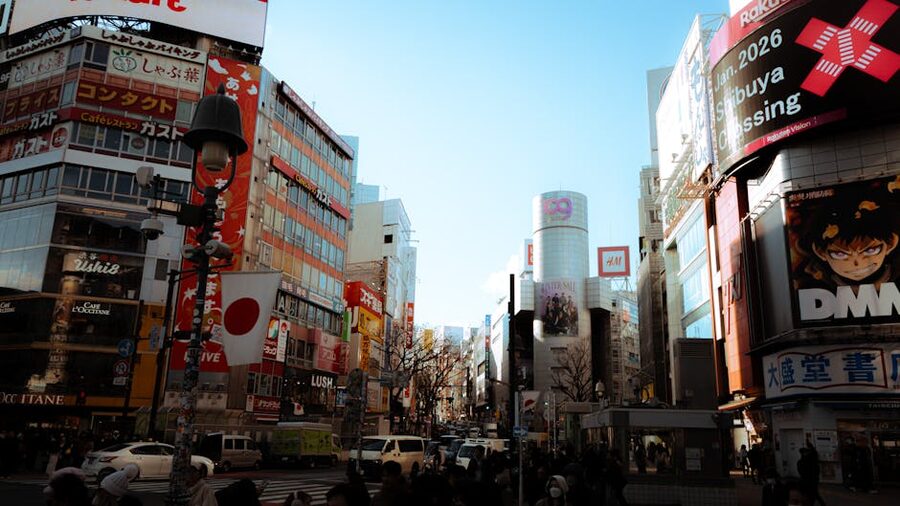
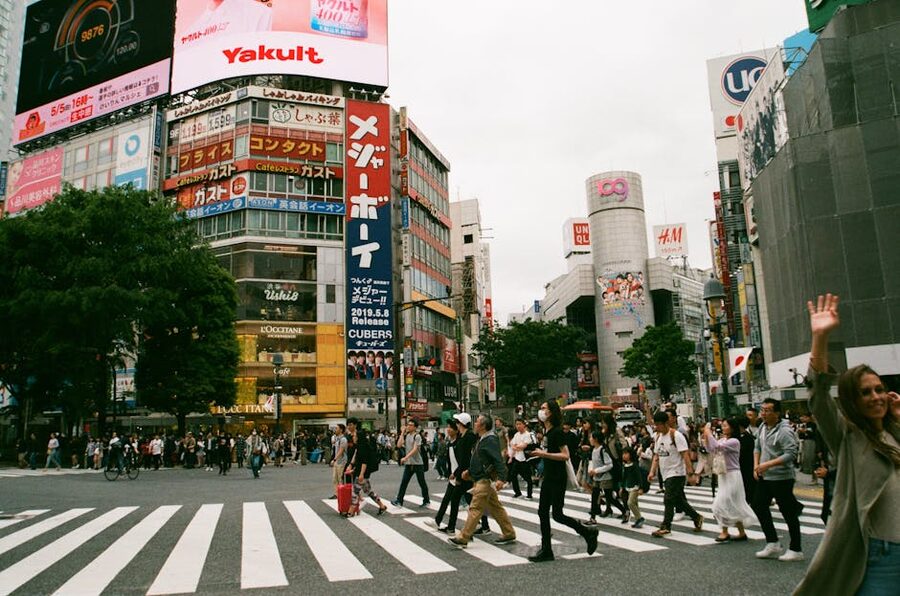
The Scramble does what it does well, which is: change colour, release a wave of pedestrians, then refill with a new wave thirty seconds later. About 3,000 people cross during a single green light. On busy weekdays Shibuya Ward measures something close to 260,000 daily crossings. The numbers are real. So is the experience of standing on the kerb for a minute, holding a phone up, and then walking somewhere else.
What you should know before deciding it’s a must-do:
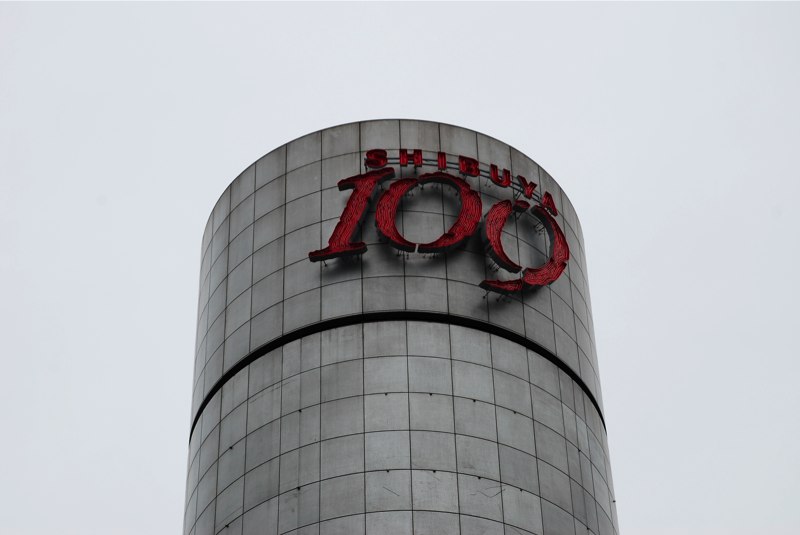
- The good photos are from above. Shibuya Sky’s open-air deck looks straight down at it. Magnet by Shibuya 109’s rooftop has a crossing-view drink package in the 1,800 yen range. The Starbucks across the road is free but a queueing exercise. The street-level view is mostly the back of a stranger’s head.
- It’s under construction until 2032. The eight-block redevelopment around Shibuya Station has been running since the 2010s and is not done. Cranes, hoardings, walking-route diversions: all of it is permanent for the next several years. If you’re hoping for some idealised sci-fi cityscape, the cityscape currently has a building site bolted to one corner.
- Halloween and New Year are off the table. Shibuya Ward banned outdoor drinking in the area year-round from 18:00 to 05:00 in 2024, after the 2022 Seoul Halloween crowd crush prompted a national rethink. Halloween and New Year’s Eve gatherings on the Crossing are actively discouraged; on 31 December the giant billboards are switched off at 23:00. If you’ve seen the YouTube videos of costumed crowds dancing at midnight, that era is over.
- Worst time slots are 18:00 to 20:00 on weekdays. The salaryman exodus from the Yamanote Line meets the post-work drinks crowd, and the Hachiko-side pavement becomes a slow-moving column. Cross at 14:00 if you must, or after 22:00 if you want the lights without the bodies.
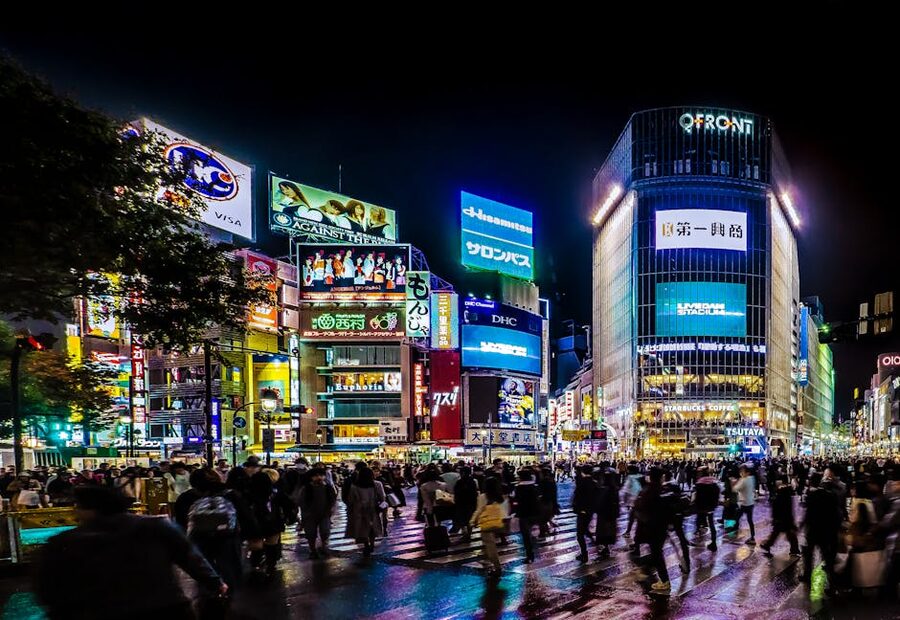
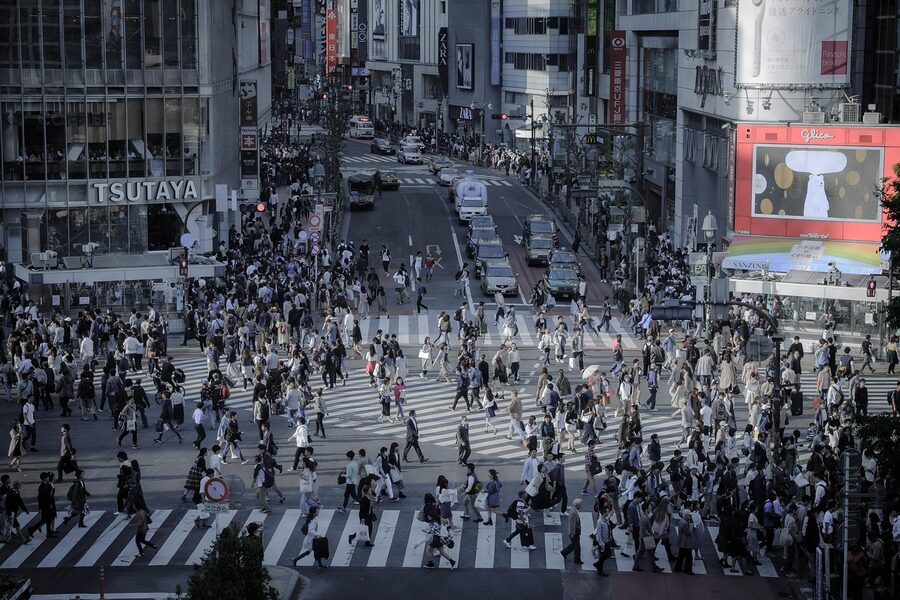
If you’ve read all of that and still want to walk it: do, then move on. The 90-second crossing experience is fine. It’s the structure of the entire neighbourhood that earns the train fare.
Surviving Shibuya Station: a quick map of the chaos
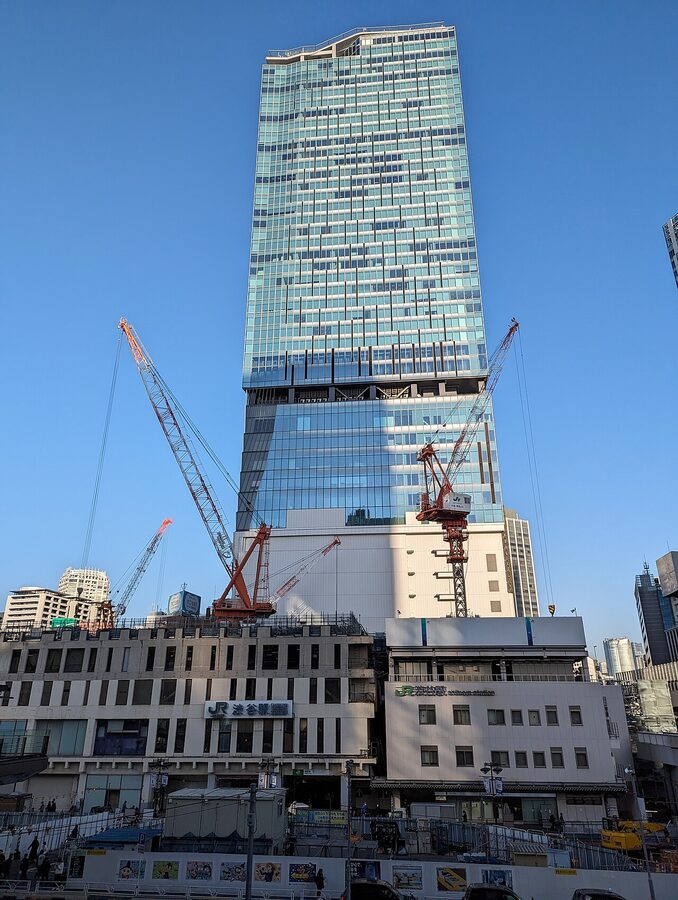
Shibuya Station is one of the busiest in Japan and one of the most disorienting. Five operators thread through it: JR (Yamanote, Saikyo, Shonan-Shinjuku, Narita Express), Tokyo Metro (Ginza, Hanzomon, Fukutoshin), Tokyu (Toyoko, Den-en-Toshi), Keio (Inokashira). The station has been actively rebuilt for over a decade and the signage has not always kept pace.
The shortcut you actually need:
- Hachiko Exit (JR side, west). This is the one. It opens directly onto Hachiko Square, the dog statue, the Crossing, and the path to Center Gai. If a guidebook ever says “come out of Shibuya Station”, this is what they mean. From the JR Yamanote platforms, follow the bright yellow Hachiko signs.
- Miyamasuzaka Exit (JR side, north-east). For Hikarie, Stream, and the Ginza Line.
- South Exit (JR side, south). For the Sakura Stage development, the Mark City link, and the bus terminal that runs to Hakone and Mt. Fuji.
- Tokyu/Metro B-1 to B-5 (basement levels). For Hikarie, Scramble Square, Stream, and most of the indoor walkways. In the rain, in the heat, with luggage: use the basement.
Locker tip: the bigger and cheaper coin lockers are in the basement passages between the JR and Metro lines, not at the JR ticket gates. The 700 yen large ones near Exit B-5 take suitcases up to 70 cm. They run out by 11:00 on weekends.
If your itinerary already covers the rail-pass picture, the Japan Rail Pass guide walks through which lines through Shibuya it covers (Yamanote: yes, Tokyo Metro: no). The wider Tokyo guide has the JR-vs-Metro logic that’s worth reading once and then forgetting.
The Hachiko story, told properly

Most travel articles compress the Hachiko story to two sentences: loyal dog, owner died, statue erected. The actual story is sadder, longer, and worth the extra paragraph.
Hachiko was an Akita Inu, born on a farm in Odate, Akita Prefecture, in November 1923. He was given as a puppy to Hidesaburo Ueno, a professor of agricultural engineering at Tokyo Imperial University. They lived in Shibuya. Every morning Hachiko walked Ueno to the station; every evening he came back to meet the train.
On 21 May 1925, Ueno had a cerebral haemorrhage during a faculty meeting and died. He never came home. Hachiko, who was about a year and a half old, kept turning up at Shibuya Station at the same evening hour, every day, for the next nine years and ten months. He was eventually photographed by a former student of Ueno’s who recognised him, the story ran in the Asahi Shimbun in 1932, and the dog became a national figure for loyalty.
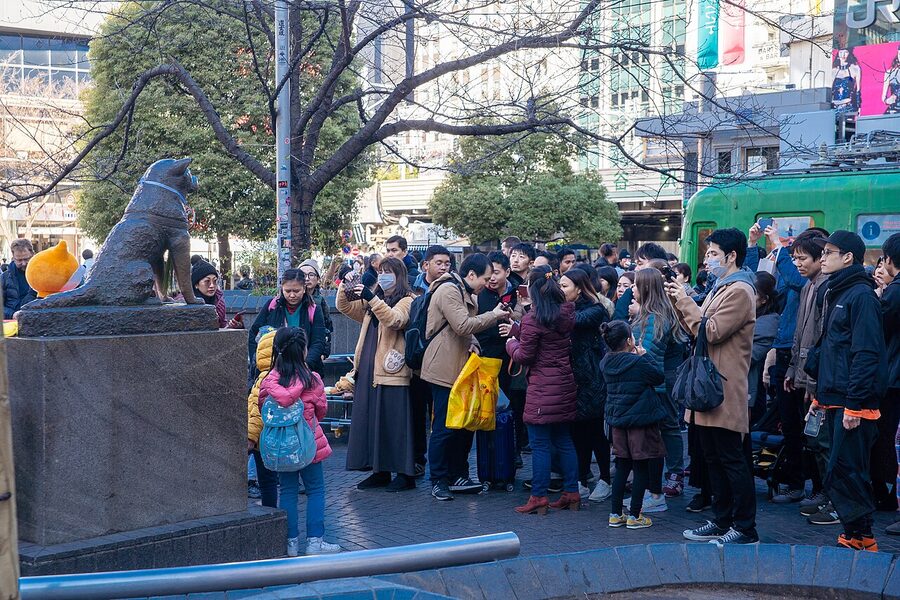
He died on 8 March 1935 on a Shibuya street, from filaria worms and terminal cancer. He was eleven. His preserved body is in the National Museum of Nature and Science in Ueno; his fur, his collar, and the original heart-leashed photograph from his dying day are all on display there if you want to see the real artefacts. His ashes rest beside Ueno’s grave at Aoyama Cemetery, a 25-minute walk from Hachiko Square.
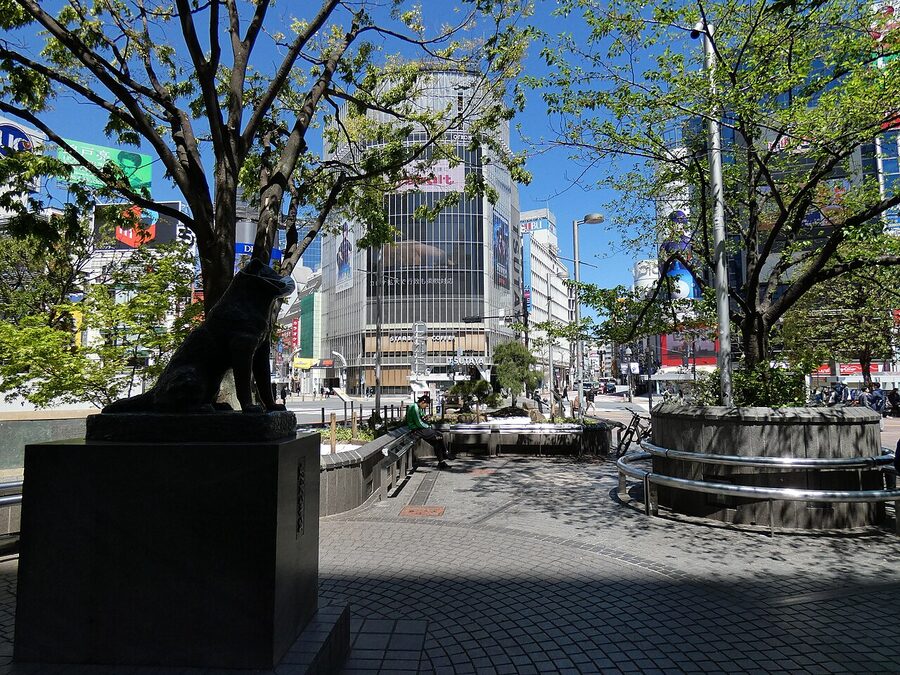
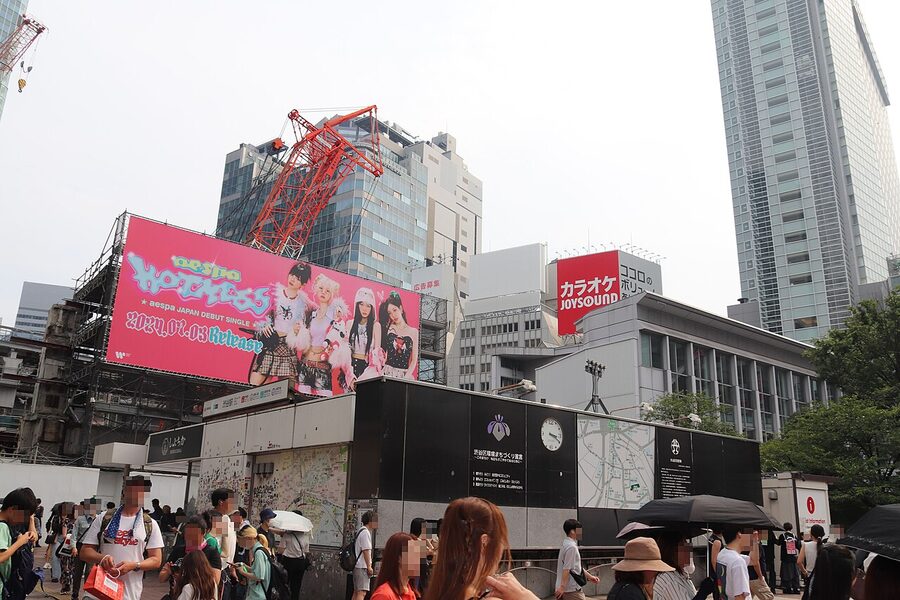
The square itself is functional rather than sentimental. There’s a small flower garden behind the bronze, a 1990s Tokyu green train carriage that’s been there since 2006, and benches where you can sit and watch foreign visitors line up for selfies. Locals don’t take photos of the dog. They use it as a meeting point and walk on.
Shibuya Sky, and how it stacks up against Tokyo Tower and Skytree
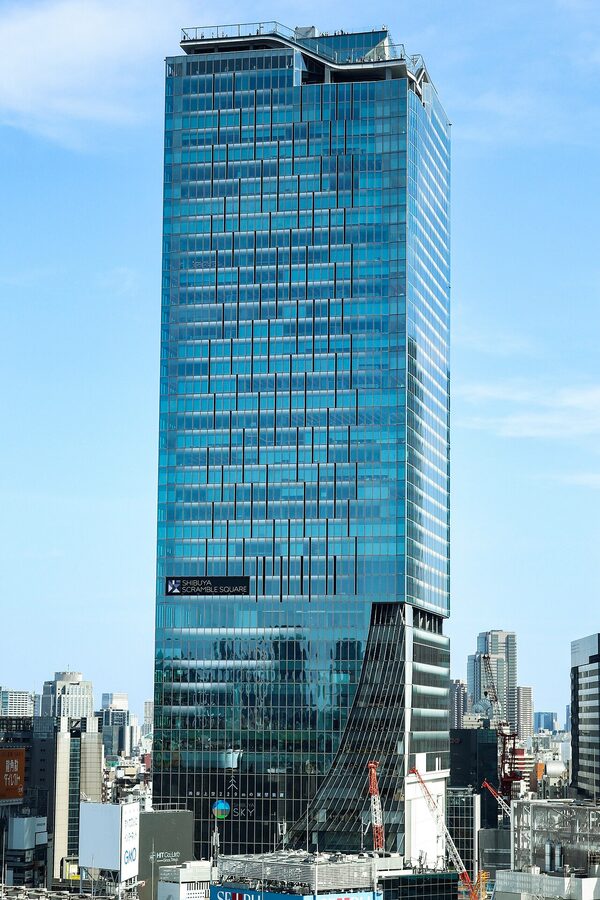
Shibuya Sky opened in November 2019 on the rooftop of Scramble Square. It’s the highest open-air observation deck in Tokyo, and it has the best views Shibuya offers full stop. Three reasons it works:
- The deck is genuinely open-air. No glass, no reflections, no muddy iPhone shots through smudged windows. There is a thigh-high glass barrier and that’s it.
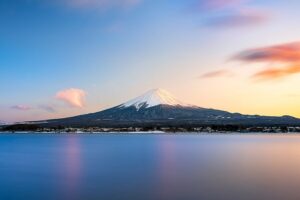
- You can see Mt. Fuji on a clear day. Sunsets between October and February are the prime window: the sun drops behind Fuji’s southern flank and the silhouette is unmistakable. Check forecasts on the morning of your visit; if humidity is below 40% your odds are good.
- The lighting after dusk turns purple, then dark blue. The deck installs a sunset programme that synchronises with sunset time. Don’t skip the indoor floor either; it has a hammock-shaped chair-net facing west called the Sky Edge.
- It’s the sound buffer for Meiji Shrine. The 100,000 trees inside Meiji Jingu’s grounds were planted in the 1920s by 100,000 volunteers from across the empire. Yoyogi-koen extends that forest. The traffic noise of central Tokyo drops off the moment you cross under the second torii.
- Sundays are the rockabilly day. The eastern entrance has been a public dance space since the late 1990s. Greaser-era jackets, slicked-back quiffs, and 1950s rock and roll on a portable boombox, every Sunday afternoon, weather permitting. They’ve been doing this for 40 years.
- The cherry trees are smaller-batch than Ueno or Shinjuku Gyoen. About 700 trees, mostly near the central plaza. The crowd in early April is heavy but nothing like Shinjuku Gyoen’s. If you’re weighing where to go for hanami, the Tokyo cherry blossom guide has the side-by-side comparison.
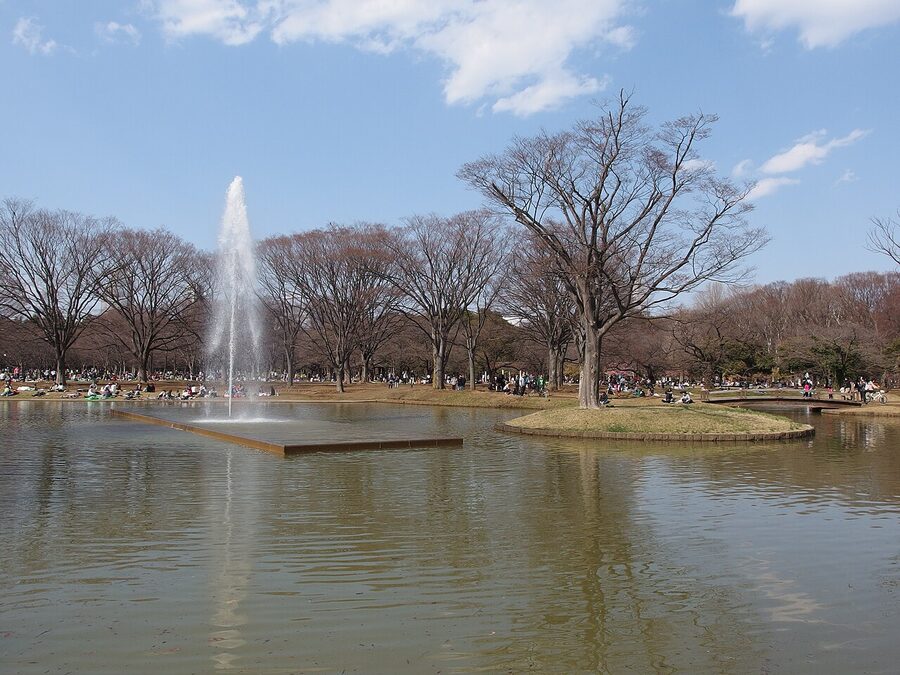
- Food trucks open on warm weekends. They cluster near the central plaza and the B District side. Cash is fine. So is sitting on the lawn with whatever you bought at the konbini outside Harajuku Station. There are no vending machines inside the trees and only a handful of toilets, so plan a short loop rather than a deep walk.
- Ramen Nagi (Center Gai-adjacent). The Niboshi King ramen is a sardine-broth bowl unlike anything else in Shibuya. About 1,150 yen. Counter seats, no reservations, queue moves fast even when long. Tatemachiya building, 4th floor.
- Tonkatsu Maisen Aoyama-Honten (Omotesando, 12 min walk north). Set lunch in the 1,800 to 2,400 yen range. Pork is sourced from named farms, panko is fresh-made. The original is in a converted bathhouse from 1925; sit at the counter if you want to watch the chefs work the panko station.
- Standing sushi at Uogashi Nihon-Ichi (basement of Center Gai). Six-piece nigiri set around 800 yen. Standing only, fast turnover. Skip the rush hour 18:00 to 20:00 unless you’re happy in a queue.
- Genki Sushi Shibuya (Dogenzaka). Conveyor sushi via a private touchscreen and table-rail system. The novelty wears off after a plate or two but kids love it. Good if you’ve got dietary requirements: every ingredient is on the iPad menu in English.
- FUGLEN TOKYO (Tomigaya 1-16-11). The first overseas branch of an Oslo coffee bar from 1963. Light Nordic roast, vintage Scandi furniture, a thirty-second walk from Yoyogi-koen Station. Coffee from about 600 yen. Switches to a cocktail bar after dark; the negroni is good. The building is a converted minka with a tiny terrace out front.
- SHIBUYA PUBLISHING & BOOKSELLERS (Kamiyama-cho 17-3). Independent bookshop with a publisher attached. A few thousand titles, mostly Japanese but with a small English-language section. The store doubles as a stationery shop and gallery. It’s where Tokyo bookshop people send you.
- Minimal Tomigaya (Tomigaya 2-1-9). Specialty chocolate from single-origin cacao. The tasting flight (around 1,800 yen for five small squares) walks you through five different cacao terroirs. Closes 19:00.
- LOST AND FOUND TOKYO STORE (Kamiyama-cho). Picked everyday objects from small Japanese makers: bowls, brooms, brushes, teapots. Beautifully merchandised and unapologetically expensive. A 7-minute walk from Yoyogi-koen Station.
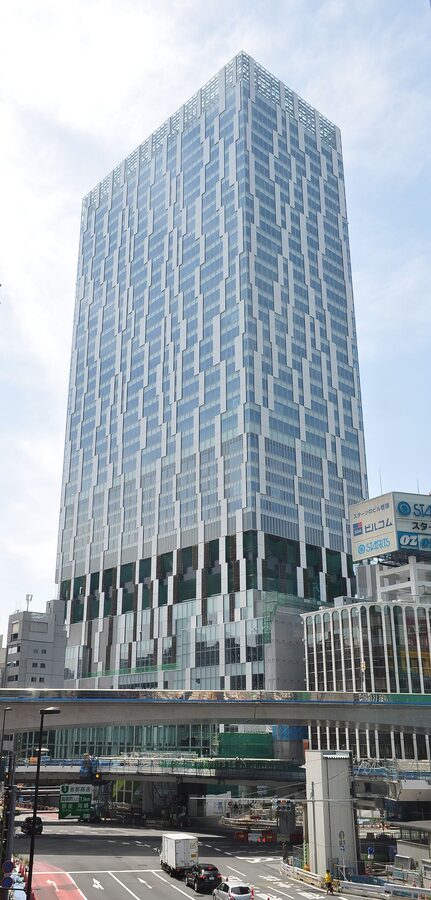
- Shibuya Scramble Square (2019). The big one. 47 floors, 230m, Shibuya Sky on the roof. Ground-floor connection to JR Inokashira concourse and to the Hikarie pedestrian deck. Stop here for the deck, the Pokemon Center on the 6F (the kind you take photos in, not the kind you buy plushies from), and the Disney Store on the 9F if you’ve got kids in tow.
- Shibuya Stream (2018). 35 floors. Google Japan’s Tokyo HQ is in this one. The reason a tourist comes is the rebuilt promenade alongside the Shibuya River that emerges from underground here. The first three floors are restaurants; they all face the river side. Around 13:00 to 14:00 you can sit outside and watch corporate Tokyo eat sushi sets.
- Shibuya Hikarie (2012). The first of the post-2010 towers. 34 floors of shops, restaurants, a theatre, and a free 11F observation lounge that catches the Crossing from the east. Skip the queue at Sky and come here if you want a window-free Crossing view. Free.
- Shibuya Mark City (2000). The skybridge over Dogenzaka. Useful as the Limousine Bus stop for Narita and Haneda Airports, plus the home of the Shibuya Excel Hotel Tokyu (booking links below). Otherwise skip.
- Sakura Stage (2024). The newest. The two-tower complex south of the station with an above-ground walkway across to the Mark City levels. The southern tower has a rooftop walkway that’s free and gives you the cleanest mid-morning Crossing-from-above shot, no Sky ticket needed.
- The rooftop is genuinely public. Open to anyone, no entry charge, with a skate park, a small climbing wall, and a sand-floored multi-sport area.
- The basement “Shibuya Yokocho” is a mini food street with 19 specialty food stalls organised by region: Tohoku, Kansai, Okinawa, Kyushu. The format is high-velocity and aimed at after-work crowds. Cash and IC cards only at most stalls.
- The view from the rooftop’s northern end pulls in Shibuya’s tower line, Yoyogi Park, and Shinjuku in one frame. It’s the cheapest skyline shot you’ll get.
- Shibuya Excel Hotel Tokyu (Mark City, directly above Shibuya Station) is the “directly above the station” option. Corner rooms on higher floors look down on the Crossing; ask for one when you book or you’ll get an inward-facing room. Solid 4-star, mid-range price (Booking.com | Agoda).
- Cerulean Tower Tokyu Hotel (Sakuragaoka-cho, 5-min walk from south exit) is the splurge. 41 floors, top-floor jazz bar, in-house no-theatre, business class. Worth the upgrade if you can afford it (Booking.com | Agoda).
- Sakura Fleur Aoyama (10-min walk from Hachiko, on the quieter Aoyama side) is the value pick. Smaller rooms but clean, well-kept, and you sleep without the late-night Center Gai street noise (Booking.com | Agoda).
- Shibuya Sky tickets in advance. Walking up on the day frequently means the sunset slot is sold out. Buy advance for a fixed 1-hour entry window (Klook).
- A small-group street-food tour through Shibuya yokocho and Nonbei Yokocho. The kind of place where the bartender doesn’t speak English is much easier to walk into with a guide. 3-hour tours typically run 12,000 to 16,000 yen, including all food and drinks. Both GetYourGuide and Klook have the same operators listed.
- Avoid weekends if you have any choice. Saturday afternoon is the maximum-density version of every Shibuya you’ll read about. Sunday isn’t much better.
- Avoid 18:00 to 20:00. The salaryman exodus from offices to commuter trains overlaps with the dinner-and-drinks crowd flowing in. Centre Gai jams up. Hachiko Square is wall-to-wall.
- Best light at the Crossing: 14:00 to 16:00 (clear billboard reads), 22:00 to midnight (lights without crowd-density overload).
- Best Shibuya Sky window: sunset between October and February. Mt. Fuji visibility peaks in winter when the air is dry.
- Best Yoyogi Park afternoon: Sunday around 15:00, ideally late April or mid-October. Mild weather, rockabilly dancers, food trucks, and the trees in their best month.
- Skip: Halloween week. The drinking ban is enforced and the atmosphere is, at best, dour. Skip 31 December for the same reason. New Year’s Day in Yoyogi-koen and Meiji Jingu, however, is a different and worthwhile thing if you don’t mind crowds.
- Day pairing #1: Shibuya morning + Asakusa afternoon. Hachiko Square at 09:00 (no crowds), Yoyogi Park at 10:30, Meiji Jingu at 11:30, lunch on Center Gai, train to Asakusa via Ginza Line at 14:00 for the rest of the day. The full Asakusa walking guide covers the second half.
- Day pairing #2: Shibuya late afternoon + Shibuya Sky sunset. Arrive at Hachiko around 15:00, Crossing photos by 15:30, Center Gai food crawl 16:00 to 17:30, Shibuya Sky entry at 17:30 for sunset. Dinner in Nonbei Yokocho.
- Day pairing #3: Shibuya as a base for a day trip. Out of the south exit and onto the Romance Car Limited Express to Hakone, or onto the Tokyu Mark City bus to Mt. Fuji. The Tokyo day trips guide covers the routing for both.
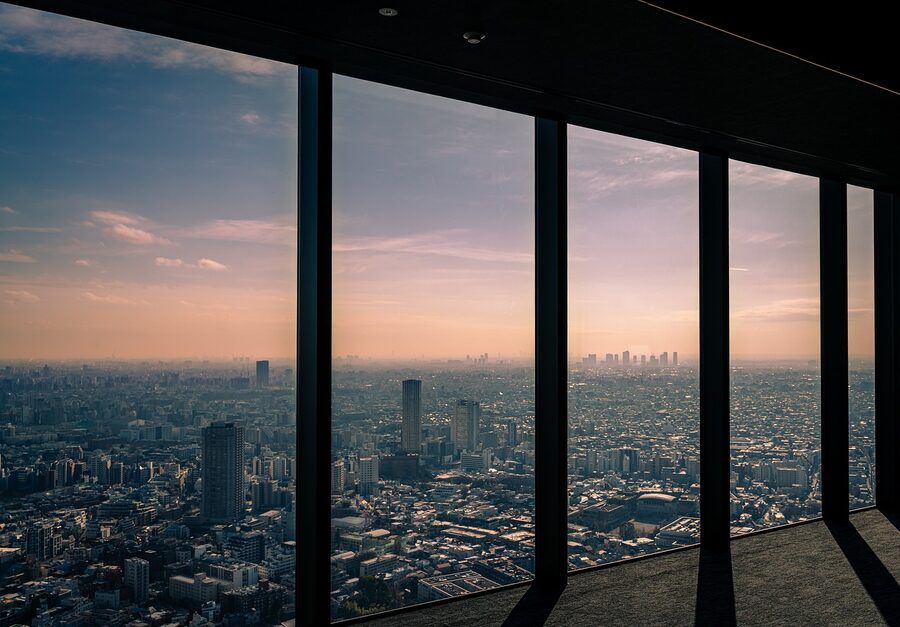
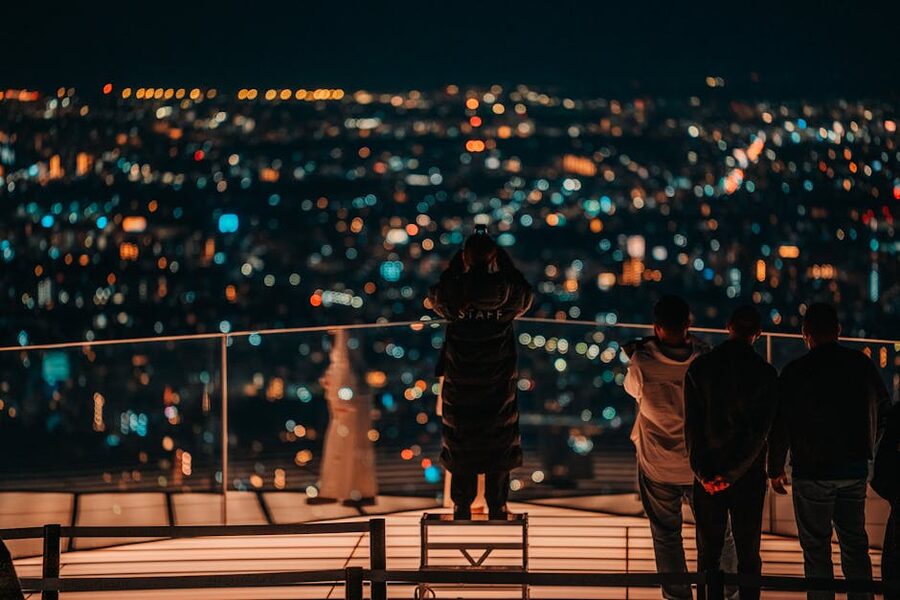
Tickets sell out for sunset slots a week in advance during cherry blossom and autumn-leaf seasons. Online tickets in the 2,500 to 2,700 yen range run cheaper than the on-site rate (japan-guide.com lists 2,700 yen on-the-day; advance Klook listings are typically 2,500 yen for adults; verified 7 May 2026). Last entry is 21:20, deck closes at 22:30. The visit takes about 90 minutes if you stay through sunset, 45 if you don’t.
If you only have time for one observation deck on a Tokyo trip, here’s the comparison I run:
| Deck | Height | Type | Adult price (verified 7 May 2026) | Best for |
|---|---|---|---|---|
| Shibuya Sky | 229m / 230m on rooftop | Open air rooftop, glass parapet | ¥2,500–2,700 | Sunset, Mt. Fuji line, photographers |
| Tokyo Skytree (Tembo Deck + Galleria combo) | 350m + 450m | Indoor through glass | ¥3,000 (combo); ¥1,800 deck only | Highest view, north-east Tokyo, kids |
| Tokyo Tower (Top Deck Tour) | 150m + 250m | Indoor through glass | From ¥3,000 | The retro lattice tower itself; old Tokyo near Zojoji |
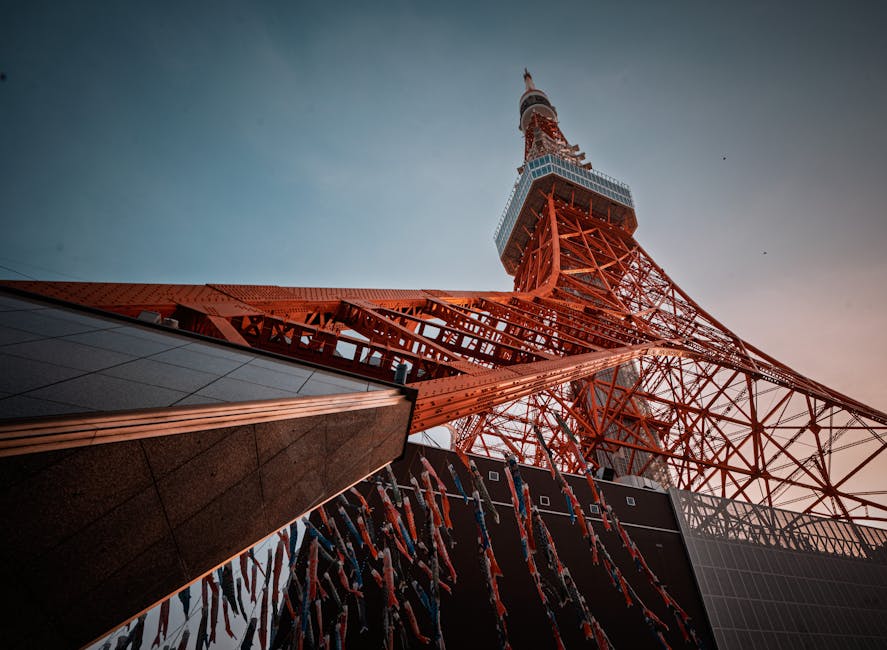
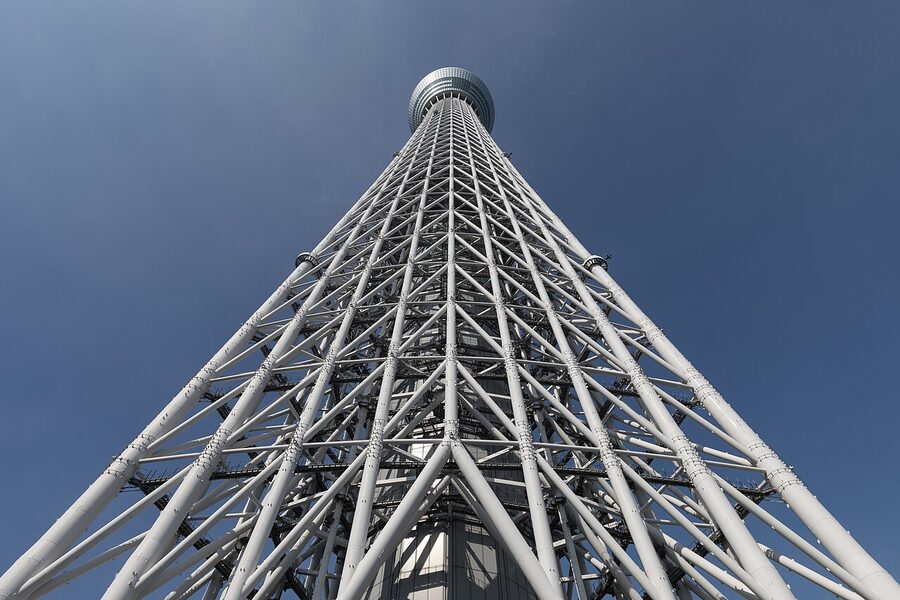
My short version: Shibuya Sky beats Skytree on atmosphere, Skytree beats Shibuya Sky on raw altitude, Tokyo Tower beats both on character. If you can only fit one observation visit into a Tokyo trip, I send people to Shibuya Sky. If you have two days, do Shibuya Sky for sunset and combine Skytree with the Asakusa walking route the next morning.
Yoyogi Park: the actual reason to be on this side of Tokyo
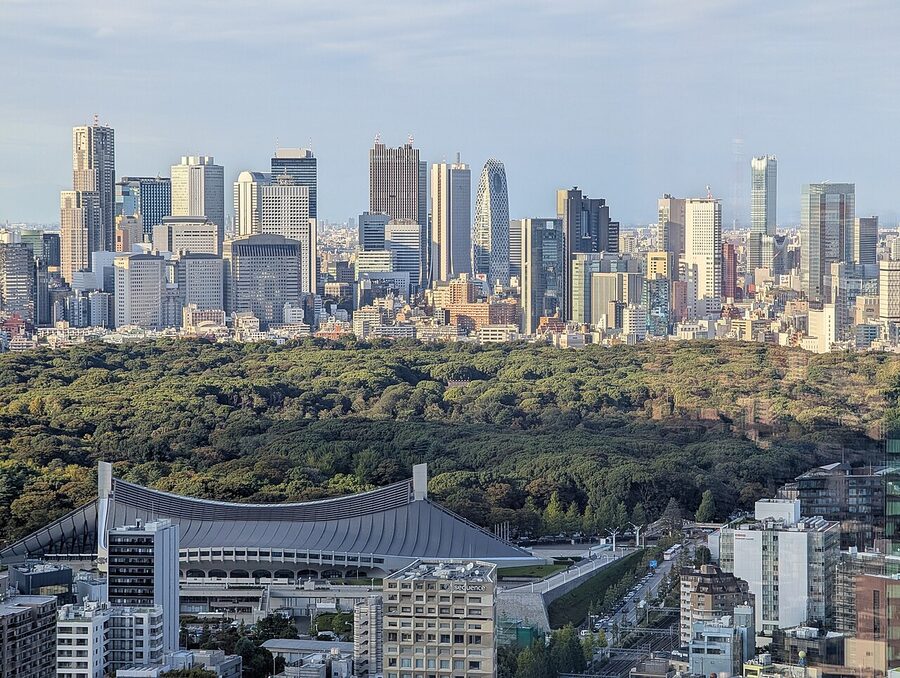
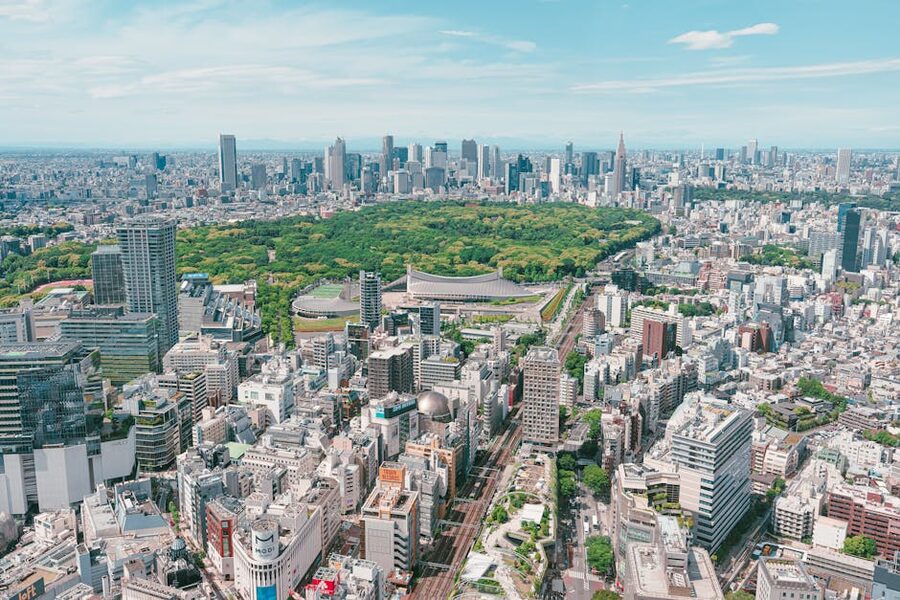
Yoyogi-koen is the fifth-biggest park in central Tokyo and easily the best for an aimless afternoon. Free entry, always open, three minutes from JR Harajuku Station, six minutes from Yoyogi-Hachiman on the Odakyu line (verified tokyo-park.or.jp on 7 May 2026). It splits into two halves divided by a road: the wooded forest park (A District) and the lawns/sports area (B District) with the outdoor stage and athletics track.
Things people don’t know:
Meiji Shrine, while you’re here
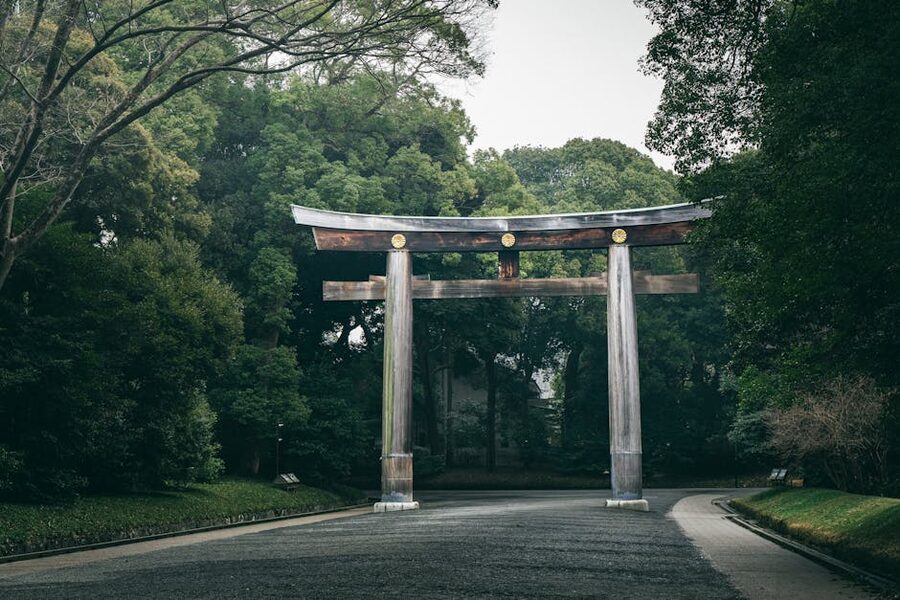
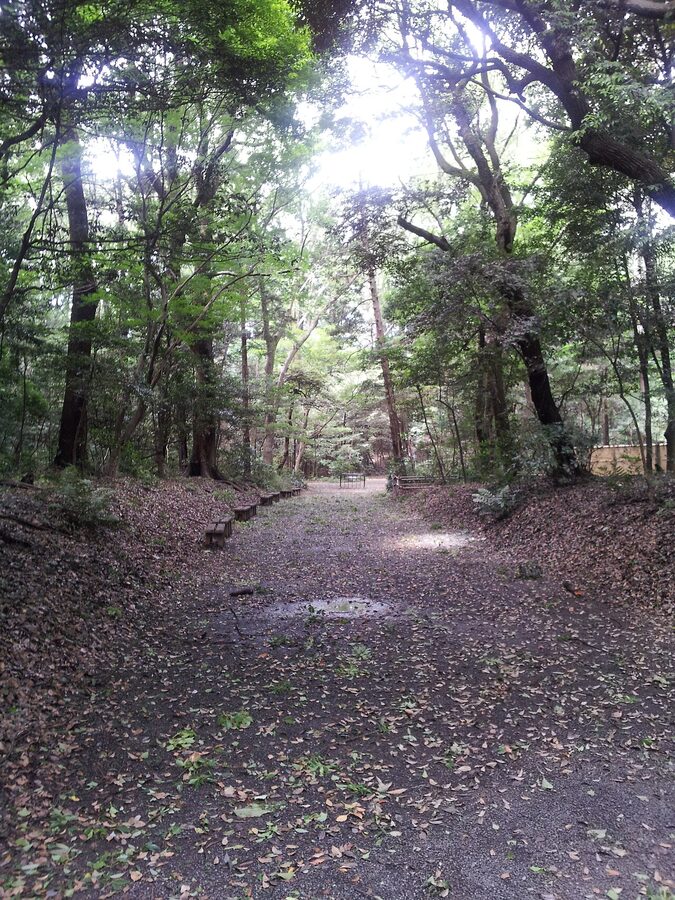
The shrine is dedicated to the Meiji Emperor (died 1912) and the Empress Shoken (died 1914). It opened in 1920, was levelled by US firebombing in 1945, and rebuilt by 1958. The trees are not original. It also has the largest wooden torii made from a single tree in the country: 12 metres tall, 17 metres wide, 1,500 years old, brought from Taiwan in 1975 because no Japanese cypress that big still existed.
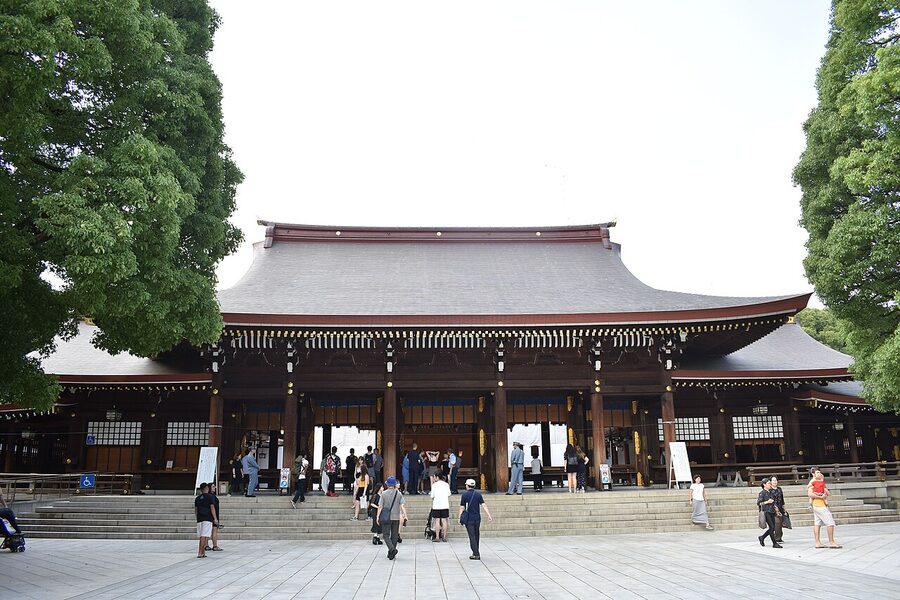
Free entry. Open dawn until dusk, varies by season. The two big ritual moments are hatsumode (the first three days of January, when over three million people visit), and the spring grand festival on 3 May. If you happen to be on a Tokyo day-trip itinerary that touches Asakusa as well, the same logic applies; the day trips guide packs both into a single morning loop.
Center Gai and the food spine of Shibuya
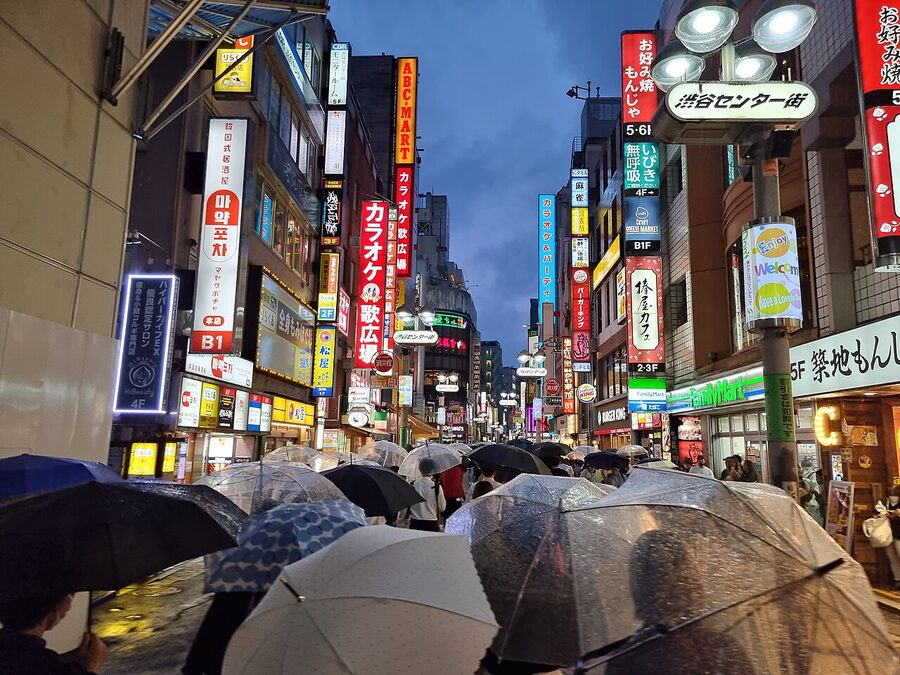
Center Gai is the pedestrian shopping street running north-east from the Crossing. It’s the lit-from-above youth-fashion-and-snacks corridor that every overhead shot of Shibuya features. About 350 metres long, dense with karaoke parlours, drugstores, ramen shops, and a noticeable post-school crowd of teenagers in winter coats and matching shopping bags.
What works on Center Gai and the streets immediately around it:
Nonbei Yokocho: the alley most lists miss
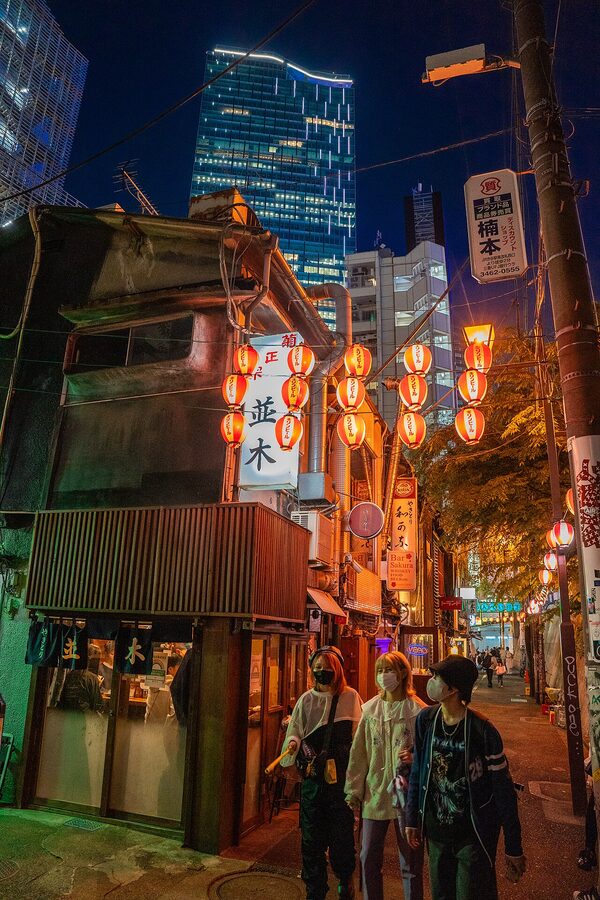
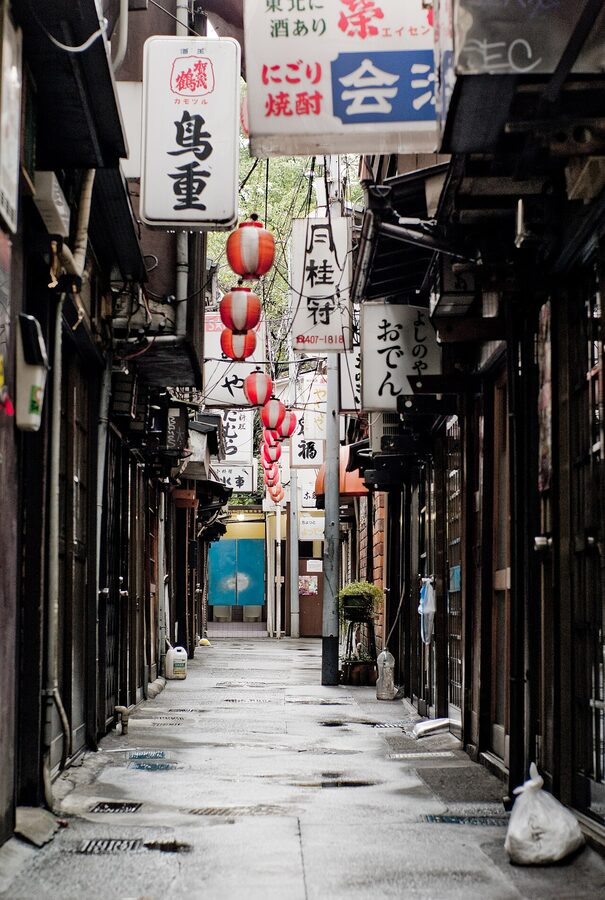
Tucked between the JR tracks and the Yamanote viaduct, this two-storey wooden lane has been there since the post-war late 1940s. There are about 35 bars across two floors. None of them are tourist traps. Most of them have a 700 to 1,500 yen seating charge (often called otoshi) on top of drinks. A few are English-friendly; most aren’t but will let you in if you’re polite and there’s a seat free. Try Bar Piano (1F, two seats at the counter, pours decent highballs) or Tight Bar (1F, jazz on vinyl).
Okushibu: the side that nobody is selling you
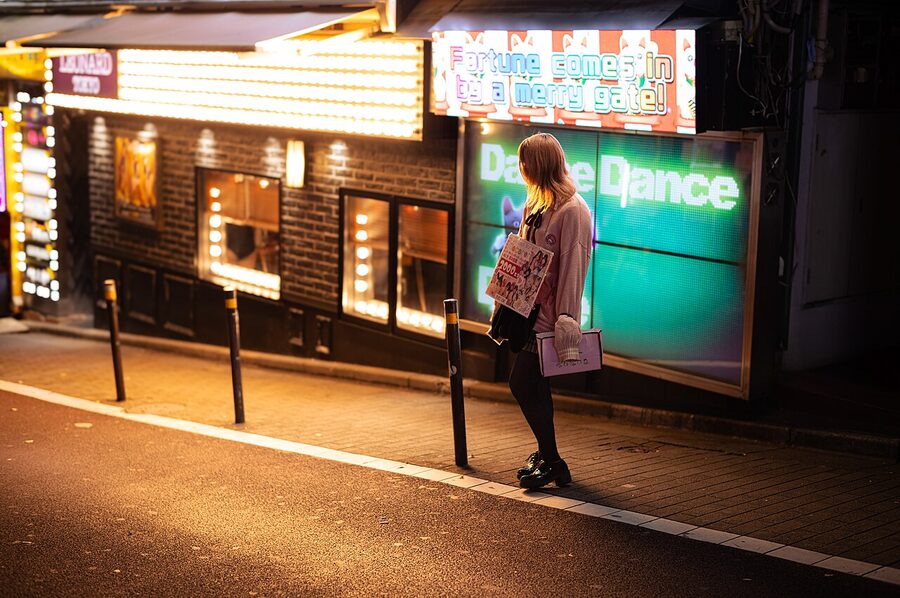
Walk through Center Gai, past Tower Records, cross under the Inokashira-line bridge, and keep going for another five minutes. The shops change: vintage clothing replaces fast fashion, single-roaster coffee shops replace Starbucks, the average age in the queue goes up by fifteen years. This is Okushibu (奥渋谷, “deep Shibuya”), the area roughly bounded by Kamiyama-cho, Tomigaya, and the eastern edge of Yoyogi Park. The local property magazines describe it as “Shibuya for grown-ups,” which is almost generous enough to be true.
The four anchors I send people to:
Walking time from Hachiko Square: about 12 to 15 minutes if you keep moving, longer if you stop on the way. The Okushibu loop works as a 90-minute morning detour or a quiet afternoon when you’ve had enough of the neon.
The towers: Scramble Square, Stream, Hikarie, Mark City, Sakura Stage
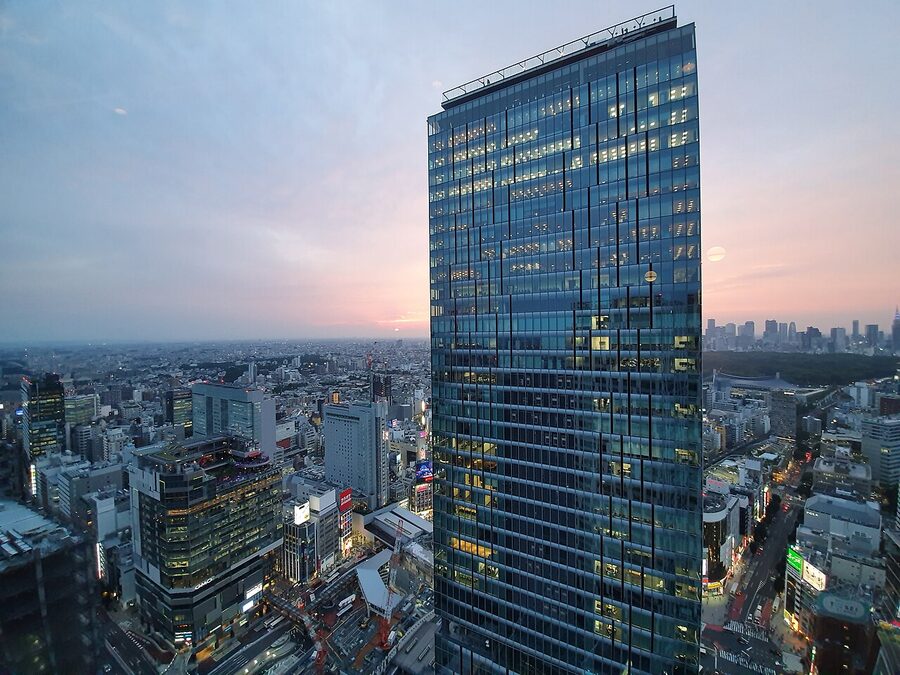
The redevelopment of Shibuya Station has produced an unusual amount of new building stock in the last decade. None of these towers existed in 2010. Quick sketch of who’s who and which one is worth a stop:
Miyashita Park, the rooftop nobody warns you about
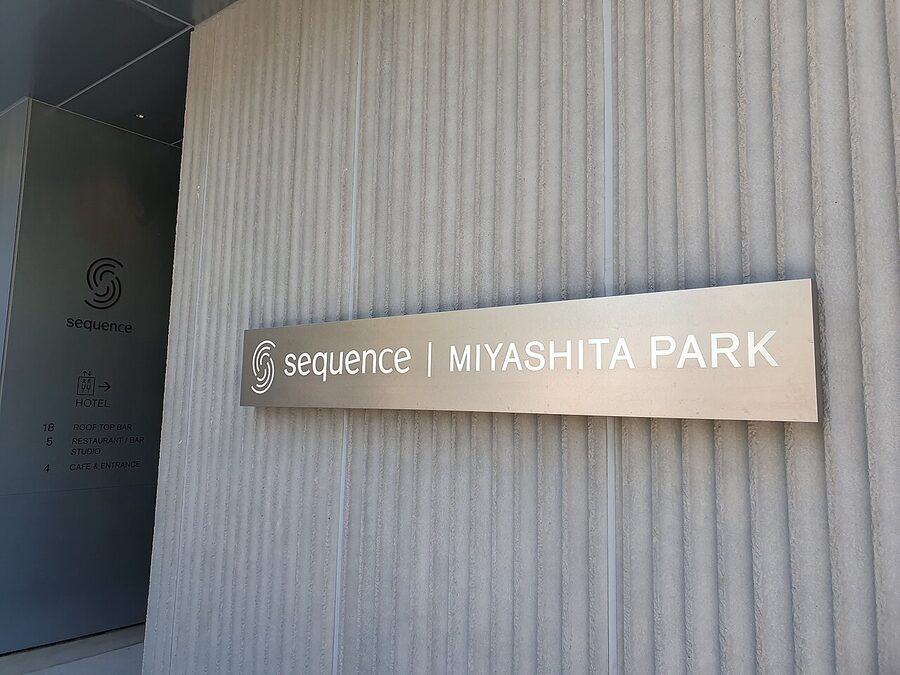
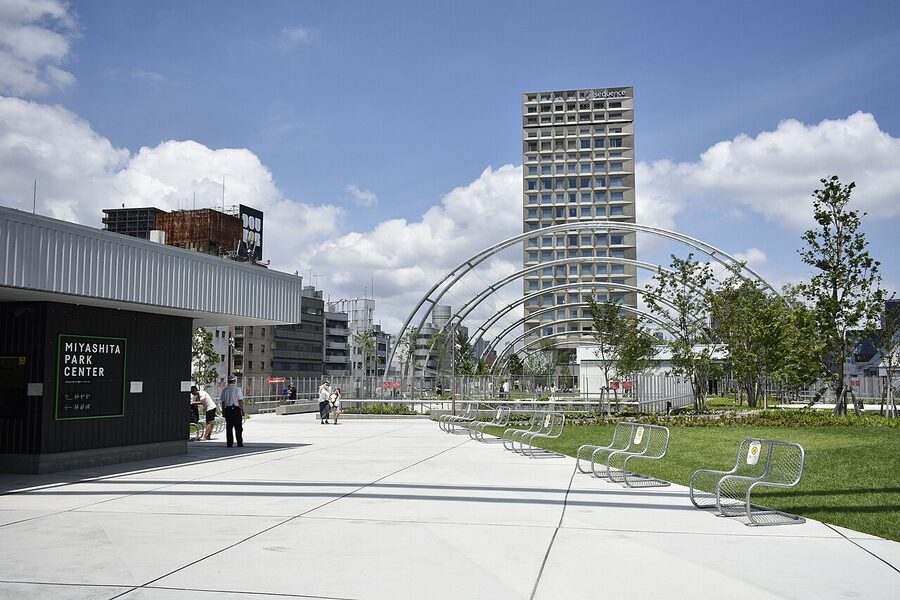
Miyashita Park reopened in July 2020 as a four-storey commercial complex with a public park bolted to the roof. The 330-metre-long building runs along Meiji-dori between Shibuya and Harajuku Stations. Three reasons to come:
Tokyu Plaza Omotesando’s “Omohara” rooftop terrace
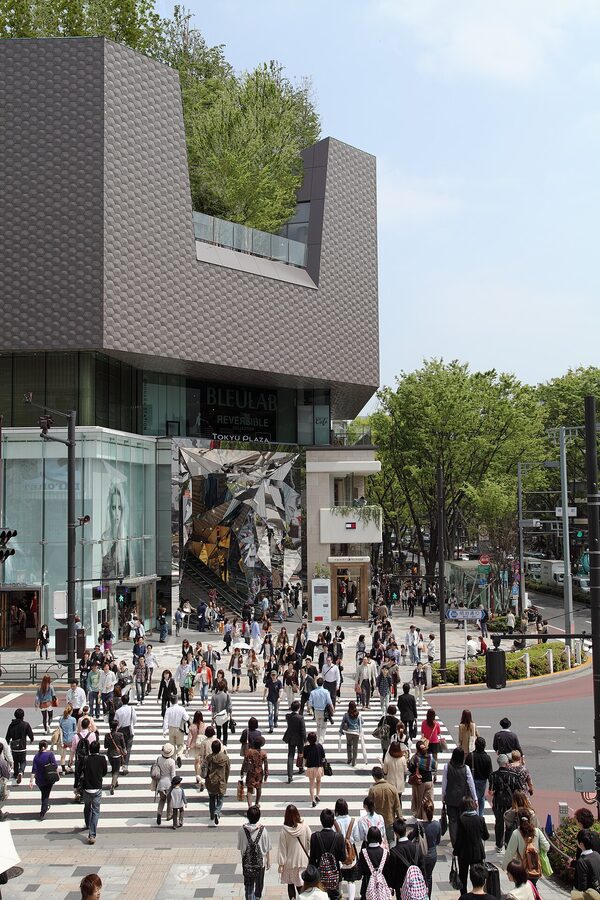
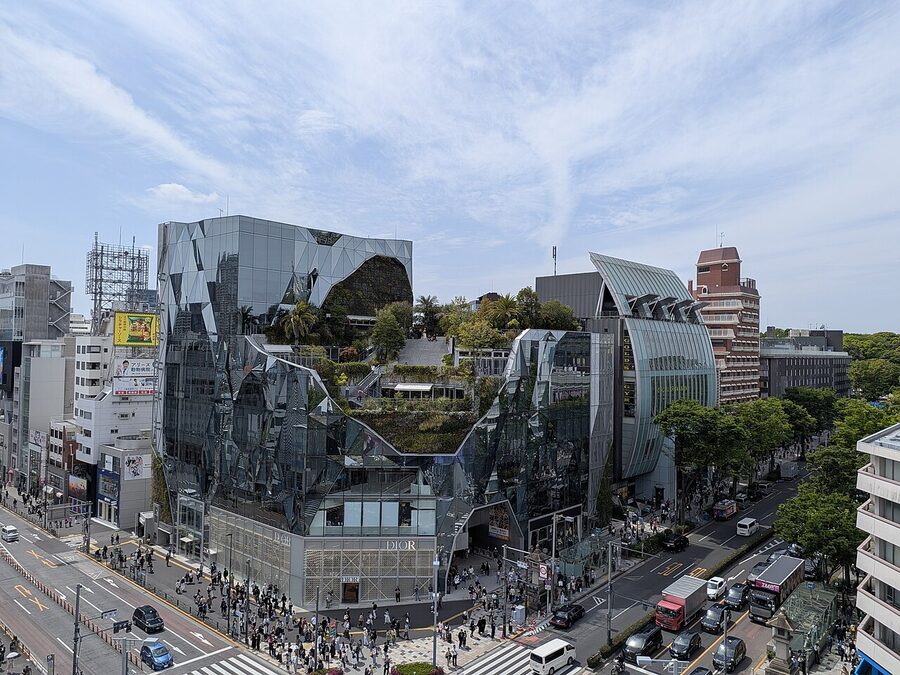
One stop north of Shibuya at the Omotesando-Harajuku junction. The 6th floor of Tokyu Plaza has a free, public, partially planted rooftop terrace nobody on the street level is queueing for. It’s set up with cafe seating, an artificial lawn, and a sight line back to Yoyogi Park’s tree line. There’s a Starbucks on the same floor if you want a coffee with the view.
The Harajuku connection, one stop north
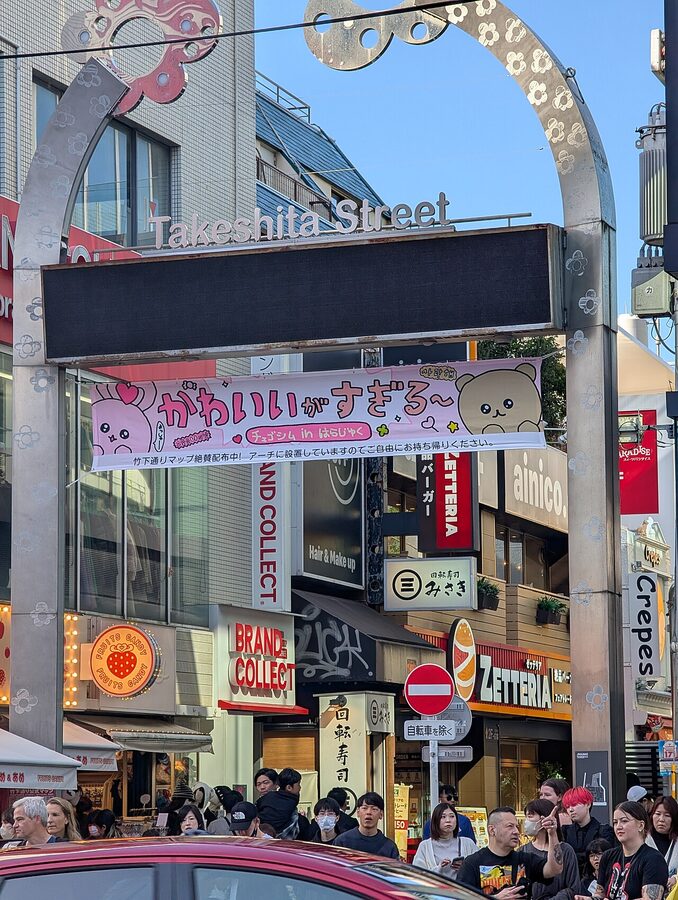
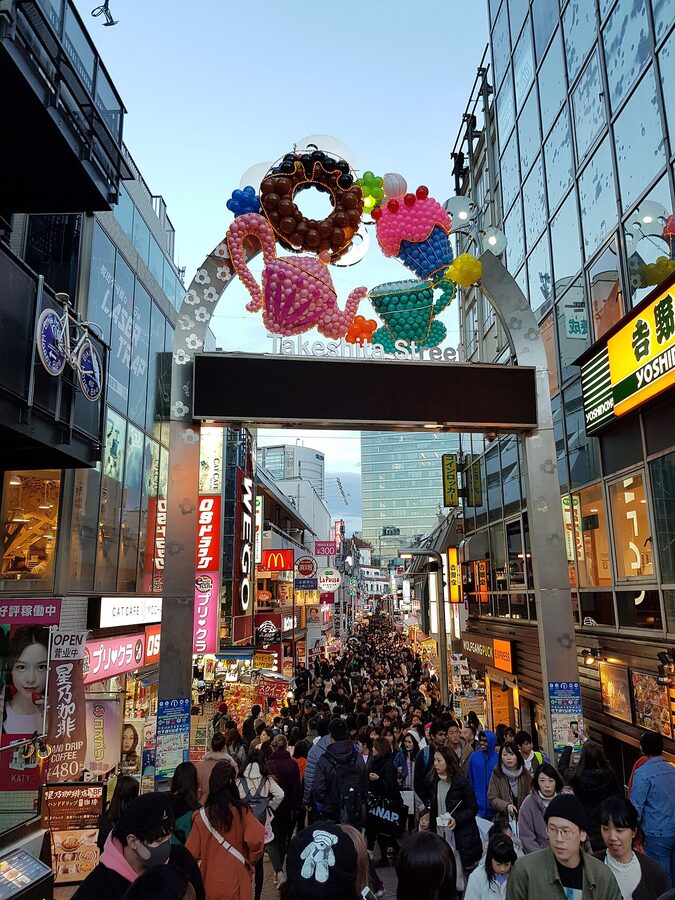
Harajuku is one stop north on the JR Yamanote Line, or a 12-minute walk from Hachiko Square through the Cat Street back lane. Most travellers think of it as a separate destination but the two neighbourhoods bleed into each other. The Takeshita Street side is teen-fashion and crepes; the Omotesando side is high-end retail and the previously-mentioned rooftops. Meiji Shrine sits between them. You can do all three in a half-day if you cut the queues right.
Where to stay (and where I’d actually book)
Shibuya makes more sense as a base than the guides give it credit for. You’re on the JR Yamanote loop (so Shinjuku, Tokyo Station, and Akihabara are all 5 to 25 minutes), the Tokyo Metro Hanzomon and Fukutoshin lines run through, and the airport bus drops you back at Shibuya Mark City in 70 to 90 minutes. Three I’d book again:
If you’re considering Harajuku-side accommodation instead, both Dormy Inn Premium Shibuya Jingumae (between the two stations, a clear winner if you want the Harajuku/Omotesando zone within walking distance) and Tokyu Stay Aoyama Premier in the Aoyama high-end strip are good calls. Skip Airbnb in this neighbourhood; the regulations are tight and the night-time arrival logistics through a landlord chat are not worth it.
Tickets and tours that actually add something
Shibuya isn’t really a tour town, with the exception of two products that consistently deliver:
Skip the go-karting tours unless that’s specifically what you came to Tokyo for. They’ve also been progressively restricted: the 2024 amendments to the road traffic law mean foreign drivers now need an International Driving Permit at minimum, and several routes near Shibuya have lost their permits.
When to come
Time-of-day matters in Shibuya more than season. Quick rules:
What to combine it with
Shibuya alone is half a day. Here’s how I’d slot it into a wider trip:
If your itinerary is already pointed at the wider Tokyo region, the Tokyo regional hub compares Shibuya against the other neighbourhoods so you can decide whether to base out of Shibuya, Shinjuku, or Tokyo Station.
One last thing
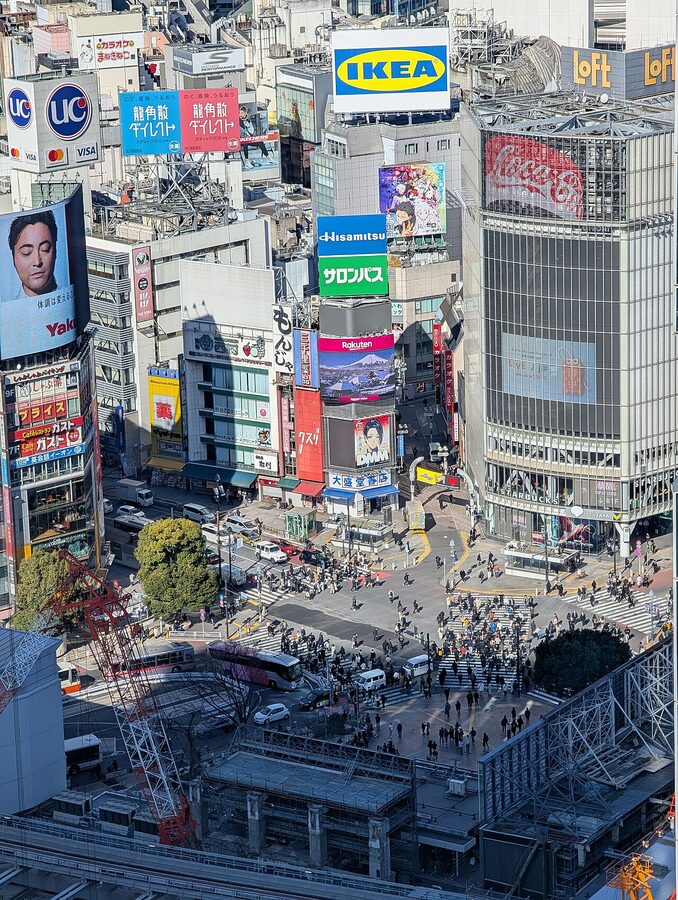
Stand on the rooftop of Sakura Stage at 11:00 on a quiet Tuesday morning. Look down. The Crossing changes colour, releases a few hundred people, refills, changes colour again. Behind it, you can see Yoyogi’s tree line, Hikarie’s glass face, the JR tracks running off toward Harajuku, and a small gap in the buildings where Mt. Fuji sits if the air’s clear enough. The intersection is one element in a frame full of better ones. The sooner you stop standing in the middle of it, the sooner you start seeing the rest.

.jpg)


.jpg)


.jpg)

.jpg)


