
06:30 at the Kaminarimon, and the lantern looks bigger than it does in any photograph. There are three of us in the square: me, a woman in white sneakers reading the kanji on the gate’s left guardian, and a delivery rider on a flat-loaded bicycle who keeps glancing at his phone. Senbei is roasting somewhere on Nakamise behind the gate, faintly, the smell of soy and burning rice flour leaking from a vent before the shutters even go up. By 09:30 you’ll be shoulder-to-shoulder under this same lantern. By 11:00 you’ll be in someone’s video. The hour you choose to arrive is the article. Everything else is detail.
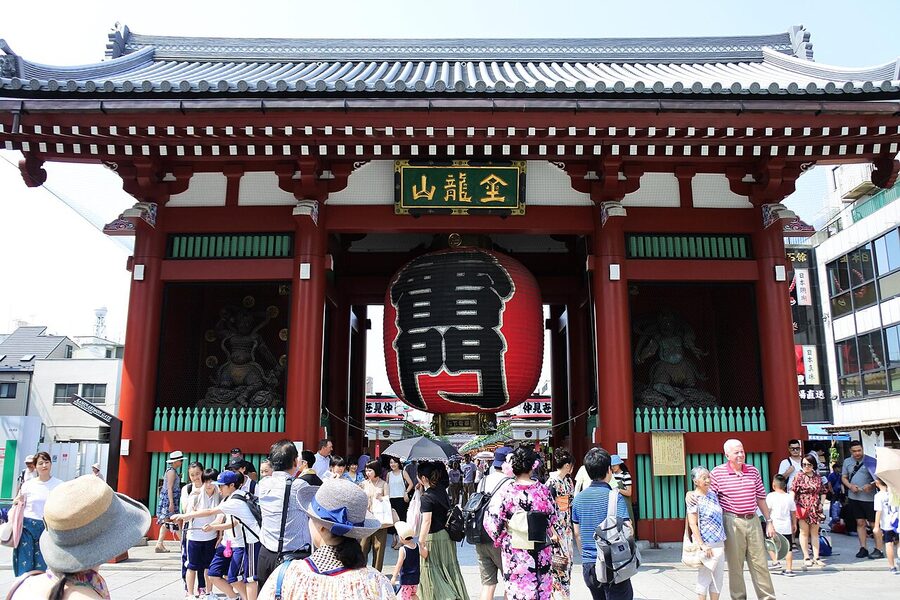
Asakusa is Tokyo’s most-visited neighbourhood and also its most-mishandled travel article. The default piece is a list of “top 10 things to do” pinned to a generic photograph of the Kaminarimon and a paragraph about the Edo period. None of it tells you that the temple grounds open before sunrise, that the back-of-shrine alleys empty out by sunset, that there’s a working rakugo theatre eight minutes’ walk from the main hall, or that the river boat to Hamarikyu is the cheapest scenic cruise in the city.
This guide walks the place. It moves the way a first visit actually unfolds: from the gate up the shopping street, through the inner gate, past the main hall, around to the shrine, out to the river, across to Skytree, and back into the bar lanes for evening. Names, prices, opening hours, the hour of the day each thing works best, and which corners I’d skip without guilt.
In This Article
- What Asakusa actually is, and where it sits
- How to get there
- The walking route, in order: Kaminarimon to the main hall
- Kaminarimon: the thunder gate
- Nakamise: the shopping street
- Hozomon and the five-storey pagoda
- The main hall
- Hours, prices and timing
- Round the back: Asakusa Shrine
- The Sumida River and the boat to Hamarikyu
- Across the bridge: Tokyo Skytree
- Hanayashiki: the 170-year-old amusement park
- Hoppy Street and the local bar lane
- Asakusa Engei Hall: the rakugo theatre nobody mentions
- Where to eat: the named restaurants
- Monjayaki at Asakusa Sometaro
- Dojo nabe at Komagata Dozeu
- Tempura at Daikokuya
- What I’d skip
- The rickshaw question
- Where to stay in Asakusa
- Combining Asakusa with other neighbourhoods and day trips
- When to come
- Practical notes I wish someone had told me
- A working day plan
- The verdict
What Asakusa actually is, and where it sits
Asakusa is the heart of shitamachi, the low-city Edo-period working district on the east side of central Tokyo, in Taito ward. It centres on Senso-ji, the city’s oldest temple, founded in 628 when two fishermen brothers, Hinokuma no Hamanari and Takenari, are said to have netted a 5.5cm gold statue of Kannon out of the Sumida River. They returned the statue, the statue returned to them, and their landowner Hashi no Nakatomo eventually turned his house into a temple. Most of what you can see today was rebuilt after the 1945 firebombing flattened the area, and the rebuild has its own story: the main hall is reinforced concrete dressed as wood, the five-storey pagoda holds a relic from Sri Lanka in its cap, and since 2007 the temple has been replacing its roof tiles with titanium ones to cut weight on the seismic load.
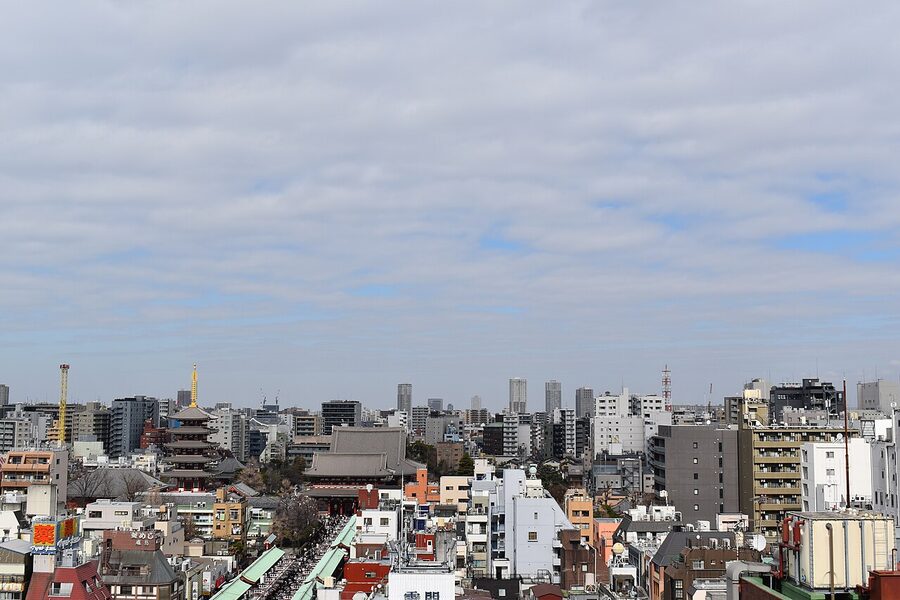
The neighbourhood lives in a pocket bounded by the Sumida River to the east, Kappabashi kitchenware street to the west, Kototoi-dori to the north, and Asakusa-dori to the south. The whole walkable area is about a kilometre square. You don’t need a metro to get between any two things in this article. You need shoes that can do five hours on cobble, paving and grit.
How to get there
Four separate stations carry the name “Asakusa” within walking distance of each other. The one you want depends on where you’re coming from. The Tokyo Metro Ginza Line drops you at the south side of the Kaminarimon, two minutes’ walk from the gate. The Toei Asakusa Line, which runs through to Haneda Airport, surfaces a block south of that. The Tobu Skytree Line at Tobu Asakusa Station is your departure point for the Limited Express Spacia to Nikko, currently around 1h 50m to Tobu-Nikko Station. The Tsukuba Express has its own Asakusa Station three blocks west, more useful for Akihabara than for the temple. If you have a JR Pass, the Yamanote Line doesn’t serve Asakusa directly: ride to Ueno, change to the Ginza Line for two stops, or walk it in 25 minutes through Kappabashi.
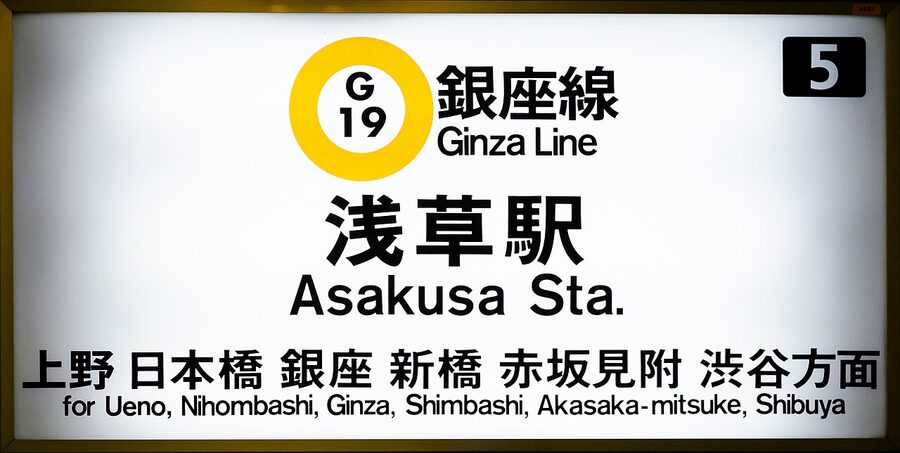
From Haneda, the Keikyu through-service to Toei Asakusa is the cleanest route, around 40 minutes for ¥530. From Narita, the Keisei Skyaccess is direct in about 60 minutes for ¥1,310. Both pull in below ground at the south end of the neighbourhood. From central Tokyo, anywhere on the Ginza Line is a single ride, no transfers. Read the broader transport context in my Tokyo travel guide if you’re piecing together a longer trip.
The walking route, in order: Kaminarimon to the main hall
This is the spine of any first visit. The Kaminarimon, then the 250-metre Nakamise shopping street, then the inner Hozomon gate, then the Senso-ji main hall and the five-storey pagoda. About 400 metres end to end. Allow an hour at any time of day, two hours if you stop to eat and shop, ten minutes flat if you arrive before 07:30.
Kaminarimon: the thunder gate
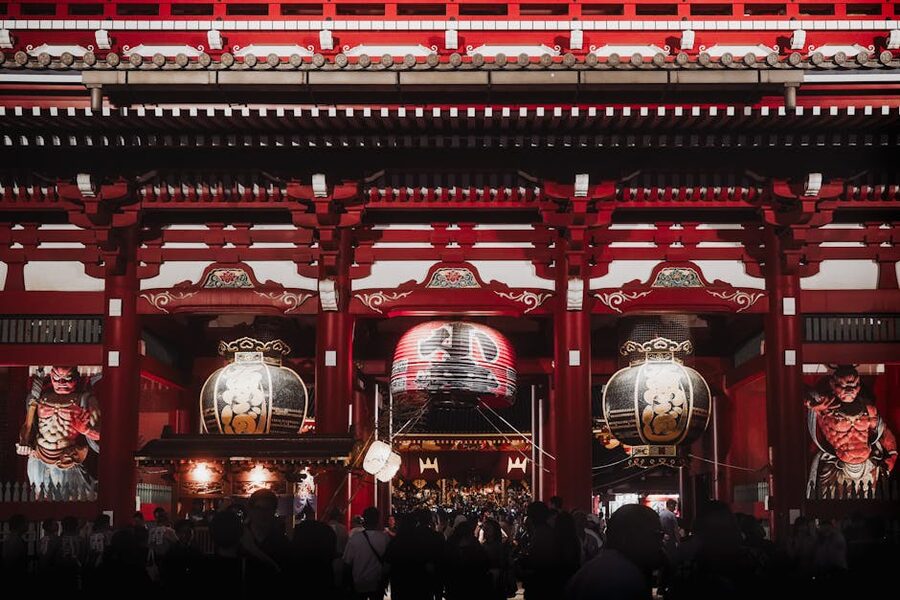
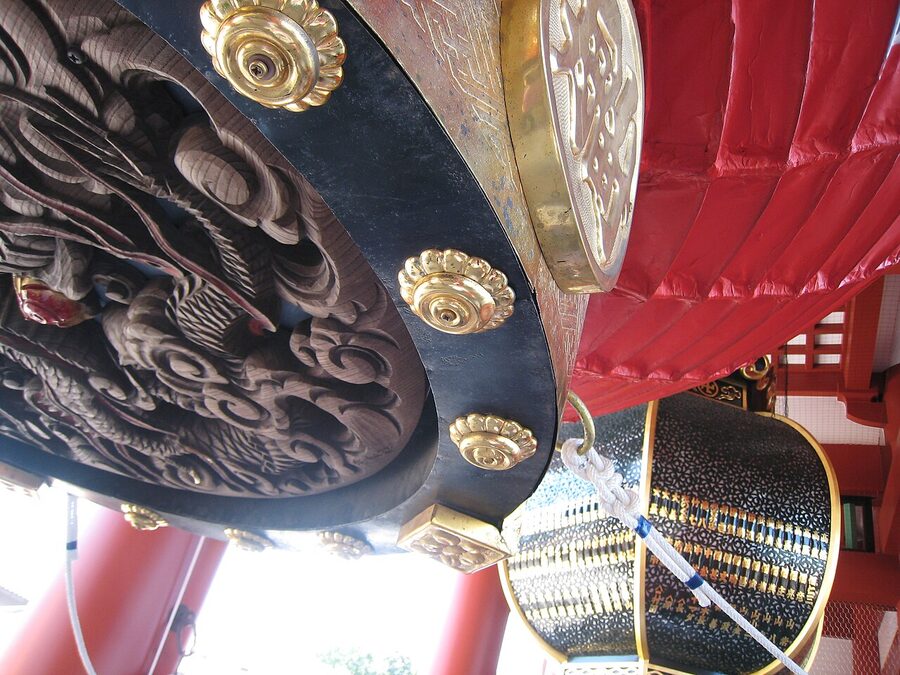
The lantern hanging from the centre of the Kaminarimon is 3.9 metres tall, weighs about 700kg, and is rebuilt roughly every ten years. The current one dates from 2020. The kanji on the front read “Kaminarimon” (thunder gate), and the kanji on the back read “Furaijinmon” (wind and thunder god gate), which is the gate’s full official name. The two guardian statues are Fujin (wind, on your right as you face the gate) and Raijin (thunder, on your left). The painted ceiling inside the lantern shows a coiled dragon, which most visitors miss because they’re either taking a photograph from below or being moved through by the crowd behind them. Look up.
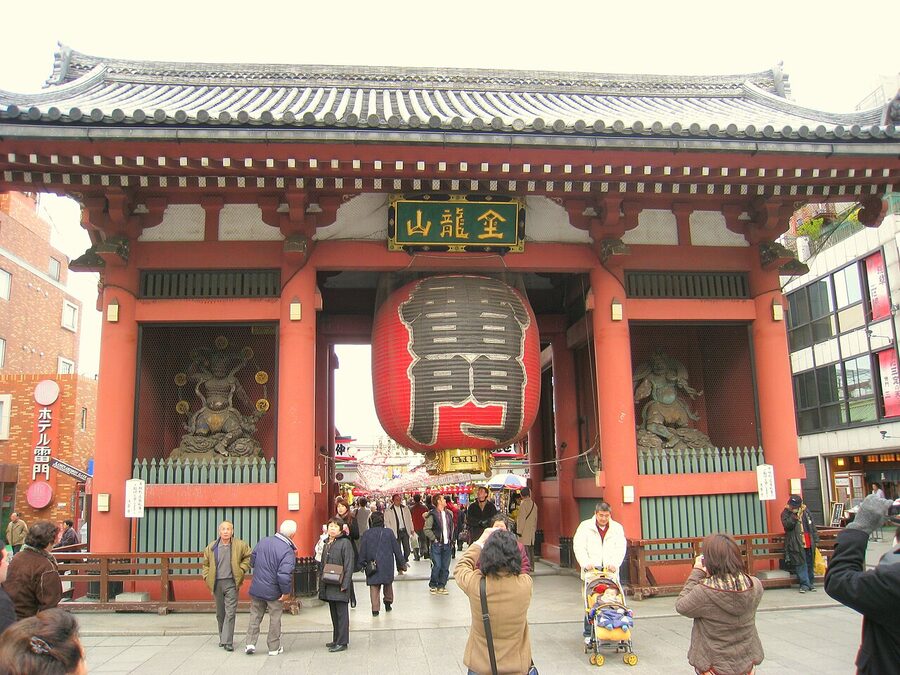
Across the street from the gate, on the north side of Kaminarimon-dori, is the Asakusa Culture Tourist Information Center. The eighth-floor observation deck is free, opens at 09:00, and gives you the view down the length of Nakamise toward the temple that every aerial photo of Asakusa is taken from. Worth ten minutes either before or after your walk down the street, depending on light. Free is rare in Tokyo. Take the offer.
Nakamise: the shopping street
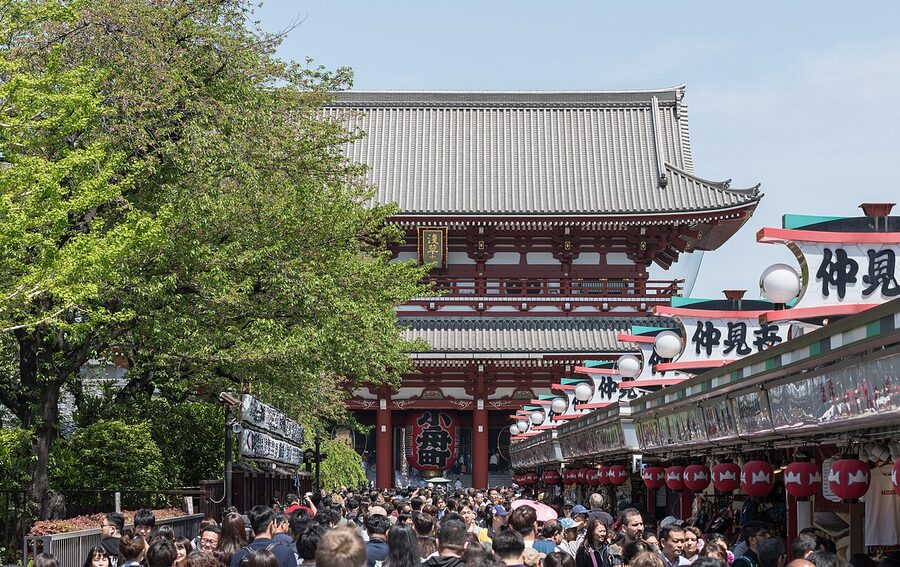
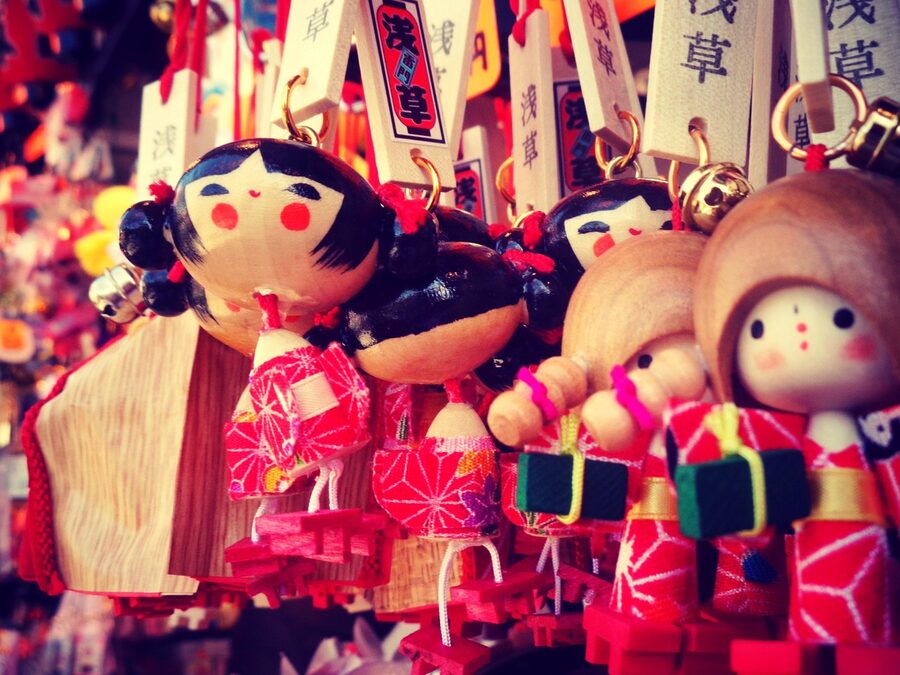
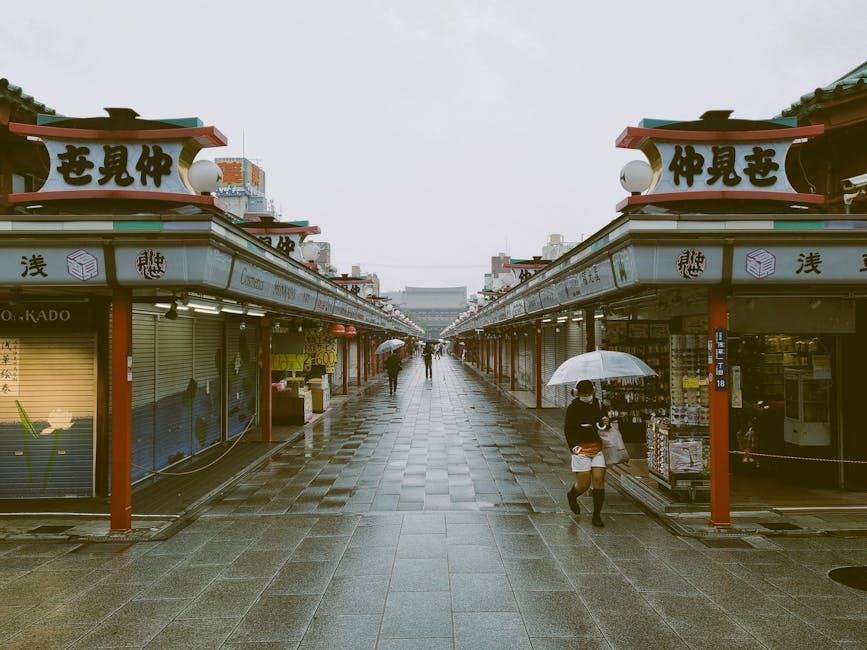
Nakamise-dori runs 250 metres straight from the Kaminarimon to the Hozomon gate. About 90 small shops on either side, all flush against each other, selling fans, hairpins, yukata, paper umbrellas, kaminari okoshi (a sweet rice puff snack the street is named for), ningyo-yaki (small filled pancakes shaped like Buddhas and the five-storey pagoda), and tourist-tier souvenirs that can be skipped. The shutters carry painted Edo-period scenes, and they’re worth photographing in the morning before they open. Once they’re up, you don’t see them.
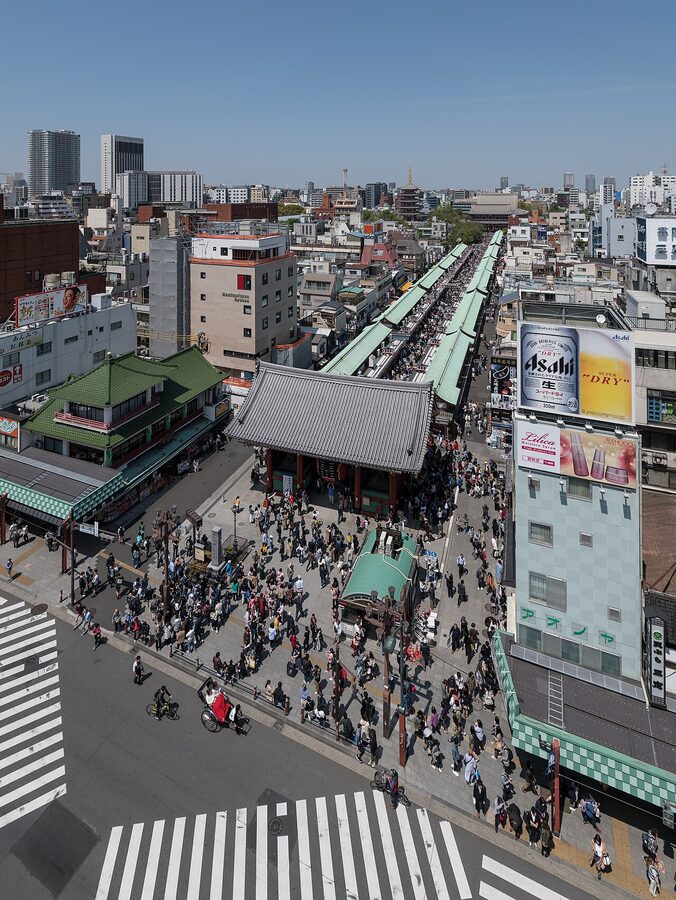
Two named places on Nakamise worth singling out. Kimuraya Honten sells ningyo-yaki cooked while you watch, eight pieces in a paper bag for around ¥800 and best eaten warm. Tokiwado, near the Hozomon end, has been making kaminari okoshi since 1755 and has a queue most afternoons that’s actually worth its time, the boxes are around ¥600 to ¥1,500 depending on size. Eating while walking is technically discouraged, but the street effectively gives up on that rule by mid-morning.
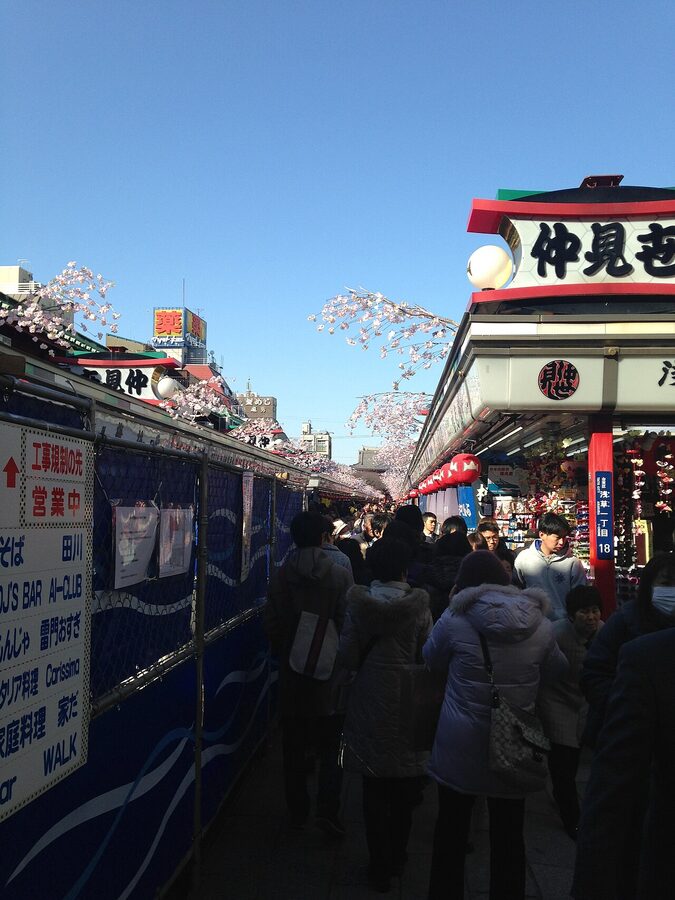
If the main street is too packed, slip out to the parallel Dembo-in-dori on the west side, an Edo-style stallway with smaller crowds and hand-made crafts that aren’t on the main run. Most visitors don’t find it because most visitors don’t look sideways. The east-side parallel, Nishi-Sando, has a covered shotengai of cheaper everyday shops; it leads back out toward Hoppy Street if you want to skip the main hall queue and come at the precinct from the side.
Hozomon and the five-storey pagoda
The Hozomon (“treasure-house gate”) is the inner gate, a two-storey vermilion wooden structure flanked by Nio guardian statues on the south face and a pair of three-metre straw sandals on the north face. The sandals are remade every ten years by an association in Murayama City, Yamagata, using rice straw from a heritage variety the village specifically grows for the purpose because modern short-stem rice can’t produce the length. The lantern under the gate’s south face reads “Kobune-cho” and is a donation from a Nihonbashi merchants’ association that’s been making the gift since 1659. Look up: the inside of the gate’s ceiling is unpainted timber, against the colour outside, and the second storey holds the temple’s sutra collection, hence the name.
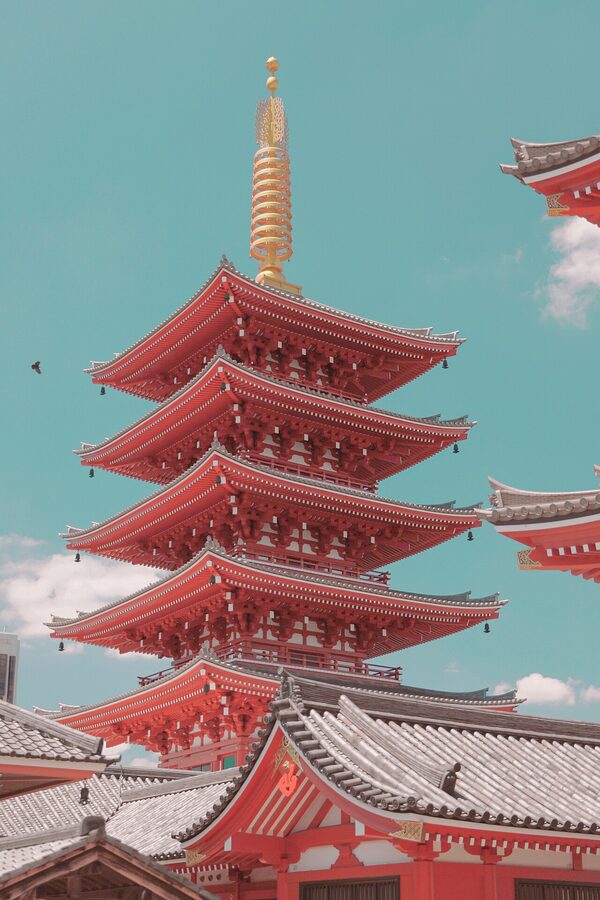
The five-storey pagoda is on your left as you face the main hall, 48 metres tall, rebuilt in 1973 in reinforced concrete, with the original three-storey pagoda having stood on the opposite side of the precinct before the 1945 firebombing. A small marker stone identifies the original site near the temple’s police box. The current pagoda’s top floor holds a Buddhist relic gifted from the Isurumuni Vihara in Anuradhapura, Sri Lanka. You can’t go in. You can light an incense bundle in the bronze cauldron in front of the main hall, wave the smoke at any body part you’d like to feel better, and then climb the steps to the main hall.
The main hall
The main hall (the hondo, or Kannon-do) sits at the back of the precinct, raised on a stone platform, with another giant lantern hanging at the centre that reads “Shin-bashi”. This one is the biggest of all the temple’s lanterns, 4.5 metres tall, 3.5 metres wide, weighing 600kg. The original burned in 1945; the current building dates from 1958, the lantern from 2020. Inside, the central altar holds an inner shrine that holds another inner shrine that holds the original Kannon statue from 628, an “absolute hidden Buddha” that has not been shown to the public since the temple’s founding. What you can see is the front-altar substitute statue, attributed by tradition to the monk Ennin in 857. Photography is not allowed inside the inner sanctuary; in front of the altar it’s tolerated.
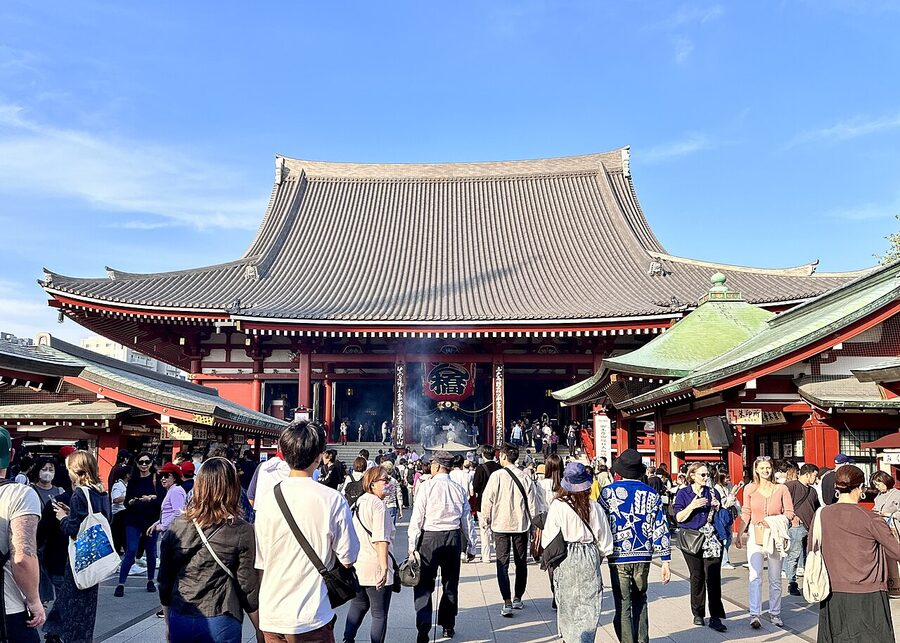
Buy an omikuji fortune slip near the front of the hall for ¥100. Drop a coin in the box, shake the cylinder until a numbered stick comes out, find the matching drawer, and read the slip. If it’s a “kyo” (bad luck), tie it to the wire frame outside so the bad luck stays at the temple. If it’s “dai-kichi” (great luck), keep it. Asakusa’s omikuji are unusually pessimistic by reputation, around 30% return bad-luck fortunes, against around 17% at most temples. Don’t take it personally.
Hours, prices and timing
| Site | Hours | Cost | Best window |
|---|---|---|---|
| Senso-ji main hall | 06:00–17:00 (Apr–Sep), 06:30–17:00 (Oct–Mar) | Free | Before 07:30 or after 18:00 |
| Senso-ji grounds | 24 hours | Free | Pre-dawn or evening |
| Nakamise shops | 10:00–19:00 typically | Free entry | 10:00 opening |
| Asakusa Culture Tourist Information Center | 09:00–20:00, deck 09:00–22:00 | Free | Sunset for the deck |
| Asakusa Shrine | 24 hours, office 09:00–16:30 | Free | Anytime |
The 07:30 window is the only one where the precinct is genuinely quiet on a weekday. By 09:00 the first tour buses arrive. By 10:00 it’s a crowd. By 11:00 the photographs at Kaminarimon involve queueing for a centred shot. After 17:00, when the shops close and the day-trippers head back to Shinjuku, the lanterns light up and you get a second quiet window from about 18:30 until 20:00, with a slow trickle of evening visitors and the occasional kimono-rental couple doing portraits. The night version of Senso-ji is genuinely beautiful and almost no guide article mentions it.
Round the back: Asakusa Shrine
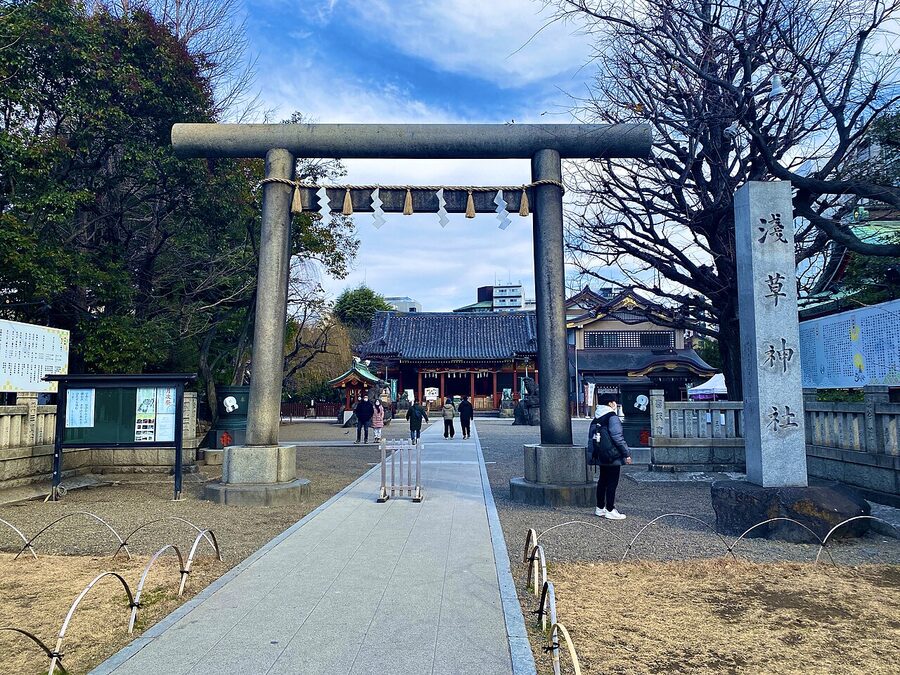
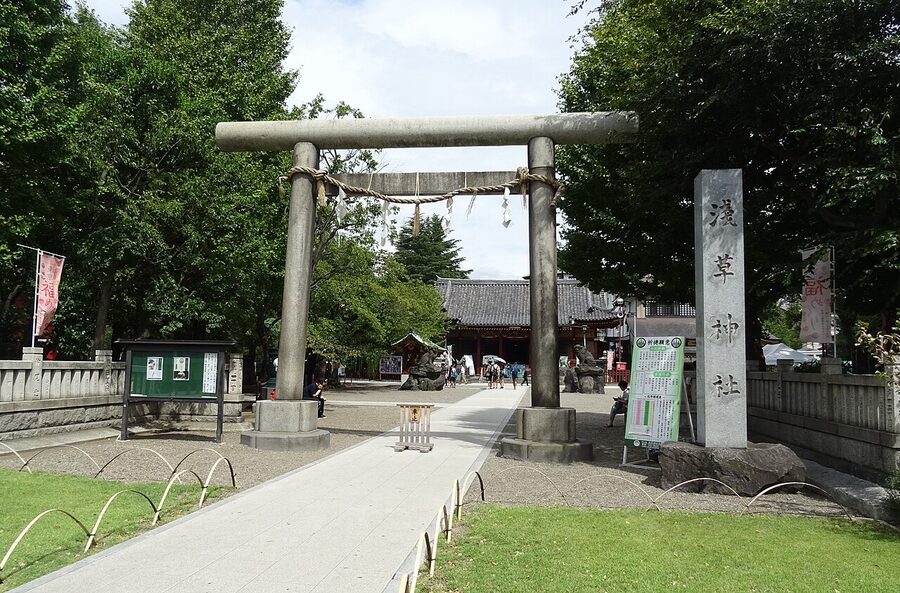
Asakusa-jinja sits immediately east of the main hall, behind a small pebble path most visitors never take. It dates from 1649, was commissioned by the third Tokugawa shogun Iemitsu, and survived the 1945 firebombing, which makes it one of the few genuinely original Edo-era buildings left in central Tokyo. It’s also the only working Important Cultural Property structure on the precinct. The shrine enshrines the three founders of Senso-ji: the two fishermen brothers and their landowner Hashi no Nakatomo. The “Sanja” in Sanja Matsuri (“three shrine festival”) refers to these three.
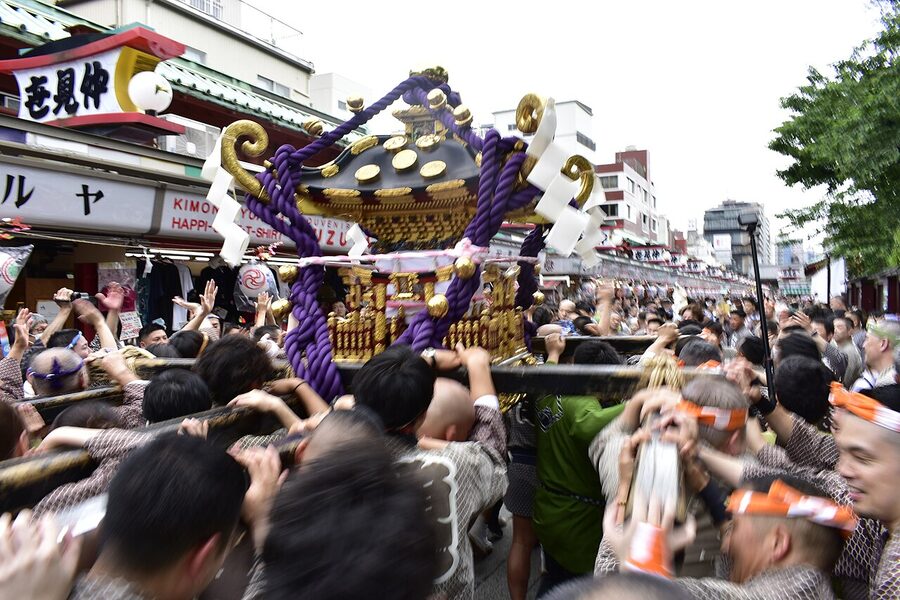
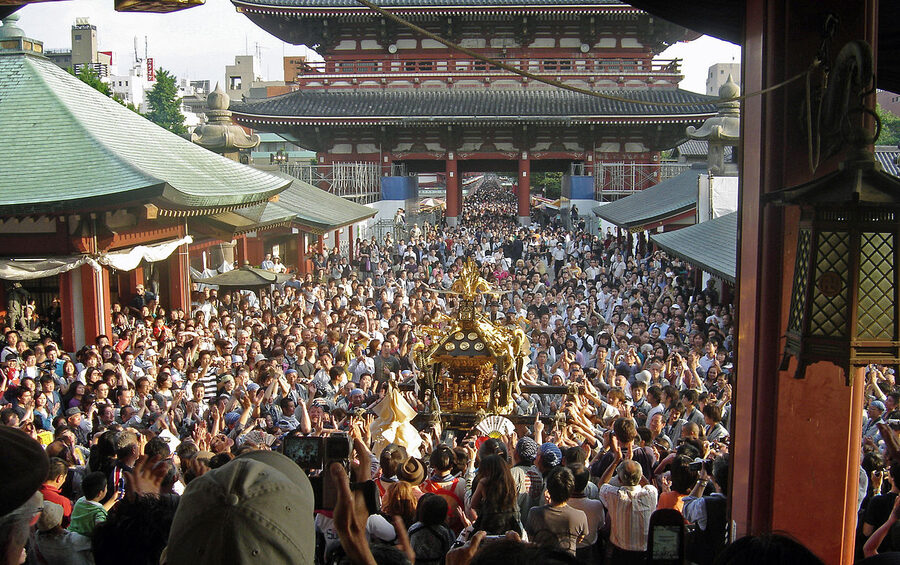
Sanja Matsuri runs across three days every May. In 2026 the dates are Friday 15, Saturday 16 and Sunday 17 May (verified on the Asakusa Tourism Federation site, e-asakusa.jp, on 2026-05-07). The big days are Saturday and Sunday, when around 100 portable shrines (mikoshi) from Asakusa’s neighbourhoods are paraded through the streets accompanied by what is reliably one of the loudest, hottest, and most physical festivals in the country. If you want to come for it, book accommodation by January at the latest. If you don’t want to come for it, avoid that weekend entirely; the precinct is unrecognisable and the trains are at festival capacity.
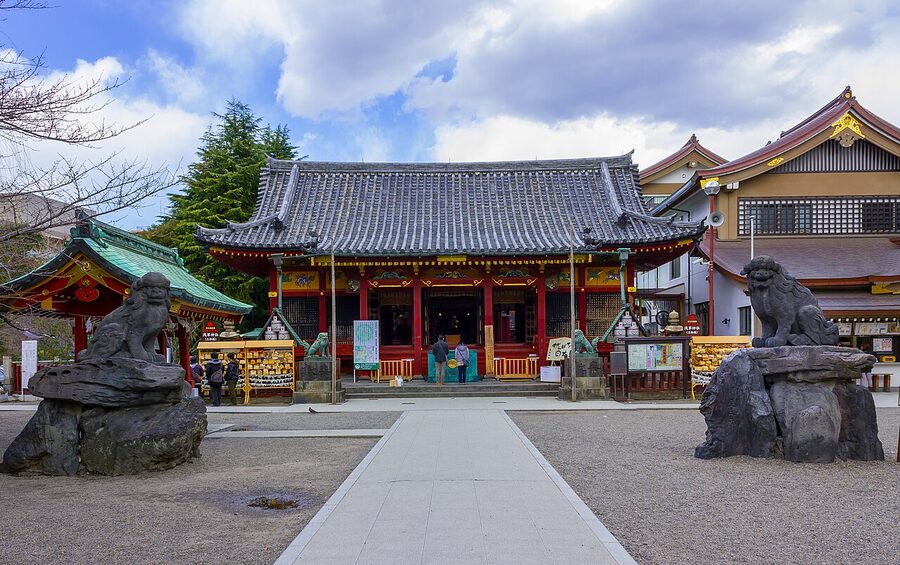
Behind the shrine, at the north-eastern corner of the precinct, is the Niten-mon, a 1618 Important Cultural Property gate that also survived the war. It’s the back exit toward Tokyo Skytree if you want to leave the temple grounds heading east toward the river.
The Sumida River and the boat to Hamarikyu
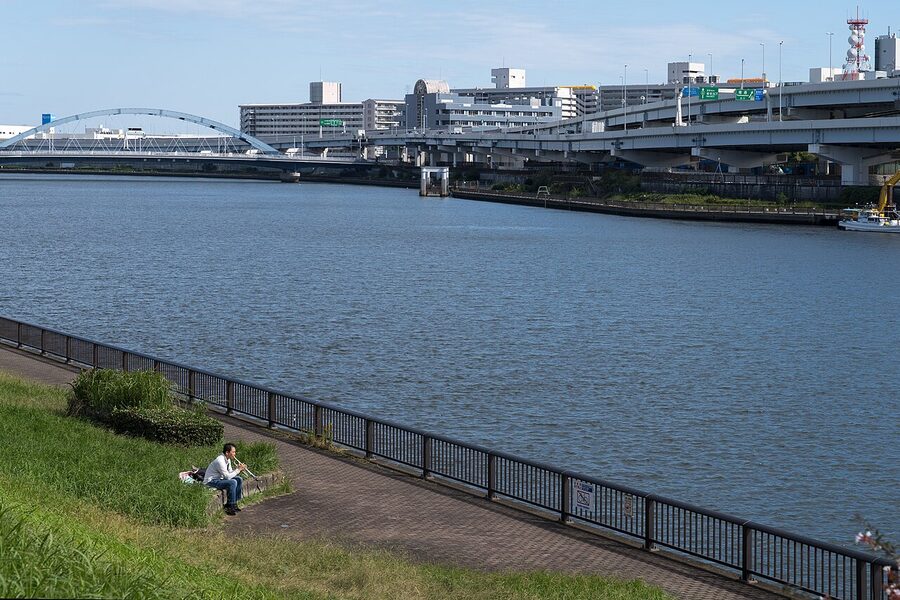
The Sumida is what the temple was originally built next to, and it’s still the best way to leave Asakusa. The Tokyo Cruise Ship Co. (suijobus.co.jp) runs scheduled water buses out of the Asakusa pier, two minutes’ walk from the south end of Sumida Park. The most useful route for a visitor is the line down to Hamarikyu Gardens, a former shogunal duck-hunting estate near Shimbashi that’s now a tea-garden and tidal-pond park. The boat takes about 35 minutes. Schedule, prices and which boat is running on the day are listed on the operator site; verify on the morning of your trip.
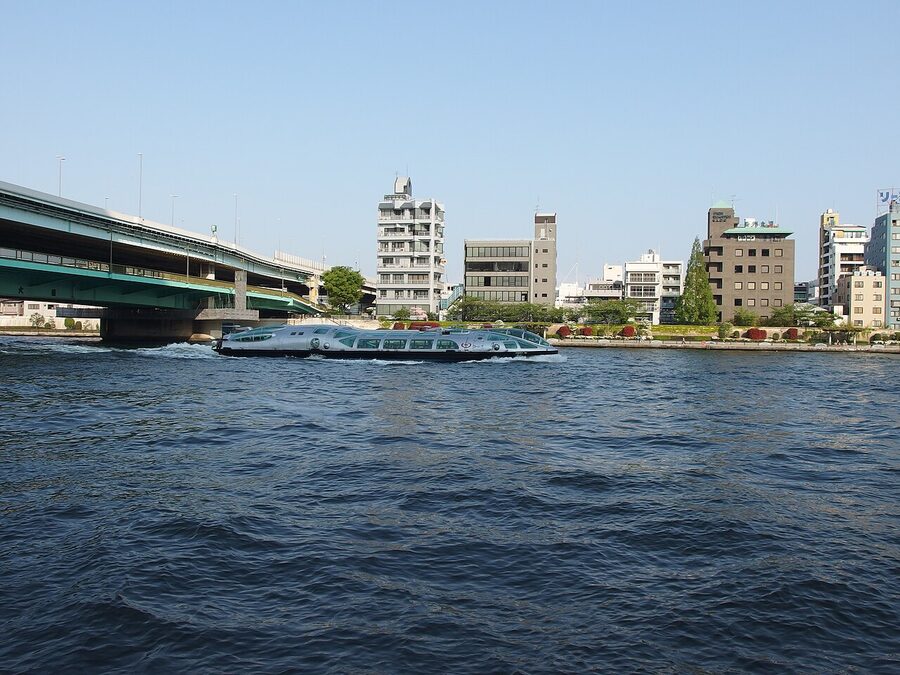
Two named boats are worth riding for the boat itself: the Himiko and the Hotaluna, both designed by manga artist Leiji Matsumoto, both running on the Asakusa-Odaiba routes (Himiko also serves Hamarikyu seasonally). They look like spaceships. The Hotaluna has a roof deck. If you have a choice, take a Matsumoto boat over the regular water bus. There’s no upcharge in most cases. The schedule that puts these on the route varies by season, so check the day before.
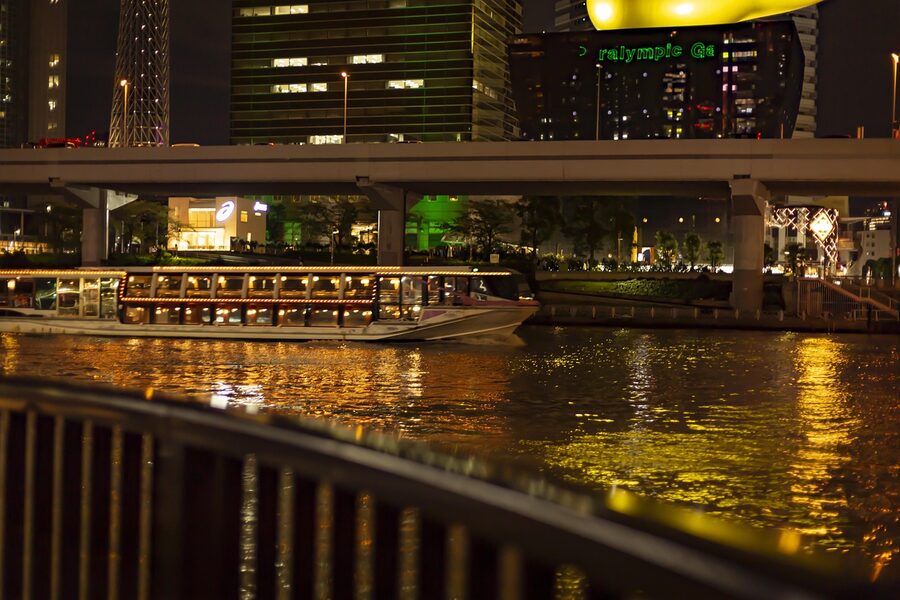
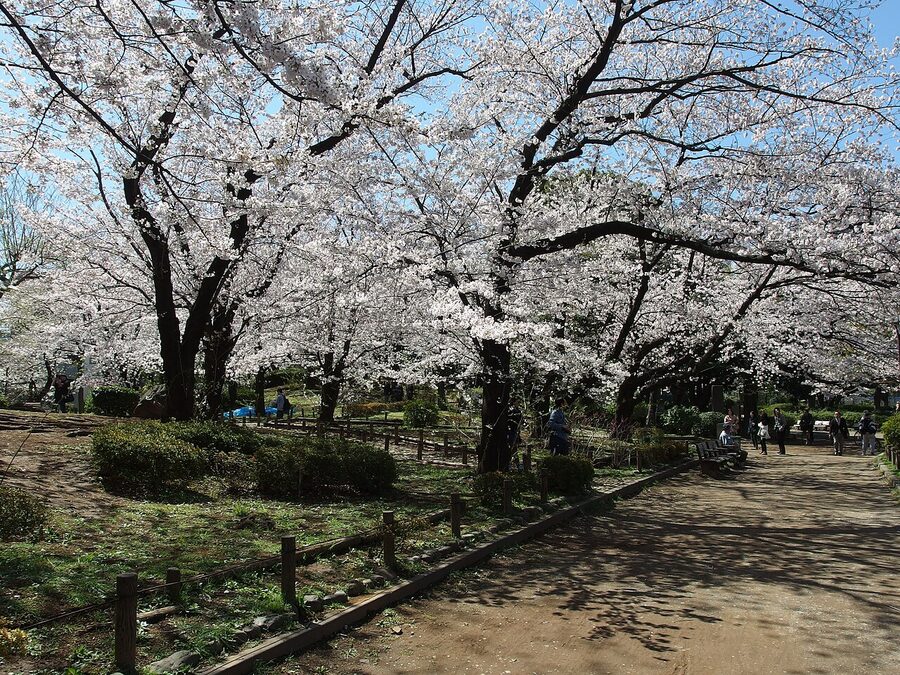
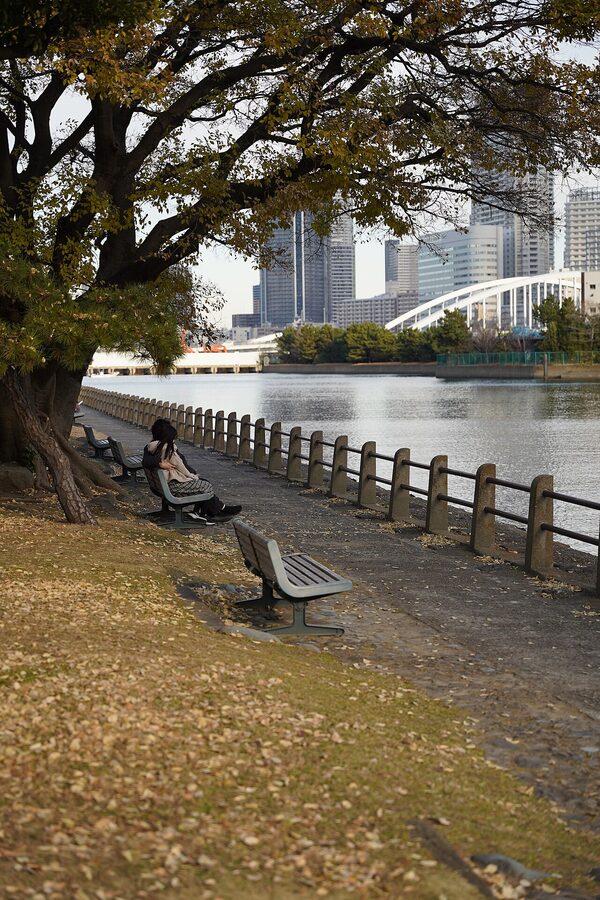
Walk the riverbank itself if you don’t want a boat. Sumida Park runs along both banks, with cherry trees that put on what is reliably one of the city’s best displays in late March. (My Tokyo cherry blossom guide covers Sumida-koen alongside Ueno, Yoyogi and the more famous spots.) The X-shaped pedestrian Sakura Bridge, north of the main Azuma Bridge, gives you the postcard view of Skytree across the water.
Across the bridge: Tokyo Skytree
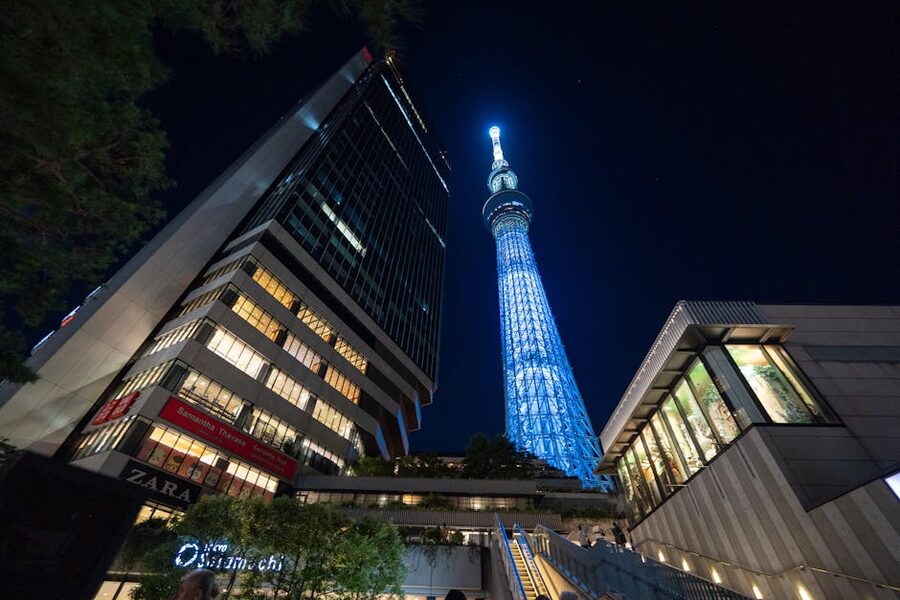
The Skytree sits on the east bank of the Sumida, in Sumida ward, a 20-minute walk from the Kaminarimon across the Azuma Bridge or one stop on the Tobu Skytree Line from Tobu Asakusa to Tokyo Skytree Station. At 634 metres it’s the tallest tower in the world, completed in 2012, and it has two observation levels: the Tembo Deck at 350m and the Tembo Galleria at 450m. Tickets, verified on tokyo-skytree.jp on 2026-05-07:
| Ticket | Adult (15+) | Child (6–14) | Best for |
|---|---|---|---|
| Tembo Deck only (350m) | From ¥1,800 | From ¥900 | The view that matters |
| Tembo Galleria only (450m) | ¥1,400 add-on | ¥700 | Same view, fewer people |
| Combo Ticket (350+450) | From ¥3,000 | From ¥1,500 | If you want to do both |
Online advance purchase is cheaper than the same-day window. Buy ahead via the official site or via Klook for a fast-track entry that bypasses the day-of queue, which on a Saturday afternoon can run 60 to 90 minutes long.
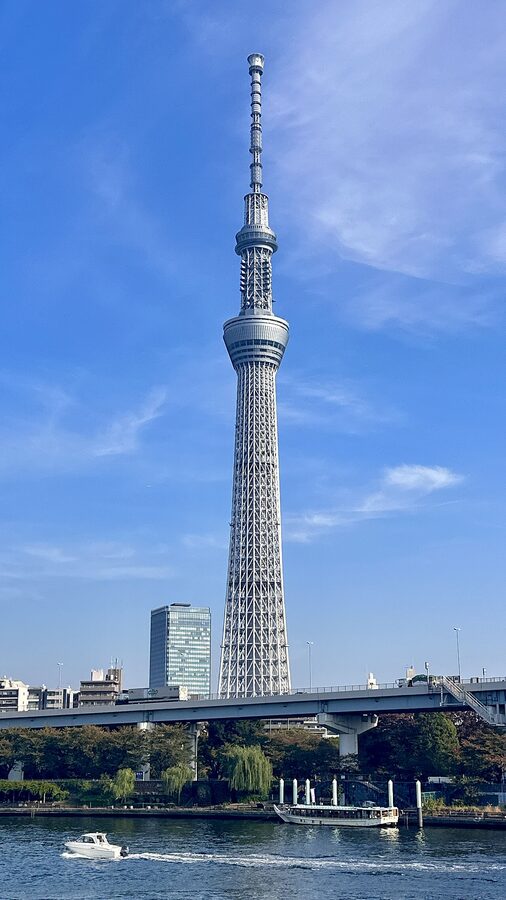
An opinion you don’t see in most guides: the Skytree view is taller than Tokyo Tower’s and Shibuya Sky’s, but the view from any of the three is essentially the same view of the same city. Go to Skytree if you want the highest deck in Tokyo and if you’re already in Asakusa. Go to Shibuya Sky if you want the more atmospheric outdoor open-roof deck, or Tokyo Tower from the central side if you want the city’s old-school silhouette. Don’t do all three on one trip; you’re paying for the same skyline three times.
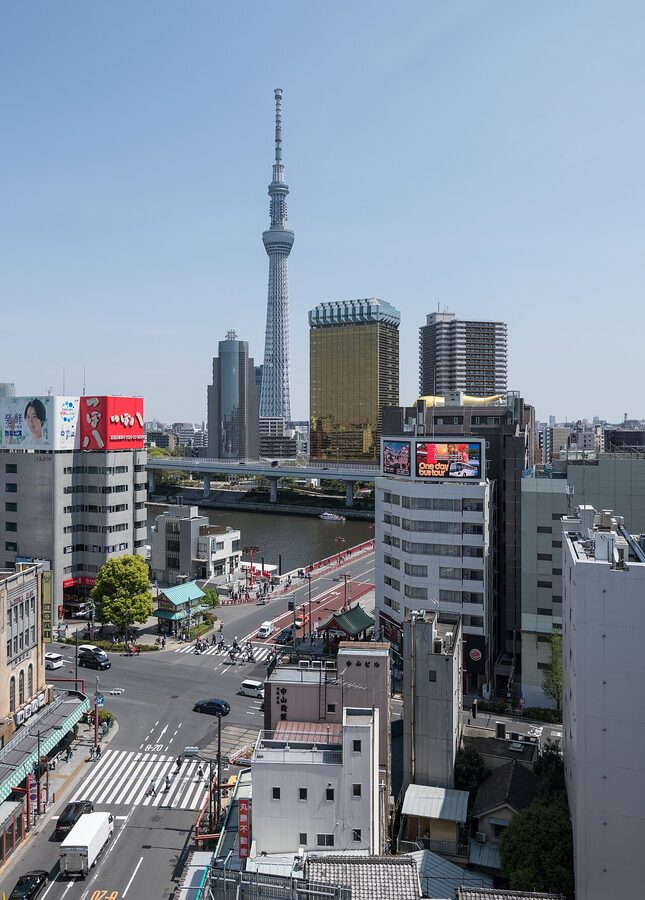
Underneath the tower, the Tokyo Solamachi shopping complex is a six-floor mall with a Sumida Aquarium, a planetarium, around 300 shops and an entire floor of restaurants. If you want to combine Skytree with a meal, this is the path of least resistance. Quality ranges from very good (the regional-cuisine restaurants on the 6F and 7F) to forgettable mall fare. The aquarium has a notable jellyfish hall and is a reasonable wet-day plan with kids; adults around ¥2,500.
Hanayashiki: the 170-year-old amusement park
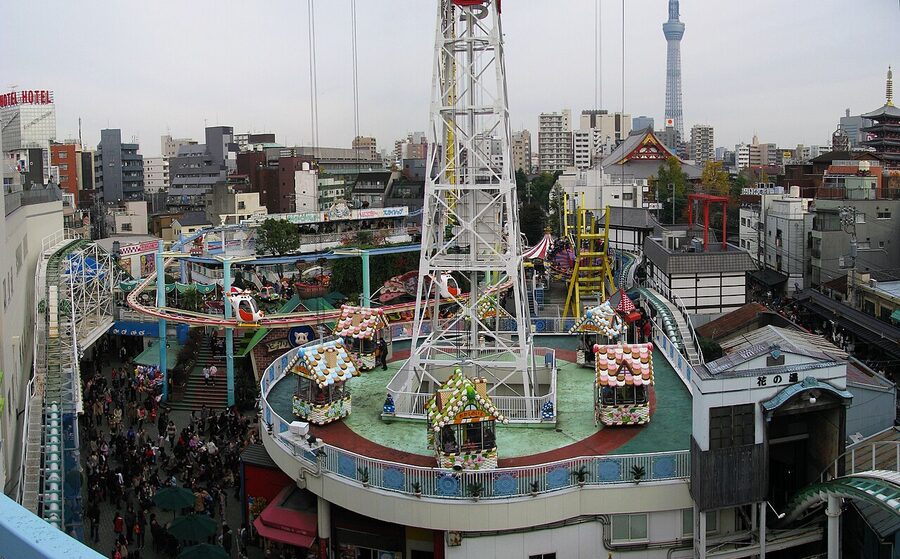
One block north-west of the main hall, behind a low wall most visitors never look over, is Hanayashiki: a tiny, gloriously old-fashioned amusement park that opened in 1853 and is the oldest in Japan. The footprint is about a city block. The roller coaster, the “Roller Coaster” (literally), runs on Japan’s oldest still-operating coaster track, dating from 1953, and threads between buildings at a top speed of 42 km/h, which sounds slow until you see how close to the buildings it goes. Most rides cost ¥200 to ¥600 individually with a one-day pass available. Verify current pricing on hanayashiki.net before you visit; a notice in May 2026 confirms the Roller Coaster and Sky Ship are on extended maintenance closures.
Hoppy Street and the local bar lane
West of the temple, behind Senso-ji’s pagoda, is Hoppy-dori, named after the cheap beer-substitute “Hoppy” that working-class Tokyo has been drinking since 1948. The street is a single covered alley about 80 metres long, lined with twenty or so small izakaya, all with red lanterns out front and outdoor benches in front of those. Beer hits the table around ¥500 a glass. Most places do nikomi (slow-stewed beef tendon and offal in miso) for about ¥500 to ¥800 a bowl, and kushiyaki grilled skewers from ¥150 a stick. The crowd is half local Tokyo office workers who finish at 17:00, half international visitors who heard about it from someone with a Tokyo blog, and the seating arrangement is shoulder-to-shoulder on benches that get sticky by the third round.
Two named places worth knowing on the lane. Toyo at number 7 has been the lane’s go-to nikomi for sixty years, opens at 12:00 (yes, a working pub serving stew at noon), closes around 22:00, cash only, sticky tables, no English menu and zero pretence about it. Asakusa Sansho a few doors up has English-friendly staff if you want a softer landing, with the same skewer-and-beer template. The place to avoid: the touristy ones at the south end of the lane that have full picture menus in five languages and prices about 40% above what the rest of the street charges. The tell is the laminated menu.
Hoppy-dori is daytime as well as nighttime. From 12:00 to 17:00 it’s lit by daylight, half-empty, and the kind of unfussy lunch the rest of Tokyo doesn’t really do anymore. From 17:00 onward it fills, peaks around 20:00, thins after 22:00.
Asakusa Engei Hall: the rakugo theatre nobody mentions
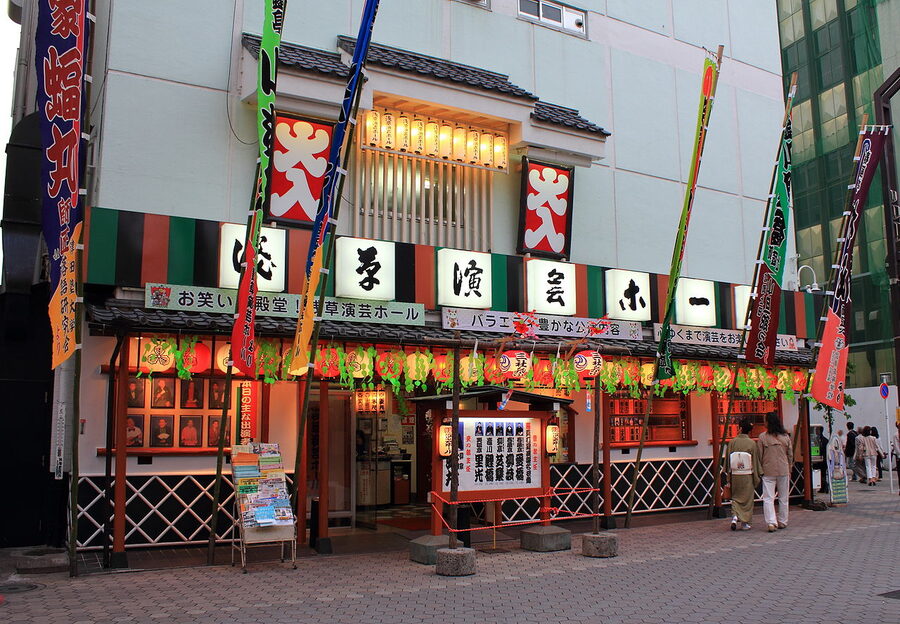
Two blocks west of the temple, on the corner of Hisago-dori and the ROX shopping complex, is Asakusa Engei Hall. It is a working yose: a small theatre running a continuous roster of rakugo (sit-down comic storytelling), manzai (two-person stand-up), kamikiri (paper-cutting performance), magic, and a few other Edo-era variety arts. It runs 365 days a year, two shows a day, daytime and evening. Standard entry is around ¥3,000 for adults and ¥1,000 to ¥2,500 for under-18s, with concession rates published on the official site asakusaengei.com (verify the current price on the day; a notice in May 2026 confirms the recent price-revision is in effect).
You don’t need Japanese for this. The yose grammar, beat structure, and physical comedy carry most of what’s funny, and the daytime show usually includes at least one wordless act (paper-cutting or magic) that’s accessible regardless. Sit toward the back if you want to leave between acts; the hall has an intermission system rather than a fixed start-and-end. You can also stay all day on a single ticket. Bring your own bento; convenience-store food is permitted, alcohol is not, exit-and-re-entry is not.
Where to eat: the named restaurants
Asakusa’s specific food culture goes beyond the snacks on Nakamise. Three dishes are worth a meal, plus one I’d skip.
Monjayaki at Asakusa Sometaro
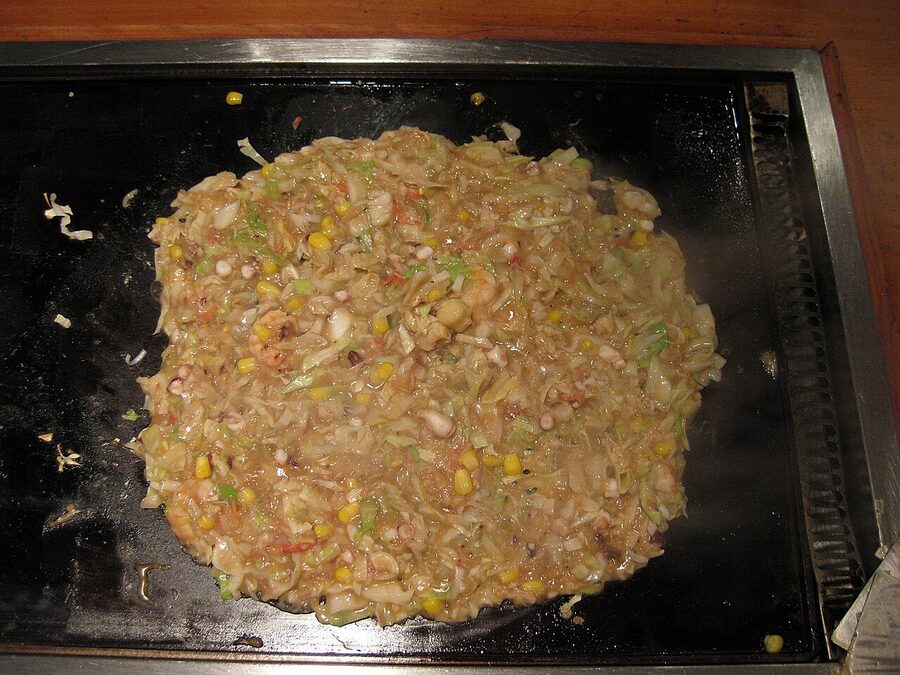
Monjayaki is the runny cousin of okonomiyaki, a savoury batter cooked on a hot iron table at your seat, and Asakusa’s heritage version is at Sometaro, a tatami-floored wooden building on Hisago-dori that’s been there since 1937 and survived the war by sheer luck. Sit cross-legged. The grill is built into the table. Order the seafood monja with squid (ika) and prawn (ebi) and a side of yakisoba; per-person you’ll spend around ¥1,800 to ¥2,500. Cash and small bills preferred. Lines start around 12:00; arrive by 11:30 or come at 14:30. Closed Tuesdays.
Dojo nabe at Komagata Dozeu
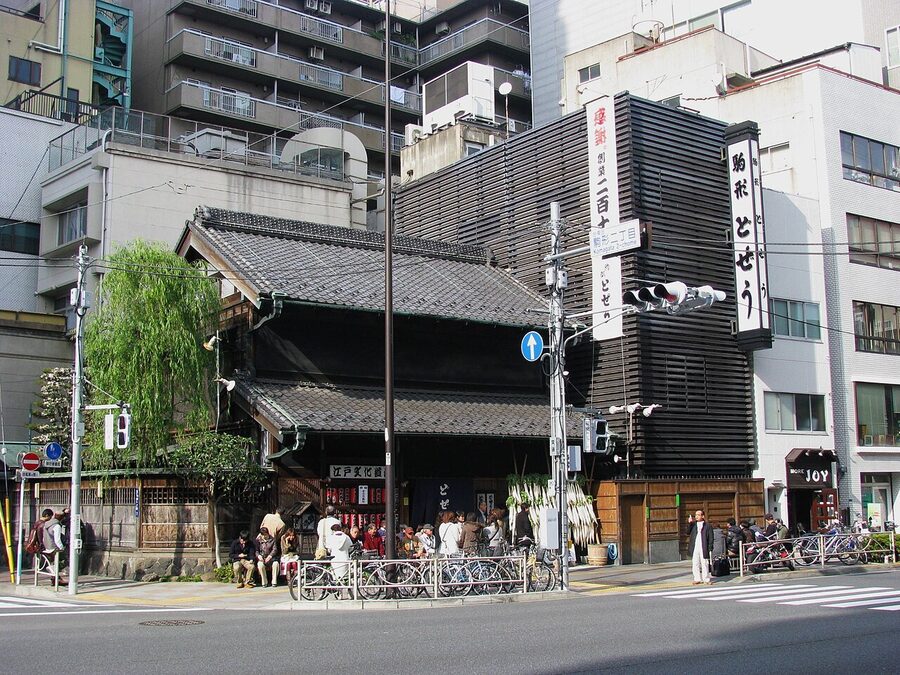
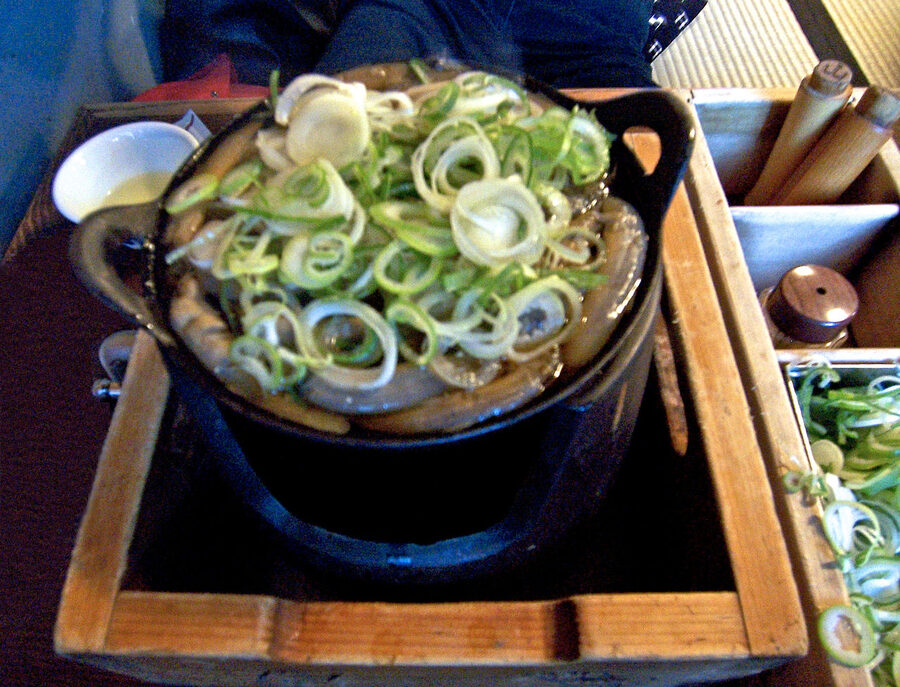
The strangest dish on this list. Dojo is a small loach fish, served whole in a flat iron pot of slow-simmered miso broth. Komagata Dozeu, on Edo-dori a six-minute walk south of the Kaminarimon, has been making it the same way since 1801. The room is tatami floors and floor seating, with a regular set lunch around ¥3,000 and the full multi-course nabe set above ¥5,500. It is, by reputation, an acquired taste; loach has a slightly bitter, slightly muddy flavour that doesn’t have a Western reference point. I would still send any traveller curious about Edo-period working-class cooking through the door at least once. The room hasn’t changed in two centuries.
Tempura at Daikokuya
The straightforward heritage option. Daikokuya Tempura, on Dembo-in-dori facing the Hozomon side, has been serving rice-bowl tempura (tendon) since 1887. The sesame-oil-fried prawn-and-anago bowl is around ¥2,000, the deluxe version with extra prawn around ¥3,000. Lines run long at lunch but turn over fast; expect 30 minutes max even on a Saturday.
What I’d skip
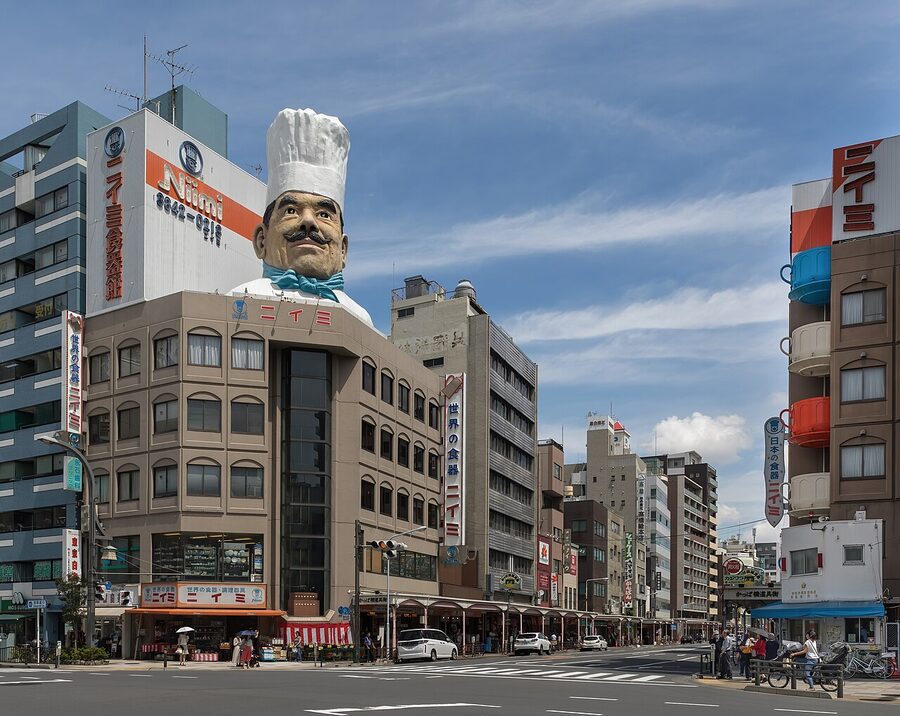
The “themed cafes” on the side streets (maid cafes, ninja cafes, samurai-themed restaurants) don’t have the same craft-built character as the older establishments. They’re not bad, but they’re not what Asakusa is for. The Kappabashi-dori knife shops (Aritsugu, Kama-Asa) are reliably excellent if you want a Japanese knife to take home; that’s a half-day trip on its own and easy to combine with this article.
The rickshaw question
You will be approached by a rickshaw driver. Probably more than one. The drivers wear black tabi-and-knickerbocker uniforms, hang around the Kaminarimon and the Azuma Bridge, and quote in lengths: 10 minutes, 30 minutes, an hour. The standard pricing as of 2026 is approximately ¥4,000 to ¥5,000 for one person for 10 minutes, scaling up to ¥30,000-plus for two people for an hour-long custom route. Two-person rates are not double; they’re about 60% above single. Negotiation is possible at the lower-end durations.
Is it worth it? Probably yes for some, no for others. If you have an interest in seeing the area from a slow-moving vantage above the crowd, and someone pointing out the named buildings as you go, the 30-minute version is decent value. The drivers (shafu) are mostly bilingual to English, often excellent storytellers, and the walking-pace tour they’d otherwise be giving you is essentially the article you’re reading now. The 10-minute “instagram run” along Nakamise is overpriced for what it is. The full hour can be a genuinely informative tour. My split: if you’re with kids or someone who can’t walk for hours, take the rickshaw; if you have time to walk, walk.
Where to stay in Asakusa
Asakusa is the budget-and-boutique side of central Tokyo accommodation. Not the Park Hyatt belt, not the Ginza spa-hotel belt; Asakusa runs from genuinely cheap hostels through mid-range business hotels through a small handful of design-led boutiques. Three patterns work.
The view-of-Skytree mid-range: hotels facing the Sumida or backing onto the Azuma Bridge. The reliable pick is Asakusa View Hotel Annex Rokku, three minutes from the temple, with Skytree-facing rooms on the higher floors. Check rates on Booking.com or Agoda.
The temple-front boutique: The Gate Hotel Kaminarimon sits literally in front of the gate, with a roof terrace looking down on the lantern. Pricier, around ¥30,000+ a night, but the location is unrepeatable. Check Booking.com or the official site directly.
The hostel option: Nui Hostel & Bar Lounge, a 12-minute walk south in Kuramae, is one of the better-looking budget stays in Tokyo, with private rooms from around ¥7,000 and dorm beds from around ¥3,500. Bookable on Booking.com.
For a full Tokyo accommodation breakdown by neighbourhood and trip length, my Tokyo travel guide covers Shinjuku, Shibuya, Ginza and Tokyo Station as alternatives, each with its own trade-off against Asakusa’s quieter, lower-priced base.
Combining Asakusa with other neighbourhoods and day trips
Asakusa works as a half-day on its own. It works as a full day with the Sumida boat extension, Skytree, and an Engei Hall sit-down. It works as one half of a paired day with one of:
- Ueno, 25 minutes’ walk west or two stops on the Ginza Line. Ueno Park has the Tokyo National Museum, Ueno Zoo, and a string of museums in a connected campus that pairs cleanly with a morning at Asakusa.
- Akihabara, two stops south on the Tsukuba Express or 15 minutes by Hibiya Line. Electronics, anime, idol-culture; a tonal jump from temples but a logical one if you want to feel both versions of Tokyo on the same day.
- Yanaka, 25 minutes’ walk west through Iriya. Tokyo’s other unbombed shitamachi neighbourhood, narrower, more residential, almost no tourists. Good for a slow late afternoon.
- Nikko, two hours north on the Tobu Spacia Limited Express from Tobu Asakusa Station. National-park temples, autumn leaves, a different scale of Japan; a full-day commitment, not an add-on. The departure point is the same Asakusa station you’d be leaving from anyway. My Tokyo day trips guide walks through this and the seven other routes worth the train time.
When to come
Late March to early April for cherry blossoms along the Sumida; the Asakusa stretch is on every Tokyo hanami list and rightly so. May for Sanja Matsuri (15-16-17 May 2026); aware that this is one of the busiest, hottest weekends in the Japanese festival calendar and not a good first introduction to Asakusa unless festivals specifically are why you came. Late October and November for autumn light on the river. Early-morning summer mornings if you can be outdoors before 09:00; otherwise the mid-day humidity in July and August will end the walking circuit early. Mid-January through February gives you cold-clear-air daytime light that’s reliably the best of any season for photographs of the precinct, with smaller crowds.
Practical notes I wish someone had told me
Cash. Asakusa runs on more cash than the rest of central Tokyo. Hoppy Street is mostly cash-only, the smaller temple-snack stalls take coins not cards, and the older heritage restaurants (Sometaro, Dozeu, Daikokuya) prefer cash. Bring ¥10,000 in mixed notes per day per person. ATMs that accept foreign cards: 7-Eleven on Kaminarimon-dori (open 24/7), the Japan Post ATM at the post office on the south-east corner of the Kaminarimon, and any Aeon Bank machine at the larger conbini.
Toilets. Free, clean, signposted in English. The Asakusa Culture Tourist Information Center has the cleanest ones in the area. The temple precinct has them too, around the back of the main hall.
Coin lockers. Tobu Asakusa Station has the largest selection of large lockers if you’re carrying a suitcase between hotels; Tokyo Metro’s Asakusa Station has medium and small only. From ¥500 to ¥700 for a 24-hour use.
Wi-Fi and IC cards. Free Wi-Fi at the Information Center is reliable. Otherwise the prepaid IC card (Suica, Pasmo) works on every train and most vending machines and conbini in the area, and you can top it up at any station. If you don’t have one, get one at any station counter before you arrive in Asakusa; the wait at Asakusa stations themselves is usually fine but not guaranteed during festival weekends.
Kimono rental. Several shops in the area rent kimono and yukata for the day, usually in the ¥5,000 to ¥10,000 bracket including dressing, hair set and basic accessories. The polite version: this is one of the few neighbourhoods in Tokyo where you’ll see locals wearing kimono for genuine reasons, including weddings at the shrine, so the rented-tourist version isn’t out of place. The reality: half the women in kimono on Nakamise on a Saturday afternoon are renters, and nobody seems to mind.
A working day plan
If you have one full day to give Asakusa the proper version of itself:
- 06:30. Kaminarimon, when there are three other people in the square. Walk Nakamise’s closed shutters in pre-dawn light.
- 07:30. Senso-ji main hall opens (06:00 in summer). Light incense, draw a fortune, climb to the altar.
- 08:30. Asakusa Shrine round the back. Two minutes’ walk, almost zero crowd.
- 09:00. Asakusa Culture Tourist Information Center deck, free, opens now. Aerial photo of Nakamise from above.
- 09:30. Coffee at one of the Kaminarimon-dori chain shops or independents on Hisago-dori. The day-trippers haven’t arrived yet.
- 10:30. Sumida River walk along the riverbank. Cross the Azuma Bridge, walk to Skytree.
- 11:30. Skytree Tembo Deck. Pre-booked online. Down by 13:00.
- 13:30. Lunch at Sometaro (monjayaki) or Daikokuya (tendon). Both within ten minutes’ walk.
- 15:00. Asakusa Engei Hall afternoon show, two acts, leave when ready.
- 17:00. Hoppy-dori as the lanterns come on. Beer and nikomi at Toyo or Sansho.
- 19:00. Walk back through the precinct. Senso-ji’s lanterns are lit. The crowd is gone.
- 20:00. Dinner properly at Komagata Dozeu (six minutes south) if you’re up for the dojo nabe.
The verdict
Asakusa is, by some distance, Tokyo’s most-photographed neighbourhood and most-bypassed-as-a-cliche neighbourhood. It earns the photographs. It also rewards the visitor who understands that the neighbourhood is shaped by its hours, that the 07:30 Kaminarimon and the 11:30 Kaminarimon are different places, that the temple has a back, that the river is part of the visit, and that the bar lane behind the pagoda is what the place was actually about for 350 years before any of this became a stop on a tour map. Three hours is enough for the spine. Eight hours is enough for the full version. Two visits, one early-morning and one evening, will tell you more about Tokyo than any single full-day trip to anywhere else in the city.
And the ningyo-yaki at Kimuraya, eaten warm at the Hozomon end of the street, will fix everything else.


.jpg)
.jpg)


_a_sunny_morning_in_Tokyo_Japan.jpg)

