
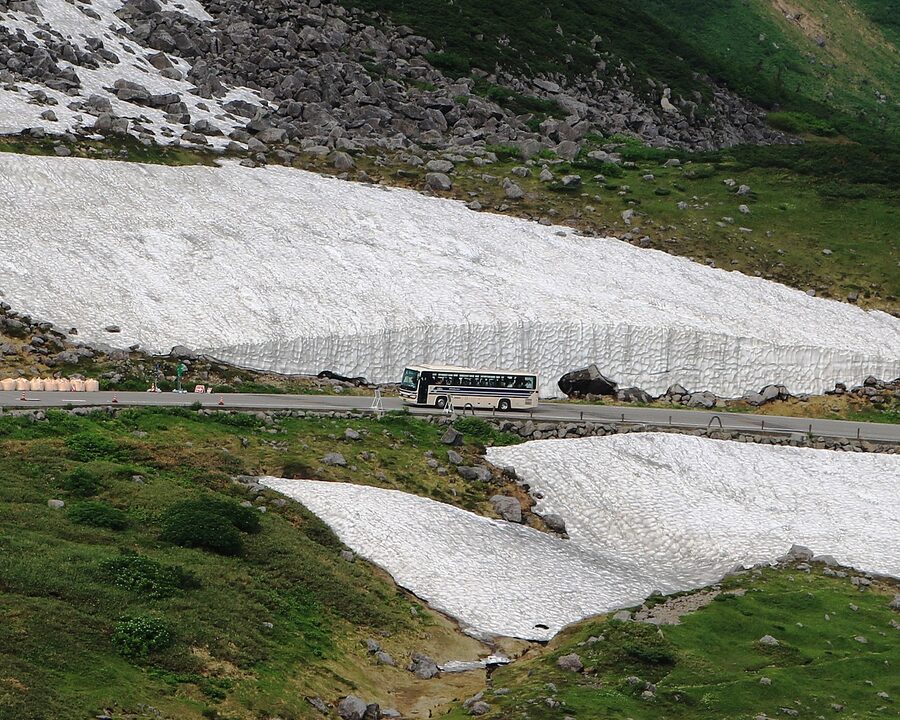
04:50 on the Murodo plateau in late April. The Yuki-no-Otani bus has just lifted out of Bijodaira on the year’s first valid run, and at the last hairpin the driver eases off the throttle so the carriage rolls between two snow walls that stand seventeen metres above the cabin. The blue light reaching the bottom of the corridor is the colour of the inside of a wave. The bus moves at twenty kilometres an hour. There are six other passengers, all wearing borrowed gloves; the driver did not warn that snow walls in late April still throw cold off the surface like a freezer door left open. That is the moment when the rest of Japan’s winter scenery rearranges itself in your head, because you finally understand the difference between a snowy place and a place that has built a season around snow.
This is a working ranking, not a list. Japan has well over five hundred ski resorts and roughly the same number of villages that look like a postcard once a year, and a writer trying to do justice to all of them ends up flattening everything into “dusted in white”. So I’ve picked ten places where the snow does something specific and decisive, then ranked them by how much harder it would be to find anywhere else on earth. Each entry has the timing window, how to actually reach it, where to stay, and the sentence I wish someone had told me in advance.
Pricing claims here are verified against operator sites on 7 May 2026. Where I flag a date or fare, that’s why. Two product changes this season are worth knowing in advance: the Tsugaru Railway stove cars have been uncoupled from running trains since 30 December 2025 and are now sitting on platform 4 at Tsugaru Goshogawara as a free walk-through display, with re-coupling resuming on 10 April 2026; and the Hakkoda Ropeway has flagged a fare revision from 1 August 2026, so winter fares this season are still the standard ones quoted below.
In This Article
- 1. Tateyama Kurobe Yuki-no-Otani: the seventeen-metre snow corridor
- What to wear at 2,450 metres in April
- 2. Zao juhyo: the snow-monster trees of Yamagata
- Getting to Zao Onsen
- 3. Shirakawa-go gassho-zukuri under fresh snow
- The viewpoint walk
- 4. Shiretoko drift ice: pack ice at 44 degrees north
- Getting to Abashiri
- 5. Hakkoda rime trees: Aomori’s quieter answer to Zao
- Getting to Hakkoda from Aomori
- 6. Otaru Snow Light Path: candles along the canal
- 7. Sapporo Snow Festival: ice sculptures at industrial scale
- 8. Kinkaku-ji in snow: the Kyoto rarity
- 9. Ginzan Onsen: the gas-lamp street under snow
- 10. Tsugaru Railway Stove Train: a winter-only ride
- Getting to the line
- Honourable mentions worth a sentence each
- Practical: driving on Japanese winter roads
- Practical: how the Shinkansen handles snow
- What to wear at −10°C
- When to go: a one-paragraph season-by-month
1. Tateyama Kurobe Yuki-no-Otani: the seventeen-metre snow corridor
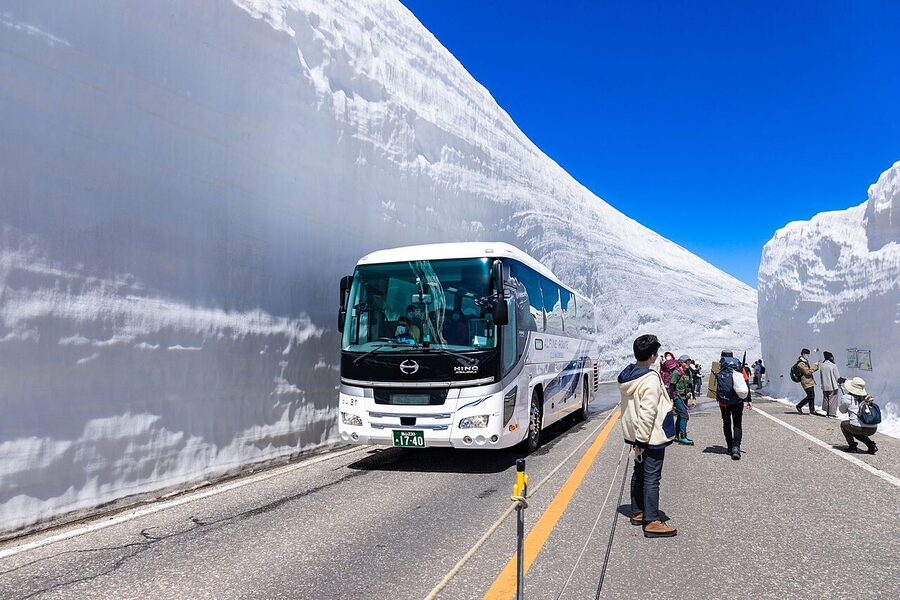
Nothing else in Japan does what this does. The Yuki-no-Otani is a 500-metre stretch of road on the Tateyama Kurobe Alpine Route where the winter ploughs cut packed snow square, and at peak depth in mid-April the walls hit seventeen to twenty metres. The 2026 season runs 15 April to 30 November, the route’s 55th anniversary year, and the Yuki-no-Otani walking section opens with the route on 15 April and closes around 25 June once the walls drop below safety height.
The decisive bit is timing the day, not the season. Most travellers arrive at Murodo on a 10:00 bus from Toyama, walk the corridor between 11:00 and 13:00 with everyone else, then leave. Stay overnight at the Hotel Tateyama or one of the two Murodo huts, and you can stand in the corridor at 06:30 with no one in the frame at all. (Note: Hotel Tateyama is closing as a lodging on 31 August 2026, so 2026 is your last winter-spring there as a stay; day-use will continue.) From Toyama Station the round-trip Alpine Route ticket to Murodo costs ¥14,180 for an adult; the full traverse to Shinano-Omachi runs ¥15,240 one way, ¥28,280 round trip.
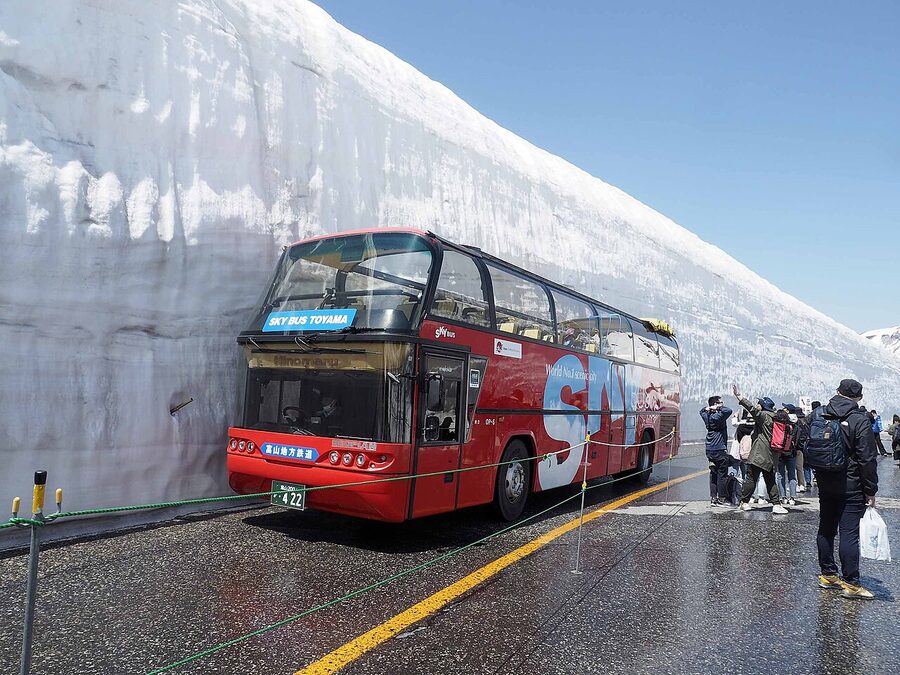
What to wear at 2,450 metres in April
Murodo Terminal sits at 2,450 m, which means an April afternoon at the corridor often runs −5°C with a hard wind. A regular city winter coat will not be enough; you want a proper insulated shell, gloves you can take photos in, and footwear with grip. There are vending machines for hot drinks at the terminal but the queue at lunch is long. Bring water.
2. Zao juhyo: the snow-monster trees of Yamagata
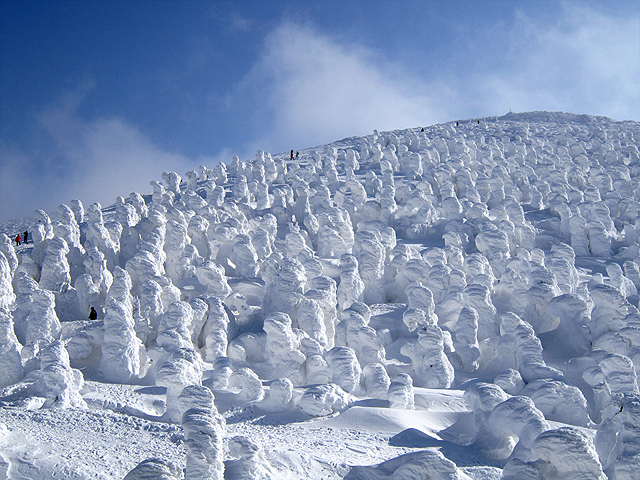
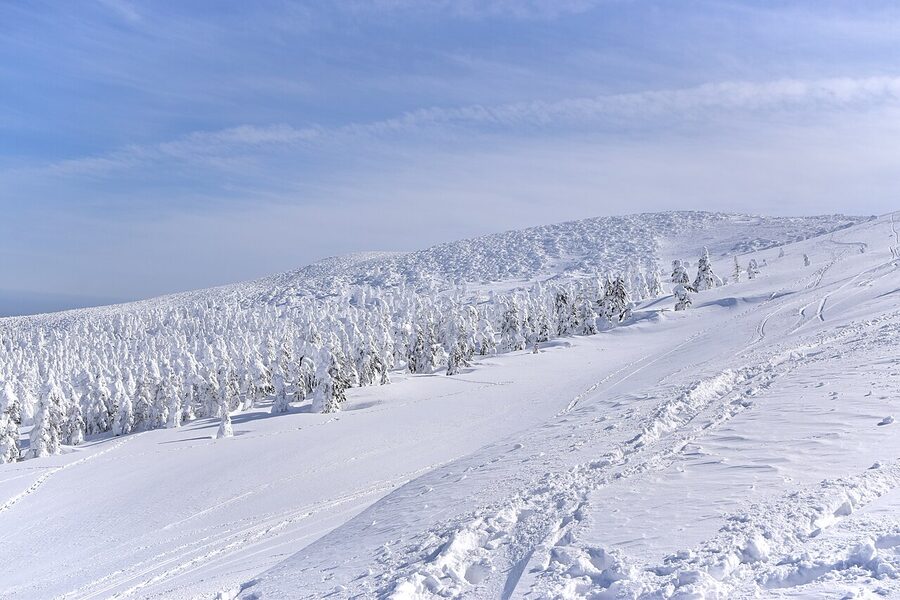
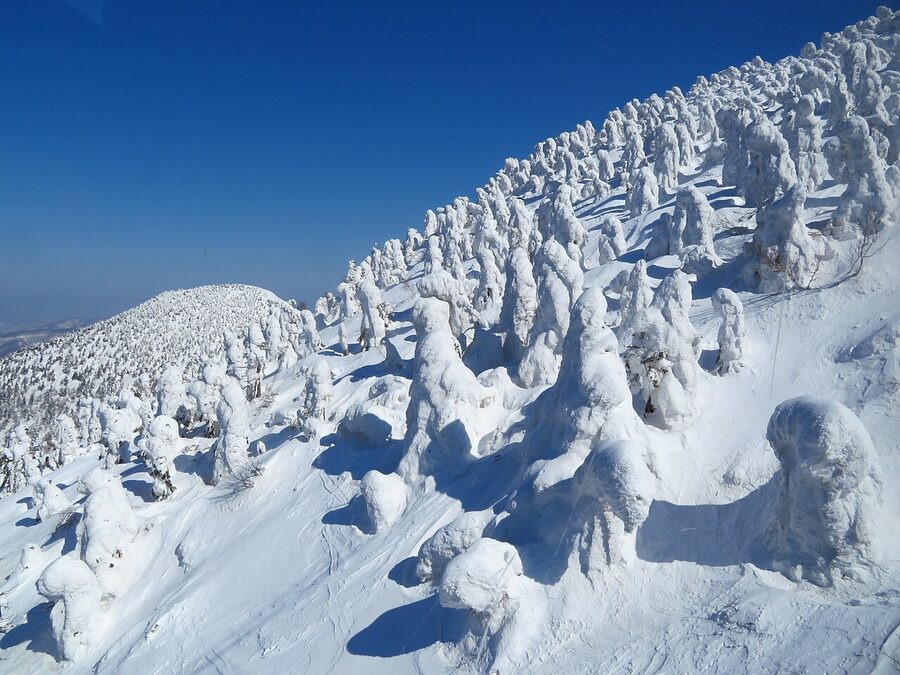
The juhyo (literally “tree ice”) are formed by a specific weather sandwich: prevailing winds from the Sea of Japan carry cloud droplets that freeze on contact with the Aomori-todomatsu fir, then snow accumulates between the rime layers until each tree looks like a hooded figure climbing the slope. Conditions need to line up; not every winter delivers a full year. Mid-January through early March is the season, late January to mid-February the peak. Yamagata’s Mt. Zao is where to see them.
Get up there on the Zao Ropeway from Zao Onsen village. The ropeway has a 2026 inspection closure on the upper line from 7 to 29 May, but that is well after juhyo season; through January and February both lines run. The ropeway also runs a juhyo evening illumination programme, where the trees are lit from below and look like frozen ghosts; tickets are timed and sell out, so book ahead via zaoropeway.co.jp.
Getting to Zao Onsen
From Tokyo: Yamagata Shinkansen Tsubasa to Yamagata Station (about 2h 45m), then bus to Zao Onsen (about 40 minutes, ¥1,000 each way). The first morning ropeway run is usually 08:30; if the trees are good the queue at 09:00 is already an hour long. Take the first one. Note that the Yamagata Shinkansen had its first fare revision since 1987 implemented from March 2026, so quoted older blog prices may understate it.
3. Shirakawa-go gassho-zukuri under fresh snow
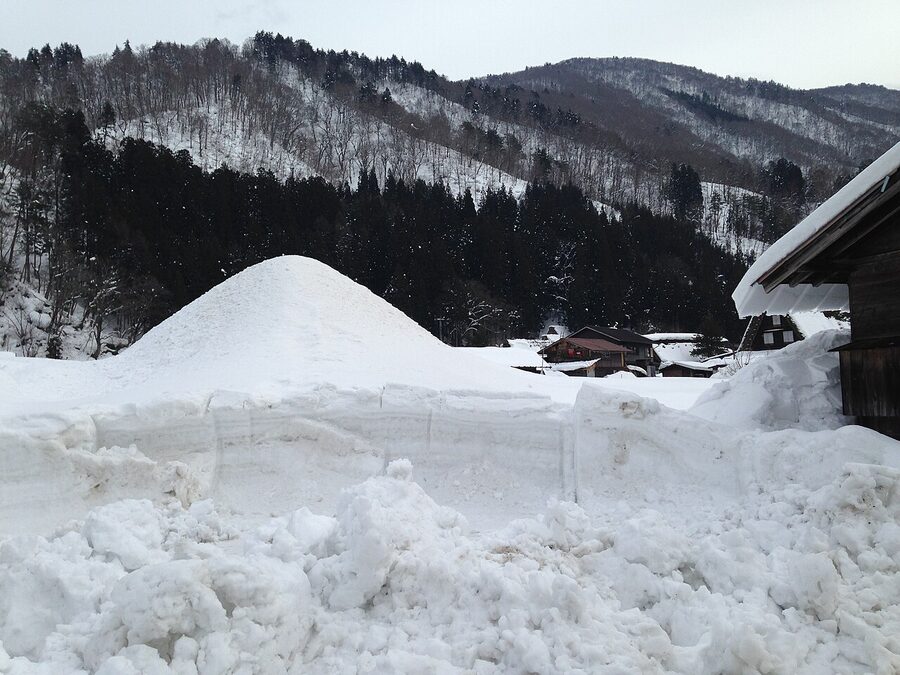
The Shirakawa-go village is one of those places that looks better than the photographs suggest, partly because the photographs cannot capture the size: the steep thatched roofs of the gassho-zukuri farmhouses are designed to shed up to two metres of snow, and standing in front of one is closer to standing under a wave than next to a roof. December through late February is the window, with the most reliable depth in mid-January. By the third week of February the snow is patchy on the eaves; the timing matters.
The annual evening light-up runs only four nights in 2026 (the dates were 12, 18, 25 January and 1 February), which is the photo most foreign visitors want and which is also why turning up that evening without a reservation has been impossible since 2019. The reservation logistics for that specific event are involved enough to deserve their own piece, so see the light-up reservation guide for how the lottery actually works. For a regular fresh-snow morning, no booking is needed; just take the Nohi Bus from Takayama (about 50 minutes, ¥2,600 each way) or the Hokutetsu bus from Kanazawa (about 75 minutes, ¥2,000), and walk into the village.
The viewpoint walk
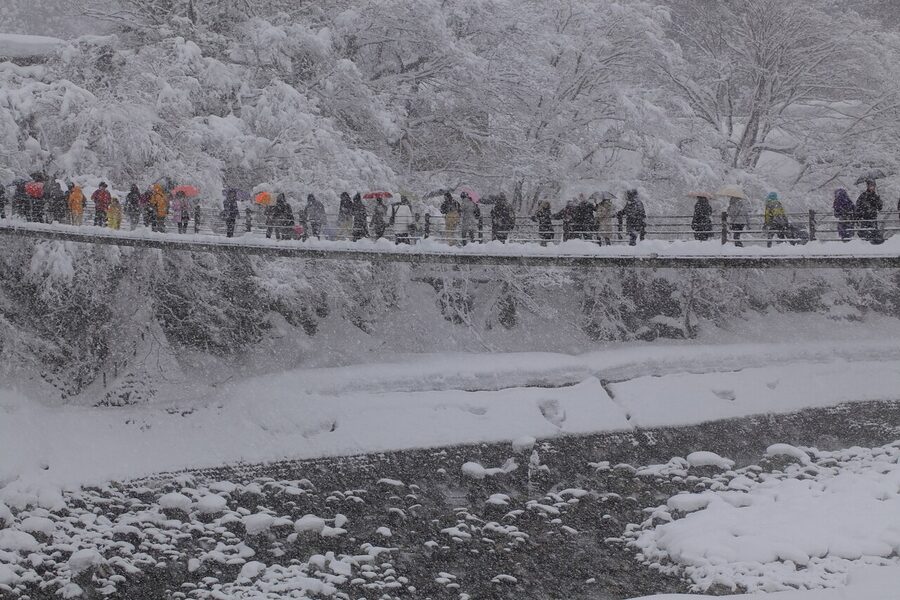
The Shiroyama Tenshukaku viewpoint above the village is the angle most photographs are taken from. Walking up takes 15 to 20 minutes from Wada House and the path is icy in spots, so wear actual boots not trainers. The viewpoint shuttle bus runs 09:00 to 16:00 in winter, ¥200 one way, but the walk is more interesting if you have the legs.
4. Shiretoko drift ice: pack ice at 44 degrees north
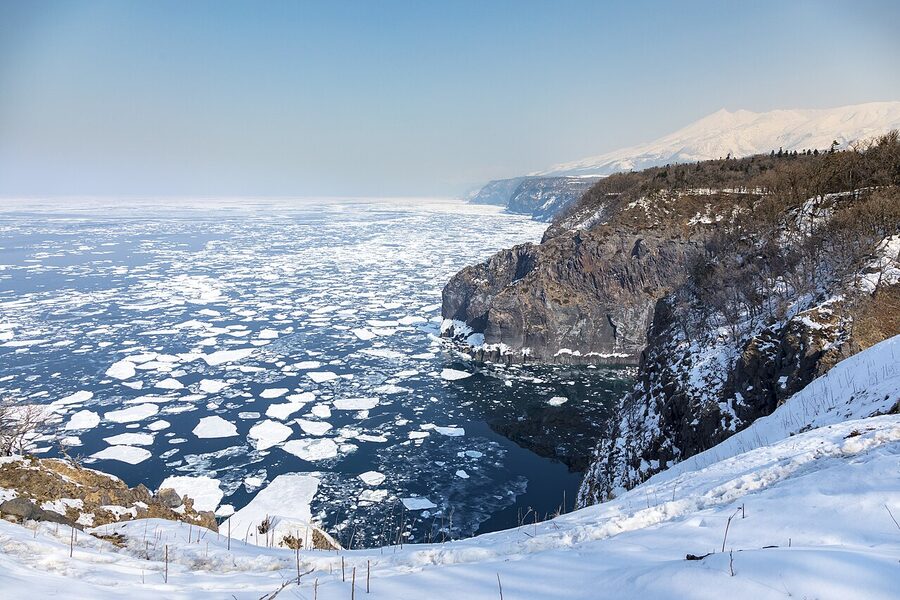
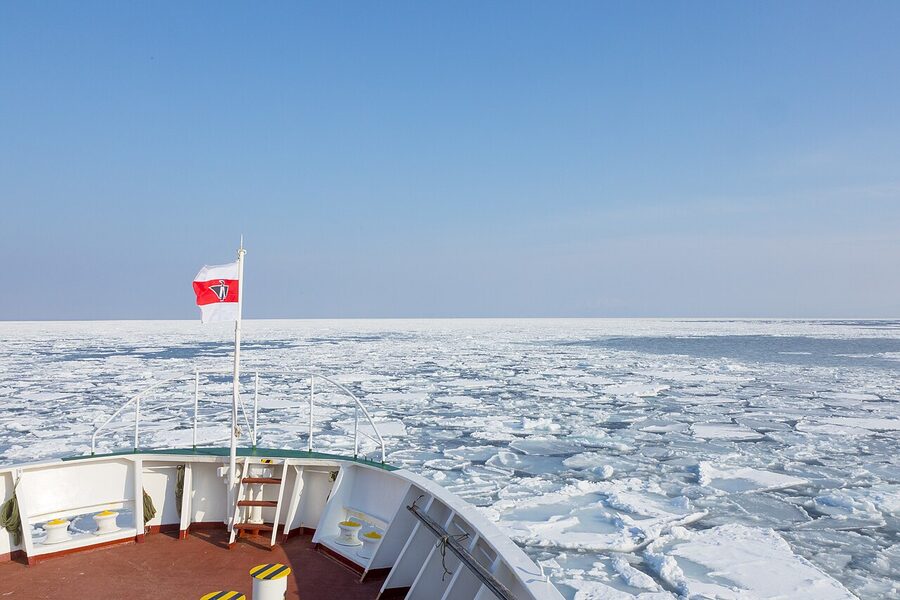
The ryuhyo (drift ice) is what convinced me Japan’s winter has things you cannot really compare. The ice is freshwater, born of the Amur River runoff into the Sea of Okhotsk, and it drifts south on the cold East Sakhalin current to crash up against the coast of Hokkaido between mid-January and early April. There is no equivalent at this latitude anywhere on the planet. The species attached to the ice on arrival is itself why Steller’s sea eagles and white-tailed eagles spend the winter here.
The standard way to see it is the Aurora drift-ice cruise from Abashiri port. The 2026 winter operating period runs late January through early April depending on ice conditions, and the operator implemented a fare revision from the start of the 2026 season, with prices that vary by month and ice density. Confirm the day’s sailing on ms-aurora.com before going. The boat is large and stable; the equivalent smaller-boat trip from Utoro on the Shiretoko peninsula gets you closer to the ice and to the eagles, but pitches more.
Getting to Abashiri
Memambetsu Airport is the closest, with multiple daily flights from Sapporo (Shin-Chitose, 50 minutes), Tokyo (Haneda, 1h 45m) and Osaka. From Memambetsu, an airport bus runs to Abashiri Station in 30 minutes (¥1,050). The boat dock is a 10-minute walk from the station. Build in two days: an Aurora morning, then the Abashiri Prison Museum or the Okhotsk Ryu-hyo Museum in the afternoon.
5. Hakkoda rime trees: Aomori’s quieter answer to Zao
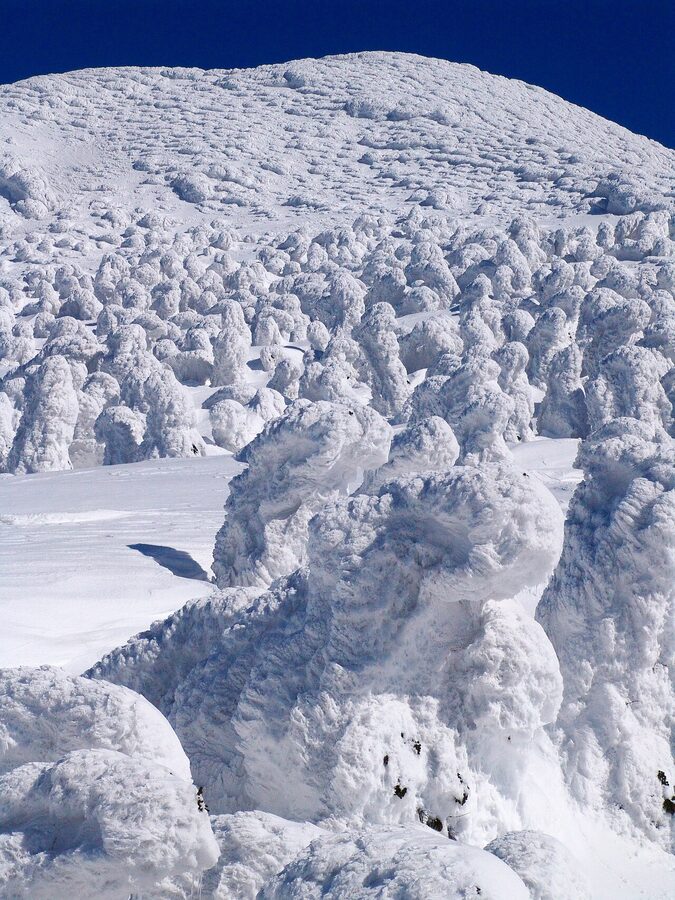
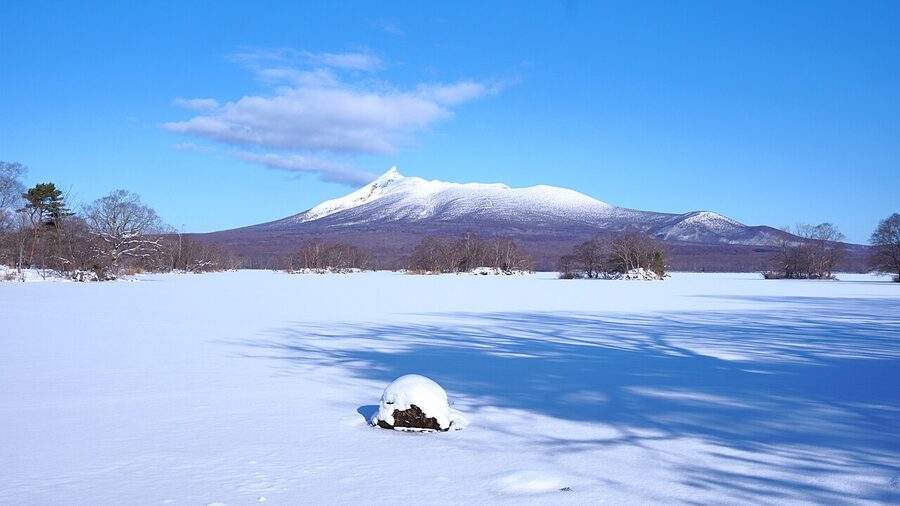
If Zao is the famous one, Hakkoda is the quieter one with arguably better rime in some years. The Aomori-todomatsu fir grows here too, the wind on the windward face is harder, and the rime is denser. Aomori as a city averages more snow per winter than any other major city on the planet, and the Hakkoda massif sits 30 km south of it. Most foreign visitors who do Zao have never heard of Hakkoda; that is partly why I’d send you here second.
The Hakkoda Ropeway runs from the foot of the mountain to Tamoyachi Plateau in about 10 minutes. As of May 2026 the fare is ¥1,400 one way and ¥2,200 round trip for an adult, ¥450 / ¥700 for primary schoolers, free for preschoolers. The operator has flagged a fare revision from 1 August 2026; if you’re travelling in winter 2026 to early 2027 those are still the prices. Hours: 09:00 first lift, 15:40 last in winter. The ropeway shuts in winds over 25 m/s, which happens.
Getting to Hakkoda from Aomori
JR Bus Tohoku runs the “Mizuumi-go” from Aomori Station to the Hakkoda Ropeway base in about 60 minutes, ¥1,250 one way. In winter the road is the only road, so the buses do not always run on time when there’s heavy snow; the JR Tohoku Shinkansen to Aomori (3h 5m from Tokyo) is reliable, but build a night in Aomori either side rather than trying it as a day trip.
6. Otaru Snow Light Path: candles along the canal
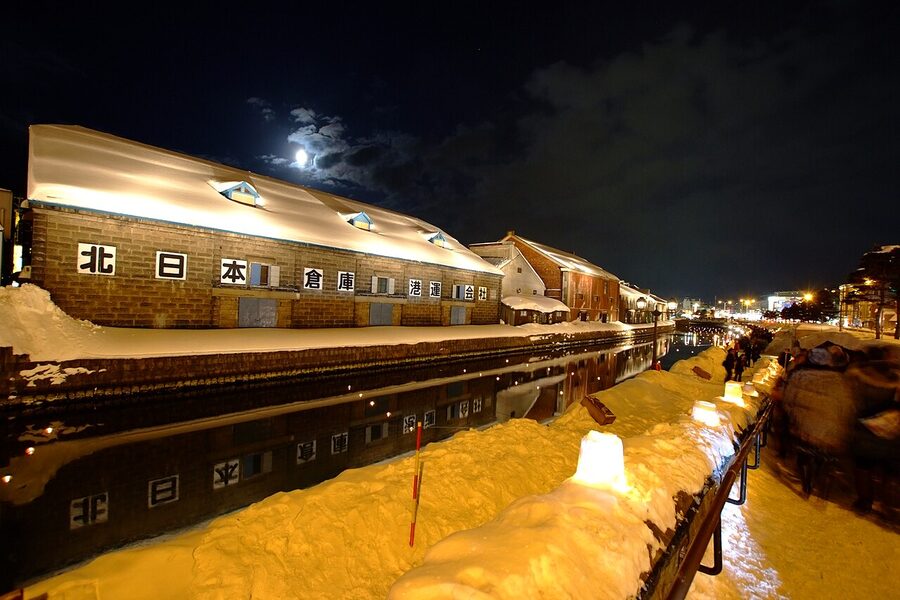
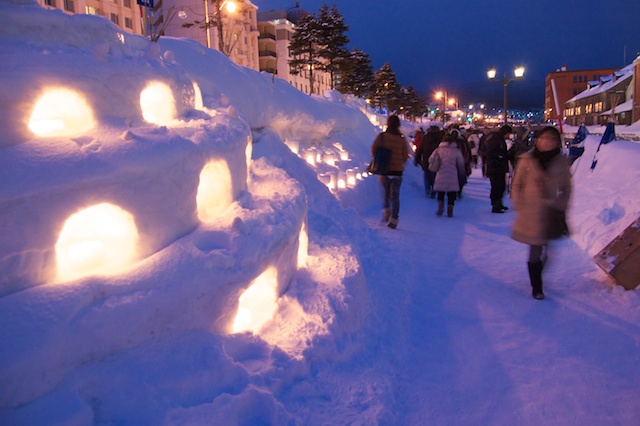
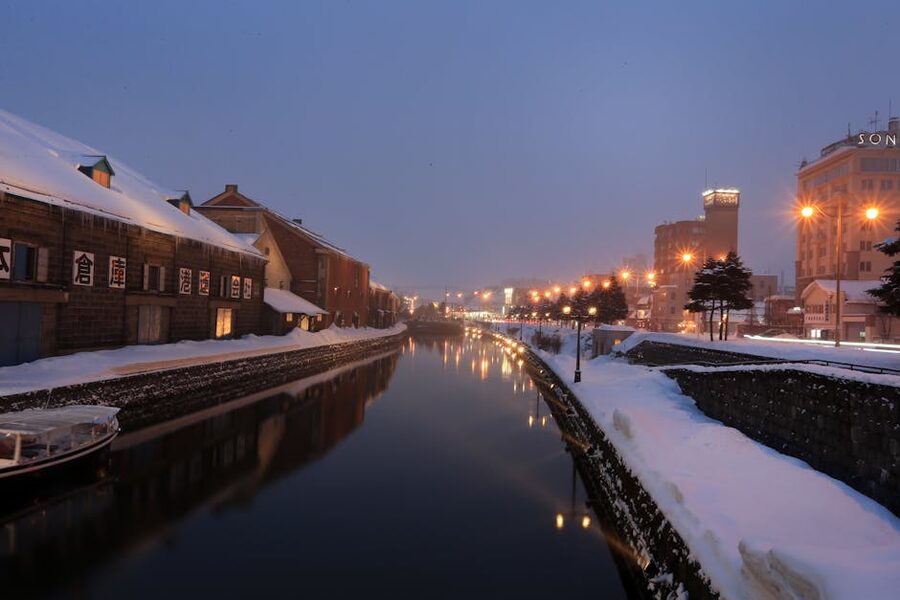
The Yuki Akari no Michi (literally “snow light path”) is one of Hokkaido’s smaller winter festivals and one of the better ones, partly because it is volunteer-run and partly because the venue is a canal that’s already photogenic. Candles are placed in snow lanterns and floats along the Otaru canal and the disused Temiya railway path; lights go on at 17:30 and the whole arc is walkable in about an hour. The 28th edition closed on 14 February 2026 (it ran 7 to 14 February); the 29th is provisionally planned for early-to-mid February 2027. Check yukiakarinomichi.org closer to the date.
From Sapporo it’s a 32-minute ride on the JR Hakodate Line Rapid Airport service to Otaru (¥750). The walk from Otaru Station to the canal is about 8 minutes. The festival is also a good excuse to stay in Otaru rather than day-tripping; the city has more atmosphere at 21:00 than at noon, and there are cheap ryokan with good snow views.
7. Sapporo Snow Festival: ice sculptures at industrial scale
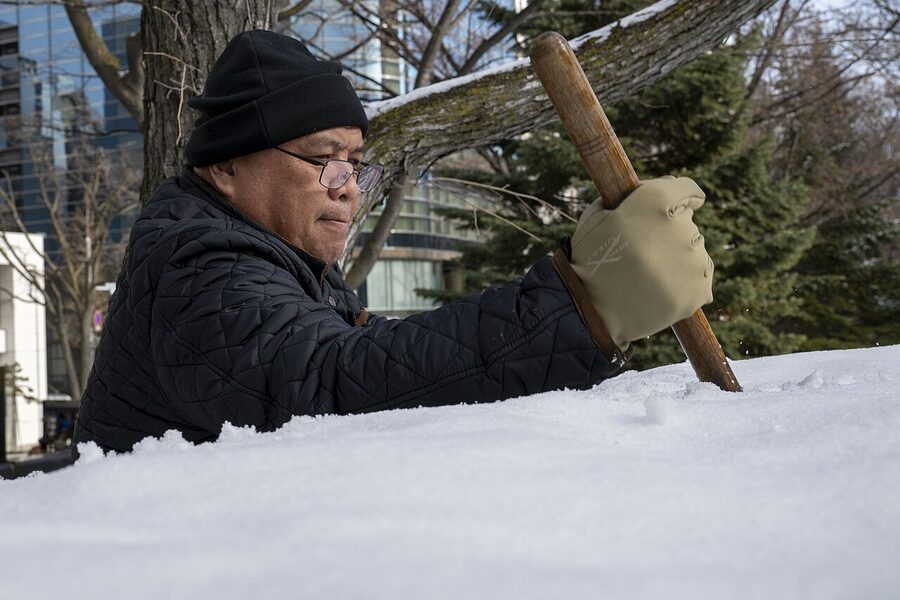
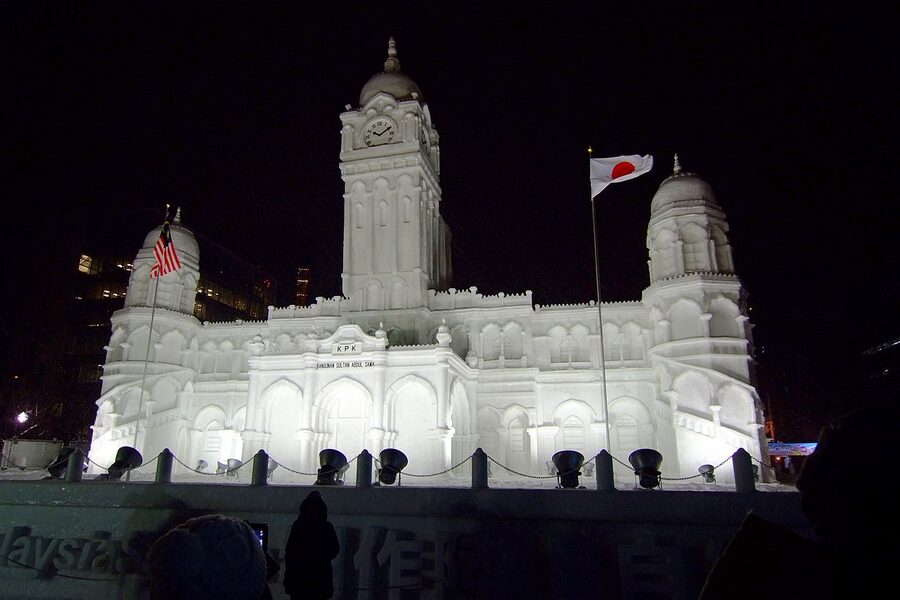
The Sapporo Snow Festival is the biggest winter event in Japan and the one most readers will already have heard of, so I’ll be brief. Two million visitors a year. Three official sites: Odori Park (twelve blocks of sculptures, the main draw), Susukino (ice sculptures, smaller-scale, easier crowds), and historically the Tsudome family site, though the Tsudome programme has been adjusted recently and you should confirm at snowfes.com which sites are running in your year. The 76th edition ran 4 to 11 February 2026; the 77th is provisionally 4 to 11 February 2027 (Thursday to Thursday).
The festival itself is free. The crowd from 18:00 to 20:00 on a Saturday is intense; weekday lunchtime is the time to walk the Odori sculptures slowly. Hotels in central Sapporo for festival week are typically booked five months ahead and prices roughly double, which is the only real warning I’d give.
8. Kinkaku-ji in snow: the Kyoto rarity
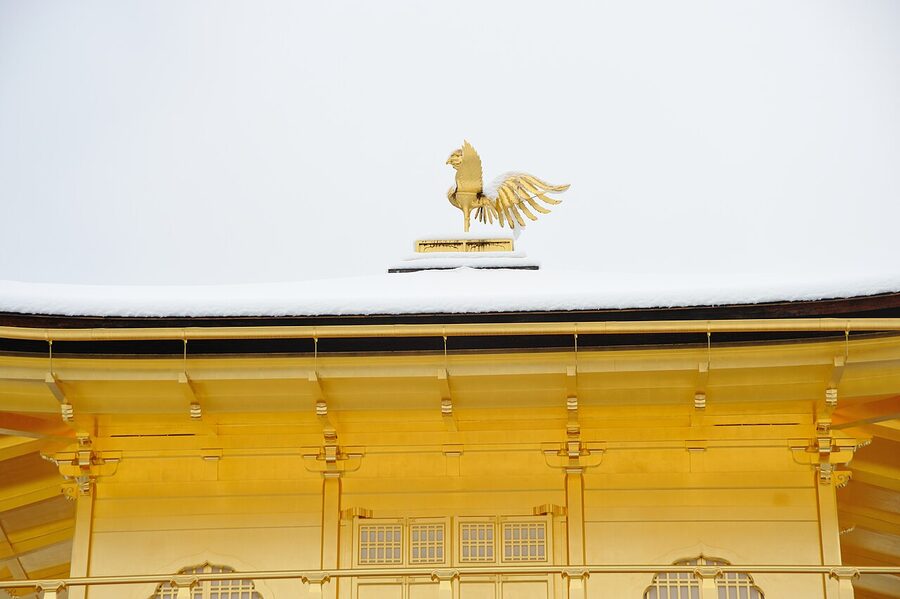
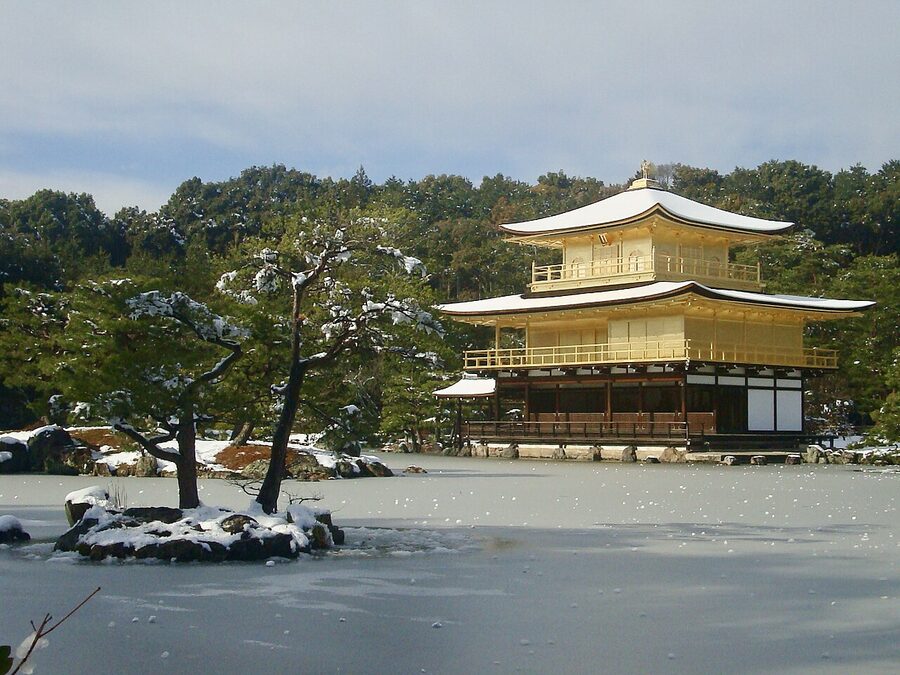
Kyoto in snow is rare and worth chasing. The city averages four to six days a year with measurable snow on temple rooftops, and only some of those mornings deliver enough to cap Kinkaku-ji’s gold-leaf roof and freeze the surface of the Kyoko-chi pond. When the alignment happens, the photograph that results is one of the most reproduced images in Japanese travel writing, which is a clue that you should plan flexibly rather than hard-target it.
The practical strategy: stay in Kyoto across two weeks in mid-January or early February, watch the JMA forecast for overnight snowfall warnings on Kyoto City, and on a snow morning be at Kinkaku-ji for the 09:00 opening. The temple holds queue management at the entrance after fresh snow; getting there at 08:30 and being in the front five reduces the people-in-frame problem. Adult admission is ¥500. The walk in from Kitano-Hakubaicho Station on the Keifuku-Kitano Line takes 25 minutes, or take Kyoto City Bus 205 from Kyoto Station to Kinkaku-ji-michi (about 40 minutes, ¥230). Note: the 1-day City Bus Pass was discontinued on 31 March 2024, so individual fares apply now.
9. Ginzan Onsen: the gas-lamp street under snow
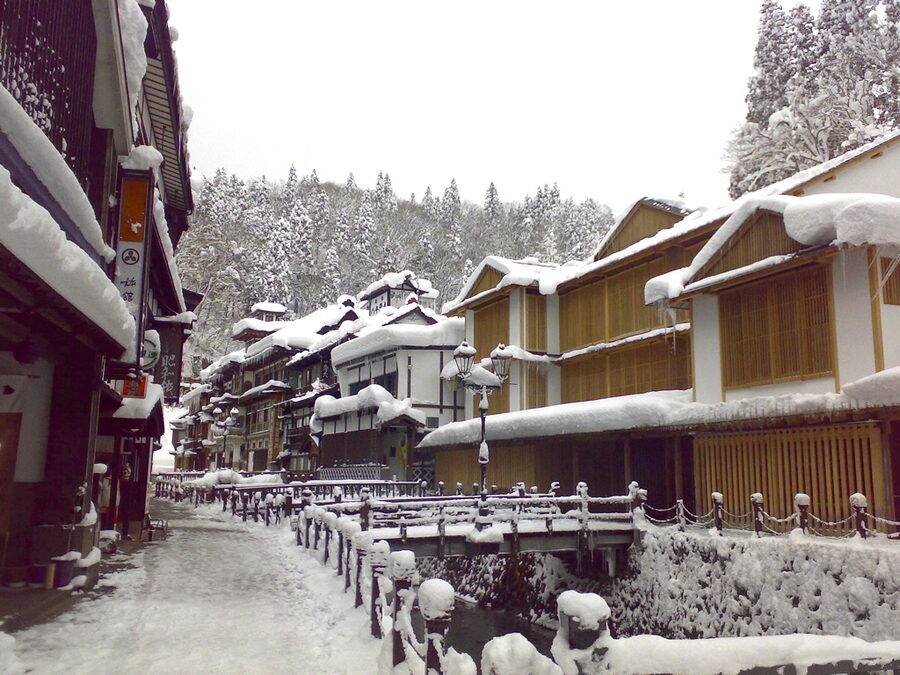
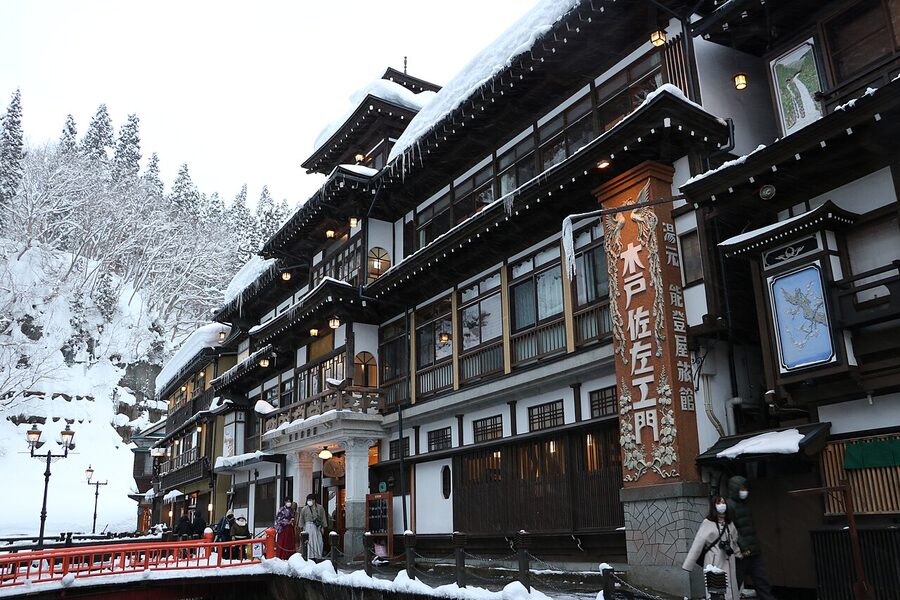
Ginzan Onsen is a small onsen village on the inland side of Yamagata Prefecture, with a single street of three- and four-storey wooden ryokan facing each other across a narrow river. In winter the snow piles on the eaves and gas lamps replace the streetlights at 16:30. The look is the visual reference Studio Ghibli is widely thought to have used for Spirited Away’s bathhouse town; whether or not the studio confirms that, the village does feel like a film set in the right light.
The decisive sentence: it is hard to do as a day trip and worth the extra night to do properly. The best ryokan are Notoya (the dark wooden one with the founder’s sign on the eaves), Fujiya (the Kengo Kuma rebuild from 2006, modernist on the inside), and Kojikan; all of them book six months ahead for January and February. From Tokyo: Yamagata Shinkansen Tsubasa to Oishida (about 3h), then a 40-minute Hanagasa Bus to Ginzan Onsen (¥750 each way, runs roughly hourly). The bus stops a 200-metre walk from the entrance to the gas-lamp street; cars are not allowed past that point in winter without a guest reservation.
10. Tsugaru Railway Stove Train: a winter-only ride
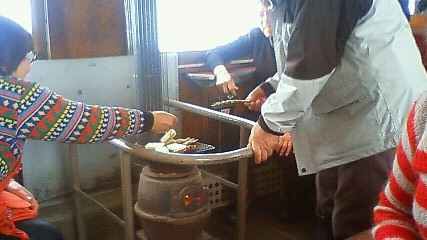
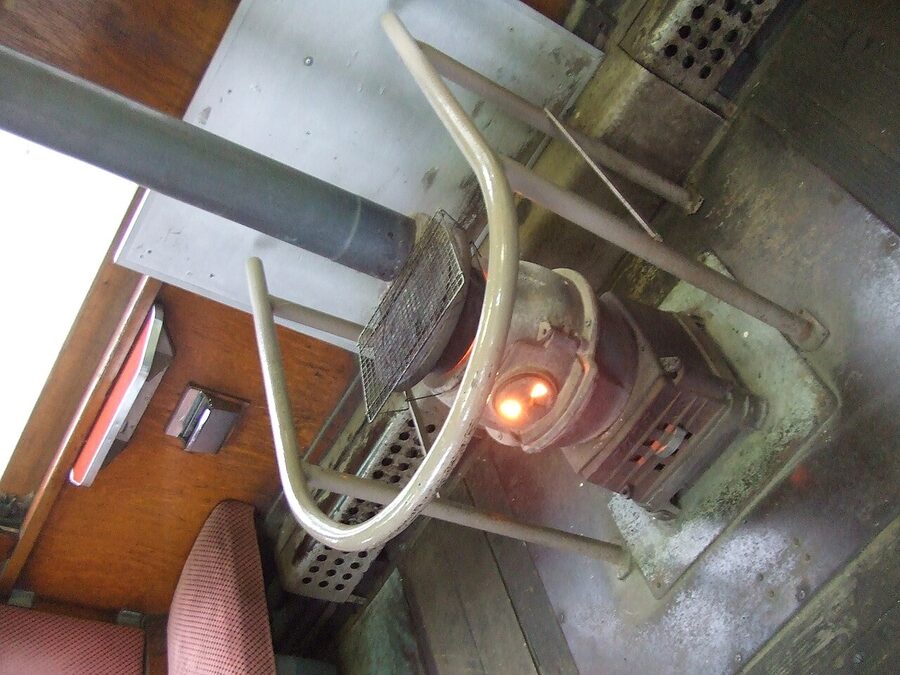
The Tsugaru Tetsudo runs old diesel locomotives pulling vintage 1947 passenger carriages with a coal-burning daruma stove down the centre of each car. In winter the conductor circulates with dried squid (surume) which passengers grill on the stove top. It is wholly low-tech and not built for tourists, which is why it works. The line runs 20 km between Tsugaru Goshogawara and Tsugaru Nakazato in Aomori prefecture.
2026 update: the stove cars have been uncoupled from running trains since 30 December 2025, and at the moment they are sitting on platform 4 of Tsugaru Goshogawara station as a free walk-through display, 09:30 to 17:00, with the stove lit and onboard sales running. Re-coupling resumes from 10 April 2026. So if you’re here in winter 2025-26 you can still see the cars and feel the stove, just not ride. From April 2026 onwards, the running fare is the regular one-way ticket plus a ¥400 stove-train surcharge.
Getting to the line
From Tokyo: Tohoku Shinkansen Hayabusa to Shin-Aomori (3h 5m), then JR Ou Line to Goshogawara (about 40 minutes), then walk five minutes to the Tsugaru Tetsudo terminus inside the same station. The full line traverse Tsugaru Goshogawara to Tsugaru Nakazato is about 45 minutes; with the stove and surume eating, plan two hours round trip.
Honourable mentions worth a sentence each
The big-ten ranking is not exhaustive. A handful of places that didn’t quite make the cut, ordered roughly by how often I think about them:
- Biei and the Blue Pond at Shirahige Falls. The pond stays blue right up to early November when it ices over; the falls are the better winter target, lit nightly from October through April. About 25 minutes by bus from JR Biei.
- JR Tadami Line. The Aizu-Wakamatsu to Koide line through Fukushima and Niigata is one of the slowest scenic JR lines in Japan, especially the First Tadami River Bridge. Best in late January.
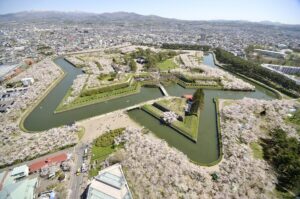
- Goryokaku Park, Hakodate. The star-shaped fortress is illuminated nightly Dec to Feb. Climb the Goryokaku Tower for the only angle where the star reads correctly.
- Akita Yokote Kamakura Festival, 13–14 February. Children build snow igloos along the river; you’re invited in for amazake. Genuinely participatory rather than spectator.
- Jigokudani Monkey Park, Nagano. Snow monkeys in onsen baths. Open year-round, but the snowfall makes this the season; mid-Jan to mid-Feb. Walk in from Kanbayashi Onsen, 30 minutes.
- Asahikawa Winter Festival, early February. Builds the single biggest snow sculpture in Japan annually; quieter and free of the Sapporo crowd.
- Niseko night-snow village. Skiing aside, the Niseko central village under powder is quietly beautiful at 22:00 once the lifts close. Hirafu Yotei View viewpoint is a five-minute uphill walk.
Practical: driving on Japanese winter roads
If you’re self-driving in winter, the rules are not optional. Studded snow tyres or chains are mandatory by prefecture across most of the snow-country regions from December through March; failing to fit them and getting stuck or causing a collision is a fineable offence. Most rental car companies in Hokkaido, Tohoku, and the Sea of Japan side fit snow tyres on every car between roughly 1 December and 31 March automatically; renting in Tokyo and driving north, you need to specifically request and pay extra for snow tyres. ETC tolls are open all winter; expressways close section by section during heavy snowfall events.
Two route notes. The Tokai-Hokuriku Expressway between Shirakawa-go and Takayama gets winter chain regulation activated multiple times per January; if it’s in force, you cannot proceed without studded tyres or fitted chains. The road through the Tateyama foothills to the Alpine Route lower terminal at Tateyama Station gets a similar regulation March through April.
Practical: how the Shinkansen handles snow
Foreign visitors are sometimes surprised that the Tohoku and Hokkaido shinkansen run reliably in heavy snow, while Tokyo’s commuter trains stop running on a few centimetres. The shinkansen tracks are heated, the catenary is heated, and Tohoku trains have specially designed nose snow-clearance fairings. Cancellations during winter are rare. Where things go wrong is on transfers to small regional lines: you can take the Tohoku Shinkansen Hayabusa from Tokyo to Aomori on schedule and then find that the JR Tsugaru Line into the Tsugaru region is suspended for the day. Build slack into the day-trip plans, especially for Aomori, Akita, and the Sea of Japan side of Niigata.
What to wear at −10°C
Northern Japan in deep winter sits at roughly −5 to −15°C in the daytime, lower with windchill at altitude. A standard down jacket from temperate climates is not enough on the Hakkoda or Zao ropeway tops. The basics: a thermal base layer, a midweight fleece or down inner, and a windproof outer shell, plus thermal lined trousers if you’re going to be standing around. Gloves matter; touchscreen-compatible inners under a thick outer pair lets you take photos without freezing your hands. Cheap waterproof boots with rubber soles will outperform expensive leather hiking boots on ice. For the very cold places (Murodo plateau, Hakkoda summit), buy or hire chemical hand warmers (called kairo in Japanese) at any convenience store; they last 12 hours in a glove or pocket.
When to go: a one-paragraph season-by-month
December: snow is settling but not deep. Best for early Hokkaido (Sapporo opens its winter illumination from late November) and Shirakawa-go starting late month. January: peak in Hokkaido and Tohoku; rime trees building at Zao and Hakkoda; Shirakawa-go properly dressed. Early February: the festival window (Sapporo, Otaru, Asahikawa, Yokote Kamakura). Mid-February: the deepest snow nationally; everywhere is white; rime trees at peak. Late February to March: drift ice peaks at Shiretoko and Abashiri; snow starts retreating from Honshu lowlands. April: the Yuki-no-Otani opens at Murodo. May to June: the snow walls drop but stay walkable; high-altitude residual snow at Tateyama, Hakkoda upper slopes, Shin-Hotaka.
If you have to pick one trip across one year, I’d still pick the one that opened this article: the late-April morning bus into the Yuki-no-Otani, the corridor blue at 04:50, and the rest of the country’s winter still settling itself in your head while the bus pulls up to Murodo Terminal and the doors hiss open and the cold gets at your face for the first time. There are other moments. That one is the one to chase.


_at_Zao)_08_Feb,_2011_-_panoramio.jpg)
.jpg)


_-_panoramio.jpg)


.jpg)
.jpg)
.jpg)


