
Turning up at Shirakawa-go on a light-up evening without a reservation has been impossible since 2019. Most of the photo-tour packages selling “Shirakawa-go winter light-up” experiences for around ¥40,000 to ¥60,000 a head are quietly priced at four to five times the room rate they include, because the operators hold the lottery-allocated minshuku rooms that almost no one else can get.
That sounds like editorialising. It isn’t. The Shirakawa-go Tourist Association moved the entire event onto a strict reservation system after the 2019 season because the village of around 1,500 residents was being engulfed by 20,000-plus visitors on each light-up night. The 2026 event runs only on Jan 12 (Mon, public holiday), Jan 18 (Sun), Jan 25 (Sun) and Feb 1 (Sun), with illumination from 17:30 to 19:30. Four nights. Two hours each. Hard cap on numbers. No same-day tickets, no walk-ins, no exceptions at the gate.
So the reservation system is the article. If you understand how it actually works, your odds of seeing the light-up at a sensible price go from “buy a tour for ¥50,000” to “¥6,000 per car or a single bus seat at ¥9,000 to ¥15,000”. Here’s the system, the cracks in it, and the realistic alternatives if you don’t get in.
In This Article
- The 2026 dates and what’s actually on those four nights
- What changed in 2019, and why every entry costs money now
- The lottery: what you actually have to do, and when
- The Shiroyama Tenshukaku observation deck, and why most photos you see were taken from there
- The car-park reservation: the cheapest route in if you can drive
- Winter tyres, the expressway, and the rule that bites every year
- The route-bus packages: the channel most foreign visitors actually use
- The day-trip-from-Takayama option for those without rooms or cars
- What the village actually looks like at the light-up moment, vs the photographer’s imagination
- What to wear: -5°C average, drops to -10°C, snow on every surface
- The food problem: most cafes close at 17:00
- What to actually do during the four daytime hours, before the lights come on
- The drone rule, the rubbish rule, the residents-live-here rule
- What to do if you don’t win the lottery, the parking, or a bus seat
- Combining the visit with the rest of a winter Japan trip
- The lottery applications open again on 1 October 2026
The 2026 dates and what’s actually on those four nights
This is the 40th edition of the event. The official dates, confirmed on the Shirakawa Village office page (vill.shirakawa.lg.jp) and mirrored by the Gifu prefectural tourism site:
- Monday 12 January 2026, public holiday (Coming-of-Age Day weekend); 17:30–19:30
- Sunday 18 January 2026; 17:30–19:30
- Sunday 25 January 2026; 17:30–19:30
- Sunday 1 February 2026; 17:30–19:30
Note the Monday slot. January 12 is the only weekday because of the three-day weekend; every other date is a Sunday. This matters if you’re working backwards from a flight: if your only free evening is a Saturday, the light-up isn’t your evening.
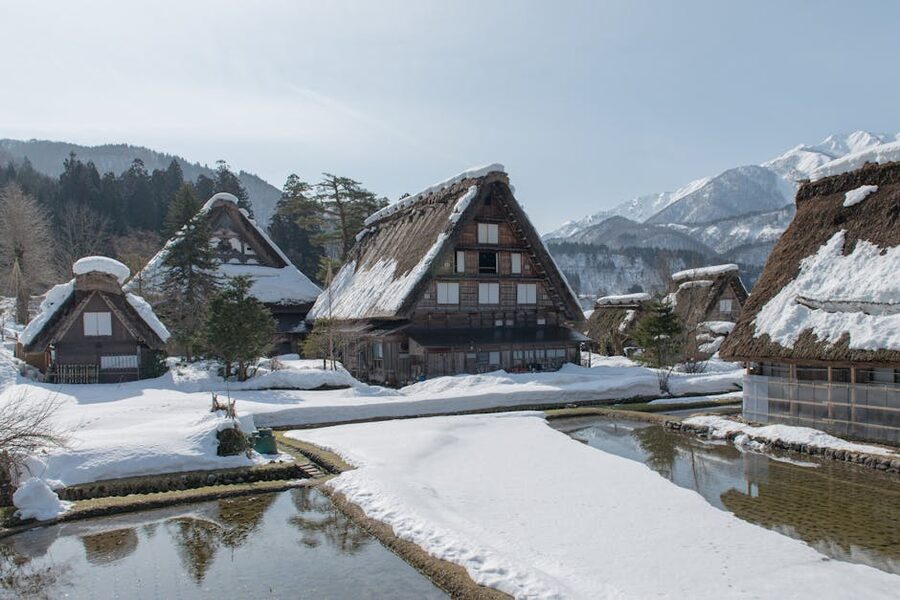
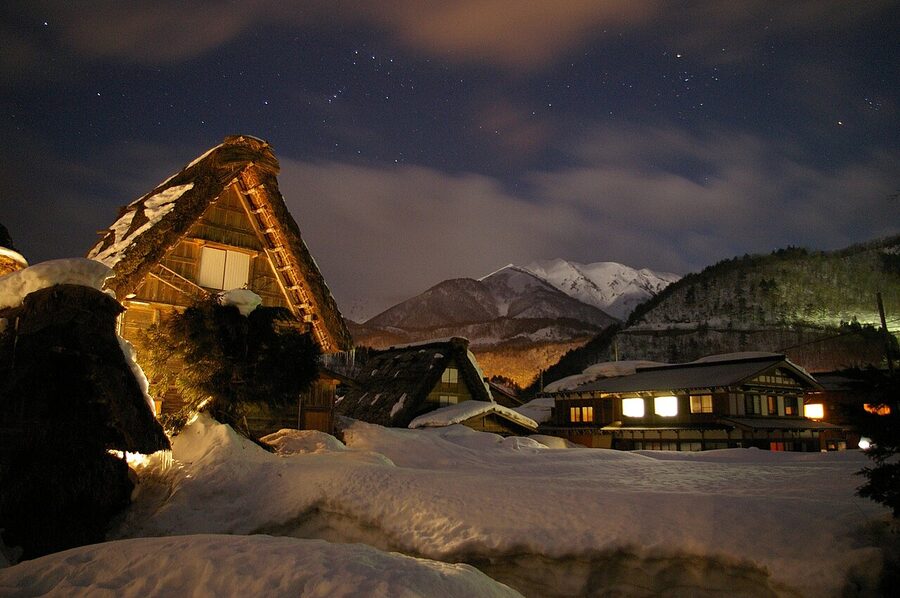
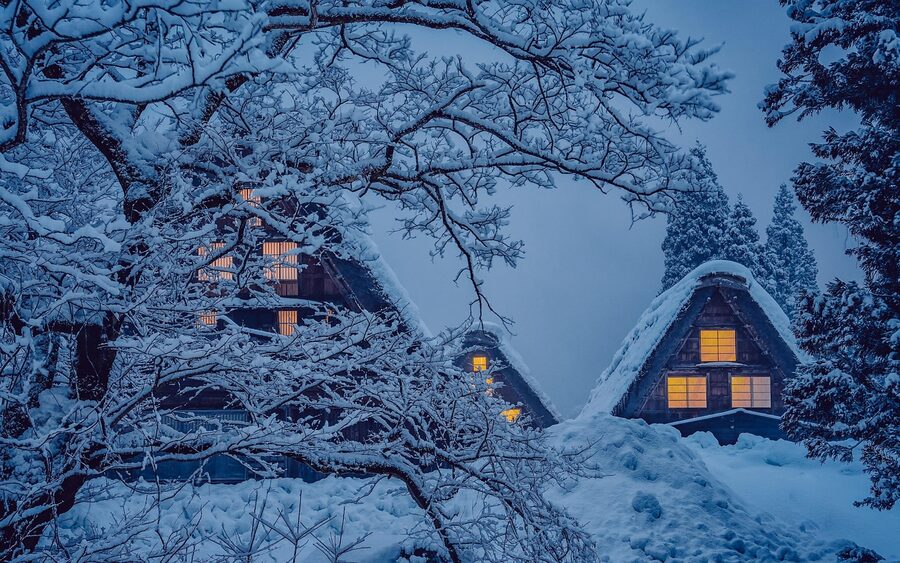
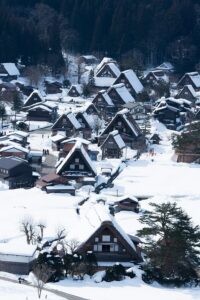
Two hours of illumination, on each night. The lights come on at exactly 17:30 and go off at 19:30. There is no gradual ramp, no encore. Floodlights at the southern and northern edges of Ogimachi, plus targeted beams on the major gassho-zukuri farmhouses around Myozenji and the Wada House. The houses themselves stay residential, so window lights inside the farmhouses are organic rather than choreographed. Snow on the steep thatched roofs catches the floods and turns the village into the postcard you’ve already seen.
The event is weather-dependent. In recent seasons the organisers have cancelled individual nights when a major cold snap threatened transportation safety on the Tokai-Hokuriku Expressway. Cancellations are announced on the Shirakawa-go Tourist Association site and refunded automatically; you do not need to chase them.
What changed in 2019, and why every entry costs money now
For about three decades the Shirakawa-go winter light-up was a free, walk-in event. You drove or bused in, parked on a verge, and joined the crowd. By the late 2010s the village was hosting around 6,000 to 8,000 visitors during a single two-hour window, with cars queueing back onto the Tokai-Hokuriku Expressway and pedestrians spilling into the residential parts of Ogimachi where actual families live.
The 2019 season was the breaking point. The tourist association ended same-day access and built a five-route reservation system, which is what’s still in place. Every visitor on a light-up evening now arrives via one of these channels, all of which are paid:
- Stay overnight at a Shirakawa-go ryokan or minshuku that’s joined the lottery system. Rooms include a deck ticket. Allocated by lottery, applications October only, results announced 10 November.
- Book a designated parking spot for your own car or rental. First-come first-served, online only, two release waves (mid-September and 1 December). ¥6,000 to ¥9,000 per vehicle depending on capacity.
- Take a route-bus tour from Takayama, Kanazawa, Toyama, Nagoya or Hokuriku via Nohi, Kaetsuno, Hokutetsu, Toyama Chiho Tetsudo or Iruka Kotsu. Round-trip bus seat with deck ticket included. Released wave-by-wave from early October.
- Book a private travel-agency tour (Willer, Club Tourism, Veltra, Meitetsu Kanko, etc.). Bus seat included; deck ticket usually NOT included, except where a tour explicitly states it is.
- Reserve a taxi through one of the village-licensed operators, with a parking-lot reservation paid in addition.
That’s the entire menu. The walk-up evening is gone for good. The official position, in the village’s own words, is that the cap exists to ensure a safe and pleasant experience for all visitors and to reduce the burden on a small village. In practice it also means the village now sleeps on light-up nights instead of being shouted at by 6,000 strangers.
The lottery: what you actually have to do, and when
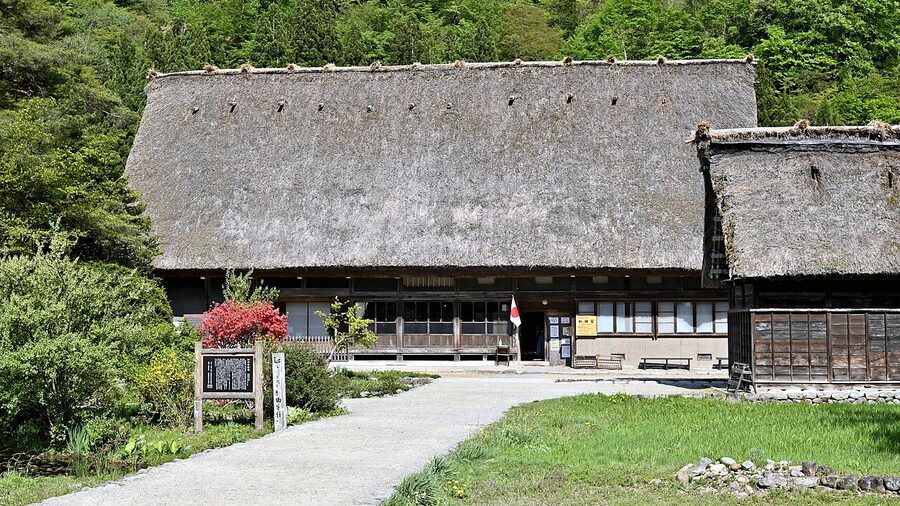
The accommodation lottery is the only way to spend a light-up night actually inside the village. It runs through the Shirakawa-go Tourist Association’s reservation portal (shirakawa-go.gr.jp) and the timing is non-negotiable:
- Application window: 1 October to 31 October every year, in the year before the event
- Results announced: 10 November (winners only get an email; non-winners get nothing)
- Payment: by credit card via the URL in the winning email, within 7 days of receipt; missed payment forfeits the room
For 2026, the window closed 31 October 2025 and results landed on 10 November 2025. If you’re reading this looking at January 2027, you’re back in the queue: October 2026 application, results 10 November 2026, event January and February 2027.
The terms are stricter than they look:
- One application per person. Multiple entries with different dates or different ryokan get the entire application disqualified, not just the duplicates.
- You cannot modify the application after submission. Wrong date, wrong room type, wrong number of guests: tough. Rejected.
- You must present your original passport (or equivalent ID) on the night, against the name on the booking. Photocopies don’t work and the staff do check.
- The lottery covers about 250 to 300 guest beds across roughly 20 to 25 properties. The total number of applications routinely runs into the tens of thousands, in three or four languages. The odds are bad and the competition is global.
Cost ranges I’ve seen for 2026, from village minshuku that opted into the lottery: roughly ¥15,000 to ¥28,000 per person on a one-night, two-meals basis. Higher-end gassho farmhouses crack ¥30,000. Rooms are simple tatami, mostly shared bathrooms. The breakfast is the morning-after photo session in the snow you came for.
The strategic point: a winning room comes with a Shiroyama Tenshukaku observation deck ticket, which means the lottery is the cheapest reliable route to the only above-village viewpoint during the illumination. Everything else costs more.
The Shiroyama Tenshukaku observation deck, and why most photos you see were taken from there
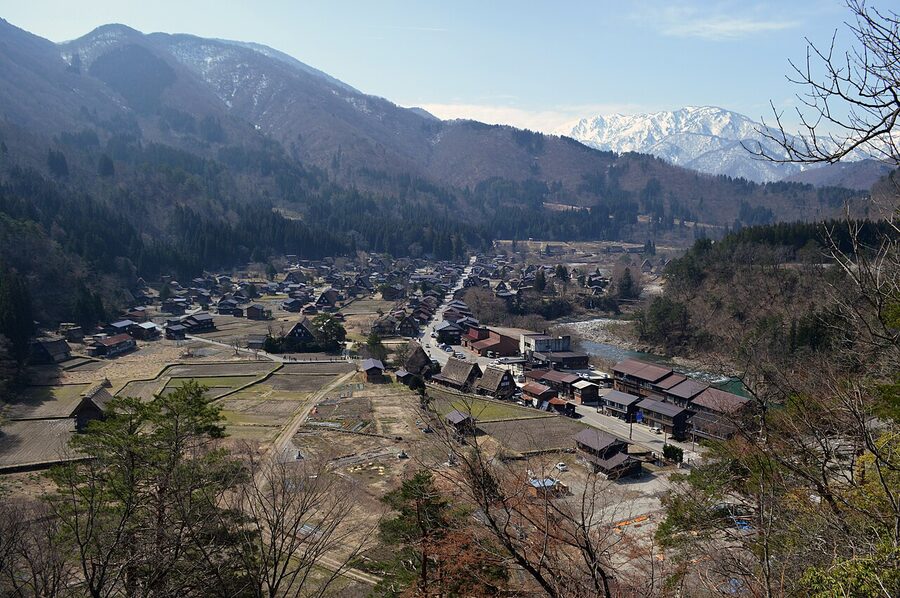
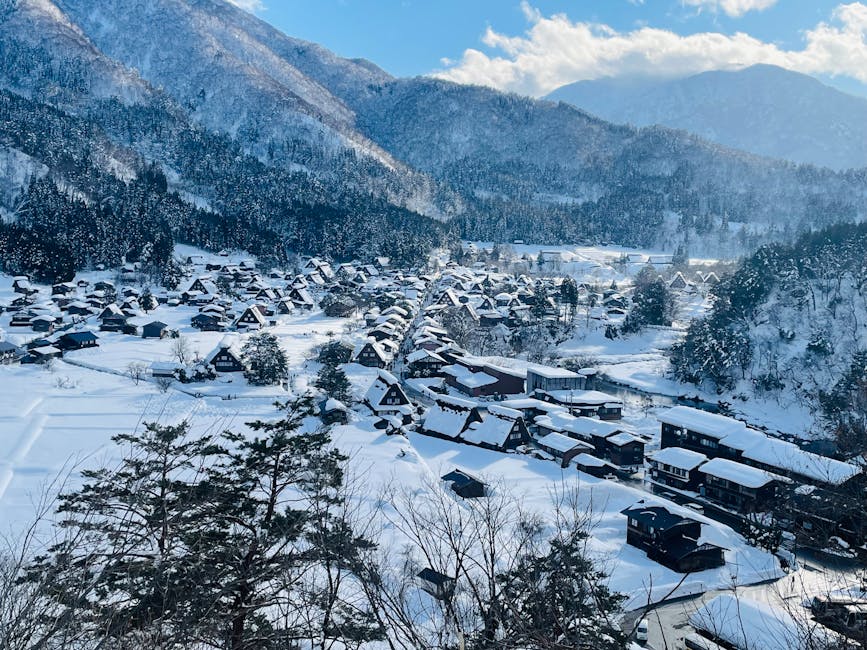
The full-village photograph that defines Shirakawa-go on every Japan tourism poster is taken from the Shiroyama Tenshukaku observation deck (also written Shiroyama Viewpoint or Ogimachi Castle Ruins observation point), perched about 70 metres above the village on the ridge to the east. It’s the platform of an old hilltop fortification. There’s a small drive-in restaurant and a gravel deck with a clear sightline down onto the gassho roofs.
During light-up nights, the deck is the most contested ticket in the village. Walk-up access has been closed since 2019, the same year the event went reservation-only. There are now exactly two ways to get on:
- Stay overnight in a lottery-allocated room. Your stay automatically includes a deck ticket with a numbered, timed entry slot. You cannot pick the slot.
- Take a route-bus tour with one of the five operators, Nohi, Kaetsuno, Hokutetsu, Toyama Chiho Tetsudo, Iruka Kotsu, and verify the specific tour explicitly includes deck access. Many of their packages don’t.
That’s it. Travel-agency tours from Tokyo, Osaka, Kanazawa or Nagoya almost never include deck access, even when the marketing implies they do. A ¥50,000 day-tour package from Nagoya can leave you with a perfect bus seat, a two-hour stand-around at village level, and zero deck access. Read the small print on whatever tour you book.
The deck itself, on the night, is small. Probably 60 to 80 visitors at a time, by timed slot, on a gravel platform with no railing on the village-facing edge. Tripods are banned. Numbers are tightly enforced. A walking shuttle bus runs from the village up to the deck for visitors with mobility issues but it’s reservation-only too. If you try to walk up the road independently you’ll be turned around at a checkpoint.
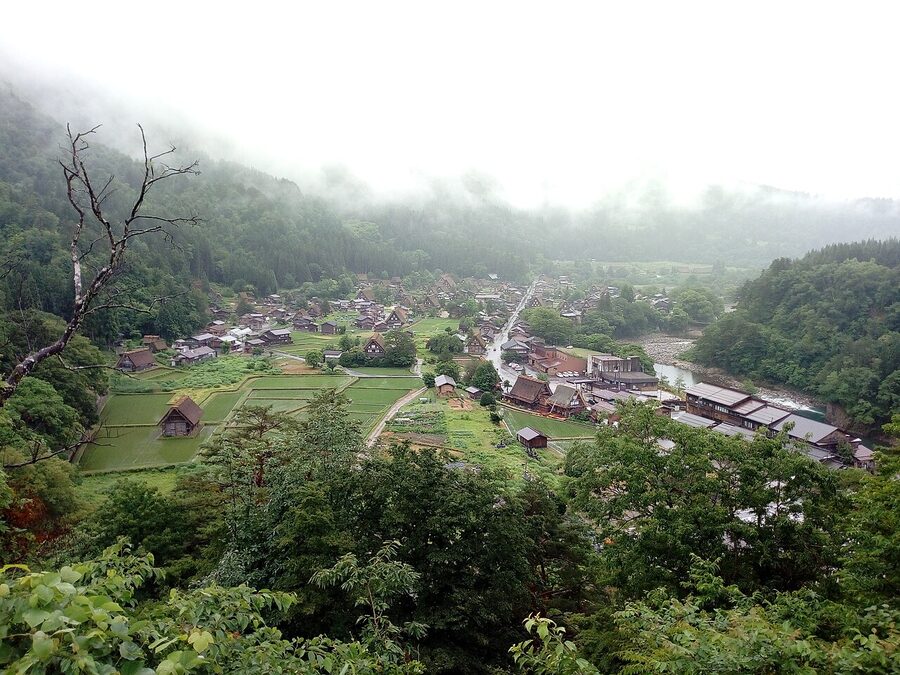
The verdict: the deck is the postcard, and the village-level walk is the actual experience. If you can’t get a deck ticket, don’t burn a tour upgrade trying. Ground-level compositions near Myozenji and the southern paddies are quieter, the snow is deeper, and you can stand still for as long as you like.
The car-park reservation: the cheapest route in if you can drive
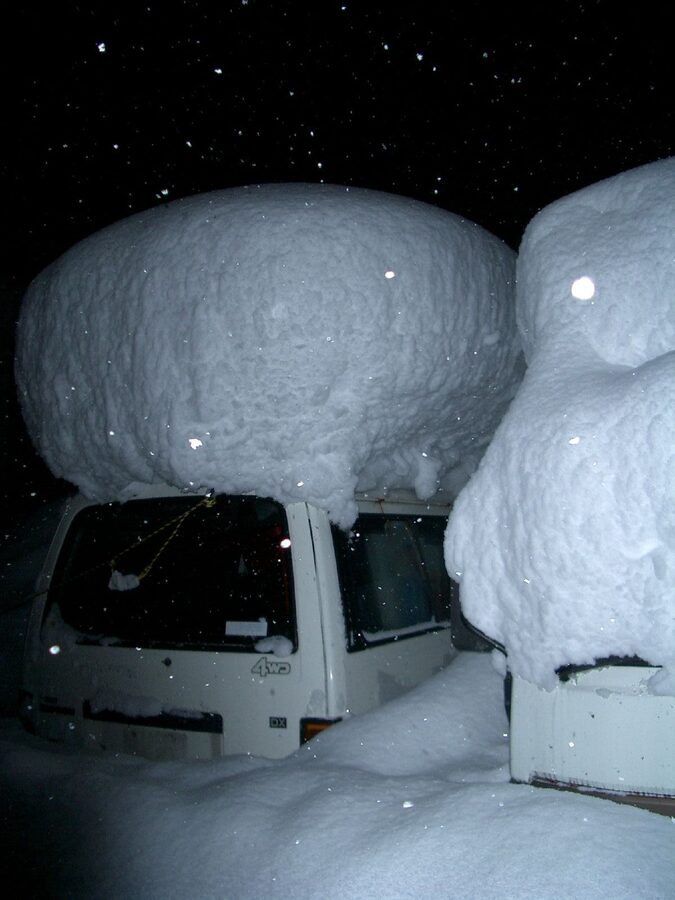
If you missed the lottery and want the cheapest reliable entry into the village, the parking-lot reservation is it. The Shirakawa-go Tourist Association releases parking spots in two waves through their online portal (shirakawa-go.gr.jp). For the 2026 season:
- Wave 1: 10 September 2025 at 13:00 JST, usually sells out within 30 to 90 minutes for the most desirable Sunday dates
- Wave 2: 1 December 2025 at 13:00 JST, the leftover dates plus any cancellation returns
Pricing for 2026, per car (this is per the village’s own posted fee schedule, verified May 2026):
- Standard car (1 to 5 passengers): ¥6,000 wave 1, ¥7,000 wave 2
- Larger vehicle / minivan (6 to 10 passengers): ¥8,000 wave 1, ¥10,000 wave 2
One booking covers the vehicle, not per person. So a five-person rental car at ¥6,000 works out at ¥1,200 a head, which is the cheapest legal way into Ogimachi during the light-up. The catch: no deck ticket is included. You’re walking the village and shooting from ground level.
The booking is non-refundable. Once you’ve paid, your slot is yours regardless of whether you actually turn up, and there are no name changes or transfers. A QR code arrives by email, usually within a week of payment, and that QR is what gets you through the parking-lot gate at Seseragi Park.
Bus and microbus operators have a separate fee schedule (¥10,000 wave 1, ¥15,000 wave 2 in 2026), but unless you’re driving a hire minibus that’s not your channel.
Parking-lot reservations open at exactly 13:00 JST on release day. The site has been known to crash for the first 10 minutes. Have your card details and passport number ready. Do not refresh in a panic; that’s how you end up with double charges and no booking.
Winter tyres, the expressway, and the rule that bites every year
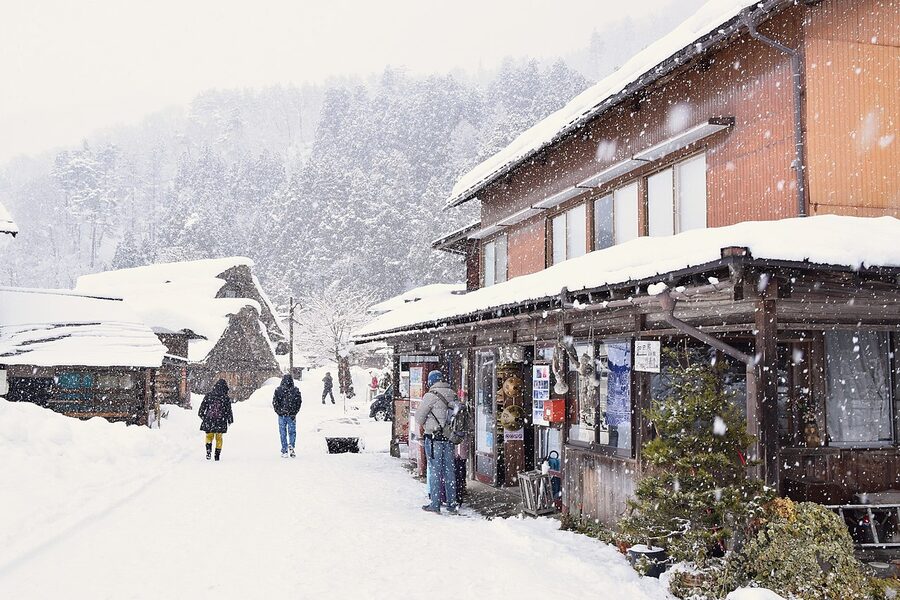
Anyone driving to Shirakawa-go between November and March is required to have studded snow tyres or four-season tyres rated for snow, plus chains in the boot. This is enforced both by the Tokai-Hokuriku Expressway operator (under the NEXCO winter-tyre rules) and by Shirakawa Village itself, which checks vehicles at parking entry on light-up nights.
If you’ve rented at Toyama, Kanazawa or Takayama airports between December and March the rental company will fit winter tyres by default; you don’t have to ask. If you’ve picked the car up further south (Nagoya, Osaka, Kyoto) you must specifically request “winter tyres” or “snow tyres” at booking and pay the supplement, usually ¥3,500 to ¥5,000 per rental for a small car. Some Nagoya rental agencies refuse to send a non-winter-tyre car towards Shirakawa-go full stop.
Practical detail: the Shogawa interchange (荘川IC) on the Tokai-Hokuriku Expressway is the closest exit before Shirakawa-go IC and is usually the cleaner road. From Shirakawa-go IC it’s about 5 minutes on Route 156 to the village. From the Kanazawa direction, it’s around 1 hour 5 minutes via Hokuriku Expressway plus the cut across to the Tokai-Hokuriku. From Nagoya, allow about 2 hours 15 minutes to Shogawa IC plus another 30 to 45 minutes on the slower roads at the bottom.
Don’t try to drive in if you don’t have winter-tyre experience. The road from the IC drops fast, with curves that ice over after dusk and limited gritting. The expressway operator closes sections without much warning when temperatures drop sharply or visibility falls below 50 metres, and the diversion routes are mountain B-roads that are worse, not better.
The route-bus packages: the channel most foreign visitors actually use
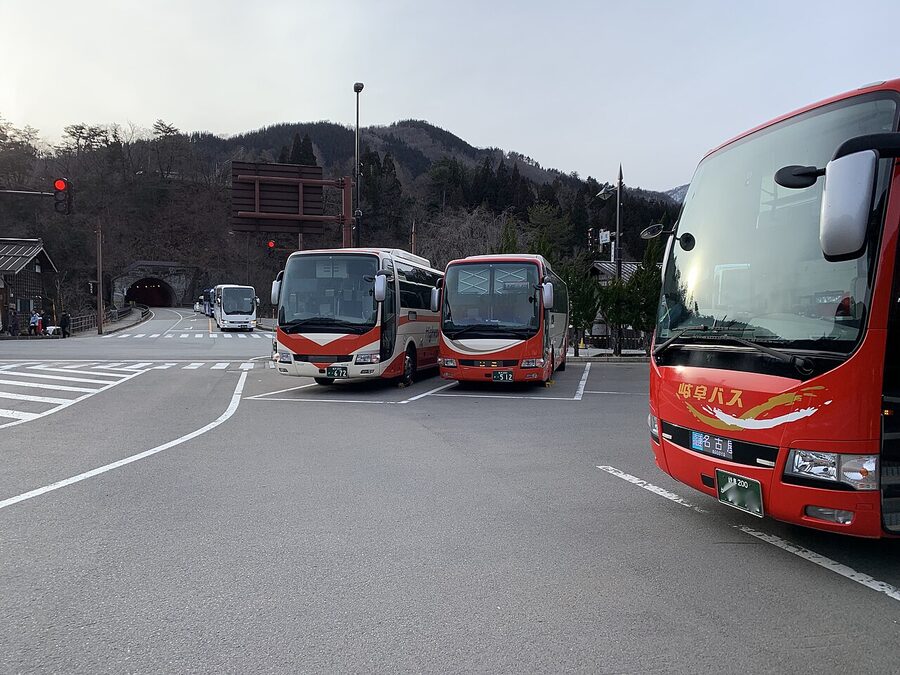
Five regional bus operators run dedicated light-up packages each year: Nohi Bus (from Takayama), Kaetsuno Bus (from Toyama and Takaoka), Hokutetsu Bus (from Kanazawa), Toyama Chiho Tetsudo Bus (from Toyama) and Iruka Kotsu (from Nagoya). They release tickets in waves about 100 days before each event date, in this rough pattern (the 2026 dates were released October 2025):
- 1st event date (12 January 2026): tickets opened early October 2025
- 2nd event date (18 January): mid October
- 3rd event date (25 January): late October
- 4th event date (1 February): early November
Pricing in 2026 ranges roughly ¥7,000 to ¥15,000 per person depending on operator and origin. The Takayama route via Nohi is the most popular for foreign visitors because Takayama is itself a major itinerary stop. A typical Nohi light-up bus package leaves Takayama Nohi Bus Center mid-afternoon, arrives Ogimachi around 15:30, drops you for the walk and the lit-up window, then leaves the village around 19:45 and gets you back to Takayama before 21:00. Some operators offer Hoba miso dinner add-ons at village restaurants for around ¥3,000 extra.
The critical filter: only some of these packages include the Shiroyama deck ticket. Read each operator’s listing. The Nohi-bus packages from Takayama, Hokutetsu from Kanazawa, Kaetsuno from Toyama and Toyama Chiho all explicitly carry deck tickets on certain departures. Travel-agency tours from Tokyo (Willer, Club Tourism, etc.) generally do not. If a deck shot is the reason you’re going, this matters more than the price.
If you’re planning around this from a wider Japan trip, the same Hokuriku Shinkansen that carries you to Kanazawa in 2 hours 30 minutes from Tokyo Station is also the trunk line for the Hokutetsu light-up bus departure. Kanazawa makes a sensible 2-night base for the trip, with the light-up evening as a 6-7 hour out-and-back. The same logic works from Toyama on the same shinkansen line, or from Takayama via the JR Hida Limited Express off the Tokaido or via Nagoya. The wider Hokuriku region has the only economic infrastructure that makes Shirakawa-go reachable in winter.
The day-trip-from-Takayama option for those without rooms or cars
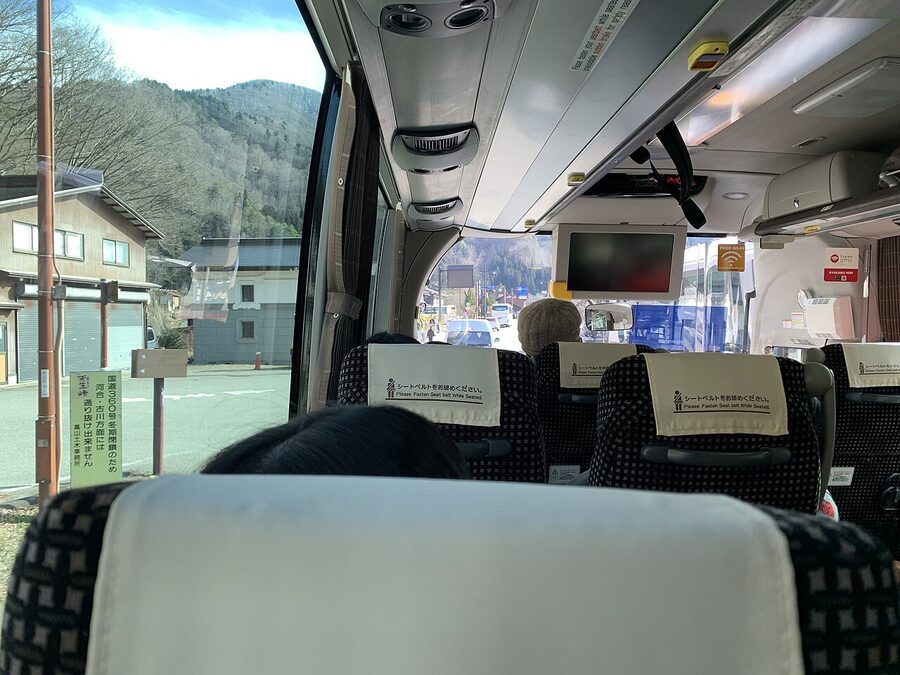
You missed the lottery. You don’t drive. The route-bus packages have sold out. There is still one channel: a daytime visit on a non-event day, paired with the Takayama-Shirakawa-go regular Nohi Bus shuttle, which runs about hourly between Takayama Nohi Bus Center and Shirakawa-go. One way is around 50 minutes; round-trip is around ¥4,400 (verify on nouhibus.co.jp at booking). Reservation is mandatory; walk-ups are not accepted.
You see the village fully snow-covered, you walk the same lanes, you climb to the Shiroyama deck (which is open for daytime walk-ups when the light-up isn’t running), and you’re back in Takayama by dinner. You don’t see the illumination. You also don’t pay ¥30,000 for a bus seat at peak demand. Daytime regular bus seats during Shirakawa-go’s winter peak (December to February, non-light-up days) typically sit around ¥2,800 each way and stay available a week ahead.
The reality: this is what most foreign visitors actually do, and it’s not a worse experience. The village in deep snow at midday is a stronger image than the village at 18:30 from a crowded path. The illumination is the headliner; the snow is the actual subject.
From Tokyo, the cleanest approach is the Hokuriku Shinkansen to Kanazawa (Tokyo to Kanazawa, 2h 30m, ¥14,180 reserved seat), one night Kanazawa, then Hokutetsu day bus to Shirakawa-go and on to Takayama for one further night. The full route is in the Hokuriku region guide alongside the Tateyama Kurobe Alpine Route spring crossover that uses the same shinkansen spine.
What the village actually looks like at the light-up moment, vs the photographer’s imagination
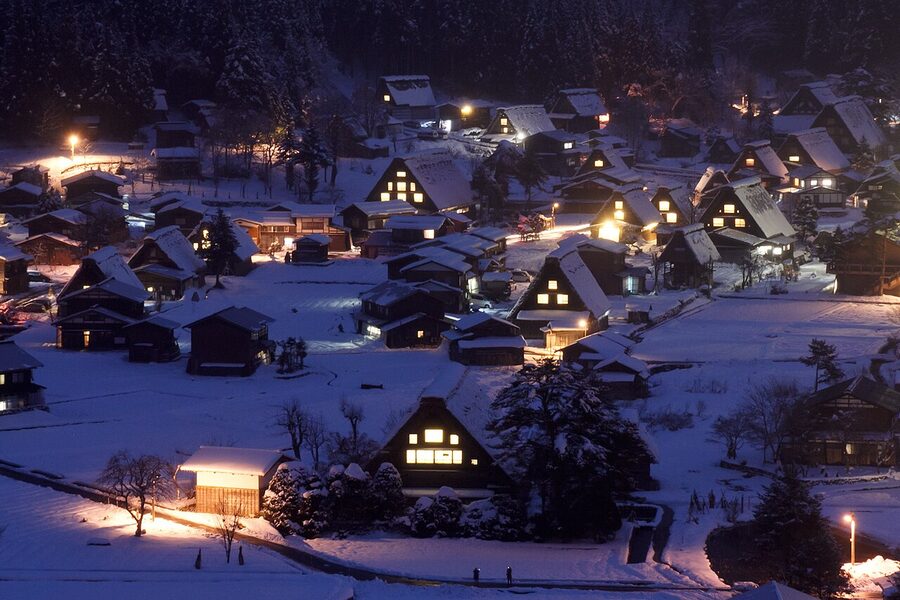
The photo brochures lean on saturation. The actual village is more restrained. Around 17:25, residents and bookable visitors have gathered at the south end (around Myozenji, the small Buddhist temple roughly in the centre of Ogimachi) and at the deck. The light is fading. The mountains behind have already gone purple-grey. The floods are off. Then at 17:30 the lights kick on with no fanfare and the village goes from dim to luminous in maybe two seconds.
What you actually see for the next two hours:
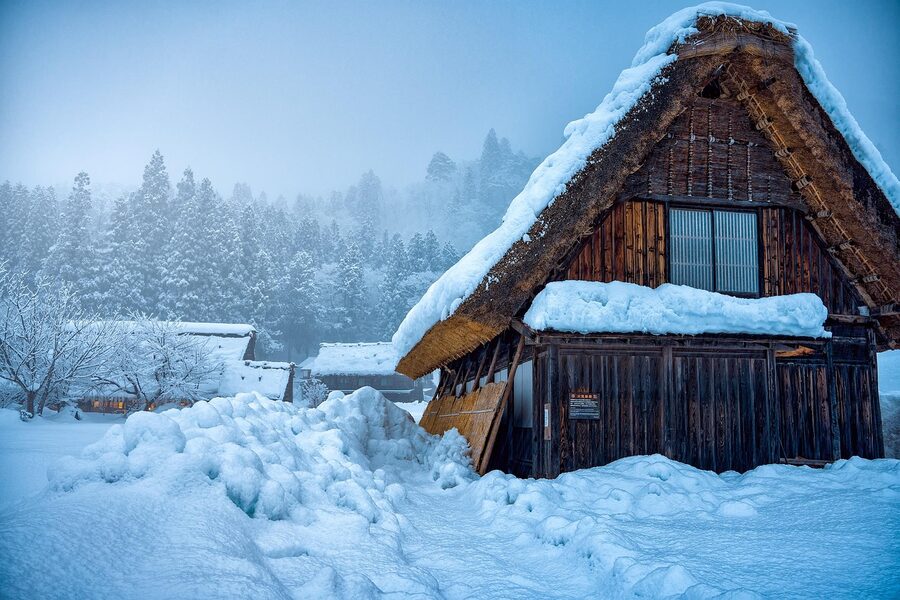
- Roof texture, mostly. The thatched 60-degree pitch of the gassho-zukuri roofs is what catches the light. Where snow has stuck on top of the thatch, you get the postcard shape; where snow has slid off you get a sharper, darker triangle.
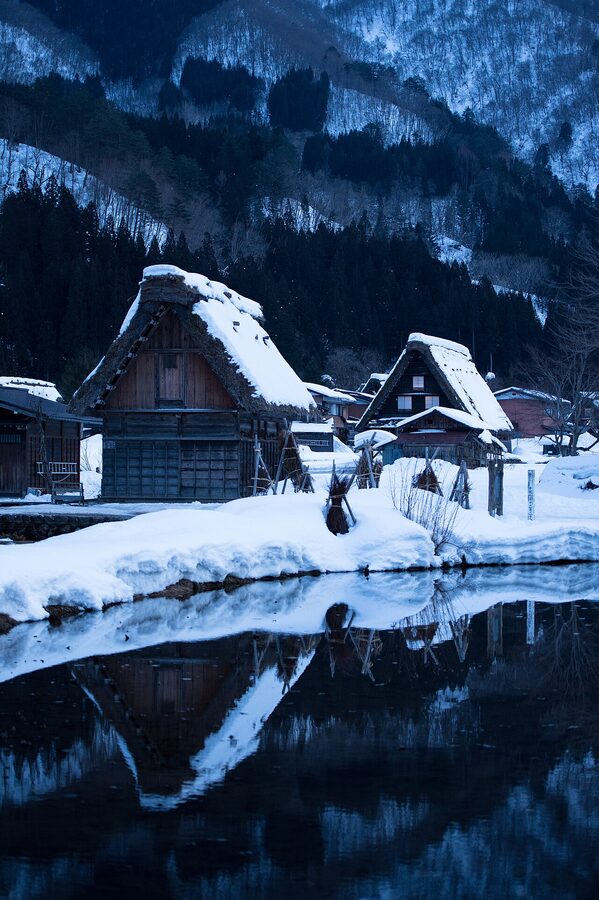
- Reflections in the rice-field ponds at the southern paddies, near Myozenji. When the air is still (it usually isn’t), you get the upside-down village. When there’s any wind, the surface ripples and the reflection breaks. About 70% of the time you get partial reflections; full ones are luck.
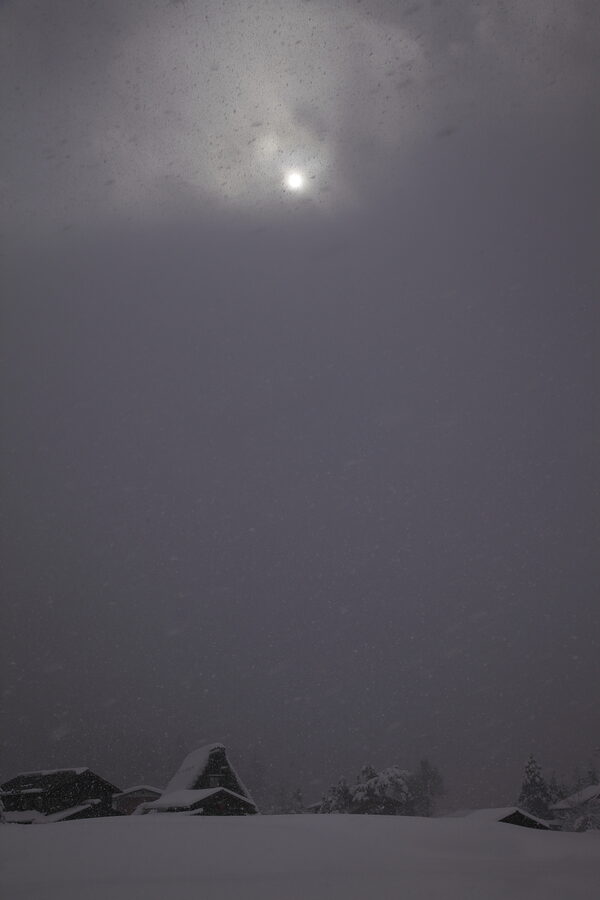
- Snow falling through the floodlights. If you’re there in active snowfall, this is the shot. The flakes catch the floods and the entire scene becomes textural. This is unpredictable and not in any brochure.
- Crowds on the main path. Even with the cap, you’re sharing the village with around 4,000 to 5,000 visitors. The path through Ogimachi is a single street with no overtaking lanes. Tripod work means standing still while a queue politely walks around you.
What you do not see, despite expectations:
- Drone shots. Drones are banned across the entire World Heritage area. The “drone aerial” you’re seeing on YouTube was either filmed on a non-event day with a permit, or filmed illegally and uploaded anyway.
- People in colourful clothing. Most attendees are layered up in dark winter gear. The brochure shots with figures in red kimono on a snowy bridge are staged photo-tour setups, almost always shot during the day.
- Houses lit up from inside in choreographed sequences. The interior lights are residents’ actual lights. Some houses are dark because the family has gone out. Some are bright because somebody’s making dinner.
What to wear: -5°C average, drops to -10°C, snow on every surface
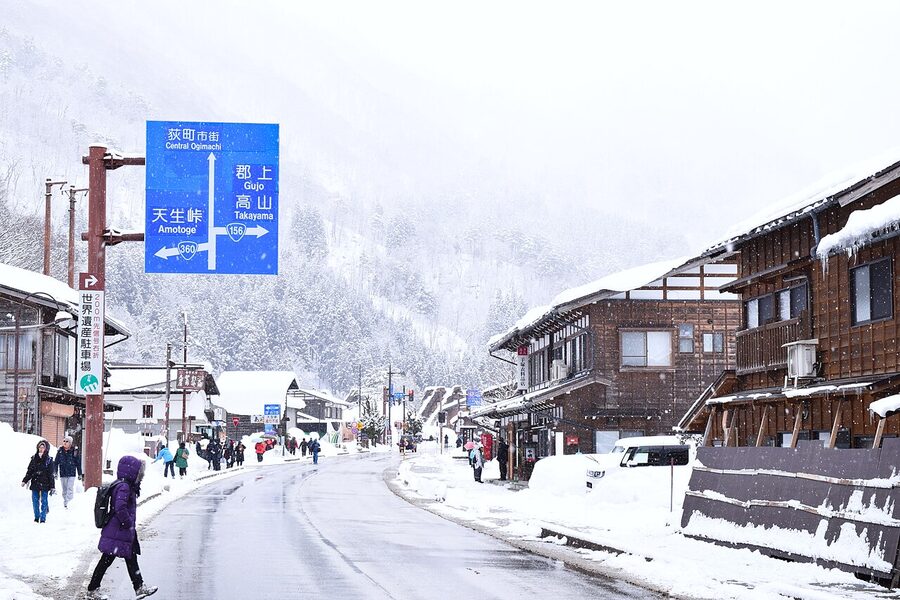
This is mountain Gifu in January. Average daytime highs in Ogimachi during the event window are around 1 to 3°C; nighttime lows during the illumination drop to around −5 to −8°C, occasionally to −10. Wind makes it feel about 5 degrees colder. You’re standing still for two hours with snow underfoot.
What I’ve found actually works for the night:
- Insulated, waterproof boots, with grippy treads. Trainers are a guaranteed wet-foot disaster within 10 minutes; flat-soled fashion boots are slip hazards. Vibram or equivalent.
- Thermal base layer, top and bottom. A normal pair of jeans is not warm enough. Long johns under jeans is fine.
- Heavy ski jacket with a hood. The hood matters; a hat alone gets snow under your collar.
- Lined gloves, not knit ones (knit gloves get wet within 20 minutes in active snow).
- A small headtorch or phone torch. The southern end of the village has stretches with no path lighting and uncovered drainage canals.
- Hand warmers if you’re shooting. Camera batteries collapse below freezing; keep spares warm in an inside pocket.
If you arrive in a thin coat from Tokyo, you will be cold enough to leave before 19:00. I’ve watched this happen dozens of times. Pre-buy from the Heat Tech rack at Uniqlo before you go.
The food problem: most cafes close at 17:00
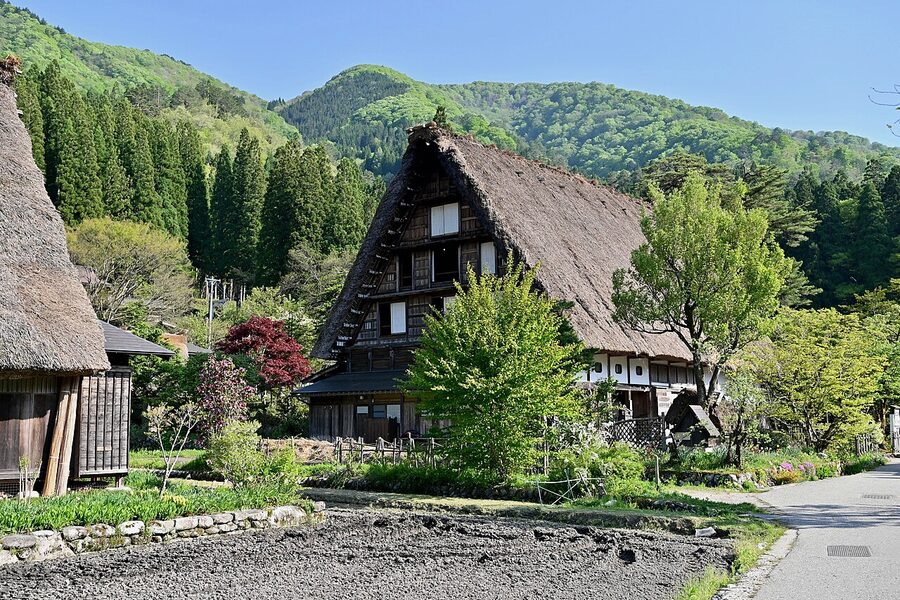
The genuine inconvenience of a light-up evening that nobody mentions until you’re there: the village’s regular cafes and restaurants almost all close before the lights come on. Hours typically run 09:00 to 16:30 or 17:00 in winter, partly because most are owner-run and partly because villagers prefer to be home before the crowds arrive. So when 6,000 visitors hit Ogimachi at 17:30, food options shrink to:
- The bus-terminal vending machines (hot drinks, instant noodles).
- One or two stalls near Myozenji selling Hida beef croquettes and skewers; usually ¥400 to ¥600 each, cash only.
- A small handful of operators running heated tents for tour groups (you’re not getting in unless you’re on that tour).
- If you’re staying overnight, your minshuku’s evening kaiseki is the answer; you’ll be eating at 18:30 anyway.
The practical answer: eat in Takayama or Kanazawa before you go. Don’t rely on the village. If you absolutely must have something hot in the village, plan around the bus terminal vending block or a Hida beef skewer at a Myozenji stall.
What to actually do during the four daytime hours, before the lights come on
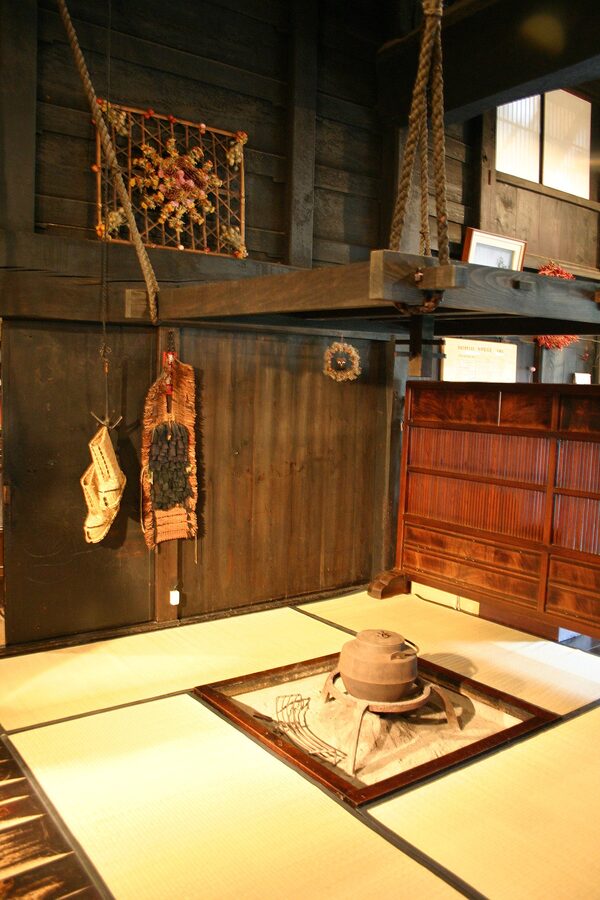
If you arrive on a route-bus tour you’ll typically have between 14:30 and 17:00 to fill before the illumination. The default tour itinerary stops at Wada House and Kanda House. Both are worth the entry fee, but the village rewards a slower walk. A practical 2.5-hour use of the daytime window:
- Wada House (15:00 to 15:45). The largest preserved gassho-zukuri farmhouse, three storeys, four families historically. Entrance ¥400 in 2026. The interior smoke-blackened beams from centuries of irori use are the actual reason to go inside. Skip the gift shop on the ground floor and go straight up.
- The Myozenji area (15:45 to 16:30). Walk south through the village. Around the temple itself is the densest cluster of preserved farmhouses and the southern paddies that produce the reflection shots. This is also the quieter half on a busy day.
- Shiroyama Tenshukaku, daytime (16:30 to 17:00, walk-up if not light-up day; or via tour deck slot if it is). The walk up takes about 12 minutes from the southern paddy area. The deck shuts at 16:10 to 17:00 depending on month and weather, so this is a tight window.
- Position yourself for the lights (17:00 to 17:30). Most photographers head back to Myozenji for the reflection, but the bridge views from along Shogawa River are quieter and almost as good.
One specific upgrade if you have an extra hour: the Gassho-zukuri Minkaen (Open-Air Museum) on the south side of the river. It’s a preservation village of relocated farmhouses you can enter for ¥600, and in heavy snow it’s almost empty even on light-up days because the tour groups don’t have time for it.
The drone rule, the rubbish rule, the residents-live-here rule
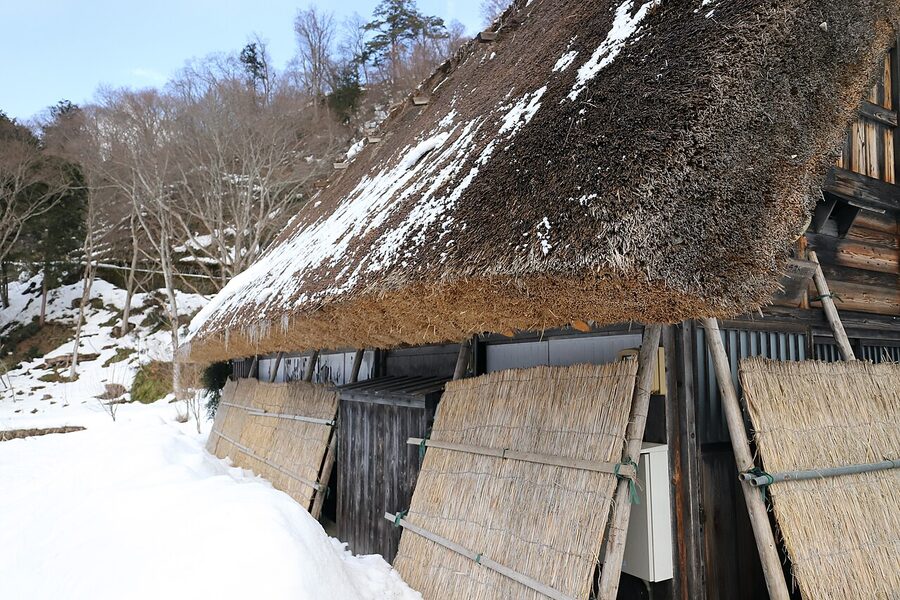
The rules the village actually enforces during the event window. Almost all are signposted in English at the bus terminal and at Wada House.
- Drones are banned. The whole World Heritage area, year-round. Even with a tourism board permit, light-up nights are off-limits. You will be approached by staff if you launch one.
- Studded snow tyres are mandatory on private vehicles. Your booking is not honoured if you arrive without them and you’ll be turned around at the parking gate.
- No stopping or dropping off passengers outside designated parking. The road into the village is single-lane and curves; a stopped vehicle blocks 800 metres of traffic in both directions.
- Take all rubbish home with you. There are no public bins in the village. This is a quietly serious rule; residents resent rubbish drift more than they resent the crowds.
- No smoking, no fireworks, no flame anywhere in Ogimachi. Three working fires in the village’s history have come close to wiping out gassho-zukuri houses; the no-flame rule is hard.
- Do not enter gardens, paddies, residential lanes. The village contains around 600 residents who live there year-round. Their houses look like museum exhibits but are not. The boundary between visitor path and private property is sometimes only marked with rope.
None of this is unusual for a UNESCO village. It’s worth saying because the photo-tour Instagram aesthetic implies a freedom of movement that doesn’t exist on the ground.
What to do if you don’t win the lottery, the parking, or a bus seat
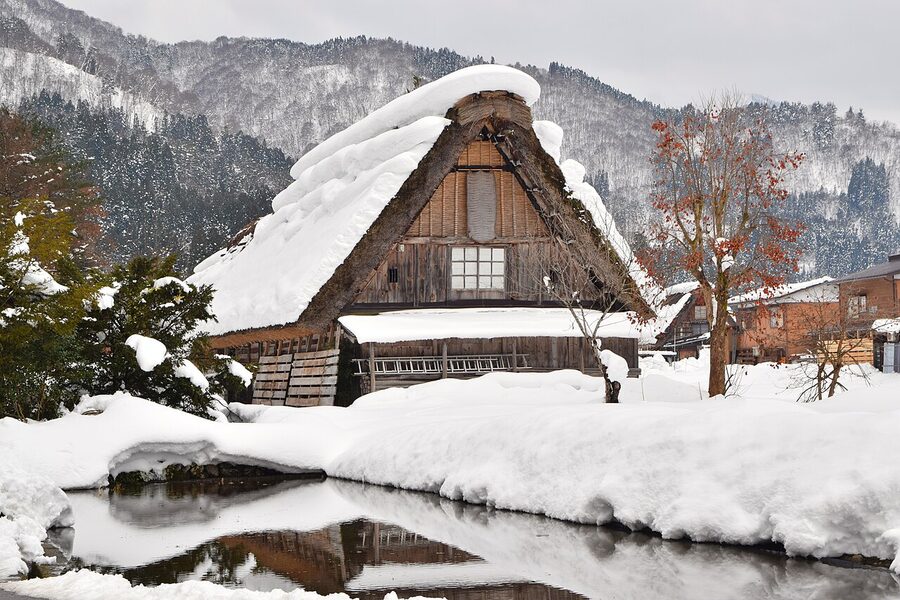
It happens to most people who try. Realistic alternatives, ranked by what I’d actually do:
- Book a Takayama day-visit on a non-event day. Cheapest, most flexible, best photographic light because the village isn’t sealed off. Combine with a Takayama overnight at any of the city’s bigger ryokan (Honjin Hiranoya Kachoan, Asunaro, etc.) for the wider Hida itinerary.
- Add Gokayama instead. Forty minutes north of Shirakawa-go, also UNESCO-listed, half the visitor load, runs its own much smaller light-up across two nights in late January and a single night in mid-February (typically 17:30 to 19:30). Reservations are needed but easier to get; transport is via Kaetsuno bus from Takaoka or Toyama. Different scale, different feel: 20 farmhouses rather than Ogimachi’s 100, with less infrastructure but more intimacy.
- Check the Wave 2 parking release on 1 December. A surprising number of Wave 1 ticket holders cancel between October and late November because plans collapse, illness intervenes, or someone scores a lottery room and lets the parking go. The Wave 2 release isn’t only “leftover bad dates”; it’s also returns from Wave 1.
- Check the route-bus operators’ last-minute releases. Tour bus seats sometimes free up 7 to 10 days out as tour-group cancellations come in. Hokutetsu and Nohi tend to release these returns through their own websites without much fanfare.
- Skip the village; walk Kanazawa or Takayama in snow. Both produce the gassho-aesthetic at temple level (Kanazawa’s Kenrokuen yuki-tsuri ropework alone is worth the train) and don’t require any reservation lottery.
My take: the value of a light-up visit is in the lottery-room overnight, not the day-trip bus seat. If you can’t get the room, the night-only experience is good but not transformative; you’re standing in a freezing crowd for two hours to see something you can largely already see in a daytime non-event visit. The light-up illumination is the marketing version of Shirakawa-go. The actual village in snow is the thing.
Combining the visit with the rest of a winter Japan trip
The light-up is one event in a wider winter Japan window. The same January-February period covers most of the country’s signature snow scenery, and the flights into Tokyo or Nagoya make the rest of the route easy to attach. Reasonable pairings:
- Hokuriku tour. Tokyo to Kanazawa (2 nights), then Shirakawa-go light-up via Hokutetsu, then Takayama (1 night), then back. The Hokuriku Shinkansen handles the whole trunk; you only need short bus connections. See the Hokuriku regional guide for the supporting infrastructure.
- Spring crossover. If you’re already planning the Tateyama Kurobe Alpine Route after April, a winter Shirakawa-go light-up makes a strong contrast piece, sharing the same shinkansen base in Toyama or Kanazawa.
- Wider snow itinerary. Pair with Zao’s juhyo snow monsters in mid-January, Shiretoko drift ice in February, or the deep snow of Tohoku’s Ginzan Onsen. The full sequence is in the working guide to Japan’s winter landscapes.
- Shirakawa-go without the light-up. The village is at its best between 20 December and 25 February, regardless of whether you can score a light-up reservation. The wider Shirakawa-go regional guide covers the daytime visit, the surrounding Gokayama and Hakusan options, and the seasonal calendar.
The lottery applications open again on 1 October 2026
The 2027 cycle:
- 1 October 2026: accommodation lottery applications open
- 31 October 2026: lottery applications close
- 10 November 2026: winners notified by email; everyone else hears nothing
- 10 September 2026 (provisional): Wave 1 of parking releases for the 2027 light-up dates
- 1 December 2026 (provisional): Wave 2 of parking releases
- Mid-January to early February 2027: the four light-up nights, dates to be confirmed by the village in October 2026
Practical sequencing if you’re trying to lock this down: apply for the lottery first (cheapest entry, best room, includes the deck), and only book parking or bus tickets after you find out you’ve lost on 10 November. Doing both in parallel and then trying to refund the parking after the lottery email arrives is a guaranteed forfeit; cancellations are not allowed.
The window matters because the village clearly intends to keep the system in place. There’s no draft proposal for opening it back up, and no political pressure from the village to do so. If anything the cap may tighten further: the 2025 season was the first to drop from six dates down to four, partly due to insufficient snow on the early-January and late-February dates that had been the original sixth and first slots. The system may eventually shrink to two or three nights. The room lottery becomes a harder ticket year on year.
If you’re treating this as a one-time bucket-list visit, plan around January 2027 or January 2028. Apply 1 October, accept the loss in November as the most likely outcome, and set up the daytime visit from Takayama as your real plan B before you’ve even applied. That way you’re not gambling a Japan trip on a 1-in-30 lottery chance, and a winning email is upside.
The village’s switchboard runs on Japanese-only phone trees, the lottery portal has an English path that mostly works, and the tourist association has been responsive on email. If a winning room emails and you’ve got the wrong passport details, fix it before the 7-day payment deadline lapses; once it’s gone, it’s gone, and the room is reallocated within the day.
Eight months out, with the snow still on the roofs from the 2026 season and the system already loaded for 2027, this is the cycle that runs. The village won’t change. The lights will come on at exactly 17:30 on the four nights it announces. The deck ticket comes with the lottery and almost nothing else. If you want it, the work starts on 1 October.


_01.jpg)
.jpg)


_01.jpg)


.jpg)
.jpg)