
Most visitors who arrive at the Arashiyama Bamboo Grove between 10:00 and 16:00 leave disappointed. The famous ground-level shot, the one with empty bamboo stalks vanishing into mist, is impossible. Between mid-morning and late afternoon you’ll be in a slow-moving line of tourists shuffling along the 400-metre path, holding phones above heads, waiting for breaks in the crowd that don’t come. The grove is free, open 24 hours, and absolutely not the hidden forest the photographs suggest.
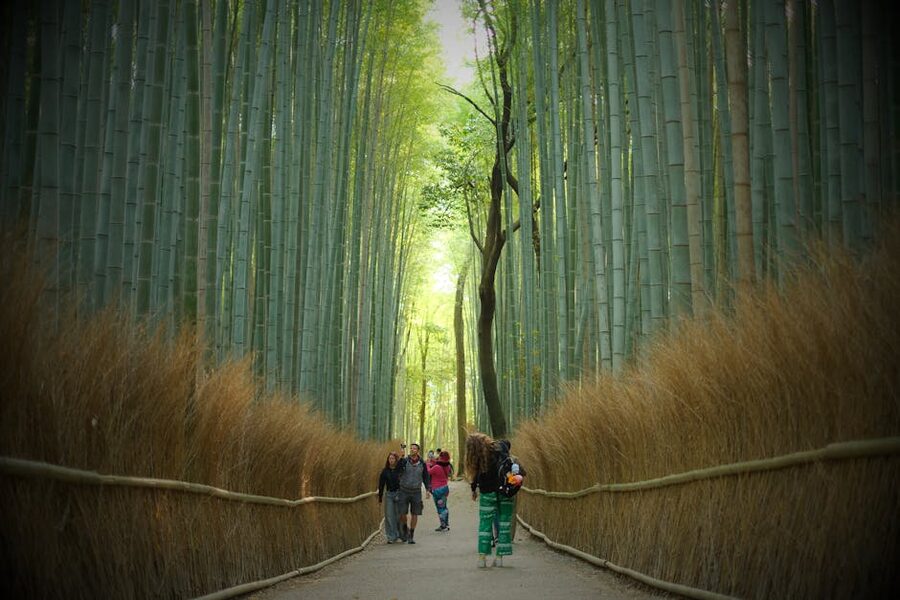
And yet, walked properly, Sagano-Arashiyama is one of the best half-days in all of Kyoto. The bamboo grove just isn’t the reason. The reason is what’s around it: Tenryu-ji’s borrowed-scenery garden (one of the most underrated UNESCO temples in the city), Jojakko-ji’s mossy hillside approach, Gio-ji’s tiny moss garden, the imperial-villa complex at Daikaku-ji, the 90-minute river boat down from Kameoka, the Sagano Romantic Train climbing along the gorge, and a monkey park whose real selling point is the panoramic view back over central Kyoto. Walk those, and the bamboo path becomes a 90-second connection corridor between Tenryu-ji’s north gate and Okochi Sanso. That’s all it needs to be.
In This Article
- The bamboo grove problem, and how to solve it
- Three stations, all called Arashiyama
- Best timing: 06:30 or 16:00, never noon
- Tenryu-ji, the most underrated UNESCO temple in Kyoto
- The walk: Tenryu-ji north gate to Adashino
- Okochi Sanso Villa
- Jojakko-ji
- Gio-ji
- Saga-Toriimoto preserved street and Adashino
- Daikaku-ji, the imperial-villa temple no one goes to
- The river: Hozugawa boat down from Kameoka
- Sagano Romantic Train: the open-windowed ride uphill
- The monkey park, for the view
- Where to eat in Sagano-Arashiyama
- One quiet morning, properly walked
- If you have a second day: combinations
- Where to stay if you want a Sagano base
- The Nonomiya Shrine note, plus a couple of small things
- One last thing about the bamboo grove
The bamboo grove problem, and how to solve it
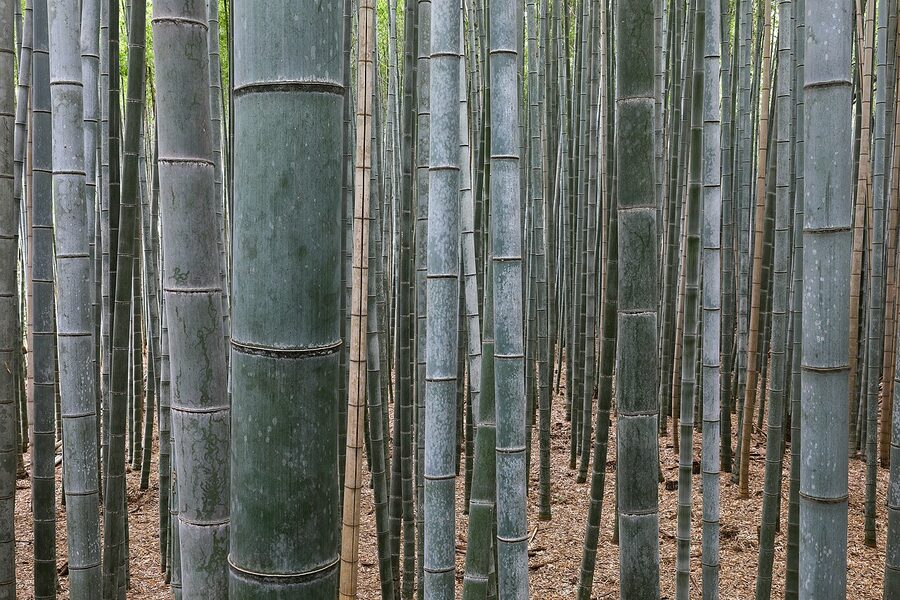
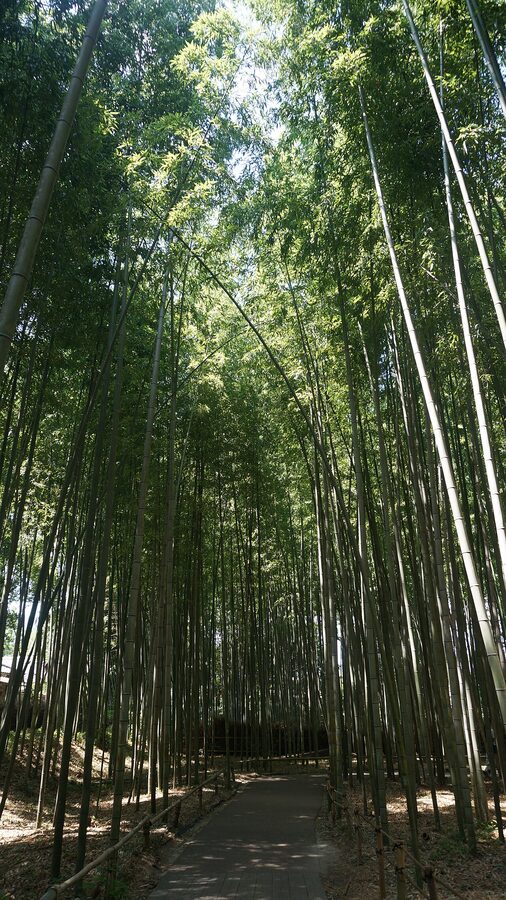
The grove itself is a 400-metre path between Nonomiya Shrine at the south end and the back gate of Okochi Sanso at the north. There’s no entry fee, no entry cap, no reservation. The path is open round the clock, which is the single most important fact about it.
Two windows work. The first is 06:30 to 08:30. By 06:30 even in shoulder season the path is genuinely quiet, the light is soft, and you can stand still for thirty seconds without being filmed by someone behind you. The second is 17:30 to dusk, after the day-trip coaches have left and the rickshaw drivers have gone home. The second window is shorter but easier to hit because most visitors come in the morning.
If you arrive between 10:00 and 16:00, please don’t queue for the photo. Walk through the bamboo as a connection corridor between Tenryu-ji’s north gate and Okochi Sanso, then keep going. The bamboo isn’t going to give you what the Instagram screenshot promised, but Sagano will give you something better, which is the rest of this district.
Three stations, all called Arashiyama
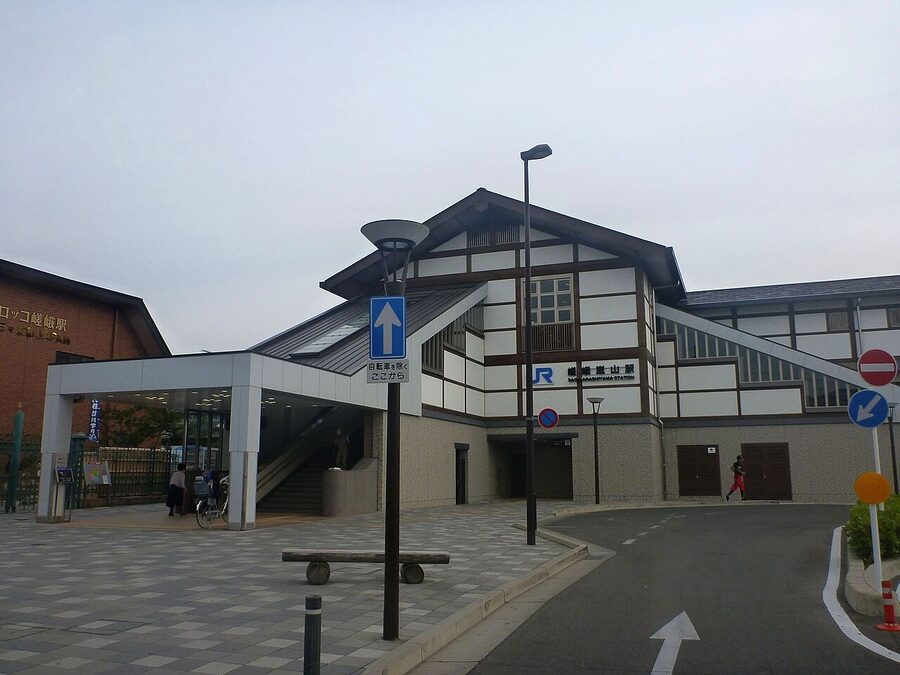
This catches every first-time visitor. Three rail companies run trains to Arashiyama, each terminating at a different station, all branded “Arashiyama,” none within 500 metres of the others. Knowing which one your itinerary actually drops you at matters because the walking time from each to the bamboo grove varies from 3 minutes to 20.
Here’s the breakdown, ranked by usefulness for a first visit.
JR Saga-Arashiyama, on the JR Sagano (San-in) Line, is the practical default. From Kyoto Station the local train takes 15 minutes and costs ¥240. Trains run roughly every 15 minutes off-peak. The station puts you a 10-minute walk from Tenryu-ji and the bamboo grove. It also lets you switch onto the Sagano Romantic Train at the adjacent Torokko Saga station without exiting the JR concourse. If you hold a JR Pass or a JR-West Pass, this is the station to use, full stop.
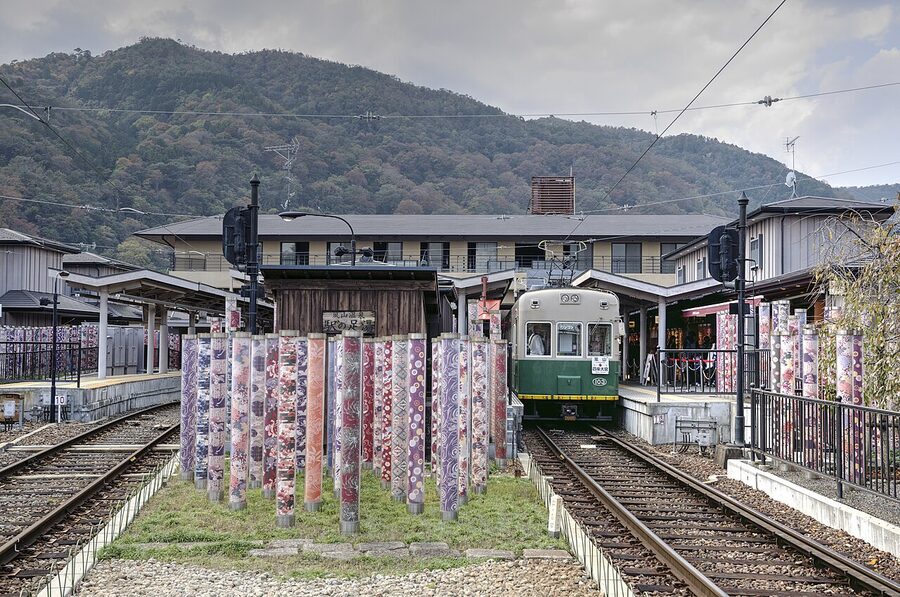
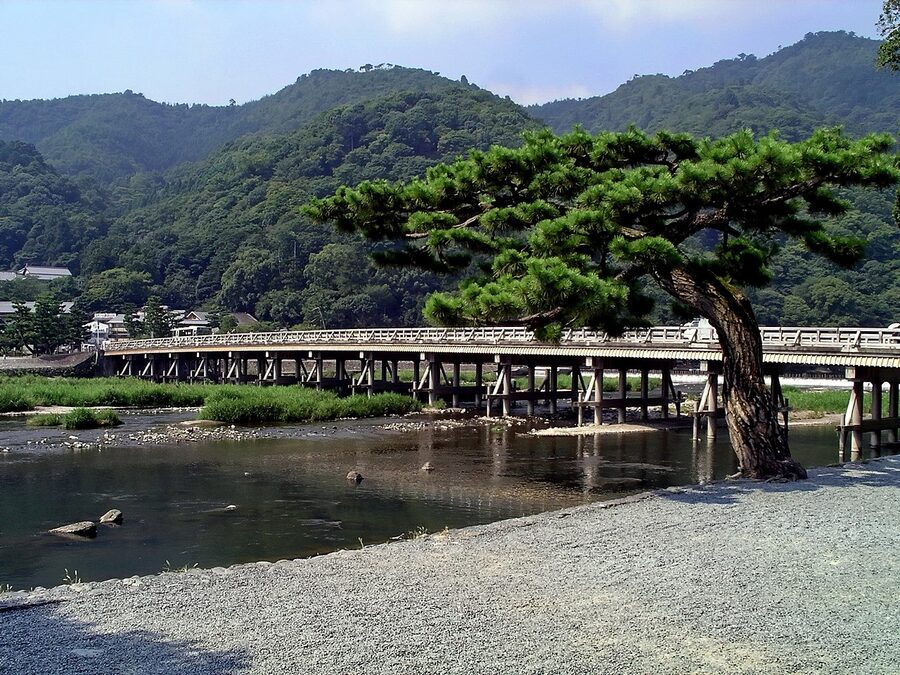
Randen Arashiyama, on the Keifuku Arashiyama Line (everyone calls it Randen), is the prettiest of the three. The line is a small two-car tram running from Shijo-Omiya in central Kyoto. The trip takes about 22 minutes and costs ¥250 flat-rate. The Randen station drops you on the south side of the main shopping street, three minutes from Togetsukyo Bridge and five minutes from Tenryu-ji’s south gate. The platform itself has 600 illuminated kimono-pattern columns called Kimono Forest, which is a small attraction in its own right.
Hankyu Arashiyama, on the Hankyu Arashiyama Line, is the one you only use if you’re staying in Osaka or central Kyoto on the Hankyu network. The station sits on the south side of the river, a 5 to 10-minute walk over Togetsukyo Bridge to the main district. From Hankyu Kyoto-Kawaramachi or Karasuma you change at Katsura, total time about 25 minutes, ¥240. It’s the slowest of the three and adds a river crossing that the other two don’t.
The fourth option that confuses people, especially in JA-language guidebooks, is the Torokko stations. The Sagano Romantic Train runs on its own preserved-line route with stations called Torokko Saga, Torokko Arashiyama, Torokko Hozukyo and Torokko Kameoka. These are not commuter stations. The train is the attraction; you don’t take it as transport. More on that in its own section below.
One quiet trick: the Kansai Railway Pass Lite no longer covers the Randen tram (it was dropped in April 2026), so if you bought one expecting Randen access you’ll need to pay cash on the day. Coverage details are in my Kansai pass guide.
Best timing: 06:30 or 16:00, never noon
If you take one piece of advice from this whole article, take this. Arrive in Sagano-Arashiyama either before 08:30 or after 16:00. The middle of the day is when day-trip coaches park three abreast on Marutamachi-dori, the rickshaw drivers shout for fares in three languages, and Hanare Cafe starts a 90-minute queue. None of this is unique to Arashiyama. What’s unique is that the alternative is so much better and so cheap to engineer: stay in central Kyoto, take the 06:30 JR Sagano local out, be back in Higashiyama for a leisurely lunch.
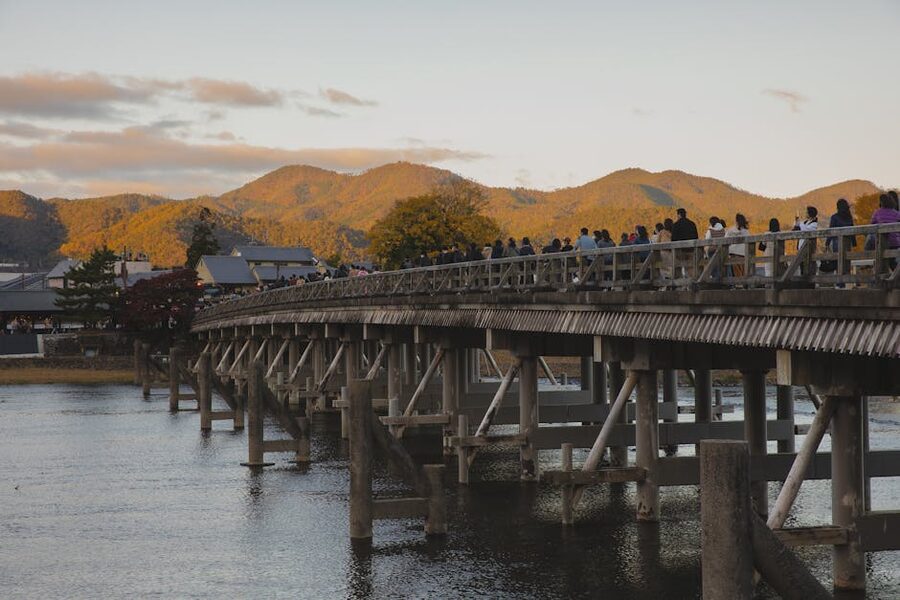
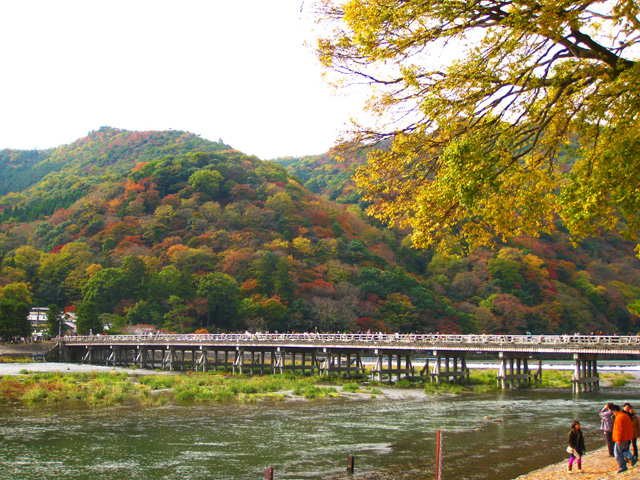
For seasonal timing the rules are different. Late March and early April for cherry blossoms (the river bank between Togetsukyo and Hozugawa station is one of Kyoto’s better hanami spots, covered in detail in my cherry blossom Kyoto piece). Mid-November for autumn colour, which is when Tenryu-ji and Jojakko-ji do their best work. May and early June for fresh green and far thinner crowds than either of the postcard seasons. August is hot and humid but the river breeze runs cool and the temple gardens are practically empty by 14:00.
The day to actively avoid: any Saturday in November. The Sagano Romantic Train sells out a month ahead, the bamboo grove queues onto the road, Tenryu-ji’s gardens hit single-file foot traffic. If you’re locked into a November weekend, push everything 90 minutes earlier than you think reasonable.
Tenryu-ji, the most underrated UNESCO temple in Kyoto
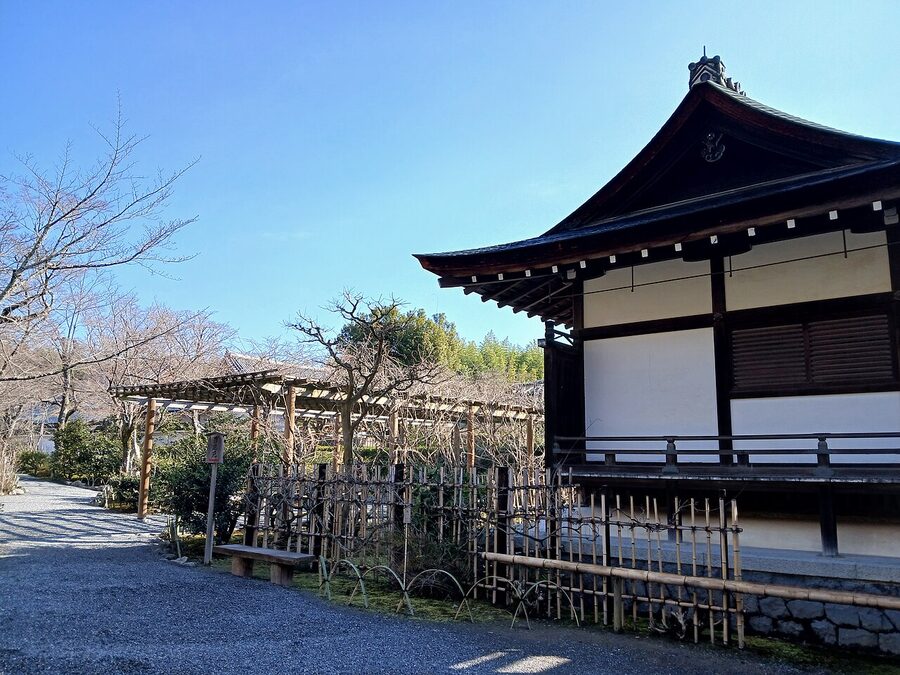
Tenryu-ji is the headline temple in Arashiyama and somehow the one tourists give the least time to. They tick the bamboo grove, the bridge, and a monkey, then leave. They miss the temple. Don’t.
It was founded in 1339 by the shogun Ashikaga Takauji to console the spirit of Emperor Go-Daigo, ranks among Kyoto’s five great Zen temples, and is a UNESCO World Heritage Site in its own right. The Sogenchi pond garden, designed by the priest-gardener Muso Soseki around the same time the buildings went up, is the oldest surviving Japanese garden of its type. It uses the Arashiyama and Kameyama mountain peaks as shakkei, “borrowed scenery,” meaning the mountains across the river are part of the composition. Stand at the south-east corner of the pond and look back across the water and the entire framing makes sense.
Practical details, verified at tenryuji.com on 2026-05-07: open 08:30 to 17:00 (last admission 16:50). Garden-only admission is ¥500 (high-school age and up), ¥300 for elementary and middle school. Add ¥300 for the buildings (the Hojo and Daihojo halls). The Hatto, the Dharma Hall, with the Cloud Dragon ceiling painting by Matazo Kayama, is a separate ¥500 and only open weekends and holidays plus daily during March 20 to April 4 and the autumn foliage period. Buy the garden ticket at the south gate; the buildings ticket is bought separately at the Hojo entrance once inside.
The Cloud Dragon Hall is the question I get most often: is it worth the extra ¥500? Yes if you’re already there on a weekend or in the autumn-illumination window, and yes if you’ve never seen a great Japanese ceiling painting in person. The dragon glares down from a circular composition, painted on 159 cypress panels, and seems to follow you as you walk under it. No, if you’re on a tight schedule and it’s a weekday: the garden carries the temple.
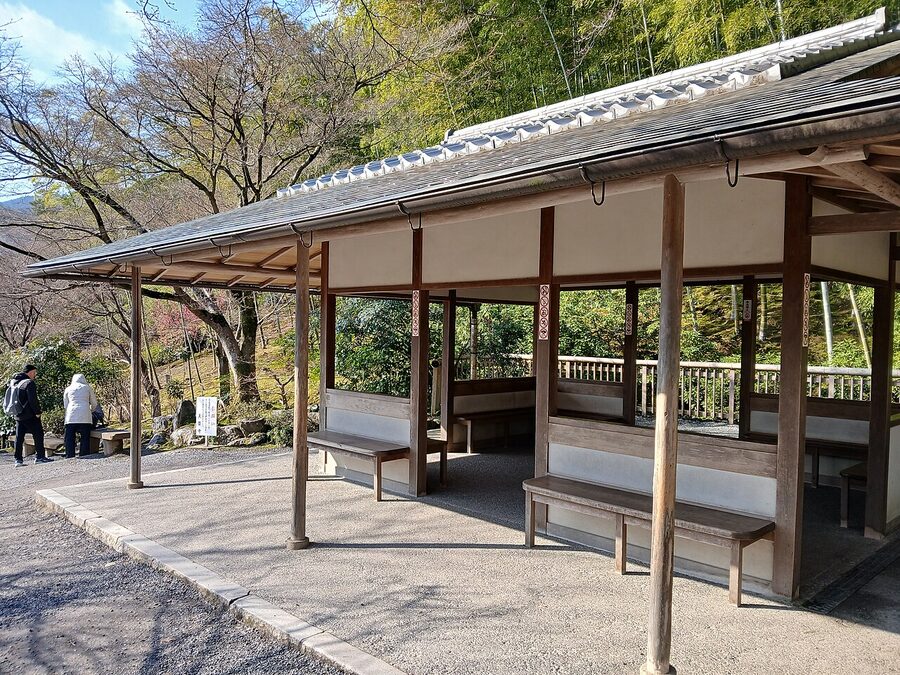
One more reason Tenryu-ji matters operationally: the temple’s north gate opens directly onto the south end of the bamboo grove. If you start at Tenryu-ji at 08:30 (admission), exit through the north gate around 09:15, and walk the bamboo path immediately, you hit the grove before the day-trip coaches even park. The whole thing flows: ticket booth, garden, north gate, bamboo, Okochi Sanso, Jojakko-ji. About three hours, and you’re done with the busy part of Arashiyama before most travellers have started their breakfast.
One restaurant note. Inside the precinct is Shigetsu, the temple’s shojin-ryori (Buddhist vegetarian) restaurant, set lunches from ¥3,800 plus the garden ticket. It’s calm, the food is precise, and the seating looks straight out at the pond. Reservation by phone the day before is wise; walk-in works on weekdays before noon.
The walk: Tenryu-ji north gate to Adashino
This is the route the brief calls the proper way to walk Sagano. It links the Bamboo Grove to four genuinely quiet temples in roughly two hours of unhurried walking, and it ends at the preserved Saga-Toriimoto street in a part of Arashiyama almost no day-trip coaches reach.
Okochi Sanso Villa
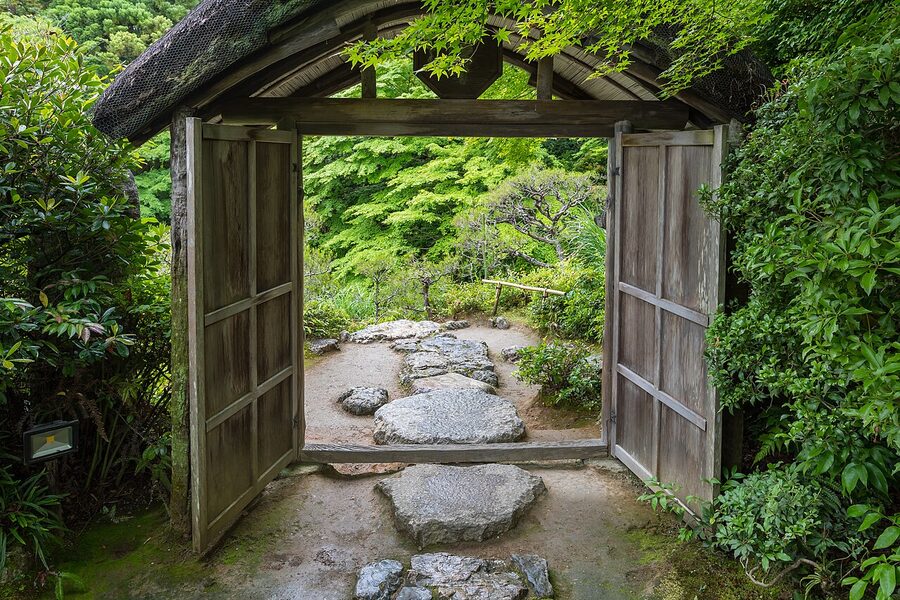
At the north end of the bamboo path, this is the former hill-top villa of Denjiro Okochi, a silent-film actor of the 1920s and 1930s. He spent thirty years building seven small structures and a hill-side garden across two hectares. Admission is ¥1,000 and includes a bowl of matcha plus a wagashi sweet at the tea house at the top of the loop. The buildings are viewed only from outside; the appeal is the garden and the views over central Kyoto from the upper teahouse, which on a clear day reach all the way to the eastern hills above Higashiyama.
Open daily 09:00 to 17:00. Most people skip it because they don’t want to pay another ¥1,000 after Tenryu-ji. Pay it. The matcha break alone is worth the entry, and the views are the best you’ll get in Arashiyama without climbing a mountain. The villa is also the entry point to the Kameyama Park trail, the only proper hike in the district.
Jojakko-ji
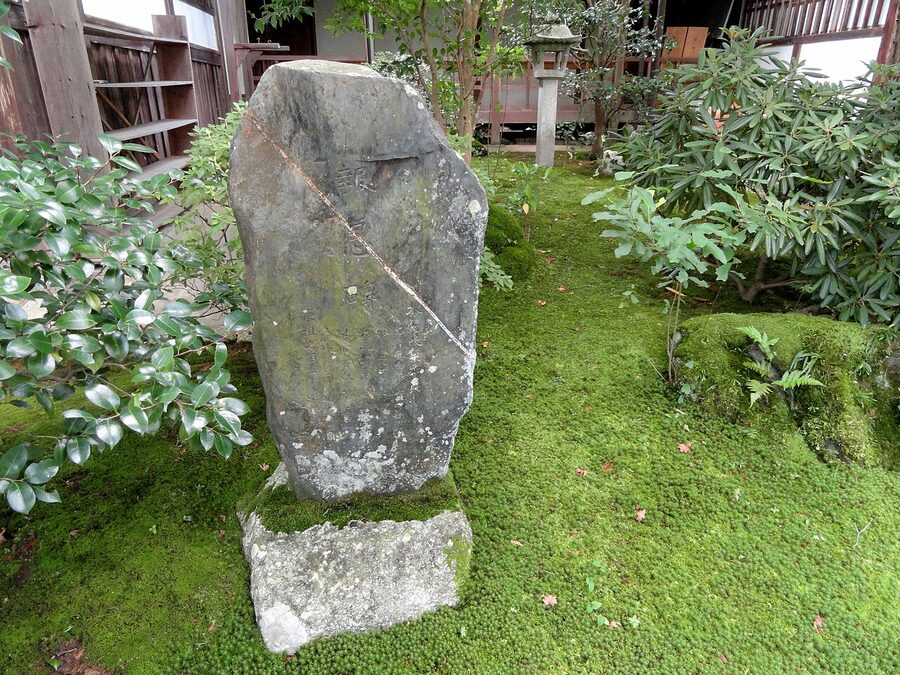
From Okochi Sanso it’s seven minutes north on the contour path to Jojakko-ji. This is where the day-trippers thin out. Jojakko-ji is a small Nichiren-sect temple, founded 1596 on the side of Mt Ogura, with a steep mossy stone-paved approach that climbs through a tahoto pagoda to a viewing platform with the best mid-elevation view of central Kyoto in the district. Admission is ¥500, hours 09:00 to 17:00 with last entry at 16:30, verified at jojakko-ji.or.jp on 2026-05-07.
Two things to know. The autumn maples here are spectacular, peaking around the third week of November, and tickets get tight on the last weekend; arrive at 09:00. The other: the lower path is steep and slick after rain, especially the mossy bottom flight. Take it slow.
Gio-ji
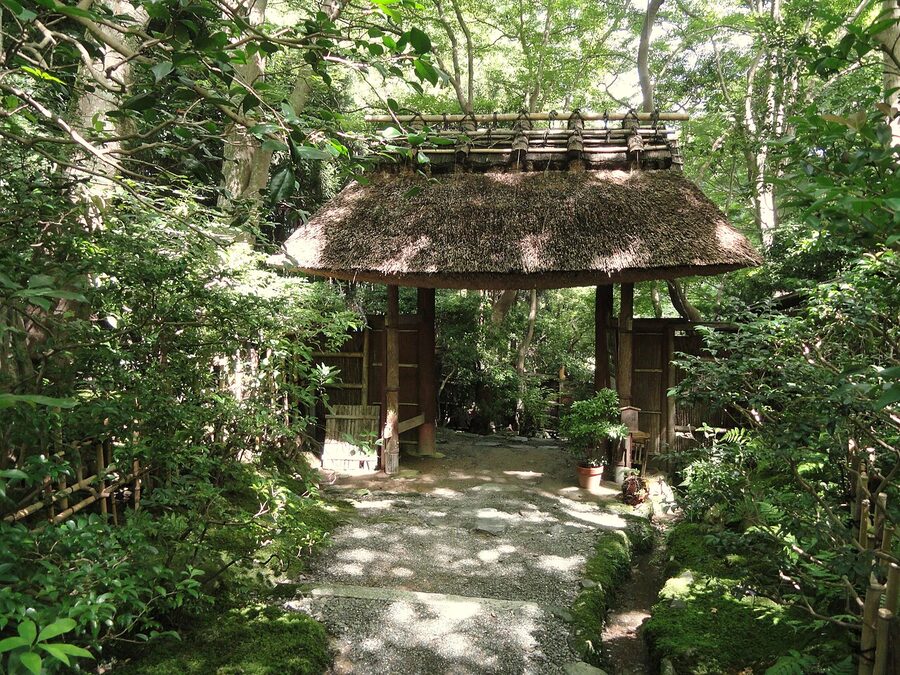
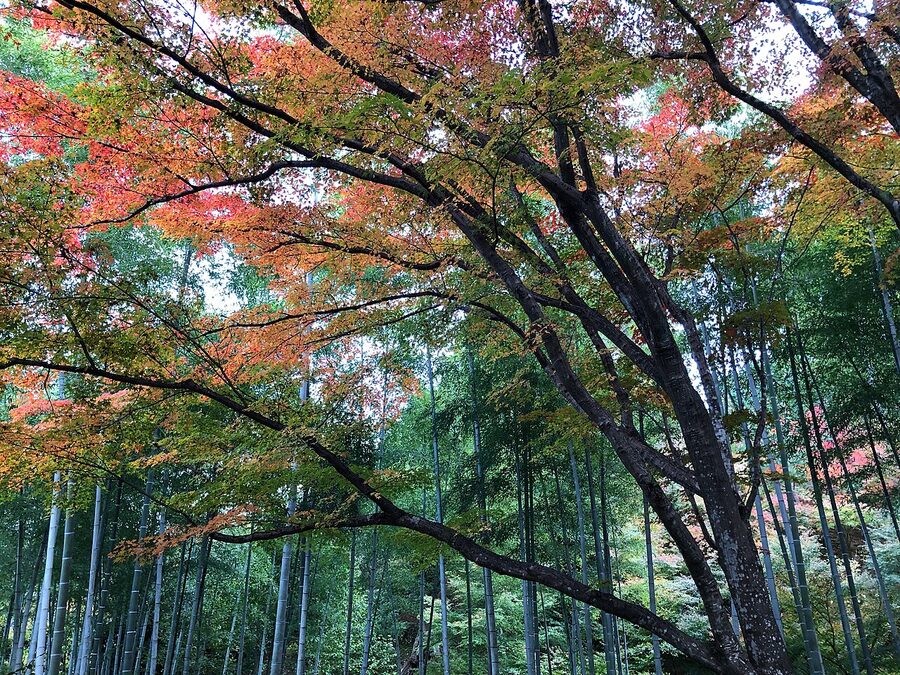
Gio-ji, ten minutes further north on the same path, is the smallest of the four hillside temples and the one I send people to who want to understand why Sagano is special. The whole precinct is one tiny moss garden under a maple canopy, with a single thatched-roof shrine hut at the back. There’s nothing to “see” in the ticking-off-a-list sense. You sit on the bench, look at the carpet of moss, and listen to the bamboo.
Admission is ¥300. Open 09:00 to 16:50 (last entry 16:30), closed January 1, verified at gioji.or.jp on 2026-05-07. The temple sells a combined ticket with Daikaku-ji for ¥600, which is the cheapest way to do both if you’re walking on to Daikaku-ji afterwards.
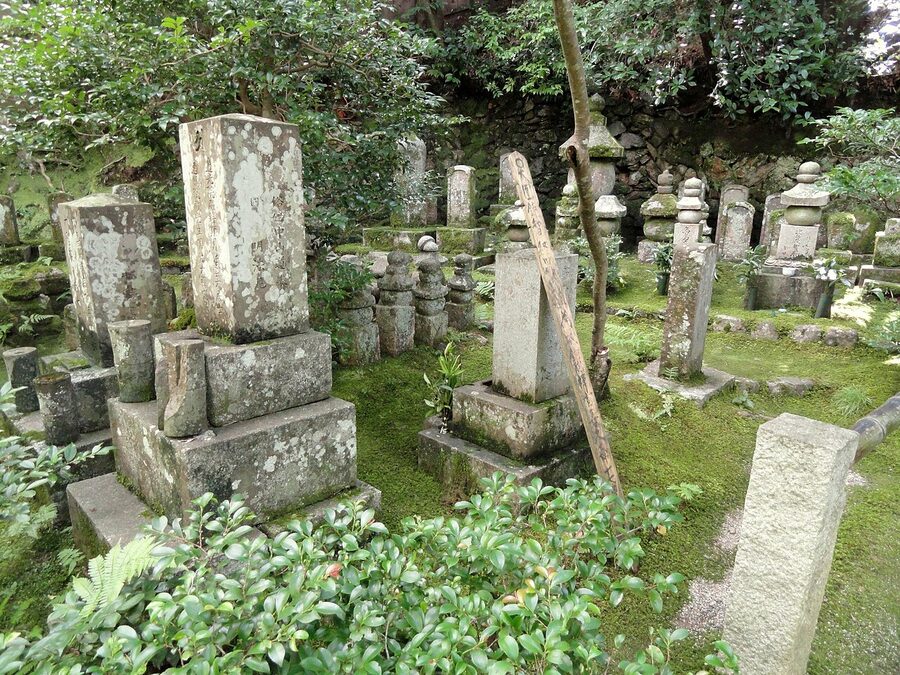
The temple’s name comes from the dancer Gio, a 12th-century court favourite of Taira no Kiyomori who was abandoned for a younger dancer and retired here as a nun at twenty-one. The story is in The Tale of the Heike, and the four small statues in the back hut are of Gio, her sister, her mother, and her successor at court. Knowing the story makes the moss feel different.
Saga-Toriimoto preserved street and Adashino
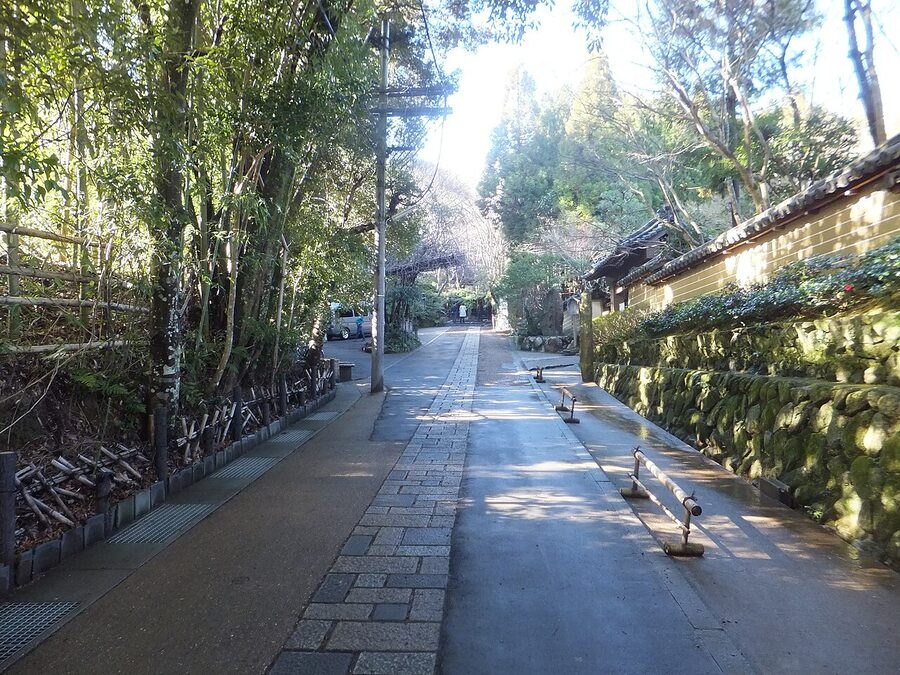
Twelve minutes from Gio-ji uphill on the lane, Saga-Toriimoto is a 600-metre stretch of traditional wooden townhouses preserved in roughly Meiji-period (1868-1912) condition. The street is partly residential, partly working machiya: a soba shop, an indigo dyer, two craft galleries. Walk it slowly. The crowds drop off completely above Gio-ji.
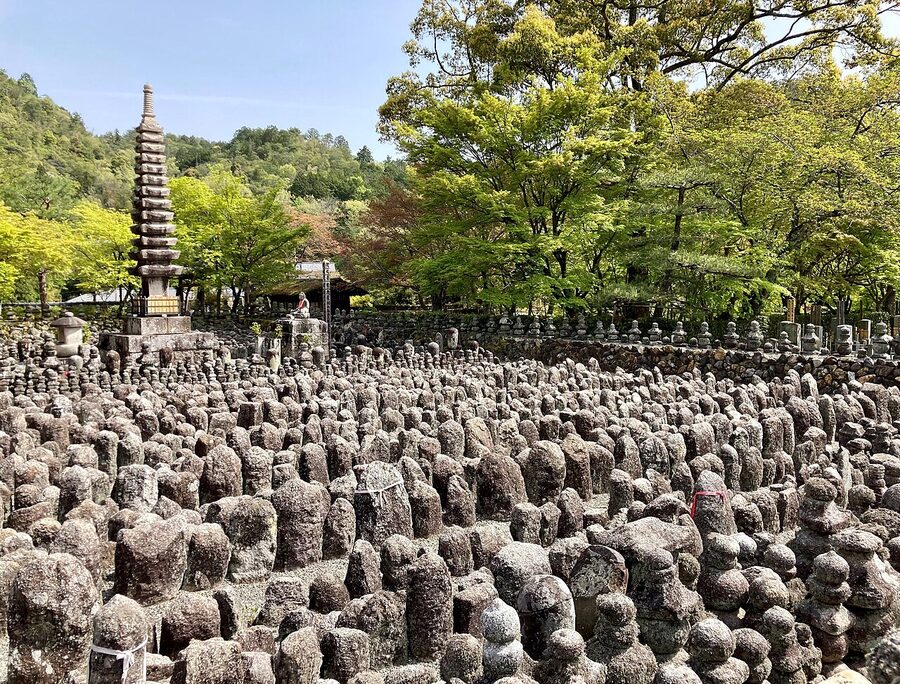
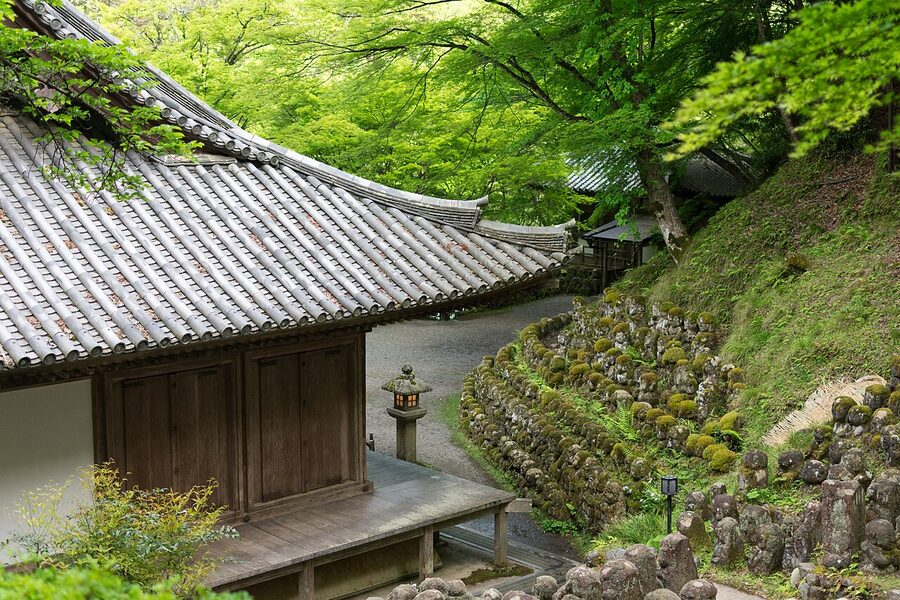
The street ends at Adashino Nenbutsuji, a small temple with about 8,000 stone Buddhist statues collected from forgotten graves across western Kyoto. They’re arranged in tight rows in a fenced courtyard at the back. The statues were originally scattered among the rice fields below; in 1903 the resident priest collected them and placed them where they sit now. On the second weekend of August the temple holds Sento Kuyo, a memorial service where each statue is lit by a single candle. It’s a hard ticket and worth planning around if your dates align. Admission is ¥500 (December to February, 09:00 to 16:00; otherwise 09:00 to 17:00).
If you have an extra hour, walk seven minutes further uphill to Otagi Nenbutsuji. This is a different temple from Adashino with a similar name, hence the confusion. Otagi has 1,200 rakan stone statues, each carved by a different amateur sculptor between 1981 and 1991 under the supervision of the temple’s then-priest. The faces are funny, distinctive, sometimes silly. Several hold cameras or small bottles of sake. It’s a pleasing antidote to the seriousness of Adashino. Admission ¥300, 08:00 to 16:30.
Daikaku-ji, the imperial-villa temple no one goes to
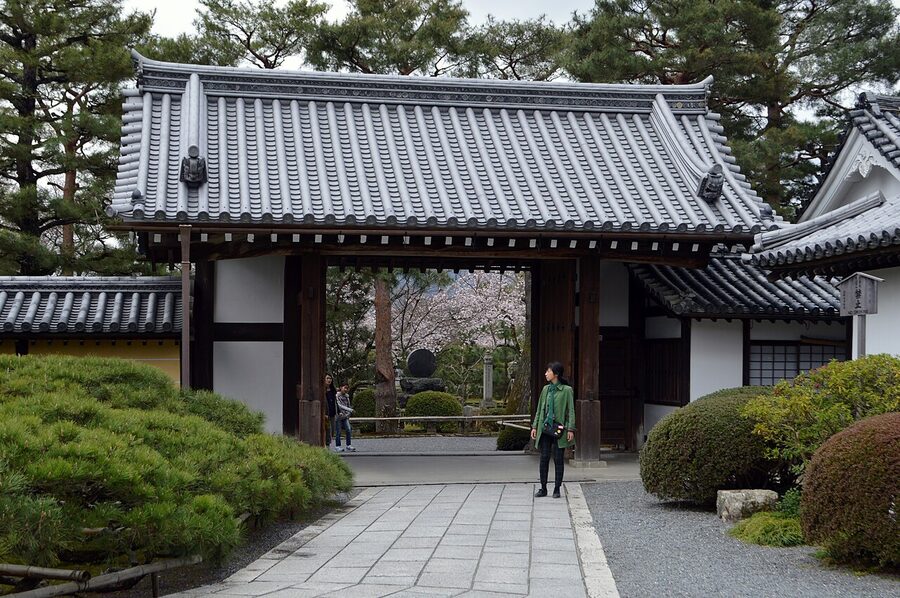
Daikaku-ji sits a 20-minute walk north of Saga-Arashiyama Station, which puts it firmly outside the bamboo-grove crowd radius. It’s a Shingon-school temple originally built as an imperial villa in 814 for Emperor Saga, then converted to a temple in 876. For most of its history a member of the imperial family served as head priest. The complex is bigger than it looks from outside, with a chain of long wooden corridors connecting six halls around a small inner courtyard. Walk it in stockinged feet and you can take the floor temperature on your way: cool stone in summer, warming hinoki in autumn.
The crowd-puller, when there is one, is Osawa Pond at the back of the temple. It was modelled on Lake Dongting in China when the villa was first built and it’s now Japan’s oldest surviving artificial pond. The temple holds a moon-viewing festival here on the first full moon of autumn (Chushu no Meigetsu, around mid-September), with court music and small flat-bottomed boats out on the water. Even on an ordinary morning the pond circuit is a 20-minute walk that very few day-trippers ever do.
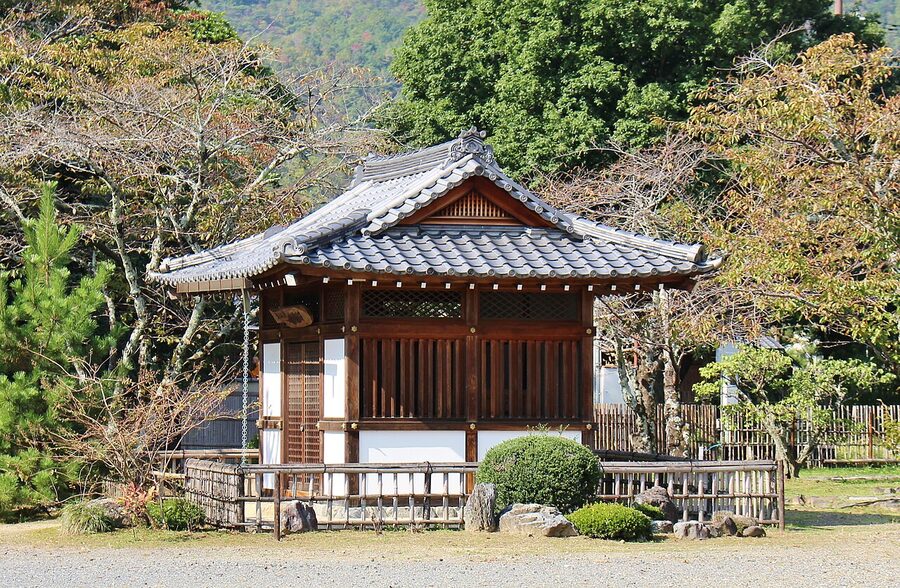
Practical: open 09:00 to 17:00 (last admission 16:30), admission ¥500 adult, ¥300 child. The temple is currently revising fees as of April 2026 and the new published rate may be a little higher; verify on daikakuji.or.jp the day before. The combined ticket with Gio-ji is ¥600 from either temple.
Buses from JR Saga-Arashiyama (Kyoto Bus 28 or City Bus 91, three minutes, ¥230) save the walk if you’re tired. From Tenryu-ji’s north gate it’s about 25 minutes on foot through quiet residential streets. The walk is pleasant in spring and autumn, less so in summer (heat) and February (cold winds off the river).
The river: Hozugawa boat down from Kameoka
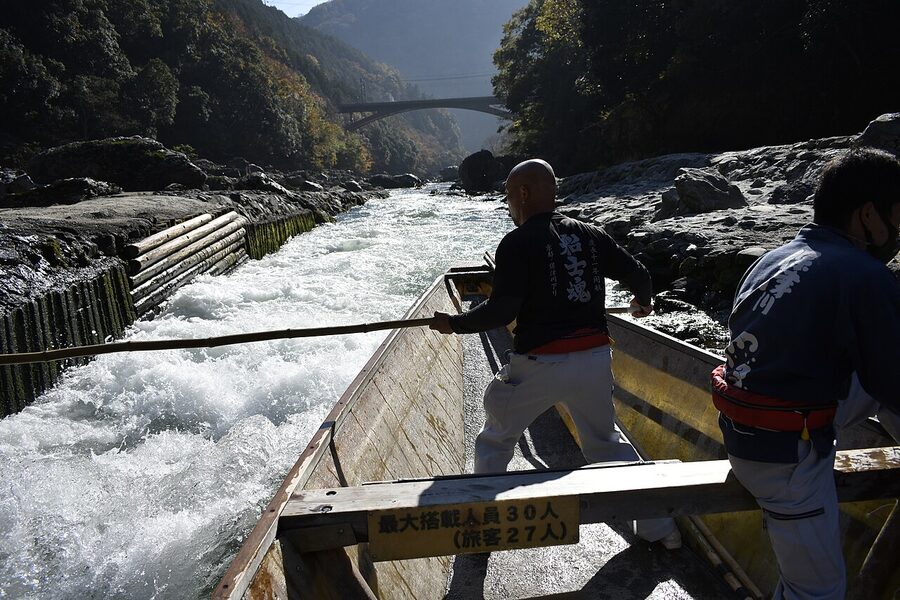
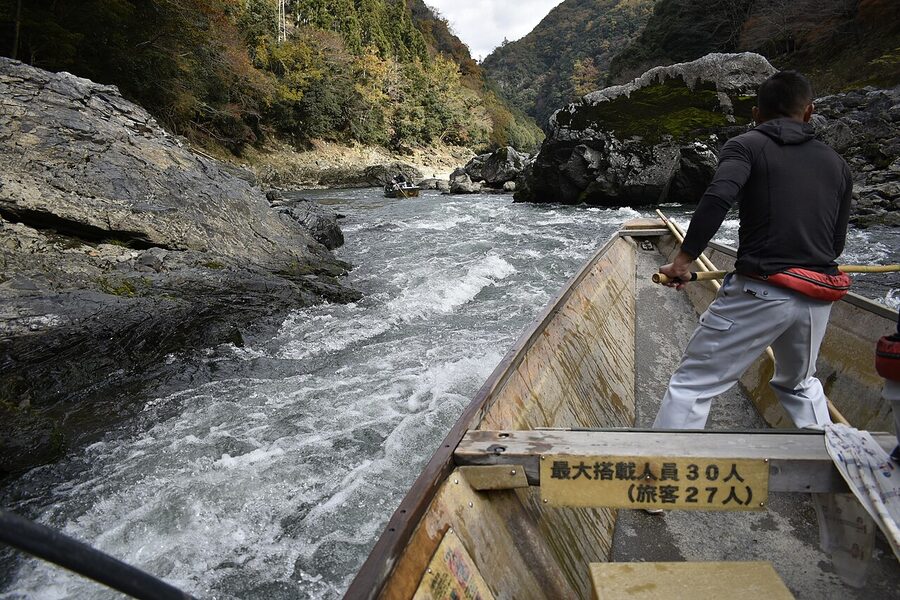
The Hozugawa river boat is the activity that punches above its weight in every Arashiyama itinerary. It’s a 16-kilometre, two-hour run downstream from Kameoka into central Arashiyama, in an open wooden boat steered by three men using bamboo poles, with an outboard motor that comes out only on the slowest stretches. There are about a dozen rapids, none big enough to be scary, plus long calm sections under cliffs and through pine-shaded canyons.
What makes it work, and what most online write-ups miss: the boat is genuinely the most efficient way to combine a forest ride out (the Sagano Romantic Train, see next section) with a view of the gorge from water level. You ride the train uphill from Arashiyama to Kameoka, walk 10 minutes to the boat dock, and ride the river back down. Both legs together take about three and a half hours and you arrive back at Togetsukyo Bridge in time for a late lunch.
Verified at hozugawakudari.jp on 2026-05-07: adult fare ¥6,000, child (under 12) ¥4,500, no boarding for children under 80cm tall, capacity 24 per boat. Walk-up tickets work for groups of 10 or fewer; reserve by phone (0771-22-5846) for larger groups. Operating in two seasonal schedules: summer schedule March 10 to December 13, winter schedule December 8 to March 9 (with reduced sailings and heated kotatsu boats on selected dates). On heavy rain or after typhoons the river runs fast and they cancel; check before leaving Kyoto Station.
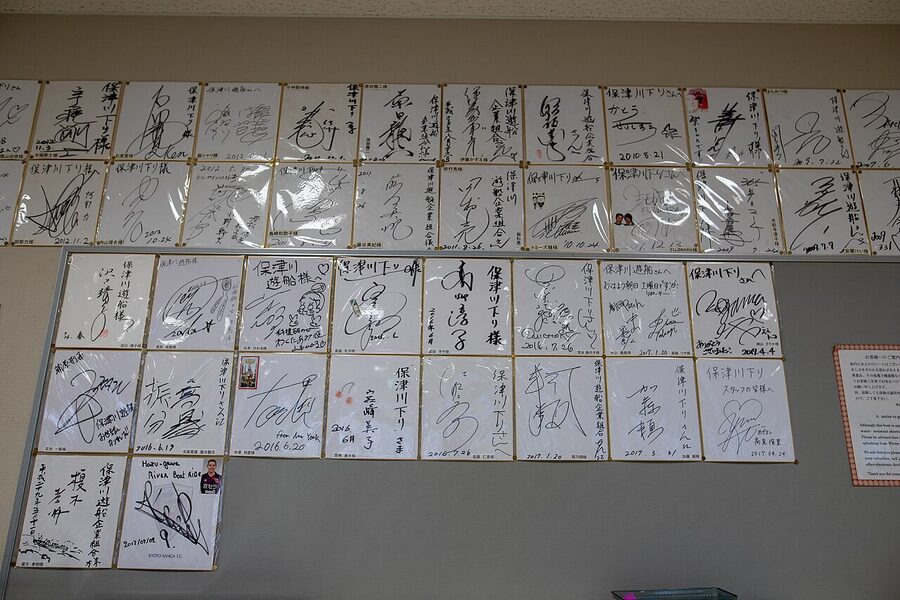
The boat ends at a small dock just north of Togetsukyo Bridge. Walk under the bridge and you’re back at Randen Arashiyama Station in three minutes.
Klook lists the boat at klook.com as a same-day reservable activity if you want to skip the phone call, although for fewer than 10 people the walk-up at Kameoka almost always works.
Sagano Romantic Train: the open-windowed ride uphill
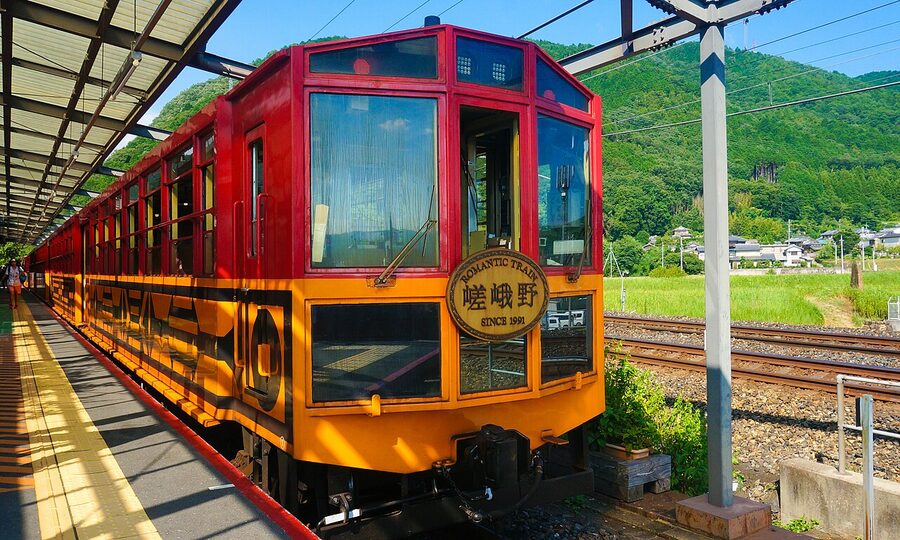
The Sagano Romantic Train (Sagano Scenic Railway, also called the Torokko) is a preserved 7.3-kilometre line that runs along the Hozu Gorge from Torokko Saga station, next door to JR Saga-Arashiyama, up to Torokko Kameoka. The trip takes about 25 minutes one way. Five carriages, four enclosed plus one fully open-air at the rear, pulled by a diesel locomotive painted to look like a steam engine. The line was scheduled for closure in 1989 when the JR Sagano line opened a tunnel that bypassed it; a group of railway-line preservationists bought it and ran it as a tourist train. It’s been one of Kyoto’s most reliable shoulder-season tickets ever since.
Practical: adult one-way ¥880, child ¥440, verified at sagano-kanko.co.jp on 2026-05-07. Same fare regardless of where you board. The line operates from early March to the end of December; closed entirely January and most of February for maintenance, plus randomly on Wednesdays in non-peak season. Trains run every hour from 09:02 to 16:02 from Saga, with extra services in November.
The trick is reservations. Same-day tickets at the station counter (every station except Hozukyo) work in May, June, September, and most of summer outside the August Bon week. Early November weekends are reserved-only and sell out two to three weeks in advance. Reserve through the official website’s booking page at sagano-kanko.co.jp/en/reserve/, which opens at midnight a month before the date you want. Klook lists the same train at klook.com with marginally easier non-Japanese-card booking; both work.
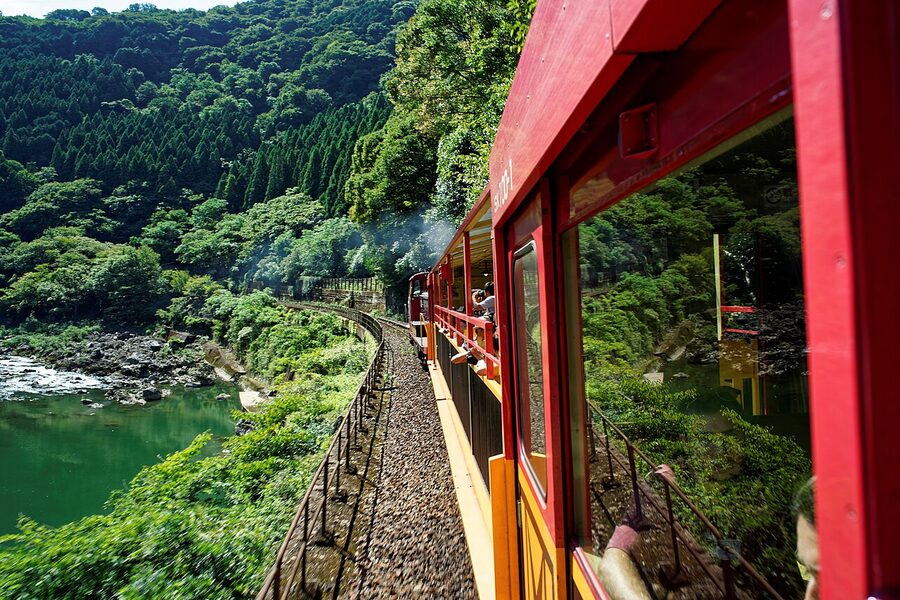
The combination move I recommend: board the Romantic Train at Torokko Saga at 09:02, ride 25 minutes up to Torokko Kameoka, walk 10 minutes to the river boat dock, board the 10:00 boat down. You’re back at Togetsukyo Bridge by midday with the best parts of both done. Total cost: ¥880 train + ¥6,000 boat = ¥6,880 per adult, plus the JR train back to Kyoto Station from Saga-Arashiyama (¥240). The train half is sometimes called Torokko, which is what the JA signs all use; it’s the same train.
The monkey park, for the view
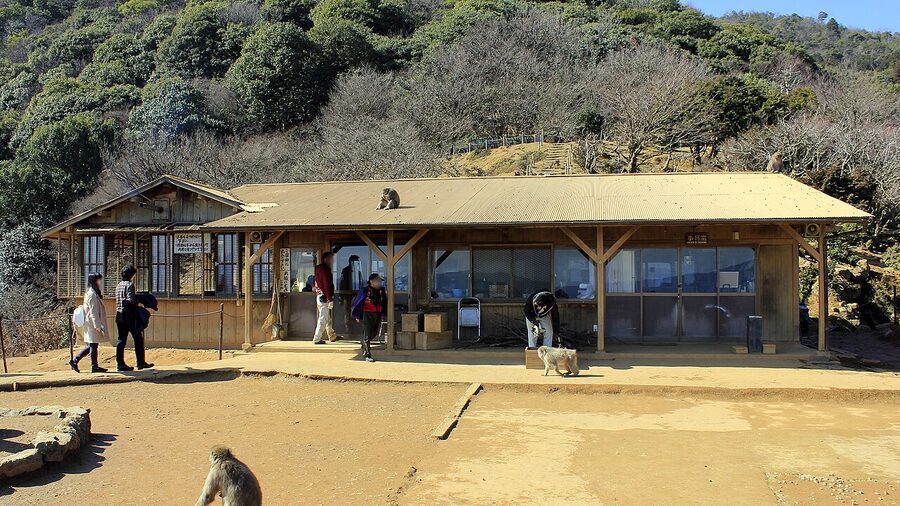
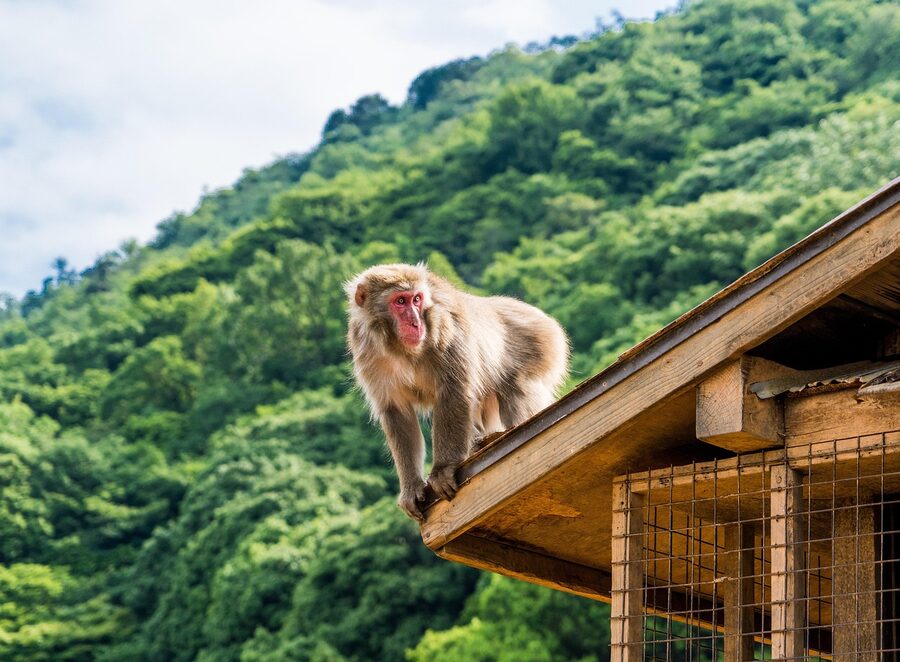
Iwatayama Monkey Park is the third Arashiyama institution that most travellers misunderstand. They go for the monkeys. The monkeys are fine. Around 120 wild Japanese macaques, fed daily so they stick around, free to roam. But what the macaques don’t tell you about is the view, which is genuinely the best 360-degree sightline in west Kyoto. The clearing at the summit looks down across the Katsura river bend, the Togetsukyo bridge, the central Kyoto basin, and the eastern hills above Kiyomizu and Higashiyama. On a clear day at 09:00 you can see Kyoto Tower 8 kilometres away. The view alone is worth the ¥800.
The price is also part of why I send people: at ¥800 entry plus a 20-minute hike, this is the cheapest panoramic of central Kyoto you’ll find. The Kyoto Tower observation deck costs ¥900 with a worse view and no monkeys.
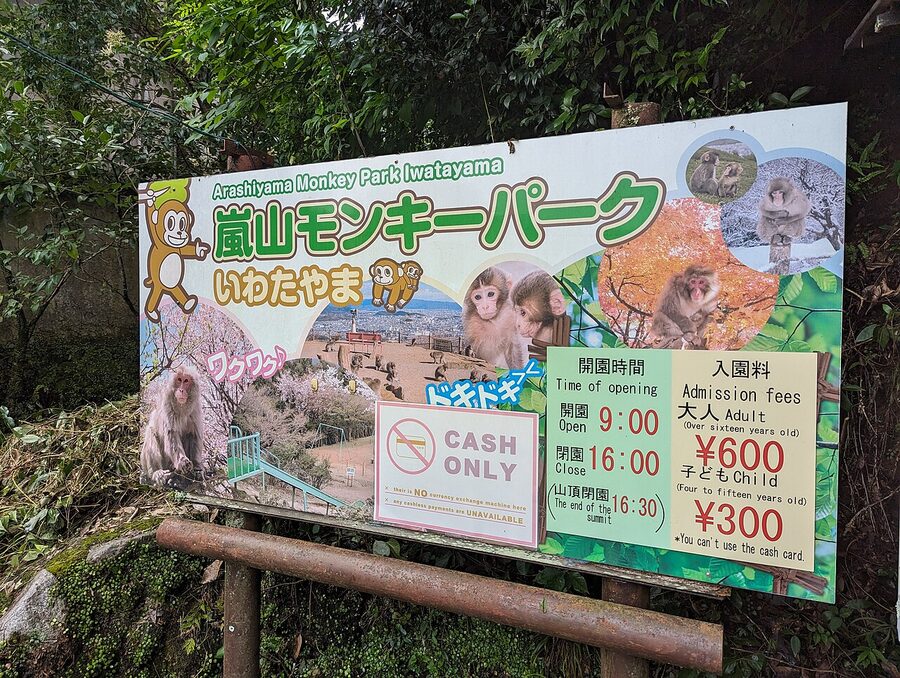
Practical, verified at monkeypark.jp on 2026-05-07: 09:00 to 16:00, adult ¥800, child (4-15) ¥400, free under 4. Cash only, Japanese yen only. They close on heavy rain days and on January 1. The hike up is steep, paved, takes about 20 minutes from the entrance gate by Ichitani Munakata Shrine on the south side of Togetsukyo Bridge. The bridge itself is the only access; there’s no taxi drop-off, no bus.
One rule from the staff: no touching the monkeys, no eye contact (juvenile males read it as a challenge), no food in your hands. There’s a wire-mesh hut at the top where you go inside to buy small bags of apple slices for ¥100; the monkeys reach in from outside to take them, which means they’re outside and you’re inside, which is the right way round.
Where to eat in Sagano-Arashiyama
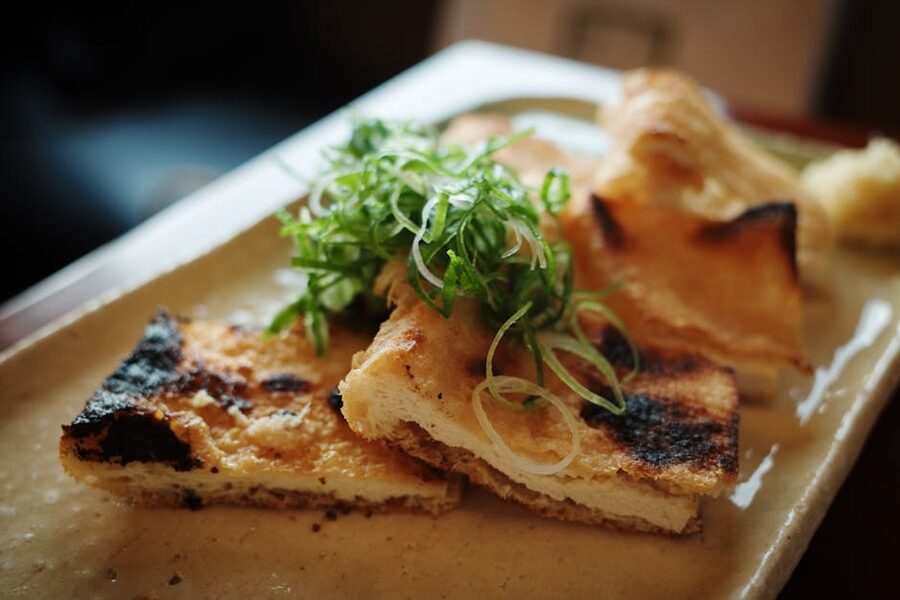
Restaurant pickings drop off sharply north of the bamboo grove. The named places worth booking ahead are mostly south of the river or close to the main streets near Tenryu-ji. The food specialty here, by tradition, is yudofu: silken tofu simmered in a kelp-water broth and dipped in soy and ginger. Tenryu-ji’s Buddhist precinct popularised it locally; you’ll see it on every menu in the district.
Shigetsu, inside Tenryu-ji’s precinct, is the obvious starter. Shojin-ryori set lunches from ¥3,800. Reservation by phone the day before recommended; phone 075-882-9725 between 11:00 and 14:00. You eat looking out at the Sogenchi pond. The garden ticket is required separately.
Sagano Yudofu on the main shopping street, three minutes from Randen Arashiyama, is the most consistent yudofu set in town. Lunch sets ¥3,500 to ¥4,800, served in a 1700s-era teahouse around an inner garden. Walk-in works on weekdays; weekends queue from 11:30. They don’t take reservations.
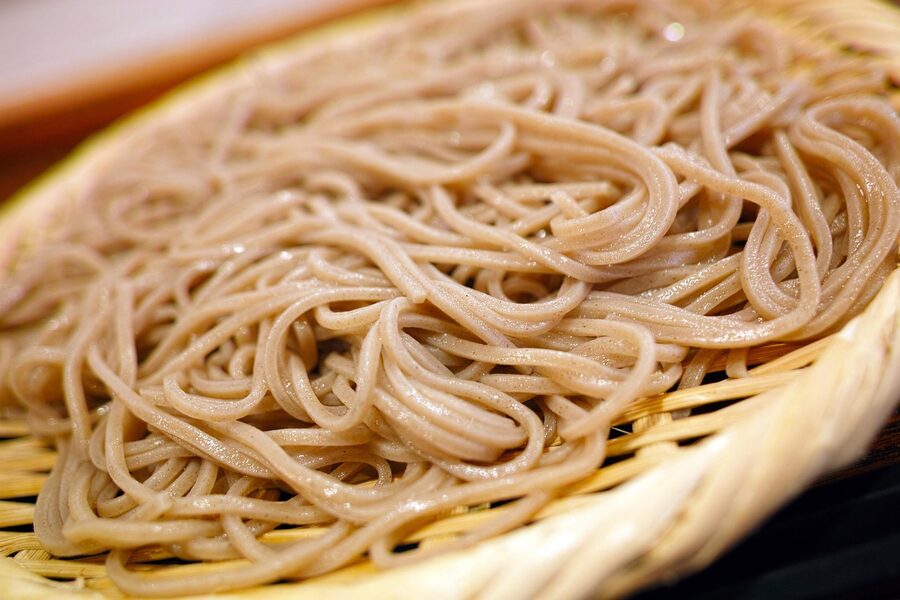
Yoshimura Arashiyama, also on the main street, is the soba option. Their hand-cut buckwheat noodles in a clear dashi broth are ¥1,200 to ¥1,800; the riverside seating on the second floor has Togetsukyo Bridge framed perfectly through the south window. Open 11:00 to 17:00 (last orders 16:00). No reservations.
For a splurge, Kitcho Arashiyama is the address. This is the original location of the Kitcho restaurant group, three Michelin stars, founded 1948, with eight private rooms looking out at a moss garden. Kaiseki dinner runs ¥55,000+ per person without drinks; lunch is ¥30,000+. Reservations open three months ahead through your hotel concierge or by phone (075-881-1101). Worth it once if Arashiyama is the splurge meal of your trip.
For a quick bite, the food stalls along the Togetsukyo approach do matcha soft-serve (¥500), yatsuhashi sweets (¥800 a box), and steamed buns. The matcha at % Arabica Arashiyama on the river bank is excellent and the queue moves fast; they bake the croissants on site. Avoid the dressed-up tourist places along the bridge approach: prices are 20 to 40% higher and the food is no better.
One quiet morning, properly walked
If you only have one morning in Arashiyama, this is the schedule that works. I’ve test-walked it twice in the last two years.
06:30: Arrive Saga-Arashiyama Station on the JR Sagano local. Walk 10 minutes north-west to Tenryu-ji’s south gate. The temple opens at 08:30, so you’ve got time. Walk up to Togetsukyo Bridge, watch the river fog burn off, and be back at Tenryu-ji’s south gate at 08:25.
08:30 to 09:30: Tenryu-ji garden circuit. Buy the garden ticket plus the buildings ticket if it’s a weekend (worth it for the cloud dragon). Exit through the north gate.
09:30 to 09:50: Walk the bamboo grove. At this hour you’ll have it almost to yourself.
09:50 to 11:30: Okochi Sanso plus the contour path north to Jojakko-ji and Gio-ji. Buy the ¥600 combined Gio-ji + Daikaku-ji ticket at Gio-ji.
11:30 to 12:30: Lunch. Sagano Yudofu if you’ve done a recce queue check, Yoshimura for soba, Shigetsu inside Tenryu-ji if you booked yesterday.
12:30 to 13:30: Walk or bus to Daikaku-ji. The Osawa Pond loop takes 30 minutes; the buildings another 20.
13:30 to 14:30: Iwatayama Monkey Park, if you have the legs.
You’re done by 15:00, on the train back to central Kyoto, in time for a leisurely afternoon at Kiyomizu-dera or Sanjusangendo in Higashiyama. The morning has been quiet, productive, and you’ve avoided every single one of the queues that ruin most people’s Arashiyama day.
If you have a second day: combinations
One day in Sagano is enough for the temples, the bamboo, the bridge, and either the monkey park or the river boat. Two days unlocks both, plus Daikaku-ji and Otagi at unhurried pace. Three days is overkill unless you’re a temple completist or the autumn leaves are peaking, in which case three days is exactly right.
The combinations that work well from a Sagano-Arashiyama base:
- Sagano + central Kyoto: morning Sagano, afternoon Gion and Higashiyama. Both are at opposite ends of the city; the JR Sagano line gets you back to Kyoto Station in 15 minutes, then a 10-minute taxi or 20-minute walk to Gion.
- Sagano + Kinkaku-ji: the Randen tram from Arashiyama to Kitano-Hakubaicho gets you within 15 minutes’ walk of the golden pavilion. Most travellers do this in reverse and arrive in Arashiyama exhausted at midday; do Kinkaku-ji second, after a Sagano morning.
- Sagano + Hieizan / Mt Hiei: harder logistically. Take the JR Sagano back to Kyoto Station, then the Eizan Railway from Demachiyanagi up to Yase, then the cable car. Half a day each way; better as a separate day.
- Sagano cherry-blossom-only day: the river bank between Togetsukyo and the Hozugawa boat dock has roughly 1,500 cherry trees; the Daikaku-ji grounds add another few hundred. April 1 to 7 is the typical peak. Pair with a Heian Jingu garden run in central Kyoto for one of the better hanami days you can put together. Full timing in my cherry blossom Kyoto guide.
Where to stay if you want a Sagano base
Most travellers stay in central Kyoto and day-trip to Arashiyama. That’s the right call for first-timers because central Kyoto puts you within 15 minutes of every other major sight. But Sagano has a small handful of ryokan and small hotels that are worth it on a return visit, especially for the morning sequence above: walking to Tenryu-ji at 06:30 from a Sagano hotel is a different experience from arriving on the JR Sagano local at the same hour.
Ranzan (lan-zan) is a long-running mid-tier ryokan with riverside rooms, half-board (kaiseki dinner plus breakfast) starting around ¥30,000 per person. The dining is consistent without being remarkable, the bath has a riverside view, and the location is three minutes from Togetsukyo Bridge. Booking.com lists it under “Hotel Ranzan.”
Hoshinoya Kyoto is the high-end option. It’s only accessible by the property’s own boat from the Togetsukyo dock, which is part of the experience and part of the price (rooms from about ¥90,000 a night). The food and service are exceptional; the location feels properly remote without being isolated. Available on Booking.com and on the property’s own site at hoshinoya.com.
Suiran, A Luxury Collection Hotel sits next to Tenryu-ji in a 1899-era stone-walled compound. Rooms from around ¥55,000. The Western/Japanese hybrid setup makes it more accessible than a pure ryokan if you’ve never tatami-stayed before. Booking.com, Agoda.
For budget travellers, the Sagano area has fewer good cheap options than central Kyoto. Most hostels are clustered around Kyoto Station and Kawaramachi. Better to commute the 15 minutes than try to find a budget ryokan in Sagano.
The Nonomiya Shrine note, plus a couple of small things
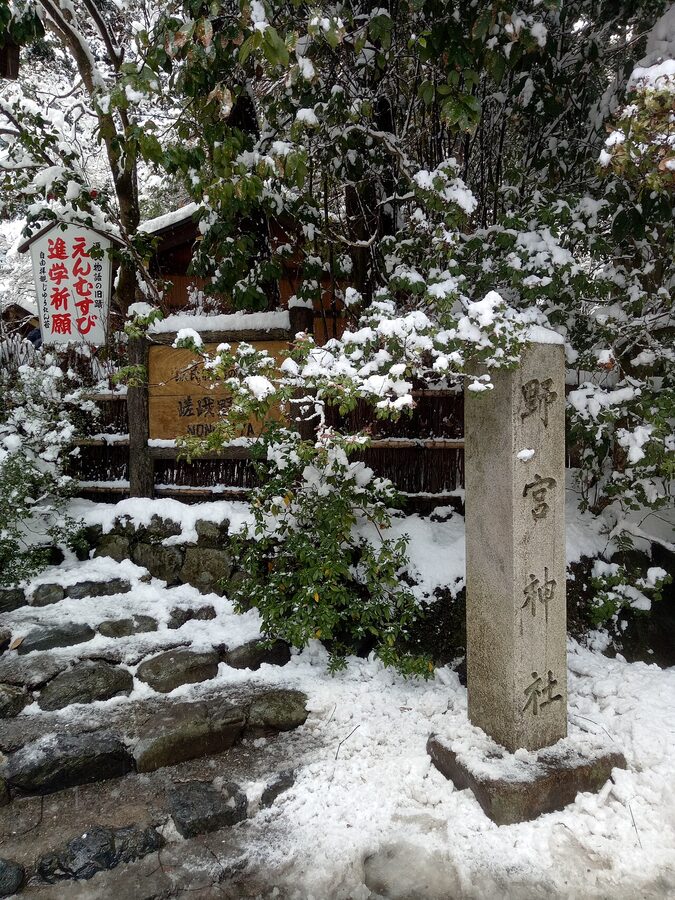
At the south end of the bamboo grove, on the path from Tenryu-ji’s north gate, sits Nonomiya Shrine. It’s tiny, easy to miss, and historically very interesting. For about 600 years it housed the imperial princesses who were sent to serve as saigu, the Vestal Virgins of Ise Grand Shrine. Each princess spent a year here in purification before traveling to Ise. The shrine appears in chapter ten of The Tale of Genji, where Hikaru no Genji visits the heroine Rokujo on the eve of her departure for Ise. The black torii is unfinished cypress, the original style still maintained for ritual reasons. Free, open dawn to dusk. Two minutes from the bamboo grove south entry; almost everyone walks straight past.
A couple of other small notes that are worth knowing.
Rickshaw rides: the men in shorts and traditional tabi socks calling out from the bridge approach run a 30-minute pull from Togetsukyo around the back streets and along the bamboo grove for about ¥9,000 per two passengers. They’re licensed, they know the area, and on a summer day when the heat is debilitating it’s a defensible spend. Most of the year I’d skip it.
Kimono rental: there are about a dozen rental shops near each station, with rates from ¥5,000 to ¥15,000 a day. Quality varies wildly. The reputable ones include obi, hairstyling, and a small bag for street shoes. Yume Yakata on the north side near Saga-Arashiyama is reliable. If you do this, plan to walk slowly: kimono are not built for the temple steps.
Bicycle rental: several shops rent for around ¥1,000 a day. Sagano is hillier than Tokyo or central Kyoto, so the rental ebikes (around ¥2,000 a day) are worth the extra. The contour path between Tenryu-ji’s north gate, Jojakko-ji, Gio-ji and Adashino works well on a bike if you skip the steep mossy approaches; lock the bike at the bottom and walk up. Useful in May and October when the weather cooperates and walking the full distance is tiring.
If you’re using the JR Sagano line as your spine for the day, the JR-West passes cover it for free; Saga-Arashiyama is on the Kyoto-Kameoka stretch.
One last thing about the bamboo grove
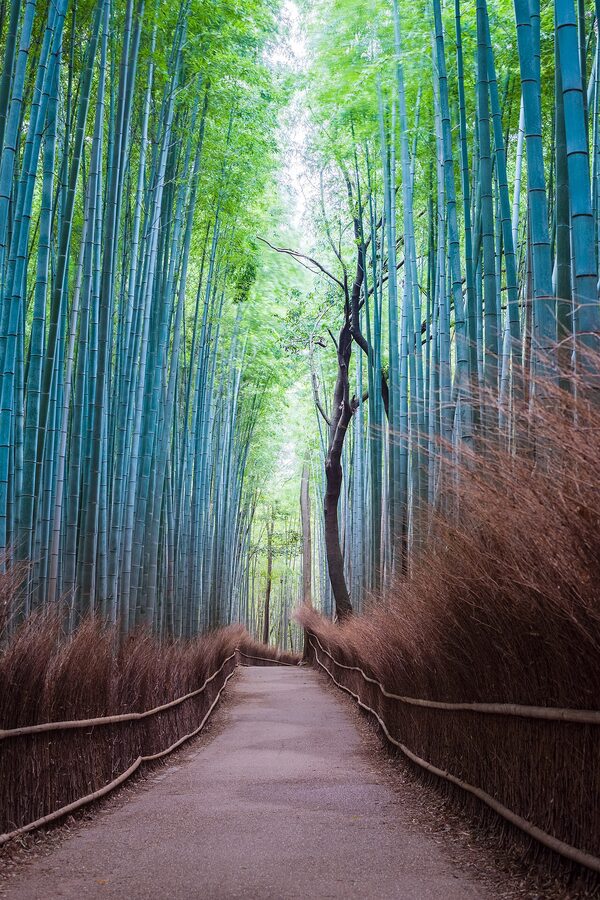
The grove gets a bad rap on the contrarian travel blogs, mine included a few paragraphs back. Let me walk that back a little.
At 06:30, with the bamboo creaking in the wind and almost no one else on the path, the grove is one of the more atmospheric short walks anywhere in Kyoto. The stalks are 10 to 20 metres tall, the canopy filters the light into a dim green wash, and the wind makes a low knocking sound that sound engineers have, since 1996, designated one of Japan’s “100 Soundscapes.” The grove is on that list for good reason.
The problem isn’t the grove. The problem is when you visit. Between 10:00 and 16:00 the path becomes a foot-traffic management exercise that no temple in Kyoto, no matter how good, would want to be put through. At 06:30 it’s exactly what the photographs promise. Choose your hour and the contrarian piece I led with stops being a contrarian piece. It just becomes the right way to walk it.
If you’re not a 06:30 person, the secondary truth of Sagano is even better. There’s an entire district of temples, gardens, hill paths, a river boat, and a forest train that doesn’t depend on the bamboo at all. Take the bamboo as the appetiser at the wrong time of day, walk the real Sagano on the rest of your morning, and you’ll come back to your hotel having had something most other Arashiyama visitors don’t.
The view from Iwatayama at 09:00 is mine. Eight kilometres to the eastern hills, the river bend in the foreground, a wild macaque on the railing twenty centimetres from my elbow because I’m sitting between the path and the food hut. Nobody else up there yet. That’s the morning I’d wish for you.


.jpg)


.jpg)


_21_Nov,_2009_-_panoramio.jpg)

.jpg)