From Shinjuku to a clear view of Mt. Fuji takes 1h 53m on the Fuji Excursion Limited Express, costs ¥4,130 one way, and is the single fastest scheduled way out there. The bus from the same station beats it on price, ¥2,200 booked online via the JNTO partner pamphlet rate, but adds 15–30 minutes and a real risk of crawling out of west Tokyo at 09:30 on a Saturday. Pretty much every other route adds a transfer.
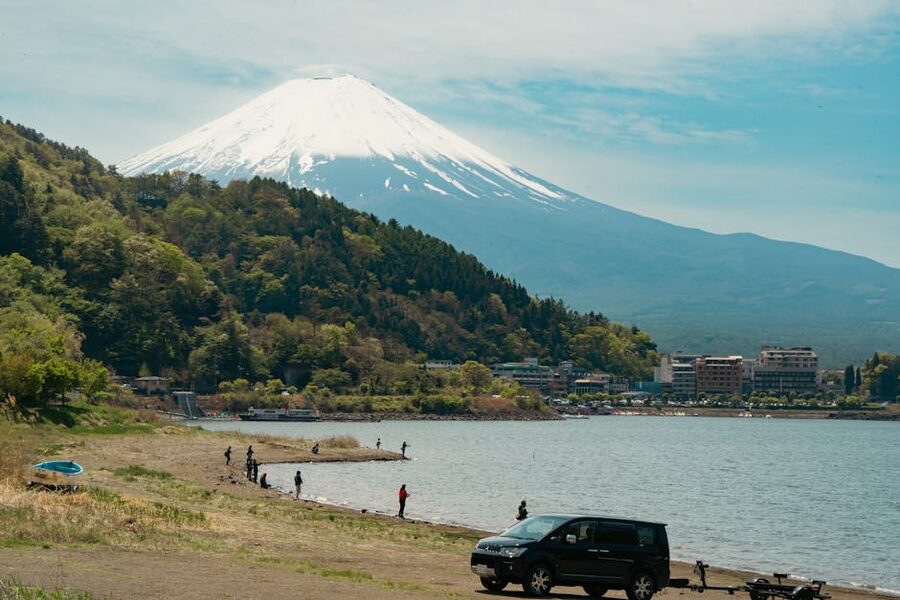
And most travellers waste an hour of that arriving at the wrong stop. Fujisan Station is not the climbing trailhead. Mt. Fuji Station is the renamed name for Fujisan Station and not the same place as the Subaru Line 5th Station. Otsuki Station is a transfer point, not a destination. Three different stations have “Fuji” in the name and only one of them puts you next to the lake everyone is photographing.
This is a guide to actually doing it, end to end. I will cover the four real transit options, what each costs and how long each takes in 2026, where to base yourself for a single day, what to skip, and what to do when the mountain is hidden, which it will be on more days than you would think.
In This Article
- The 10-second answer: bus or Fuji Excursion
- The Fujikyu Highway Bus: still the default
- Where it actually leaves from
- What the bus actually feels like
- The Fuji Excursion Limited Express: book it the moment tickets release
- Picking up your reserved ticket
- If the train is sold out
- The Romance Car to Hakone: a different answer to the same question
- Where Hakone shows Mt. Fuji and where it does not
- Where to base yourself: Lake Kawaguchi vs Hakone vs Gotemba
- Lake Kawaguchi (Yamanashi side, Fuji Five Lakes)
- Hakone
- Gotemba
- The single-day-versus-overnight call
- The cloud problem you cannot out-plan
- Visibility checks before you commit
- What to actually do once you arrive
- The Chureito Pagoda question
- Lake Kawaguchi north shore: the Maple Avenue and Oishi Park
- The unexciting truth about Oshino Hakkai
- Lake Yamanaka: skip on a day trip
- Hakone-led day trip: the alternative shape
- The Owakudani Fuji shot
- Mt. Fuji Pass and the area transit math
- Getting back to Tokyo
- What about a tour package?
- What to do if Fuji is hidden
- The climbing question, in passing
- One more shape: the post-Kyoto routing
- Practical bits worth knowing
- What to expect from the day
The 10-second answer: bus or Fuji Excursion
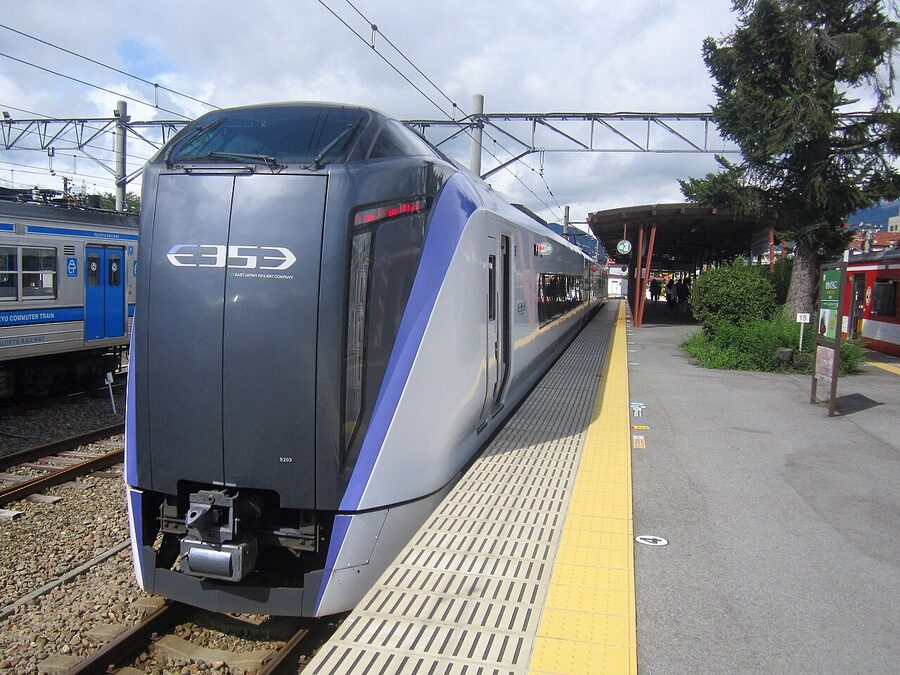
If you only read one section, this one. There are four ways to get from Tokyo to the Mt. Fuji area in a single day. Two are worth your time, one is a backup, one is a tour package.
| Route | Time | Cost (one way) | Best for |
|---|---|---|---|
| Fujikyu Highway Bus, Shinjuku to Kawaguchiko | 1h 45m to 2h | ¥2,200 | Cheapest, frequent, sells out on weekends |
| Fuji Excursion Limited Express, Shinjuku to Kawaguchiko | 1h 53m | ¥4,130 | Fastest scheduled, four trains a day, reserved only |
| JR Chuo Line + Fujikyu Railway via Otsuki | 2h 30m to 3h | ¥2,510 | Backup when Fuji Excursion is sold out |
| Romance Car to Hakone, Shinjuku to Hakone-Yumoto | 1h 25m | ¥2,470 with surcharge | Different mountain, easier full day if Fuji is hidden |
That table covers the day-trippable options as of 2026. The Tokaido Shinkansen technically gets you to Mishima or Shin-Fuji faster, but you still need a bus from the bullet train station to the lakes, so the headline time advantage evaporates. Skip the Shinkansen unless you are combining the day with a stop in Atami or Mishima. The pricing here is verified against the JNTO Apr–May 2026 pamphlet for the bus, the Fujikyu Railway operator site for the Fuji Excursion, and the Odakyu English site for the Romance Car (all confirmed as of 2026).
The Fujikyu Highway Bus: still the default
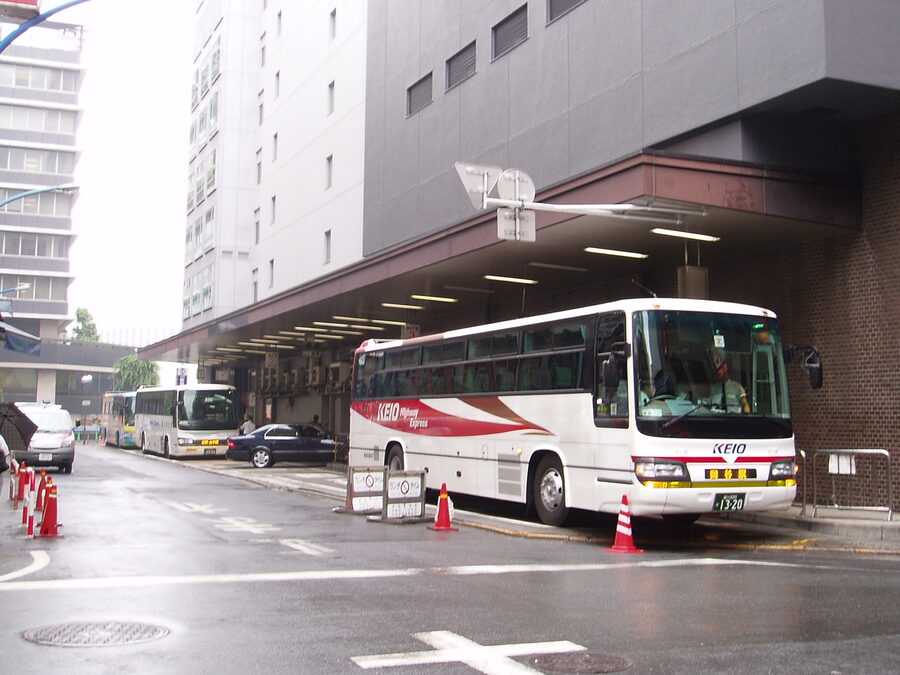
The bus does most of the work. It runs roughly hourly from 07:00 to about 21:00, takes 1h 45m to 2h depending on Saturday traffic on the Chuo Expressway, and costs ¥2,200 one way if you book online in advance, ¥2,200 walk-up at the counter. Round trip is ¥4,400. Children pay half. There is a Lake Kawaguchiko Family Pack that bundles return tickets with park admission, which I would skip unless you are set on Fuji-Q Highland.
Buy through the operator site at highway-buses.jp or via Willer Express, which sometimes shows different inventory for the same route. The bus is operated jointly by Fujikyu, Keio, and Yamanashi Kotsu, so the ticket says different things in different places. They are the same bus.
Where it actually leaves from
Shinjuku Expressway Bus Terminal, signed as Busta Shinjuku in Japanese and SEBT on operator timetables. The entrance is the New South Gate of JR Shinjuku Station, not the South Gate, not the East Exit. From the JR ticket gates, follow the signs to Shinjuku Expressway Bus Terminal up to the fourth floor. About four minutes walk from the ticket gates if you do not get distracted by the food court. Plan ten if it is your first time.
Most buses also stop at Shibuya (Mark City, B1F) and a few continue on to Tokyo Station Yaesu South Exit, useful if you are staying in Marunouchi or Ginza and do not want to backtrack to Shinjuku. There is also a less-publicised service from Ikebukuro Sunshine City Prince Hotel, slightly cheaper, slightly slower, and far less crowded. Check the route number rather than the destination when you board: anything ending in K goes via the Chuo Expressway to Kawaguchiko.
What the bus actually feels like
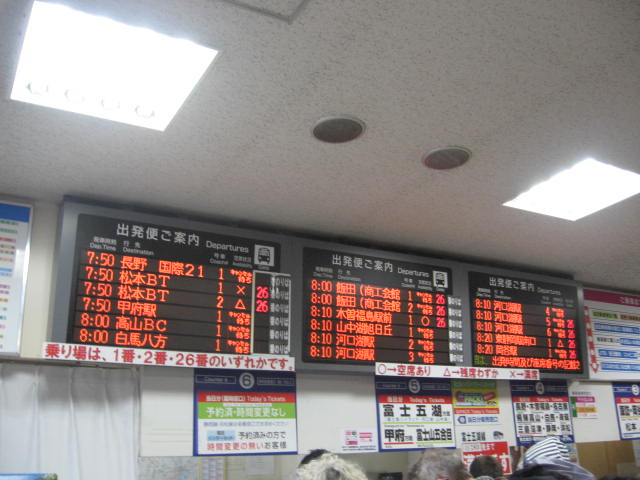
Decent. The bus is a four-by-four reclining tourist coach, not a city bus. There is a toilet in the back if you draw a long-route ride, no toilet on the regular two-hour Kawaguchiko run because there is a service stop at Dangozaka roughly halfway. The Chuo Expressway is the bottleneck. On a Tuesday morning the journey clocks in at 1h 45m. On a Saturday in cherry blossom season, expect a full 2h 15m and do not be surprised if you sit motionless on the Sasago tunnel approach for 20 minutes. Leave on the 07:25 if you can. By 10:00 the road is queued.
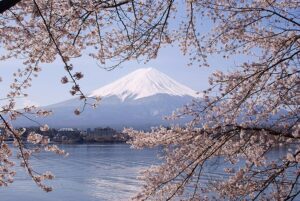
The right-hand window seat shows you Fuji from about 90 minutes in. The left side gets the bigger lake views on the descent. Neither is a scenic standout. Treat the bus as transit.
The Fuji Excursion Limited Express: book it the moment tickets release
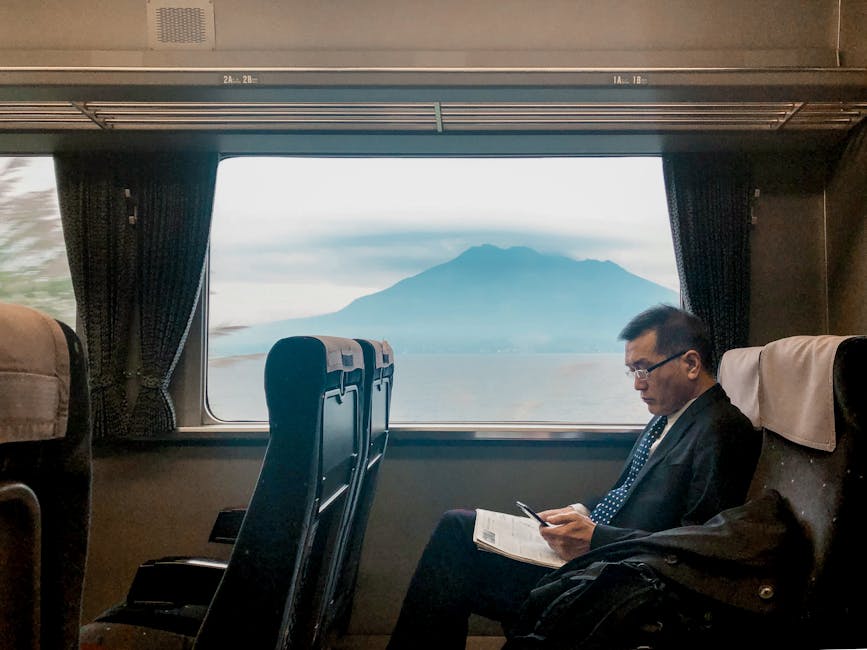
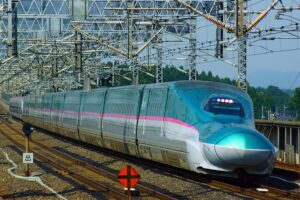
The Fuji Excursion is the JR East E353 Limited Express running direct from Shinjuku into Kawaguchiko Station via the Chuo and Fujikyu lines, no transfer. It takes 1h 53m, costs ¥4,130 one way for a non-reserved fare on the JR East site (basic fare ¥2,560 plus limited express surcharge ¥1,570), and runs four times a day in each direction with seasonal extras during cherry blossom and autumn. All seats are reserved.
It is the single most efficient way to do this trip if you can secure tickets. It is also the most contested. Tickets release on the JR East Eki-net site one month in advance to the day, and the morning departures (07:32 and 08:30 from Shinjuku) sell out within minutes during peak season. Klook has a parallel allocation that sometimes outpaces the JR East site, though Klook only confirms the booking after JR releases inventory. Klook is worth trying as a backup; the official Eki-net booking is the primary route. As of 2026 there are also Tokyo Station departures on selected days, which extend the train through the central loop, but Shinjuku is where most boardings happen.
Picking up your reserved ticket
If you book on Klook you get a QR code, and that QR code is not your ticket. You take it to the Eki-net machines inside Shinjuku Station (look for the green Eki-net logo or the JR East logo on the screen) and exchange the QR for a printed seat ticket. The machines are inside the JR ticket gates and there are also a few outside near the New South Gate. Do this the day before, ideally in the evening when there is no queue. I learned this on my second visit; the first time I gave myself thirty minutes pre-departure and almost missed the train.
If you book directly on Eki-net you can collect the ticket from any JR East ticket machine or counter. The counter takes longer because they want to see your passport.
If the train is sold out
Do not panic, but plan B is meaningfully slower. The standard JR Chuo Line Special Rapid from Shinjuku to Otsuki Station, then transfer to a Fujikyu Railway local for Kawaguchiko, takes about 2h 30m to 2h 45m and costs ¥2,510 one way. The Fujikyu leg is a single-car local that runs through some unexpectedly pretty Yamanashi countryside.
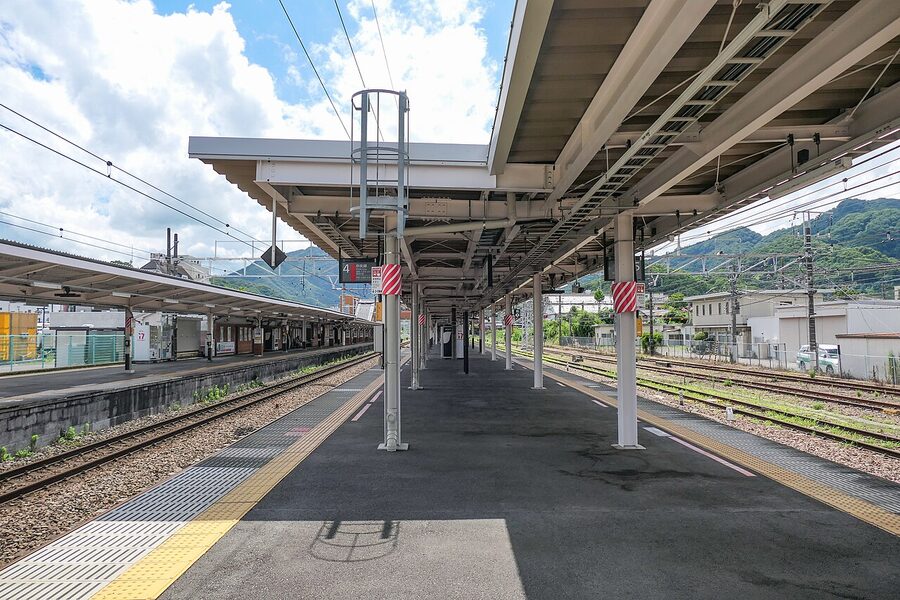
The Otsuki transfer trips up first-timers. JR Chuo Line trains arrive at the JR gates. You exit the JR side, walk about 60 metres to the Fujikyu gates, and buy a separate ticket (or tap a Fujikyu IC pass if you have one). Suica and Pasmo work on JR but not on the Fujikyu local; you will need cash or a Fujikyu day pass. The Fujikyu line is also a slightly slower ride than you would think, about 50 minutes for the 26 kilometres, because it climbs steeply and the trains pause at every minor station.
If you hit a peak weekend with no Fuji Excursion seats, the Otsuki route is fine. If you are choosing between Otsuki-by-train and Shinjuku-by-bus, take the bus, save thirty minutes and fifteen hundred yen.
The Romance Car to Hakone: a different answer to the same question
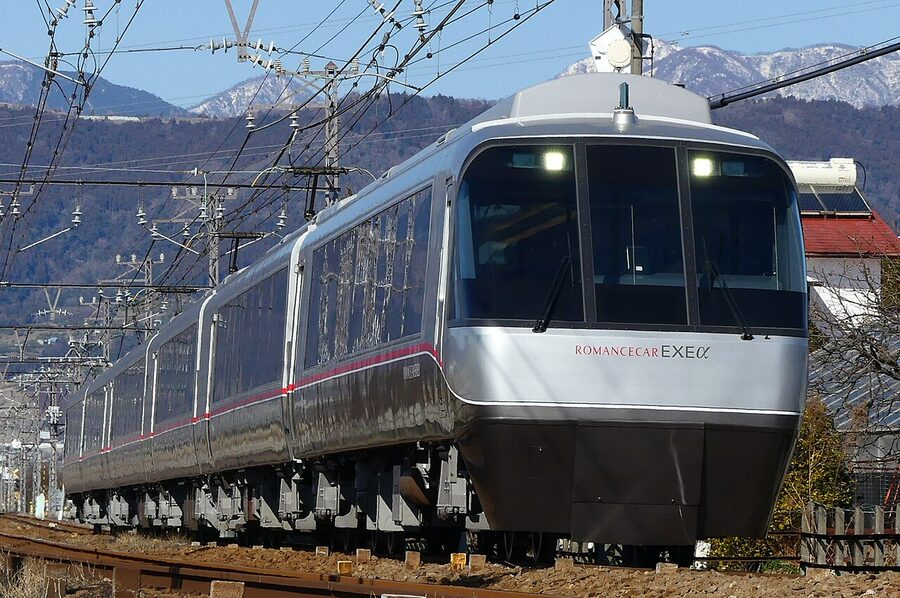
Hakone is the other answer to where to see Mt. Fuji from Tokyo as a day trip. You do not actually see the summit from anywhere on the loop most of the day, but Hakone is more reliable in cloudy weather (the volcanic valley, the lake, the open-air museum, all worth the trip on their own) and the journey itself is faster. The Odakyu Limited Express Romance Car runs Shinjuku to Hakone-Yumoto in 1h 25m. The standard fare is ¥1,270 plus a ¥1,200 limited express surcharge, total ¥2,470 one way.
If you are committing to a Hakone-led day, buy the Hakone Free Pass. The 2-day version from Shinjuku is ¥7,100 (verified on the official Odakyu Hakone Free Pass page as of 2026), which covers the round-trip Odakyu fare from Shinjuku plus unlimited rides on the Hakone Tozan train, Hakone Tozan cable car, Hakone Ropeway, Hakone Pirate Ship on Lake Ashi, and the Hakone Tozan bus network. The Limited Express Romance Car surcharge is separate, ¥1,200 each way on top of the pass. If you are doing the full Hakone Round Course in a day, the Free Pass is meaningfully cheaper than buying tickets for each leg. Klook sells the digital version that activates on first scan; the Odakyu official site has the full route map.
Where Hakone shows Mt. Fuji and where it does not
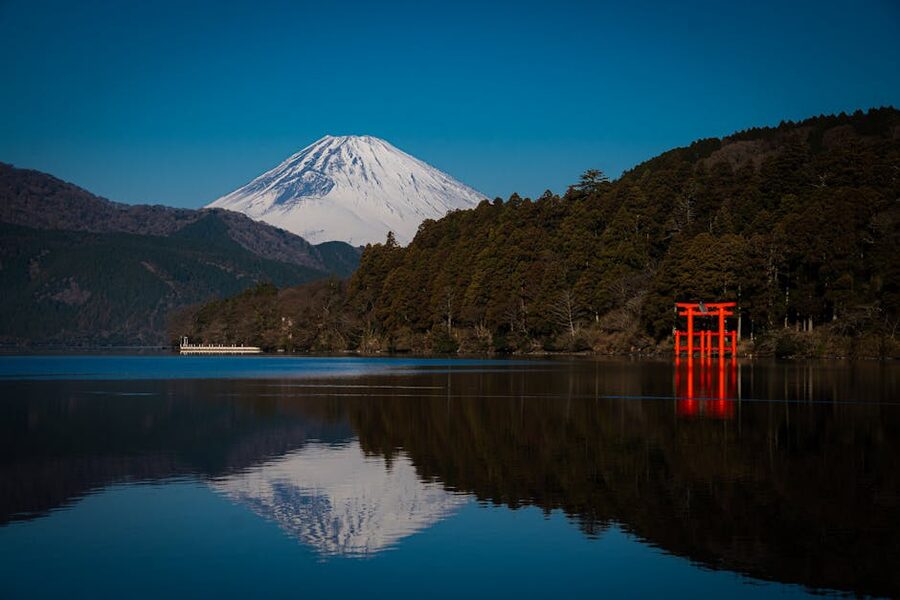
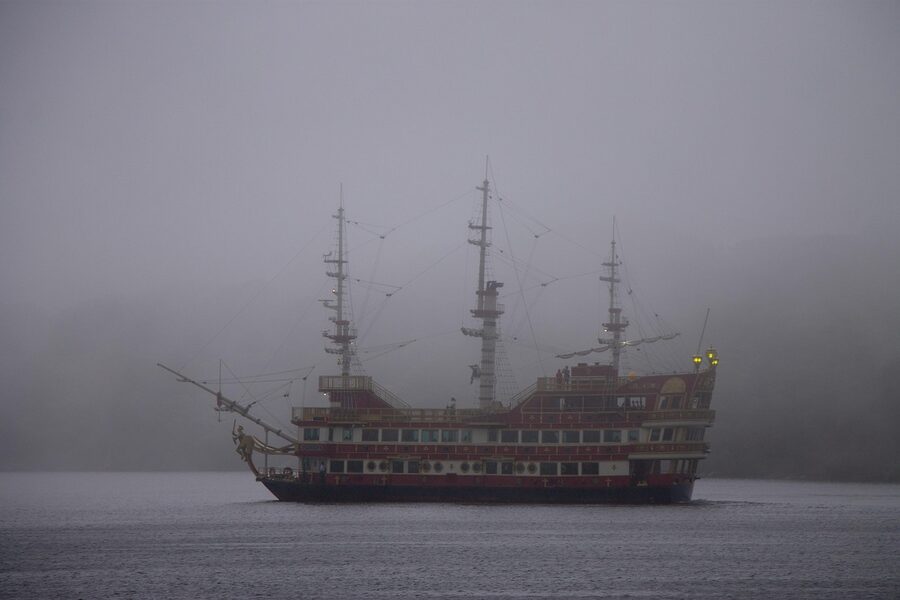
The good news: from Owakudani (the volcanic valley reached by the Hakone Ropeway from Sounzan), Mt. Fuji is direct west, framed by the steaming sulphur vents. From the eastern shore of Lake Ashi, particularly the path between Moto-Hakone and the Hakone Shrine torii gate, Fuji rises behind the lake on clear days. The pirate-ship cruise across Lake Ashi gives you a moving view from the water.
The bad news: Hakone has its own weather system. Fog rolls up the Hayakawa valley and sits in the basin, especially in the morning. From May to September, the chance of seeing Fuji on any given day is about one in four. Winter is much better, and the days I have had clear Fuji from Hakone have all been January or early February.
I cover the rest of how to do Hakone properly in the Hakone day trip piece, including which legs of the Round Course are worth doing and which you can skip.
Where to base yourself: Lake Kawaguchi vs Hakone vs Gotemba
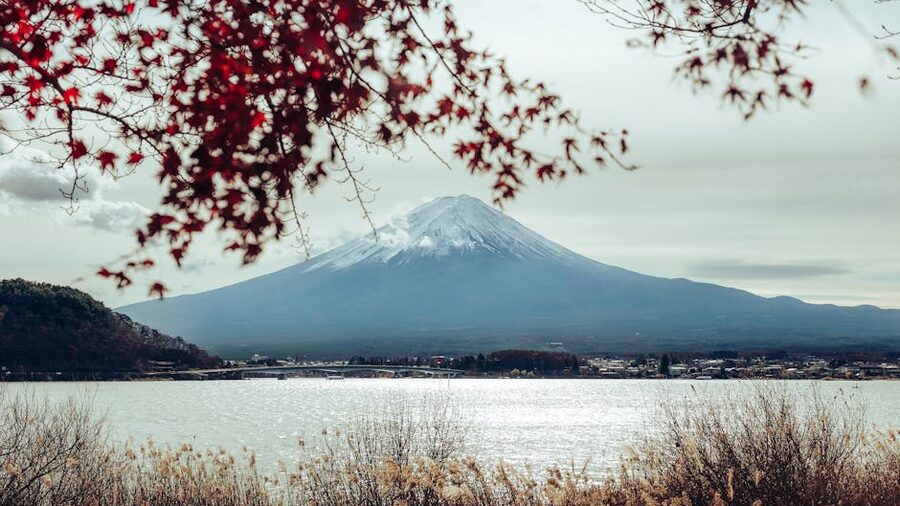
For a day trip you have to commit to one base. Pick wrong and you spend half the day on transit between zones. The three workable answers:
Lake Kawaguchi (Yamanashi side, Fuji Five Lakes)
Default for a Fuji-focused day. Closest lake to the mountain with proper transit access, the highest density of viewpoints (Oishi Park, the north-shore Maple Avenue, the cable car up Tenjoyama, Ubuyagasaki Shrine), and a station that is the terminus of both the bus and the Fuji Excursion. From Kawaguchiko Station you can be at the lake edge in five minutes on foot, at Oishi Park in 25 minutes via the Red Line sightseeing bus, and at Chureito Pagoda in 35 minutes by Fujikyu local train back to Shimoyoshida.
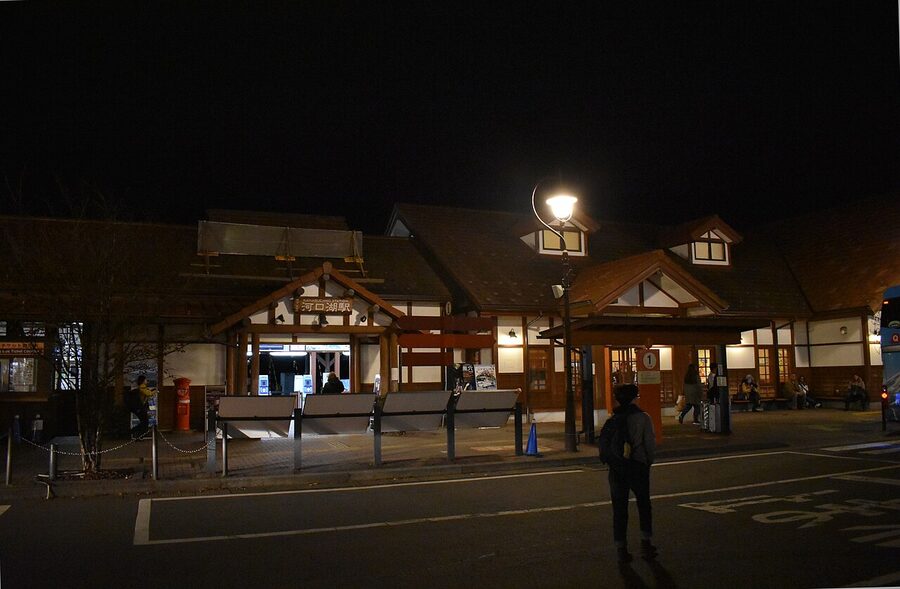
Drawback: it is small. Do anything on the south or west shores and you are either renting a bike (¥1,500 per day from the rental kiosks at the station) or taking the Red Line and Green Line sightseeing buses, which are excellent but operate at 15-minute headways outside summer.
Hakone
Pick this when Fuji visibility is dicey or when you have already done Kawaguchiko. The Round Course (Hakone-Yumoto by switchback train, Hakone Tozan cable car, Hakone Ropeway over Owakudani, pirate ship across Lake Ashi, bus back) is a full day on its own and does not depend on Fuji being out. Onsen options if you want a 90-minute soak between sights.
Gotemba
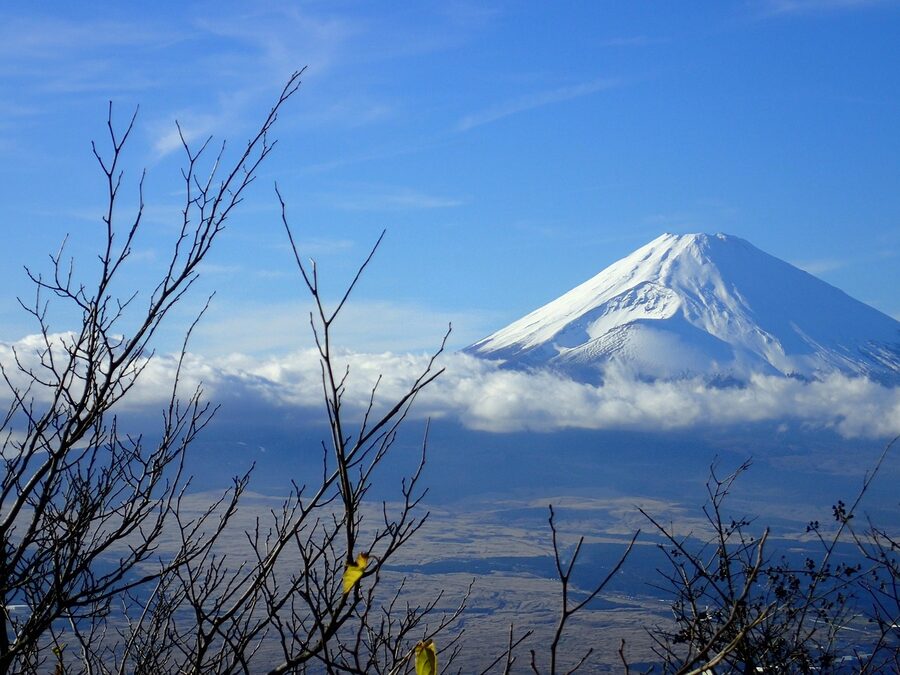
Gotemba sits on the Shizuoka side, southeast of Fuji. From Tokyo, it is the JR Tokaido Line to Kozu plus the Gotemba Line, or the express bus from Shinjuku. The reason to come is Gotemba Premium Outlets, a serious bonus if you want shopping, and the Gotemba 5th Station, which is the trailhead for the Gotemba climbing route in summer. As a Fuji-viewing base it is the weakest of the three. The mountain from the south face shows less of its iconic snow-capped shape, and the access logistics from Tokyo are not faster than the other two.
I would skip Gotemba unless you want the outlets or you are climbing.
The single-day-versus-overnight call
Day trip works for: Lake Kawaguchi north shore, Chureito Pagoda, the lake-shore walking path, one or two short photo stops, and lunch. Day trip does not work for: Lake Yamanaka or any of the other four lakes (too far to reach with limited bus service), the 5th Station for non-climbers (the road is gated outside July–September anyway), Oshino Hakkai plus Lake Kawaguchi plus Chureito (you will burn 90 minutes on the buses).
If your trip plan is to see Mt. Fuji from Tokyo on day X, I would carve out 09:00 departure to 19:00 return as a realistic window, accept that you will see roughly two viewpoints, and go. If your plan is to make sense of the Fuji Five Lakes properly, an overnight in Kawaguchiko is ¥15,000 to ¥30,000 for a mid-range room and gives you a clear morning, which is when Fuji visibility peaks. The full Mt. Fuji travel guide has the breakdown of all five lakes and how they read at different times of year.
The cloud problem you cannot out-plan
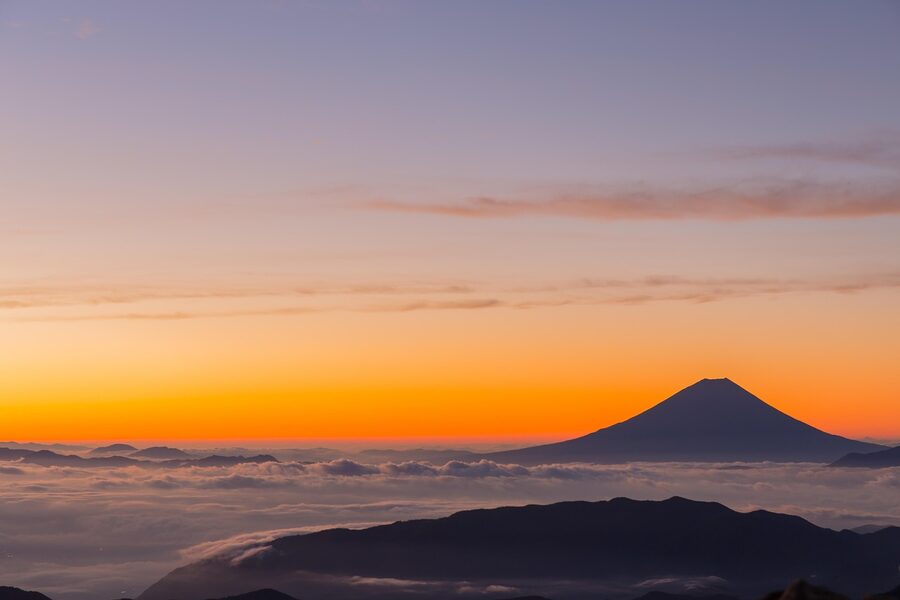
Mt. Fuji is visible, on average, about 70 to 80 days a year from the lakes. That number is dominated by autumn and winter. In June and July the mountain is hidden by cloud or atmospheric haze on roughly two-thirds of days. The thermal pattern is consistent: clearest at dawn, cloud builds from 09:00 onward as the valley warms, summit is wrapped by mid-morning, sometimes the whole peak by lunchtime. By mid-afternoon the wind sometimes scours it clean again, sometimes does not.
The implications for a day trip:
- Take the earliest bus or train you can manage. The 06:54 first bus from Shinjuku puts you at Kawaguchiko by 08:50, in time for the morning window.
- Front-load your photography. Whatever you came to shoot, do it first.
- Save museums and indoor stops for after 11:00.
- If the morning is hidden, walk anyway. The peak often clears around 15:00 in summer.
Visibility checks before you commit
Two free webcams I check the night before a Fuji trip. FUJISANWATCHER on the Yamanashi tourism site aggregates official live feeds from across the prefecture; the camera on Lake Kawaguchi is the most useful for day-trip planning. Fujigoko TV runs eight or so cameras around the lakes, including a 24-hour stream from the Kawaguchi south shore and one at Oshino Hakkai. If both are showing solid white at 06:00 the day of, your odds are not good. If either shows the upper cone outlined, go.
Do not trust general weather forecasts. Tokyo says sunny plenty of days when the Five Lakes basin sits under cloud. The webcams are the only one that tell you.
What to actually do once you arrive
The Chureito Pagoda question
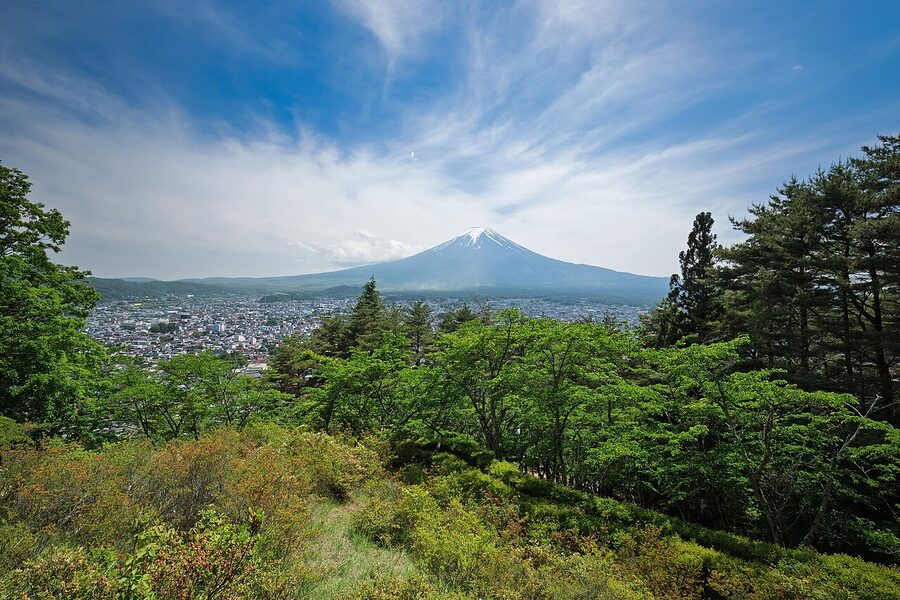
Yes, do it, but understand the geometry. The pagoda is in Arakurayama Sengen Park, above Shimoyoshida, two stops down the Fujikyu line from Kawaguchiko. The famous photo (pagoda foreground, Fuji middle ground, cherry blossoms or autumn leaves around) is taken from a viewing platform reached by climbing 398 steps from the lower park. The platform is small and gets crowded.
If you are at Kawaguchiko, take the Fujikyu Railway four minutes back to Shimoyoshida Station, walk ten minutes to the lower park, climb the steps. Allow 90 minutes round trip from Kawaguchiko Station, doubled in cherry blossom or autumn peak. Off-peak, weekday morning, you will have the platform almost to yourself.
The pagoda itself is a 1963 reconstruction of a war memorial pagoda. It is not historically significant. You are there for the alignment with Fuji, which is best on the descent path, where the angle widens.
Lake Kawaguchi north shore: the Maple Avenue and Oishi Park
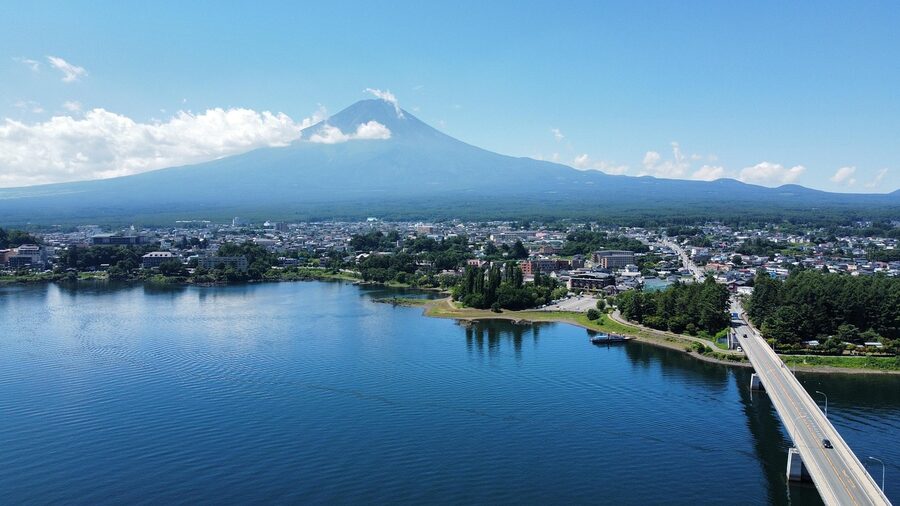
The north shore is where the Lake Kawaguchi iconic-Fuji-over-still-water view lives. Take the Lake Kawaguchi Sightseeing Bus Red Line from Kawaguchiko Station to Oishi Park (about 25 minutes, ¥220 a hop or unlimited with the 2-day Mt. Fuji Pass). Oishi Park has a herb garden, lavender in late June, and a long bench along the water that gives you the open view. The Maple Avenue (Momijidai) sits a five-minute walk further round the lake, a 150-metre corridor of red maples that is lit up at night during the autumn festival in early November.
Watch out for the wind. After 11:00 in autumn, the lake surface chops up and the reflection breaks. Reflection photographers should be on the bench by 09:30.
The unexciting truth about Oshino Hakkai
Oshino Hakkai is a cluster of eight pond springs fed by Mt. Fuji groundwater. It is heavily on the tourist circuit, has a thatched-roof aesthetic, and is genuinely picturesque in the right light. It is also a 30-minute bus ride from Kawaguchiko (or a complicated bus transfer from Fujisan Station), the parking lots are larger than the village, and most of the photos you have seen are taken from a single small bridge that gets a queue forming by 10:00.
If you are doing a day trip, I would skip Oshino Hakkai unless you have a clear visibility morning and you have already done Chureito. The arithmetic works out better as: Chureito early, Oishi Park mid-morning, lunch, head back. Adding Oshino burns 90 minutes for what is essentially a small pond.
Lake Yamanaka: skip on a day trip
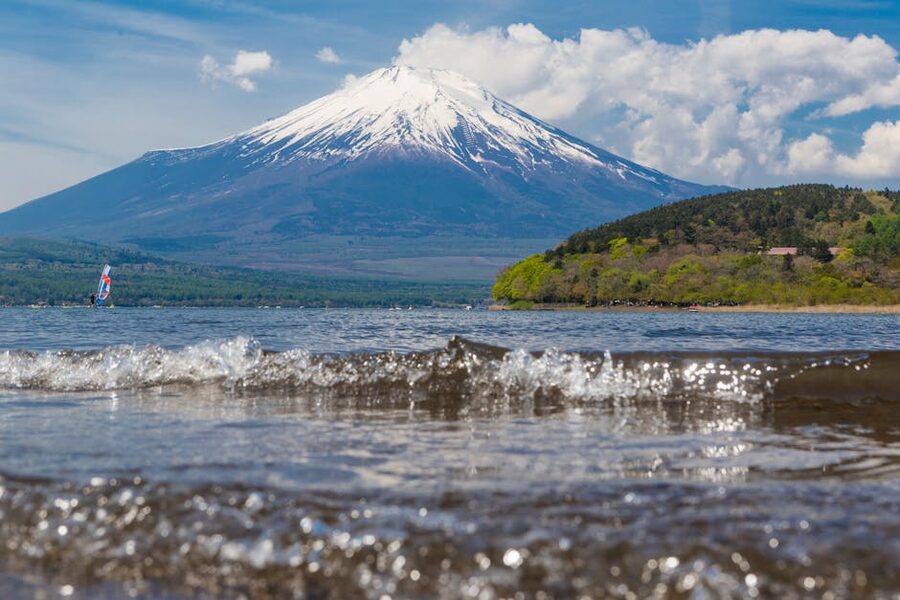
Yamanaka is the largest of the five lakes and the closest to the foot of Fuji. It is beautiful, and on a clear morning the view from the western shore is the best of any lake. The problem is access. From Kawaguchiko Station the bus is 25 minutes; from Tokyo you are committing to a longer day or an overnight. On a single-day trip out of Shinjuku, your transit budget is better spent on the Kawaguchi denser cluster of stops.
If you are going to do Yamanaka, give it a stay. The Marriott on the south shore has the best lakeside rooms in the area, and a sunrise photo from the Marriott lawn is worth the night.
Hakone-led day trip: the alternative shape
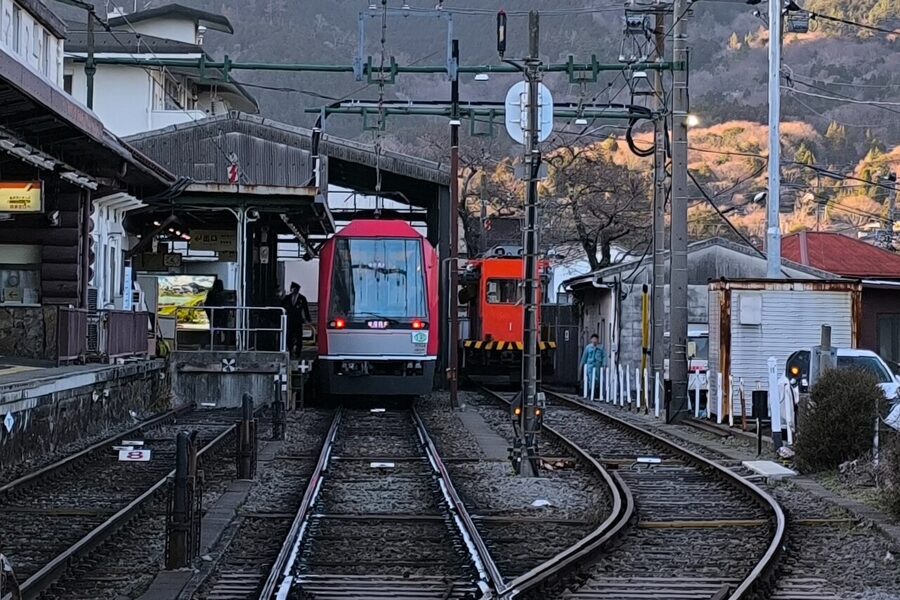
If you have decided Hakone, the day shape is roughly: Romance Car 08:00 to Hakone-Yumoto, switchback Hakone Tozan train to Gora, cable car to Sounzan, ropeway over Owakudani (Fuji view from the volcanic valley), descend to Togendai, pirate ship across Lake Ashi to Moto-Hakone, walk the cedar avenue and Hakone Shrine, bus back to Hakone-Yumoto, Romance Car back to Shinjuku. That is a real ten-hour day.
What I would actually do, having done the Round Course three times: skip the cable car (it is a ten-minute ride for ¥420 that adds nothing), skip the Hakone Open Air Museum unless you are a Henry Moore obsessive (it is a beautifully landscaped sculpture park but takes 90 minutes you do not have), and use the time saved for a long lunch at one of the Gora ryokan-restaurants. The contrarian Hakone routing is the subject of the dedicated Hakone day trip piece.
The Owakudani Fuji shot
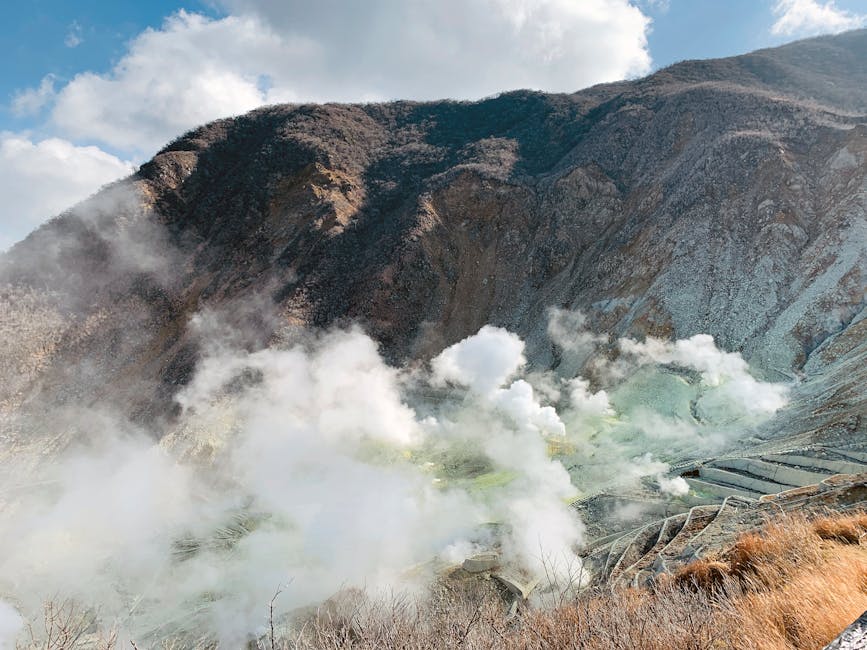
Owakudani is the steaming sulphur valley you have seen on Hakone tour brochures. It is reached by the Hakone Ropeway from Sounzan and the cars cross the valley with Fuji in the western frame. On a clear day this is a strong shot. On a cloudy day you are paying ¥1,500 to ride a gondola through fog. Check the visibility cameras before committing.
Owakudani Station has black eggs (eggs boiled in the sulphurous spring water, blackened by chemical reaction), a few souvenir stands, and a short walking trail above the station. Trail sometimes closes for high gas readings; check signage on arrival.
Mt. Fuji Pass and the area transit math
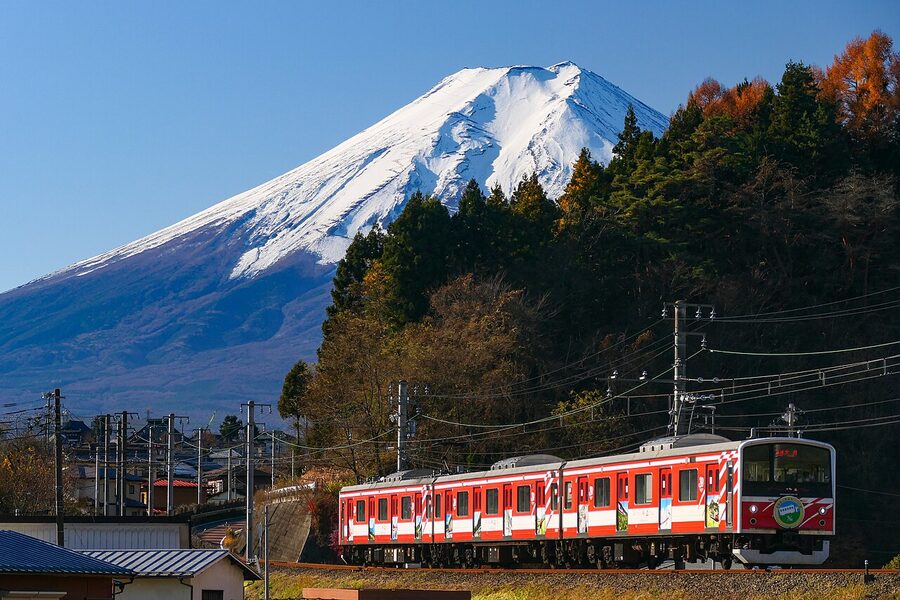
Once you are in the Fuji Five Lakes area, you will either pay per ride on the local buses (¥220 a hop, IC card-friendly on the Fujikyu Bus network) or buy a pass. The candidates as of 2026:
Lake Kawaguchi Sightseeing Bus 2-day pass: ¥1,500. Covers the Red, Green, and Blue lines around the Kawaguchi lakeshore plus the Saiko area. Best value if you are doing two or three Red Line stops and want flexibility.
Mt. Fuji Pass (Fujikyu): 1-day ¥6,000, 2-day ¥9,000, 3-day ¥11,000 (verified on the Fujikyu Bus operator site as of 2026). Covers Fujikyu buses across the area, the Fujikyu Railway local trains between Otsuki and Kawaguchiko, and discounts on Fuji-Q Highland and the Subaru Line 5th Station shuttle in season. Heavy pass; only worth it on a multi-day visit hitting both Yoshida and Kawaguchi areas.
For a single day from Tokyo to Kawaguchi, the simple sightseeing bus 2-day pass at ¥1,500 covers everything you will do.
Getting back to Tokyo
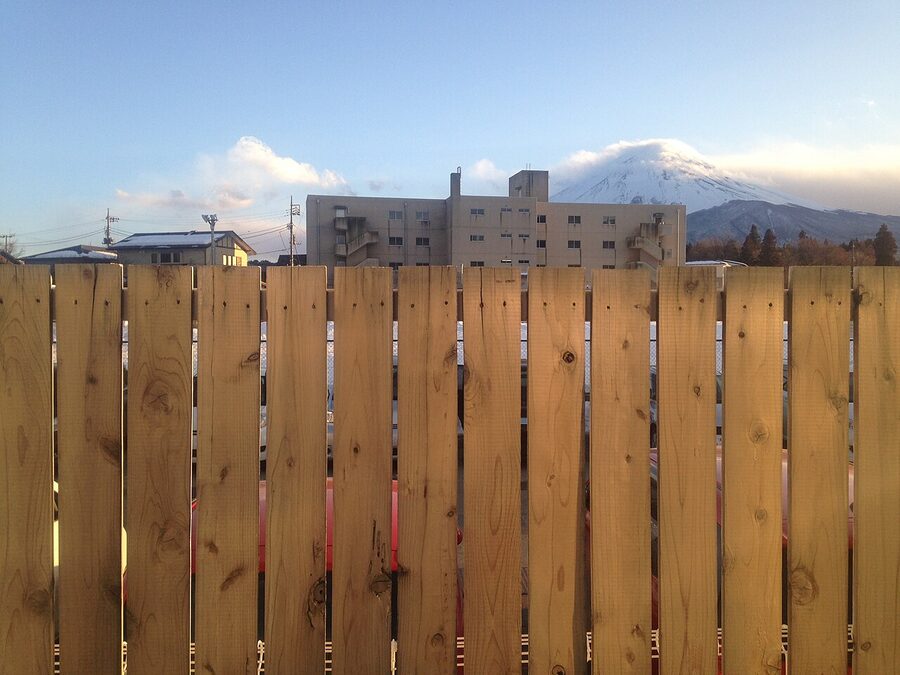
The afternoon return trip is the part most travellers underestimate. Buses leave Kawaguchiko at roughly hourly intervals from 14:00 onward; the last bus back to Shinjuku is at 21:30 in summer, earlier in winter. The 17:00 to 18:00 buses are the bottleneck and sell out on weekends. If you have a fixed return train (the Fuji Excursion has only four return slots: 13:14, 15:25, 16:35, and 17:35 from Kawaguchiko on the standard 2026 schedule), buy that ticket in advance.
If you walked into Kawaguchiko without a return ticket and find the late buses sold out, the fallback is the Fujikyu Railway local back to Otsuki (50 minutes), then any JR Chuo Line train to Shinjuku (1h 15m on the Limited Express Azusa, 1h 45m on the rapid). Total cost about ¥2,500. It is not glamorous, but it works.
What about a tour package?
Tour packages are the simplest answer for a single-day visit if logistics are not your thing. The Klook Mt. Fuji Classic Route day tour from Tokyo runs about ¥13,000 and bundles Shinjuku pickup, English-speaking guide, Lake Kawaguchi stops, Oshino Hakkai, sometimes a Subaru Line 5th Station leg in season, and a return drop-off. Klook and Viator both list comparable products at similar prices.
The verdict: a tour is the right call if you are travelling with elderly relatives, kids who tire easily, or you want the day to be entirely hands-off. It is the wrong call if you want to be on the lakeshore at 09:00 (most tours arrive at 11:00 because of the Tokyo pickup loop), if you have specific photo sites in mind, or if you do not want to spend an hour at a souvenir centre while the tour does its commission stop.
If you have just one day in Japan and Fuji is non-negotiable, the tour is fine. If you have two or three days to spare, go independently and use the bus or Fuji Excursion.
What to do if Fuji is hidden
You will, at some point, take the bus to Kawaguchiko and find the mountain swallowed by cloud. It happens. Here is the salvage list, in order of how much consolation each provides:
- Walk the lakeshore anyway. The path on the south side from Kawaguchiko Station to Ubuyagasaki is pleasant in any weather, and the cloud sometimes thins by mid-afternoon. You may yet see the peak.
- Itchiku Kubota Art Museum. Five minutes from the Lake Kawaguchi north-shore bus route, dedicated to the Tsujigahana silk-dyeing revival. Quiet, indoor, ¥1,500. Genuinely worthwhile and zero relationship to the weather.
- Fuji-Q Highland. Theme park in Fujiyoshida with some of the world biggest roller coasters. Entry is ¥6,500 with all rides, separate tickets at the gate are ¥1,000 to ¥2,000 per attraction. Open all year.
- Oishi Park even in cloud. The herb garden, lavender, autumn cosmos, all bloom regardless of summit visibility. The view across the lake gives you the lower foothills even when the cone is hidden.
- Ride the Fujikyu Railway. The 50-minute route between Kawaguchiko and Otsuki is genuinely scenic on its own, with farms, river crossings, and the front car of the train showing forward views. It is the cheapest scenic train in the area.
The wrong move is to abandon and head back to Tokyo. By the time you are on the return bus, the cloud has often started to lift, and you have spent four hours on transit for nothing.
The climbing question, in passing
If you are here because you want to climb Mt. Fuji as a day trip from Tokyo, that is not really feasible. The Yoshida Trail from the Subaru Line 5th Station to the summit and back is six to ten hours of climbing, and almost everyone breaks it overnight at one of the mountain huts to time a sunrise summit. The full climbing-as-a-Tokyo-base scenario is covered in the Mt. Fuji climbing guide, which goes through the four trails, the reservation system, the climbing toll, and what the season actually looks like in 2026.
The short version: if you are climbing, treat it as a two-day commitment from Tokyo (day 1 bus to 5th Station and overnight in a hut, day 2 sunrise summit and descent), not a day trip.
One more shape: the post-Kyoto routing
If your trip plan is Tokyo to Kyoto and back, consider treating Fuji as a stopover rather than a Tokyo day trip. The Tokaido Shinkansen between Tokyo and Kyoto passes within visible range of the mountain (right-hand window, Tokyo to Kyoto direction, between Mishima and Shin-Fuji, about 40 minutes after departure from Tokyo). On a clear day this is the cheapest Fuji view possible, baked into a journey you were taking anyway.
From Mishima Station you can also bus 90 minutes to Kawaguchiko (about ¥2,530), making a Mishima-stopover routing viable: Tokyo Shinkansen to Mishima, bus to Kawaguchiko, half-day at the lake, evening bus back to Mishima, overnight, Shinkansen onward to Kyoto. It saves a full day in Tokyo.
Practical bits worth knowing
- Cash. The Fujikyu Railway prefers it; Suica and Pasmo work on JR but the Fujikyu local is its own ticket. Have ¥2,000 in coins and 1,000-yen notes.
- Lockers. Kawaguchiko Station has ¥500 small, ¥700 medium lockers on the right wall just inside the entrance. They fill by 10:00 on busy weekends.
- Lunch. Hoto noodles, thick wheat noodles in miso broth, Yamanashi specialty, are everywhere around Kawaguchiko Station. Hoto Fudo is the chain everyone goes to; the line is real, the food is fine, but the lunch counter at any of the smaller shops further from the station is identical food in less time.
- Cherry blossom timing. The Fuji Five Lakes basin blooms about 7 to 10 days after Tokyo, typically the second week of April, sometimes the first week. Chureito Pagoda peaks the same week. Book the Fuji Excursion the day inventory releases.
- Autumn timing. Maple Avenue and the lakes peak around 5 to 12 November in normal years, slightly later in warm autumns. The Maple Festival has evening illumination from late October through mid-November.
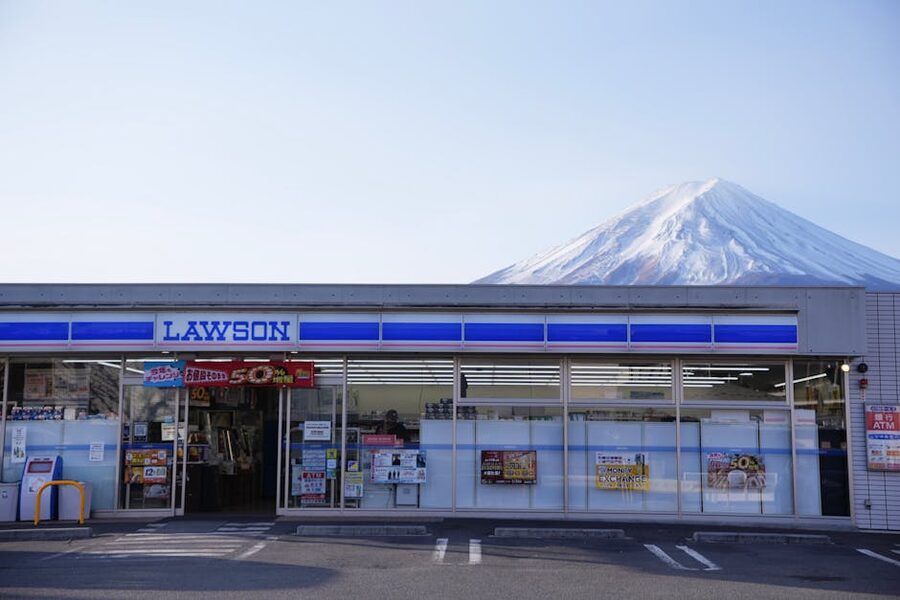
- The Lawson photo. The Lawson at Fujikawaguchiko with Mt. Fuji in the background, viral on Instagram a few years ago, has been deliberately blocked with a mesh barrier since 2024 to manage crowds. The barrier comes and goes depending on local council enforcement. Do not make it your trip.
What to expect from the day
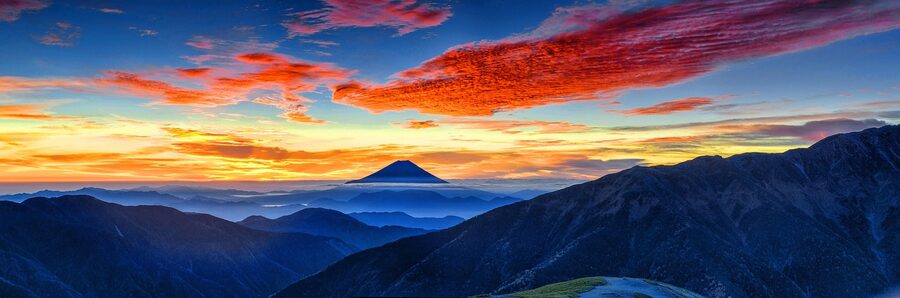
A done-right Tokyo to Mt. Fuji day trip looks like this: 06:54 bus from Shinjuku, 08:50 arrival Kawaguchiko, drop bag in a station locker, four-minute Fujikyu local back to Shimoyoshida, walk to Arakurayama Sengen Park, climb to the Chureito viewing platform, photograph in the morning light, descend, bus or local train back to Kawaguchiko, Red Line sightseeing bus to Oishi Park, lakeshore lunch, walk Maple Avenue, return to Kawaguchiko, 16:35 Fuji Excursion back to Shinjuku.
You will have spent about ¥7,800 on transit and seen Mt. Fuji from two angles in good light. You will be back in Tokyo by 18:30. That is the trip the Fuji Five Lakes earns when you give it the early start, and there is no version of it that is better than this one without an overnight stay.
Check the cameras tonight. Set the alarm for 05:30. The mountain is shy, but the math is on your side if you are at Busta Shinjuku before 07:00.